
Losing weight doesn't have to mean giving up every food you love, surviving on salads, or feeling hungry all day. Sometimes, a few thoughtful changes to your everyday meals can make healthy eating feel much more manageable. That's where a low carb diet for weight loss may help. By choosing satisfying protein sources, adding plenty of non-starchy vegetables, reducing added sugars, and paying attention to portions, you can build an eating pattern that supports your goals without turning every meal into a math problem.
But what does eating low-carb actually look like? Should you avoid bread completely? Are fruit and potatoes off-limits? And how can you put together a week's worth of meals without spending hours cooking?
This guide answers those questions with a practical low carb diet plan, a comprehensive food list, a 7-day menu, grocery shopping tips, and strategies for handling common challenges. You'll also learn how carbohydrate intake relates to weight loss, why results vary, and which health considerations deserve attention before making substantial dietary changes.
The goal isn't to follow the strictest possible diet. It's to find an approach that provides adequate nutrition, fits your lifestyle, and gives you habits you can maintain over time. Evidence from Harvard's Nutrition Source suggests that some low-carbohydrate diets can support weight loss, but food quality and long-term adherence remain important considerations.
Can a Low Carb Diet Help You Lose Weight?
Picture your usual weekday meals for a moment. Perhaps breakfast includes sweetened cereal, lunch comes with a large sandwich and a sugary drink, and dinner ends with a generous serving of pasta. None of these foods automatically makes your diet unhealthy, but the overall pattern may leave little room for vegetables, adequate protein, or other foods that help make meals satisfying. A low carb diet for weight loss offers another way to organize those meals. Instead of relying heavily on refined carbohydrates, you emphasize protein-rich foods, non-starchy vegetables, selected healthy fats, and carbohydrate portions that suit your needs. For some people, this change makes it easier to feel satisfied and reduce their overall energy intake without constantly thinking about food.
The important detail is that carbohydrate restriction doesn't automatically guarantee weight loss. Your results depend on several factors, including the amount you eat, the foods you choose, physical activity, sleep, medications, and individual health circumstances. The Centers for Disease Control and Prevention (CDC) explains that gradual, steady weight loss is generally easier to maintain than rapid weight loss, and that healthy weight management involves nutrition, activity, sleep, and stress management. (1)
So, rather than chasing dramatic before and after results, think of this guide as a practical starting point. You'll discover which low carb foods for weight loss are worth keeping in your kitchen, how to build satisfying plates, and how to create a flexible weekly menu. You don't need to transform every habit overnight. Start with a few meals, notice how they fit your routine, and make adjustments as you learn what works for you.
What Is a Low Carb Diet?
A low-carb diet is an eating pattern that reduces the amount of carbohydrate consumed, usually by limiting some combination of sugary foods, refined grains, starchy vegetables, and other carbohydrate-rich foods. Instead, meals often contain more protein, non-starchy vegetables, and fats from sources such as olive oil, nuts, seeds, fish, or avocado. The exact definition isn't universal, though. Different eating plans use different carbohydrate limits, and a moderate low-carb approach can look very different from a ketogenic diet.
Carbohydrates are one of the body's main sources of energy. They occur naturally in fruits, vegetables, beans, lentils, milk, and whole grains, as well as in foods containing added sugars and refined starches. This distinction matters because reducing soft drinks and pastries is not nutritionally equivalent to eliminating berries, beans, or vegetables. Some carbohydrate-containing foods provide dietary fiber, vitamins, minerals, and other beneficial compounds. MedlinePlus offers an accessible explanation of carbohydrates and their role in a balanced diet. (2)
What counts as low-carb?
There is no single daily target that defines every low-carb diet. Depending on the approach, a person may reduce carbohydrates moderately or restrict them substantially. A flexible plan might still include measured portions of oats, beans, fruit, or whole grains, while a stricter ketogenic plan generally limits carbohydrate intake much more sharply to encourage ketosis.
The most useful question isn't simply, "How few carbohydrates can I eat?" Instead, ask, "What level of carbohydrate intake allows me to eat well, feel satisfied, and follow this plan consistently?"
That shift helps you avoid unnecessary restrictions. A person who enjoys fruit and beans may do well with a more flexible eating pattern, while another person may prefer a lower-carbohydrate menu built around eggs, fish, vegetables, and tofu. Neither approach is automatically best for everyone.
What does a balanced low-carb plate look like?
A basic meal might contain grilled chicken, roasted broccoli, a mixed salad, and olive oil dressing. Another might feature baked salmon with asparagus and cauliflower. For a plant-based meal, tofu with stir-fried zucchini, mushrooms, and peppers can provide variety without relying on a large serving of refined starch.
The common thread is balance. You are reducing carbohydrates according to your chosen plan while making sure the foods that remain provide adequate nutrition. A healthy low carb diet plan should be more than a list of foods you are forbidden to eat.
How a Low Carb Diet Can Support Weight Loss
The relationship between carbohydrates and body weight is more nuanced than many online diet claims suggest. Carbohydrates aren't inherently responsible for weight gain, and cutting them out doesn't cause body fat to disappear automatically. However, changing the kinds of foods you eat can influence hunger, total energy intake, meal satisfaction, and your ability to maintain consistent habits. For some people, these changes make a low carb diet for weight loss a useful strategy.
Energy balance still matters
Your body uses energy to maintain basic functions, digest food, move, and carry out everyday activities. When you consistently consume less energy than you use, your body draws on stored energy, including body fat, over time. Reducing carbohydrate intake can help create this energy deficit if it replaces foods that contribute substantial calories without keeping you satisfied for long.
For example, replacing a regular sugary drink with water removes the drink's energy without making your meal smaller. Swapping a large serving of refined crackers for vegetables and hummus may also change the balance of your snack. But adding large amounts of cheese, butter, nuts, or oil to every meal can offset some of those changes because these foods are energy-dense.
That is why you should choose low-carb foods for weight loss based on overall nutritional value and portion size, not simply because their carbohydrate content is low.
Protein and fullness
Protein-rich foods such as eggs, poultry, fish, tofu, plain Greek yogurt, and other suitable options can help make meals satisfying. Combining them with vegetables and, where appropriate, high-fiber foods creates meals that offer a range of nutrients and textures.
Imagine eating breakfast with eggs, spinach, and mushrooms instead of one made mainly from sweetened cereal. Depending on portions and preparation, the first meal may provide more protein and fewer refined carbohydrates. You might find it easier to stay satisfied until lunch. Your experience will depend on your personal appetite, activity, and the composition of both meals, but the example illustrates how food choices can influence your routine.
Initial water loss isn't the same as fat loss
When carbohydrate intake falls substantially, the body may use some of its stored glycogen. Glycogen is stored carbohydrate, and it is associated with water. Changes in glycogen and body water can therefore cause an early drop on the scale.
That initial change can be encouraging, but it shouldn't be confused with an equivalent amount of body fat loss. Weight also fluctuates because of sodium intake, digestion, hormonal changes, hydration, and other everyday factors. A larger decrease in the first week does not mean the same rate will continue.
For a more useful picture of progress, look at longer-term trends alongside improvements in meal consistency, activity, and how you feel.
Why results differ from person to person
Research does not show that one carbohydrate target works best for everybody. Harvard's Nutrition Source notes that low-carb diets can support weight loss, but longer-term outcomes depend on the diet and the people following it.
Your ability to follow an eating plan matters, too. If you love traditional oatmeal breakfasts, a plan that permanently bans oats might become frustrating. If you prefer eggs, fish, salads, and roasted vegetables, a lower-carbohydrate pattern may feel natural.
The best strategy is the one that supports your health, suits your circumstances, and can become an ordinary part of your life.
Types of Low Carb Diets and Daily Carb Targets
Before building your low carb diet plan, it helps to understand that carbohydrate restriction exists on a spectrum. You do not have to follow the strictest version to eat fewer refined carbohydrates or work toward a weight management goal. Choosing the right starting point involves more than selecting a number from a diet chart. You also need to consider your activity level, food preferences, health history, medications, and overall nutritional needs.
Moderate low-carb eating
A moderate approach focuses on reducing added sugars, sugary drinks, and some refined starches while retaining a variety of nutrient-rich foods. Depending on the person's target, the menu may include fruit, beans, lentils, whole grains, or measured portions of starchy vegetables.
For example, breakfast could include eggs with spinach and a small serving of whole-grain toast. Lunch might feature a chicken salad with chickpeas, while dinner includes fish and roasted vegetables. This pattern provides flexibility and may be easier to maintain for people who enjoy a wide range of foods.
Rather than removing every carbohydrate source, the emphasis is on improving food choices and managing portions. It can also be easier to share meals with family members because you can often adjust the proportions on your plate without preparing an entirely separate menu.
Lower-carbohydrate eating
A more restrictive plan reduces carbohydrate-rich foods further. Meals might feature eggs, poultry, seafood, tofu, non-starchy vegetables, plain yogurt, nuts, seeds, and selected fats. Portions of bread, rice, pasta, cereals, beans, or fruit may need to be adjusted according to the chosen carbohydrate limit.
This approach requires more attention to variety. If you remove several food groups, you need to plan deliberately for fiber and nutrients. A plate of chicken and cheese, for example, may be low in carbohydrates but isn't as varied as chicken served with broccoli, leafy greens, and an appropriate portion of another nutrient-rich food.
A lower-carbohydrate menu can still be colorful, flavorful, and flexible. Herbs, spices, citrus, garlic, vinegar, and different cooking methods add variety without requiring sugary sauces.
Low-carb versus keto
A ketogenic diet is a more restrictive form of carbohydrate reduction intended to encourage the body to produce ketones and enter a metabolic state called ketosis. It generally requires closer attention to carbohydrate intake than a moderate low-carb approach. Keto is not simply another name for every diet that contains fewer carbohydrates.
Harvard's Nutrition Source explains that ketogenic diets have particular constraints and considerations, including questions about nutritional balance and long-term sustainability.
A general low carb diet for beginners doesn't necessarily need to reach ketosis to reduce sugary drinks, improve meal composition, or develop more consistent eating habits.
How should you choose a daily target?
Start by considering what you currently eat. If most of your carbohydrates come from sugary beverages, sweets, and refined snacks, changing those foods first may be more practical than adopting a severe restriction immediately. You can then evaluate hunger, energy, meal variety, and adherence before making further adjustments.
Avoid treating a published target as a universal prescription. Someone who exercises intensively may have different needs from someone with a sedentary routine. A person managing diabetes with medication may also need a clinician's guidance before reducing carbohydrate intake substantially.
A sensible starting plan should meet three basic requirements:
- It provides adequate nutrients and enough food to support daily activities.
- It uses a carbohydrate target that fits your health circumstances and preferences.
- It is realistic enough to follow beyond the first burst of motivation.
- The goal is a workable eating pattern, not a contest to see how little you can eat.
Best Low Carb Foods to Eat for Weight Loss
One of the simplest ways to make a low carb diet for weight loss more manageable is to focus on what you can eat, rather than keeping a running list of forbidden foods. Stock your kitchen with useful staples, choose ingredients you enjoy, and learn a few combinations that are easy to repeat. That approach turns a diet from a collection of rules into a set of meals you can actually look forward to.
The low carb foods for weight loss below can form the foundation of many breakfasts, lunches, dinners, and snacks. Your portions and combinations should depend on your chosen carbohydrate target, hunger, overall dietary needs, and personal preferences.
Protein-rich foods
Protein helps build and maintain body tissues and is an important part of a balanced diet. Including a suitable protein source at meals can also help make your plate more satisfying. You have plenty of options, so there is no need to eat chicken at every meal or rely on protein powder to build a practical menu.
Useful choices include:
- Eggs: Boiled, scrambled, poached, or prepared as an omelet with vegetables.
- Chicken and turkey: Grilled, roasted, baked, or shredded for salads and wraps.
- Fish and seafood: Salmon, cod, sardines, tuna, shrimp, and other options you enjoy.
- Lean meat: Beef or other meats in suitable portions, depending on your preferences and health needs.
- Tofu and tempeh: Convenient plant-based ingredients for stir-fries, salads, and bowls.
- Plain Greek yogurt and cottage cheese: Protein-rich choices, with attention to added sugars and portion sizes.
For instance, you could prepare a batch of roasted chicken and use it in a salad one day, lettuce wraps the next, and a vegetable bowl later in the week. This saves preparation time without making every meal identical.
Dairy and suitable alternatives
Dairy foods can contribute protein, calcium, and other nutrients. Plain Greek yogurt is useful for breakfast, snacks, or creamy dressings, while cottage cheese can be paired with vegetables or a suitable fruit portion. Cheese can add flavor to omelets, salads, and roasted vegetable dishes.
However, dairy products differ in carbohydrate content. Milk naturally contains lactose, a carbohydrate, and some yogurts contain added sugar. Read product labels rather than assuming every item in the dairy aisle fits your target.
If you avoid dairy, consider unsweetened, fortified alternatives. Unsweetened soy products may provide more protein than some other plant-based beverages, although nutrition varies by brand. Check calcium, vitamin D, added sugar, and protein information when comparing products.
A useful rule is to choose alternatives that contribute to your nutritional needs instead of selecting them solely because the package says "low-carb."
Non-starchy vegetables
Vegetables deserve a prominent place in a balanced low-carb menu. Many non-starchy vegetables provide fiber, vitamins, minerals, and volume with relatively modest carbohydrate amounts per typical serving. Their variety also makes meals more appealing, which can make it easier to repeat healthy habits.
Some useful choices include:
- Leafy greens: Spinach, lettuce, kale, arugula, and other salad greens.
- Cruciferous vegetables: Broccoli, cauliflower, cabbage, and Brussels sprouts.
- Everyday cooking vegetables: Zucchini, mushrooms, eggplant, asparagus, and green beans.
- Salad vegetables: Cucumber, tomatoes in suitable portions, radishes, and peppers.
- Flavorful additions: Onions, herbs, garlic, and lemon, used in amounts that fit your plan.
Try building meals around vegetables instead of treating them as a tiny garnish. Serve baked fish with roasted broccoli, add mushrooms to scrambled eggs, or fill a large salad bowl with leafy greens, cucumber, peppers, and chicken.
Frozen vegetables can be just as convenient as fresh ones. They are often a useful budget option, especially when certain vegetables are out of season. Choose plain varieties when possible, then season them at home with herbs, spices, citrus, or olive oil.
Keep in mind that vegetables are not nutritionally identical. Potatoes, sweet potatoes, corn, peas, and some other vegetables provide more starch than leafy greens or zucchini. They do not have to be permanently forbidden, but their portions may need to fit the daily carbohydrate target.
Healthy fats
Fat helps the body absorb certain vitamins and provides essential fatty acids. It also contributes flavor and texture to meals. For a heart conscious eating pattern, emphasize sources of unsaturated fats rather than assuming that a low-carb diet means unlimited butter, cream, or fatty processed meats.
Good options include:
- Olive oil for salad dressings and cooking.
- Avocado for salads, egg dishes, and vegetable bowls.
- Almonds, walnuts, and other nuts.
- Chia seeds, flaxseeds, pumpkin seeds, and sesame seeds.
- Oily fish, such as salmon and sardines.
These foods can be useful additions to a meal, but portion awareness still matters. A generous pour of oil or several handfuls of nuts can add substantial energy even when the carbohydrate content is low.
A practical approach is to add enough fat to make meals enjoyable without using it as an automatic replacement for every carbohydrate you've removed. A tablespoon of dressing, a modest serving of nuts, or some avocado may be enough, depending on the meal.
Fruit, nuts, and seeds
Fruit can fit into many low-carb eating patterns. Berries, in particular, provide flavor and can be used in suitable portions with plain yogurt, cottage cheese, or chia pudding. Other fruits can also fit depending on the selected carbohydrate target and serving size.
Avoid assuming that fruit must be eliminated simply because it contains naturally occurring sugar. Whole fruit also provides water, fiber, and micronutrients. It is different from a large sugary drink or a sweetened dessert, and the right choice depends on the complete eating pattern.
Nuts and seeds offer crunch, unsaturated fats, and varying amounts of protein and fiber. Try adding chia or ground flaxseed to plain yogurt, sprinkling pumpkin seeds over a salad, or using walnuts in a small snack portion.
Because nuts and seeds are energy-dense, measuring a serving can help prevent casual snacking from turning into a much larger portion than intended. The aim is not to fear these foods, but to include them in amounts that make sense for your needs.
Higher-fiber carbohydrate choices
A balanced eating pattern doesn't necessarily require eliminating beans, lentils, whole grains, or other fiber containing carbohydrate sources. Whether and how much you include depends on your chosen plan. In a moderate low carb diet plan, a smaller serving of beans with a large vegetable salad may be a practical option. Someone following a much stricter approach may choose a different combination.
Fiber is worth considering when changing your diet because an eating pattern that removes too many plant foods can make it difficult to meet nutritional needs. Legumes and whole grains also provide a range of nutrients beyond carbohydrate.
Instead of asking whether a food is simply "allowed," ask what it contributes, how much you usually eat, and whether that portion fits your overall plan. This keeps the decision grounded in nutrition rather than rigid food rules.
Drinks, sauces, and seasonings
Some of the easiest changes involve what you drink or pour over meals. Water, sparkling water without added sugar, unsweetened tea, and unsweetened coffee can replace sugary beverages. You can also use fresh herbs, spices, garlic, vinegar, mustard, lemon juice, and other flavorful ingredients to make simple meals more appealing.
Packaged sauces and dressings deserve a closer look because some contain added sugars or starches. Compare serving sizes and labels, particularly if you use condiments generously. A sauce doesn't automatically have to disappear from your diet; the goal is to understand how it fits your daily intake.
When you make flavors enjoyable, healthy eating feels less like restriction and more like discovering new ways to cook. That's an advantage you'll appreciate long after your first week of meal planning.
Foods to Limit or Replace on a Low Carb Diet
You don't need to label foods as completely off-limits to make progress with a low carb diet for weight loss. A more flexible strategy is to identify which foods contribute a lot of added sugar or refined starch to your usual eating pattern, then decide where a smaller portion or a replacement might help. That way, your diet becomes a series of practical adjustments rather than an endless list of restrictions.
The first place to look is often your drinks and snacks. Sugary soft drinks, sweetened iced tea, energy drinks, and sweetened coffee beverages can add considerable energy without providing the same fullness as a balanced meal. Replacing some of these drinks with water or an unsweetened option is a straightforward change. You can still enjoy a favorite drink occasionally if it fits your overall eating pattern.
Next, review foods made primarily with refined flour or added sugar. Cookies, cakes, pastries, candy, sweetened cereals, and many packaged snack foods may be worth reducing, especially if they appear several times a day. A handful of nuts, plain yogurt with a suitable fruit portion, or a boiled egg may be more satisfying alternatives for some people. The best replacement depends on what you enjoy and what helps you stay comfortably satisfied between meals.
Refined grains deserve a more individual approach. White bread, white rice, pasta, and crackers contain carbohydrates, but their presence in a diet doesn't automatically make someone gain weight. If you enjoy these foods, you may be able to manage portions rather than eliminate them. For example, you could serve a smaller portion of rice alongside fish and a generous portion of vegetables, or use a smaller piece of bread with an egg and vegetable breakfast.
Pay attention to packaged products, too. Salad dressings, ketchup, barbecue sauce, flavored yogurt, and ready made marinades may contain added sugar. Read the nutrition label and compare similar products. You don't have to memorize the carbohydrate content of every product in the supermarket; start with the items you buy most often.
Here are some helpful swaps to consider:
| Instead of Relying On | Try More Often |
|---|---|
| Sugary Soft Drinks | Water, Sparkling Water, or Unsweetened Tea |
| Sweetened Breakfast Cereal | Eggs with Vegetables or Plain Yogurt with Seeds |
| Large Portions of Refined Snack Crackers | Vegetables with a Suitable Dip or a Measured Portion of Nuts |
| Sweetened Yogurt | Plain Yogurt with Berries, If Suitable for Your Carb Target |
| Creamy, Sweetened Bottled Dressings | Olive Oil, Vinegar, Herbs, and Spices |
| Pastries as an Everyday Snack | A Satisfying Snack Containing Protein, Fiber, or Both |
These are options, not rigid rules. If you eliminate foods you enjoy without finding satisfying alternatives, your plan may become difficult to sustain. Focus on the changes that improve your overall food choices while leaving room for personal preferences and social occasions.
How to Build a Balanced Low Carb Plate
Once you understand which foods fit your plan, you can simplify daily decisions with a repeatable meal formula.
Think of your plate as a small collection of building blocks: vegetables for color and variety, protein for nutritional support and satisfaction, and a suitable amount of fat for flavor. Depending on your carbohydrate target, you can add an appropriate portion of beans, whole grains, fruit, or another carbohydrate containing food.
The advantage of this method is that you don't need a brand new recipe for every meal. You can switch ingredients according to what's available, what you enjoy, and how much preparation time you have. A low carb meal plan for weight loss becomes easier to follow when it relies on combinations you already know how to make.
Start with protein and vegetables
Choose a protein source first. This might be eggs, chicken, fish, tofu, turkey, or another food that suits your diet. Add one or two vegetables, such as broccoli and cauliflower, spinach and mushrooms, or cucumber and leafy greens. Then decide how to prepare the meal and which fats or seasonings will make it appealing.
For example, a baked salmon fillet with roasted broccoli and a cucumber salad provides a straightforward dinner. If you prefer plant-based food, you might choose tofu with stir-fried zucchini, mushrooms, and peppers. Both meals can be adapted to different appetites and carbohydrate targets.
Pay attention to portions without becoming rigid
Even nutritious foods need to be considered in context. Olive oil, nuts, cheese, and avocado can all fit into a healthy diet, but they provide substantial energy relative to their volume. Adding a little can improve a meal; adding large amounts to every dish can make overall energy intake higher than intended.
You don't have to weigh every ingredient forever. Start by using consistent serving sizes, notice whether meals leave you comfortably satisfied, and adjust based on your progress and circumstances. If detailed tracking makes eating stressful, a simpler plate-based approach may be more appropriate.
Make flavor part of the plan
A healthy plate should taste good. Use lemon juice, garlic, cumin, paprika, black pepper, fresh herbs, chili, or vinegar to add flavor. Roast vegetables to bring out their natural sweetness, grill fish for a smoky finish, or use a quick stir-fry to give tofu and vegetables a different texture.
You can also prepare versatile ingredients in advance. A batch of grilled chicken can become a salad, lettuce wraps, or a warm vegetable bowl. Roasted broccoli can accompany fish on one day and appear in an egg scramble the next.
The goal is to develop a few simple formulas that work on busy days, not to create an elaborate recipe every time you eat.
A Practical 7-Day Low Carb Meal Plan for Weight Loss
A weekly menu takes some of the guesswork out of changing your eating habits. Instead of standing in front of the refrigerator wondering what qualifies as a low-carb meal, you already have a plan and a list of ingredients to work with.
The following low carb meal plan for weight loss includes three main meals and an optional snack each day. The meals emphasize protein sources, non-starchy vegetables, and appropriate amounts of fats, with modest portions of foods such as berries or plain yogurt where they fit. The plan is a flexible example, not a personalized prescription for calories or carbohydrate intake.
Portions should be adjusted to your appetite, activity, dietary requirements, and health circumstances. Some products, particularly yogurt, sauces, and plant-based alternatives, have different carbohydrate contents, so check labels when you need to follow a specific daily target.
Day 1: A simple start

- Breakfast: Spinach and feta eggs with avocado
- Cook eggs with spinach and a little feta, then serve with avocado. Use herbs or black pepper for additional flavor.
- Lunch: Chicken and avocado salad
- Combine cooked chicken, leafy greens, cucumber, and avocado. Dress with olive oil, lemon juice, and seasoning.
- Dinner: Salmon with roasted broccoli
- Bake or grill salmon and serve it with broccoli roasted in a measured amount of olive oil.
Optional snack: Plain Greek yogurt with a modest serving of walnuts, if you are hungry between meals.
The first day introduces some useful staples without requiring complicated cooking. Eggs provide a convenient breakfast, chicken can be prepared ahead for lunch, and salmon offers a different protein source at dinner. If you don't enjoy avocado, use another vegetable or an alternative source of unsaturated fat that suits your preferences.
Day 2: Mix up the textures

- Breakfast: Plain Greek yogurt with berries and chia seeds.
- Choose plain yogurt and add a suitable portion of berries and chia seeds. If dairy doesn't suit you, use an unsweetened alternative with a nutritional profile that meets your needs.
- Lunch: Turkey lettuce wraps.
- Fill sturdy lettuce leaves with cooked turkey, cucumber, peppers, and a suitable sauce. Serve extra vegetables on the side to make the meal more substantial.
- Dinner: Beef and zucchini stir-fry.
- Cook lean beef strips with zucchini, mushrooms, and peppers. Use garlic, ginger, and a small amount of a suitable sauce for flavor, checking the label if carbohydrate intake is closely controlled.
- Optional snack: Hard-boiled eggs.
Day 2 is a good example of using different textures to keep meals interesting. The cool yogurt breakfast, crunchy lettuce wraps, and warm stir-fry feel distinct even though they all fit a similar overall approach. If you prefer a plant-based dinner, replace the beef with tofu or tempeh.
Day 3: Prepare once, eat more than once

- Breakfast: Mushroom and cheese omelet.
- Cook sliced mushrooms and eggs in a suitable pan, then add a modest amount of cheese. Serve with spinach or another vegetable if you want a more substantial meal.
- Lunch: Tuna salad with leafy greens.
- Combine tuna with cucumber, lettuce, and tomatoes in a suitable portion, and add an olive oil dressing. If you prefer not to use tuna, canned salmon or cooked chickpeas may be alternatives depending on your selected carbohydrate target.
- Dinner: Roasted chicken with cauliflower and green beans.
- Season chicken with paprika, garlic, and black pepper. Roast or bake until safely cooked, then serve with cauliflower and green beans.
- Optional snack: A measured portion of nuts.
Day 3 makes use of ingredients that can be prepared together. Roast enough chicken for dinner and save a properly refrigerated portion for lunch the following day. Keeping a few prepared ingredients available is a practical way to make a low carb diet for beginners less time consuming.
Day 4: Keep lunch easy

- Breakfast: Cottage cheese with berries.
- Combine cottage cheese with a suitable fruit portion. Add cinnamon or a few seeds if desired, and check the label of your chosen product.
- Lunch: Leftover chicken salad.
- Use the chicken prepared on Day 3 with leafy greens, cucumber, peppers, and dressing. This saves time while still allowing you to build a balanced meal.
- Dinner: Baked cod with asparagus and olive oil.
- Season the fish with lemon, herbs, and black pepper. Serve with roasted or steamed asparagus and another suitable vegetable if you need more volume.
- Optional snack: Cucumber slices with a suitable dip.
The lesson here is that meal planning doesn't mean cooking every dish from scratch. Using leftovers safely can reduce waste and make a busy week easier. You can replace cod with another fish, tofu, or chicken if it is more affordable or readily available.
Day 5: Add a plant-based meal

- Breakfast: Scrambled eggs with peppers and spinach.
- Cook eggs with peppers and spinach, seasoning with herbs or spices. Serve with cucumber or tomatoes if they suit your chosen carbohydrate target.
- Lunch: Tofu and vegetable bowl.
- Combine cooked tofu with broccoli, zucchini, mushrooms, and a suitable dressing. Bake or pan-cook the tofu ahead of time for faster assembly.
- Dinner: Turkey meatballs with zucchini noodles.
- Prepare turkey meatballs and serve them with zucchini noodles and a tomato sauce without unnecessary added sugar. A side salad can provide more variety.
- Optional snack: Plain yogurt or another suitable protein-rich option.
A plant-based lunch adds variety without making the entire week vegetarian. If you'd rather avoid meat altogether, you can replace turkey at dinner with a suitable plant-based alternative. Check product labels because premade meat substitutes vary in protein, fat, sodium, and carbohydrate content.
Day 6: Use breakfast to plan ahead
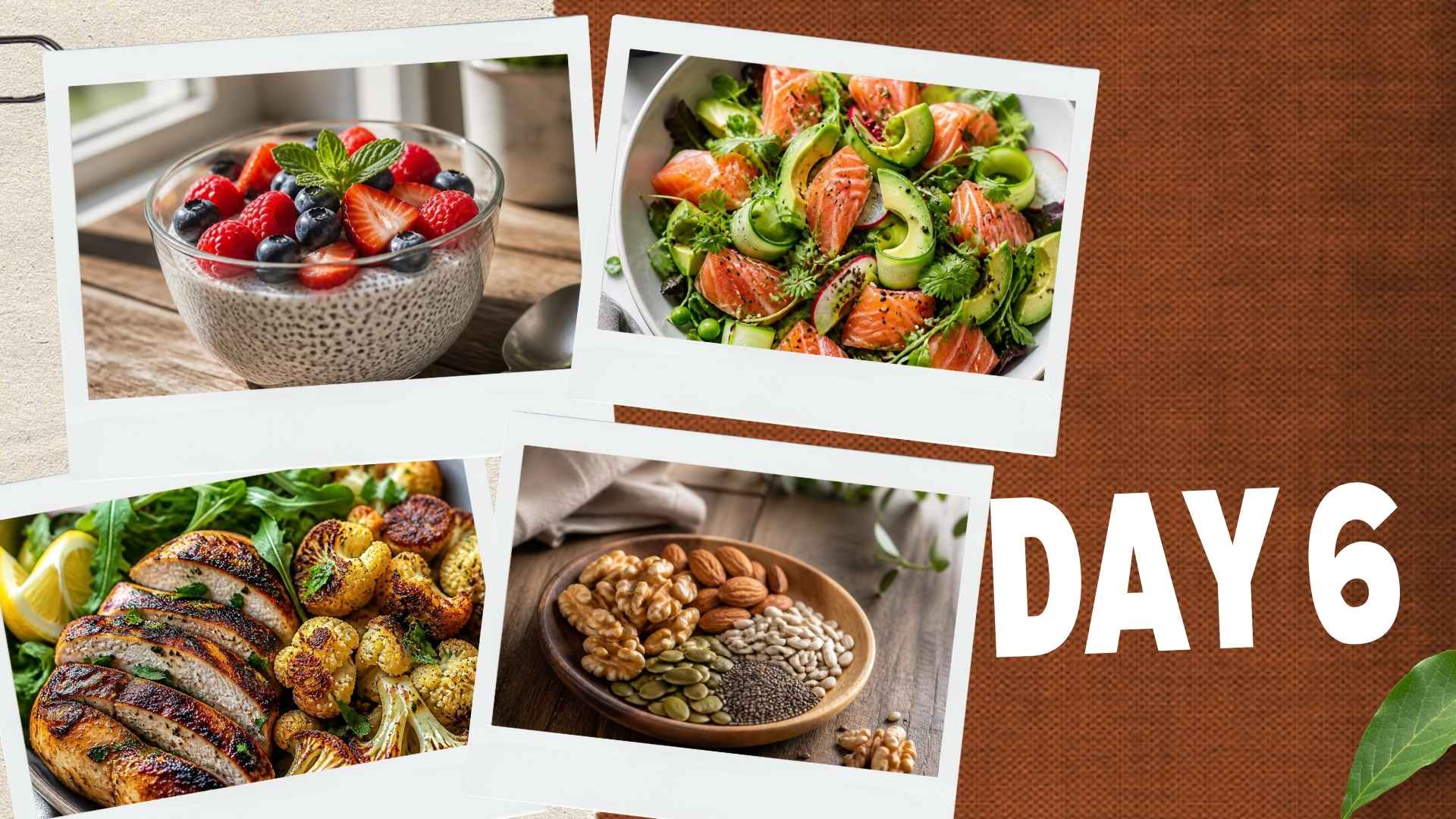
- Breakfast: Chia pudding.
- Mix chia seeds with unsweetened milk or a suitable alternative and allow the mixture to thicken in the refrigerator. Add a modest portion of berries or cinnamon if desired.
- Lunch: Salmon salad with cucumber and avocado.
- Use leftover cooked salmon or canned salmon with leafy greens and cucumber. Add avocado and an olive oil dressing in an amount that fits your needs.
- Dinner: Grilled chicken with roasted cauliflower and leafy greens.
- Season chicken with herbs and lemon. Pair it with roasted cauliflower and a fresh salad.
- Optional snack: A modest portion of nuts or seeds.
This day demonstrates how a little preparation can make several meals easier. Chia pudding can be prepared the evening before, while leftover salmon can become lunch without requiring another cooking session. If you need a more substantial meal, adjust portions or add an appropriate carbohydrate source according to your plan.
Day 7: Finish the week with flexible favorites

- Breakfast: Vegetable omelet with a side salad.
- Use leftover mushrooms, spinach, or peppers to make an omelet. This is a convenient way to use produce before it goes to waste.
- Lunch: Leftover protein and roasted vegetables.
- Combine whatever suitable chicken, fish, tofu, or other protein you have available with cooked vegetables. A fresh dressing or herbs can make the meal feel different from earlier dinners.
- Dinner: Roast fish or tofu with broccoli and zucchini.
- Season your chosen protein with lemon, garlic, and herbs. Roast or steam the vegetables, then add a suitable amount of olive oil.
- Optional snack: Plain Greek yogurt with a few berries, if appropriate for your appetite and carbohydrate target.
Day 7 is intentionally flexible. It encourages you to use ingredients you have rather than buying a separate set of foods for the final day. That flexibility is important if you want your plan to work beyond one week.
Meal swaps and personalization
You do not need to follow the menu word for word. Swap foods according to allergies, dietary preferences, cost, and availability. Chicken can replace fish, tofu can replace meat, and vegetables can change with the season.
You can also adapt carbohydrate portions instead of automatically removing every grain, fruit, or legume. A suitable serving of beans or whole grains may fit a less restrictive plan, while someone with a specific medical need may require individualized guidance.
The most useful menu is one that meets your nutritional needs and makes cooking easier. Treat these seven days as a starting framework that you can repeat, rearrange, and improve.
Low Carb Grocery List and Meal Prep Plan
A plan becomes much easier to follow when your kitchen contains ingredients that work together. You don't need an expensive collection of specialty products or a pantry filled with foods labeled "keto." A few versatile staples can provide the foundation for a practical low carb diet plan.
A shopping list for the week
Use this list as a starting point, adjusting quantities for the number of people you are feeding and the portion sizes you need.
| Category | Shopping Ideas |
|---|---|
| Protein | Eggs, Chicken, Turkey, Canned Tuna or Salmon, Fresh or Frozen Fish, Tofu |
| Vegetables | Spinach, Lettuce, Broccoli, Cauliflower, Zucchini, Mushrooms, Cucumbers, Peppers |
| Dairy or Alternatives | Plain Greek Yogurt, Cottage Cheese, Suitable Cheese, Unsweetened Fortified Alternatives |
| Fruit | Berries and Other Fruit in Portions Suitable for Your Chosen Plan |
| Nuts and Seeds | Walnuts, Almonds, Chia Seeds, Flaxseeds, Pumpkin Seeds |
| Pantry Staples | Olive Oil, Vinegar, Canned Fish, Suitable Tomato Sauce, Herbs, Spices |
| Flavorings | Garlic, Lemon, Black Pepper, Paprika, Cumin, Mustard, Fresh Herbs |
Before shopping, check what you already have. If you own olive oil, spices, frozen broccoli, and canned fish, you may not need to buy them again. Choose recipes that share ingredients so you can finish packages instead of letting half a bag of produce sit unused.
How to shop on a budget
Healthy eating does not require buying every ingredient fresh or choosing premium products. Frozen vegetables, store-brand yogurt, eggs, canned fish, seasonal produce, and larger packages of ingredients you regularly use can be practical options.
Compare unit prices when possible rather than relying only on the package price. A larger container may be better value if you can finish it before it spoils. Likewise, frozen fish or vegetables may cost less than fresh options while giving you flexibility over when to cook them.
Plan around sales, but don't purchase a large quantity of unfamiliar ingredients simply because they are discounted. Your goal is a reliable set of foods you know how to prepare.
A simple weekly meal prep routine
Meal prep doesn't need to consume your entire Sunday. Start with a few tasks that remove the most friction from your week.
- Wash and prepare vegetables. Rinse suitable produce, dry leafy greens, and cut vegetables that will be used soon.
- Cook one or two protein sources. Roast chicken, boil eggs, or prepare tofu so you have ingredients ready for salads and bowls.
- Prepare versatile vegetables. Roast a tray of broccoli, cauliflower, or zucchini to use across different meals.
- Mix a basic dressing. Combine olive oil, vinegar or lemon juice, herbs, and seasonings.
- Plan leftover portions. Decide which meals will use leftovers so ingredients are not forgotten in the refrigerator.
Store cooked foods promptly in suitable containers and refrigerate them safely. Keep raw meat and seafood separate from ready-to-eat foods, and follow recognized food-safety guidance for storage and cooking.
Make meal prep flexible
Prepare ingredients rather than making seven identical containers of food if that feels repetitive. Cooked chicken can become a salad one day, and lettuce wraps the next. Roasted vegetables can accompany fish at dinner and appear in an omelet later.
Leave some room for spontaneous meals, too. If your plans change, having eggs, canned fish, frozen vegetables, or tofu available can help you put together something suitable without ordering food simply because cooking feels too difficult.
The aim is to make the convenient choice a useful choice. A small amount of planning can help a low carb meal plan for weight loss fit into real life.
Portion Sizes, Calories, and Carb Tracking
Understanding portions can help you make your eating plan more effective, but tracking shouldn't become a full-time job. Some people enjoy recording food and carbohydrate intake because it gives them a clear picture of their habits. Others find detailed logging tedious or stressful. Both experiences are valid, and the right method depends on what supports your goals without undermining your well-being.
Setting a carbohydrate target
Start by defining what you want your plan to achieve. Are you mainly reducing sugary drinks and refined snacks, or are you deliberately following a substantially lower-carbohydrate diet? Those approaches can require different levels of tracking.
There is no universal carbohydrate number that guarantees weight loss. Your needs depend on your overall diet, activity level, medical history, and other individual factors. If you have diabetes or take medication that affects blood glucose, discuss substantial carbohydrate reductions with your healthcare professional.
For general guidance, Mayo Clinic explains that low-carb diets vary in both the types and amounts of carbohydrates they include. It also recommends that people with health conditions seek professional advice before making dietary changes. (3)
Read food labels carefully
Nutrition labels help you compare products, estimate portions, and notice added sugars. Look at the serving size first. A package may contain several servings, so the displayed values may not represent the amount you typically eat.
Then consider total carbohydrate, dietary fiber, added sugars, protein, saturated fat, and sodium as relevant to your plan. Foods marketed as low-carb are not automatically more nutritious than their alternatives. A product may have fewer carbohydrates but still contain substantial energy, sodium, or saturated fat.
Be cautious with net carb calculations, too. Definitions and labeling practices may vary, and some marketed calculations subtract ingredients that do not affect everyone in the same way. For ordinary food planning, reading the full label and considering the overall nutritional value is often more useful than relying on one number.
Manage protein and fat portions
Protein foods come in different forms, from lean fish and poultry to eggs, cheese, tofu, and fattier cuts of meat. Their energy content can differ considerably. The same is true for oils, nuts, seeds, avocado, and creamy sauces.
For example, a salad with grilled chicken, vegetables, and a moderate amount of dressing can provide a balanced meal. Adding several generous handfuls of nuts, lots of cheese, and a large serving of oil dressing can substantially increase its energy content, even if the carbohydrate total remains fairly low.
This doesn't mean that fats or nuts are bad choices. It means that portion size matters in a low carb diet for weight loss, just as it does in other eating patterns. Choose amounts that make your meals enjoyable and satisfying while fitting your overall needs.
Understand calories without obsessing over them
Calories measure energy, and overall energy intake remains relevant to body weight. However, you don't necessarily have to count every calorie to improve your food choices. Some people get useful results from establishing regular meals, moderating portions, and making more nutrient-dense foods the foundation of their diet.
If you prefer a structured starting point, the National Institute of Diabetes and Digestive and Kidney Diseases provides an adult Body Weight Planner. It can help estimate energy needs for reaching and maintaining a weight goal. It is not intended for children, pregnant people, or breastfeeding people, and it does not replace individualized medical advice. (4)
If tracking helps you understand your habits, use it as information rather than a judgment of your worth. If it creates anxiety, encourages excessive restriction, or becomes compulsive, consider a less detailed approach and seek support where appropriate.
Track progress in more than one way
The scale provides one measurement, but it doesn't explain every change in your body. Water retention, digestion, sodium intake, menstrual cycle related changes, and other factors can cause short-term fluctuations.
You may also track:
- How consistently you prepare meals.
- Whether you feel comfortably satisfied after eating.
- Your energy during ordinary activities.
- Your ability to maintain enjoyable physical activity.
- Whether your eating pattern is becoming easier to follow.
Choose one or two helpful measures without making your day revolve around them. Give your plan enough time to evaluate its overall direction, and avoid changing several things at once in response to a single weigh-in.
Vegetarian, Dairy-Free, and Other Low Carb Variations
A low carb diet for weight loss doesn't have to revolve around chicken, eggs, cheese, and fish. You can adapt the same basic approach to vegetarian meals, dairy-free eating, and a variety of cultural food traditions. The trick is to plan around the nutrients your usual choices provide, then find suitable alternatives instead of simply removing ingredients. That matters because a diet can be low in carbohydrates and still fall short on protein, fiber, or certain vitamins and minerals.
Vegetarian and plant-forward options
Eggs and unsweetened dairy products can be useful protein sources for vegetarians who include them in their diet. For those who prefer plant-based meals, tofu, tempeh, and some soy products can provide protein without requiring large portions of grains or beans.
You can build a simple vegetarian meal with tofu, broccoli, mushrooms, and zucchini, seasoned with garlic and ginger. Another option is an omelet with spinach and peppers, served with a side salad. Plain Greek yogurt with a suitable portion of berries and seeds can work for breakfast or as a snack if you include dairy.
Beans, lentils, and chickpeas also deserve consideration. Although they contain carbohydrates, they provide fiber and other nutrients. Depending on your chosen carbohydrate target, smaller portions may fit into your eating pattern. A strict approach that excludes every legume can make a vegetarian diet harder to balance, so it's worth choosing a level of carbohydrate restriction that supports adequate nutrition.
Dairy-free alternatives
If you avoid dairy because of an allergy, intolerance, preference, or other reason, look for alternatives that match your nutritional needs. Unsweetened fortified soy milk may be a useful option, while other plant-based beverages can vary widely in protein content.
You can prepare creamy dressings with avocado, tahini, or blended tofu, depending on your preferences and portion needs. Coconut products may also be suitable for some recipes, although they can contain considerable saturated fat. Compare nutrition labels rather than assuming that all dairy-free products are nutritionally equivalent.
Calcium and vitamin D deserve particular attention when dairy is excluded. A varied eating pattern with suitable fortified foods may help, while some people may need individualized advice from a qualified healthcare professional.
Gluten-free and allergy aware substitutions
A low-carb diet is not automatically gluten-free, dairy-free, or free of other allergens. If you have celiac disease or a diagnosed food allergy, read labels and follow appropriate precautions to avoid exposure.
Naturally suitable foods may include eggs, plain fish, poultry, tofu, and many vegetables, depending on the particular restriction. Packaged sauces, marinades, seasonings, and meat substitutes require more careful checking because ingredients can vary.
Building variety into your plan
The simplest way to avoid repetitive meals is to rotate protein sources, vegetables, seasonings, and cooking methods. Roast tofu with paprika one day, prepare a ginger flavored stir-fry another day, and use the remaining ingredients in a salad or vegetable bowl.
A healthy eating pattern should be broad enough to meet your nutritional requirements while remaining enjoyable. If a very restrictive approach leaves you with few suitable foods, consider whether a more flexible low carb diet plan would better serve your long-term needs.
Practical Tips for Following a Low Carb Diet Successfully
The first few days of a new eating pattern can feel exciting. You buy fresh vegetables, prepare recipes, and imagine how organized the entire week will be. Then a busy afternoon arrives, dinner runs late, or somebody brings pastries to the office. This is where a realistic low carb diet for weight loss needs to work differently from a perfect looking meal plan on paper. Instead of depending on motivation every day, build routines that make suitable choices easier when life gets unpredictable.
Start gradually instead of changing everything
If you're used to eating a large amount of refined carbohydrates, you may find it easier to begin with a few specific changes. Replace a sugary drink with water, add a protein source to breakfast, or include more vegetables at dinner.
Once those changes become familiar, choose another habit to work on. This approach gives you time to learn which meals are satisfying and which ingredients you genuinely enjoy. It also lets you identify problems early rather than feeling that you have failed because you couldn't maintain an entirely new routine.
For many people, reducing carbohydrate intake gradually is less disruptive than making a sudden, dramatic change. If you are considering a very restrictive plan or have a medical condition, discuss the approach with a qualified professional first.
Handle cravings and hunger realistically
Cravings do not necessarily mean that you lack discipline. They can reflect habit, stress, limited sleep, food availability, or genuine hunger. Sometimes the problem is as simple as eating a meal that isn't substantial enough.
Review your meals if you frequently feel hungry soon after eating. Are you including a suitable protein source? Are your vegetable portions adequate? Have you cut so many foods that the menu no longer satisfies you?
Some practical options include:
- Prepare a snack in advance for times when you regularly become hungry.
- Eat balanced meals rather than relying on coffee to get through the morning.
- Keep convenient foods such as boiled eggs, plain yogurt, or suitable vegetables available.
- Allow flexibility for enjoyable foods instead of creating rules that make ordinary eating feel like failure.
If cravings are intense or the diet leaves you preoccupied with food, that is a reason to reassess the plan, not necessarily to impose stricter rules.
Make eating out less complicated
Restaurant meals can fit into many low-carb eating patterns. Look for meals built around fish, chicken, eggs, tofu, or another protein, with vegetables or salad. Request dressings or sauces separately when that helps you manage portions, and ask about ingredients if you have an allergy or specific dietary requirement.
You don't have to order the plainest dish on the menu. Herbs, spices, grilled vegetables, and suitable sauces can add flavor. You might also choose a smaller portion of rice, bread, or potatoes rather than removing those foods entirely, depending on your target.
Social occasions deserve the same flexibility. If you attend a family meal or birthday celebration, choose foods you enjoy, pay attention to your appetite, and return to your usual routine at the next meal. One meal doesn't determine the outcome of a long-term eating pattern.
Save time and money
The most useful ingredients are often the simplest. Eggs, canned fish, frozen broccoli, cabbage, seasonal vegetables, tofu, and store-brand yogurt can support a variety of meals without requiring expensive specialty products.
Choose two or three recipes that share ingredients. If you buy spinach for breakfast omelets, you can also use it in a lunch salad. Roasted chicken can supply protein for multiple meals, and a large tray of vegetables can serve as dinner one night and a lunch side the next.
If cooking every day isn't realistic, keep a few quick combinations in mind:
- Eggs with spinach and mushrooms.
- Tuna with leafy greens, cucumber, and dressing.
- Tofu with frozen stir-fry vegetables.
- Plain yogurt with seeds and a suitable portion of berries.
These are not elaborate recipes, but reliable meals are often more helpful than complicated dishes that require a special shopping trip.
Deal with setbacks without starting over
You may eat a meal that doesn't match your plan, forget to prepare lunch, or spend a week with less time for exercise. None of these situations means you have to start again from zero.
Return to your ordinary meal structure, identify what made the routine difficult, and decide whether a practical adjustment would help. Perhaps you need simpler dinners, a more filling breakfast, or a grocery list that includes convenient alternatives.
A sustainable plan should accommodate real life. The goal is consistency over time, not perfect compliance with every rule.
Be flexible when traveling or working unusual hours
Pack useful snacks when appropriate, look for meals that include protein and vegetables, and avoid assuming that every day must follow the same schedule. If your routine changes, your plan can change with it.
Ultimately, the strongest low carb diet for beginners is one that can survive busy days, restaurant meals, family preferences, and occasional surprises. Flexibility makes it easier to return to healthy habits without turning one difficult day into an entire difficult week.
Exercise, Sleep, and Stress Management During Weight Loss
Food choices matter, but they are only one part of weight management. Physical activity, sleep, and stress can influence your energy, routines, appetite, and ability to follow your plan. A low carb diet for weight loss does not need to be paired with extreme exercise or an elaborate wellness routine. Small, repeatable habits can support both health and consistency.
Choose movement you can maintain
Walking is a simple starting point for many adults. You might take a brisk walk after lunch, use the stairs when practical, or spend a few minutes moving between periods of sitting. If you already exercise regularly, continue with activities you enjoy while paying attention to how your body responds to changes in eating patterns.
Resistance exercise can also be useful during weight management because it helps maintain strength and supports muscle health. Depending on your experience and medical circumstances, this might include body weight exercises, resistance bands, or weight training. Start at a suitable level and increase activity gradually rather than trying to compensate for food intake with excessive workouts.
The CDC explains that physical activity offers benefits beyond weight management, including support for sleep, cardiovascular health, and muscle function. How much activity is appropriate varies from person to person. (5)
Give sleep enough attention
When your schedule is demanding, sleep can be one of the first habits to suffer. But consistently inadequate sleep may make it harder to maintain routines, manage hunger, and find energy for movement.
Build a bedtime routine that fits your circumstances. A regular sleep schedule, a comfortable sleeping environment, and less stimulating activity close to bedtime may help. If sleep problems persist, seek appropriate medical advice rather than assuming you simply need more willpower.
Manage stress without using food rules as punishment
Stress can change eating patterns in different ways. Some people snack more when overwhelmed, while others lose their appetite or skip meals. Notice your own pattern and prepare a realistic response, such as taking a short walk, contacting a supportive friend, practicing relaxation, or arranging more manageable meal preparation.
You don't need to optimize every part of your life simultaneously. Start with a meal routine and one or two habits you can maintain. Over time, these can work together to support health and weight management.
Potential Benefits and What the Research Says
Interest in low carb foods for weight loss often comes from reports of rapid results or improved blood sugar levels. Research suggests that some low-carbohydrate diets can be useful for certain people, but the results depend on the precise diet, the comparison group, the length of follow-up, and the outcomes measured. Understanding those distinctions helps you evaluate diet claims without assuming that every positive result applies to everyone.
Short-term weight loss
Some people experience greater initial weight loss when they substantially reduce carbohydrate intake. Early changes in glycogen and associated water can contribute to the number on the scale, and changing food choices may also reduce overall energy intake.
However, initial changes do not tell you exactly how much body fat has been lost. Over time, weight change depends on factors such as energy intake, activity, adherence, and individual circumstances. The early speed of one eating pattern doesn't necessarily determine which approach will produce the best long-term result.
What recent evidence suggests
A 2026 systematic review and meta-analysis of randomized trials compared ketogenic diets with higher-carbohydrate diets under comparable prescribed energy conditions. The review reported an average additional weight reduction of approximately 1.49 kilograms for ketogenic diets, but rated the evidence as low certainty. The authors highlighted the predominantly short-term evidence and limitations in understanding actual energy and protein intake, body composition, and the durability of the effect. (6)
There is an important distinction here: the study examined ketogenic diets, not every form of moderate low-carb eating. It also doesn't mean that a particular individual should expect to lose an additional 1.49 kilograms. Study averages cannot predict personal results with that level of precision.
The broader lesson is that a lower-carbohydrate approach may suit some people, but its effectiveness needs to be considered alongside nutritional quality, safety, preferences, and long-term adherence.
Blood sugar, triglycerides, and other health markers
Changing carbohydrate intake can affect markers such as blood glucose and triglycerides in some people. The effect depends on the particular diet and the individual. A person replacing sugary beverages and refined snacks with balanced meals may improve their overall eating pattern, while a diet that relies heavily on saturated fat or excludes too many nutrient-rich foods may create other concerns.
People managing diabetes should be particularly cautious when changing carbohydrate intake because the change can affect medication requirements and blood glucose. A healthcare professional can help determine an appropriate approach and monitoring plan.
Why studies produce different results
Studies vary in their duration, participants, prescribed diets, food quality, adherence, and comparison groups. A tightly controlled short-term intervention may not reflect what happens when people choose and prepare meals in their normal environment for a year or longer.
It is also useful to distinguish weight loss from changes in blood lipids, blood pressure, glucose regulation, and other outcomes. Improvements in one marker don't automatically establish that every part of a diet is beneficial.
Harvard's Nutrition Source emphasizes that low-carbohydrate diets can be designed with different food qualities and that the choices of fats and protein sources matter. (7)
Food quality should remain central
A balanced low carb diet plan should emphasize nutrient-rich foods, including non-starchy vegetables, suitable protein sources, nuts, seeds, and unsaturated fats. Depending on the plan, it may also include fruit, beans, and whole grains in appropriate portions.
Reducing carbohydrates doesn't mean you need to replace them with unlimited quantities of butter, cheese, processed meat, or oil. Nor does it mean that all grain foods or fruit automatically undermine weight loss.
The most useful question is whether your dietary pattern supports your health and is realistic enough to maintain. Evidence can guide your decisions, but your individual needs determine how a particular approach should be adapted.
Side Effects, Risks, and Nutritional Gaps
A low carb diet for weight loss can be a practical option for some adults, but more restrictive versions are not suitable for everyone. Reducing carbohydrate intake substantially changes the foods you eat, and those changes can affect digestion, energy levels, nutrient intake, and medication needs. Before making a significant change, think about both what you plan to remove and what you will eat instead.
Possible early side effects
Some people experience headache, tiredness, dizziness, constipation, or changes in exercise performance when they substantially reduce their carbohydrate intake. Experiences vary, and symptoms should not automatically be dismissed as a normal adjustment period.
Changes in fluid intake, total food intake, meal timing, and the types of foods eaten may all play a role. If you feel unwell, review the change you made and consider seeking medical advice, particularly if symptoms are persistent, severe, or accompanied by other concerning signs.
Avoid trying to push through significant symptoms simply because a diet promises fast results. A plan that leaves you struggling to function comfortably may require adjustment or may not be appropriate for you.
Protect fiber and micronutrient intake
One common mistake is removing several food groups without replacing the nutrients they provide. If you eliminate most fruits, vegetables, legumes, and whole grains, it may become harder to obtain adequate fiber and a variety of vitamins and minerals.
To help maintain nutritional quality, build meals around a range of vegetables and include suitable sources of protein, unsaturated fats, and other nutrient-rich foods. Depending on your selected carbohydrate target, portions of berries, beans, seeds, or whole grains may also fit.
Fiber deserves particular attention because some people experience constipation after changing their eating pattern. Vegetables, seeds, nuts, and other appropriate fiber sources can help, but increase fiber intake in a way that suits your digestive needs and drink sufficient fluids. Seek professional guidance if symptoms persist.
Pay attention to dietary fat and cholesterol
A lower-carbohydrate diet can become unbalanced if you replace many carbohydrate foods with large quantities of butter, cream, fatty processed meats, and other foods high in saturated fat. Harvard's Nutrition Source emphasizes that the quality of protein and fat sources matters when evaluating low-carb dietary patterns.
Consider emphasizing olive oil, nuts, seeds, avocado, fish, and other suitable sources of unsaturated fats. If you have elevated cholesterol or a history of cardiovascular disease, ask your healthcare professional whether a proposed eating pattern fits your needs. Some people experience different changes in blood lipids, so individualized monitoring may be appropriate.
Hydration and electrolytes
Drink fluids regularly and pay attention to your needs, particularly when exercising, working in hot conditions, or experiencing illness. You do not need to take electrolyte supplements automatically just because you are following a low-carb diet.
Excessive or unnecessary supplementation can create problems, particularly for people with certain health conditions or medication requirements. If you experience persistent dizziness, weakness, or other concerning symptoms, seek appropriate advice instead of assuming that more salt or supplements will solve the problem.
Medication considerations
Reducing carbohydrates substantially can change blood glucose levels and may affect the requirements for insulin or other glucose-lowering medicines. Some medications used for blood pressure may also need review if major dietary changes affect blood pressure or fluid balance.
Do not change or stop prescribed medication on your own. Speak with your clinician before beginning a restrictive eating plan, especially if you use diabetes medication or have other medical conditions.
When to reconsider the plan
Ask whether the diet is providing adequate nutrition, whether you feel well, and whether the routine is sustainable. Persistent constipation, ongoing fatigue, worsening exercise tolerance, excessive food preoccupation, or unexplained changes in your health deserve attention.
You do not need to prove that you can follow the strictest possible version of a diet. A less restrictive, more balanced approach may be more appropriate, and professional support can help you decide what adjustments make sense.
Who Should Speak With a Healthcare Professional First?
For many adults, reducing added sugars and improving overall food quality can be reasonable steps toward healthier eating. However, a restrictive low carb diet plan is not a universal recommendation. Medical conditions, medications, life stage, and nutritional requirements can substantially affect what is appropriate. If any of these factors apply to you, personalized advice is more useful than following a generic online meal plan.
People with diabetes or taking glucose-lowering medication
Carbohydrate intake affects blood glucose, and reducing it substantially may change how much medication a person needs. Insulin and some other glucose-lowering medicines can increase the risk of hypoglycemia if food intake changes without an appropriate treatment adjustment.
If you have diabetes, discuss your proposed plan with your healthcare professional before making substantial dietary changes. Ask whether medication adjustments, glucose monitoring, or additional follow-up are needed. Don't independently change doses to match an online diet plan.
Pregnancy, breastfeeding, and younger people
Pregnancy, breastfeeding, childhood, and adolescence involve specific nutritional requirements. A restrictive weight loss diet may make it more difficult to meet those needs, so general internet guidance should not replace advice from a qualified healthcare professional.
A flexible, nutrient-rich eating pattern tailored to the individual is more appropriate than assuming that the same carbohydrate target works at every stage of life.
People with kidney, liver, cardiovascular, or other health conditions
Existing conditions can influence suitable protein intake, fluid management, electrolyte balance, and the choice of dietary fats. For example, someone with kidney disease may need individualized guidance about protein and certain minerals. A person with cardiovascular disease may need to consider both blood lipids and the quality of the fats included in the diet.
Your medical history matters more than a generic list of foods labeled low-carb. Mayo Clinic advises discussing dietary approaches with a healthcare professional, particularly when health conditions such as diabetes, heart disease, or kidney disease are involved.
People with medication or nutritional concerns
If you take regular medication, ask whether changes in carbohydrate intake, meal timing, or fluid balance could affect your treatment. If you've experienced significant unintentional weight changes or have concerns about your relationship with food, seek individualized guidance before starting a restrictive plan.
Preparing for an appointment
You can make the conversation more useful by bringing a brief description of your usual meals, your proposed changes, and your health goals. Ask about an appropriate carbohydrate range, nutritional adequacy, medication monitoring, and when to review progress.
The purpose of professional guidance is not to prevent you from making healthy changes. It's to help you choose an approach that is safe, practical, and appropriate for your circumstances.
Weight Loss Plateaus and Maintaining Results
You've followed your low carb diet for weight loss for several weeks, prepared meals ahead of time, and started noticing changes. Then the scale stops moving. It's easy to assume you've made a mistake or that your plan has stopped working. In reality, weight management is rarely a perfectly straight line, and a short period without change doesn't necessarily mean you need a stricter diet.
Understanding a weight loss plateau
Body weight naturally fluctuates, even when your eating habits remain consistent. Changes in hydration, sodium intake, digestion, hormones, and other factors can affect the scale from one day to the next.
As your body weight changes, your energy requirements may also change. In addition, routines that initially helped you reduce your overall intake may become less consistent over time. A plateau can therefore have several explanations rather than one simple cause.
Before making changes, look at the overall trend and consider how long progress has remained stable. A few days of unchanged weight are not enough to establish that your approach needs a major adjustment.
Review common obstacles
Start by checking your routine rather than immediately eliminating more foods. Consider whether you have been eating larger portions, using more cooking oil, drinking more caloric beverages, or snacking more frequently without noticing.
Other factors may be involved, too:
- Your daily movement may have decreased because of work, travel, or a schedule change.
- You may be sleeping less or experiencing more stress.
- Restaurant meals or packaged foods may be contributing more energy than expected.
- A medical condition or medication may be affecting weight management.
These are possibilities to investigate, not reasons to blame yourself. If weight changes are unexpected or persistent, a qualified healthcare professional can help assess potential medical contributors.
Make adjustments without extreme restriction
If your plan is nutritionally balanced but progress has slowed, consider returning to consistent meals and reviewing portions. You might prepare more meals at home, include vegetables more regularly, or use a suitable protein source to make meals satisfying.
You don't necessarily need to eliminate fruit, cut out another entire food group, or reduce portions dramatically. Extreme restriction can make an eating plan harder to sustain and may create nutritional gaps.
If you want more structured feedback, a registered dietitian can help assess your eating pattern and make adjustments that reflect your goals and health needs. That can be more useful than repeatedly switching between restrictive diets.
Maintain progress after weight loss
Weight maintenance is a separate skill from losing weight. You'll need eating habits that fit changing schedules and appetite levels, along with realistic approaches to activity, sleep, and food preparation.
Consider keeping a small collection of reliable meals that you enjoy and can prepare with minimal effort. Continue planning groceries, make use of leftovers, and have convenient ingredients available for busy days. Check your habits periodically, but avoid responding to every small scale fluctuation with a drastic change.
The CDC recommends maintaining a realistic eating pattern, planning for changes in routine, staying physically active, and monitoring relevant habits over time.
Build a long-term routine rather than a temporary diet
Ask yourself which parts of your low carb diet plan are genuinely helpful. Perhaps having eggs and vegetables for breakfast reduces morning decision-making, or preparing protein and vegetables in advance makes lunch easier. Keep the habits that work, and modify the parts that feel unnecessarily restrictive.
You may also decide to include more carbohydrate-containing foods as your needs and preferences change. Maintenance doesn't require following precisely the same menu forever. It requires an eating pattern that supports your health and is practical over the long term.
A plateau isn't a verdict on your effort. Use it as an opportunity to review what is happening, make measured adjustments, and seek support if you need it.
The Bottom Line: Make Your Low Carb Plan Work for You
A low carb diet for weight loss can provide a practical framework for improving food choices, managing portions, and creating satisfying meals. The most useful approach isn't necessarily the one with the fewest carbohydrates. It's the one that provides adequate nutrition, fits your preferences, and supports habits you can maintain.
Start with simple changes: choose suitable protein sources, add a variety of non-starchy vegetables, reduce added sugars, and build a grocery list around meals you actually enjoy. Use the 7-day menu as inspiration rather than a rigid prescription, and adjust portions and ingredients according to your needs.
Remember that weight loss varies from person to person, and early changes on the scale do not necessarily represent body fat loss. Prioritize consistent habits over dramatic promises, and ask a healthcare professional for guidance when medical conditions or medications affect your choices.
Your next step: Choose three meals from the weekly plan, write down the ingredients you need, and prepare them for the coming days. You don't have to change everything overnight. A realistic plan built around repeatable habits is a much better starting point than a perfect diet you cannot sustain.
Frequently Asked Questions About a Low Carb Diet for Weight Loss
How many carbs should I eat per day to lose weight?
There is no single daily carbohydrate target that guarantees weight loss for everybody. Appropriate intake depends on your health, activity level, overall diet, and preferences. Some people prefer a moderate approach that reduces added sugars and refined starches, while others follow a substantially lower-carbohydrate plan. The overall quality of your food choices and your ability to maintain the approach also matter. If you have diabetes, take glucose-lowering medication, or have another relevant health condition, consult your healthcare professional before making substantial changes to carbohydrate intake.
What foods can I eat on a low-carb diet?
Common choices include eggs, fish, chicken, turkey, tofu, non-starchy vegetables, plain yogurt, suitable cheeses, nuts, seeds, avocado, and olive oil. Berries and other fruit may fit in portions suited to your selected plan. Some people also include measured servings of beans, lentils, or whole grains, especially when following a less restrictive approach. Check packaged food labels and pay attention to added sugars, serving sizes, and total carbohydrates. Aim for variety rather than building every meal around just one or two foods.
Can you lose weight on a low-carb diet without counting calories?
Yes, some people lose weight without formally recording calories. Changing food choices, reducing sugary drinks, moderating portions, and building satisfying meals may help them consume less energy overall. However, carbohydrate restriction doesn't eliminate the role of energy balance, and a low-carb diet does not guarantee weight loss without calorie tracking. You can begin with consistent meals and sensible portions, then evaluate your progress over time. If you prefer a more structured approach, a healthcare professional or registered dietitian can help you choose a suitable tracking method.
What is the difference between a low-carb diet and a keto diet?
A low-carb diet reduces carbohydrate intake, but the amount allowed varies considerably between plans. A ketogenic, or keto, diet is a more restrictive version designed to encourage ketosis, in which the body produces ketones as part of its energy metabolism. Many general low-carb plans permit more carbohydrates and may include selected fruit, legumes, or whole grains. Keto also requires more attention to maintaining a very low carbohydrate intake. Neither approach is automatically best for everyone, and people with health conditions or relevant medications should seek individualized advice before beginning a restrictive diet.
How much weight can you lose in one week on a low-carb diet?
There is no reliable amount that everyone can expect to lose in seven days. Results depend on starting circumstances, overall energy intake, activity, hydration, and other individual factors. Some people experience a relatively quick initial decrease on the scale because changes in glycogen and associated water affect body weight. That is not equivalent to losing the same amount of body fat. A gradual, sustainable approach is generally preferable to pursuing extreme short-term results. Focus on consistent eating habits, appropriate portions, and longer-term trends rather than a guaranteed weekly number.








0 Comments