
Love the idea of smoothies but not the carb-count? You’re in the right place. This guide shows you how to blend creamy, satisfying drinks that keep carbs low, favor healthy fats, and fit a ketogenic lifestyle — without tasting like diet chalk. Ketosis is the metabolic state produced by a very-low-carb, higher-fat eating pattern, and properly built drinks can be a simple way to meet your macros while staying full and focused.
Who this guide serves: beginners who need clear, practical rules; busy people who want fast, make-ahead keto breakfasts and on-the-go shakes; and women 50+ who often want recipes tailored for appetite control, bone and heart health, and changing energy needs. Because older adults may have different cardiovascular and medication considerations, I’ll flag when a recipe or ingredient warrants extra caution or a quick chat with your clinician.
What you’ll get here: a short, non-judgy primer on keto drink building blocks (bases, fats, proteins, sweeteners), macro-friendly recipes (from quick coffee boosts to meal-replacement smoothies), make-ahead and freezer tips, shopping lists, and plain-English safety notes so you can decide what works for your goals. Practical, evidence-aware pointers are woven through the recipes so you can blend confidently — whether you’re trying keto for weight, blood-sugar control, or just better morning energy.
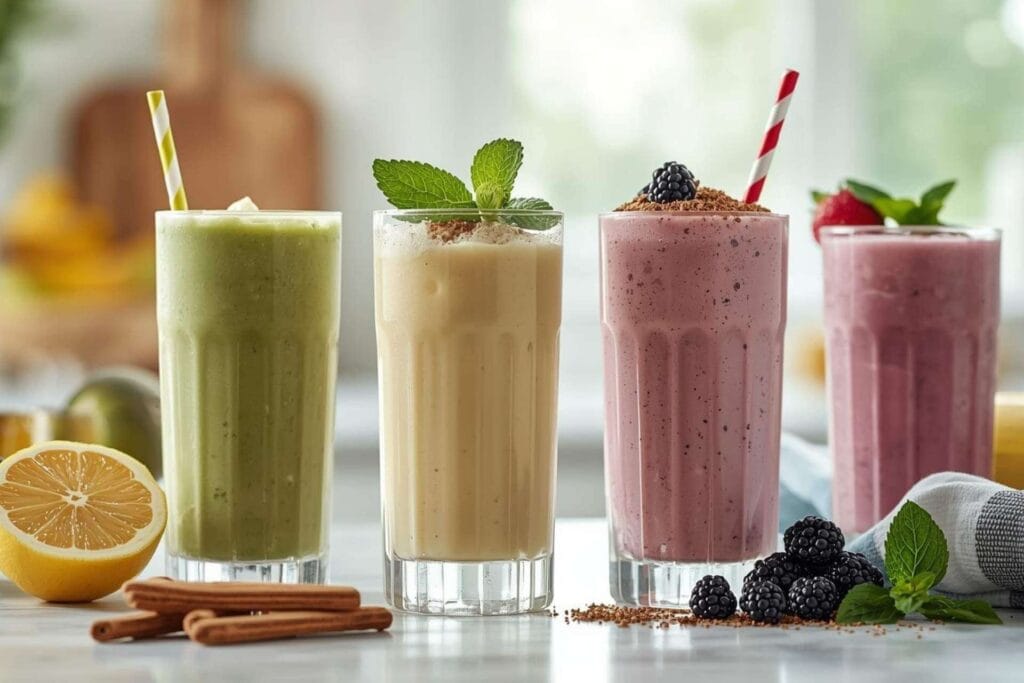
What Is a Keto Drink or Smoothie? (Basics & Goals)
A keto drink or smoothie is simply a blended beverage that’s been built to fit a ketogenic eating pattern: very low in usable carbohydrates, higher in fats, and moderate in protein so the body can stay in — or move toward — ketosis (burning fat for fuel and producing ketones). In practice, that means choosing bases, add-ins, and portion sizes so the drink contributes to your daily macro targets instead of blowing your carb limit. (1, 2)
Core features — what makes a smoothie “keto”
- Low net carbs. Net carbs are the carbs that affect blood sugar (typically calculated as total carbs minus fiber and sometimes minus certain sugar alcohols). Keto smoothies aim to keep net carbs per serving low — usually single-digit grams or at most low teens, depending on your daily limit. (3, 4)
- Higher fat provides energy and satiety. Healthy fats (avocado, MCT oil, nut butters, coconut cream, heavy cream) make the texture rich and raise calories without adding carbs. The ketogenic approach often targets a high percentage of calories from fat. (5)
- Adequate or tailored protein. Powdered proteins (whey isolate, collagen, pea protein) or whole-food proteins (Greek yogurt, nut butter) turn a drink into a meal replacement and help preserve muscle. Protein is kept moderate so it doesn’t convert to glucose in excess and interfere with ketosis for some people. (6, 7)
Typical macro ranges for keto (how smoothies fit in)
There’s no single “one-size-fits-all” ratio, but many authoritative sources summarize the ketogenic diet as roughly:
- 70–80% of calories from fat
- 5–10% of calories from carbohydrates
- 10–20% of calories from protein.
Translating those percentages into a single smoothie depends on how many calories you want it to supply (snack vs meal replacement). Below are practical target ranges commonly used when building a keto smoothie:
- Net carbs: ~3–12 g per serving (aim low if your daily allowance is ≤20–30 g).
- Protein: 15–30 g for a meal-replacement smoothie (less if it’s a small snack). (8)
- Fat: 15–40 g depending on whether the smoothie is a snack or a full meal (higher fat = more calories and greater satiety).
Why liquids matter on keto (satiety, blood sugar, and calories)
Two practical things to remember about liquid calories:
- Satiety can differ by form. Some studies and reviews show liquids are less reliable fillers than solids, which means a high-calorie drink might not reduce your next meal intake as much as an equivalent solid food would. The evidence is mixed (some trials show little difference), but the consensus for practical dieting is: if you rely on smoothies for full meals, add protein, fiber, and fat to increase satiety. (9, 10)
- Blood sugar and absorption depend on composition and viscosity. A smoothie made mostly of fruit or juice can spike glucose. A properly built keto smoothie that contains fiber (e.g., spinach, chia), fat (avocado, MCT oil), and protein will blunt the glycemic response and be much friendlier to ketosis. In short, what’s in the glass matters far more than the fact that it’s liquid. (11)
Practical takeaway: make your smoothie thicker (frozen avocado, chia, psyllium), include a protein source, and add fat — this increases oral exposure time, slows gastric emptying, and helps you feel fuller longer. Studies also show MCTs may increase perceived fullness relative to some long-chain fats, which is why MCT oil is a popular add-in (start with small amounts to test tolerance). (12, 13)
Quick mini-calculation: building a 400 kcal keto smoothie (step-by-step)
Below is a concrete example so you can see how percentages turn into grams — I’ll show every step.
Goal: 400 kilocalories (a typical meal-replacement smoothie). Choose a macro split close to many keto recommendations: 70% fat / 20% protein / 10% carbs.
- Calories from fat: 70% of 400 kcal = 0.70 × 400 = 280 kcal from fat.
- Convert fat calories to grams: fat has 9 kcal per gram.
- So 280 ÷ 9 = 31.111... g fat. (9 × 31 = 279; remainder 1 → 31.11 g rounded).
- Calories from protein: 20% of 400 kcal = 0.20 × 400 = 80 kcal from protein.
- Convert protein calories to grams: protein has 4 kcal per gram.
- So 80 ÷ 4 = 20 g protein.
- Calories from carbs: 10% of 400 kcal = 0.10 × 400 = 40 kcal from carbs.
- Convert carb calories to grams: carbs have 4 kcal per gram.
- So 40 ÷ 4 = 10 g total carbs. If most or all of that is fiber or sugar-alcohol friendly, the net carbs could be lower — but assume ~10 g net carbs in this example unless you add fiber that reduces usable carbs. (14)
So a 400 kcal keto smoothie with a 70/20/10 split roughly equals 31 g fat / 20 g protein / 10 g carbs. Adjust portion sizes, protein powders, and fat sources to hit these numbers in real recipes.
Practical building rules (so you don’t do the math every time)
- Start with a low-carb base: unsweetened almond milk, macadamia milk, diluted coconut milk, or water.
- Add a fat: 1/4–1/2 avocado, 1 tbsp MCT oil, 1–2 tbsp nut butter, or 2–4 tbsp heavy cream, depending on caloric needs.
- Add protein: 1 scoop whey isolate, collagen, or pea protein (usually 15–25 g protein per scoop).
- Add fiber & body: a handful of spinach, 1 tbsp chia or flax, or a teaspoon of psyllium for thickness.
- Sweeten only if needed with non-nutritive sweeteners (stevia/monk fruit/erythritol) and keep berries to small portions.
Final notes & safety flags
- If you’re aiming for strict ketosis (e.g., therapeutic uses or tight metabolic control), your acceptable carbs may be <20 g/day, so a smoothie with 10 g net carbs is a big chunk of that day’s allotment. Track carefully.
- People with diabetes, kidney disease, or certain lipid concerns should consult their healthcare provider before adopting frequent high-fat or high-protein meal-replacement drinks — ketogenic diets can raise LDL cholesterol in some people and change medication needs.
Keto Macros Applied to Drinks (How to Calculate Carbs, Fats & Protein)
If you want smoothies that actually fit a ketogenic diet, you’ve got to treat drinks like any other meal: count the carbs, add protein, and pack in enough fat for satiety. Below, I’ll walk you through net carbs vs total carbs, how to treat fiber and sugar alcohols, and show step-by-step macro math for two example smoothies (400 kcal and 500 kcal) so you can copy the method every time.
Net carbs vs total carbs — the rule of thumb
- Total carbs = every carbohydrate on the label (includes fiber, sugars, starches, sugar alcohols).
- Net carbs = carbs that are likely to raise blood sugar and therefore matter for ketosis. Most people calculate net carbs as:
Net carbs = Total carbs − Fiber − (some or all Sugar Alcohols). (15)
Important nuance: not all sugar alcohols behave the same. Some (like erythritol) have minimal to no blood-sugar effect and are commonly subtracted fully; others (like maltitol or sorbitol) are partially absorbed and may still raise blood sugar, so they should be treated cautiously (some people subtract half, some count them fully). Always check the ingredient list and, when in doubt, treat uncertain sugar alcohols as partially usable carbs. The FDA and diabetes organizations encourage using the Nutrition Facts panel and recognizing that net-carb math is an approximation, not a perfect clinical measure. (16, 17)
Practical label-reading steps:
- Locate Total Carbohydrate (g).
- Subtract Dietary Fiber (g).
- Subtract Erythritol (many ketoers count this as 0 g), but be cautious with maltitol/sorbitol — treat them as partially available carbs.
- Watch for hidden starches, inulin, or dextrin — these can raise carbs even if a product is labeled “keto.” (18)
Why fiber and sugar alcohols get special treatment
- Dietary fiber is poorly digested and does not raise blood sugar in the same way as digestible carbs, so it’s commonly deducted when calculating net carbs.
- Sugar alcohols are chemically different from table sugar; many are only partially absorbed and therefore have a reduced glycemic impact. Labeling rules vary, and some sugar alcohols must carry laxative warnings if overconsumed. Use caution and test how you personally tolerate them. (19, 20)
Use USDA FoodData Central for precise ingredient macros
When you build a smoothie, use a reliable database like USDA FoodData Central to look up exact grams of carbs, fiber, protein, and fat for whole foods (avocado, spinach, almond milk, etc.). That’s the best way to avoid surprises when you add up ingredients.
Example macro math — step-by-step (digit-by-digit)
Below are two complete worked examples so you can see exactly how to convert calories → macro grams for a smoothie. I’ll show each multiplication/division explicitly so there’s no arithmetic mystery.
Example A — 400 kcal smoothie (target split: 70% fat / 20% protein / 10% carbs)
- Calories from fat: 70% of 400 = 0.70 × 400 = 280 kcal.
- Convert fat kcal → grams: fat = 9 kcal per gram → 280 ÷ 9 = 31.111... g fat → round to 31.11 g fat.
- (Work shown digit by digit: 9 × 31 = 279 kcal; remainder 1 kcal → 1 ÷ 9 = 0.11 → 31.11 g)
- Calories from protein: 20% of 400 = 0.20 × 400 = 80 kcal.
- Convert protein kcal → grams: protein = 4 kcal per gram → 80 ÷ 4 = 20 g protein.
- Calories from carbs: 10% of 400 = 0.10 × 400 = 40 kcal.
- Convert carb kcal → grams: carbs = 4 kcal per gram → 40 ÷ 4 = 10 g carbs.
Result for 400 kcal (70/20/10): ≈ 31.11 g fat / 20 g protein / 10 g carbs.
This is a very common target for a meal-replacement keto smoothie; note that 10 g carbs here should ideally be mostly fiber or come from low-carb berries so net carbs remain within your daily limit. (See net-carb counting rules above).
Example B — 500 kcal smoothie (target split: 65% fat / 25% protein / 10% carbs)
- Calories from fat: 65% of 500 = 0.65 × 500 = 325 kcal.
- Convert fat kcal → grams: 325 ÷ 9 = 36.111... g fat → round to 36.11 g fat.
- (Check: 9 × 36 = 324 kcal; remainder 1 kcal → 1 ÷ 9 = 0.11 → 36.11 g)
- Calories from protein: 25% of 500 = 0.25 × 500 = 125 kcal.
- Convert protein kcal → grams: 125 ÷ 4 = 31.25 g protein.
- Calories from carbs: 10% of 500 = 0.10 × 500 = 50 kcal.
- Convert carb kcal → grams: 50 ÷ 4 = 12.5 g carbs.
Result for 500 kcal (65/25/10): ≈ 36.11 g fat / 31.25 g protein / 12.5 g carbs.
Again, aim for those carbs to be mostly fiber or low-glycemic sources so net carbs remain keto-friendly.
How to turn grams into real ingredients (quick templates)
Use these starting templates to hit the example macros. Exact grams will vary by brand/size, so plug values into USDA FoodData Central for precision.
Template to hit ~31 g fat / 20 g protein / 10 g carbs (400 kcal example):
- 1 cup unsweetened almond milk — ~1–2 g fat, 1–2 g protein, ~1–2 g carbs (low).
- 1/2 medium avocado — ~11–15 g fat, 1–2 g protein, 2–3 g net carbs (depending on size).
- 1 scoop collagen or whey isolate — ~20 g protein, 0–2 g carbs.
- 1 tbsp MCT oil or 1 tbsp almond butter — ~14 g fat (choose one).
- Small handful (1/4 cup) of raspberries or strawberries — ~2–4 g net carbs.
Template to hit ~36 g fat / 31 g protein / 12.5 g carbs (500 kcal example):
- 3/4 cup full-fat coconut milk or 1/4 cup heavy cream + 1/2 cup unsweetened almond milk — adds rich fat.
- 1 scoop whey isolate (~25–30 g protein).
- 1 tbsp almond butter (~9–10 g fat).
- 1/4 cup frozen berries + a handful of spinach (adds fiber, micronutrients, minimal carbs).
Use the USDA FoodData Central to add up the exact g of fat/protein/carbs per ingredient before blending for best accuracy.
Final practical tips (so your math matches the blender)
- Weigh or measure ingredients when you can — cups and tablespoons vary by density.
- Use a nutrition database or app (USDA, Cronometer, MyFitnessPal) to sum ingredient macros and calculate net carbs after subtracting fiber and appropriate sugar alcohols. (21)
- If you’re tracking strict ketosis (<20 g/day), aim for the lower end of the carb ranges in these examples. A 400 kcal smoothie with 10 g total carbs could take up half (or more) of a strict daily carb limit—plan accordingly.
- Test sugar alcohols in small amounts (erythritol is generally well tolerated; others may cause GI upset or raise blood sugar). Label rules and absorption rates vary; treat them carefully.
Best Bases for Keto Smoothies (Milk, Milks, and Alternatives)
Picking the right liquid base is one of the fastest ways to make a smoothie keto-friendly (or not). Below, I walk through the most popular bases — unsweetened almond milk, macadamia milk, coconut milk/cream, heavy cream, and full-fat Greek yogurt (and yogurt alternatives) — with practical pros/cons for carbs, fats, and taste so you can choose the best option for your goals.
Unsweetened almond milk — the workhorse
- Why people use it: extremely low carb, widely available, mild flavor that won’t compete with other ingredients.
- Typical macros (approx.): ~<1–2 g total carbs per cup for unsweetened commercial almond milks (varies by brand). Many brands fortify with calcium and vitamin D.
Pros
- Very low in carbs → great for strict keto.
- Low-calorie (helps keep the smoothie lighter if you want fewer total calories).
- Neutral taste — pairs with cocoa, coffee, berries, or greens without overpowering them.
Cons
- Very low in fat and protein by itself — you’ll need to add fats (MCT oil, nut butter, coconut cream) and protein (powder or yogurt) to make a meal-replacement smoothie.
- Some brands use thickeners or carrageenan (these can bother sensitive stomachs); always pick unsweetened and check the ingredient list.
Best use: thin, low-carb smoothies, coffee-based shakes, or as the liquid when you plan to add richer fats separately.
Macadamia milk — naturally rich and ultra low-carb
- Why people use it: higher fat than almond milk and often still very low in carbs, so it adds creaminess without needing MCT oil.
- Typical macros (example brand data): many unsweetened macadamia milks report ~0–1 g net carbs per cup with a few grams of fat, though formulations differ by brand. (22, 23)
Pros
- Creamy mouthfeel with more fat than almond milk → smoother, silkier smoothies.
- Very low carb when unsweetened → keto friendly.
- Mild, slightly nutty flavor that complements chocolate, vanilla, and berry blends.
Cons
- It can be pricier and less widely stocked than almond milk.
- Some versions (not typical) can include added carbs or thickeners — read labels.
Best use: richer keto smoothies where you want some fat from the base itself without adding heavy cream or MCT oil.
Coconut milk & coconut cream — thick, rich, and high in saturated fat
- Why people use it: super-creamy and naturally low in carbs (especially the canned full-fat versions used in recipes). Coconut cream gives a pudding-like texture that many ketoers love.
- Typical macros (approx., small serving): coconut milk/cream is low in carbs per tablespoon but high in fat (mostly saturated) — e.g., 1 tbsp can provide several grams of fat with minimal carbs. Always check the product label for exact numbers. (24, 25)
Pros
- Massive creaminess and stability (great for thick shakes and keto “ice cream” smoothies).
- Low-carb if you use unsweetened, full-fat canned coconut milk or cream.
- Adds a naturally sweet, tropical flavor that works well with cacao, vanilla, and berries.
Cons & cautions
- High in saturated fat. Coconut products are rich in saturated fats that can raise LDL cholesterol in some people — if you have known heart disease or high LDL, discuss frequent use with your clinician. Harvard and other sources note caution around high intake of saturated plant fats like coconut. (26, 27)
- Very caloric — a little goes a long way.
- Some “coconut milks” sold as beverages are diluted and contain added carbs — prefer canned full-fat coconut cream for thickness or unsweetened beverage varieties if you want less fat.
Best use: decadent meal-replacement smoothies, dessert-style shakes, or when you want a thick base without adding dairy.
Heavy cream — low carb, very high fat, dairy-forward
- Why people use it: nearly zero carbs and very high fat content make it an easy way to raise calories and creaminess with tiny volume.
- Typical macros: heavy cream contains ≈5–5.4 g fat per tablespoon and only ~0.4 g carbs per tablespoon — so it’s extremely low-carb but calorie-dense. (28)
Pros
- Minimal carbs → great for strict keto.
- Smooth, full-fat dairy flavor that blends well with coffee, chocolate, and nut butters.
- Small amounts give large increases in richness and calories.
Cons
- Very calorie-dense — easy to overshoot energy goals if you’re not tracking.
- Dairy — not suitable for lactose-intolerant people (though many tolerate heavy cream) and not vegan.
- Contains saturated fat (as with coconut), so monitor total daily saturated-fat intake if that’s a concern.
Best use: add a tablespoon or two to boost creaminess without raising carbs, or use as the primary fat for coffee-based keto drinks.
Full-fat Greek yogurt (and yogurt alternatives) — protein + texture, watch the carbs
- Why people use it: strained Greek yogurt adds protein, body, and tang — it can turn a smoothie into a fuller meal. Plain full-fat Greek yogurt typically has more protein and fewer carbs than regular yogurt.
- Typical macros (approx., per 100 g): around ~4 g carbs, ~9 g protein, ~5 g fat (values vary by brand and full-fat vs reduced-fat). (29, 30)
Pros
- Adds substantial protein and a thick, creamy texture (helps satiety).
- Contains probiotics (if live cultures are present), which may support gut health.
- Lower lactose and carbs than many flavored yogurts — choose plain, full-fat Greek yogurt for keto.
Cons
- Not as low-carb as unsweetened nut milks or heavy cream — portion sizes matter.
- Flavored yogurts or low-fat variants often contain added sugars; always pick plain.
- Dairy — not suitable for strict vegans or people with dairy allergies.
Alternatives: For dairy-free protein and creaminess, consider unsweetened coconut yogurt (watch saturated fat), cashew cream (soaked cashews blended with water), or pea-protein yogurt if you want plant-based options — check carbs per serving on labels. (31)
Quick comparison & pick-the-right-base rules
- If your top priority is the lowest possible carbs, use unsweetened almond milk or unsweetened macadamia milk. Both keep net carbs minimal.
- If you want max creaminess without dairy: use canned full-fat coconut milk or coconut cream — but account for saturated fat and calories.
- If you want rich dairy flavor + near-zero carbs: add heavy cream sparingly for thickness and fat.
- If you want protein and texture, use plain full-fat Greek yogurt (watch portion size for carbs).
Practical label tips (so you don’t get surprised)
- Always choose “unsweetened.” Sweetened versions add sugar and quickly bump net carbs.
- Check serving sizes. “Per cup” on a label may not match how much you actually use.
- Watch for hidden carbs: gums, maltodextrin, fruit juice concentrates, and some “natural flavors” can add carbs.
- Use USDA FoodData Central or a trusted nutrition app for exact macro lookups when you want precision.
Final health flag
Coconut products and heavy cream are common keto go-tos for creaminess, but both are higher in saturated fat, which can raise LDL cholesterol in some people. If you have existing cardiovascular risk factors or elevated LDL, talk with your healthcare provider about how often and how much of these bases to use. Harvard’s nutrition experts advise caution with frequent high-saturated-fat foods.
Fats That Make Smoothies Keto (MCTs, Avocado, Nut Butters, Oils)
Fat is the secret sauce of keto smoothies — it provides calories, keeps blood sugar steady, and makes a drink feel like a meal. Below you’ll get practical, evidence-aware guidance on which fats to use, when to use MCT oil (and how to avoid the GI fallout), realistic macros for avocado and common nut butters, and a note on saturated vs. unsaturated fats so you can make choices that match both ketosis and long-term health.
What fats do in a keto smoothie (quick)
- Raise calories without adding carbs (so you hit ketosis targets).
- Slow gastric emptying → greater satiety.
- Improve mouthfeel and flavor (the difference between “thin water” and “creamy meal”).
Use a mix of fats rather than only one source — that gives you texture, flavor, and a better balance of fatty acids.
MCT oil — when to use it, benefits, and GI cautions
What it is: MCT (medium-chain triglyceride) oil is a concentrated fat made of medium-chain fatty acids (often C8 caprylic and C10 capric acids). Unlike long-chain fats, MCTs are absorbed quickly and can raise blood ketone levels faster than most dietary fats. (32, 33)
Benefits of keto drinks
- Quick ketone boost: MCTs can raise circulating ketones, which some people use to accelerate ketosis or for a mental boost.
- Neutral taste & easy blend: MCT oil blends smoothly into coffee or smoothies and doesn’t solidify like coconut oil.
- Portable energy: because it’s rapidly metabolized, some people notice a quicker energy lift compared with long-chain fats.
GI cautions — start slow
- Common side effects at higher doses include stomach cramps, gas, bloating, and diarrhea. Clinical reviews and consumer guidance repeatedly note that MCTs are easier to absorb but can cause GI upset if you suddenly consume a lot. The usual practical advice: start with 1 teaspoon in a drink, wait a day or two, then increase gradually to 1 tablespoon (≈1 Tbsp) as tolerated. If you get loose stool, back off the dose. (34, 35)
Quick math (calories) — why MCT volume matters
- Typical fat density: 1 gram of fat = 9 kcal.
- A tablespoon of oil is roughly 14 grams of fat. So:
- 14 g × 9 kcal/g = 126 kcal from 1 Tbsp of MCT oil.
- (Step-by-step: 9 × 14 = 126.)
That’s a meaningful calorie boost for a smoothie — useful for meal replacements, less useful if you want a light snack.
Practical tips
- Use MCT when you want a fast ketone bump or lighter flavor.
- Don’t replace all your fats with MCT; include whole-food fats (avocado, nut butter) for satiety and micronutrients.
Avocado — macros, texture, and why it’s a superstar
Why it’s great: Avocado brings creaminess, fiber, potassium, and mostly monounsaturated fat — it’s a whole-food fat that also adds body and slows digestion. Hass avocado composition studies and USDA-based nutrition summaries list avocados as nutrient-dense and fiber-rich. (36, 37)
Typical macros (rounded, per 1/2 medium avocado ≈100 g):
- Fat: ≈ 14.7 g
- Total carbs: ≈ 8.5 g
- Dietary fiber: ≈ 6.7 g → so net carbs ≈ 1.8 g (8.5 − 6.7 = 1.8).
- Protein: ≈ 2.0 g.
Why the math matters — step-by-step:
- Total carbs 8.5 g − fiber 6.7 g = 1.8 g net carbs. That makes half an avocado shockingly keto-friendly while delivering ~14–15 g of fat and lots of fiber and micronutrients.
Practical use: ½ avocado (fresh or frozen) is a go-to for a thick keto smoothie — it adds healthy fats and fiber with almost no usable carbs.
Nut butters — macros and quick comparisons
Nut butters are convenient, calorie-dense, and usually low in net carbs — but they differ by nut.
Common per-tablespoon (≈15–16 g) approximations
(rounded values from USDA-derived nutrition summaries and product averages):
- Almond butter (1 Tbsp): ~8.9 g fat, 3.4 g protein, 3 g carbs (≈1.6 g fiber). Net carbs ≈ 1.4 g.
- Peanut butter (1 Tbsp): roughly 8 g fat, 3–4 g protein, 3–4 g carbs (2 g fiber per 2 Tbsp → ~1 g fiber per Tbsp). Net carbs ≈ 2 g per Tbsp (varies by added sugar). (38)
- Macadamia butter (1 Tbsp): higher fat (~12–13 g fat), lower protein (~1–2 g), carbs ≈ 2 g — so very keto-friendly for fat content (brand variability applies). (39)
Calories math example (almond butter):
- Fat grams ≈ 8.9 g → 8.9 × 9 kcal/g = 80.1 kcal from fat.
- Add protein (3.4 g × 4 kcal/g = 13.6 kcal) and carbs (~3 g × 4 kcal/g = 12 kcal) → total ≈ 105.7 kcal per tablespoon (rounded to typical label values ~98–103 kcal depending on brand).
(Work: 9×8.9=80.1; 4×3.4=13.6; 4×3=12; sum=105.7.)
Practical tip: choose natural, no-sugar nut butters (ingredients: nuts + maybe salt). Avoid varieties with added sugar, hydrogenated oils, or high amounts of seed oils.
Saturated vs. unsaturated fats — quick health notes (what to watch for)
Basic chemistry:
- Saturated fats have no double bonds (solid at room temp: butter, coconut oil).
- Unsaturated fats have one (monounsaturated) or more (polyunsaturated) double bonds and are usually liquid at room temp (olive oil, nuts, seeds, fatty fish). (40, 41)
What the evidence and major public-health bodies say
- Replacing saturated fat with polyunsaturated fat lowers LDL cholesterol and reduces cardiovascular risk markers. Harvard and nutrition reviews encourage favoring unsaturated fats (olive oil, nuts, fatty fish) over saturated fats. That doesn’t mean all saturated fat must be banned, but frequent, large doses (e.g., daily heavy use of coconut cream + butter) may raise LDL in some people.
How does that apply to smoothies?
- Use saturated-rich ingredients (coconut cream, butter) thoughtfully. They’re delicious and keto-friendly, but can increase saturated-fat load quickly.
- Favor unsaturated whole-food fats (avocado, olive oil, nut butters, macadamia) for most daily uses — they support heart health while still being keto-friendly.
- Balance: a smoothie can include a small amount of coconut cream for texture, plus avocado or almond butter for healthier monounsaturated fats.
Practical “build-your-fat” rules for kitchen use
- Start with whole foods: avocado, nut butter, or chopped nuts give texture, micronutrients, and fiber.
- Add small amounts of concentrated oils (MCT oil, extra-virgin olive oil) for energy/ketone goals — but add MCT slowly to avoid GI upset.
- Watch saturated fat: if you use coconut cream or butter often, rotate with olive oil/avocado/macadamia to balance your fatty-acid profile.
- Measure, don’t guess: fats add lots of calories quickly. A tablespoon here and there adds ~120–130 kcal (for 14 g fat) — useful if you want a meal replacement, problematic if you want a light snack. (See the 14 g × 9 kcal/g = 126 kcal math earlier.)
Short recipe prompts (fat-focused)
- Creamy Avocado-MCT Morning Smoothie: ½ avocado + 1 cup unsweetened almond milk + 1 tsp MCT (start low) + 1 scoop collagen + ice.
- Chocolate Macadamia Shake: 1 Tbsp macadamia butter + 1 cup macadamia milk + 1 Tbsp cocoa + whey isolate + ice.
- Green Nut Butter Fuel: 1 cup spinach + 1 Tbsp almond butter + 1 Tbsp olive oil + water + protein powder — savory, filling, and low carb.
TL;DR (what to remember)
- MCT oil raises ketones quickly but can cause GI upset — start at 1 tsp and work up.
- Avocado = creamy + fiber + ~14–15 g fat per ½ fruit with very low net carbs.
- Nut butters are convenient fat sources — macadamia is higher-fat, almond and peanut offer some protein; choose no-sugar varieties and check labels.
- Prefer unsaturated fats (avocado, nuts, olive oil) most days; use saturated fats (coconut, cream) in moderation if you’re concerned about cholesterol.
Keto-Friendly Proteins (Powders & Whole-Food Options)
Protein is the “make-or-break” ingredient in a keto smoothie when you want it to replace a meal. The right powder delivers muscle-preserving amino acids with minimal carbs; the wrong one can sneak in sugars and wreck your net-carb target. Below you’ll find a practical breakdown of the most keto-friendly protein options (whey isolate, collagen peptides, pea protein), what to watch for on labels (hidden sugars, sweeteners, filler carbs), and how to pick a powder that actually helps you stay in ketosis.
Whey protein isolate — the keto-friendly classic
Why pick it: Whey isolate undergoes extra filtration to remove most lactose, fat, and carbs, so you usually get a high protein yield with very low carbohydrates — exactly what many ketoers want for a meal-replacement shake. Typical isolate servings deliver ~20–25 g protein and ~0–2 g carbs per scoop, depending on brand, making them easy to fit into tight daily carb limits.
Practical tip: if you tolerate dairy, choose a whey isolate (not concentrate) and check “total carbs” on the Nutrition Facts. Many reputable isolates list 0–1 g sugars and 0–2 g total carbs per scoop — ideal for strict keto.
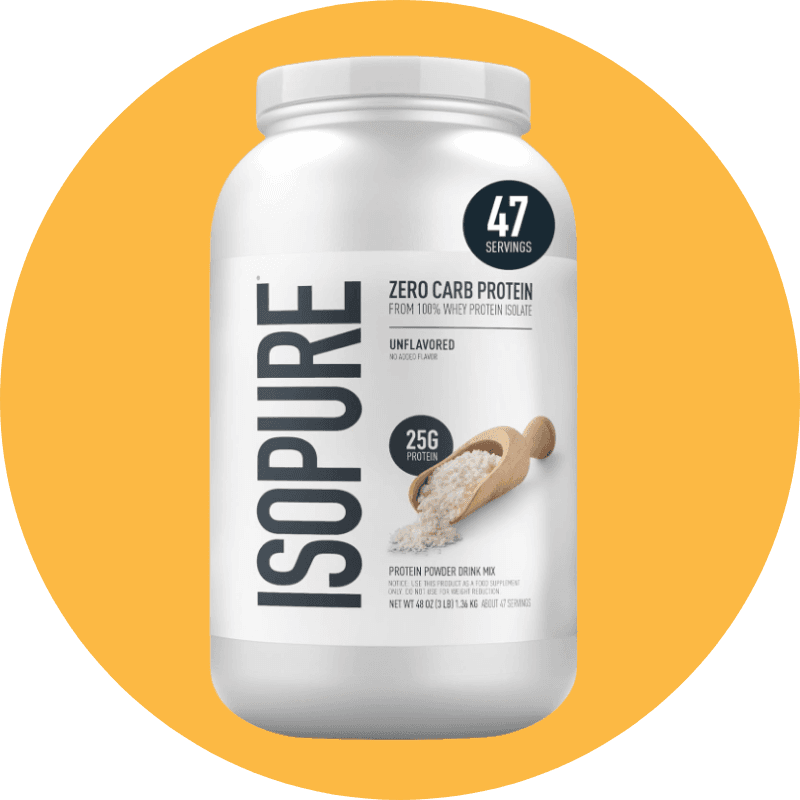
Clean, versatile protein for low-carb goals — Isopure Zero Carb (Unflavored) delivers 25 g of 100% whey protein isolate per serving with 0 g carbs/sugar and a lactose-free formula, so it’s ideal for keto, post-workout recovery, or adding protein to recipes without extra carbs.
Comes in a 3 lb tub (~47 servings) that mixes smoothly into water, coffee, smoothies, soups, or baked goods and won’t change the flavor of your recipes.

Collagen peptides — great for joints/skin, not a full muscle strategy
What it is: Collagen peptides are hydrolyzed collagen derived from connective tissue. They’re popular for skin, hair, and joint support and tend to contain little or no carbs while providing 10–20 g protein per scoop, depending on the product. Collagen is low in carbohydrates and usually mixes clear, but it's not a complete muscle-building protein because it’s relatively low in the branched-chain amino acid leucine compared with whey. If your primary goal is muscle gain, combine collagen with a leucine-rich protein (or use whey isolate). (42, 43)
Label watchers’ note: collagen powders are often unflavored and unsweetened (zero carbs), but flavored varieties may add sweeteners or sugar — always check.
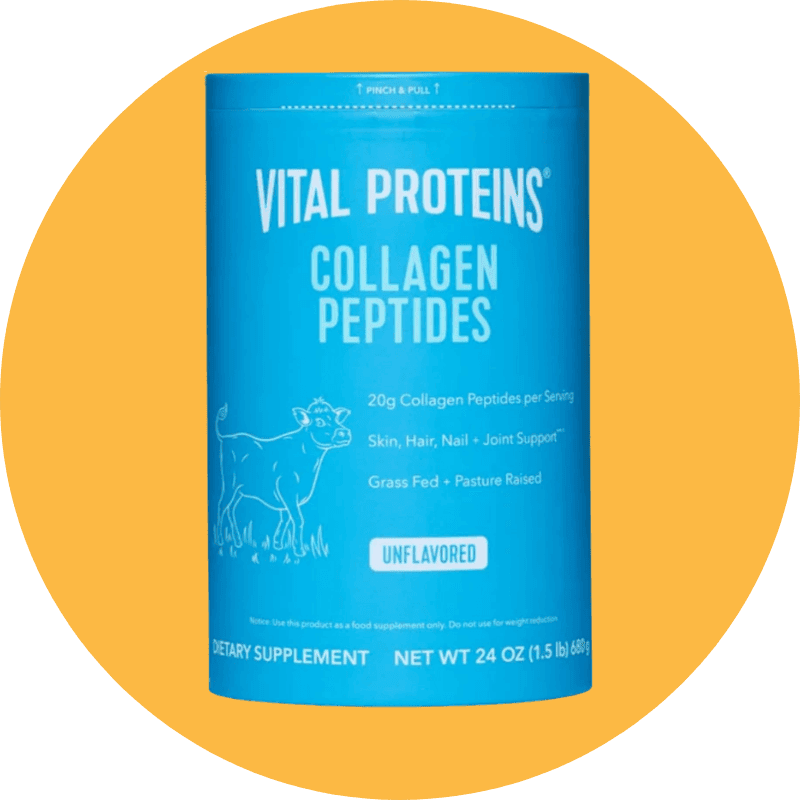
Vital Proteins Collagen Peptides — a clean, unflavored single-ingredient powder made from pasture-raised, grass-fed bovine collagen. One scoop mixes into hot or cold drinks to help support healthy skin, hair, nails, bones & joints; paleo- and keto-friendly, gluten- and dairy-free, in a 24-oz tub.
Pea protein — plant-based and low in carbs
Why consider it: Pea protein isolate gives a hypoallergenic, dairy-free option with solid protein per scoop (often 15–25 g protein with ~0–2 g carbs depending on brand). It’s typically low in sugar and a complete protein in many formulations, so it’s a practical vegan keto choice. Look for brands that use isolate (not whole pea flour) to keep carbs low. (44)
Flavor/texture note: pea protein can be earthier in taste and a bit grittier than whey; flavored versions usually use sweeteners to mask that.
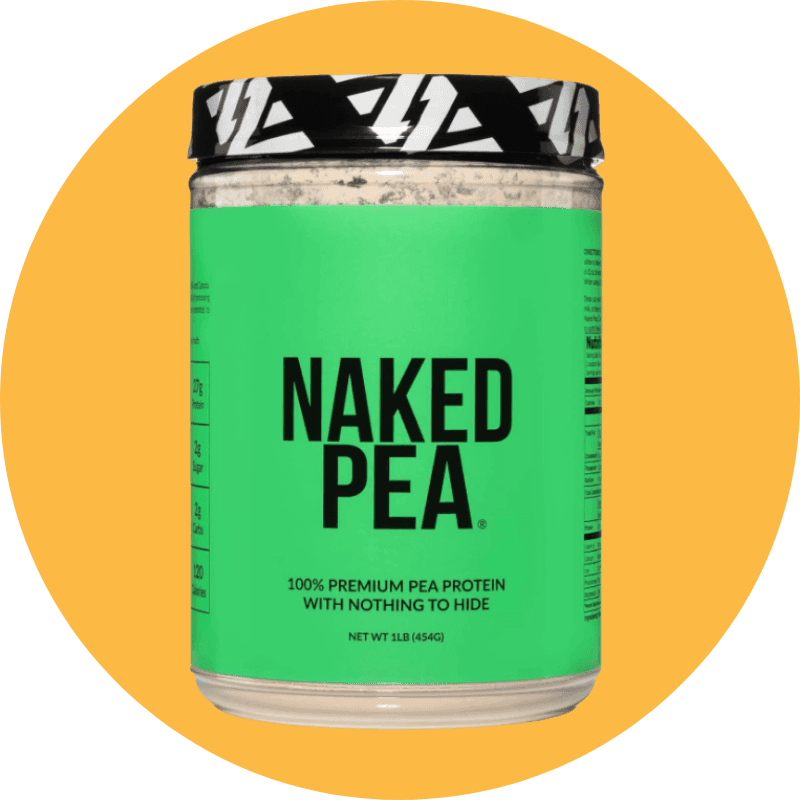
Pure, single-ingredient Naked Pea — 100% yellow pea protein isolate that packs 27 g protein per serving with only ~120 calories, 2 g carbs, and 2 g sugar. Dairy-free, non-GMO, soy-free, gluten-free, and easy to digest — a clean, vegan-friendly protein that mixes into shakes, smoothies, coffee, or recipes (15 servings).
Reading labels: sugar, sweeteners, and hidden carbs (plain-English rules)
When shopping, this is what you must check on any protein-powder label:
- Serving size & protein per serving. Is the scoop size huge? Don’t compare “scoops” — compare grams of protein.
- Total carbohydrates →sugars →dietary fiber. This gives you total carbs; subtract fiber (and erythritol in some cases) to estimate net carbs. (45)
- Ingredient list order. Ingredients are listed by weight. If maltodextrin, cane sugar, dextrose, or fruit concentrates appear near the top, the product may be higher in usable carbs.
- Sweeteners used. Common items: stevia, monk fruit, erythritol (often keto-safe), sucralose or acesulfame (artificial), or sugar alcohols like maltitol (which can raise blood glucose for some people). Know which sweeteners your body tolerates. (46)
- “Other” additives. Fillers, gums, or starches (e.g., maltodextrin, inulin) can add carbs or change gut tolerance. If you’re aiming for strict ketosis, avoid powders with added maltodextrin/dextrose.
Real-world example: a whey isolate labeled “1 g carbs, 24 g protein” per 30 g scoop is far friendlier to keto than a flavored blend that lists 10 g carbs, 4 g sugar per scoop. Always do the subtraction: net carbs = total carbs − fiber − (erythritol if used).
Sweeteners: which ones are keto-safe — and which to test carefully
- Erythritol: Often treated as 0 net carbs and widely used in “keto” products; most people tolerate it, though large amounts can cause GI upset in some.
- Stevia & monk fruit: Non-nutritive, zero-calorie sweeteners that don’t raise blood sugar and are common in low-carb powders. EatingWell and research reviews highlight them as effective, low-impact sweeteners. (47, 48)
- Sugar alcohols (maltitol, sorbitol): Can be partially absorbed and may raise blood sugar for some people — treat as partially usable carbs.
- Artificial sweeteners (sucralose, aspartame): Zero-calorie but sometimes avoided by people who prefer “natural” ingredients; they don’t add carbs but may have an aftertaste.
Practical test: if a flavored powder lists “erythritol + stevia” and shows 0–2 g total carbs, it’s usually safe for keto — but monitor your personal blood-glucose/ketone response if you’re strict or testing for therapeutic ketosis.
Protein quality & intended use (which to choose when)
- For muscle recovery/strength goals: Whey isolate is often best — high leucine, fast absorption, and low carbs per scoop.
- For joint/skin support or low-carb snacks: Collagen helps with connective tissues and usually has few carbs, but pair it with a complete protein if you’re training hard. (49)
- For vegan or dairy-free needs: Pea protein isolate offers solid protein with low carbs; check flavoring and sweeteners.
Safety flags & quality checks (don’t ignore this)
- Contamination & heavy metals: Independent testing programs have found contaminants in some powders. If you’re using supplements frequently, choose brands that do third-party testing (NSF, Informed Sport, or similar). Verywell Health and consumer testing sources recommend third-party verification to reduce risk. (50)
- GI tolerance: If you have lactose sensitivity, even isolates can cause symptoms in sensitive people, and some sweeteners or fiber additives (inulin) can cause bloating. Start with half a scoop to test tolerance.
Quick kcal conversion (so you can plan macros precisely — digit by digit)
If your label gives 20 g protein, and you want to convert to calories from protein: protein = 4 kcal/gram.
- 20 × 4 = 80 kcal from protein. (4 × 20 = 80.)
If a scoop also has 1 g carbs → 1 × 4 = 4 kcal from carbs. (4 × 1 = 4.)
So total from those macros = 80 + 4 = 84 kcal (plus calories from any fats added). Use this to build your target 400–500 kcal smoothie.
Bottom line (practical buying checklist)
- Prefer whey isolate if dairy is OK and you want max muscle support with minimal carbs.
- Use collagen for joint/skin support — pair it with another protein if you need full muscle-building amino acids.
- Choose pea protein isolate for a vegan, low-carb alternative.
- Always read: serving size • total carbs • fiber • sugar alcohols • ingredient order • sweeteners used, and prefer products with third-party testing when possible.
Low-Carb Sweeteners & Flavorings (Erythritol, Stevia, Monk Fruit, Cocoa, Spices)
Sweeteners and flavorings are the small things that make a keto smoothie enjoyable — but they’re also the sneaky bits that can add carbs, aftertaste, or stomach trouble. Below is a practical guide to the most common low-carb sweeteners and flavor builders: how they affect net carbs, what they taste like, and what digestive issues (if any) to watch for.
Fast summary (TL;DR)
- Erythritol = low/zero net carbs, cooling mouthfeel, generally well tolerated in moderate amounts, but can cause GI symptoms at high doses. (51, 52)
- Stevia = zero-calorie plant glycosides, no blood-sugar spike for most people, may have a bitter/licorice aftertaste in higher doses. (53, 54)
- Monk fruit (mogrosides) = non-caloric, no insulin response reported; often blended with erythritol or fiber for bulk. (55, 56)
- Cocoa/cacaoo = flavorful, antioxidant-rich, but contains carbs — use unsweetened powder and watch portion size. (57, 58)
- Spices (cinnamon, vanilla, ginger, cardamom) = nearly zero carbs per pinch and can enhance flavor and perceived sweetness; cinnamon has mixed evidence for modest blood-sugar effects. (59, 60)
Erythritol & sugar alcohols — carbs and digestion
How it affects carbs: Erythritol is widely treated as 0 net carbs by keto trackers because it is mostly absorbed and excreted unchanged, with minimal blood-sugar effect. Other sugar alcohols (maltitol, sorbitol, isomalt) have different impacts — maltitol in particular can raise blood sugar more than erythritol and is best avoided on strict keto. (61, 62)
Taste & texture: Erythritol provides bulk and a sugar-like sweetness with a notable cooling or minty sensation on the tongue and a tendency to recrystallize (graininess) when used in high concentrations or chilled recipes. That’s why many keto recipes blend erythritol with a tiny amount of liquid glycerin, polydextrose, or a non-caloric binder — or mix erythritol with stevia/monk fruit to avoid crystallization.
Digestive considerations: Erythritol is generally better tolerated than many polyols, but very large doses (tens of grams) can cause rumbling, nausea, or loose stools in some people. Other polyols like maltitol and sorbitol are much more likely to cause gas and osmotic diarrhea at moderate doses. Start small and test your tolerance. (63, 64)
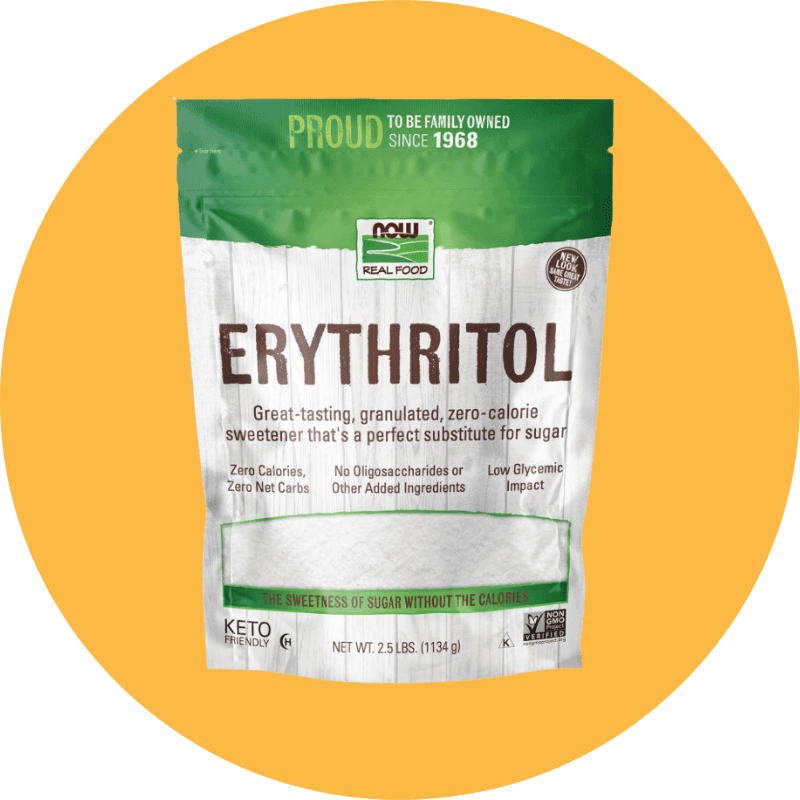
NOW Foods Erythritol — a great-tasting sugar substitute with zero calories and a low glycemic impact. This kosher, non-artificial sweetener looks and tastes like sugar, dissolves easily in coffee, baking, and beverages, and comes in a 2.5-lb bag (packaging may vary).
Stevia — potency, taste, and blood-sugar impact
How it affects carbs: Refined steviol glycosides (the forms used in food like rebaudioside A) have essentially no usable carbs and do not raise blood glucose in most studies — which is why they’re a common keto sweetener. Whole-leaf stevia and crude extracts are less regulated and not always recommended in supplements/food labeling. (65)
Taste profile: Extremely sweet (200–400× sugar), with possible bitter or licorice-like aftertaste at higher doses. Many commercial stevia blends pair stevia with erythritol or monk fruit to give bulk and reduce aftertaste.
Digestive considerations: Most people tolerate purified stevia extracts well; small children or sensitive stomachs sometimes notice mild GI effects when large amounts of sweetener blends (with sugar alcohols) are used. Clinical trials indicate stevia doesn’t adversely affect blood sugar in usual amounts for most people.
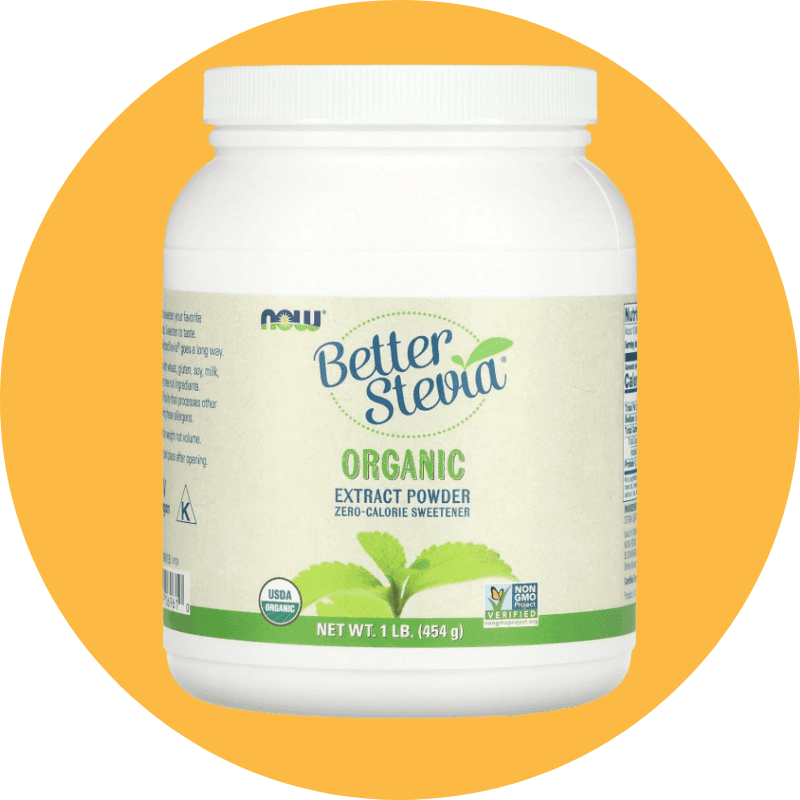
NOW Foods Better Stevia — Certified Organic Extract Powder
Pure, concentrated stevia powder made from the stevia leaf — a zero-calorie, plant-based sweetener that adds clean sweetness to coffee, tea, smoothies, and recipes without sugar. Highly concentrated (a little goes a long way), vegan, and organic — ideal if you’re cutting calories or following low-carb or keto lifestyles.
Monk fruit (mogrosides) — sweet, stable, and safe
How it affects carbs: Monk fruit’s active compounds (mogrosides) are non-caloric and generally do not trigger an insulin response, so they count as zero or near-zero net carbs in keto tracking. Regulatory bodies and reviews (EFSA, industry groups) list refined monk fruit extracts as safe for food use.
Taste profile: Clean sweet taste with a little bitter aftertaste compared with some stevia extracts. It’s often sold as a blend (monk fruit + erythritol) to give table-sugar-like bulk and mouthfeel.
Digestive considerations: Pure monk fruit extract is well tolerated; GI problems are generally related to the bulking agents added (erythritol or fiber) rather than mogrosides themselves. (66)
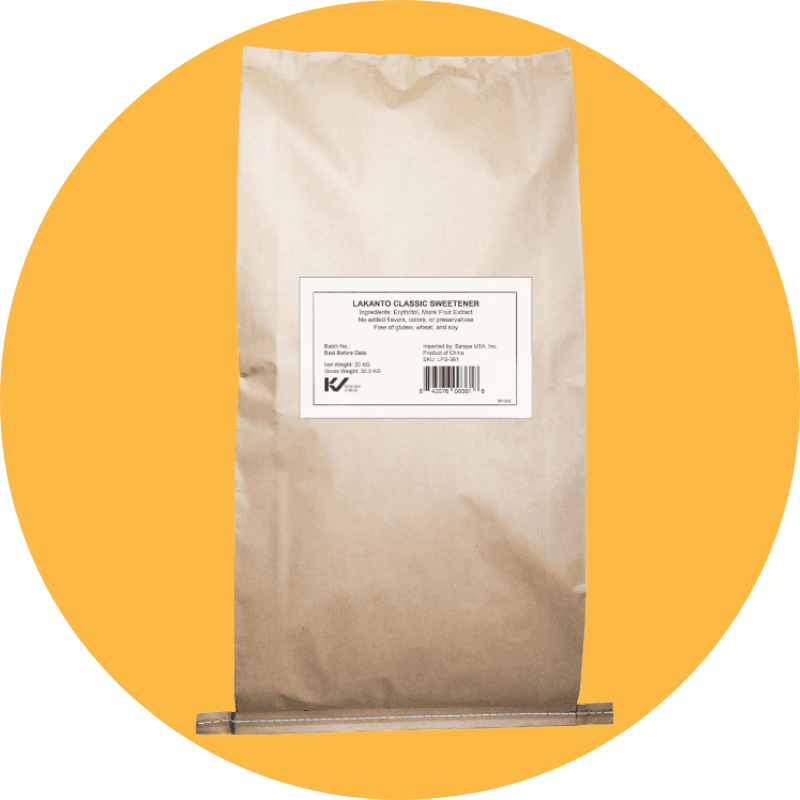
Bulk convenience for serious bakers — Lakanto Classic (20 kg) blends monk fruit extract with erythritol into a white, 1:1 sugar substitute that bakes, browns, and measures like sugar but with zero calories and no glycemic impact. Ideal for restaurants, bakeries, and high-volume home bakers who want a clean, keto- and paleo-friendly sweetener in industrial quantities — perfect for cookies, cakes, beverages, and bulk recipe formulation.
Quick facts: 1:1 sugar swap • zero calories • bakes & browns like sugar • keto-friendly • 20 kg bulk pack.
Cocoa/cacao — flavor powerhouse, but watch the carbs
How it affects carbs: Unsweetened cocoa or cacao powder packs flavor and antioxidants, but is not carb-free. Cocoa contains carbohydrates, a good portion of which may be fiber; still, portion control matters — a tablespoon or two adds noticeable carbs if you’re on a very tight daily limit.
Taste profile & use: Cocoa adds deep chocolate flavor, marries well with nut butters, avocado, and MCT oil, and reduces the need for added sweetener. For a keto smoothie, use unsweetened cocoa powder (not sweetened chocolate) and balance the portion with high-fat ingredients.
Health notes: Cocoa/cacao are rich in flavonoids that have been associated with cardiovascular and cognitive benefits in some research — another bonus beyond flavor —, but those benefits don’t negate the need to count the carbs. (67)
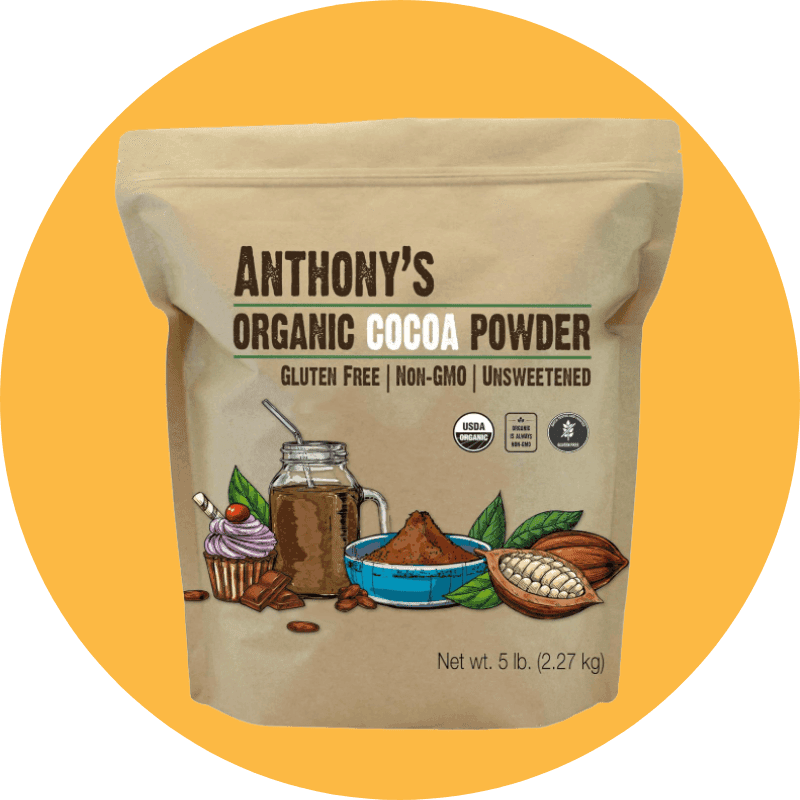
Anthony’s Organic Cocoa Powder
Rich, unsweetened cocoa in a large 5-pound bag — organic, non-GMO, and gluten-free. Delivers deep chocolate flavor for baking, brownies, hot chocolate, smoothies, and desserts without added sugars. Bulk size is perfect for frequent bakers or meal preppers; store in a cool, dry place to keep flavor fresh.
Spices & extracts — tiny calories, big flavor
- Cinnamon: Almost zero carbs per day, and some studies suggest modest blood-sugar-lowering effects in people with insulin resistance — evidence is mixed, so treat cinnamon as a flavor booster, not a therapy. (68)
- Vanilla extract: Minimal carbs in normal recipe amounts; enhances perceived sweetness — often reduces needed sweetener.
- Ginger, cardamom, nutmeg: Near-zero carb and great for warming or exotic profiles.
Use spices liberally — they add perceived sweetness and complexity with negligible carb cost.
Practical mixing & taste hacks (kitchen-ready)
- Blend sweeteners: mixing erythritol (bulk + sugar-like) with a pinch of stevia or monk fruit reduces aftertaste and graininess.
- Start small: add sweetener incrementally — you can always add more, but you can’t take it out.
- Use flavor boosters: a dash of cinnamon, a drop of vanilla extract, or a teaspoon of unsweetened cocoa often cuts the amount of sweetener you need. (69)
- Watch label blends: many “keto” sweetener packets are blends — check whether erythritol, dextrose, or maltodextrin were used as fillers (some fillers add carbs).
- If you notice GI issues: reduce or stop sugar alcohols first (maltitol and sorbitol are most likely to cause diarrhea); try monk fruit or pure stevia instead. (70)
Safety note & when to check with a pro
If you have IBS, a sensitive gut, diabetes, or are following a therapeutic ketogenic diet, check with a healthcare professional before making large or daily changes to sweetener intake — especially if you’re relying on sugar alcohols. Labels and individual tolerance vary, so use these sweeteners intentionally and monitor how you feel. (71)
Low-Carb Fruits, Veggies & Add-Ins (Berries, Greens, Seeds)
When you want a keto smoothie that still tastes fruity, fresh, and satisfying, choosing the right fruits, vegetables, and add-ins is everything. Below, I’ll break down the best berry choices and their net-carb logic, the leafy greens that give nutrients with almost no carbs, mild veg like zucchini/cucumber for bulk, and the seed/fiber add-ins (chia, flax, psyllium) that add texture, satiety, and slow digestion. I’ll also give practical serving sizes so you can keep net carbs keto-friendly.
Best berries for keto smoothies (tiny portions = big flavor)
Berries are the fruity exception on keto because they’re relatively low in net carbs and high in fiber and antioxidants. The standouts:
- Raspberries & blackberries — highest fiber per serving, lowest net carbs, and they add bright tartness. (Per 100 g, raspberries and blackberries have single-digit net carbs after fiber.) (72, 73)
- Strawberries — slightly higher net carbs than raspberries/blackberries, but still very friendly when used in small amounts (¼ cup to ½ cup per smoothie).
- Blueberries — more sugar and higher net carbs, so use sparingly (a tablespoon or two) if you’re strictly limiting carbs.
Practical portioning tip: for most keto smoothies, stick to ¼–½ cup of berries (frozen works great) — this gives flavor, color, and antioxidants while usually keeping net carbs in the single digits, depending on your target. For exact carb counts, always check a nutrition database (USDA FoodData Central) and subtract fiber to calculate net carbs.
Leafy greens: nutrient powerhouses with near-zero carbs
Leafy greens are a keto smoothie MVP — they add vitamins, minerals, and bulk with almost no usable carbs.
- Spinach — very mild flavor and blends invisibly; great for beginners who don’t want a “green” taste.
- Kale — slightly stronger and chewier; chop or blend well, or use baby kale for a milder flavor.
- Swiss chard, arugula, bok choy — useful for variety and micronutrient density.
Why they’re ideal: per cup, most leafy greens contribute 1–3 g total carbs with a good share as fiber, so net carb impact is tiny while micronutrient payoff is large. Use a generous handful (1–2 cups fresh) without worrying about the carb bank. (74)
Mild veg for body: zucchini & cucumber
If you want a thicker smoothie without fruit sugar, use watery, mild veggies:
- Zucchini (fresh or frozen) — adds body and creaminess when frozen; very low net carbs. Some keto recipe lists even rank zucchini among the lowest-carb “fruit/veg” choices. (75)
- Cucumber — ultra-hydrating, mild, and perfect for green or citrus blends.
- Cauliflower (frozen florets) — neutral flavor and great texture for “creamier” smoothie bowls when you want to avoid fruit.
Tip: freeze slices of zucchini or small cauliflower florets in portions so you can make a thick, creamy smoothie that feels indulgent but keeps carbs low.
Seeds & fiber add-ins — chia, flax, and psyllium for texture + satiety
Seeds are among the most useful keto add-ins because they add fiber, healthy fats, and thickness without many net carbs.
Chia seeds
- Typical benefit: gel-forming chia soaks up liquid and gives a puddinglike texture, plus about 4–5 g fiber per tablespoon (amounts vary by source). Soaked chia gives body and keeps you full. Start with 1 tbsp in a smoothie or pre-soak to prevent gulping dry seeds. (76, 77)
Flax seeds (ground)
- Ground flax is great for omega-3 ALA and fiber; 2 tbsp of ground flax is commonly used and contributes several grams of fiber while adding a mild nutty flavor. Because whole flax passes through undigested, grind it for the nutrients to be bioavailable. (78, 79)
Psyllium husk
- Psyllium is mostly soluble fiber and is excellent for thickening — 1 tsp to 1 tbsp (start small) will thicken a smoothie or create a pudding texture as it absorbs liquid. It’s powerful: a tablespoon can contain several grams of fiber, so hydrate it well to avoid excessive gelling in the gut. Pre-soaking psyllium or adding it slowly while blending prevents an overly gloopy texture.
Digestive caution: increase fiber slowly and drink plenty of water. If you’re not used to fiber, introduce chia/flax/psyllium gradually to avoid bloating or constipation — soaking chia and psyllium before consuming is often recommended. (80, 81)
How to combine these add-ins for the best results (kitchen templates)
- Green + Berry Boost: 1 cup spinach + ¼ cup raspberries + 1 tbsp chia (soaked) + 1 scoop protein + unsweetened almond milk. (Bright, low net carbs.)
- Creamy Veg Builder: ½ cup frozen zucchini + 1 tbsp ground flax + 1 tbsp almond butter + collagen powder + water or macadamia milk. (Very low sugar, thick mouthfeel.) (82)
- Psyllium pudding smoothie: Blend your usual smoothie, then stir in ½–1 tsp psyllium, let sit 3–5 minutes to thicken, then enjoy — great if you want a spoonable texture. Hydrate well.
Final practical tips (so your smoothie stays keto)
- Portion fruit carefully — favor raspberries, blackberries, and strawberries, and keep servings to ¼–½ cup.
- Bulk with greens & mild veg — spinach, zucchini, and cucumber add volume with negligible net carbs.
- Use seeds for fiber and texture — chia/flax/psyllium increase satiety and lower the effective net-carb impact of a smoothie. Introduce them gradually.
- Check nutrition databases for exact net-carb math (USDA FoodData Central is a reliable source).
Dairy-Free, Egg-Free & Allergy-Friendly Variations
Want a keto smoothie or smoothie bowl that skips dairy, eggs, and tree nuts — but still tastes lush and keeps carbs low? Yep, you can do that. Below are practical, kitchen-tested swaps (with quick ratios and tips) for cashew cream, coconut cream, eggless “fat-head” alternatives, nut-free crusts for smoothie bowls, and thickener swaps (chia, psyllium, xanthan alternatives). Each section gives you the “why,” the simple how-to, and things to watch for so your blends stay tasty and keto-safe.
Cashew cream — creamy, versatile, but not zero-carb
Cashew cream is the fastest, creamiest dairy substitute: soak raw cashews, then blend with water until silky. It’s perfect for coffee smoothies, creamy green blends, and vegan “yogurt” textures.
Quick ratio (starter):
- 1 cup raw cashews (soaked 2–4 hours) + 3/4–1 cup water, blend until super-smooth. For thicker cream (sour-cream style), use less water; for pourable milk, use more.
Nutrition note: cashews are more carb-dense than many nuts — expect several grams of carbs per ounce, so measure portions if you’re strict on carbs. Use cashew cream sparingly in strict <20 g/day plans, or dilute with low-carb base (almond or macadamia milk). (83, 84)
Storage & tip: refrigerate up to 4–5 days. For long-term use, freeze in ice-cube trays and pop cubes into smoothies for thickness without rehydrating every time.
Coconut cream — the ultra-creamy, dairy-free powerhouse (and the caution)
Full-fat canned coconut cream gives pudding-thick texture with minimal carbs — ideal for dessert-style keto shakes and scoopable “nice cream.” Use unsweetened canned coconut cream to avoid added sugar.
Quick ratio: 1 part canned coconut cream: 1–2 parts low-carb milk (depending on desired richness). A single tablespoon of coconut cream adds substantial fat and texture, so a little goes a long way. (85)
Health flag: Coconut products are high in saturated fat. If you have elevated LDL cholesterol or heart-disease risk factors, rotate coconut cream with monounsaturated fat options (avocado, olive oil, seed butters) and talk to your provider about frequency. (86, 87)
Egg-free “fat-head” alternatives — low-carb crusts & bowl bases without eggs
Classic fat-head dough uses mozzarella + cream cheese + egg. For egg-free versions, you can still get a flexible, low-carb dough by replacing eggs’ binder with psyllium husk or ground chia (which gel) and adjusting hydration. There are tested egg-free fat-head recipes that yield a pliable, low-carb crust.
Simple egg-free fat-head template (approx):
- 1 cup shredded low-moisture mozzarella (or dairy-free melting cheese if avoiding dairy)
- 2 oz cream cheese (or 2–3 tbsp cashew cream for dairy-free)
- 1 cup almond flour (or sunflower seed meal for nut-free)
- 1 tsp psyllium husk (adds binding)
- Warm & mix until dough forms; chill 10–20 min before rolling.
If you need fully dairy-free + egg-free: swap mozzarella/cream cheese step for blended soaked cashews + 2–3 tbsp coconut cream + psyllium + almond or seed flour — the psyllium provides elasticity and structure in place of egg. Test small batches and adjust psyllium up to 1.5 tsp for more binding. (88)
Nut-free crust & “sprinkle” ideas for smoothie bowls
Smoothie bowls crave texture — here are allergy-friendly, nut-free options that keep carbs low:
- Sunflower-seed “crumb”: blitz roasted sunflower seeds into a coarse meal; toast briefly for crunch. Use as a base or sprinkle. (Sunflower butter is also a creamy, nut-free butter for smoothies.)
- Pumpkin-seed crumble: pumpkin seeds (pepitas) pulse with coconut flakes and a pinch of cinnamon for a keto bowl topper — high in healthy fats and low in net carbs. (89)
- Toasted coconut flakes + chia crunch: lightly toast unsweetened coconut flakes and combine with a few tsp of toasted chia or ground flax for crunch without nuts.
- Seed bars / brittle (quick): mix sunflower + pumpkin seeds with a touch of sugar-free binder (erythritol + butter or coconut oil) and press thin; bake briefly, cool, and crumble.
Label-check note: when buying seed butters, choose no-sugar-added versions (some commercial sunflower butters contain added sugar).
Thickener swaps — xanthan, psyllium, chia, and flax (what to use when)
If you rely on thickeners for texture — particularly in eggless or dairy-free recipes — here are reliable swaps and practical dosages:
- Psyllium husk — powerful soluble fiber that gels and mimics binding/elasticity (use ½–1 tsp to thicken a single smoothie; for baking/flatbreads, follow recipe ratios and expect to use more). Psyllium hydrates quickly and can create a pudding texture if left to sit. (90)
- Chia seeds — soak 1 tbsp chia + 2–3 tbsp water to make a gel; add 1 tbsp gel per smoothie for pudding-like body or use 1–2 tbsp whole/ground chia blended for texture. Chia also adds fiber and omega-3s. (91)
- Ground flax — mild nutty flavor, useful for bulk and omega-3s; use 1–2 tbsp ground flax in smoothies. Grind fresh for best nutrient uptake. (92)
- Xanthan gum (small pinch) — extremely potent; start with 1/16–1/8 tsp in a smoothie and blend well to avoid sliminess. Because xanthan is a lab-produced hydrocolloid, some people prefer whole-food thickeners. If substituting xanthan in recipes, halve psyllium amounts as healthline guidance recommends psyllium as a replacement ratio.
Practical blending tip: add thickeners gradually, blend, then let sit briefly — it’s easier to add more than to fix an over-thick, gluey texture.
Putting it together — two allergy-friendly smoothie examples
Dairy-free Green Velvet (nut-free option)

- 1 cup unsweetened sunflower or macadamia milk (macadamia if not nut-allergic)
- 2 tbsp sunflower seed butter (or ½ cup soaked cashews for cashew-tolerant)
- 1 cup spinach
- 1 tbsp chia gel (1 tbsp chia soaked in 3 tbsp water)
- 1 scoop pea protein (or collagen if not vegan)
- Ice, cinnamon pinch — blend.
(Net carbs depend on exact products; sunflower butter and pea protein are typically low-carb if no sugar is added.)
Creamy Coconut-Psyllium “Pudding” Shake (egg-free, dairy-free)
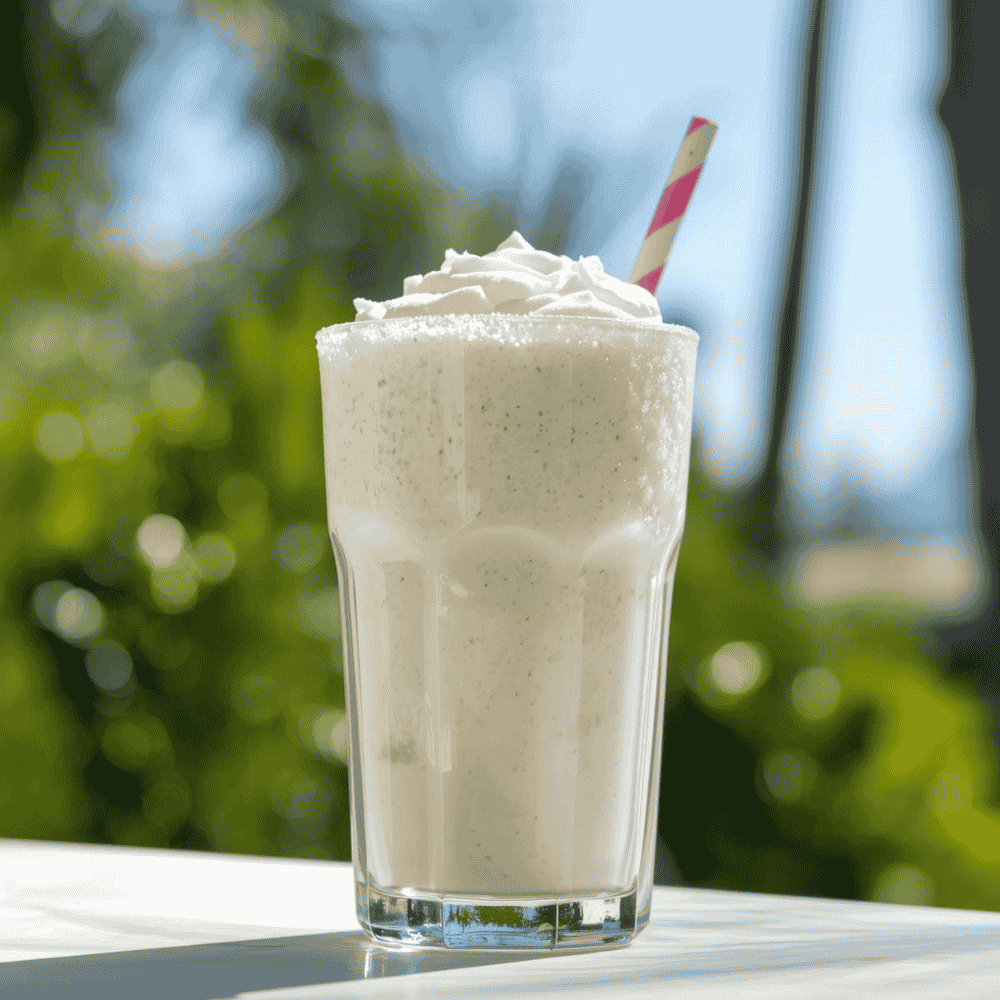
- 2 tbsp canned coconut cream
- 1 cup unsweetened almond/macarona milk
- 1 scoop collagen or pea protein
- 1/2 tsp psyllium husk (start small)
- 1 tsp MCT oil (optional)
- Ice; blend and rest 2–3 minutes to thicken to a spoonable texture.
(Watch saturated-fat intake if you use coconut cream frequently.)
Final allergy & safety flags
- Seed allergies exist. Sunflower/pumpkin becomes a go-to nut-free answer, but always confirm allergy status. If you’re cooking for others, label ingredients and note potential cross-contact on shared equipment.
- Fiber-first thickeners (psyllium, chia, flax) are great, but increase water intake when you add them — they soak up liquid and can cause constipation if you’re underhydrated. Start low and increase gradually.
25 Keto Smoothie & Drink Recipes (Grouped & Ready to Use)
Below are 25 keto-friendly drinks grouped by use case. Each recipe includes ingredients, a quick method, estimated macros (calories, net carbs, protein, fat) based on typical serving sizes, and simple substitutions.
Breakfast / Meal-Replacement (6)
1) Avocado Matcha Meal Smoothie
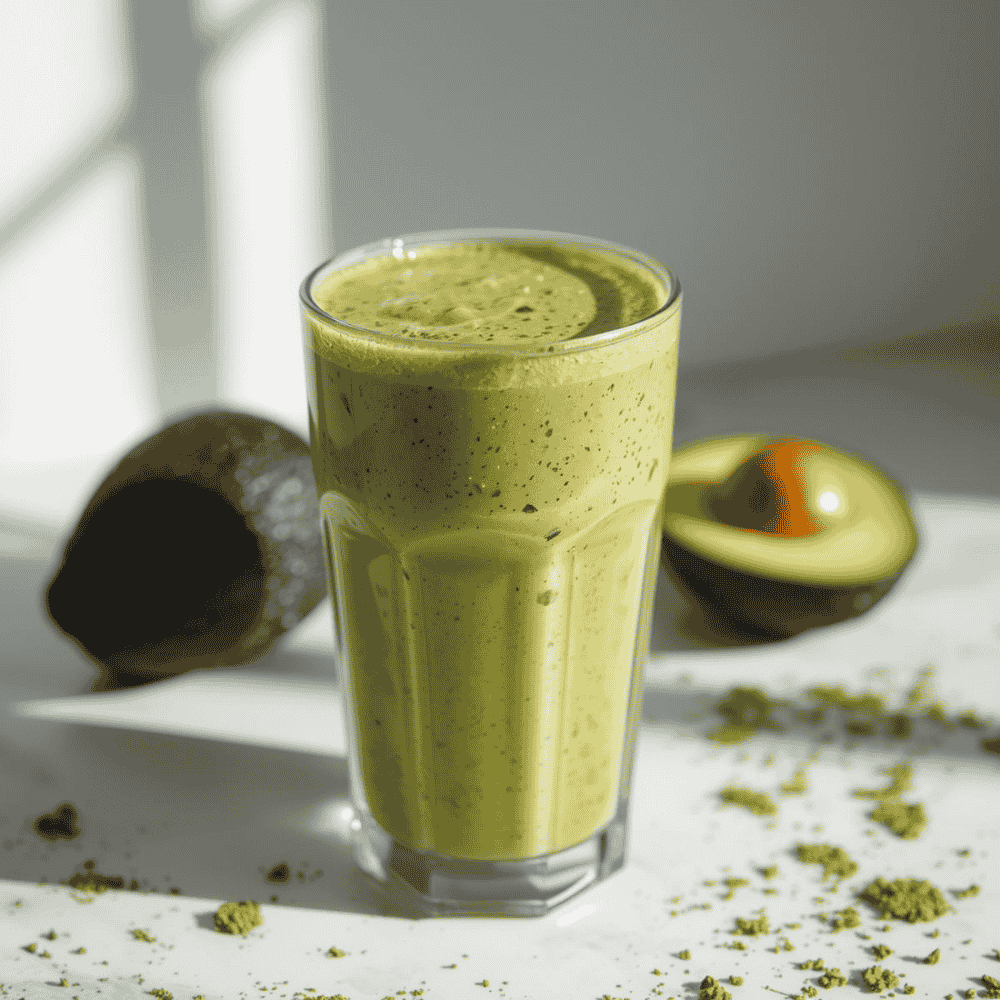
- Ingredients: ½ medium avocado, 1 cup unsweetened almond or macadamia milk, 1 scoop collagen or whey isolate, 1 tsp matcha, 1 tsp MCT oil, ice.
- Method: Blend until silky.
- Est. macros: Net carbs ~2–5 g, Calories ~350–420 kcal, Protein ~15–22 g, Fat ~28–36 g.
- Subs: Use pea protein for vegan; swap MCT for 1 tbsp almond butter for milder GI effect.
2) Chocolate Peanut Butter Meal Shake
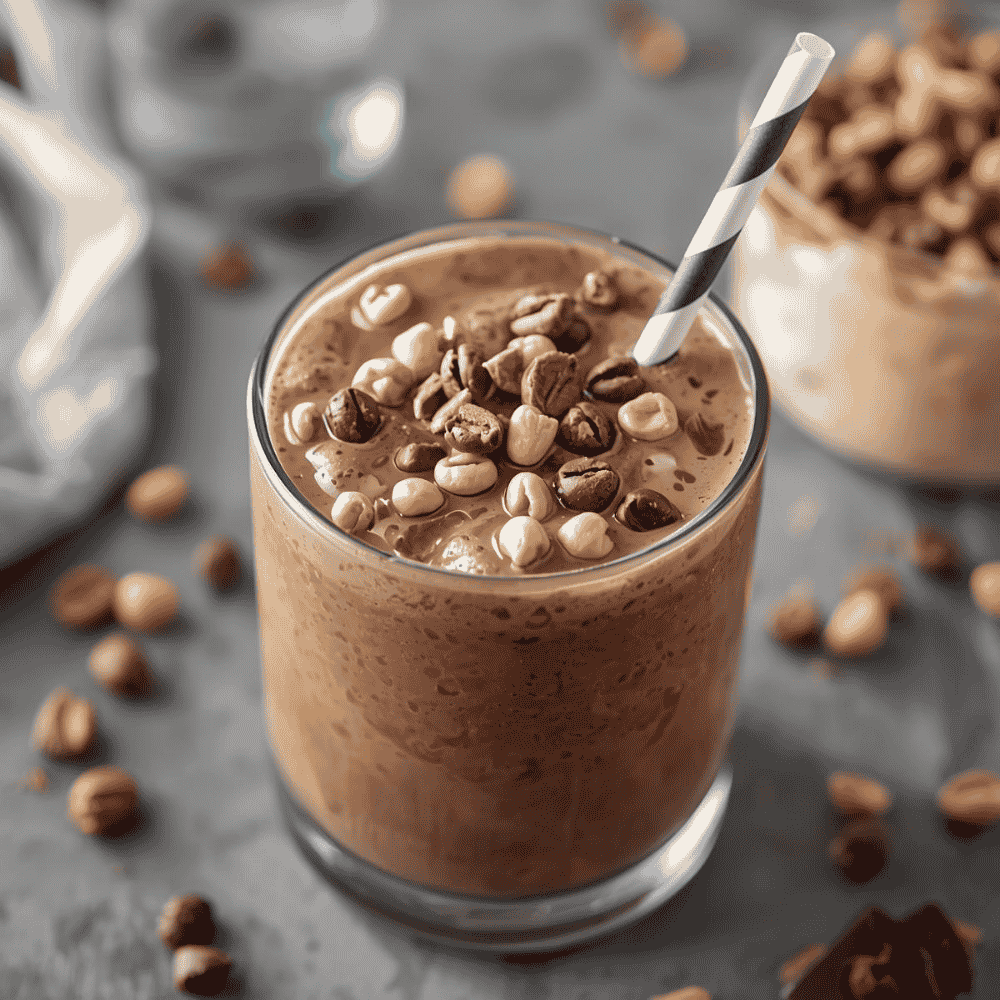
- Ingredients: 1 cup unsweetened almond milk, 1 scoop chocolate whey isolate, 1 tbsp natural peanut butter, 1 tbsp unsweetened cocoa, 1/2 avocado or 1 tbsp heavy cream, ice.
- Method: Blend until smooth.
- Est. macros: Net carbs ~4–7 g, Calories ~380–480 kcal, Protein ~25–30 g, Fat ~28–36 g.
- Subs: Almond butter or macadamia butter instead of peanut; collagen + cocoa for dairy-free.
3) Berry Collagen Meal (Low-Berry)
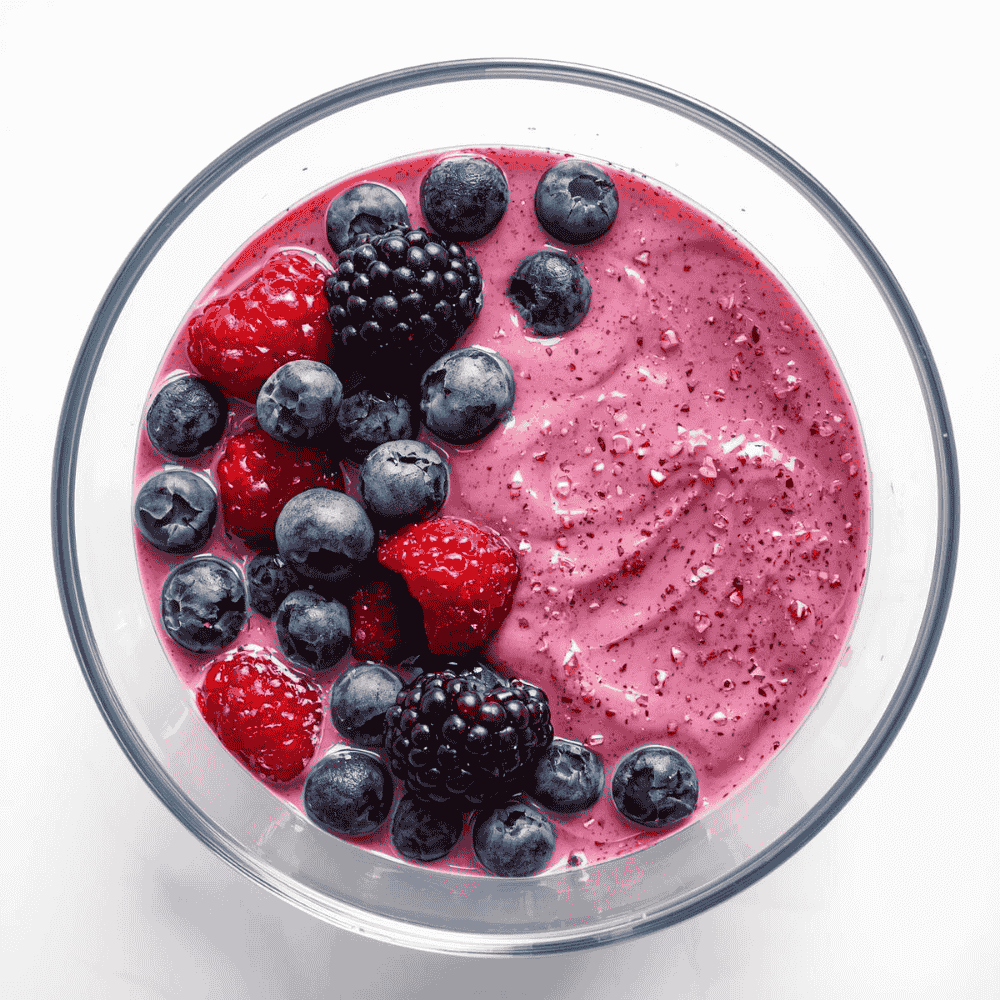
- Ingredients: 1/3 cup frozen raspberries, 1 cup unsweetened almond milk, 1 scoop collagen peptides, 2 tbsp heavy cream or 1 tbsp MCT oil, 1 tbsp chia (soaked), ice.
- Method: Blend; let chia sit 1–2 minutes for texture.
- Est. macros: Net carbs ~4–6 g, Calories ~330–420 kcal, Protein ~15–20 g, Fat ~24–34 g.
- Subs: Use blackberries for slightly lower net carbs.
4) Keto Bulletproof Smoothie (Coffee + Fat)
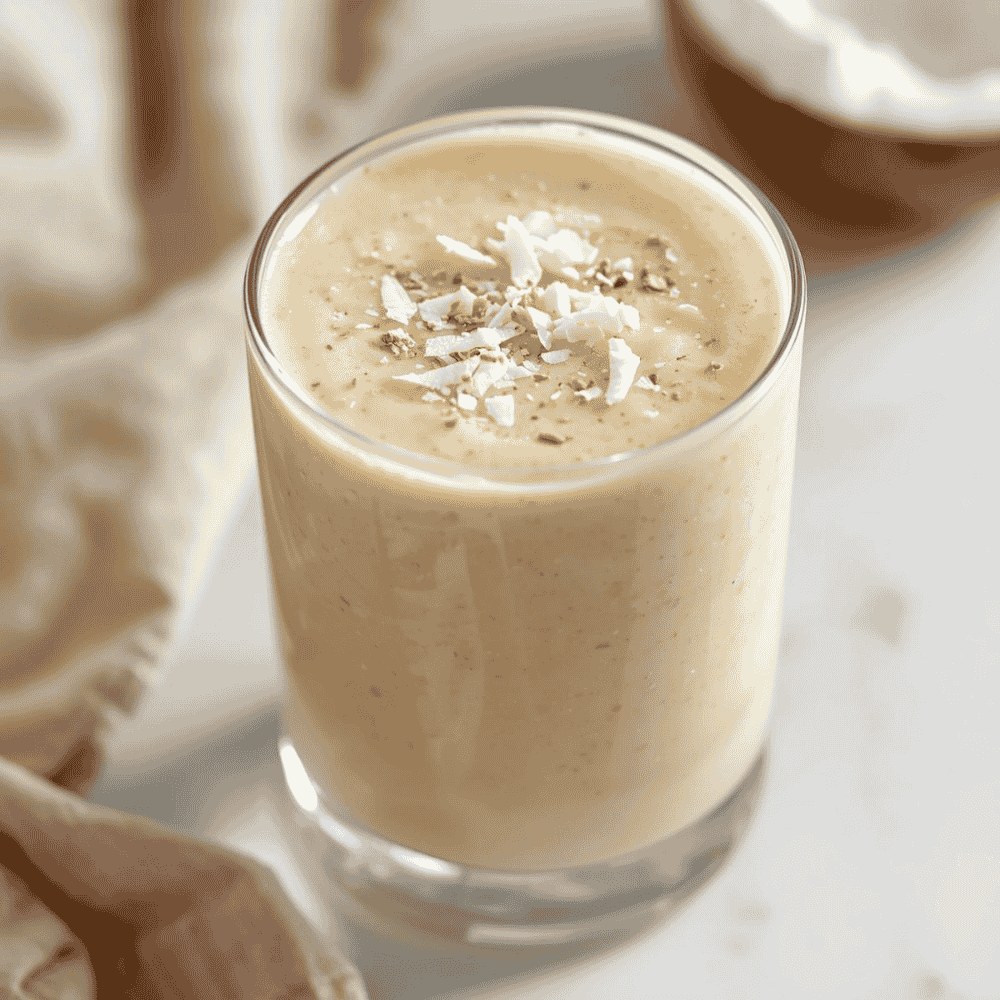
- Ingredients: 1 cup brewed cold coffee (or chilled espresso), 1 tbsp MCT oil, 2 tbsp heavy cream, 1 scoop collagen or whey isolate (vanilla), ice.
- Method: Blend until frothy.
- Est. macros: Net carbs ~1–3 g, Calories ~250–350 kcal, Protein ~10–20 g, Fat ~22–34 g.
- Subs: Use coconut cream for dairy-free (watch sat fat).
5) Green Avocado Meal
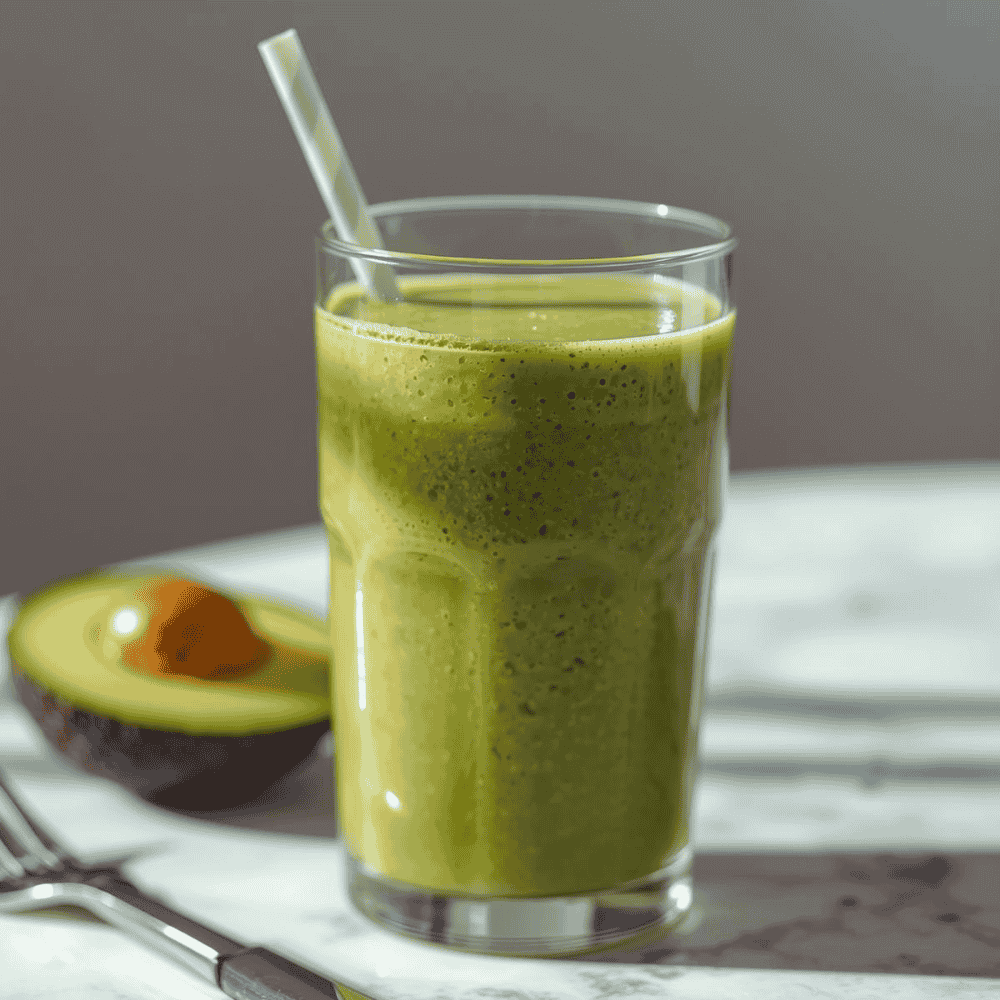
- Ingredients: 1 cup baby spinach, ½ avocado, 1 cup unsweetened macadamia milk, 1 scoop whey or pea protein, 1 tbsp flax (ground), ice.
- Method: Blend until smooth.
- Est. macros: Net carbs ~3–6 g, Calories ~350–420 kcal, Protein ~20–25 g, Fat ~26–34 g.
- Subs: Swap spinach for kale (slightly stronger flavor).
6) Coconut-Almond Meal Replacement
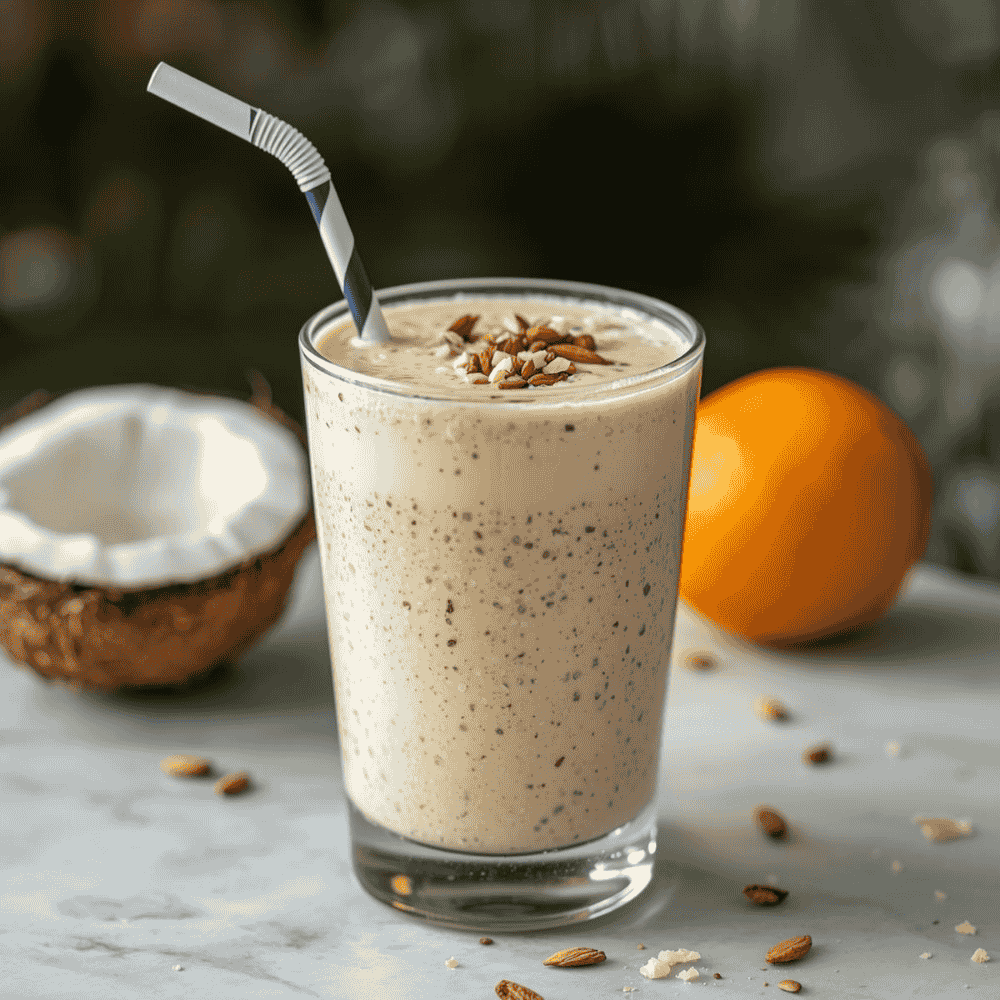
- Ingredients: 1 cup unsweetened coconut milk (beverage) + 2 tbsp canned coconut cream, 1 scoop collagen, 1 tbsp almond butter, ice.
- Method: Blend until creamy.
- Est. macros: Net carbs ~2–6 g, Calories ~400–520 kcal, Protein ~10–18 g, Fat ~36–48 g.
- Subs: Macadamia milk + macadamia butter for a different flavor.
Coffee & Caffeine Boosters (3)
7) Classic Bulletproof Coffee (Keto Coffee)

- Ingredients: 1 cup hot brewed coffee, 1 tbsp MCT oil, 1 tbsp grass-fed butter or ghee (optional), pinch cinnamon, blend or froth.
- Method: Blend hot in a heat-safe blender or use an immersion frother.
- Est. macros: Net carbs ~0–1 g, Calories ~220–260 kcal, Protein ~0–1 g, Fat ~24–28 g.
- Subs: Use 1 tbsp coconut oil if avoiding dairy.
8) Iced Keto Mocha

- Ingredients: 1 cup cold-brew coffee, 1 tbsp unsweetened cocoa, 1 tbsp MCT oil or 2 tbsp heavy cream, 1 scoop chocolate whey isolate, ice.
- Method: Blend with ice for a cold shake.
- Est. macros: Net carbs ~2–5 g, Calories ~280–380 kcal, Protein ~20–25 g, Fat ~20–32 g.
- Subs: Use collagen plus a touch of erythritol if you prefer.
9) Matcha MCT Energizer
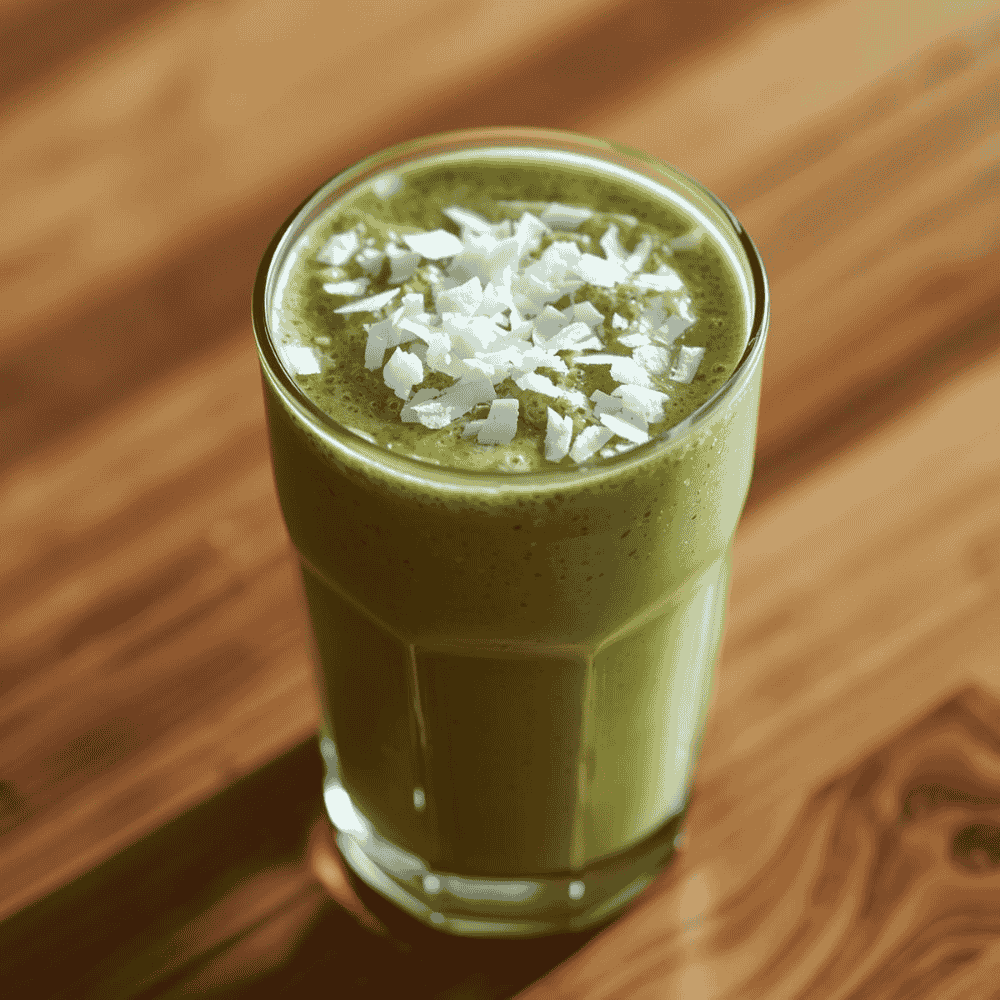
- Ingredients: 1 tsp ceremonial matcha, 1 cup unsweetened almond milk, 1 tsp MCT oil, 1 scoop collagen or protein, ice.
- Method: Whisk/Blend until frothy.
- Est. macros: Net carbs ~1–3 g, Calories ~180–280 kcal, Protein ~10–20 g, Fat ~12–24 g.
- Subs: Use coconut milk for a creamier mouthfeel.
Dessert-Style (4)
10) Chocolate Avocado Mousse Smoothie
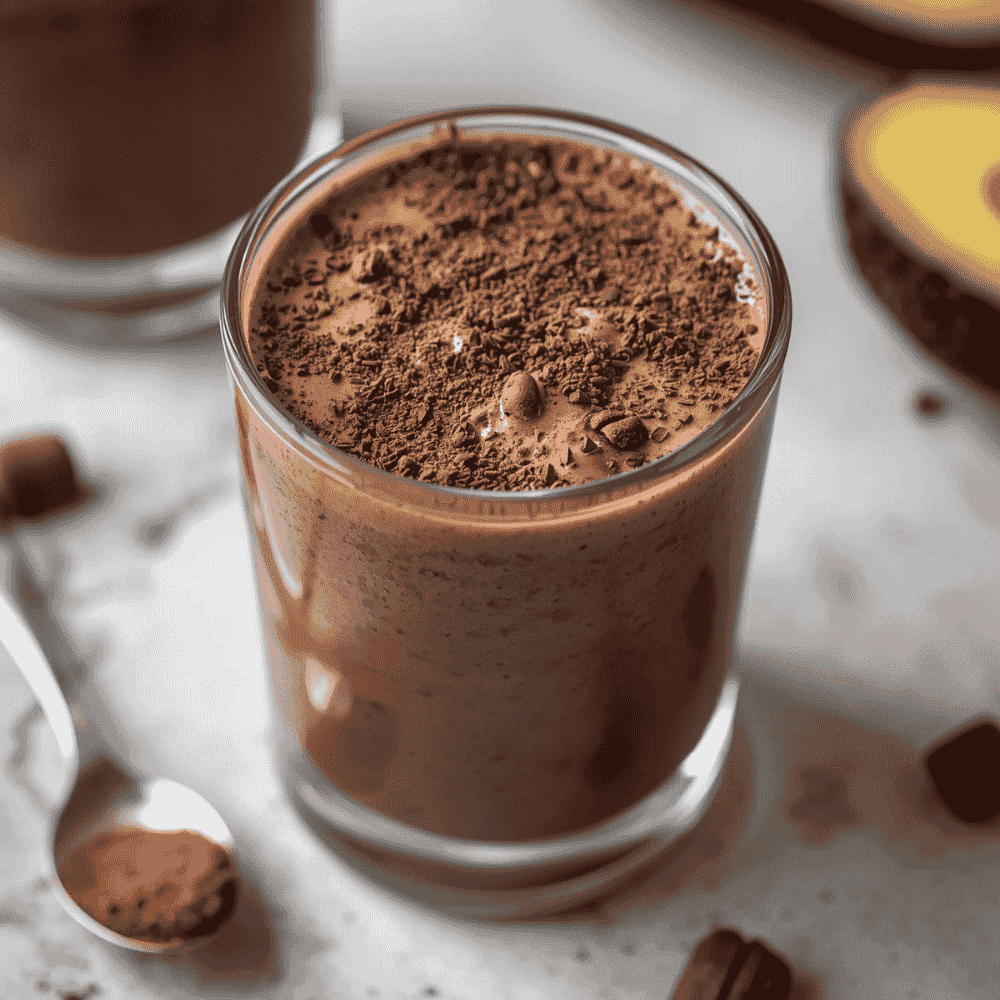
- Ingredients: 1 cup unsweetened almond milk, ½ avocado, 1 tbsp cocoa, 1 scoop collagen, ice.
- Method: Blend until ultra-smooth — spoonable texture if chilled.
- Est. macros: ~162 kcal • 3.0 g net carbs • 13 g protein • 10.7 g fat.
- Subs: add 1 tbsp almond butter for nuttier depth.
11) Coconut “Piña Colada” (low-sugar)

- Ingredients: 2 tbsp canned coconut cream, 1/4 cup frozen pineapple substitute (very small — optional) OR 1 tbsp lime juice + a few drops monk fruit, 1 cup unsweetened coconut milk, 1 scoop collagen, ice.
- Method: Blend; keep pineapple tiny or use lime + sweetener to avoid carbs.
- Est. macros: Net carbs ~2–5 g (if no pineapple), Calories ~350–450 kcal, Protein ~8–15 g, Fat ~30–42 g.
- Subs: Use frozen strawberries instead of pineapple for lower carbs.
12) Cheesecake Strawberry Smoothie (Keto)
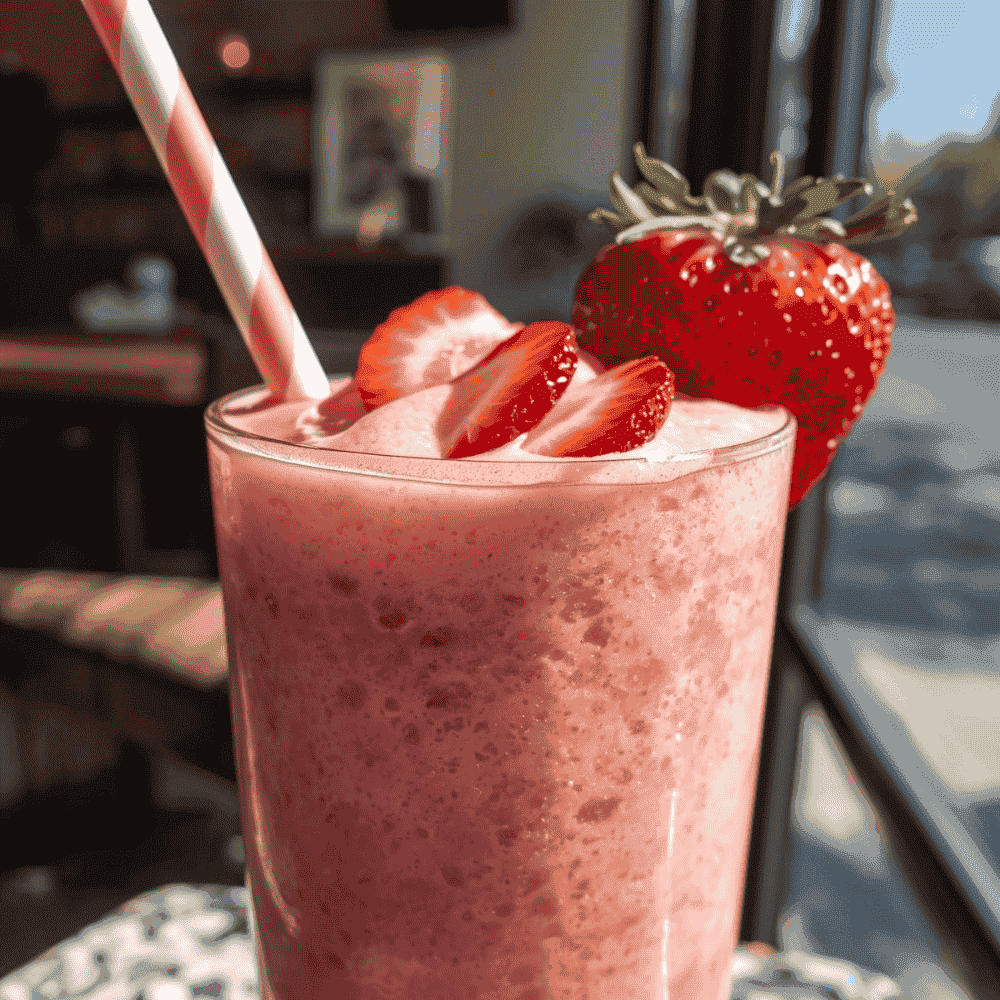
- Ingredients: 1 cup unsweetened almond milk, ½ cup full-fat plain Greek yogurt, ¼ cup frozen strawberries, 1 scoop collagen.
- Method: Blend to mimic cheesecake with a tangy note.
- Est. macros: ~192 kcal • 7.1 g net carbs • 21.2 g protein • 8.6 g fat.
- Subs: swap Greek yogurt for coconut yogurt for dairy-free (check carbs).
13) Chocolate Hazelnut Dessert Shake
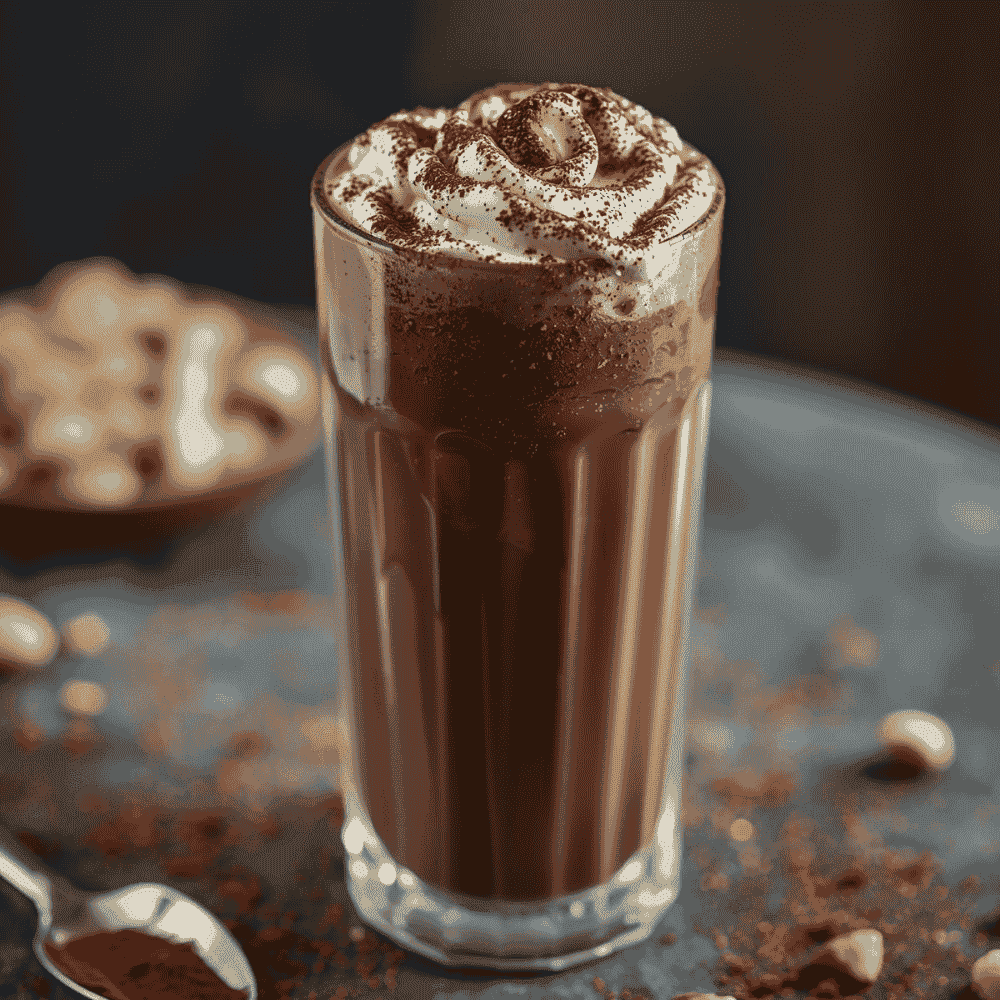
- Ingredients: 1 cup unsweetened almond milk, 1 scoop whey isolate, 1 tbsp almond (or hazelnut) butter, 1 tbsp cocoa.
- Method: Blend and garnish with a few toasted hazelnut crumbs.
- Est. macros: ~240 kcal • 4.4 g net carbs • 30.4 g protein • 12.7 g fat.
- Subs: use hazelnut butter if available, or almond + a drop of hazelnut extract.
Green & Veggie (4)
14) Spinach-Cucumber Mint Refresher

- Ingredients: 1 cup unsweetened almond milk, 1 cup spinach, ½ cup cucumber, 1 scoop collagen, a few mint leaves, and ice.
- Method: Blend; strain if you prefer a smoother drink.
- Est. macros: ~82 kcal • 2.05 g net carbs • 12.2 g protein • 2.7 g fat.
- Subs: add 1 tsp MCT for a meal version.
15) Kale Avocado Detox Smoothie
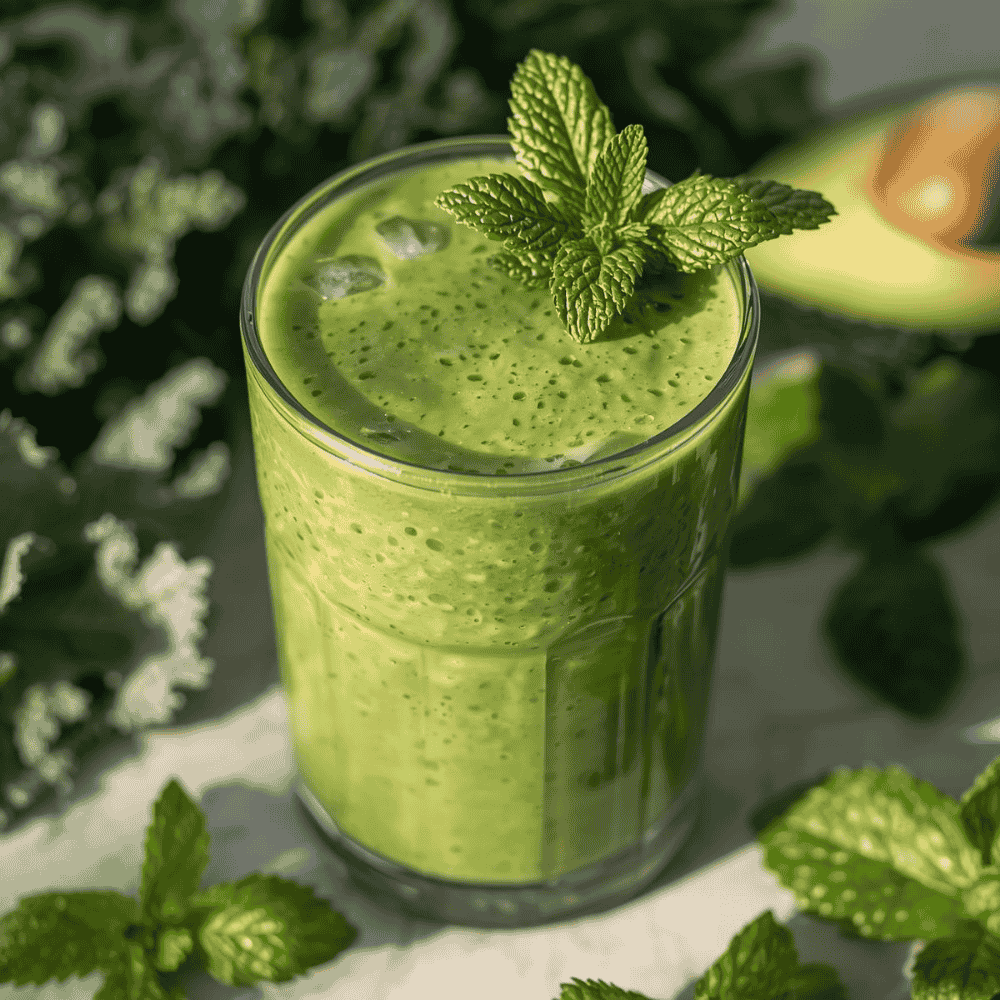
- Ingredients: 1 cup unsweetened almond milk, ½ avocado, ½ cup spinach (or baby kale), 1 scoop collagen, ice.
- Method: Blend and sip slowly for a nutrient hit.
- Est. macros: ~234 kcal • 3.15 g net carbs • 13.4 g protein • 17.6 g fat.
- Subs: swap spinach for baby kale to reduce bitterness.
16) Zucchini-Cauliflower Creamer
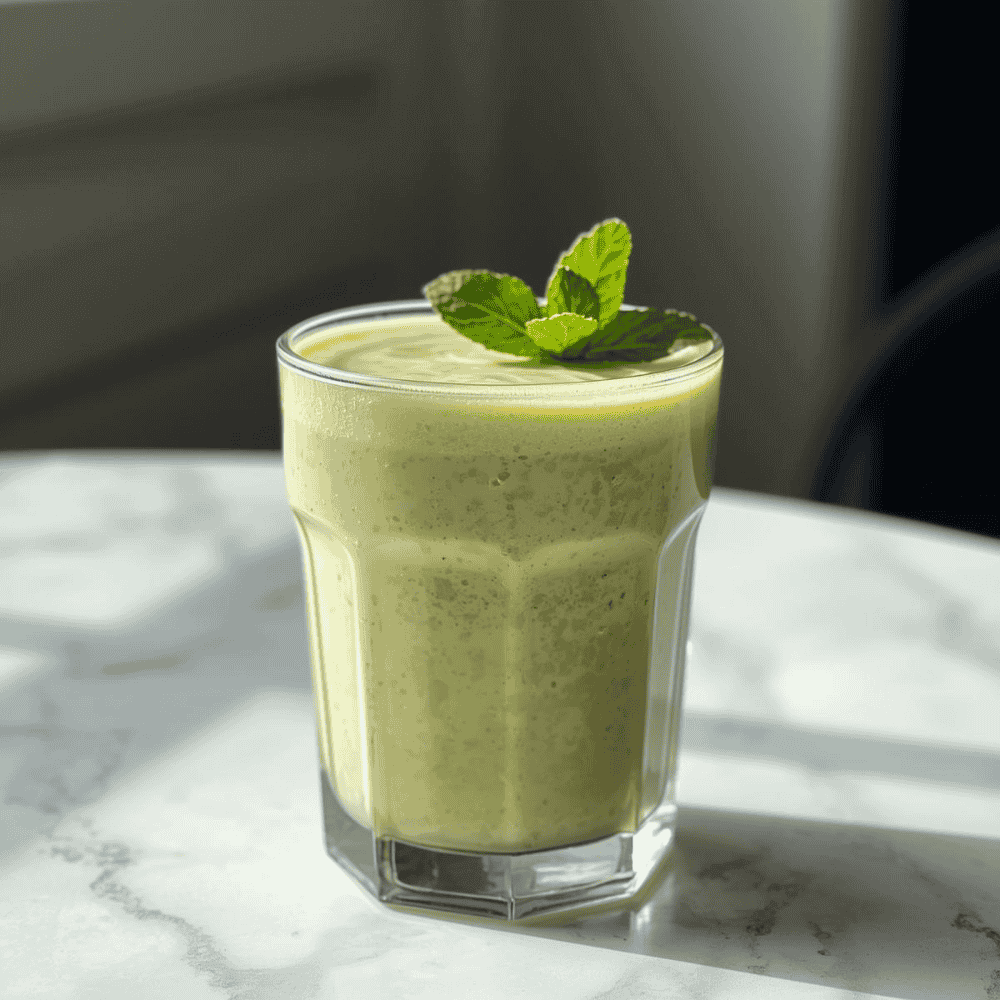
- Ingredients: 1 cup unsweetened almond milk, ½ cup frozen zucchini, ½ cup frozen cauliflower, 1 tbsp almond butter, 1 scoop collagen.
- Method: Blend frozen veg for a neutral, creamy base—great for adding flavorings.
- Est. macros: ~190 kcal • 5.4 g net carbs • 15.7 g protein • 11.8 g fat.
- Subs: add cocoa + erythritol for chocolate creamer.
17) Savory Broccoli Lemon Smoothie
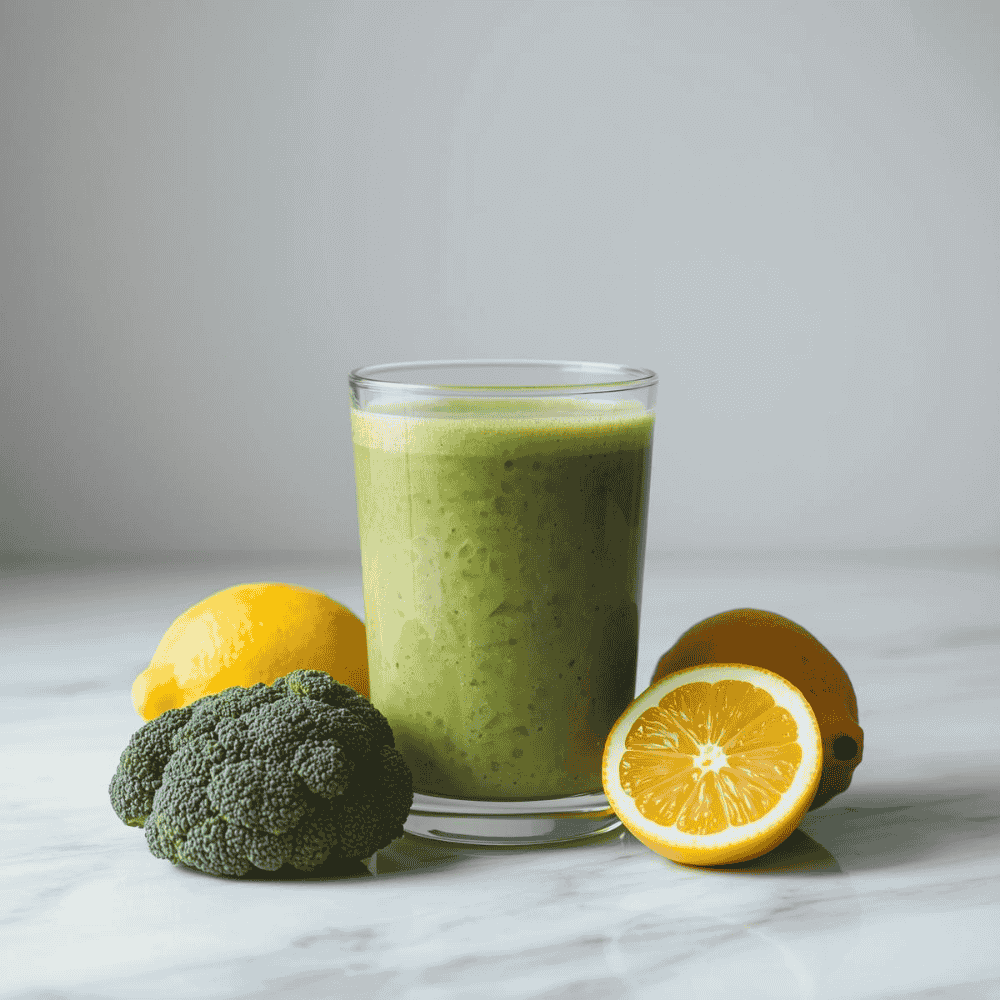
- Ingredients: 1 cup unsweetened almond milk, ½ cup steamed & cooled cauliflower or broccoli, 1 tbsp olive oil, 1 scoop collagen, lemon juice, salt, ice.
- Method: Blend; strain for a smooth, savory beverage.
- Est. macros: ~201 kcal • 2.5 g net carbs • 11.6 g protein • 16.1 g fat.
- Subs: add fresh herbs (dill or parsley) for freshness; omit oil for lighter calories.
Post-Workout / Protein (4)
18) Whey Isolate Berry Recovery
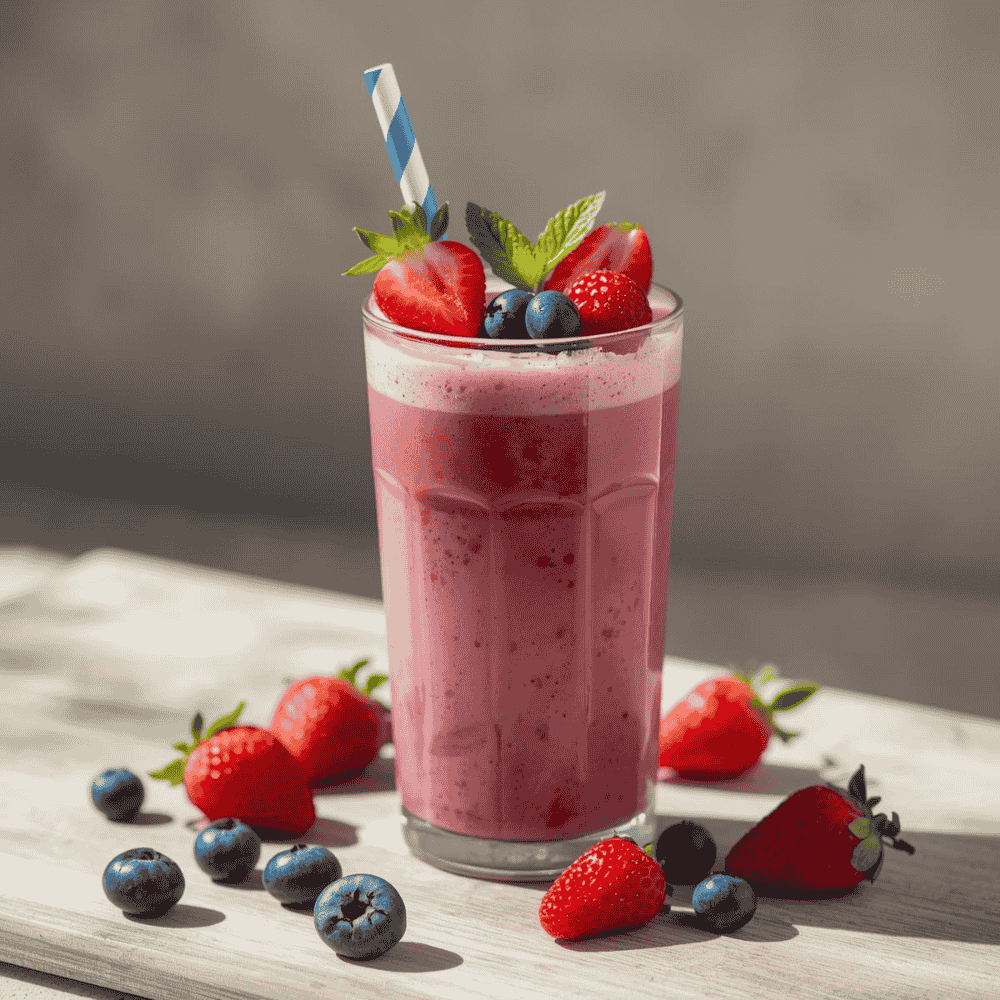
- Ingredients: 1 cup unsweetened almond milk, 1 scoop whey isolate, ¼ cup frozen raspberries, 1 tbsp ground flax.
- Method: Blend immediately after training for quick protein.
- Est. macros: ~182 kcal • 3.6 g net carbs • 27.6 g protein • 6.2 g fat.
- Subs: use whey isolate + dextrose (small targeted carb) only if you need glycogen restoration.
19) Chocolate Collagen Recovery Shake
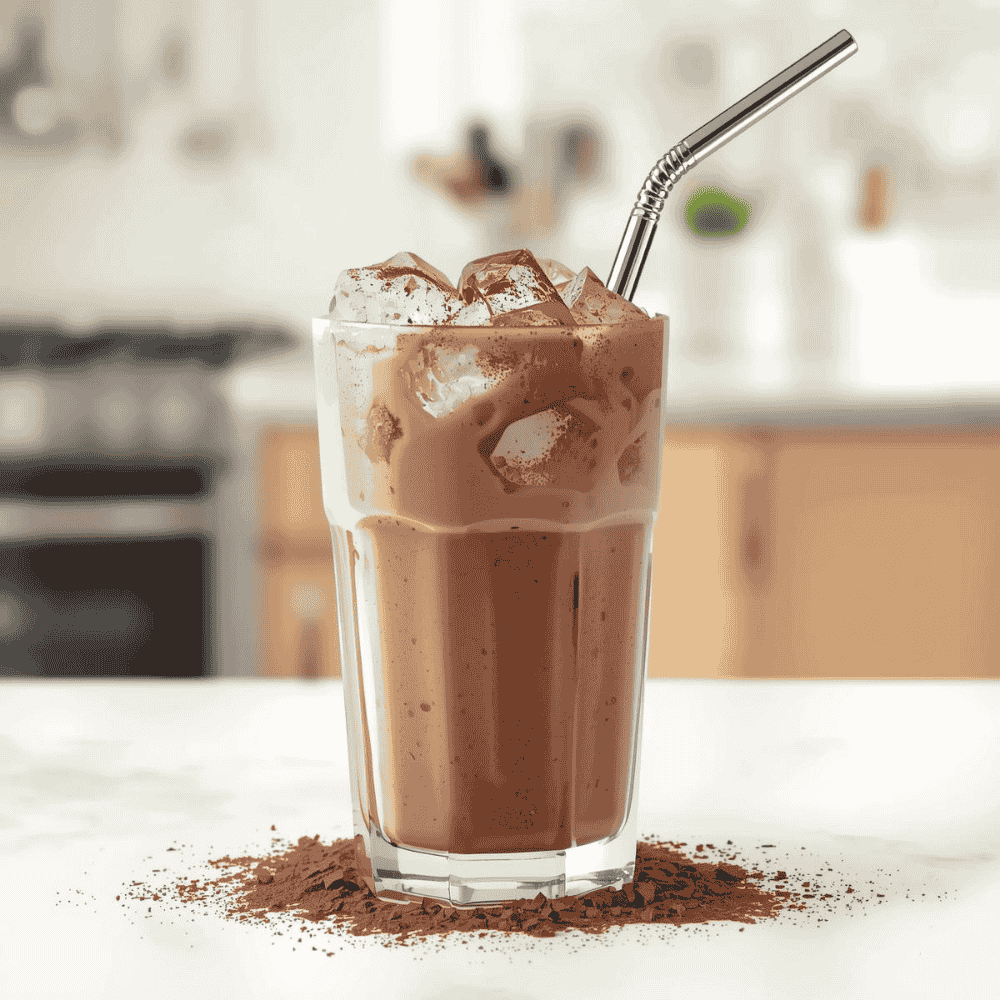
- Ingredients: 1 cup unsweetened almond milk, 1 scoop collagen, 1 tbsp cocoa, 1 tbsp almond butter, ice.
- Method: Blend — collagen supports joints while almond butter adds fat.
- Est. macros: ~180 kcal • 3.4 g net carbs • 15.4 g protein • 12.2 g fat.
- Subs: replace collagen with whey isolate for higher leucine.
20) Tropical Pea-Protein Refuel
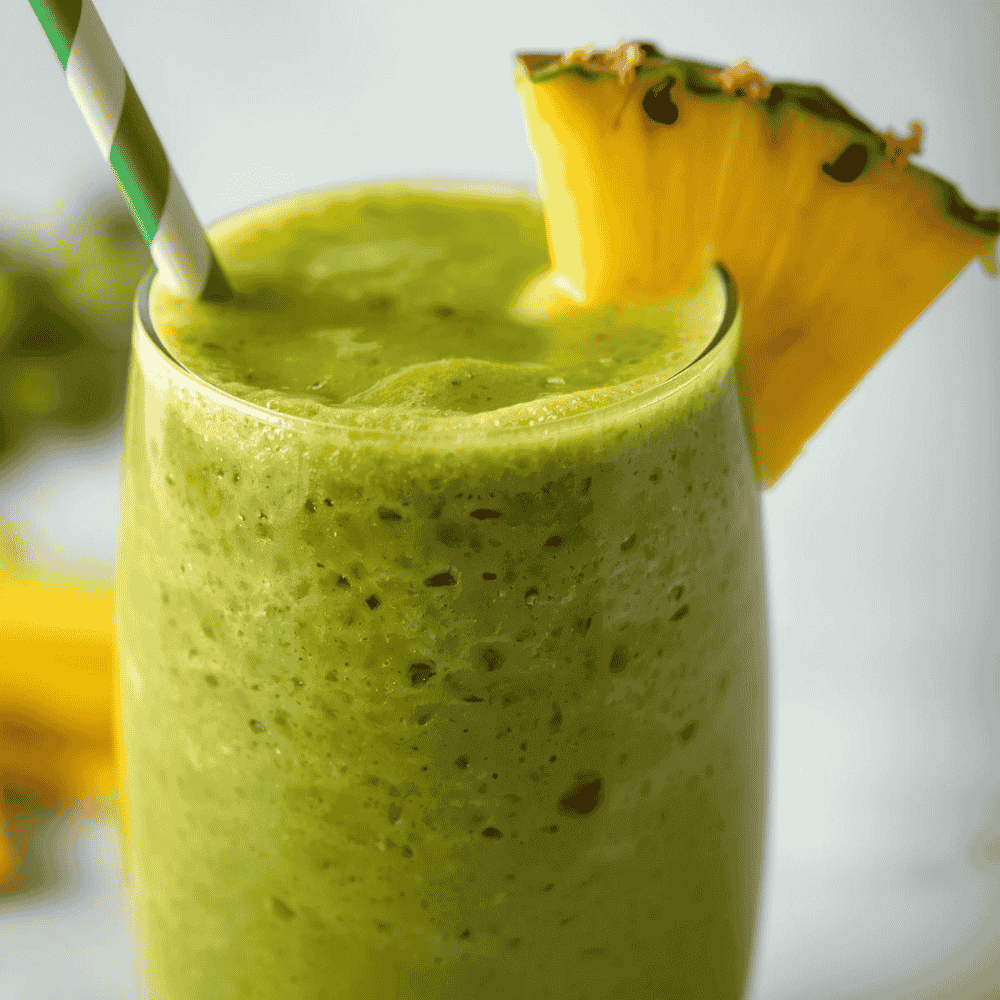
- Ingredients: 1 cup unsweetened almond milk, 1 scoop pea protein, ¼ cup frozen strawberries, 1 tbsp MCT oil, ice.
- Method: Blend for a plant-based refuel. Watch coconut water use (not included here) — it can add carbs.
- Est. macros: ~268 kcal • 5.1 g net carbs • 21.2 g protein • 18.6 g fat.
- Subs: switch pea → whey if dairy is OK and you want faster absorption.
21) Cold Brew Protein Boost
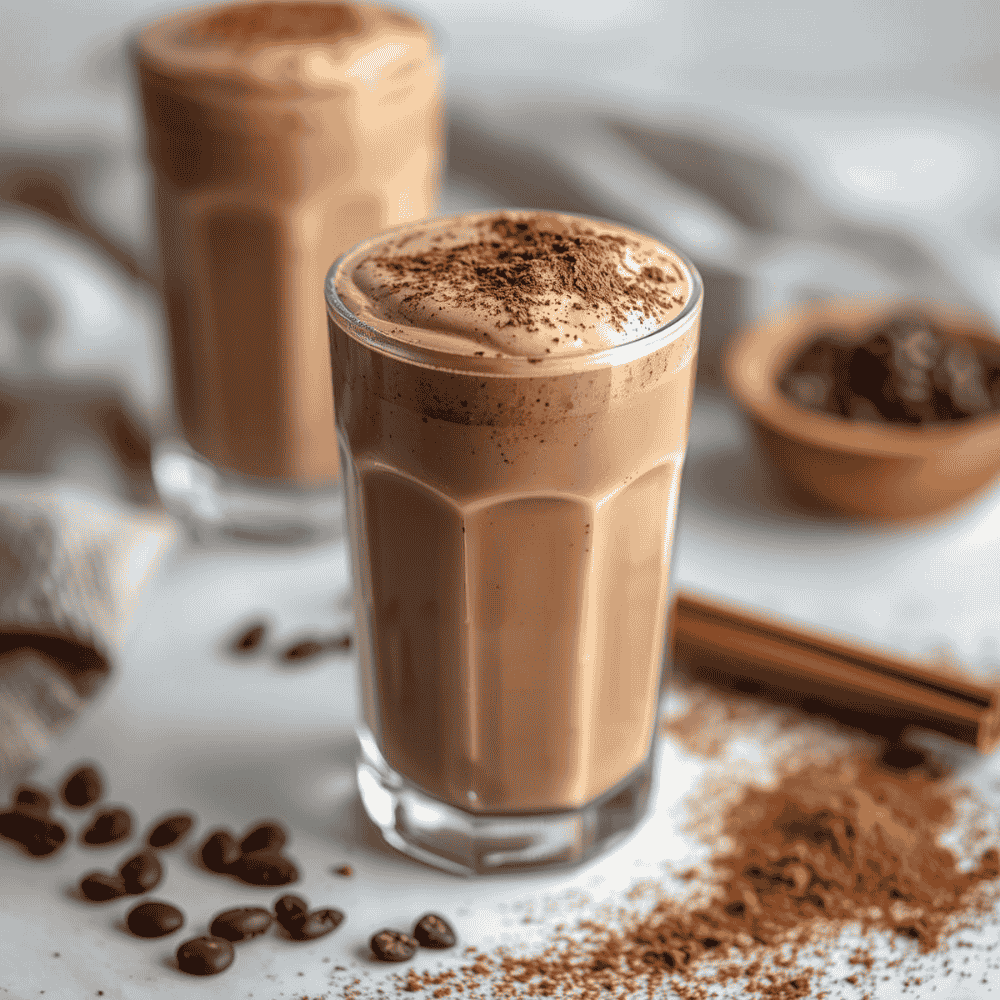
- Ingredients: 1 cup cold brew, 1 scoop chocolate whey isolate, 1 tbsp heavy cream, ice.
- Method: Shake or blend for a caffeinated recovery boost.
- Est. macros: ~182 kcal • 2.4 g net carbs • 26.3 g protein • 8.6 g fat.
- Subs: collagen + extra cream for dairy-sensitive systems (note: less muscle leucine).
Kids & Family-Friendly (2)
22) Strawberry Cream (Kid-Friendly, Low Sugar)
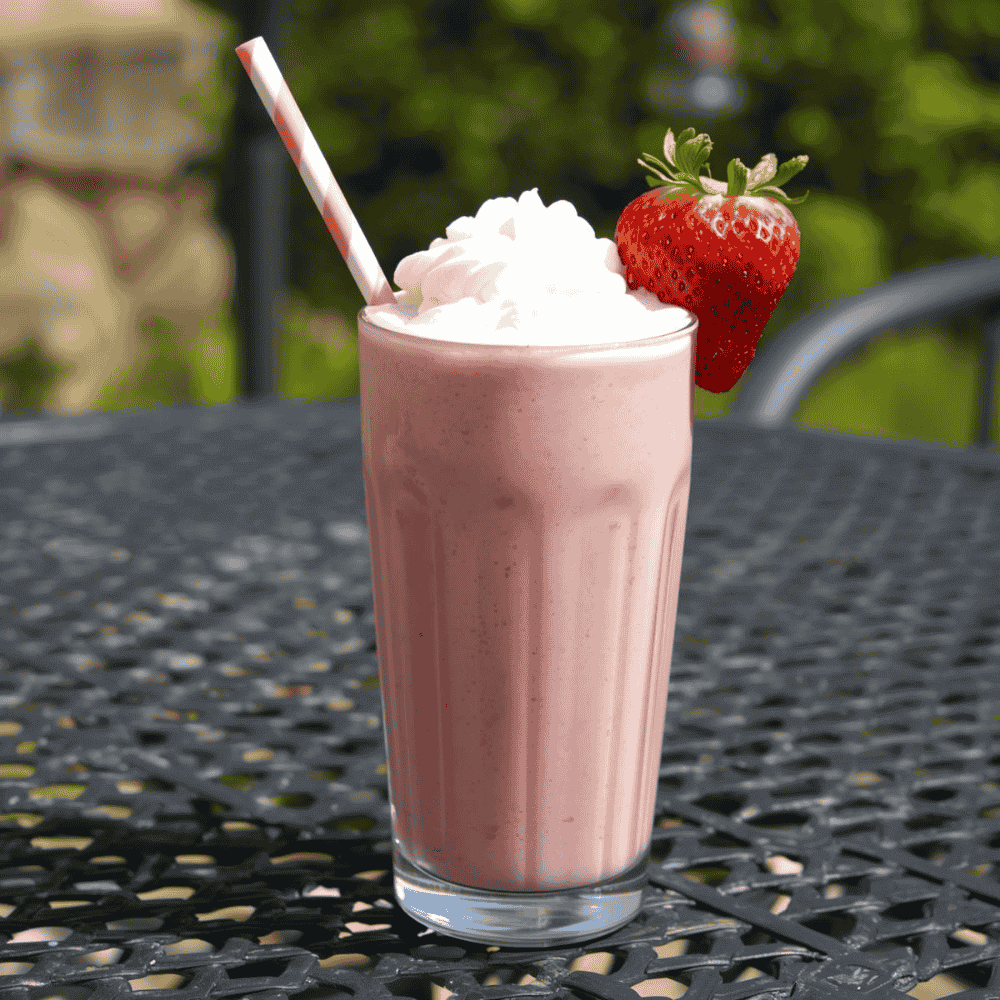
- Ingredients: 1 cup unsweetened almond milk, ½ cup frozen strawberries (smashed into ¼–½ cup equivalent), 2 tbsp heavy cream or ¼ avocado, 1 scoop collagen (optional), a drop of vanilla.
- Method: Blend until smooth—serve smaller portions for kids.
- Est. macros: ~198 kcal • 6.0 g net carbs • 12 g protein • 13.9 g fat.
- Subs: omit collagen for younger kids; use full-fat Greek yogurt for added protein (check carbs).
23) Chocolate “Banana” Smoothie (no banana)

- Ingredients: 1 cup unsweetened almond milk, ½ avocado, 1 tbsp almond butter, 1 tbsp cocoa, 1 scoop whey isolate.
- Method: Blend—the avocado + cocoa mimic banana creaminess without the sugar.
- Est. macros: ~320 kcal • 5.4 g net carbs • 31.4 g protein • 20.2 g fat.
- Subs: replace avocado with 2 tbsp cream cheese for a denser texture.
On-the-Go Bottled Options (2)
24) Ready-To-Go Keto Shake (bottleable)
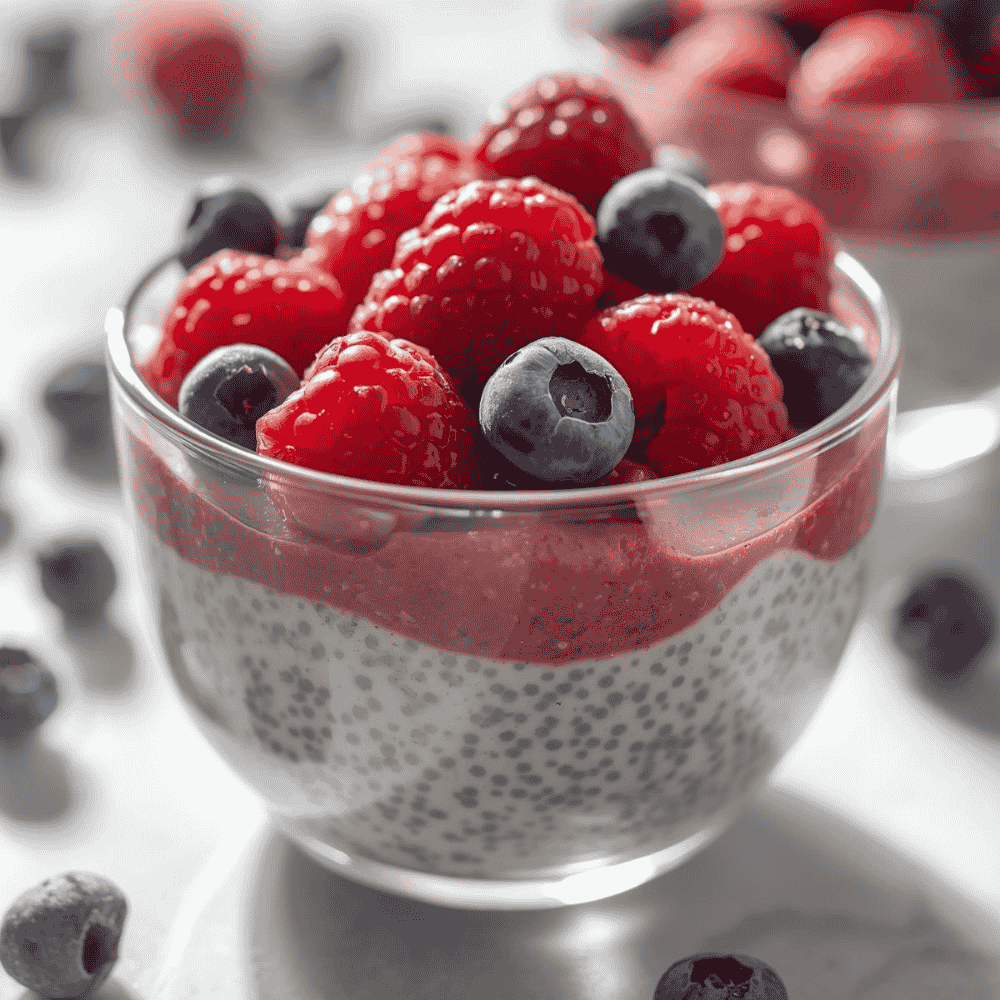
- Ingredients (12–16 oz): 1 cup unsweetened almond milk, 1 scoop whey isolate, 1 tbsp MCT oil, 1 tbsp chia gel (soaked). Mix in a shaker bottle and chill.
- Method: Shake well before drinking; keep refrigerated.
- Est. macros: ~314 kcal • 3.0 g net carbs • 28.0 g protein • 20.7 g fat.
- Subs: use collagen + extra nut butter for longer satiety; add a pinch of xanthan for texture stability in the bottle.
25) Electrolyte Lemonade Bottle (hydrator)
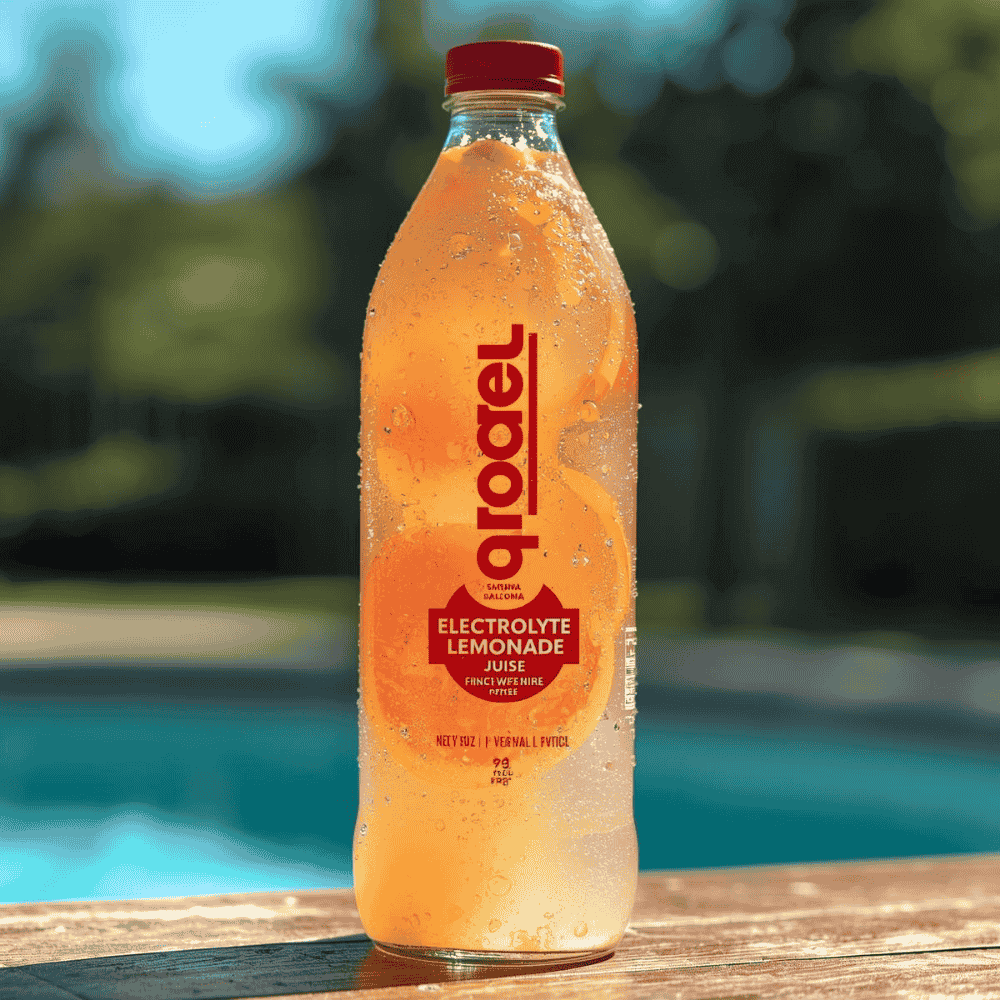
- Ingredients (bottle): 16 oz water, juice of ½ lemon, pinch sea salt, optional ¼ tsp potassium salt, stevia/monk fruit to taste. Add a splash (¼ cup) of coconut water only if you need more potassium and accept the carbs.
- Method: Mix and chill; sip during the day or workouts.
- Est. macros: ~15 kcal • 4.0 g net carbs • 0.2 g protein • 0 g fat.
- Subs: Use bone broth for sodium + amino acids after hard sweat sessions.
Quick notes on accuracy & tracking
- The macros above are estimated using commonly used serving sizes and typical values for the ingredients listed. If you require exact macros for medical or competitive reasons, log your exact brand/weights in a trusted tracker (Cronometer, MyFitnessPal, or USDA FoodData Central).
- For strict ketosis (<20 g net carbs/day), pick smoothies with ≤5 g net carbs (examples: Avocado Matcha, Bulletproof Smoothie, Coconut-Almond Meal).
- For muscle/athletic goals, prioritize whey isolate as shown (higher leucine); for joint/skin focus, collagen blends are useful, but add a complete protein for training.
Pre-Workout, Post-Workout & Recovery Keto Drinks
Working out on keto? Nice. The rules shift a bit because your body is using more fat and (sometimes) ketones instead of glucose — so timing, macronutrient balance, and electrolytes become the names of the game. Below is a practical, evidence-aware playbook you can use today: when to drink what, how much protein vs fat to aim for, how to replace sodium/potassium/magnesium, and a few ready-to-blend examples you can try before and after training. (If you’re under 18 or have health conditions, run big diet changes by a parent/guardian and your clinician first.)
Quick overview — the science elevator pitch
- Short, high-intensity efforts still rely on carbohydrates; long, low-moderate efforts can be fueled more by fat/ketones after adaptation. Research about keto + exercise is mixed — fat adaptation can increase fat-burning, but doesn’t guarantee better performance for every sport or intensity. If performance drops, a small targeted carbohydrate strategy can help. (93, 94)
Pre-workout: timing & what to choose
When: aim to have a small pre-workout drink 30–90 minutes before exercise, so it’s partly digested but not heavy — exact timing depends on your stomach tolerance and whether the workout is light cardio or hard intervals. High-fat options digest more slowly than carbs, so give yourself more time if you drink heavy fats. (95)
What to prioritize:
- For low–moderate intensity (longer sessions): a fat-forward small drink (MCT + avocado/nut butter + water or almond milk) supplies steady energy without spiking blood sugar.
- For high-intensity or short explosive efforts (sprints, heavy lifts): many athletes on keto still do better if they include a small, strategic carb serving pre-workout (e.g., 10–20 g carbs) or rely on fast protein + caffeine — monitor how your performance responds.
Pre-workout example (light/fast-adapted):
- 1 cup cold water + 1 tsp MCT oil + 1 scoop collagen or whey (unflavored) + pinch salt; blend and sip 30–60 min before training.
Estimated: ~120–180 kcal, low carbs, ~10–20 g protein (depending on scoop). Start with 1 tsp MCT and increase slowly to avoid GI upset.
During training: hydration & electrolytes (when to sip)
If you exercise for under 60 minutes at moderate intensity, plain water + adequate electrolytes beforehand is often enough. For sessions >60–90 minutes or in hot conditions, include electrolytes and (for non-keto athletes) small amounts of carbs to sustain performance. Keto-adapted athletes often prioritize sodium, potassium, and magnesium during longer sessions because initial low-carb shifts increase urinary water/electrolyte losses. (96, 97)
Quick intra-workout option (keto-friendly):
- 500–750 mL water + pinch of salt (or 1/2 cup bone broth) + a squeeze of lemon and a tiny monk-fruit/stevia if you want flavor. For longer sessions, add an electrolyte powder without sugar (sodium + potassium + magnesium). Avoid high-sugar sports drinks unless you deliberately need the carbs for performance. (98)
Post-workout recovery: protein window & fat balance
What to aim for: the sports-nutrition consensus recommends 20–40 g of a high-quality protein per feeding to stimulate muscle protein synthesis after resistance exercise. Getting protein within a few hours of training supports recovery; exact timing is flexible, but aiming for a post-workout protein-containing drink within 0–2 hours is practical. If your training is high-volume or you’re doing repeated sessions, include more protein across the day. (99, 100)
Carbs? On keto, you may keep carbs minimal — but if your performance or recovery is suffering after intense sessions, a small targeted post-workout carbohydrate (10–30 g) can restore glycogen and improve recovery — balance this with your overall keto goals. For most keto trainees, a protein-forward, moderate-fat post workout drink is a good first choice. (101)
Post-workout example (keto-friendly recovery shake):
- 1 scoop whey isolate (20–30 g protein) + 1 cup unsweetened almond milk + 1 tbsp almond butter (for fat & satiety) + 1/4 cup water, blended.
Estimated: ~250–380 kcal; protein ~20–30 g; carbs ~1–5 g; fat ~12–24 g. Swap whey for collagen + a leucine-rich food if you want more joint support. (102)
Electrolytes — sodium, potassium & magnesium: why they matter on keto
- Sodium helps retain water and maintain plasma volume — many keto dieters experience increased sodium loss early on and feel “keto flu” symptoms that respond to added salt or bone broth. The American College of Sports Medicine notes that extra sodium before heavy/hot exercise can help maintain fluid balance. (103)
- Potassium is vital for muscle and nerve function; keto-friendly sources include avocado, leafy greens, and nuts. The NIH explains potassium’s role in cellular gradients and muscle health. (104)
- Magnesium supports energy production, nerve function, and muscle relaxation — low-carb diets sometimes reveal marginal magnesium intakes; food sources (leafy greens, seeds, nuts) or a simple supplement can help if intake is low. (105, 106)
Practical electrolyte tips: sip bone broth, salt your food, include avocado or spinach in recovery drinks, or use a sugar-free electrolyte powder if you sweat a lot. If you take medications (especially blood pressure meds or diuretics), check with your clinician before changing sodium/potassium intake.
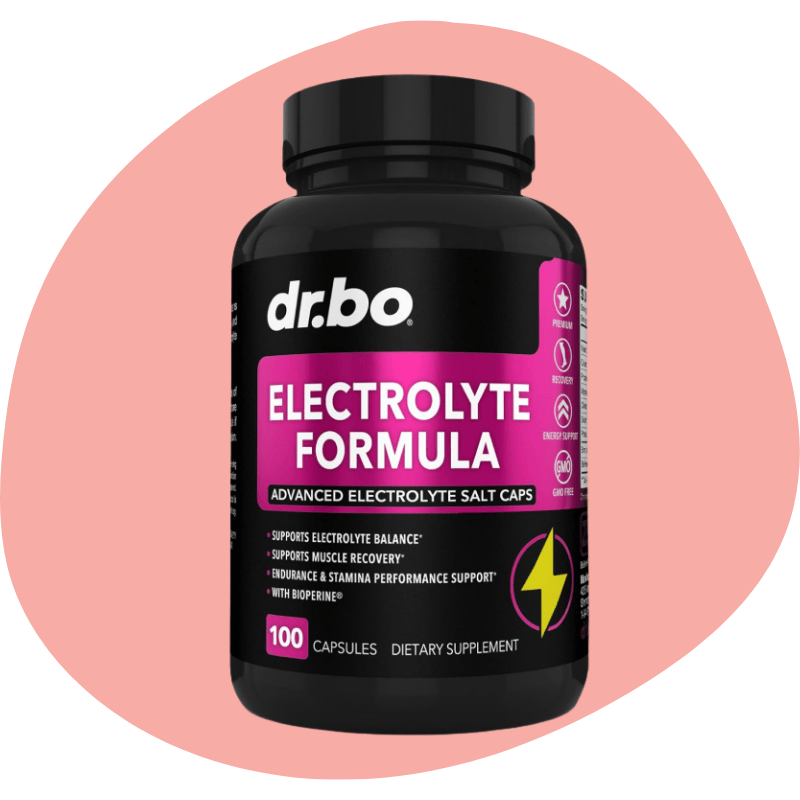
Electrolyte Pills — 100 Capsules | Potassium • Magnesium • Sodium • Chloride • Calcium — Rehydration, Keto & Cramp Support
Compact electrolyte capsule formula (100 caps) delivering key minerals — potassium, magnesium, sodium, chloride, and calcium — to help replace minerals lost with sweat or low-carb diets.
Useful for short-term rehydration after exercise, during hot weather, or when following keto/low-carb plans that increase electrolyte loss; many people also use electrolytes to help reduce muscle cramps.
Contains concentrated minerals for convenience (capsules are an alternative to drinks or powders) — follow label directions, avoid exceeding recommended doses, and consult your healthcare provider if you take blood-pressure or heart medications or have kidney disease.
Sources for quick reference: Cleveland Clinic (what electrolytes do), MD Anderson (when to use electrolytes), MedlinePlus (imbalances & risks), WebMD/EatingWell (mineral uses & safety).
Things to watch & safety notes
- GI tolerance: MCT oil can cause stomach upset if you dose too high pre-workout — start tiny (1 tsp) and titrate.
- If performance drops: consider a targeted carb strategy (small pre/post carbs) or consult a sports dietitian — evidence for keto in high-intensity sports is mixed.
- Avoid relying on ketone pills as a performance hack — recent trials show ketone supplements don’t reliably improve performance and may sometimes impair it. Whole-food fueling and electrolytes are safer first steps. (107)
Quick checklist (before you train)
- Hydrated? Sip 300–500 mL of water an hour before.
- Electrolytes topped up? Add a pinch of salt, bone broth, or an electrolyte drink if you’ve felt lightheaded.
- Protein target set for post-workout? Plan a 20–40 g protein recovery shake.
- If you do high-intensity work and feel weak, allow a small targeted carb (try 10–20 g) and monitor results.
Keto Smoothies for Special Goals (Weight Loss, Muscle, Cognitive Boost)
Want smoothies that do more than taste good? Great — you can tune the same basic template to support weight loss, muscle gain, or sharper focus. Below, I’ll show how to adjust macro splits for each goal, give literal ingredient ideas (so you don’t have to guess), explain the role of caffeine, collagen, and MCTs, and add safety notes (especially for teens). Clear, practical, and ready to use.
How to pick a macro split for your goal (the quick rule)
- Weight loss on keto: favor moderately high protein to preserve muscle + moderate fat to stay full.
- Muscle building: higher protein + enough calories overall; keep carbs low if you’re staying keto, but aim to hit protein targets.
- Cognitive boost / mental energy: higher fat (especially MCTs) + moderate protein; fats and ketones can support sustained mental energy.
Below are three realistic 400 kcal smoothie examples with step-by-step macro math (so you can copy the method). I show the math digit-by-digit, so there are no arithmetic surprises.
Example A — Weight-loss smoothie (target: 60% fat / 30% protein / 10% carbs — 400 kcal)
- Calories from fat: 60% of 400 = 0.60 × 400 = 240 kcal.
- Convert fat kcal → grams: fat = 9 kcal/g → 240 ÷ 9 = 26.666... g fat → round to 26.67 g fat.
- (Check: 9 × 26 = 234 kcal; remainder 6 → 6 ÷ 9 = 0.666… → 26.67 g)
- Calories from protein: 30% of 400 = 0.30 × 400 = 120 kcal.
- Convert protein kcal → grams: protein = 4 kcal/g → 120 ÷ 4 = 30 g protein.
- Calories from carbs: 10% of 400 = 0.10 × 400 = 40 kcal.
- Convert carbs kcal → grams: carbs = 4 kcal/g → 40 ÷ 4 = 10 g carbs.
Target macros ≈ : 26.7 g fat / 30 g protein / 10 g carbs.
Practical build (approx):
- 1 cup unsweetened macadamia milk (very low carb)
- 1 scoop whey isolate (≈25–30 g protein)
- ½ small avocado (≈7–8 g fat) + 1 tbsp almond butter (≈9 g fat)
- 1 tbsp heavy cream, or add 1 tsp MCT to the top fat if needed
- tiny handful of raspberries (keeps carbs low)
Why this works: higher protein keeps you full and preserves lean mass while the fat portion keeps the smoothie satisfying and delays hunger—good for weight control.
Example B — Muscle-building smoothie (target: 55% fat / 35% protein / 10% carbs — 400 kcal)
- Calories from fat: 55% of 400 = 0.55 × 400 = 220 kcal.
- Convert fat kcal → grams: 220 ÷ 9 = 24.444... g fat → round to 24.44 g fat.
- (Check: 9 × 24 = 216 kcal; remainder 4 → 4 ÷ 9 = 0.444… → 24.44 g)
- Calories from protein: 35% of 400 = 0.35 × 400 = 140 kcal.
- Convert protein kcal → grams: 140 ÷ 4 = 35 g protein.
- Calories from carbs: same 10% → 40 kcal → 10 g carbs.
Target macros ≈: 24.4 g fat / 35 g protein / 10 g carbs.
Practical build (approx):
- 1 scoop whey isolate (25–30 g protein) + 1/2 scoop extra or 1 large scoop if needed for 35 g total
- 1 tbsp peanut or macadamia butter (9–13 g fat)
- 1/2 cup unsweetened almond milk + 1 tbsp heavy cream (for extra fat if needed)
- 1 tbsp ground flax or chia for fiber and texture
Why this works: whey isolate is leucine-rich and fast-absorbing — ideal for post-workout muscle protein synthesis. If you train hard, aim for 25–40 g protein in your post-workout window.
Example C — Cognitive-boost smoothie (target: 75% fat / 20% protein / 5% carbs — 400 kcal)
- Calories from fat: 75% of 400 = 0.75 × 400 = 300 kcal.
- Convert fat kcal → grams: 300 ÷ 9 = 33.333... g fat → round to 33.33 g fat.
- (Check: 9 × 33 = 297 kcal; remainder 3 → 3 ÷ 9 = 0.333… → 33.33 g)
- Calories from protein: 20% of 400 = 0.20 × 400 = 80 kcal.
- Convert protein kcal → grams: 80 ÷ 4 = 20 g protein.
- Calories from carbs: 5% of 400 = 0.05 × 400 = 20 kcal.
- Convert carbs kcal → grams: 20 ÷ 4 = 5 g carbs.
Target macros ≈ 33.3 g fat / 20 g protein / 5 g carbs.
Practical build (approx):
- 1 cup unsweetened coconut milk or macadamia milk
- 1 tbsp MCT oil (≈14 g fat) + ½ avocado (≈14 g fat) → already ~28 g fat
- 1 scoop collagen or ½ scoop whey (≈10–20 g protein depending on product)
- pinch cinnamon, 1 tsp cocoa for flavor, and 1–2 raspberries or lemon for negligible carbs
Why this works: high MCTs + fats produce ketones faster and provide steady fuel for the brain. Many people pair this with low-dose caffeine for focus.
Caffeine, collagen, and MCTs — how to use them smartly
Caffeine (coffee, matcha)
- Benefits: improved alertness, reaction time, and perceived energy.
- Safety note for teens: for adolescents, health organizations often recommend limiting caffeine (commonly suggested upper limit ≈100 mg/day) — check with a parent/guardian and avoid large black-coffee doses. For adults, a standard 8-oz cup of brewed coffee ≈ has 95 mg caffeine; matcha has lower, gradual caffeine and L-theanine for smoother focus.
- Practical use: for cognitive smoothies, add cold brew (1/2–1 cup) or 1 tsp matcha; for workouts, a small espresso shot can be helpful. Keep totals in check and track sleep and jitteriness.
- Why it’s used: MCTs (especially C8/C10) convert quickly into ketones and supply fast brain fuel.
- Start low: begin with 1 teaspoon to test tolerance; progress to 1 tablespoon (≈14 g fat) if tolerated. GI side effects (loose stool, cramping) are common if you start high.
- Tip: Using MCT with other fats and fiber reduces GI upset for many people.
- Benefits: supports connective tissues, joints, and skin; mixes well and tastes neutral.
- Limitations: Collagen is not a complete protein (low in leucine), so if muscle gain is the goal, pair collagen with whey isolate or another complete protein source. Typical collagen doses: 10–20 g per serving.
- Practical: add collagen to any smoothie for body/healing benefits, but rely on whey/pea/isolate for muscle-building targets.
Timing & practical tips by goal
- Weight loss: Use smoothies as meal replacements (not extra snacks). Drink slowly, include protein + fiber + fat, and track total daily calories and carbs. If you’re aiming for strict ketosis (<20 g/day), keep berry portions very small.
- Muscle: have a protein-forward shake within ~60–120 minutes post-workout (20–40 g protein). If you want more carbs for glycogen, a small targeted carb (10–30 g) post-workout can help performance — but it may temporarily reduce ketosis.
- Cognitive focus: Have your MCT + caffeine smoothie in the morning (after testing tolerance). Pair with electrolytes and water to avoid headaches; consider cycling MCT use, so you don’t overload saturated fats every day.
Electrolytes & hydration (applies to all goals)
Keto increases urinary sodium and water loss — add a pinch of salt to your smoothie or sip bone broth, include potassium-rich low-carb foods (avocado, spinach), and consider magnesium if you feel cramps or poor sleep. If you take blood-pressure meds or have health conditions, consult your clinician before changing sodium/potassium intake.
Safety notes & teen-specific caution
Because you’re under 18, be cautious about supplements and stimulants:
- Check with a parent/guardian before adding MCT oil, collagen powder, or caffeine.
- Limit caffeine (many health bodies recommend adolescents keep caffeine lower — e.g., ~100 mg/day or less).
- Avoid relying on supplements as a substitute for a balanced diet. If you have medical conditions or take medications, always check with your clinician.
Quick recipe templates you can copy (goal-matched)
Weight-loss template:
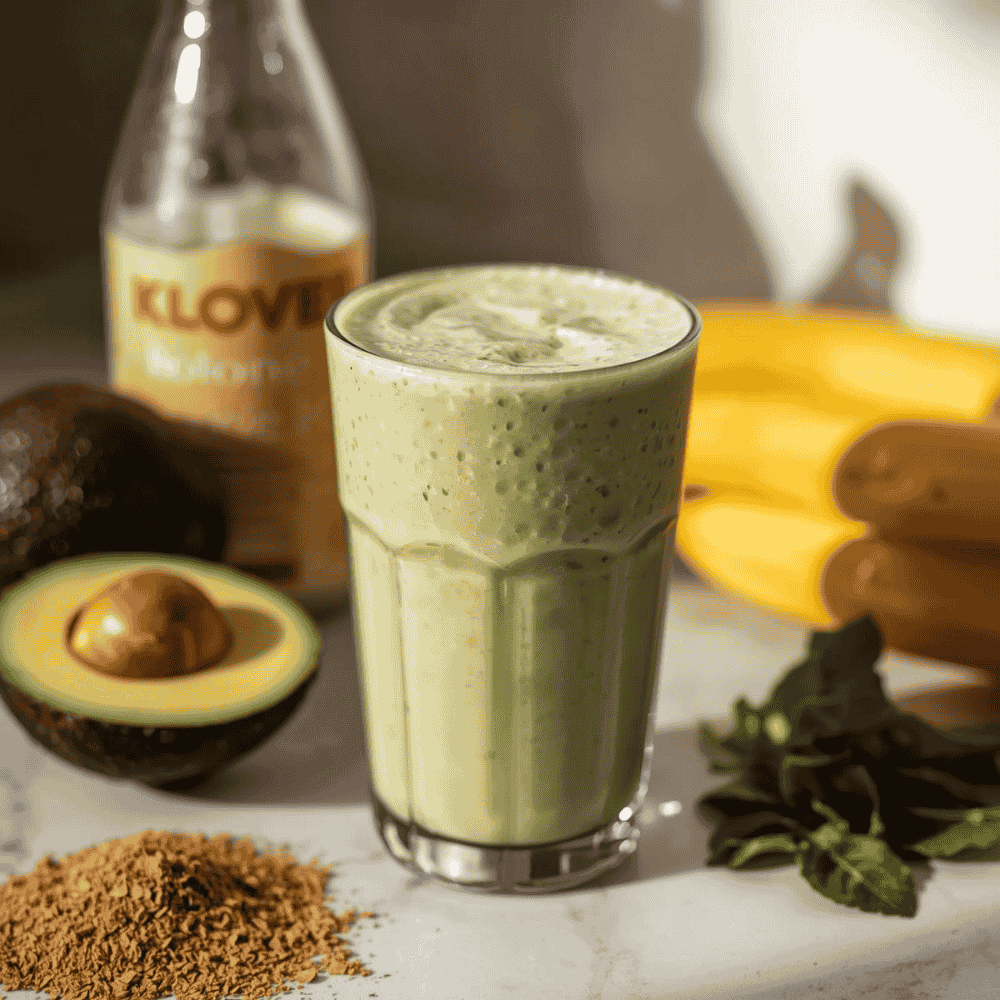
- 1 cup unsweetened macadamia milk
- 1 scoop whey isolate (≈25–30 g protein)
- ½ avocado
- 1 tsp MCT oil (optional)
- Ice + cinnamon
Muscle template (post-workout):
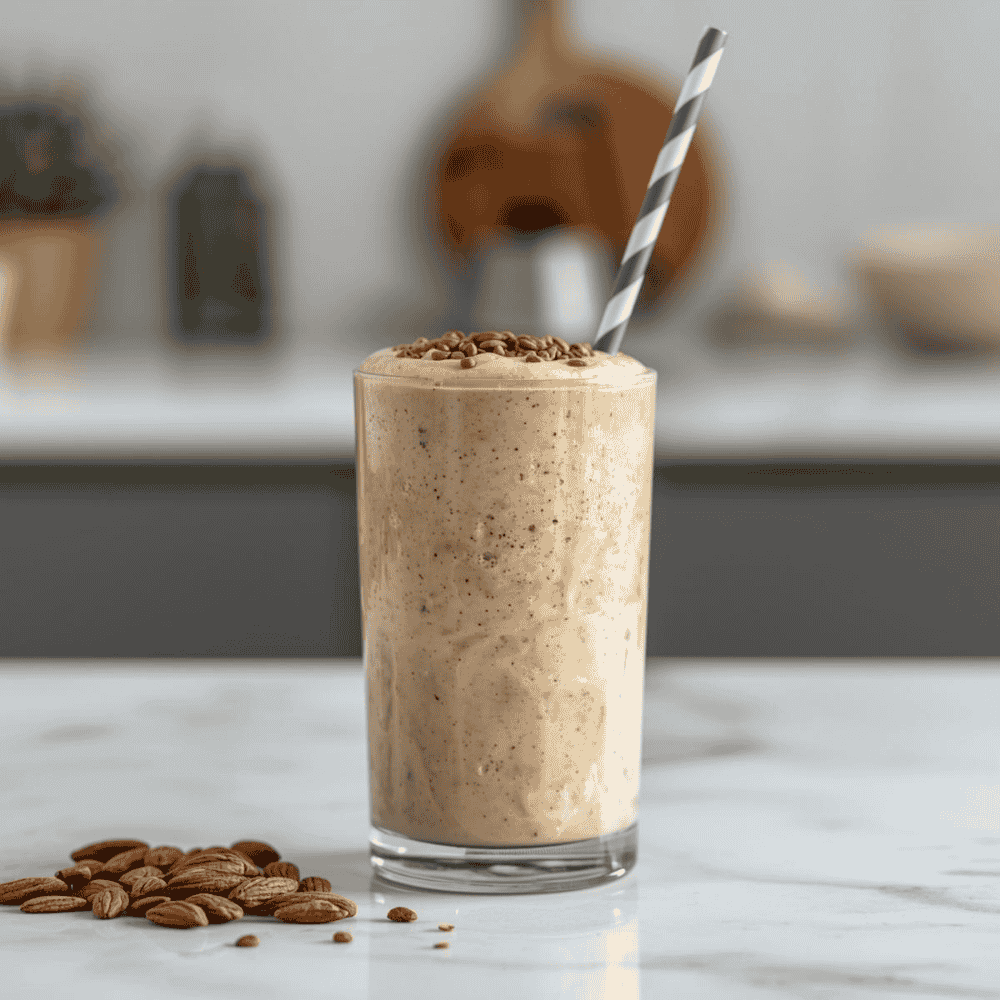
- 1 cup unsweetened almond milk
- 1–1.5 scoops whey isolate (to reach 30–35 g protein)
- 1 tbsp almond butter
- 1 tbsp ground flax
Cognitive template (morning focus):
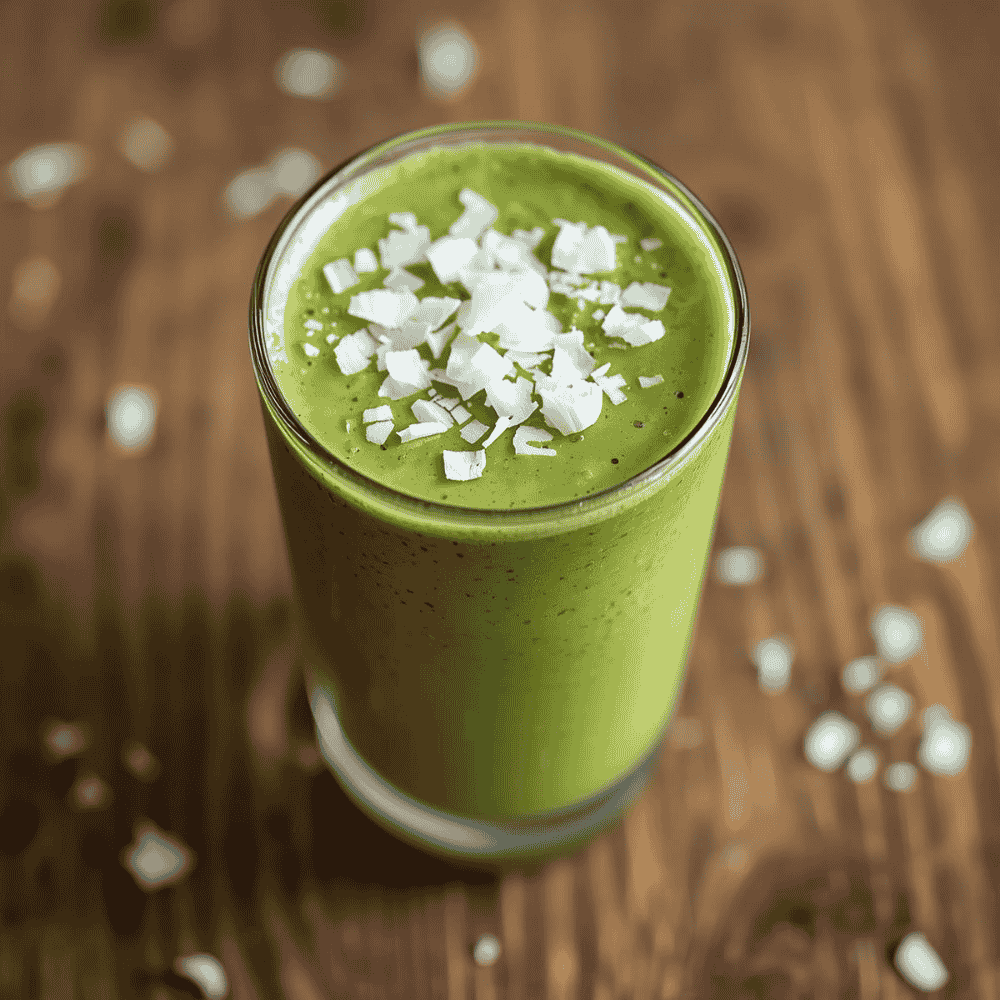
Where to Buy Keto-Friendly Drinks & What to Avoid (Store & Chain Options)
Buying ready-made drinks can be convenient — but packaged beverages are a minefield for hidden carbs and marketing tricks. Below is a kitchen-to-grocery playbook: how to read labels fast, what to watch for, real examples of good vs. bad store-bought choices (categories you can trust and categories to avoid), and a short shopping checklist you can use in-store or online.
Quick takeaway (if you’re scanning)
Good store buys: unsweetened nut milks, plain canned coconut cream, cold brew (unsweetened), bone broth, plain sparkling water, and sugar-free electrolyte mixes or low-carb ready-to-drink protein shakes that show low total carbs and no added sugar.
Avoid: bottled fruit smoothies, many “fresh-pressed” juices, flavored milks and sweetened coffee drinks, and products that say “keto” but carry added sugars, maltodextrin, or high amounts of sugar alcohols like maltitol. (108, 109)
Read labels like a pro — the five-second scan
- Check serving size (top). Labels lie by volume — compare the realistic portion to the “serving.” (110)
- Look at Total Carbohydrate →Sugar →Added Sugars. If Added Sugars > 0, it’s a red flag for keto. The FDA requires Added Sugars to be listed. (111)
- Find Dietary Fiber & Sugar Alcohols. Net carbs = Total carbs − Fiber − (some sugar alcohols). Many people subtract erythritol but treat maltitol and similar polyols with caution. (112, 113)
- Scan the ingredient list (top 5 ingredients). If “cane sugar,” “fruit juice concentrate,” “maltodextrin,” or “high-fructose corn syrup” appear near the top, put them back. (114)
- Check for calories, protein, and sodium. Some keto-friendly drinks trade carbs for calories or sodium; make sure the rest of the label fits your goals.
Red flags & marketing traps to avoid
- “Keto” on the front ≠ of the bottle. The term “keto” isn’t regulated the way “low fat” or “good source of fiber” is — so “keto-friendly” can be pure marketing. Always check the Nutrition Facts and ingredient list. (115, 116)
- “No sugar added” or “all-natural” can still mean lots of fruit sugars. A drink made from only fruit has naturally occurring sugars and can spike carbs even with no added sugar. (117, 118)
- Beware of sugar alcohols you don’t know. Erythritol is usually treated as zero net carbs for trackers, but others (maltitol, sorbitol) may raise blood sugar in some people — and large amounts of polyols can cause GI upset. Recent research also flags open questions about long-term erythritol safety for people with cardiovascular risk, so don’t assume “safe forever.” (119)
- Hidden fillers that add carbs: maltodextrin, dextrose, fruit juice concentrate, and some gums/starches add usable carbs — check the ingredient list.
Examples — Good vs Bad store-bought choices (categories, with why)
Good choices (buy these)
- Unsweetened almond, macadamia, or cashew milks — very low total carbs when unsweetened; useful as a liquid base. Check the label for added sugars and thickeners. (120)
- Canned full-fat coconut milk/coconut cream (unsweetened) — excellent for creamy shakes; watch saturated fat totals (rotate with other fats).
- Cold brew coffee (unsweetened) and plain sparkling water — zero carbs and great as mixers or bases.
- Plain bone broth — savory option with electrolytes and almost no carbs; great pre/post workout.
- Sugar-free electrolyte powders (no dextrose) and low-carb ready-to-drink protein shakes that list ≤2 g total carbs and 0 g added sugar on the label. Always verify serving size and carbs.
Bad choices (skip or treat as an occasional indulgence)
- Bottled fruit smoothies & many cold-pressed juices — can contain as much sugar as soda, even if “natural.” Which/consumer checks show many popular smoothie brands are high in sugar?
- Flavored milks and sweetened coffee drinks often contain added sugars, syrups, or concentrated sweeteners. (121)
- “Keto” bars/drinks with maltitol-heavy sweetening — some feel lower-carb on labels but include sugar alcohols that count for you metabolically; test tolerance and always calculate net carbs. (122, 123)
- “All-natural” fruit juice blends or smoothie bottles — even with “no added sugar” can have high natural sugar and low fiber — not keto-friendly.
Quick shopping checklist you can screenshot
- Serving size = my real portion? ✔
- Total carbs ≤ (your per-drink limit)? ✔
- Added sugars = 0 g? ✔
- Fiber/erythritol listed? ✔ (subtract if appropriate)
- Ingredients: no maltodextrin, cane sugar, dextrose, fruit concentrate up top? ✔
- Protein & calories match my goal (meal vs. snack)? ✔
Use USDA FoodData Central or your tracking app to double-check any numbers if you want precision.
Safe rule-of-thumb for “keto” labeled products
If a product says “keto-friendly” but has >5 g net carbs per serving, treat it as a snack/indulgence, not a meal replacement — especially if you’re under a strict 20–30 g/day carb budget. If the product uses sugar alcohols, calculate net carbs conservatively (treat unknown polyols as partly usable).
What to do when you’re dining out or grabbing a chain drink
- Order unsweetened cold brew or black coffee and add heavy cream or MCT oil yourself (you control carbs).
- Ask for plain water or sparkling water with lemon.
- If a smoothie shop will blend a custom drink, ask for no juice or sweeteners, use unsweetened milk alternatives, add avocado or nut butter, and keep berries to small portions.
Final safety note on sweeteners & long-term use
Erythritol and other non-nutritive sweeteners are widely used and often tolerated, but new research has raised questions about long-term effects and cardiovascular signals in some studies — keep use moderate and don’t assume “zero-carb” equals “zero risk.” If you have heart disease or other health concerns, check with your clinician about frequent use of sugar alcohols or high-dose sweetener consumption. (124)
Prep, Freezing & Storage (Batching Smoothies & Make-Ahead Tips)
Smoothies are perfect for batching — but do them wrong, and you’ll end up with a watery, separated mess or a fridge-smelling bottle that tastes off. Below is a practical, kitchen-tested guide to freezing, thawing, keeping texture, and maintaining nutrition for keto smoothies. Follow these steps, and you’ll have grab-and-go breakfasts that actually taste great.
Quick rules up front
- Fridge-ready smoothies: use within 24–48 hours for best texture and freshness.
- Frozen smoothie packs (ingredients only): best quality up to 3 months; safe long, er but quality drops.
- Fully blended smoothies frozen: best if consumed within 6–12 weeks; technically safe longer, but texture and flavor decline.
- Don’t refreeze a smoothie that’s been thawed. Re-freezing damages texture and increases spoilage risk.
Two smart strategies (choose one)
- Freeze ingredient packs (recommended) — freeze fruits/veggies/seeds/protein in portioned bags. Add liquid + fats, fresh, and blend. Best texture, easiest to thaw, and preserves nutrients.
- Freeze finished smoothies (convenience) — pour blended smoothie into freezer-safe jars or bottles and thaw before drinking. Works, but the texture will separate and may need re-blending.
How to make freezer smoothie packs (step-by-step)
- Portion ingredients into single-serve freezer bags or silicone trays: leafy greens, berries (¼–½ cup), measured seeds (chia/flax), chopped avocado (½ fruit = 1 pack), protein powder in a small resealable bag. Exclude liquid, nut milks, and MCT oil (add fresh).
- Remove air — press flat to remove air or use a vacuum sealer. Flat packs freeze faster and stack easily.
- Label each pack with: name, date packed, and target macros (e.g., “Green Avocado — 12/01 — ~6g net carbs”). Stick a small label on the bag.
- Freeze flat on a baking sheet for 2–4 hours, then stack to save space. Frozen flat packs thaw in minutes in a blender with liquid.
Why this works: ingredients keep color and structure; you only add liquids/fats right before blending, so you avoid watery separation.
How to freeze a finished smoothie (if you must)
- Use wide-mouth mason jars or rigid freezer-safe bottles.
- Leave headspace — liquids expand when frozen. Leave at least 1 inch (2.5 cm) at the top. If using glass, make sure the jar is rated for freezing and is cooled to room temperature before putting it in the freezer to avoid cracking.
- Freeze flat on a tray for faster freezing; then stand upright.
- Label with date and contents.
Thawing: move to the fridge overnight, or for a quick fix, dump frozen block into a blender with 2–4 tbsp cold liquid and re-blend until smooth. Don’t microwave — it cooks and ruins the flavor/texture.
Keep texture — tricks that actually help
- Add thickeners at blending time: 1 tbsp soaked chia, 1–2 tsp psyllium husk, or a pinch (1/16–1/8 tsp) xanthan gum will stabilize texture and reduce separation. Start small — xanthan is potent.
- Freeze cream or coconut cream in cubes: when a thawed smoothie becomes too thin, toss in a few frozen cream cubes and re-blend.
- Use frozen whole ingredients rather than ice: ice melts and dilutes flavor; frozen avocado, cauliflower, or zucchini keeps the body without watering down the drink.
- Blend cold and fast: a high-speed blender creates a better emulsion and smoother texture than low-speed or over-blending (which can warm a drink and break texture).
Maintain nutrition & color
- Freeze quickly: Quick freezing preserves vitamins better. Lay packs flat in a single layer until solid — this speeds freezing.
- Add lemon or vitamin C to greens or avocado packs if you care about color — a teaspoon of lemon juice prevents browning. (Tiny acid won’t hurt keto macros.)
- Don’t overheat— heat destroys some vitamins. Avoid reheating smoothies; instead, re-blend cold.
- Store greens raw when possible — blanching can reduce some nutrients and is unnecessary for smoothie packs.
Safe containers & labeling
- Best containers: freezer-grade zip-top bags (press flat), rigid BPA-free bottles, wide-mouth mason jars (with headspace), or silicone trays.
- Avoid: thin plastic takeaway cups (not freezer-safe) and filling glass to the brim.
- Label format: NAME | DATE PACKED | SERVINGS | NET CARBS (EST) — Makes meal planning easier and helps with friendly recipe card notes.
Troubleshooting common problems
- Watery after thawing: re-blend with frozen coconut-cream cubes, 1 tbsp nut butter, or extra ice. Use less watery liquid next time.
- Grainy texture (erythritol recrystallization): blend more vigorously or add a little glycerin alternative (not usually necessary). Mixing sweeteners — e.g., erythritol + monk fruit — reduces graininess.
- Separation (oil vs water): that’s normal. Shake or re-blend. Add a tiny xanthan pinch for future batches to emulsify.
- Off smell/taste: discard. If a fridge-stored smoothie smells sour or metallic after 48 hours, don’t drink it.
Sample batch plan (easy weekly routine)
- Sunday (1 hour): make 7 freezer packs (breakfasts) — spinach, half-avocado (frozen), 1 tbsp chia, 1 scoop protein in bag. Make 3 “coffee base” packs for bulletproof coffee days (coffee grounds not needed; use cold brew). Label and freeze.
- Each morning: dump 1 pack into blender + 1 cup unsweetened almond/macadamia milk + 1 tsp MCT + ice; blend and go.
- Leftover fresh smoothies: refrigerate and drink within 24 hours or freeze if needed (follow headspace rule).
Final food-safety notes
- Always wash your hands and produce before prepping packs.
- Keep fridge at ≤40°F (4°C) and freezer at 0°F (−18°C).
- Don’t use raw eggs in make-ahead smoothies you plan to store (food-safety risk). Use pasteurized egg products or avoid eggs entirely.
Safety, Health Considerations & Who Should Check with a Provider
Keto smoothies can be great, but they’re not risk-free for everyone. Below is a clear, teen-friendly rundown of the main safety issues (heart health, kidneys, medications), what to monitor, and when to pause and talk to a clinician or registered dietitian. I’ll keep it practical so you can act on it — and yes, if you’re under 18, loop in a parent/guardian before trying major diet changes.
1) Heart health & saturated fat — the coconut product caution
Many keto drinks use coconut cream, coconut milk, or lots of butter, which are high in saturated fat. Clinical reviews and major public-health sources say high saturated-fat intake tends to raise LDL (“bad”) cholesterol in many people, so frequent use of coconut-heavy smoothies can increase cardiovascular risk for people who are vulnerable. If you already have high cholesterol, a family history of heart disease, or other risk factors, be cautious about daily coconut/cream overload and favor more monounsaturated fats (avocado, olive oil, nut butters) most days. (125)
What to do: if you plan regular high-fat smoothies, get a baseline lipid panel (total cholesterol, LDL, HDL, triglycerides) and repeat it after a few months so you know how your body is responding. If LDL rises, work with your clinician to swap some saturated fat for unsaturated fats. (126)
2) Kidneys & protein — when “more” is not always better
High protein is common in many meal-replacement shakes. For most healthy people, moderate increases in protein aren’t harmful — but people with chronic kidney disease (CKD) are generally advised to limit protein (unless they’re on dialysis, when needs change). If you have any known kidney issues, kidney stones, or abnormal kidney labs, don’t increase your protein intake without medical advice. The National Kidney Foundation recommends individualized protein targets and consultation with a kidney dietitian. (127, 128)
What to do: if you have risk factors (family kidney disease, recurrent kidney stones, abnormal creatinine/eGFR), get kidney function checked (creatinine/eGFR and urine tests) and talk with a clinician before adding heavy protein shakes.
3) Medication interactions — be careful with diabetes drugs and others
The ketogenic pattern changes blood glucose and ketone dynamics, so some medications need close monitoring:
- SGLT2 inhibitors (gliflozins) — drugs in this class (used for type 2 diabetes and sometimes heart or kidney protection) are linked to a risk of ketoacidosis even when blood glucose isn’t very high. The FDA has specific warnings about this. If you’re on an SGLT2 drug, discuss any low-carb or ketogenic plan with your prescriber first. (129, 130)
- Insulin and other glucose-lowering meds — reducing carbs can mean you need less insulin or other medications; if doses aren’t adjusted safely, hypoglycemia (dangerously low blood sugar) can happen. Clinical guidance recommends medical supervision and stepwise medication adjustment when lowering carb intake. (131, 132)
What to do: never stop or change prescription meds on your own. If you have diabetes or take BP, heart, or diuretic medications, tell your clinician before starting a ketogenic plan — they can advise dose changes and monitoring (blood glucose, ketones, blood pressure, electrolytes).
4) Electrolytes, hydration & other metabolic signals
Starting or doubling down on keto can quickly change how your body handles water and electrolytes (sodium, potassium, magnesium). Symptoms like headaches, dizziness, muscle cramps, or fatigue can be signs you need more fluid or electrolytes — not necessarily that keto is unsafe, but they’re worth addressing. For people on blood-pressure meds or diuretics, shifting sodium/potassium can have big effects, so check with a clinician. (133)
What to do: include low-carb electrolyte sources (avocado, spinach, salt to taste, or a sugar-free electrolyte powder) and stay hydrated. If you feel faint, very lightheaded, or have severe cramps, stop and contact a clinician.
5) Who should definitely check with a provider before trying keto drinks/smoothies
- Anyone with heart disease, high LDL, or a strong family history of cardiovascular disease. (134)
- People with kidney disease, recurrent kidney stones, or abnormal kidney labs.
- Anyone taking diabetes medications (especially insulin or SGLT2 inhibitors), blood-pressure drugs, or some heart meds.
- Pregnant or breastfeeding people — avoid major restrictive diets without specialist advice.
- Teens and young people (under 18): always tell and involve a parent/guardian and your pediatrician or family doctor before starting.
- People with eating-disorder history or disordered eating — check with a mental-health professional and dietitian first.
6) Practical monitoring checklist (what tests & how often)
If you and your clinician agree to try a keto pattern with smoothies, consider baseline and follow-up checks (your clinician will tailor this):
- Baseline: lipid panel (total, LDL, HDL, triglycerides), basic metabolic panel (electrolytes, kidney function: creatinine/eGFR), fasting glucose or A1c if diabetic, and blood pressure.
- Follow-up: repeat lipid panel and basic metabolic panel in ~8–12 weeks after major dietary change, or sooner if symptoms occur. If you’re on meds that affect glucose or blood pressure, more frequent checks or home monitoring may be needed.
7) Find the right pro — what to ask a dietitian or clinician
Look for a registered dietitian (RD or RDN) who has experience with low-carb or ketogenic diets (or a sports RD if your goal is athletic). When you talk to them, mention:
- Your age and medical history (kidney, heart, diabetes, meds).
- Your goals (weight, performance, cognitive, and general health).
- How often do you plan to drink high-fat or high-protein smoothies?
Ask for a personalized macro plan, monitoring schedule, and a list of safe supplements or labs.
Practical, safe steps you can take now
- If you’re under 18, tell a parent/guardian and bring this plan to your pediatrician. Don’t go it alone.
- If you have any heart, kidney, or metabolic conditions OR take diabetes / BP meds, check with your clinician first — some meds need adjusting, and some conditions mean keto isn’t right.
- Get baseline labs (lipids, kidney function, electrolytes) and repeat after ~8–12 weeks if you proceed.
- Favor whole-food fats (avocado, olive oil, nut butters) most days and treat very high saturated-fat ingredients (frequent coconut cream/heavy cream) as occasional.
Shopping List, Pantry Staples & Kitchen Tools
Want a kitchen that actually makes keto smoothies easy every morning? Smart—setting up the right pantry and tools saves time, money, and spoiled recipes. Below is a practical checklist: pantry staples (with storage tips and shelf life), essential and nice-to-have tools, how to choose a blender (features and wattage guidance), and a comparison: countertop vs immersion blenders, so you can pick what fits your routine.
Quick shopping checklist (copy-paste for your phone)
- Unsweetened almond milk (or macadamia milk) — 2 cartons
- Canned full-fat coconut cream — 2 cans
- Avocados (ripe + unripe) — 6–8
- MCT oil — 1 small bottle
- Natural nut butters (almond, macadamia, peanut) — 2 jars
- Whey isolate/collagen/pea protein — 1–2 tubs
- Unsweetened cocoa powder, vanilla extract
- Frozen berries (raspberries, blackberries) — 2 bags
- Frozen zucchini/cauliflower — 1 bag each
- Chia seeds, ground flaxseed, psyllium husk
- Erythritol / monk fruit / stevia — 1 pack each (optional)
- Sea salt, magnesium powder, electrolyte powder (sugar-free)
- Reusable bottles/mason jars + freezer bags or silicone trays
- High-power blender or immersion blender (see below)
- Digital kitchen scale, measuring spoons & cups
Pantry staples (with storage & shelf-life tips)
Bases & milks
- Unsweetened nut milks (almond, macadamia): Refrigerate after opening; use within 7–10 days. Keep an extra shelf-stable carton for travel.
- Canned coconut milk/coconut cream: Store unopened in pantry (1–2 years shelf life). After opening, refrigerate for ≤5 days; separate solids can be frozen in cubes.
Fats & butters
- MCT oil: Pantry; long shelf life. Start small each day to test GI tolerance.
- Nut butters: Pantry until opened; then refrigerate for longer freshness (especially natural types). Use within 2–3 months for the best flavor.
Proteins & powders
- Whey isolate / collagen/pea protein: Store cool & dry; follow tub’s expiry. Keep scoops dry; avoid moisture.
Fruits, veg & add-ins
- Frozen berries/veggies: Use directly from the freezer for best texture. Keep frozen for up to 6–12 months.
- Seeds & fiber: Chia, flax (ground) — keep flax in fridge to prevent rancidity. Psyllium in pantry; long shelf life.
Sweeteners, spices & extras
- Erythritol/monk fruit/stevia: Pantry, sealed.
- Cocoa powder, cinnamon, vanilla extract: Pantry. Vanilla extract improves perceived sweetness, so you often need less sweetener.
Must-have kitchen tools (practical + budget options)
Essentials
- High-speed blender OR immersion blender (see comparison below)
- Digital kitchen scale — for accurate macros and consistent recipes.
- Measuring spoons & cups — keep one set for dry and one for liquids.
- Freezer bags/silicone trays — for smoothie ingredient packs and frozen cream cubes.
- Wide-mouth mason jars or BPA-free bottles — ideal for storing and freezing smoothies.
- Nut milk bag (if you make homemade cashew/coconut milk) — reusable and multipurpose.
Nice-to-have
- Tamper (for blender) — helps blend thick mixtures without overworking the motor.
- Vacuum sealer — if you batch a lot of packs and want long-term freezer shelf life.
- Small spice grinder/coffee grinder — grind flax or seeds fresh to maximize nutrients.
- Compact travel shaker — for easy on-the-go shakes (if you’re taking bottled options).
Choosing a blender — features that matter (not just brand)
Power / Wattage
- High-power (1000 W+) — crushes ice, blends frozen veg, makes nut butter, and silky smoothies quickly. Best if you want one machine to do everything.
- Mid-range (500–900 W) — fine for most smoothies, especially if you use frozen soft ingredients (avocado, berries). May struggle with whole nuts or very thick nut-butter mixes.
- Personal/portable blenders (~300–500 W) — compact and great for single-serve shakes, but limited for thick blends or nut butters.
Jar material & capacity
- Glass jars: heavier, less stain, but heavier and can break if frozen solid.
- BPA-free plastic: lighter, durable; choose high-quality plastic to avoid scratching and odor retention.
- Capacity: pick a size that matches household servings (single-serve vs 1–2 L family-size).
Blade design & tamper
- Look for stainless-steel multi-angle blades and a tamper (helps process thick mixtures without stopping). A good tamper saves time and prevents overheating.
Ease of cleaning
- Dishwasher-safe jars and removable blades speed cleanup. Smoothie fans use blenders a lot — cleaning matters.
Noise & warranty
- Powerful blenders are louder. If noise is a concern, check decibel info and look for reputable warranties (2–7 years typical for higher-end units).
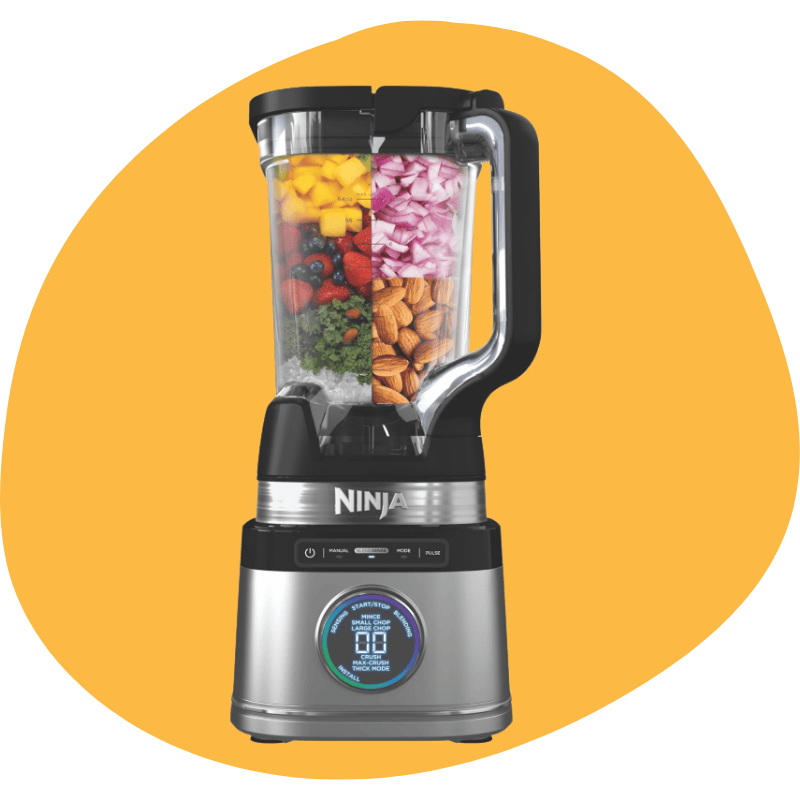
Ninja TB201 Detect Power Blender Pro — 1800-peak-watt power with 72-oz pitcher for family-sized batches.
BlendSense™ smart dial senses ingredients and automatically adjusts speed and run time for consistently smooth smoothies, frozen drinks, and sauces.
Total Crushing® & Chopping blades plus one-touch presets make ice-crushing, salsa prep, and pulsing effortless — 10 speeds give fine control for every texture.
Large, dishwasher-safe pitcher handles big batches and family meals while the powerful motor tackles tough ingredients with ease.
Top mid-range pick: delivers near-premium blending performance at a much friendlier price — excellent value for smoothies and most sauces.
Countertop vs Immersion (hand) blender — which to pick?
Countertop blender — pros & cons
Pros
- Superior power and consistency for frozen ingredients, nut butters, creamy green smoothies, and full meal replacements.
- Better emulsification and smoother textures.
- Useful for making frozen cream cubes, batters, and hot soups (if rated).
Cons
- Bigger footprint and usually more expensive.
- Louder and heavier to clean.
Best for: people who make smoothies regularly, want café-smooth texture, or plan to blend nuts/frozen veg frequently.
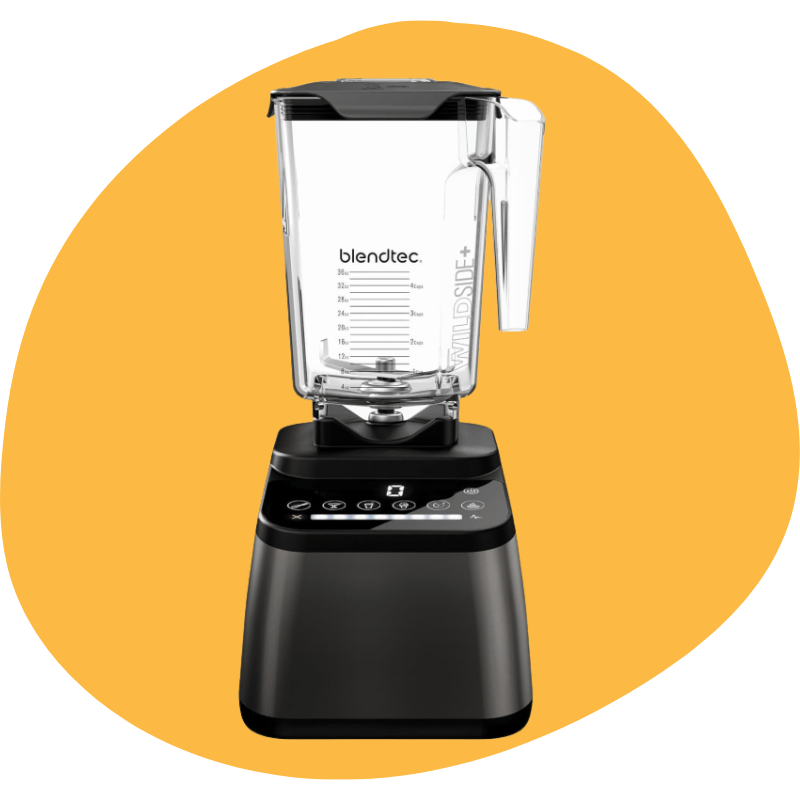
Blendtec Original Designer Series + 90-oz WildSide+ — pro-grade countertop blender with a powerful 1,560W motor for café-quality smoothies, hot soups, and nut butters.
Includes the WildSide+ 90-ounce jar (patented fifth side) and blunt wingtip blade to speed up blending and handle large or frozen batches with up to ~25% greater efficiency.
Easy, consistent results from intuitive pre-programmed cycles, variable speed control, and a self-clean function that simplifies cleanup.
Built for durability — stainless-steel wingtip blade and impact-resistant, BPA-free jar material for long-lasting, safe performance.
Sleek gunmetal finish and a compact footprint make it kitchen-ready, backed by Blendtec’s limited warranty for added peace of mind.
Immersion (hand) blender — pros & cons
Pros
- Compact, inexpensive, easy to store, and clean.
- Perfect for thin shakes, small jobs, and soups.
- Great when you only need occasional smoothies or have limited counter space.
Cons
- Less power — won’t handle very thick, frozen, or nut-heavy blends well.
- Texture can be chunkier; not ideal for nut butters or heavy frozen blends.
Best for: occasional smoothie makers, small kitchens, or those who prefer portability.
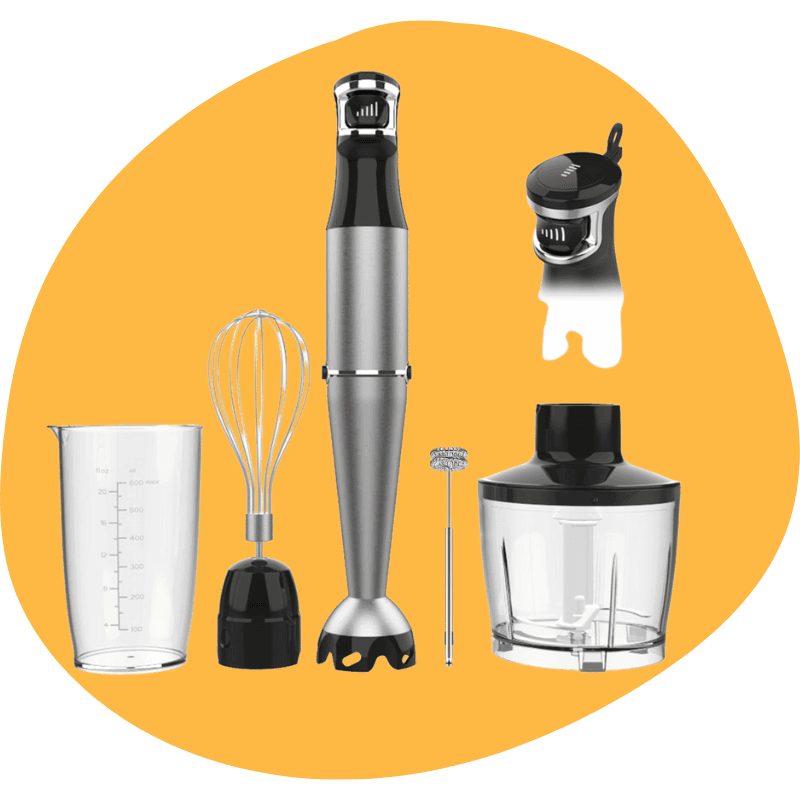
Powerful, precise, and kitchen-ready — the 1100W Immersion Hand Blender 5-in-1 makes soups, smoothies, baby food, sauces, and whipped drinks fast and easy. The ergonomic, corded stick blender features a trigger variable-speed control and a responsive motor that blends, chops, whisks, froths, and emulsifies with one compact tool.
Key features:
- 1100W motor for quick, smooth blending
- Trigger variable speed for full control (pulse/steady)
- 5-in-1 set: stick/emulsifier shaft, chopper attachment, whisk, frother, and accessory coupling
- Stainless steel shaft & blades for durability and easy cleaning
- Perfect for: hot soups, baby food, smoothies, sauces, dressings, and frothy coffee
Compact, versatile, and built for everyday use — great for home cooks who want pro results without the clutter.
Final setup recommendation (starter + upgrade)
- Starter kit: mid-range countertop blender (600–900 W) + digital scale + silicone freezer trays + mason jars.
- Upgrade: high-power blender (1000 W+) with tamper, vacuum sealer, and a small spice grinder.
Quick pro tips before you shop
- If you want frozen-thick, cafe-style smoothies every day, invest in a high-power blender.
- If you prioritize space and light use, a quality immersion blender plus a shaker bottle works fine.
- Buy unsweetened bases and freeze cream cubes to control texture and consistency.
- Keep a small “blender maintenance kit”: spare gasket, replacement jar, and brush for seals — saves downtime.
Sample 7-Day Keto Smoothie Meal Plan (Breakfasts & Snacks)
Here’s a practical, grab-and-go 7-day keto smoothie plan for breakfasts + light snacks — each breakfast is built to be a satisfying meal-replacement (rough targets: ~350–450 kcal, ~15–35 g protein, ~20–40 g fat, ~2–10 g net carbs). Snacks are small, low-carb (usually <150–220 kcal) and meant to curb hunger or supply electrolytes.
Important: macros are estimates — use your labels or USDA/Cronometer to calculate exact numbers for your brands. If you’re under 18, talk this plan over with a parent/guardian or your clinician before trying it.
Day 1 — Creamy Avocado Matcha (Breakfast)
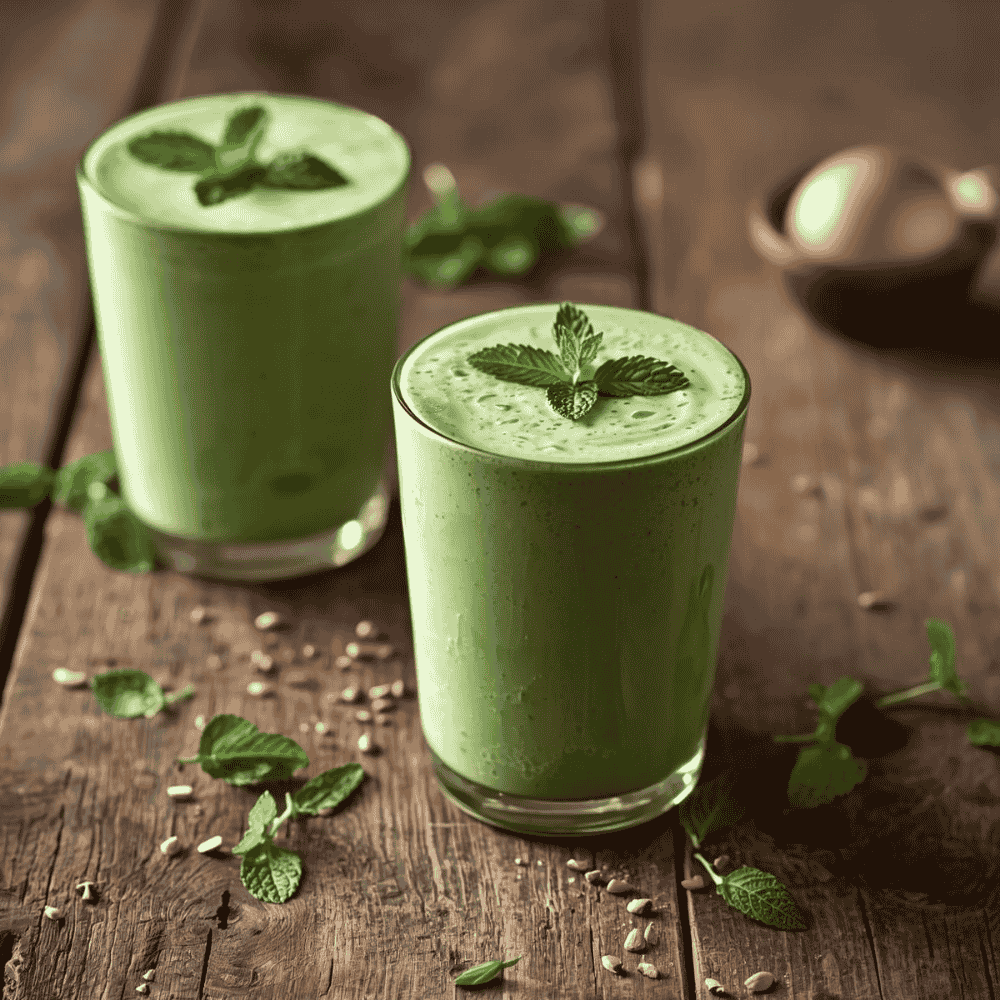
- Ingredients: ½ avocado, 1 cup unsweetened almond or macadamia milk, 1 scoop collagen or whey isolate, 1 tsp matcha, 1 tsp MCT oil, ice.
- Est. macros: Net carbs ~3–5 g · Calories ~360 kcal · Protein ~18–22 g · Fat ~28–34 g.
- Snack (mid-afternoon): Electrolyte lemonade — 12–16 oz water, pinch salt, squeeze lemon, stevia. (~0–2 g carbs)
- Swap ideas: Use macadamia milk for creaminess; swap collagen → pea protein for dairy-free.
- Prep tip: Freeze avocado halves for faster blending and a thicker texture.
Day 2 — Chocolate Peanut Butter Meal (Breakfast)
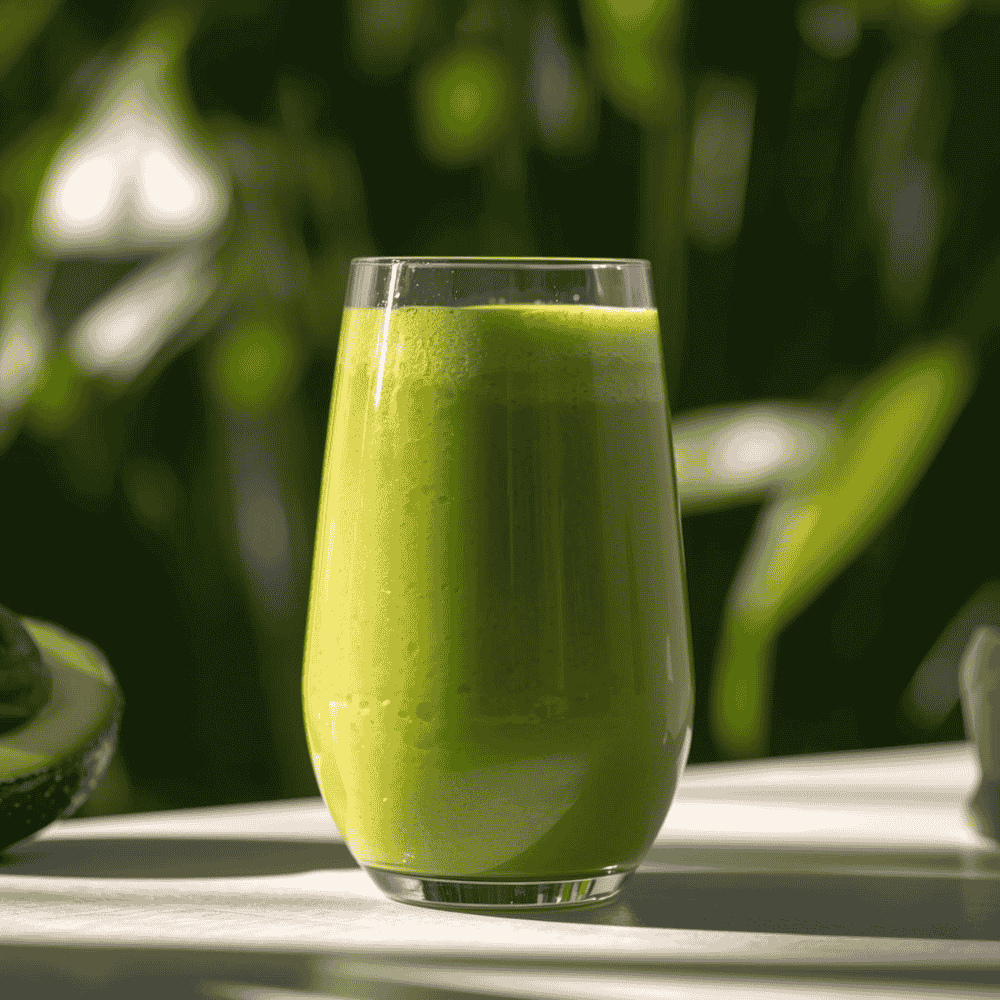
- Ingredients: 1 cup unsweetened almond milk, 1 scoop chocolate whey isolate, 1 tbsp natural peanut butter, 1 tbsp unsweetened cocoa, 1 tbsp heavy cream or ½ avocado, ice.
- Est. macros: Net carbs ~4–7 g · Calories ~380–450 kcal · Protein ~22–28 g · Fat ~28–36 g.
- Snack: Small Greek yogurt cup (full-fat, plain) + cinnamon — or collagen + water for lower carbs. (~2–5 g net carbs)
- Swap ideas: Almond butter or macadamia butter instead of peanut; use collagen for dairy-free.
- Variation: Add 1 tbsp ground flax for extra fiber and omega-3s.
Day 3 — Green Avocado Protein (Breakfast)
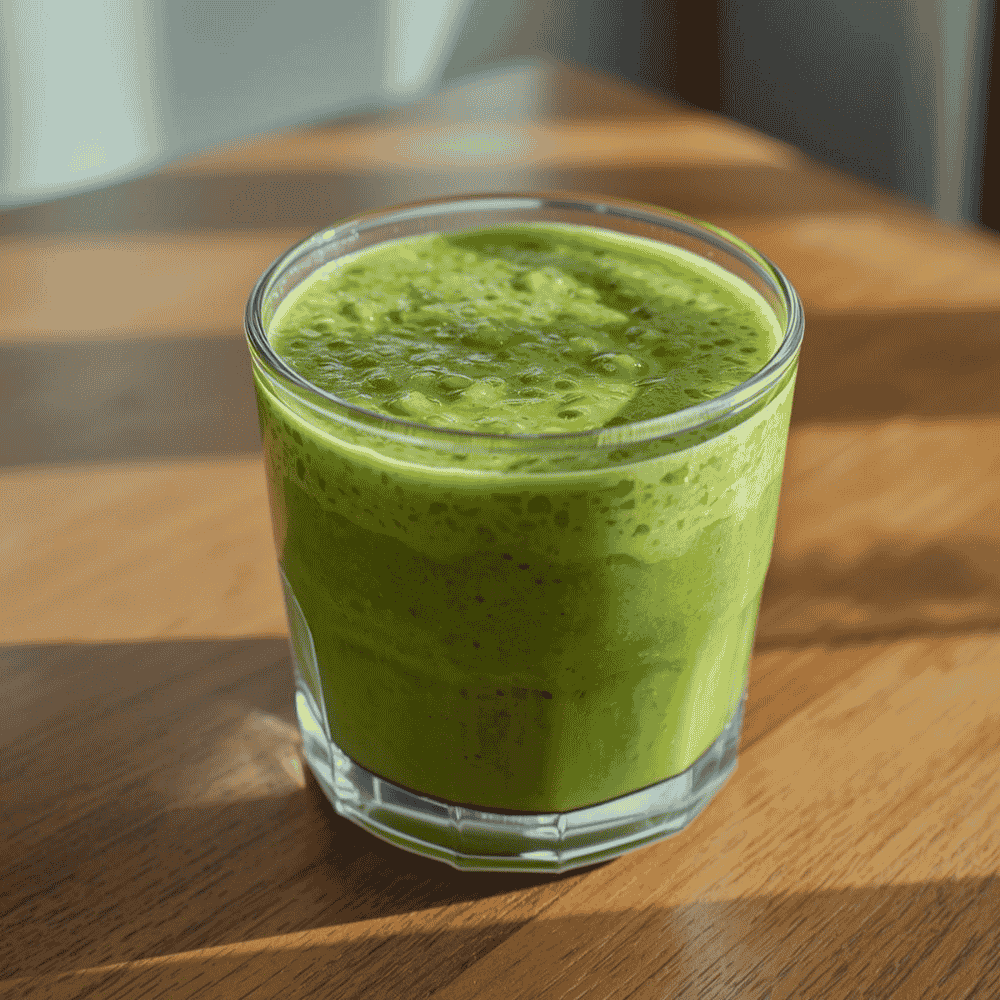
- Ingredients: 1 cup spinach, ½ avocado, 1 cup unsweetened macadamia milk, 1 scoop whey or pea protein, 1 tbsp ground flax, ice.
- Est. macros: Net carbs ~3–6 g · Calories ~360–420 kcal · Protein ~20–28 g · Fat ~26–34 g.
- Snack: 1 tbsp almond butter on celery sticks (~3–4 g net carbs)
- Swap ideas: Use kale instead of spinach; add 1 tsp MCT for mental energy.
- Prep tip: Make freezer packs of spinach + pre-measured flax to save time.
Day 4 — Bulletproof Coffee Smoothie (Breakfast)
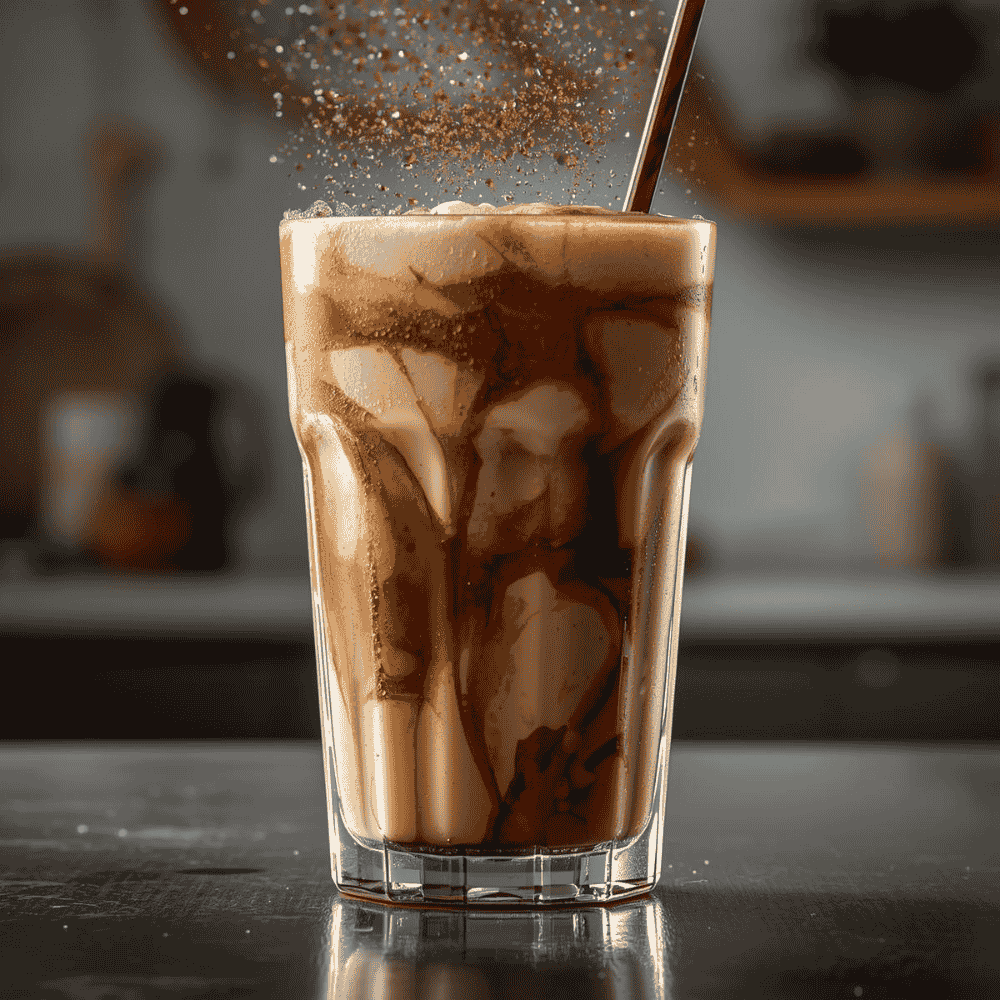
- Ingredients: 1 cup cold brew or strong coffee, 1 tbsp MCT oil, 2 tbsp heavy cream, 1 scoop vanilla whey or collagen, ice.
- Est. macros: Net carbs ~1–3 g · Calories ~300–380 kcal · Protein ~10–20 g · Fat ~28–36 g.
- Snack: Small berry & chia snack — 2 tbsp chia gel + 2 tbsp raspberries (keeps carbs low). (~2–4 g net carbs)
- Swap ideas: Coconut cream instead of heavy cream (watch saturated fat); use matcha instead of coffee for gentler caffeine.
- Note: Start MCT at 1 tsp if you’re new to it to avoid stomach upset.
Day 5 — Chocolate Collagen Berry (Breakfast)
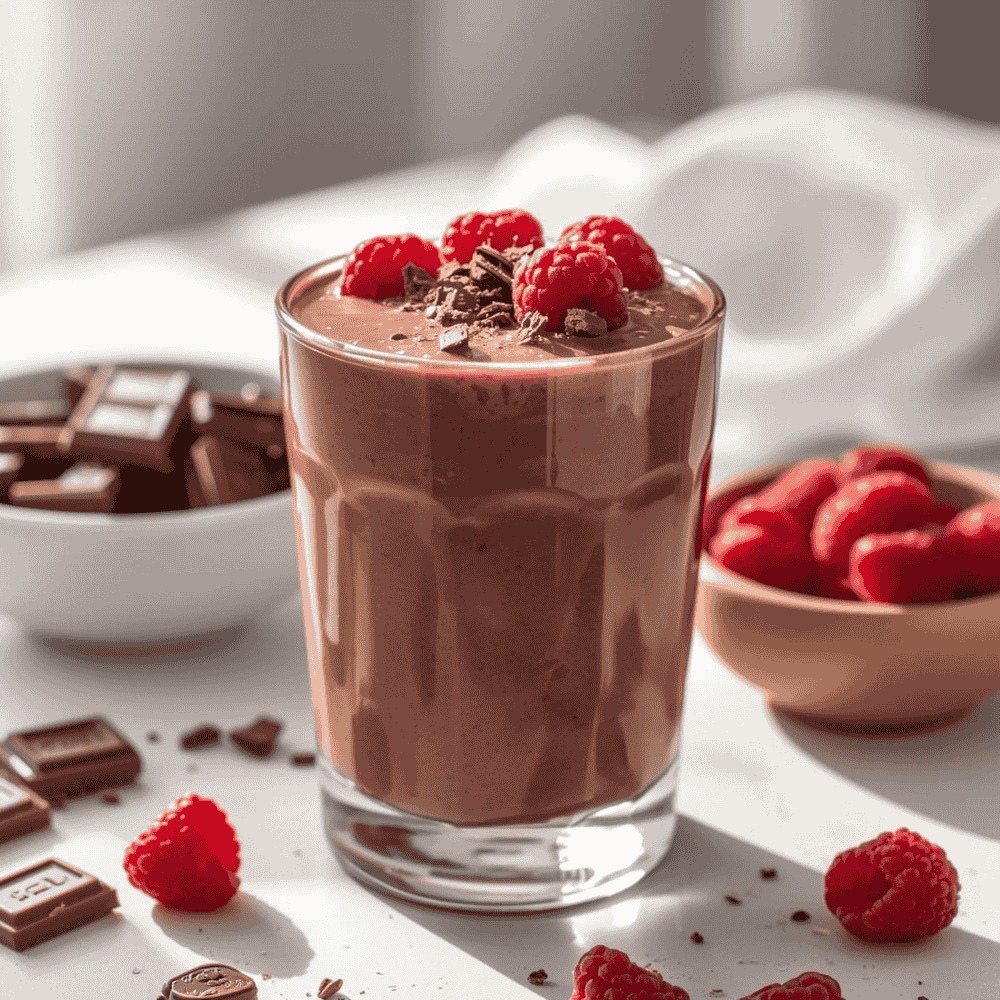
- Ingredients: 1/4 cup frozen raspberries, 1 cup unsweetened almond milk, 1 scoop chocolate collagen, 2 tbsp heavy cream or 1 tbsp almond butter, 1 tbsp chia (soaked), ice.
- Est. macros: Net carbs ~4–6 g · Calories ~330–420 kcal · Protein ~12–18 g · Fat ~24–34 g.
- Snack: Cheese stick + a few olives (~1–2 g net carbs)
- Swap ideas: Use blackberries for slightly lower net carbs; switch collagen → whey for more protein.
- Prep tip: Soak chia the night before to make mornings faster.
Day 6 — Zucchini-Cauli Cream Smoothie (Breakfast)
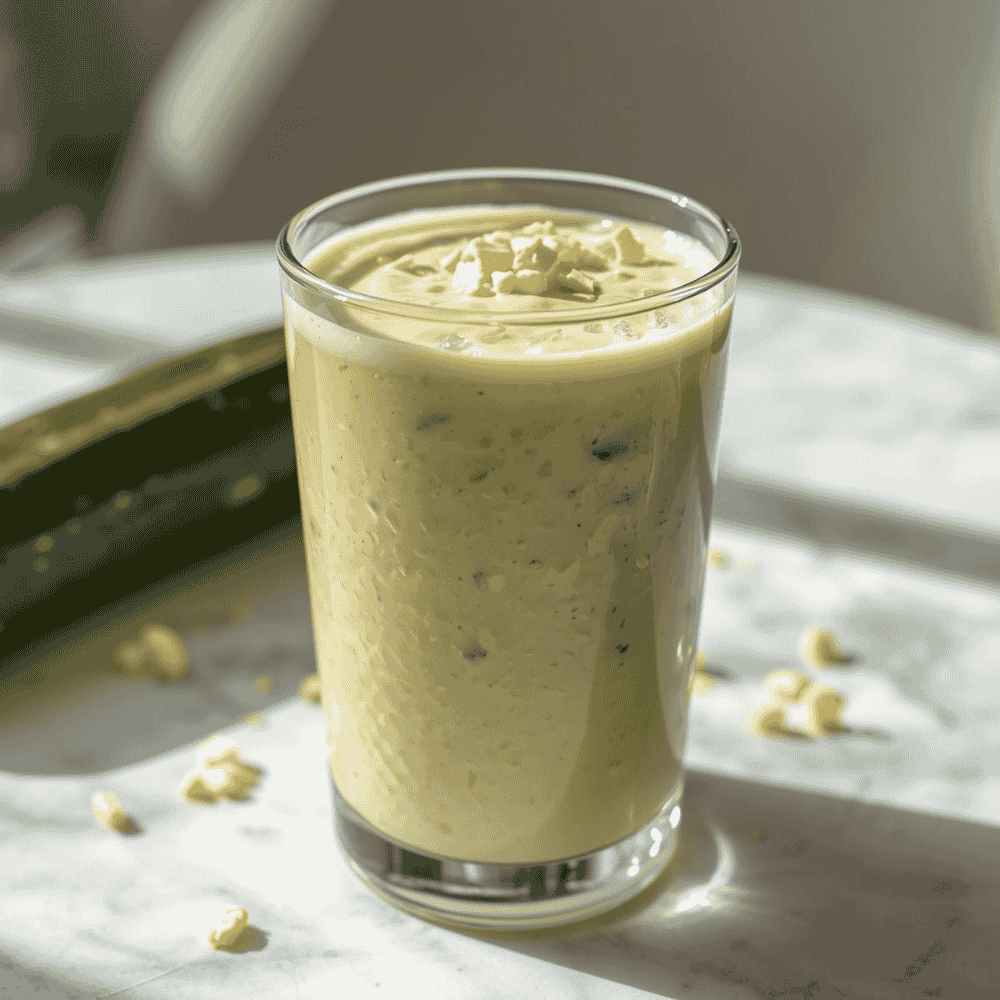
- Ingredients: ½ cup frozen zucchini, ½ cup frozen cauliflower, 1 cup unsweetened almond milk, 1 tbsp almond butter, 1 scoop unflavored collagen or whey, ice.
- Est. macros: Net carbs ~3–6 g · Calories ~300–380 kcal · Protein ~18–25 g · Fat ~16–26 g.
- Snack: Pumpkin seeds (1 oz) or a small seed-butter spoon (~2–3 g net carbs)
- Swap ideas: Add 1 tsp cocoa for a chocolate twist; use macadamia milk + macadamia butter for richer fat.
- Kitchen hack: Frozen veg makes smoothies creamy without fruit sugar.
Day 7 — Tropical Coconut Almond (Breakfast)
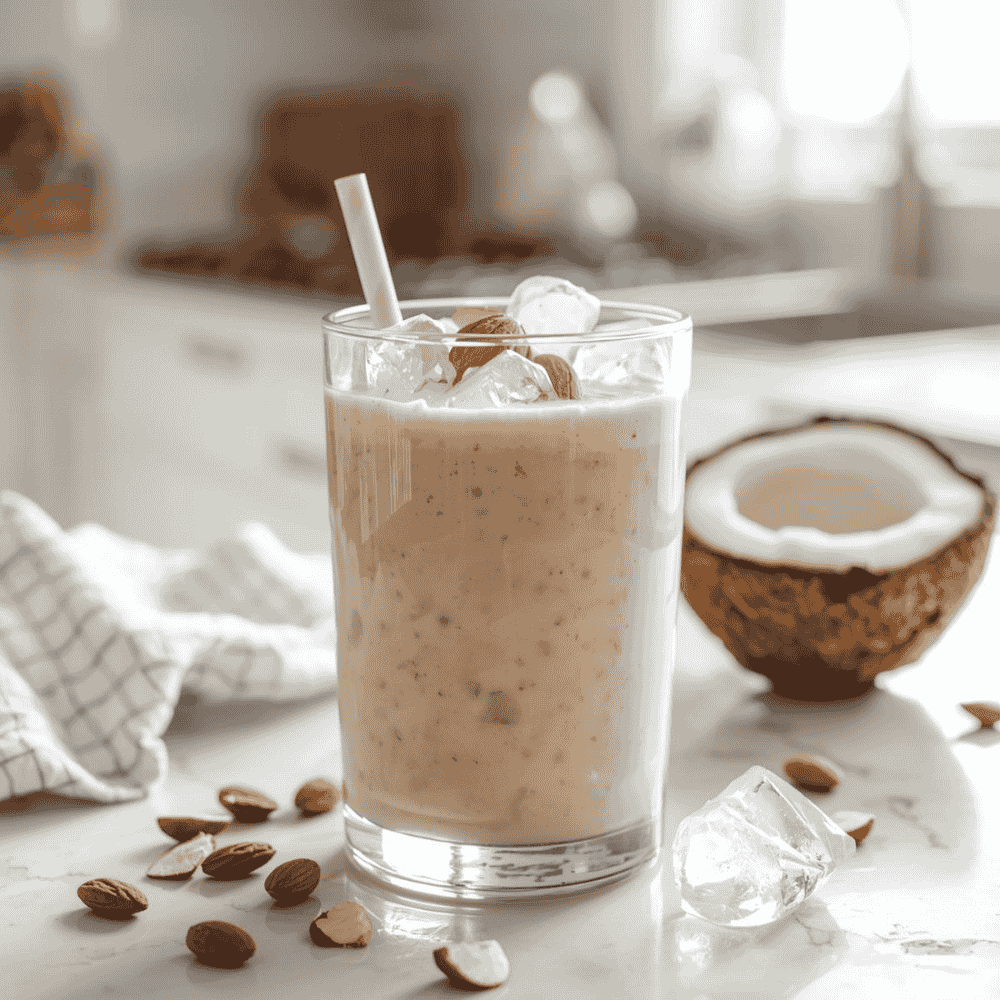
- Ingredients: 1 cup unsweetened coconut milk (beverage) + 2 tbsp canned coconut cream, 1 scoop collagen or whey, 1 tbsp almond butter, tiny splash lime, ice.
- Est. macros: Net carbs ~2–5 g · Calories ~380–480 kcal · Protein ~10–20 g · Fat ~34–46 g.
- Snack: Small iced matcha with unsweetened almond milk (~1–2 g carbs) or 1 boiled egg if extra protein needed.
- Swap ideas: Replace coconut cream with heavy cream to reduce tropical flavor and saturated-fat focus; add a few frozen strawberries to the blend if you want fruit.
- Health flag: Rotate coconut-heavy days with avocado/nut-butter days if you’re watching saturated fat.
Weekly swap & variation suggestions
- More protein: swap collagen → whey isolate or add an extra half scoop whey to bump protein 8–15 g.
- Lower calories: reduce heavy cream/MCT oil by 1 tbsp or use more almond milk (but keep some fat for satiety).
- Dairy-free: use collagen or pea protein + nut/coconut bases; avoid heavy cream.
- Thicker texture: use frozen avocado, frozen zucchini, or 1 tbsp chia gel.
- Faster prep: make 7 freezer packs (greens/berries/veggies + seeds) and store protein powder separately to keep scoops dry.
Practical macro & tracking tips
- Track each smoothie once with your preferred app (Cronometer, MyFitnessPal) using the exact brands you use — ingredient choice changes macros quickly.
- If you aim for strict ketosis (<20 g net carbs/day), pick breakfasts from days with ≤5 g net carbs and keep snacks extremely low in carbs.
- For weight or performance goals, adjust calories (add/remove MCT or nut butter) rather than changing carb targets.
Final reminders (safety & balance)
- If you’re under 18, always check with a parent/guardian and your doctor before changing your diet.
- If you have health conditions (diabetes, kidney disease, high cholesterol) or take medication, consult a clinician before adopting regular high-fat or high-protein smoothies.
- Hydrate and include electrolytes as needed (salt, avocado, spinach, or a sugar-free electrolyte blend).
FAQs
Are smoothies always a good idea on keto?
Smoothies can be great for convenience and nutrition, but are easy to overconsume. Make them balanced (fat + protein + low net carbs) and count them toward daily carb limits.
Can I use frozen fruit in keto smoothies?
Cup to keep net carbs low.
Is coconut milk bad for keto?
Not—it’s low carb and creamy. But it’s high in saturated fat, so men/women with high LDL or heart disease should use it cautiously and consult their provider.
Which sweetener is best for smoothies on keto?
Stevia, monk fruit, and erythritol are commonly used. Erythritol usually counts as zero net carbs; some other sugar alcohols do not. Taste and GI tolerance vary.
Can smoothies replace meals on keto?
Yes, if they contain sufficient calories, fat, and protein. Aim for a balanced macro spread to avoid early hunger. Use protein powders and a good fat source for a true meal replacement.
The Bottom Line
Keto drinks and smoothies can be delicious, convenient, and nutritionally powerful when you build them with the right bases, fats, and proteins — and when you pay attention to net carbs. Use whole-food ingredients where possible, double-check labels on powders and store buys, and tailor macros to your personal goals. If you have heart disease, kidney problems, or other health conditions, discuss major diet changes with a clinician. For recipe ideas and evidence background, check the linked resources in this guide.
We may earn a commission when you buy using our links


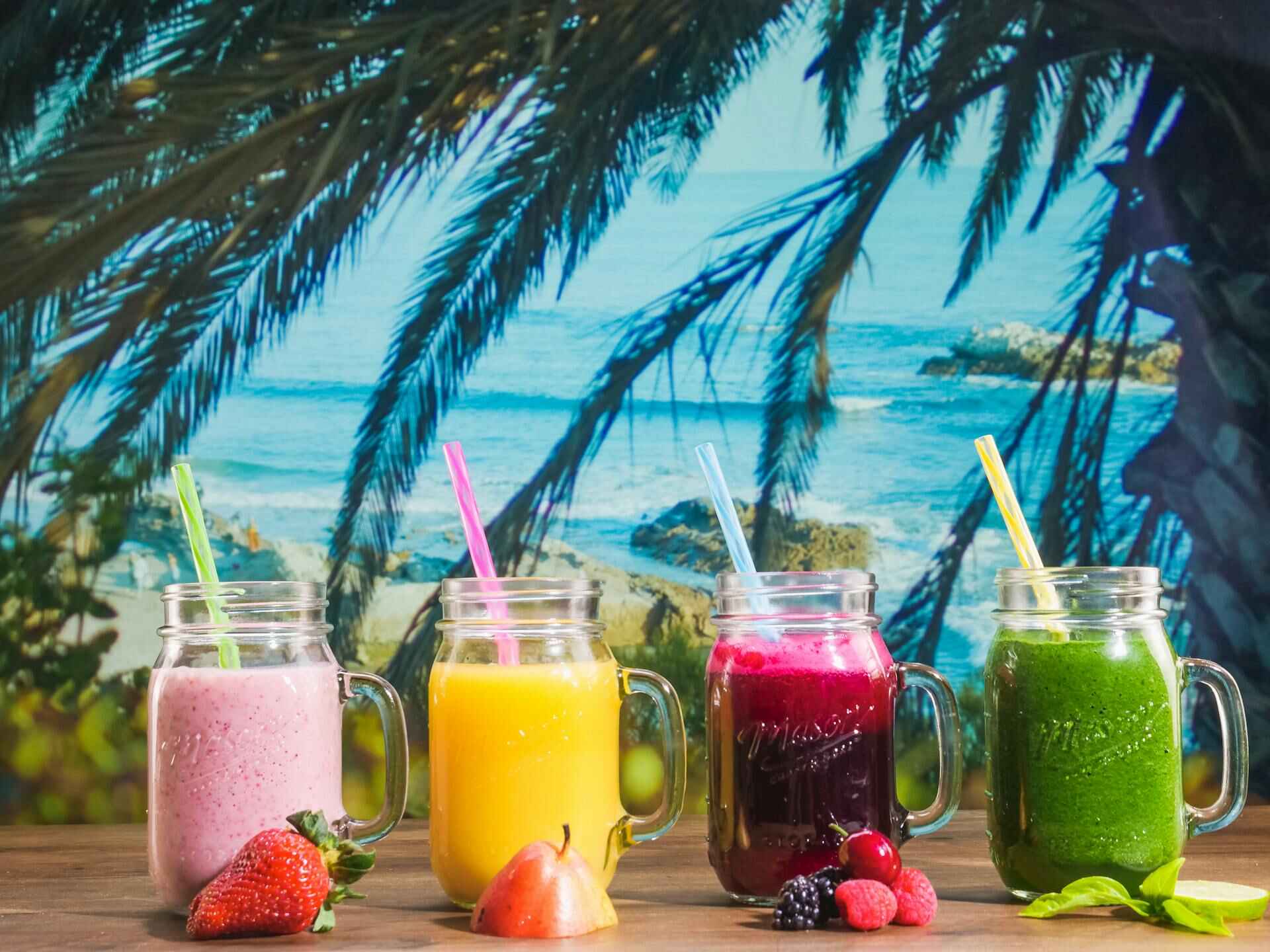




I wanted to thank you for this great read!! I definitely enjoying every little bit of it I have you bookmarked to check out new stuff you post…
Thank you so much — I’m really glad you enjoyed the read! 💛 I appreciate you bookmarking the site. I’ll keep sharing new posts, and if there’s a topic you’d like me to cover next, tell me and I’ll add it to the list. Thanks for the support!