
If you love homemade desserts but want to use less traditional sugar, you have plenty of options. The tricky part is that choosing a sugar substitute isn't quite as simple as grabbing another sweet ingredient and swapping it cup for cup. Sugar does much more than make a cake or cookie taste sweet. It affects moisture, texture, browning, tenderness, spread, and even the way ingredients behave during baking.
That's why some sugar alternatives for baking work beautifully in one recipe but disappoint in another. A granulated allulose blend might be useful in cookies, while mashed banana may be a better fit for muffins. A concentrated sweetener such as stevia can add plenty of sweetness, but very little bulk, so replacing a full cup of sugar with a tiny amount of stevia requires other adjustments.
The good news? You don't need to become a pastry scientist to make smart swaps. Once you understand what each sweetener actually does, choosing among sweeteners and sugar alternatives becomes much easier.
This guide walks through practical options for cakes, cookies, brownies, cheesecakes, frostings, puddings, and other desserts. You'll also learn when to reduce sugar rather than replace it, how liquid sweeteners affect recipes, and why some popular sugar alternatives don't produce the same texture as regular sugar.
Why Is Sugar So Important in Desserts?
When people talk about sugar in desserts, sweetness is usually the first thing that comes to mind. But in baking, sugar is much more than a sweetener. It can influence moisture, tenderness, texture, browning, spread, structure, flavor, and mouthfeel, which is why choosing the right sugar substitute requires more thought than simply matching sweetness.
Think of sugar as a behind the scenes ingredient. You notice it when a cookie tastes sweet, but you also experience its effects when that cookie spreads across the baking sheet, develops golden edges, or stays pleasantly soft after cooling. Sugar can also enhance other flavors, helping ingredients such as cocoa, vanilla, fruit, spices, and chocolate taste more balanced. King Arthur Baking notes that sugar acts as both a sweetener and flavor enhancer while also contributing to browning and the texture of baked goods. (1)
That's why sugar alternatives can behave so differently from one another. A concentrated sweetener may deliver plenty of sweetness while adding almost no bulk. A liquid sweetener can bring sweetness and moisture but change the consistency of a batter. A fruit puree can contribute sweetness, water, and fiber while also adding its own flavor. In other words, when you're choosing among sweeteners and sugar alternatives, you're not simply replacing one flavor with another; you're changing part of the recipe's architecture.
Sugar Does More Than Make Desserts Sweet
Sweetness is obviously important, but sugar also helps round out a dessert's overall flavor profile. A small amount can soften bitter or acidic notes and make other ingredients taste more pronounced. This is particularly noticeable in chocolate desserts, where reducing sugar too aggressively can make cocoa or unsweetened chocolate taste much sharper. King Arthur Baking's reduced sugar testing similarly found that cutting sugar can affect overall flavor, not just perceived sweetness. (2)
This is one reason you shouldn't judge a sugar substitute only by its sweetness rating. Two ingredients might provide a similar level of sweetness but produce completely different desserts.
For example, imagine making a chocolate cake with a highly concentrated sweetener. The cake may taste sweet enough, yet still seem dry, dense, or less rounded than the original. The problem isn't necessarily that the sweetener "failed." Rather, the original sugar was performing several jobs at once.
When experimenting with sugar alternatives for baking, ask yourself:
- Does this ingredient provide enough sweetness?
- Does it add moisture?
- Does it provide physical bulk?
- Will it affect browning?
- Will it change the texture?
- Does it dissolve properly?
- Does it work with the other ingredients?
- Will its flavor complement the dessert?
Those questions turn sugar replacement from guesswork into a much more manageable baking experiment.
Sugar Helps Retain Moisture
One of the less obvious jobs of sugar is its relationship with water. Sugar is hygroscopic, meaning it can attract and hold water. In baked goods, that property can contribute to a softer, moister texture and help the finished product remain pleasant over time. When you substantially reduce sugar without compensating elsewhere, the result can become drier and more crumbly.
This is especially important when considering sugar free baking. If you remove a large amount of granulated sugar and replace it with a very small quantity of a concentrated sweetener, you've removed not only sweetness but also a significant amount of physical material from the recipe.
That's why a successful sugar substitute often needs to do more than taste sweet.
Consider a simple muffin. Sugar contributes sweetness, but it also participates in the balance of dry and wet ingredients. Replace a substantial amount of sugar with a concentrated sweetener, and the muffin may no longer have the same softness or moisture. Replace it with a fruit puree, on the other hand, and you introduce water and solids along with sweetness—which can create an entirely different but potentially delicious result.
Liquid sweeteners create another variation. Honey and maple syrup add moisture because they contain water, so they don't behave like dry granulated sugar. King Arthur Baking's testing found that baked goods made with liquid sweeteners tend to be softer and moister, while the additional liquid can affect crumb and structure. (3)
This is why "sweetness equivalent" does not necessarily mean "baking equivalent."
Sugar Affects Texture and Mouthfeel
Texture is where the difference between traditional sugar and many sugar alternatives becomes especially noticeable.
A cookie can be crisp, chewy, tender, cakey, or crumbly depending partly on how sugar interacts with the other ingredients. Sugar melts during baking, affects moisture movement, and can contribute to the final structure as the cookie cools. King Arthur Baking's cookie testing shows that changes in sugar can alter spread, crispness, chewiness, and overall texture. (4)
The same principle applies to cakes.
In recipes that use the creaming method, granulated sugar crystals help create tiny air pockets in softened butter. Those pockets can contribute to the structure and rise of the finished cake or cookie. Replacing granulated sugar with a liquid sweetener changes that process because a liquid doesn't provide the same crystalline structure. (5)
That's a major reason a sugar substitute should be selected according to the recipe.
A sweetener that works beautifully in pudding might be less successful in a classic creamed butter cake. A fruit puree may be wonderful in banana muffins but completely inappropriate for a delicate sugar cookie. A powdered alternative might work nicely in frosting but behave differently in a cookie dough.
Sugar Helps With Browning and Caramelization
Have you ever noticed how a freshly baked cookie develops golden edges and a deeper color around the surface? Sugar plays a role in that transformation.
As baked goods heat, sugar can participate in browning reactions, including caramelization and the Maillard reaction. These processes contribute not only to color but also to the complex toasted, caramel-like flavors associated with many baked desserts. (6)
This matters when choosing sugar alternatives for baking because different sweeteners don't necessarily brown in the same way.
Honey, for example, can brown relatively quickly because of its glucose and fructose content. Maple syrup behaves differently, while granulated sugar has its own browning characteristics. King Arthur Baking's testing of liquid sweeteners found noticeable differences in color and baking behavior depending on the sweetener used.
If you replace sugar with an alternative and your cake comes out paler than expected, that doesn't automatically mean the dessert is underbaked. Conversely, some liquid sweeteners can encourage faster browning, so color alone isn't always a perfect indicator of doneness.
When practicing sugar free baking, it's better to use several cues together:
- Check the recommended baking time.
- Look at the edges and center.
- Test doneness according to the recipe.
- Consider the expected color of the substitute.
- Avoid automatically adding extra baking time just because the dessert looks lighter.
Sugar in Cookies: Spread, Crispness, and Chew
Cookies are one of the clearest examples of why sugar replacement can be tricky.
During baking, sugar melts and can contribute to cookie spread. As the cookies cool, sugar can recrystallize, helping create a crisp or snappy texture. The type and amount of sugar can therefore influence whether a cookie turns out thin and crisp, thick and cakey, or soft and chewy. (7)
Reducing sugar can have the opposite effect. King Arthur Baking's testing found that lower-sugar cookies generally spread less and become drier and more crumbly as the sugar level decreases. (8)
This is a crucial point for anyone experimenting with sugar alternatives. If your favorite chocolate chip cookie recipe produces a wide, chewy cookie, removing a large amount of sugar may turn it into a smaller, thicker cookie—even if the replacement provides the same perceived sweetness.
The lesson is simple: match the substitute to the texture you want.
If you're aiming for a soft cookie, moisture and tenderness matter. If you're aiming for a crisp cookie, browning and crystallization become more important. If you're making a cakey cookie, the requirements are different again.
Sugar in Cakes: Structure, Tenderness, and Moisture
Cakes depend on a delicate balance of flour, eggs, fat, liquid, leavening, and sugar.
Sugar can contribute moisture and tenderness while also affecting the way ingredients interact during mixing and baking. In creamed cakes, the physical crystals of sugar help aerate butter, creating tiny pockets that can contribute to a lighter crumb.
This is why replacing sugar with a liquid sweetener can produce a cake that is noticeably different. King Arthur Baking's testing found that cakes made with liquid sweeteners could become more moist and delicate but also somewhat denser, particularly when adapting recipes designed around creaming butter and sugar.
For sugar free baking, this means the best approach is often to choose a recipe that was designed around the alternative rather than forcing a completely different ingredient into a conventional recipe.
You can certainly experiment, but expect the result to have its own personality.
Sugar in Frozen Desserts
Sugar has another important role in frozen desserts: it affects more than flavor.
In ice cream and other frozen desserts, dissolved sugars influence the freezing behavior of the mixture. This helps determine whether the finished dessert is relatively smooth and scoopable or becomes excessively hard and icy.
That's why simply replacing sugar with a highly concentrated sugar substitute can change the texture of homemade frozen desserts. You may achieve the desired sweetness but lose some of the physical effects that sugar contributes to the frozen mixture.
This is another example of why sweeteners and sugar alternatives should be evaluated by function rather than sweetness alone.
If you're making homemade frozen desserts, look for recipes specifically developed with the alternative sweetener you're considering. A recipe designed around allulose, for example, may account for its particular characteristics in a way a conventional ice cream recipe doesn't.
Sugar in Custards and Puddings
Custards and puddings present a slightly different situation.
In these desserts, sugar primarily contributes sweetness and flavor, but it can also affect the overall consistency and balance of the mixture. Because many custards and puddings don't rely on the same flour-based structure as cakes, they may be more forgiving when experimenting with concentrated sugar alternatives.
Still, the sweetener needs to dissolve properly.
A granulated ingredient that remains gritty can ruin an otherwise silky pudding. A liquid sweetener may blend easily but add moisture. A concentrated sweetener can provide sweetness without much physical bulk.
That means the best sugar substitute depends on the texture you're trying to create.
For a silky pudding, dissolution and mouthfeel may matter most. For a baked custard, moisture and browning may become more important. For a frozen custard, freezing behavior enters the equation.
Same goal—less traditional sugar. Completely different baking problem.
Sugar in Frostings and Glazes
Frostings are another area where sugar's physical properties matter enormously.
Powdered sugar isn't simply there to make buttercream sweet. It provides most of the frosting's bulk and contributes to its consistency. Replace a large quantity of powdered sugar with a tiny amount of concentrated sweetener, and you'll still have sweetness—but you won't necessarily have enough material to create the same frosting.
That's why sugar free baking often works better when you choose a frosting recipe specifically developed around the desired sweetener.
For example, a yogurt-based topping, cream cheese-style frosting, fruit puree, or specially formulated powdered sweetener blend may provide a better texture than trying to substitute a concentrated sweetener directly into traditional buttercream.
The same principle applies to glazes. A glaze needs the right balance of sweetness and liquid to flow over the dessert and set properly.
Why a Simple 1:1 Substitution Does Not Always Work
The phrase "1:1 sugar substitute" sounds wonderfully convenient. Unfortunately, baking doesn't always cooperate.
A true 1:1 replacement needs to account for more than sweetness. It needs to provide a reasonably similar amount of physical ingredient, and ideally behave similarly during mixing, heating, cooling, and storage.
That's difficult because different sugar alternatives have very different characteristics.
Consider these examples:
| Type of Sweetener | Sweetness | Physical Bulk | Moisture Contribution | Potential Baking Effect |
|---|---|---|---|---|
| Granulated Sugar | Moderate | High | Helps retain moisture | Spread, browning, tenderness |
| Stevia | Very Concentrated | Very Low | Very Low | May need another source of bulk |
| Honey | High | Liquid | High | Softer, moister, darker |
| Maple Syrup | Moderate | Liquid | High | Changes moisture and flavor |
| Fruit Puree | Variable | Moderate | High | Adds moisture and fruit flavor |
| Allulose | Lower Than Sugar | Relatively High | Can Affect Moisture | Useful in many baked applications |
The exact behavior depends on the specific product and recipe, but the comparison illustrates the bigger point: sweetness and structure are separate properties.
When choosing sugar alternatives for baking, think in terms of what you're removing and what you're putting back.
If you're removing a cup of granulated sugar, ask:
- Where will that volume go?
- If the answer is "I'm replacing it with a teaspoon of concentrated sweetener," the recipe may need another ingredient to compensate for the lost bulk.
- If you're replacing dry sugar with honey, ask:
- Where will the extra liquid go?
- If you're replacing sugar with mashed banana, ask:
- How will the added moisture and fruit solids affect the crumb?
These questions are much more useful than relying on a generic substitution chart.
What Happens When You Remove Sugar From a Recipe?
Removing sugar doesn't create one universal result. The outcome depends on the recipe, the amount removed, and what—if anything—you use in its place.
Still, several changes are common.
Less Browning
One of the first visual differences can be reduced browning.
Sugar contributes to caramelization and participates in browning reactions, so lowering the amount can result in a paler surface.
This is particularly important with cookies and cakes. A reduced-sugar cookie might reach the correct internal texture before it develops the deep golden color you're accustomed to seeing.
Don't automatically bake it longer just to chase the original color. Instead, use the recipe's other doneness cues.
Different Moisture Levels
Sugar helps retain water, so significantly reducing it can produce a drier finished product. King Arthur Baking notes that lower-sugar baked goods can become drier and more crumbly and may have a shorter shelf life.
This is one reason a sugar substitute that contributes moisture can behave very differently from a concentrated sweetener.
For example, replacing sugar with a fruit puree may create a moist dessert, while using a very concentrated sweetener may require another strategy to maintain the desired texture.
Changes in Spread and Tenderness
Cookies demonstrate this particularly well.
Less sugar generally means less spread, and the resulting cookies can become thicker, drier, or more crumbly.
That's not necessarily a bad thing if you prefer a thick, tender cookie. But if you're trying to recreate a thin, crisp cookie, you'll need to consider how your chosen sugar alternative affects melting and spread.
Possible Changes in Volume and Mouthfeel
Sugar contributes physical bulk and can influence how batters and doughs behave.
In creamed recipes, granulated sugar helps create tiny air pockets as it is beaten with butter. A replacement that lacks the same crystalline structure won't necessarily produce identical aeration.
The result may be a dessert that feels:
- Denser.
- Softer.
- More moist.
- More crumbly.
- Less crisp.
- Less airy.
- Slightly different in its overall mouthfeel.
Again, none of these outcomes automatically means your sugar substitute is wrong. They simply show that the ingredient is performing differently.
Why Recipe Specific Experimentation Matters
This may be the most useful lesson of all: there is no single substitution rule that works perfectly for every dessert.
A sugar replacement that works in muffins may not work in cookies. A sweetener that's excellent in pudding may be disappointing in frosting. A liquid sweetener may be wonderful in an oil-based cake but less predictable in a cake that depends on creaming butter and sugar.
King Arthur Baking's reduced-sugar research emphasizes the same practical principle: different baked goods respond differently, so successful experimentation requires testing and tasting rather than relying on one universal formula.
If you're developing your own sugar free baking recipes, make small changes first. Keep the flour, eggs, fat, and leavening consistent while testing your sweetener. Take notes about sweetness, spread, moisture, browning, and texture.
Then make the next adjustment.
That's how you turn a disappointing first batch into a reliable recipe.
A Simple Rule for Choosing Sugar Alternatives
Before reaching for a sugar substitute, identify the job sugar is doing in your dessert.
- If sweetness is the main job: a concentrated sweetener may be enough.
- If sweetness and bulk matter: consider a granulated alternative designed for baking.
- If sweetness and moisture matter: a liquid sweetener or fruit puree may be more appropriate.
- If crispness and browning matter: choose an option that has been tested for that specific type of dessert.
- If you're making frosting: think about bulk and consistency as much as sweetness.
And if you simply want a less sweet dessert? You may not need to replace sugar at all. A moderate reduction can sometimes preserve more of the original texture than a complete swap.
The best sugar alternatives for baking aren't the ones that imitate sugar perfectly in every situation. They're the ones that fit the particular recipe and help you create a dessert you actually enjoy eating.
Sugar Reduction vs. Sugar Replacement
When you're trying to make desserts with less sugar, there are two very different approaches: reduce the amount of sugar or replace the sugar with another sweetener. They may sound like the same strategy, but they can produce surprisingly different results in the kitchen. Reducing sugar means keeping the original ingredient but using less of it, while replacing sugar means introducing a different ingredient that may have its own sweetness, moisture, volume, texture, and baking characteristics. Understanding this distinction is one of the most useful steps you can take before experimenting with sugar alternatives for baking.
Why does this matter? Because sugar isn't simply there to make your dessert taste sweet. It can affect tenderness, moisture, browning, spread, structure, and mouthfeel. King Arthur Baking's testing of alternative sweeteners found that some substitutes delivered acceptable sweetness but produced noticeable differences in texture, while simply reducing the amount of granulated sugar sometimes produced better overall baking results.
So, before reaching for a sugar substitute, take a moment to decide what you're actually trying to accomplish. Do you want your cookies to be less sweet? Are you trying to eliminate added sugar? Are you looking for sugar free baking? Or do you simply want to experiment with a different sweetener? Once you know the goal, choosing the right approach becomes much easier.
Reducing Sugar: The Simpler Starting Point
Sugar reduction is often the most straightforward place to begin because you're not completely changing the recipe's ingredient balance. Instead of replacing the sugar with something else, you reduce the quantity and allow the remaining ingredients to do most of the work.
For example, if a cookie recipe uses one cup of granulated sugar, you might experiment with a modest reduction rather than immediately replacing the entire cup with a concentrated sweetener. This can preserve more of the original recipe's structure because the sugar is still present and continues to perform many of its normal functions.
The key word here is gradually.
A small reduction may be barely noticeable in some desserts, while a dramatic reduction can change the entire recipe. Cookies may spread differently, cakes may become less tender, and brownies may become drier or more bitter. King Arthur Baking's testing similarly shows that the effect of reducing sugar varies significantly between cookies, cakes, brownies, muffins, and other baked goods.
If you're new to sugar alternatives, try reducing sweetness before completely replacing sugar. It gives you a chance to learn how your favorite recipes respond.
How to Gradually Reduce Sweetness
A gradual approach makes experimentation much easier.
Instead of asking, "What can replace all the sugar?" start with:
"How much sugar can I remove while keeping the dessert delicious?"
That small change in mindset can make a big difference.
Start by making the original recipe once so you know what the intended texture and sweetness should be. Then reduce the sugar modestly in the next batch. Keep the other ingredients unchanged whenever possible, and compare the results.
Pay attention to more than sweetness. Look at:
- Texture: Is the dessert soft, chewy, crisp, tender, or dry?
- Moisture: Does it remain pleasant after cooling?
- Spread: Did cookies become thicker or smaller?
- Color: Does the surface brown as expected?
- Flavor: Do cocoa, spices, fruit, or other ingredients become more prominent?
- Mouthfeel: Does the dessert still feel satisfying?
This approach is particularly useful for people interested in sugar free baking because it helps establish what the recipe needs before introducing an entirely different sweetener.
You might discover that you don't actually need a complete sugar substitute. Perhaps your chocolate cake is still delicious with moderately less sugar. Maybe your banana muffins are naturally sweet enough that they need very little additional sweetener. Or perhaps a fruit-forward dessert tastes better when the sweetness is allowed to come from the fruit itself.
When Sugar Replacement Makes More Sense
There are times when reducing sugar isn't enough.
If you're specifically looking for a dessert with very little or no traditional sugar, a sugar substitute can become useful. This is where ingredients such as allulose, stevia, monk fruit products, and certain sugar alcohols enter the picture.
But replacement requires more planning because these ingredients don't necessarily perform the same jobs as granulated sugar.
A concentrated sweetener might be many times sweeter than table sugar but provide almost no bulk. A liquid sweetener can add both sweetness and moisture. A fruit puree can contribute sweetness, water, solids, and flavor. A granulated alternative may provide more volume but still behave differently during baking.
That's why the phrase "same sweetness" doesn't mean "same baking performance."
If you remove one cup of sugar and replace it with a tiny amount of concentrated sweetener, you've removed a large amount of physical material from the recipe. The dessert may taste sweet enough, but the texture could change dramatically.
Why Recipes Designed Around a Specific Sweetener Often Work Better
One of the easiest ways to get better results with sweeteners and sugar alternatives is to use a recipe that was actually developed for the sweetener you're planning to use.
Think about it like building a house. If an architect designs the entire structure around a particular foundation, swapping that foundation for a completely different material isn't necessarily a simple exchange. The same idea applies to baking.
A recipe specifically developed for allulose, for example, can account for its sweetness, moisture, and behavior during heating. A recipe designed around a particular monk fruit blend can account for the other ingredients in that blend. A dessert developed with a fruit puree can balance the puree's moisture and flavor from the beginning.
By contrast, taking a traditional cake recipe and randomly replacing all the sugar with a concentrated sweetener means you're changing one of the recipe's structural ingredients without necessarily compensating elsewhere.
This doesn't mean experimentation is off-limits. Quite the opposite. Baking experiments can be fun. But if you're looking for predictable results, recipes formulated specifically around a particular sugar alternative are usually a better starting point than random substitutions.
Why a 1:1 Sugar Substitute Isn't Always a True 1:1 Swap
The phrase "1:1 sugar substitute" can be misleading if you don't look at what the product actually contains.
A product may be designed to measure cup-for-cup like sugar, but that doesn't necessarily mean it behaves exactly like sugar during baking. The manufacturer may have formulated it with additional ingredients to provide bulk and make it easier to use.
Other sweeteners, such as concentrated stevia or monk fruit extract, may require dramatically smaller quantities because they are much sweeter than sucrose.
This creates an important distinction:
A 1:1 measuring replacement is not necessarily a 1:1 functional replacement.
In practical terms, always check the specific product's instructions. Don't assume that every brand or form of a sweetener has the same conversion ratio.
This is especially important when working with sugar alternatives for baking, because texture matters just as much as sweetness.
No Added Sugar vs. Sugar-Free: What's the Difference?
These terms are often used casually, but they don't mean the same thing.
"No added sugar" generally means that no sugar-containing ingredient was added during processing or preparation under the applicable labeling definition. A food can still contain naturally occurring sugars from ingredients such as fruit or milk. The FDA explains that total sugars include both naturally occurring sugars and added sugars, while added sugars specifically include sugars introduced during processing, including sugars from syrups and honey.
"Sugar free" is a more specific regulatory claim. Under FDA regulations, a food using the "sugar free" claim generally must contain less than 0.5 grams of sugars per reference amount customarily consumed and per labeled serving, subject to the applicable regulatory conditions.
That distinction is important when writing about sugar alternatives.
For example, a dessert sweetened with mashed bananas may contain no added sugar if no sugar-containing ingredient is added, but the bananas naturally contain sugars. That doesn't automatically make the dessert "sugar free."
Likewise, replacing white sugar with honey doesn't make a recipe sugar free. FDA guidance specifically identifies sugars from honey and syrups as added sugars when they are added to foods.
What "No Added Sugar" Can Look Like in Desserts
A dessert might reasonably be described as having no added sugar when its sweetness comes from ingredients that naturally contain sugar rather than from added sugar.
Examples might include:
- Ripe bananas.
- Unsweetened applesauce.
- Whole fruit.
- Unsweetened fruit puree.
- Naturally sweet dairy ingredients without added sweeteners.
However, the nutritional profile still depends on the entire recipe.
"No added sugar" doesn't automatically mean low-calorie, low-carbohydrate, or nutritionally superior. The FDA specifically cautions that a "no added sugars" claim does not mean a food is calorie-free, and consumers should look at the complete Nutrition Facts label when comparing products.
What "Sugar Free" Means
When discussing sugar free baking, it's important to use the term carefully.
A dessert made with a high-intensity sweetener may contain little or no sugar, but the exact result depends on every ingredient in the recipe. Milk, fruit, chocolate, flour products, and other ingredients can contribute sugars even when traditional table sugar isn't used.
That's why you should evaluate the complete recipe rather than focusing on one ingredient.
A recipe can be:
- Lower in added sugar.
- Made with no added sugar.
- Reduced in sugar.
- Sweetened with a sugar alternative.
- Sugar free under applicable labeling criteria.
These descriptions aren't interchangeable.
Does "No Added Sugar" Mean "Healthy"?
Not necessarily.
It's tempting to see "no added sugar" and assume you've found the healthiest possible dessert, but food quality can't be determined from a single label statement. A dessert can have no added sugar while still being high in calories, saturated fat, or naturally occurring sugars.
The FDA recommends using the Nutrition Facts label to consider the broader nutritional picture rather than focusing on one nutrient or claim.
The same principle applies to homemade desserts.
A date-based brownie, for example, may contain no refined table sugar, but dates still contribute naturally occurring sugars. A dessert made with honey contains a different type of sweetener, but honey is still considered an added sugar when added during food preparation.
The goal should be clarity, not clever labeling.
Which Approach Should You Choose?
If you're wondering whether to reduce sugar or use a sugar substitute, consider your main goal.
| Your Goal | Best Starting Approach |
|---|---|
| Dessert Is Simply Too Sweet | Gradually reduce the sugar |
| Keep the Original Texture | Try a modest sugar reduction first |
| Reduce Added Sugar | Reduce sugar or use an appropriate alternative |
| Avoid Traditional Sugar | Explore a suitable sugar alternative |
| Use Fruit for Sweetness | Try banana, applesauce, dates, or fruit puree |
| Create Sugar-Free Desserts | Use recipes specifically developed for sugar-free ingredients |
| Preserve Predictable Texture | Choose recipes formulated for the selected sweetener |
This approach keeps things practical.
If you're making a family-favorite cookie and simply want it a little less sweet, there's no reason to completely redesign the recipe. If you're developing a dessert specifically for sugar free baking, however, a purpose-built recipe may save you several rounds of trial and error.
And if you're somewhere in the middle? You have plenty of room to experiment.
A Simple Strategy for Successful Sugar Alternatives
The next time you're adapting a dessert, follow this order:
- Define your goal. Decide whether you want less sugar, no added sugar, or a sugar-free recipe.
- Identify sugar's role. Consider sweetness, moisture, bulk, browning, and texture.
- Choose the appropriate ingredient. Pick a sugar substitute based on the dessert rather than popularity alone.
- Check the product instructions. Conversion ratios vary between sweeteners and brands.
- Change one major ingredient at a time. This makes troubleshooting much easier.
- Evaluate the finished dessert. Taste, texture, moisture, color, and structure all matter.
- Adjust the next batch. Treat the first experiment as information, not failure.
That last point is worth remembering.
Baking with sugar alternatives isn't about getting everything perfect on the first try. It's about understanding how ingredients behave and making small, thoughtful adjustments.
Once you know whether you're trying to reduce sugar or replace sugar, the entire process becomes clearer. You can choose a strategy that matches your recipe instead of forcing every dessert into the same substitution formula.
For many everyday desserts, a modest sugar reduction may preserve the original character better than a complete replacement. For recipes specifically designed for sugar free baking, a purpose-built sweetener and recipe may provide a more predictable result. And for fruit-based desserts, you may find that natural sweetness is enough to make the recipe satisfying without relying heavily on added sweeteners.
The best sugar alternatives aren't about finding one ingredient that works everywhere. They're about choosing the right tool for the dessert you're making.
The Best Sugar Substitutes for Desserts at a Glance
Choosing the best sugar substitute for dessert isn't as simple as finding another ingredient that tastes sweet. Different sugar alternatives behave differently when they're mixed, heated, chilled, or baked. Some provide plenty of sweetness but very little bulk, while others add moisture, structure, or a distinctive flavor. That's why the right choice depends on what you're making and what you want the finished dessert to be like.
For example, a concentrated sweetener may work well when the main goal is sweetness, while a granulated alternative can be more practical when a recipe needs both sweetness and physical volume. Fruit-based options such as mashed banana or applesauce bring moisture as well as sweetness, which can be helpful in muffins and some cakes but may make a delicate cookie too soft. Liquid sweeteners such as honey and maple syrup create another set of considerations because they add moisture and can change the balance of the batter.
The FDA recognizes several different categories of sweeteners, including high-intensity sweeteners, sugar alcohols, and sugars that are metabolized differently from traditional sugars. High-intensity sweeteners are much sweeter than table sugar, so only small quantities may be needed to achieve a similar level of sweetness. Sugar alcohols, such as erythritol and xylitol, are a separate category, while allulose belongs to the group of sugars that are metabolized differently from traditional sugars.
Quick Comparison of Popular Sugar Alternatives
Use the table below as a starting point rather than a universal substitution chart. A product's ingredients and the manufacturer's recommended conversion can make a significant difference, especially when you're using sugar alternatives for baking.
| Sugar Substitute | Type | Best Suited For | What It Contributes | What to Consider |
|---|---|---|---|---|
| Allulose | Alternative Sugar | Cookies, Cakes, Brownies, Sauces | Sweetness and Physical Bulk | May behave differently from sucrose during baking |
| Stevia | High-Intensity Sweetener | Puddings, Drinks, Fillings, Some Desserts | Strong Sweetness | Provides very little bulk |
| Monk Fruit | High-Intensity Sweetener | Drinks, Fillings, Some Baked Goods | Strong Sweetness | Many products are blends |
| Erythritol | Sugar Alcohol | Frostings, Cookies, Selected Baked Goods | Sweetness and Bulk | Can affect texture and mouthfeel |
| Xylitol | Sugar Alcohol | Certain Candies and Desserts | Sweetness and Bulk | Must be kept away from dogs |
| Honey | Syrup/Sugar | Cakes, Muffins, Sauces | Sweetness, Moisture, and Flavor | Counts as added sugar when added to foods |
| Maple Syrup | Syrup/Sugar | Cakes, Sauces, Desserts | Sweetness, Moisture, and Maple Flavor | Adds liquid and sugar |
| Mashed Banana | Fruit | Muffins, Quick Breads, Some Brownies | Sweetness and Moisture | Adds banana flavor |
| Applesauce | Fruit Puree | Muffins and Cakes | Moisture and Mild Sweetness | Can change crumb and structure |
| Date Paste | Whole-Fruit Ingredient | Brownies, Bars, Truffles | Sweetness, Moisture, and Fruit Solids | Creates a denser texture |
The table highlights an important point: not all sugar alternatives are designed to do the same job. FDA information explains that high-intensity sweeteners are many times sweeter than sucrose, which is why they can be used in much smaller amounts. That also means they don't necessarily replace the physical bulk that a larger quantity of granulated sugar would provide.
Sugar alcohols are different again. The FDA lists erythritol, xylitol, sorbitol, maltitol, mannitol, and other sugar alcohols as a separate category of sweeteners used in products including sugar free candies and cookies. Their sweetness varies, so you shouldn't assume that every sugar alcohol works identically in a recipe.
Natural Doesn't Automatically Mean Sugar-Free
This is one of the easiest points to misunderstand when shopping for sugar alternatives.
Words such as natural, pure, organic, or from fruit don't automatically mean an ingredient is sugar free. Honey and maple syrup, for example, may be less processed than some refined sweeteners, but they still contain sugars. When honey or syrup is added to a food, the FDA includes those sugars within its definition of added sugars.
That distinction matters when you're describing a dessert as sugar free baking.
A homemade muffin sweetened with honey isn't accurately described as sugar free simply because it contains no white table sugar. Likewise, replacing granulated sugar with maple syrup doesn't eliminate sugar from the recipe. It changes the source and form of the sweetener.
The same principle applies to coconut sugar, date syrup, agave syrup, and similar ingredients. They may have different flavors or processing methods, but they still contribute sugars.
Honey and Maple Syrup Still Count as Added Sugars
The FDA's current Nutrition Facts guidance states that added sugars include sugars added during food processing as well as sugars from syrups and honey. Total sugars, meanwhile, include both naturally occurring sugars and added sugars.
There's a useful distinction here for anyone writing about sweeteners and sugar alternatives.
If you add a spoonful of honey to a cake batter, the honey is functioning as an added sweetener. If you eat fruit, the sugars naturally present in that whole fruit are not classified in the same way as added sugars. The FDA Nutrition Facts framework specifically distinguishes naturally occurring sugars in foods such as fruits and milk from sugars added during processing.
So, think of these terms separately:
- Reduced sugar: The recipe contains less sugar than the original.
- Sugar alternative: Another sweetening ingredient replaces some or all of the traditional sugar.
- No added sugar: No qualifying sugars have been added to the food, although naturally occurring sugars may remain.
- Sugar-free: A specific labeling claim with regulatory requirements; it shouldn't be used casually to describe every dessert made without white sugar.
This distinction makes your dessert descriptions more accurate and helps readers understand exactly what they're eating.
How to Choose the Right Sugar Substitute
Instead of asking, "What's the healthiest sugar substitute?" start by asking what your dessert needs.
For cakes: Look for an option that can provide sweetness while fitting the cake's moisture and structure requirements.
For cookies: Consider spread, crispness, chewiness, and browning.
For brownies: Pay close attention to moisture and the balance between sweetness and cocoa's bitterness.
For puddings and custards: Dissolution and mouthfeel may matter more than browning.
For frosting: Think about volume and consistency as well as sweetness.
For fruit-based desserts: You may be able to rely partly on the natural sweetness of ripe fruit.
This recipe first approach makes sugar alternatives for baking much easier to understand. Instead of forcing one sweetener into every recipe, you're choosing an ingredient based on the job it needs to perform.
Allulose: One of the Most Baking-Friendly Sugar Alternatives
If you're looking for a sugar substitute that behaves more like traditional sugar than many highly concentrated sweeteners, allulose is worth understanding. Allulose is a naturally occurring monosaccharide, also known as D-allulose or D-psicose, that has the chemical characteristics of a sugar but is metabolized differently from traditional sugars such as sucrose. The FDA recognizes allulose as one of the sugars that are metabolized differently from traditional sugars and states that D-allulose has been determined to be generally recognized as safe (GRAS) under specified conditions of use. (9, 10)
What makes allulose particularly interesting for sugar alternatives for baking is its physical presence in a recipe. Unlike highly concentrated sweeteners such as purified steviol glycosides, allulose can be used in substantially larger quantities. That means it can contribute some of the bulk and texture that bakers normally expect from granulated sugar. A tiny amount of an intensely sweet ingredient can make a dessert taste sweet, but it can't automatically recreate everything that a cup of sugar does in a cookie or cake.
Allulose also has a sweetness level below that of sucrose, so recipes may require adjustments depending on the desired sweetness and the particular allulose product.
That difference is important: you shouldn't assume that every product labeled "allulose" will provide an identical result or that every recipe can be converted with a universal formula.
Why Allulose Behaves Differently From High-Intensity Sweeteners
To understand why allulose can be useful in sugar free baking, it helps to separate sweetness from bulk.
High-intensity sweeteners are extremely sweet compared with sucrose and are therefore used in very small amounts. The FDA describes these ingredients as a separate category from sugars such as allulose. Allulose, by contrast, is chemically a sugar, although the body metabolizes it differently from traditional sugars. (11)
Imagine a recipe calling for a large scoop of sugar. Replacing that scoop with a tiny quantity of a high-intensity sweetener may preserve the sweet taste, but you've removed most of the ingredient's physical volume. That's why recipes using stevia or another concentrated sweetener often need additional ingredients to compensate for the lost bulk.
Allulose gives you a different starting point. Because it can be incorporated in larger quantities, it can help maintain more of the physical characteristics of a sugar recipe. It isn't identical to sucrose, but it can be easier to work with when you're trying to create cookies, cakes, brownies, cheesecakes, and other desserts where sweetness isn't the only consideration.
How Allulose Works in Baked Desserts
The real appeal of allulose becomes apparent once you put it in the oven.
When you're experimenting with sugar alternatives, you want to think about several characteristics at once: sweetness, moisture, browning, texture, spread, and structure. Allulose can influence these characteristics differently from traditional sucrose, so the finished dessert may not look or feel exactly like the original recipe.
Browning
Browning is one of the areas where allulose can behave differently from ordinary table sugar. If you're accustomed to judging cookies or cakes by their familiar golden color, don't assume that a recipe containing allulose will brown in the same way.
This matters because browning contributes both visual appeal and flavor. A pale dessert isn't automatically a failed dessert, but you may need to rely on additional signs of doneness rather than color alone.
Moisture
Allulose can also affect the moisture balance of a dessert. Because you're replacing an ingredient that has specific water-binding and structural properties, the final crumb may be softer or otherwise different from a conventional sugar-based version.
This is why sugar free baking works best when you treat allulose as an ingredient with its own personality rather than expecting it to behave exactly like sucrose.
Texture
Texture is perhaps the biggest reason to choose a baking-friendly sugar substitute rather than simply using a highly concentrated sweetener.
Depending on the recipe, allulose can contribute to a softer or more tender texture. However, the amount used, the other ingredients, baking temperature, and cooking time all influence the final result.
In other words, allulose can make sugar replacement easier, but it doesn't make sugar replacement automatic.
How to Bake With Allulose
The easiest way to become comfortable with allulose is to understand how it fits different types of desserts. A cookie has very different requirements from a cheesecake, and a sauce has different needs from a frozen dessert.
Rather than asking whether allulose is "good" or "bad" for baking, ask a more useful question:
Does allulose suit the job this particular recipe requires?
Allulose for Cookies
Cookies can be a good testing ground for sugar alternatives because relatively small changes can produce noticeable differences in spread, crispness, chewiness, and browning.
When adapting cookies, pay attention to the dough before it goes into the oven. A dough made with allulose may have a different consistency from the original sugar-based dough. The finished cookies can also have a different degree of spread and softness.
For the most predictable results, start with a cookie recipe specifically developed with allulose rather than assuming a traditional recipe will behave identically after a complete substitution.
If you're experimenting with your own recipe, change one major variable at a time. That makes it easier to determine whether the sweetener, flour, fat, or liquid balance caused the change.
Allulose for Cakes
Cakes require a careful balance of structure and moisture, so sugar alternatives for baking need to be selected thoughtfully.
Allulose can be useful in cakes because it provides more physical substance than a highly concentrated sweetener. However, the recipe may still produce a different crumb from one made with sucrose.
If the original cake depends heavily on creaming butter and sugar, for example, changing the sugar can affect the mixing process and therefore the final structure. That's one reason recipes specifically formulated around allulose can be more dependable than simply swapping ingredients in an unrelated cake recipe.
Pay attention to the cake's:
- Crumb
- Moisture
- Density
- Browning
- Sweetness
- Overall tenderness
The goal isn't necessarily to create a perfect clone of the original cake. A successful sugar free baking recipe can have its own texture while still being enjoyable.
Allulose for Brownies
Brownies are particularly interesting because they depend heavily on the relationship between sugar, fat, chocolate, eggs, and flour.
If you reduce traditional sugar dramatically, cocoa and chocolate flavors can become more pronounced. Texture can change, too, particularly if the original recipe relied on sugar for moisture and structure.
Allulose can provide sweetness while also supplying more bulk than a tiny amount of high-intensity sweetener. That can make it a useful option for brownie recipes designed specifically around it.
For a fudgy brownie, moisture and texture are especially important. For a cakier brownie, structure and aeration matter more. The same sugar substitute can therefore behave differently depending on the recipe.
Allulose for Cheesecakes
Cheesecake is another dessert where allulose can be especially interesting.
Because cheesecake relies primarily on cream cheese, eggs, dairy, and a sweetener rather than a large amount of flour, changing the sweetener doesn't necessarily create the same structural challenges you might encounter in a traditional cake.
Allulose can be incorporated into the filling, but you'll still want to consider sweetness and texture. Some recipes may require additional experimentation to achieve the preferred level of sweetness and consistency.
For no-bake cheesecake, the situation can be different again because there is no oven-driven browning or baking structure. Dissolution, sweetness, and the behavior of the other ingredients become more important.
Allulose for Sauces
Sauces are often among the easiest places to experiment with sugar alternatives because you're not trying to reproduce a delicate cake crumb.
Allulose can work in dessert sauces where you want sweetness and some body. It can be useful in recipes such as chocolate sauce, caramel sauces, fruit sauces, or dessert toppings, although the exact behavior depends heavily on the other ingredients.
One important point is that allulose isn't simply a drop-in replacement for every traditional caramel recipe. Caramelization is a complex process, and changing the sugar can change the chemistry responsible for the familiar flavor, color, and consistency.
So if you're specifically looking for caramel, use a recipe formulated and tested with the particular sweetener you're using rather than assuming a standard caramel recipe will behave identically.
Allulose for Frozen Desserts
Frozen desserts introduce another reason to think beyond sweetness.
Ice cream, frozen yogurt, and similar desserts depend on the balance of water, fat, milk solids, sweetener, and air. The sweetener can influence freezing behavior, which means replacing traditional sugar can affect scoopability and texture.
Allulose can be useful in frozen dessert formulations because it is not simply a tiny dose high-intensity sweetener. However, the complete recipe still matters enormously.
A well-formulated frozen dessert may need to balance:
- Sweetness
- Water content
- Freezing behavior
- Creaminess
- Mouthfeel
- Storage stability
If you're making homemade frozen desserts, recipes developed specifically around allulose are generally a better starting point than attempting a direct substitution in a conventional recipe.
FDA Labeling: How Allulose Is Treated Differently
Allulose is particularly interesting from a nutrition labeling perspective because the FDA distinguishes it from traditional sugars based on how it is metabolized.
The FDA states that allulose must still be included in Total Carbohydrate, but the agency permits manufacturers, under its enforcement discretion, to exclude allulose from the declared amounts of Total Sugars and Added Sugars on Nutrition Facts labels. The FDA also permits manufacturers to use a value of 0.4 calories per gram when calculating calories from allulose, rather than the 4 calories per gram generally used for traditional sugars. (12, 13)
That labeling treatment is an important distinction, but it shouldn't be confused with saying that allulose is "not a sugar" in the chemical sense. The FDA specifically describes allulose as a sugar that is metabolized differently from traditional sugars such as sucrose.
This also explains why allulose shouldn't simply be grouped with stevia or other high-intensity sweeteners. The FDA treats these ingredients as different categories with different chemical and nutritional characteristics.
What This Means for Home Bakers
For someone interested in sugar free baking, the labeling distinction is useful background information, but it doesn't replace good recipe technique.
When you buy an allulose product, read the ingredient list and nutrition information. If it's a blend, the product may contain other sweeteners or ingredients that influence how it performs in a recipe.
And remember that a dessert made with allulose isn't automatically a nutritionally ideal food simply because the sweetener is treated differently on the Nutrition Facts label. The rest of the recipe still matters.
A brownie made with allulose can still contain substantial amounts of butter, cream, chocolate, or other ingredients. One ingredient doesn't determine the nutritional profile of the entire dessert.
Tips for Better Allulose Baking
If you're ready to experiment with this sugar substitute, a few practical habits can make the process much smoother.
- Start with a tested recipe. A recipe specifically developed for allulose gives you a much better baseline than randomly replacing sugar in a traditional recipe.
- Check the product instructions. Different allulose products may have different recommended uses, blends, and conversion guidance.
- Don't judge doneness by color alone. Browning can differ from conventional sugar-based baking.
- Expect texture differences. The goal is a delicious dessert, not necessarily an identical copy of a sugar-based version.
- Change one thing at a time. If you change the sweetener, flour, fat, and liquid simultaneously, troubleshooting becomes much harder.
- Keep notes. Write down the amount of allulose used, baking time, texture, sweetness, and appearance. Your second batch can then be much better than your first.
Ultimately, allulose stands out among sugar alternatives for baking because it occupies an interesting middle ground. It is chemically a sugar, yet the FDA recognizes that it is metabolized differently from traditional sugars and permits specific labeling treatment for it. (14)
For bakers, its usefulness goes beyond sweetness. Because it can be used in meaningful quantities rather than tiny doses, it can fit more naturally into recipes where bulk, moisture, texture, and mouthfeel matter. That doesn't make it a universal replacement for sucrose, but it does make it an ingredient worth understanding when you're exploring sweeteners and sugar alternatives for desserts.
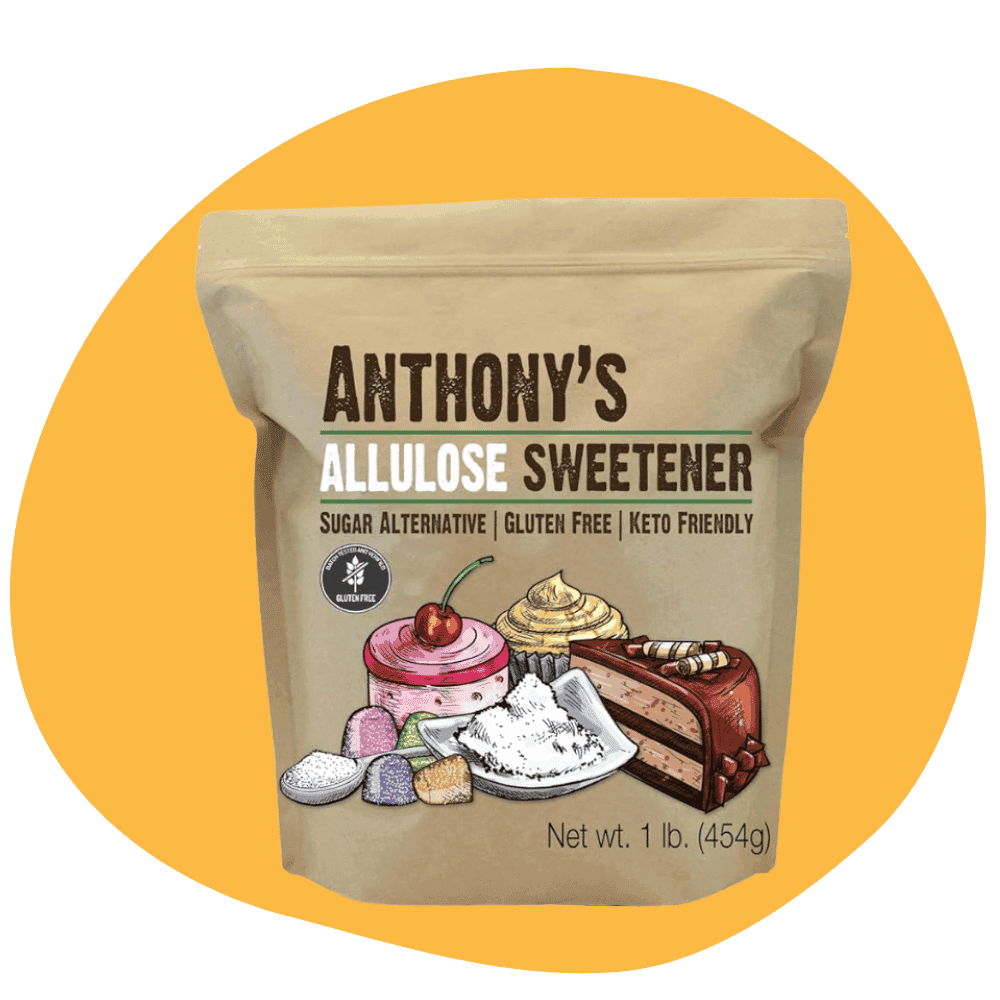
Among experienced home bakers, allulose has earned a reputation as one of the closest alternatives to traditional sugar. Although it's classified as a rare sugar, it contributes very few calories and behaves remarkably like regular sugar in many baking applications.
Unlike some sugar substitutes, allulose dissolves easily, blends smoothly into batters, and helps create desserts with a soft, moist texture. It also browns more naturally than many other alternatives, making it especially useful for recipes where color and caramelization matter.

Stevia for Desserts: Powerful Sweetness With Very Little Bulk
If you're exploring sugar substitutes for desserts, stevia is one of the most concentrated options you'll encounter. Stevia-derived sweeteners contain steviol glycosides, compounds found naturally in the stevia plant (Stevia rebaudiana). The FDA classifies certain purified steviol glycosides among high-intensity sweeteners and notes that they are many times sweeter than table sugar, meaning only a very small quantity is needed to produce a similar level of sweetness. (15, 16)
That incredible sweetness is both stevia's biggest advantage and one of its biggest challenges in sugar free baking. If a recipe calls for a substantial amount of granulated sugar, replacing it with a tiny amount of concentrated stevia may preserve sweetness but remove much of the original ingredient's physical bulk. And remember, sugar isn't only a sweetener. It can influence moisture, tenderness, spread, browning, structure, and mouthfeel.
So, when using stevia as a sugar substitute, think of it primarily as a sweetness replacement, not automatically as a complete functional replacement for sugar. That distinction will help you understand why some stevia desserts work beautifully while others turn out unexpectedly thin, dry, dense, or otherwise different from the original.
How Sweet Is Stevia?
The answer depends on the specific steviol glycoside and formulation, but the numbers are striking. The FDA reports that certain purified steviol glycosides are approximately 200 to 400 times sweeter than table sugar, while its comparison chart lists steviol glycosides in that same range. (17)
That explains why you don't simply measure stevia the way you would measure ordinary granulated sugar.
Imagine a cake recipe that uses a large quantity of sugar. If you tried to replace all of that volume with a sweetener hundreds of times sweeter, you would need only a tiny amount to achieve sweetness. The problem is that the missing volume doesn't magically disappear without affecting the recipe.
This is the central idea to remember when working with sugar alternatives for baking:
Stevia can replace much of sugar's sweetness without replacing all of sugar's physical functions.
That's why commercial baking products often combine a concentrated sweetener with other ingredients that provide bulk. Always check the product label because a product marketed as a "stevia baking blend" can have a very different composition and measuring ratio from a bottle of concentrated stevia extract.
Why a Small Amount of Stevia Can Replace Much More Sugar
High-intensity sweeteners are specifically designed to deliver substantial sweetness at very low use levels. The FDA explains that these sweeteners are many times sweeter than sucrose, so smaller amounts are required to achieve comparable sweetness.
This can be useful when the primary goal is simply to sweeten a food without using a large quantity of sugar. But baking introduces another layer of complexity.
Suppose a traditional recipe contains a cup of sugar. That cup contributes sweetness, but it also occupies space in the batter or dough. It interacts with water and other ingredients, affects texture, and participates in the physical and chemical changes that occur during baking.
A tiny amount of concentrated stevia cannot automatically reproduce all of those functions.
That's why successful sugar free baking often requires a recipe designed around the particular sweetener rather than a random substitution.
Powdered Stevia vs. Liquid Stevia
Stevia isn't always sold in the same form. You may encounter liquid drops, powders, concentrated extracts, or baking blends, and these products aren't necessarily interchangeable.
Liquid stevia can be convenient when you're sweetening beverages, sauces, fillings, or small portions of a recipe. Because only a small amount may be needed, it doesn't contribute much bulk or moisture.
Powdered stevia can be easier to distribute through dry ingredients, but its concentration varies considerably by product. Some powders are highly concentrated steviol glycosides, while others are formulated with additional ingredients to make them easier to measure.
This is why the word stevia alone isn't enough to determine how much to use.
Always read the product's serving size and conversion instructions. A tablespoon of one stevia baking product could represent a very different amount of sweetening power from a tiny scoop of concentrated stevia extract.
Why Baking Blends Can Be Easier to Use
If you're new to sugar alternatives, a stevia baking blend can sometimes be easier to work with than highly concentrated stevia.
The reason is simple: volume matters in baking.
A baking blend may contain stevia-derived sweeteners alongside another ingredient that provides additional bulk, allowing the product to measure more like sugar. This can make it easier to incorporate into cookies, cakes, muffins, and other recipes.
However, you shouldn't assume that every baking blend is interchangeable with sugar on a cup-for-cup basis. Products differ in their ingredients, sweetness, and intended applications.
For predictable sugar free baking, use the manufacturer's recommended conversion rather than creating your own conversion based solely on the sweetness of pure steviol glycosides.
Concentrated Stevia Requires More Care
Pure or highly concentrated stevia-derived sweeteners are a different story.
Because they're so potent, adding slightly too much can make a dessert noticeably sweeter than intended. That's particularly important in delicate desserts where sweetness needs to balance chocolate, fruit, dairy, spices, or other flavors.
Concentrated stevia also contributes very little physical bulk compared with the quantity of sugar used in many traditional recipes.
So if you're adapting a conventional cake or cookie recipe, don't simply remove the sugar and add a tiny amount of concentrated stevia. You may need a recipe specifically formulated to compensate for the lost volume and other functions of sugar.
Does Stevia Have an Aftertaste?
Taste perception is highly individual, but some people notice a lingering or distinctive aftertaste with certain stevia products.
This is one reason the specific steviol glycoside and formulation matter. Stevia isn't a single chemical substance; it refers to a family of steviol glycosides with different properties.
Modern sweetener formulations may combine different steviol glycosides or blend stevia with other sweeteners to create a more balanced flavor profile. The FDA's information on stevia-derived sweeteners includes several purified steviol glycosides, including rebaudioside A and other preparations.
For dessert recipes, the easiest way to evaluate a stevia product is to taste the finished recipe rather than judging the sweetener alone.
Chocolate, vanilla, cinnamon, citrus, coffee, nuts, and fruit can all influence how sweetness is perceived. A stevia product that tastes slightly different in plain water may be much less noticeable in a richly flavored dessert.
Still, if you notice a lingering taste, adding more stevia isn't necessarily the answer. More concentrated sweetener could make the flavor more pronounced rather than solving the problem.
Why Stevia Alone Doesn't Reproduce Sugar's Physical Properties
This is probably the most important baking lesson about stevia.
Sweetness isn't the same thing as bulk.
Traditional sugar can occupy a substantial physical portion of a recipe. Stevia-derived high-intensity sweeteners are used in tiny quantities because they're extraordinarily sweet. The FDA specifically describes high-intensity sweeteners as substances that require much smaller quantities than table sugar to achieve a similar sweetness level.
That difference can affect your dessert in several ways.
Texture Can Change
If you remove a large quantity of sugar and add only a tiny amount of stevia, the finished dessert may not have the same texture as the original.
A cookie could become less spread out. A cake could have a different crumb. A brownie could lose some of the characteristics you associate with a traditional sugar recipe.
The issue isn't necessarily the stevia itself. It's the fact that you've changed the overall ingredient balance.
Moisture Can Change
Sugar interacts with water and contributes to the moisture characteristics of many baked goods. Removing a large quantity of sugar therefore changes the moisture balance.
A recipe designed for sugar alternatives should account for this rather than simply swapping sweeteners.
Browning Can Change
Sugar also participates in browning reactions during baking. When you dramatically reduce or remove it, the dessert may not develop the same color or toasted flavor.
That's why a stevia sweetened cookie may look different from the conventional version even when the sweetness is similar.
Volume Can Change
This is especially important in cakes and other recipes where the original sugar contributes significantly to the total volume of the ingredients.
A small amount of stevia cannot replace that physical volume.
That's why some stevia baking blends are formulated with additional ingredients to make them more practical for baking.
Stevia for Cookies
Cookies can be challenging when using a concentrated sugar substitute because sugar affects spread, texture, moisture, and browning.
If you use concentrated stevia without replacing the missing bulk, the dough may behave differently from traditional cookie dough.
For this reason, look for cookie recipes specifically designed around stevia or a stevia baking blend. If adapting your own recipe, make a small test batch rather than committing an entire batch of dough to an untested conversion.
Pay attention to:
- Cookie spread
- Edge crispness
- Center softness
- Browning
- Overall sweetness
- Aftertaste
A successful stevia cookie doesn't have to be identical to the original sugar cookie. The goal is to create a texture and flavor combination that works well with the ingredients you're using.
Stevia for Cakes
Cakes can be even more sensitive to sugar replacement because their texture depends on the interaction between flour, eggs, fat, liquid, leavening agents, and sweetener.
A concentrated stevia product may provide sweetness but not the bulk needed by the original formula.
This is where a baking blend can be particularly practical. A product formulated to provide more volume can make recipe development easier than using pure concentrated stevia.
For the best results, choose a cake recipe that was developed specifically for your selected sugar alternative. This lets the recipe account for the sweetener from the beginning instead of trying to repair the ingredient balance afterward.
Stevia for Brownies
Brownies have a reputation for being forgiving, but they can still react noticeably to changes in sweetener.
A fudgy brownie depends heavily on moisture and the balance between fat, eggs, chocolate, flour, and sweetener. Removing a large amount of sugar and replacing it with a tiny amount of stevia can alter that balance.
If you're experimenting with sugar free baking, look for brownie recipes that specifically use stevia or another suitable sweetener.
Rich ingredients such as cocoa, vanilla, and chocolate can also help create a more rounded flavor profile, although the exact result depends on the recipe and the stevia formulation.
Stevia for Frostings and Fillings
Frostings present another interesting challenge because powdered sugar isn't only responsible for sweetness. It also provides the bulk that creates the characteristic consistency of many traditional frostings.
A tiny amount of concentrated stevia can't reproduce that structure by itself.
Instead, a frosting designed around a stevia sweetener might use ingredients such as cream cheese, whipped dairy, yogurt, nut or seed butter, or another base to provide volume and texture.
The same principle applies to dessert fillings. Choose the sweetener and the base together, rather than treating sweetness as an isolated ingredient.
Stevia for Puddings, Custards, and Sauces
Concentrated stevia can sometimes be easier to incorporate into desserts where sugar's physical bulk isn't as important.
Puddings, custards, sauces, and some fillings can provide more flexibility because their structure comes primarily from ingredients such as eggs, dairy, starches, or thickeners.
However, the sweetener still needs to dissolve and distribute evenly.
A tiny amount of liquid stevia can be convenient in a sauce or filling, but the exact quantity should come from the product's directions or a tested recipe.
How to Choose the Right Stevia Product for Baking
When shopping for sugar alternatives for baking, don't stop at the front of the package. Turn it around and read the ingredient list.
Look for:
- The type of steviol glycoside used
- Serving size
- Sweetness comparison
- Other ingredients in the blend
- Whether it is intended for baking
- Recommended sugar conversion
This is particularly important because "stevia" can describe products with very different formulations.
The FDA distinguishes purified steviol glycosides from whole-leaf or crude stevia extracts. The agency states that certain highly purified steviol glycosides have received favorable GRAS responses, while whole-leaf and crude stevia extracts are not considered GRAS for use as sweeteners in the United States.
So, when discussing stevia for desserts, precision matters. The regulatory information applies to specific purified steviol glycosides and their intended uses—not automatically to every product marketed with the word "stevia."
The Bottom Line on Stevia and Sugar Alternatives
Stevia is one of the most powerful sugar alternatives available for desserts because certain steviol glycosides can be hundreds of times sweeter than table sugar. The FDA classifies certain purified steviol glycosides among high-intensity sweeteners and explains that their extreme sweetness means much smaller quantities are needed compared with sucrose.
But that incredible potency comes with a trade-off: stevia provides sweetness without providing the same amount of physical bulk as sugar.
That's the key to using it successfully.
For beverages, sauces, fillings, and some desserts, that may be perfectly manageable. For cookies, cakes, brownies, and other baked goods, a stevia baking blend or a recipe specifically developed around stevia may be a better starting point than concentrated stevia alone.
And if you're aiming for sugar free baking, remember that replacing sugar isn't simply a matter of making a dessert taste sweet. You're also managing texture, moisture, volume, browning, and mouthfeel.
Once you understand that difference, stevia becomes much easier to work with—and much easier to choose intelligently among the many sweeteners and sugar alternatives available today.
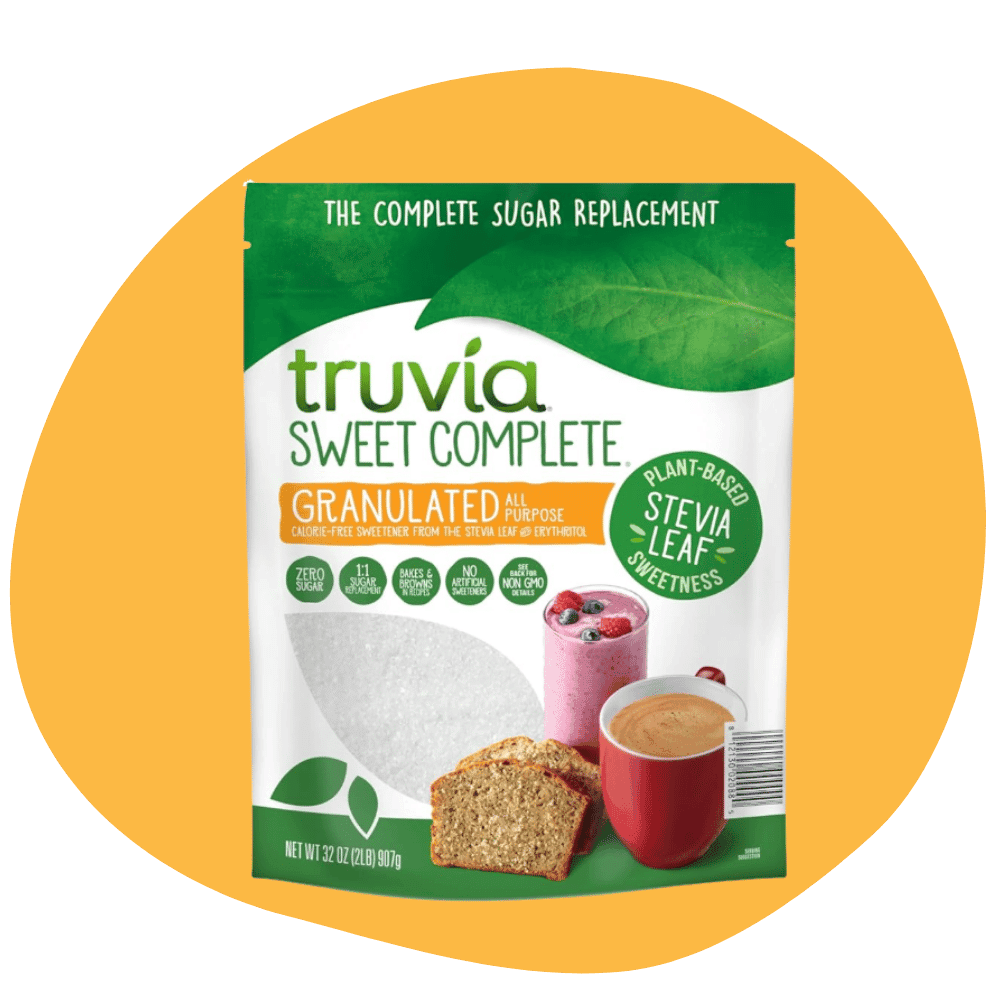
Stevia is one of the sweetest sugar alternatives available, making it unique among baking ingredients. Derived from the leaves of the Stevia rebaudiana plant, it provides intense sweetness in very small amounts.
Because it is much sweeter than sugar, careful measuring is essential.
Monk Fruit Sweetener: What Bakers Need to Know
If you're exploring sugar substitutes for desserts, monk fruit is an interesting option because its sweetness comes from compounds called mogrosides found in monk fruit, also known as Siraitia grosvenorii or Luo Han Guo. The FDA describes monk fruit extract as a high-intensity sweetener and notes that its sweetness can be roughly 100 to 250 times greater than table sugar, depending on the extract and its mogroside content. That enormous range is one reason you shouldn't assume that every product labeled "monk fruit" will work the same way in a recipe.
For sugar free baking, monk fruit presents an important distinction: pure monk fruit extract and granulated monk fruit sweetener are not necessarily the same ingredient from a baking perspective. Pure extract can be extremely concentrated, meaning you need only a small amount for sweetness. A granulated product, on the other hand, may contain monk fruit extract combined with another ingredient that provides bulk and makes the product easier to measure. For example, some commercial products combine monk fruit extract with erythritol and are specifically formulated as one-for-one sugar replacements.
That difference can completely change how a cookie, cake, pudding, or frosting behaves. So before reaching for a sugar substitute, don't just look for the words "monk fruit" on the front of the package. Turn the package around and read the ingredient list, serving size, and conversion instructions first.
What Is Monk Fruit Extract?
Monk fruit is a small fruit native to Southern China. Its characteristic sweetness comes primarily from mogrosides, compounds found in the fruit extract. According to the FDA, monk fruit extracts contain varying levels of mogrosides, and the concentration of these compounds influences sweetness intensity. (18)
This is important because "monk fruit extract" doesn't necessarily describe one standardized level of sweetness. FDA documentation on monk fruit extracts has described products with substantially different concentrations of mogrosides, illustrating why different extracts can have very different sweetness intensities. (19)
In practical baking terms, that means a tiny amount of a concentrated monk fruit extract can provide a lot of sweetness. But that tiny amount won't necessarily provide the bulk, moisture, or physical structure that a larger quantity of granulated sugar contributes to a dessert.
That's where commercial blends come into the picture.
Why Monk Fruit Is So Sweet
Monk fruit is classified by the FDA among plant and fruit-based high-intensity sweeteners. The agency reports that monk fruit extract can be approximately 100 to 250 times sweeter than sucrose, depending on the extract.
Imagine a recipe that calls for one cup of sugar. You can't simply assume that a tiny amount of pure monk fruit extract can replace that cup functionally. It might replace much of the sweetness, but it won't automatically replace the physical material occupying space in the batter or dough.
This is the central concept to remember when working with sugar alternatives for baking:
A sweetener can replace sweetness without replacing all of sugar's baking functions.
Traditional sugar contributes more than flavor. It can affect moisture, texture, browning, spread, tenderness, and mouthfeel. When you remove a large quantity of sugar, those characteristics can change even if the dessert remains sweet.
That's why pure monk fruit extract and a granulated monk fruit blend can produce dramatically different results.
Why Commercial Monk Fruit Products Often Contain Other Ingredients
If monk fruit is so sweet, why don't most baking products simply contain monk fruit extract by itself?
The answer is concentration and usability.
Pure monk fruit extract can be far too concentrated for convenient cup-by-cup baking. Measuring a tiny amount accurately can be difficult, particularly when a recipe needs a larger quantity of sweetener.
A manufacturer can combine a small amount of monk fruit extract with another ingredient that provides volume. The result is a product that's easier to scoop, measure, mix, and incorporate into recipes.
This is why you may find monk fruit products containing ingredients such as erythritol or allulose. The additional ingredient isn't necessarily there simply to add sweetness; it can change the product's physical characteristics and make it more practical for everyday cooking and baking.
For example, one commercial granulated monk fruit product lists monk fruit extract and erythritol and provides a one-for-one sugar replacement approach.
Another important point is that the bulking ingredient can influence your final dessert. If two products contain monk fruit but use different bulking ingredients, they may behave differently when heated, cooled, mixed with liquids, or incorporated into dough.
So don't stop reading after the first ingredient.
Pure Monk Fruit Extract vs. Granulated Monk Fruit Blends
The difference becomes clearer when you put the two side by side.
| Feature | Pure Monk Fruit Extract | Granulated Monk Fruit Blend |
|---|---|---|
| Sweetness | Extremely concentrated | Usually diluted with another ingredient |
| Amount Needed | Very small | Often much larger |
| Bulk | Very little | More substantial |
| Ease of Measuring | Can be challenging | Generally easier |
| Baking Applications | Requires recipe-specific formulation | Often designed for cooking and baking |
| Conversion | Product-specific | May be 1:1, but only if the package says so |
| Texture Contribution | Minimal by itself | Depends heavily on the bulking ingredient |
The biggest takeaway is simple: never assume a conversion ratio based solely on the word "monk fruit."
The FDA's information makes clear that monk fruit extracts can vary in mogroside content, and therefore sweetness intensity can vary as well.
A granulated product might be designed to measure similarly to sugar, while a concentrated extract might require only a tiny amount.
Those are two completely different baking ingredients.
How to Check the Package Before Using a Conversion Ratio
Before using any sugar substitute in a dessert, spend a minute reading the package. It can save you an entire batch of cookies.
Check the Ingredient List
Look at what's actually inside the product.
FDA guidance explains that food ingredients are listed in descending order by weight, so the ingredient list can help you understand what makes up the product. (20)
A product called "monk fruit sweetener" may contain monk fruit extract plus a larger volume ingredient. Another product may use a different combination.
That difference matters.
Check the Serving Size
Look at how much the manufacturer considers one serving.
If the serving is a tiny scoop, you're probably dealing with a highly concentrated product. If the product is intended to be measured by tablespoons or cups, it may contain substantial bulking ingredients.
Don't use the serving size as a direct sugar conversion, but use it as a clue about how concentrated the product is.
Look for a Sugar Conversion Chart
Some manufacturers specifically tell you whether their product is intended as a 1:1 sugar replacement.
For example, In The Raw's granulated monk fruit and erythritol product provides one-for-one replacement guidance.
But that instruction applies to that particular formulation. It should not automatically be applied to another monk fruit product.
Check Whether It's a Blend
This may be the most important step.
If the package says "monk fruit blend," find out what the other ingredients are. The additional ingredients can contribute much of the product's physical bulk and influence how it behaves in your dessert.
Two products can both say "monk fruit" on the front and still require completely different approaches.
Monk Fruit for Cookies
Cookies are one of the desserts where choosing the correct sugar alternatives formulation really matters.
Traditional sugar affects cookie spread, tenderness, crispness, browning, and moisture. A highly concentrated monk fruit extract can provide sweetness without providing the same physical contribution.
That's why a granulated monk fruit blend may be more practical for some cookie recipes than pure extract.
Still, don't assume every granulated product will create the same cookie. The bulking ingredient matters, and the amount of moisture and fat in your recipe matters too.
If you're adapting a favorite cookie recipe, start by checking whether the monk fruit product is designed for one-for-one replacement. If it isn't, use a recipe formulated specifically for that product rather than guessing.
For the most reliable sugar free baking, test a small batch first.
Pay attention to:
- Cookie spread
- Edge crispness
- Center texture
- Browning
- Sweetness
- Overall mouthfeel
The goal isn't necessarily to make a cookie that is identical to the original. It's to create a cookie where the sweetener works naturally with the rest of the ingredients.
Monk Fruit for Cakes
Cakes introduce another challenge because sugar can contribute to the texture and structure of the finished crumb.
A highly concentrated monk fruit extract may provide sweetness but very little bulk. If you remove a large amount of sugar from a cake and replace it with a tiny quantity of extract, the ingredient balance can change substantially.
A granulated monk fruit blend can make the transition easier, particularly if the product is specifically designed to replace sugar by volume. But even then, the result may differ from the original cake.
This is especially true for recipes that rely on creaming butter and sugar. The physical characteristics of the sweetener can influence mixing and aeration, so a recipe developed specifically for the chosen sugar substitute can be much more predictable.
When testing a monk fruit cake, evaluate the crumb, moisture, volume, sweetness, and browning rather than judging the recipe on sweetness alone.
Monk Fruit for Puddings
Puddings can be more forgiving because their structure often comes from ingredients such as milk, cream, eggs, starch, or other thickeners.
In this situation, a concentrated monk fruit product can sometimes provide the desired sweetness without needing to replace a large amount of sugar-based bulk.
The key is even distribution.
If you're using a very concentrated product, measure carefully according to its package directions. Adding too much can quickly shift the sweetness balance.
For pudding recipes, you may also find that monk fruit works particularly well with complementary flavors such as:
- Vanilla
- Cocoa
- Cinnamon
- Coffee
- Citrus
- Berries
- Coconut
The important thing is to choose the product based on its actual formulation rather than assuming every monk fruit extract has the same potency.
Monk Fruit for Frostings
Frosting is another area where the difference between sweetness and bulk becomes obvious.
Traditional powdered sugar provides much of the physical volume in buttercream frostings. Pure monk fruit extract can't recreate that volume because you use so little of it.
A monk fruit blend can be easier to incorporate, but its texture will depend heavily on the ingredients used to create the blend.
For this reason, recipes specifically designed for sugar free baking may use monk fruit alongside ingredients that provide the desired body and consistency.
If you're creating a frosting from scratch, think about the complete formula rather than simply replacing powdered sugar with monk fruit extract.
Ask:
What will provide the volume?
What will provide the creamy texture?
What will help the frosting hold its shape?
What will balance the sweetness?
Those questions are much more useful than simply asking whether monk fruit is "as sweet as sugar."
Don't Assume Every Monk Fruit Product Has the Same Sweetness
This is perhaps the most important warning for anyone experimenting with sweeteners and sugar alternatives.
"Monk fruit" is not a universal conversion measurement.
The FDA notes that monk fruit extract contains varying levels of mogrosides, and its sweetness depends on the extract's composition. FDA documentation also describes monk fruit extracts with significantly different mogroside concentrations.
That means two products can have:
- Different sweetness intensity.
- Different serving sizes.
- Different bulking ingredients.
- Different textures.
- Different recommended conversion ratios.
- Different applications in baking.
So, if one package says "1 cup replaces 1 cup of sugar," don't assume another monk fruit product works the same way.
Follow the instructions for the product you actually have.
This one habit can prevent a lot of disappointing baking experiments.
A Simple Rule for Baking With Monk Fruit
When using monk fruit as a sugar substitute, remember the three-part check:
1. Sweetness: How concentrated is the monk fruit extract?
2. Bulk: What ingredient provides the physical volume?
3. Conversion: What does the manufacturer recommend?
If you can answer those three questions before mixing your ingredients, you'll have a much better idea of what to expect.
And if you're making sugar free baking recipes regularly, keep the package information nearby. Sweetener blends can change over time, and different brands can use different formulations.
Monk fruit can be a useful option for desserts, but it works best when you treat it as a specific ingredient rather than a generic replacement for sugar. The FDA recognizes monk fruit extracts among high-intensity sweeteners and notes that their sweetness comes from mogrosides, with extracts reported to be roughly 100–250 times sweeter than sucrose depending on composition.
Once you understand the difference between pure monk fruit extract and granulated monk fruit blends, the whole subject becomes much easier. You can choose a product based on the dessert you're making, check its actual ingredients, and use the manufacturer's conversion guidance instead of guessing.
That's the real secret to successful sugar alternatives for baking: don't choose the sweetener first and force it into the recipe. Choose the formulation that fits the job.
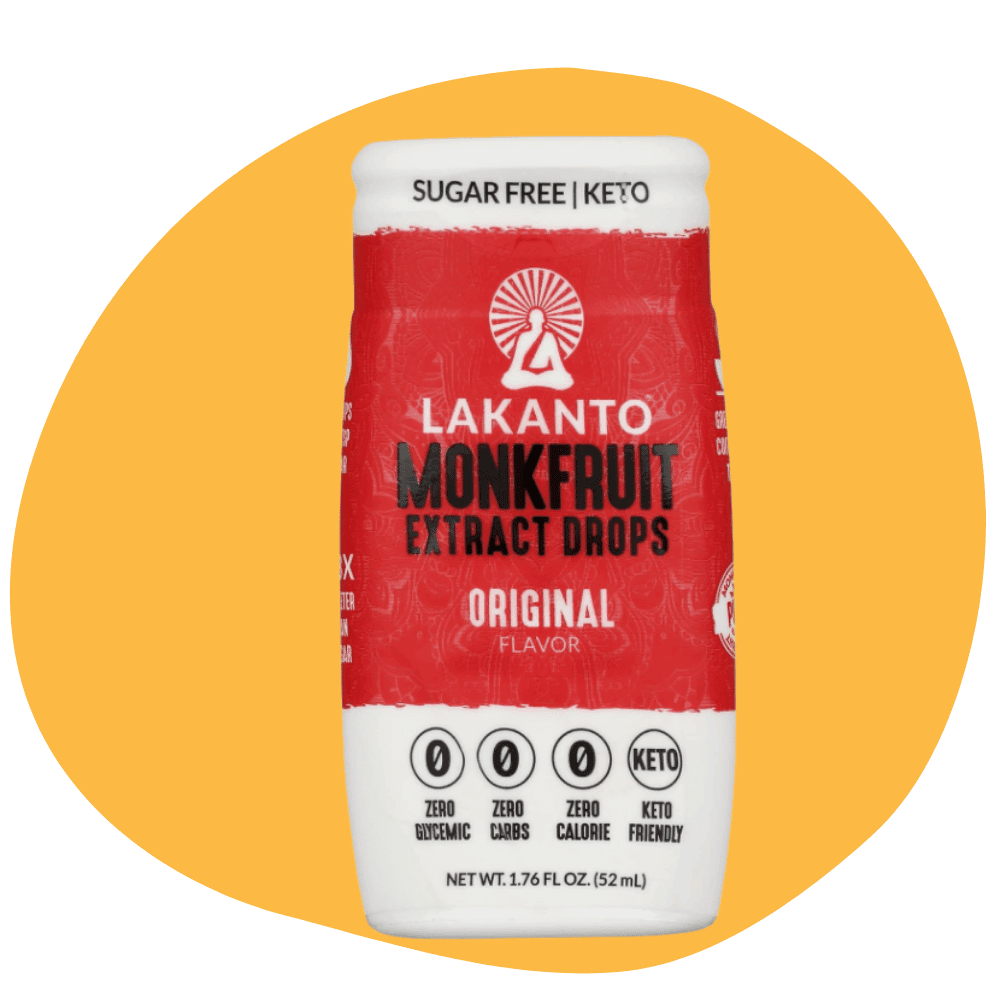
Monk fruit has become one of the most popular ingredients in sugar-free dessert recipes, thanks to its clean flavor and natural origin. Extracted from the monk fruit, this sweetener contains compounds called mogrosides, which provide sweetness without the sugar found in traditional sweeteners.
Pure monk fruit extract is extremely sweet, so most baking products combine it with erythritol or allulose to make measuring easier and improve texture.
Erythritol and Other Sugar Alcohols
If you're comparing sugar substitutes for desserts, sugar alcohols deserve a place on the list. Despite the name, sugar alcohols are not the same thing as alcoholic beverages. They are a distinct category of sweeteners that have a chemical structure related to both sugars and alcohols, and the FDA lists examples including erythritol, xylitol, sorbitol, maltitol, and mannitol. They are commonly used in products such as sugar free candies, cookies, and chewing gum.
For baking, sugar alcohols are interesting because they sit somewhere between traditional sugar and high-intensity sweeteners. Unlike highly concentrated sweeteners such as certain steviol glycosides, sugar alcohols generally provide enough physical material to contribute to the texture and bulk of a recipe. At the same time, they don't necessarily behave exactly like sucrose, so a sugar substitute made with erythritol, xylitol, or maltitol can change the finished dessert in noticeable ways.
The FDA states that the sweetness of sugar alcohols varies from approximately 25% to 100% as sweet as sugar, depending on the particular ingredient. That range is important because you shouldn't assume that every sugar alcohol can be swapped for table sugar using the same measurement.
What Are Sugar Alcohols?
Sugar alcohols are carbohydrates that resemble sugars in some ways but have a different chemical structure. The FDA treats them as a category separate from both traditional sugars and high-intensity sweeteners. Examples include sorbitol, xylitol, lactitol, mannitol, erythritol, and maltitol.
They can be particularly useful in sugar free baking because they provide sweetness without requiring the extremely tiny quantities associated with high-intensity sweeteners.
Think of it this way: if a high-intensity sweetener is like a concentrated drop of food coloring, a sugar alcohol is more like a spoonful of an ingredient that can actually occupy space in the recipe. That physical presence matters when you're making cookies, brownies, frostings, or other desserts where the amount of sweetener affects more than flavor.
Still, "can occupy space" doesn't mean "behaves exactly like sugar." Sugar alcohols can have their own effects on crystallization, texture, cooling sensation, moisture, and browning. That's why a successful recipe often depends on choosing the right sweetener for the specific dessert.
Erythritol, Xylitol, Sorbitol, Maltitol, and Mannitol
Not all sugar alcohols are interchangeable. Their sweetness, physical characteristics, and applications can differ considerably.
| Sugar Alcohol | Relative Sweetness | Common Dessert Applications | Baking Considerations |
|---|---|---|---|
| Erythritol | About 60–80% | Cookies, Frostings, Chocolate-Style Desserts | Can crystallize and produce a cooling mouthfeel |
| Xylitol | About 100% | Candies, Baked Goods, Desserts | Similar sweetness to sugar; recipe formulation matters |
| Sorbitol | About 60% | Candies, Fillings, Soft Baked Goods | Can contribute moisture and softness |
| Maltitol | About 75–90% | Candies, Chocolate-Style Products, Baked Goods | Useful for bulk but can behave differently from sucrose |
| Mannitol | About 50–70% | Confections and Selected Food Applications | Lower sweetness and distinctive physical behavior |
*Relative sweetness varies by ingredient, formulation, and source, so product labels and recipe-specific guidance should be checked.
Approximate sweetness varies by source, formulation, and comparison method. FDA describes the overall range for sugar alcohols as approximately 25–100% as sweet as sugar.
The practical lesson is simple: don't treat "sugar alcohol" as though it were one ingredient. Erythritol isn't identical to xylitol, and xylitol isn't identical to sorbitol.
That difference becomes especially obvious when you start experimenting with sugar alternatives for baking.
Erythritol: A Popular Choice for Sugar Free Baking
Erythritol is probably one of the sugar alcohols you'll encounter most often in recipes marketed as sugar free baking. It can provide sweetness and bulk, which makes it more practical for some baked goods than an extremely concentrated sweetener used alone.
One characteristic that bakers often notice is crystallization. Erythritol can recrystallize as a dessert cools, potentially creating a slightly gritty texture in frostings, fillings, or other preparations where smoothness is important.
This doesn't mean erythritol is unsuitable for desserts. It simply means the recipe needs to account for its characteristics.
Erythritol can work particularly well in recipes where a little firmness or a crystalline texture isn't a problem. Cookies, certain cakes, chocolate desserts, and some frostings can all be formulated around it.
But if you're aiming for an exceptionally smooth and creamy dessert, the formulation becomes much more important.
Xylitol and Its Baking Characteristics
Xylitol is another sugar alcohol with a sweetness level relatively close to sucrose. Because it provides both sweetness and physical bulk, it can be used in various food applications.
For bakers, the important point is that xylitol should still be treated as its own ingredient, not simply as another name for erythritol.
Its sweetness and physical properties differ, which means a recipe designed specifically for erythritol may not produce identical results with xylitol.
When experimenting with sugar alternatives, follow the recipe's instructions or the product manufacturer's conversion guidance rather than assuming all sugar alcohols are interchangeable.
Important household safety note: xylitol is highly toxic to dogs. If xylitol is used in a home kitchen, it should be stored securely and kept completely away from pets.
Sorbitol, Maltitol, and Mannitol
Sorbitol, maltitol, and mannitol may receive less attention in everyday baking conversations, but they're also recognized by the FDA as sugar alcohols.
- Sorbitol can contribute sweetness and moisture, making its behavior different from a dry, crystalline sweetener.
- Maltitol is commonly used in confectionery and other sweet products because it can provide both sweetness and bulk.
- Mannitol is less sweet than sucrose and has physical characteristics that can make it useful in specific food applications.
These differences illustrate an important principle for anyone researching sweeteners and sugar alternatives: the category tells you what an ingredient is, but it doesn't tell you exactly how it will behave in your recipe.
Why Sugar Alcohols Behave Differently From High-Intensity Sweeteners
This distinction can save you from many disappointing baking experiments.
The FDA separates sugar alcohols from high-intensity sweeteners. High-intensity sweeteners are many times sweeter than table sugar, so they are used in much smaller quantities. Sugar alcohols, by contrast, are generally only as sweet as or less sweet than sugar and can therefore be used in larger quantities.
That difference affects baking.
If you replace one cup of sugar with a tiny quantity of a concentrated sweetener, you lose most of the original ingredient's bulk. With a sugar alcohol, you can use a substantially larger amount, which makes it more capable of contributing to the physical structure of the recipe.
But sugar alcohols still aren't carbon copies of sucrose.
They may influence:
- Texture
- Moisture
- Crystallization
- Spread
- Mouthfeel
- Browning
- Sweetness intensity
That's why a recipe developed specifically for a particular sugar alcohol can be much more reliable than randomly substituting one into a traditional recipe.
Texture and Crystallization Matter
If you've ever made a dessert with erythritol and noticed a slightly grainy sensation after it cooled, you've encountered one of the practical challenges of sugar alcohols.
Crystallization can become particularly noticeable in recipes where you want a silky, smooth texture. Frostings, fillings, sauces, and creamy desserts may therefore require more careful formulation than simple baked goods.
The particle size of the sweetener can also matter. A finely powdered form may behave differently from a coarse granulated form because it can distribute more evenly through the mixture.
This is one reason some recipes call specifically for powdered erythritol rather than granulated erythritol.
Don't assume the difference is cosmetic. The form of the sweetener can influence the final texture.
What About Digestive Tolerance?
Sugar alcohols can also raise questions about digestive tolerance. The response can vary from person to person, and the amount consumed matters.
Some people may experience digestive symptoms after consuming larger amounts of certain sugar alcohols. This is one reason it is better to avoid exaggerated claims such as saying that all sugar alcohols will cause digestive problems—or that none will.
Different sugar alcohols can behave differently in the digestive system, and individual tolerance varies.
If a packaged food contains sugar alcohols, checking the Nutrition Facts panel and ingredient list can help you understand what you're consuming. The FDA also notes that individuals can have particular sensitivities or adverse reactions to food substances.
For recipe development, the practical takeaway is simply to avoid assuming that "sugar free" automatically means "unlimited." The overall recipe and portion still matter.
Erythritol vs. Allulose for Baking
When comparing sugar alternatives for baking, erythritol and allulose are often discussed together, but they're actually different categories.
The FDA identifies erythritol as a sugar alcohol, while allulose is classified as a sugar that is metabolized differently from traditional sugars.
That distinction matters because the two ingredients can produce different results in baked desserts.
| Baking Characteristic | Erythritol | Allulose |
|---|---|---|
| Sweetness | Lower than sucrose | Lower than sucrose |
| Category | Sugar alcohol | Sugar metabolized differently |
| Texture | Can become crystalline or slightly gritty | Often produces a softer texture |
| Moisture | Can behave relatively dry in some recipes | Can contribute to a softer, more moist result |
| Browning | Can differ from sucrose | Can promote noticeable browning |
| Cooling Sensation | More noticeable in some applications | Generally less characteristic of erythritol's cooling effect |
| Cookies | Crisp or firm formulations | Often useful for softer cookies |
| Brownies | Works in formulations designed for it | Useful for softer, fudgier textures |
| Frostings | Powdered forms can be useful | Can produce a different consistency |
| Frozen Desserts | Recipe-specific | Useful in selected frozen formulations |
These are general baking tendencies rather than universal rules. The final result depends on the complete recipe, the sweetener's form, the amount used, and the other ingredients.
Texture
Erythritol can produce a firmer or more crystalline texture, particularly when it recrystallizes after cooling.
Allulose can provide a softer texture in many applications, making it attractive for recipes where tenderness is desirable.
Neither characteristic is automatically better.
For a crisp cookie, a little firmness might be exactly what you want. For a soft brownie, you may prefer a sweetener that supports a more tender texture.
Moisture
Moisture is another major difference to consider.
A traditional sugar-based recipe has a carefully balanced amount of water, fat, flour, and sweetener. Changing the sweetener can alter that balance.
Allulose is often chosen for recipes where a softer, moister texture is desired, while erythritol can produce a different mouthfeel.
This is why blindly switching between the two can produce very different results even when the sweetness seems similar.
Browning
Browning can be particularly important when you're developing cookies, cakes, and brownies.
A dessert made with a sugar alternative may not brown exactly like its conventional counterpart. Allulose can brown readily in baking, while erythritol doesn't simply reproduce the same browning behavior as sucrose.
So if you're judging doneness based entirely on color, be careful.
Color is only one signal. Baking time, internal texture, firmness, and the specific recipe should also guide you.
Mouthfeel
Mouthfeel is where the difference can become especially obvious.
Erythritol is known for a cooling sensation that some people notice, particularly in larger amounts or certain formulations. Allulose generally has a different sensory profile.
Neither is automatically the winner.
If you're making a creamy dessert where a smooth mouthfeel is the priority, the sweetener needs to complement the other ingredients rather than overpower them.
Which Is Better for Cookies?
For cookies, the "better" choice depends on what kind of cookie you're trying to create.
If you want a crisper, firmer cookie, erythritol may fit the formulation well. If you want a softer cookie, allulose may be worth considering.
But cookie texture also depends on flour, fat, eggs, baking temperature, and the amount of sweetener.
That's why a recipe specifically developed around the chosen sugar substitute is usually a better starting point than converting a traditional cookie recipe without making any other adjustments.
Which Is Better for Brownies?
Brownies are particularly sensitive to moisture and texture.
If you're aiming for a soft, fudgy brownie, allulose may be attractive because it can support a softer texture in appropriately formulated recipes.
Erythritol can also work, but the recipe may need to account for its tendency toward crystallization and its different sensory characteristics.
The best option depends on whether your ideal brownie is fudgy, chewy, or cakey.
Which Is Better for Frosting?
Frosting requires a different approach because smoothness and spreadability are often more important than browning.
Powdered erythritol can be useful in some frosting recipes because it provides substantial volume. However, crystallization can become an issue if the formulation isn't designed to keep the texture smooth.
Allulose can also be used in certain frosting and filling recipes, but it won't necessarily produce the same consistency as powdered erythritol.
Again, the recipe should be built around the sweetener rather than treating the sweetener as an afterthought.
Which Is Better for Frozen Desserts?
Frozen desserts bring another layer of complexity because sweeteners can influence the properties of the frozen mixture.
Ice cream, frozen yogurt, and similar desserts depend on the balance of water, fat, milk solids, sweetener, and air.
Changing the sweetener can therefore change the texture after freezing.
Allulose may be useful in some frozen dessert formulations because it can contribute sweetness and affect the freezing characteristics of the mixture. Erythritol can also be used, but its crystallization and cooling characteristics may be noticeable.
For either ingredient, a recipe specifically formulated for frozen desserts is the safest starting point.
Why the "Best" Sugar Substitute Depends on the Recipe
This is the bigger lesson behind erythritol vs. allulose.
There isn't one universally "best" sugar substitute because desserts have different jobs to perform.
A crispy cookie needs different characteristics from a creamy cheesecake. A brownie needs a different moisture balance from a frosting. A frozen dessert has different requirements from a baked cake.
So instead of asking:
"Which sweetener is best?"
Ask:
"Which sweetener best fits this recipe?"
That small change in thinking makes sugar free baking much easier.
If you're making cookies, focus on spread and crispness.
If you're making brownies, focus on moisture and chewiness.
If you're making frosting, focus on smoothness and consistency.
If you're making frozen desserts, focus on freezing behavior and mouthfeel.
And if you're making a cake, pay attention to volume, crumb, moisture, and browning.
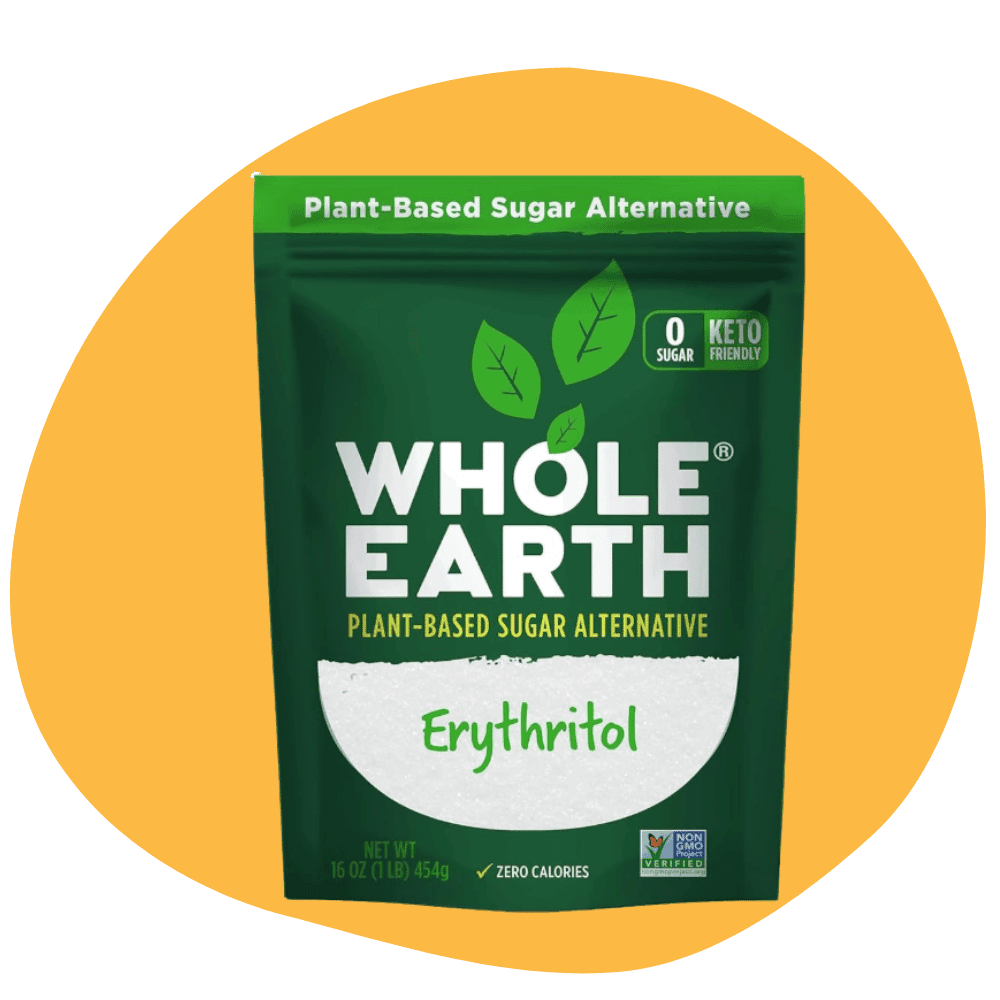
Erythritol has long been a staple ingredient in low carb baking. It's a sugar alcohol that provides sweetness while contributing very few calories, making it a common choice for homemade sugar-free dessert recipes.
One of its biggest advantages is stability. Erythritol performs well under high temperatures, making it suitable for cookies, cakes, and brownies.
Honey, Maple Syrup, and Agave: Are They Really Sugar-Free Swaps?
Swapping white sugar for honey, maple syrup, or agave can change the flavor and texture of a dessert, but it doesn't automatically make the recipe sugar free. These ingredients are still sources of sugar, even though they may have different flavors, textures, and culinary uses. The FDA includes sugars from honey and syrups in its definition of added sugars when they are added to foods, so replacing granulated sugar with a syrup is better described as a sweetener substitution than a true sugar free swap. (21, 22)
That distinction is especially important when you're writing or reading recipes labeled sugar free baking. A muffin made with honey instead of table sugar may contain no refined white sugar, but the honey still contributes sugars. Likewise, a cake sweetened with pure maple syrup isn't automatically sugar free simply because maple syrup sounds more natural or less processed.
The good news? You don't have to avoid these ingredients to appreciate what they can do in the kitchen. Honey, maple syrup, agave, coconut sugar, and date syrup each bring their own personality to desserts. The trick is understanding what you're actually replacing—and what you're adding in its place.
Honey
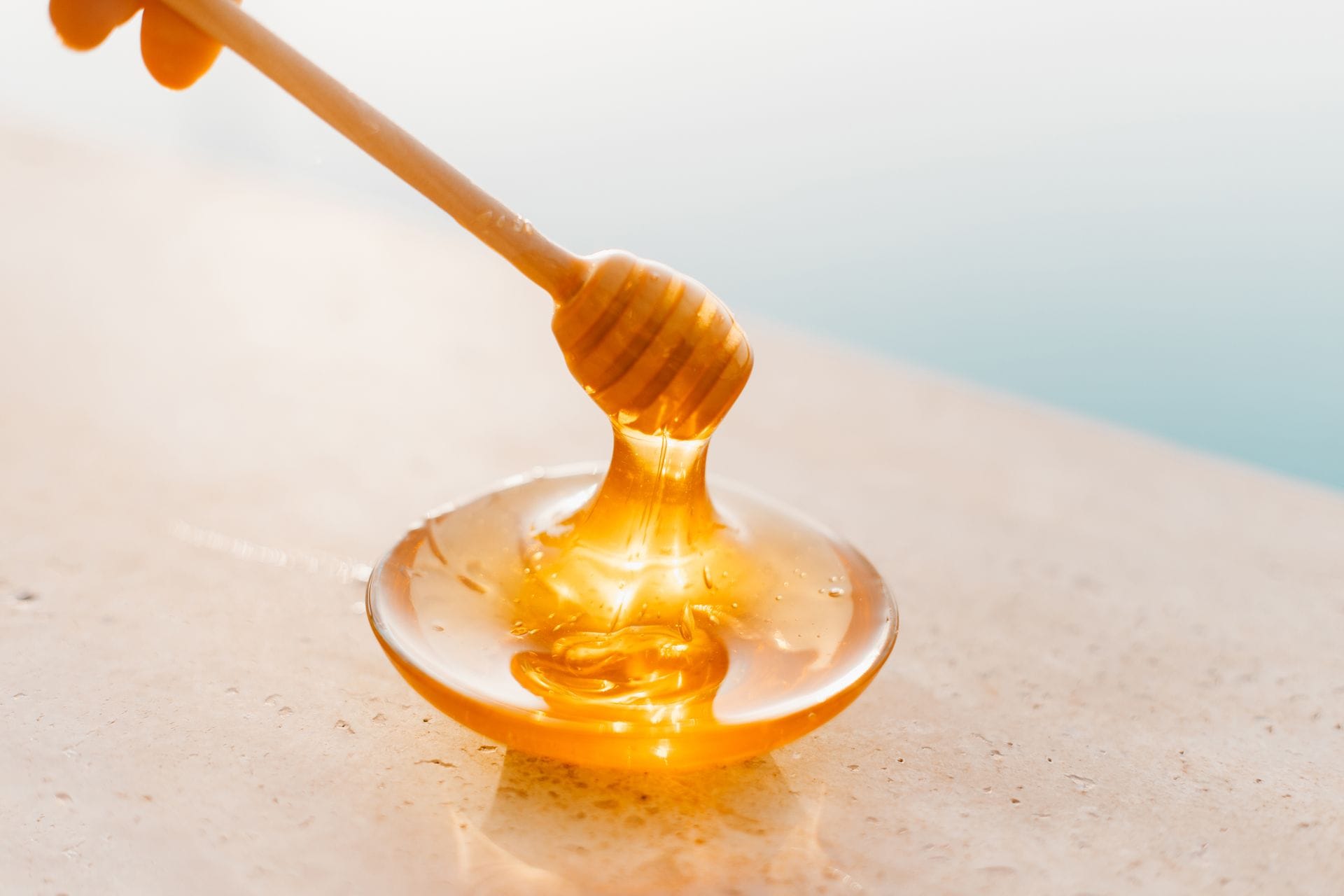
Honey is one of the oldest sweeteners used in cooking, and it's particularly useful when you want sweetness plus moisture and flavor. Depending on the variety, honey can have floral, fruity, buttery, or caramel-like notes, giving baked goods more character than plain granulated sugar.
Its liquid form also changes how it interacts with a recipe. When you replace dry sugar with honey, you're not simply changing one sweetener for another. You're introducing additional liquid, which can influence the consistency of the batter and the texture of the finished dessert.
Honey can work beautifully in muffins, quick breads, soft cakes, sauces, and certain granola desserts. Its distinctive flavor can pair especially well with ingredients such as cinnamon, oats, nuts, citrus, apples, and warm spices.
But here's the important labeling point: honey is still an added sugar when it is added to a food. The FDA specifically includes sugars from honey among added sugars, while single-ingredient honey products have special Nutrition Facts labeling requirements.
So, if your goal is sugar alternatives for baking rather than strictly sugar free baking, honey can be a useful option. If your goal is a dessert genuinely formulated without added sugars, honey doesn't meet that objective.
Pure Maple Syrup
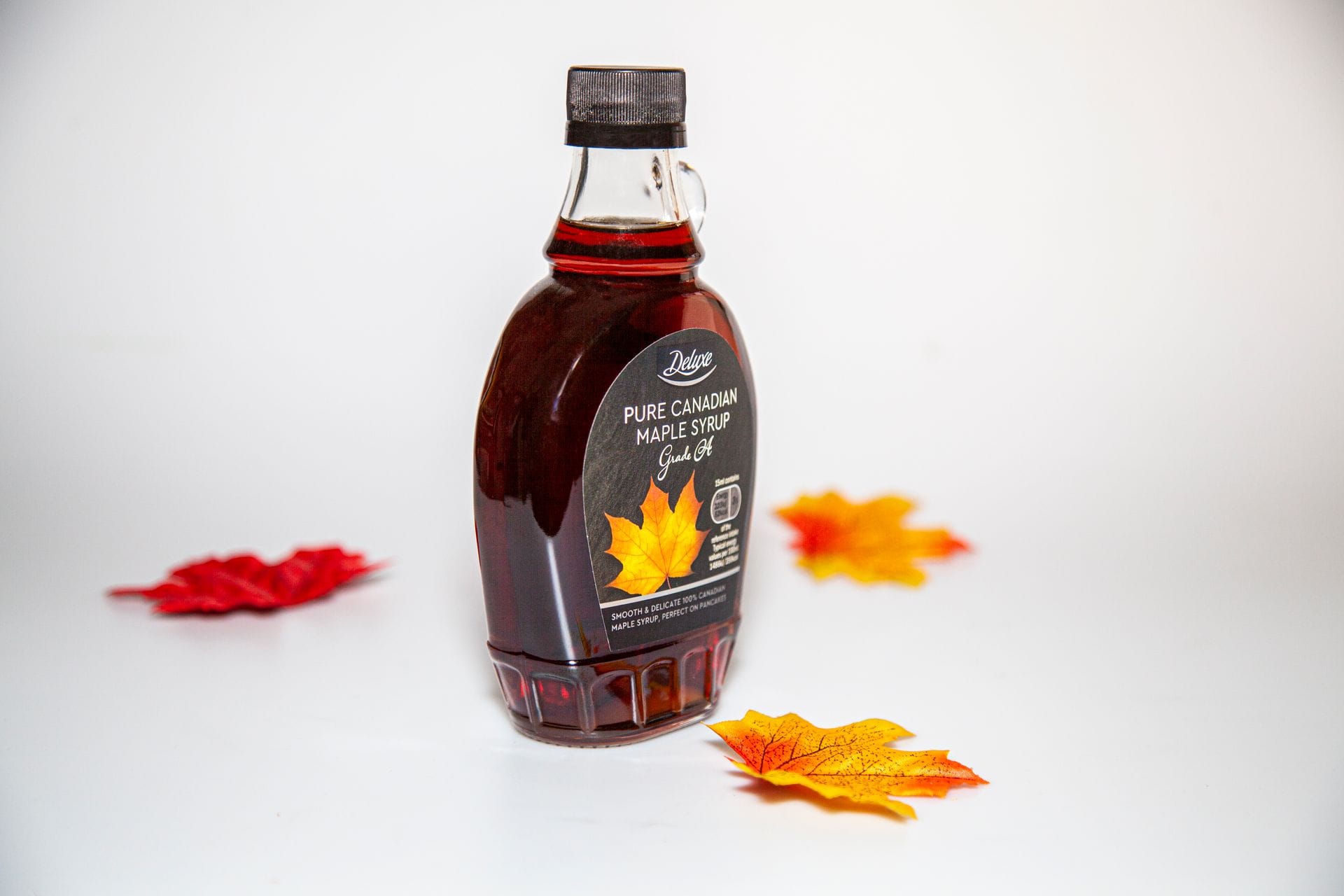
Pure maple syrup offers something honey doesn't: a recognizable maple flavor. That makes it particularly appealing in desserts where its flavor can become part of the recipe rather than simply serving as background sweetness.
Think oatmeal bars, pumpkin muffins, apple cakes, nutty granola clusters, or a warm dessert sauce. Maple syrup can bring a subtle toasted, woody sweetness that works beautifully with vanilla, cinnamon, ginger, pecans, walnuts, and other complementary ingredients.
Like honey, however, maple syrup is a liquid sweetener. That means replacing granulated sugar with maple syrup can change the moisture balance of the recipe.
Pure maple syrup also counts toward added sugars when consumed or added to foods under the FDA's Nutrition Facts framework. The FDA explains that single ingredient maple syrup products must declare their contribution to the Daily Value for added sugars, although they have different labeling requirements from foods containing added sweeteners. (23)
In other words, "pure" doesn't mean "sugar free." It describes the nature or composition of the product, not the absence of sugar.
Agave Syrup
Agave syrup, sometimes called agave nectar, is another liquid sweetener you'll encounter in recipes and packaged foods. Its relatively neutral flavor can make it useful when you want sweetness without the pronounced flavor of honey or maple.
Because agave is liquid, it can be useful in sauces, dressings, no-bake desserts, and selected baked goods. But again, you need to account for the liquid it contributes.
Agave also belongs in the same important labeling conversation: the FDA's guidance specifically includes agave and other syrups among single ingredient sugars and syrups subject to added sugar labeling requirements. (24, 25)
That means changing from table sugar to agave doesn't turn a dessert into a sugar free dessert. It simply changes the type and form of sweetener.
Coconut Sugar
Coconut sugar is different from honey, maple syrup, and agave because it is generally used as a granulated sweetener rather than a liquid syrup.
That makes it easier to incorporate into recipes originally designed around dry sugar. It also has a deeper, caramel-like flavor that can complement chocolate, coffee, nuts, cinnamon, and warm spices.
Because it is still a sugar containing sweetener, however, coconut sugar shouldn't automatically be described as a sugar free alternative. If you're writing a recipe, phrases such as "alternative to white sugar" or "refined sugar free" may communicate the intended substitution more accurately, depending on the complete recipe and the terminology you're using.
Date Syrup
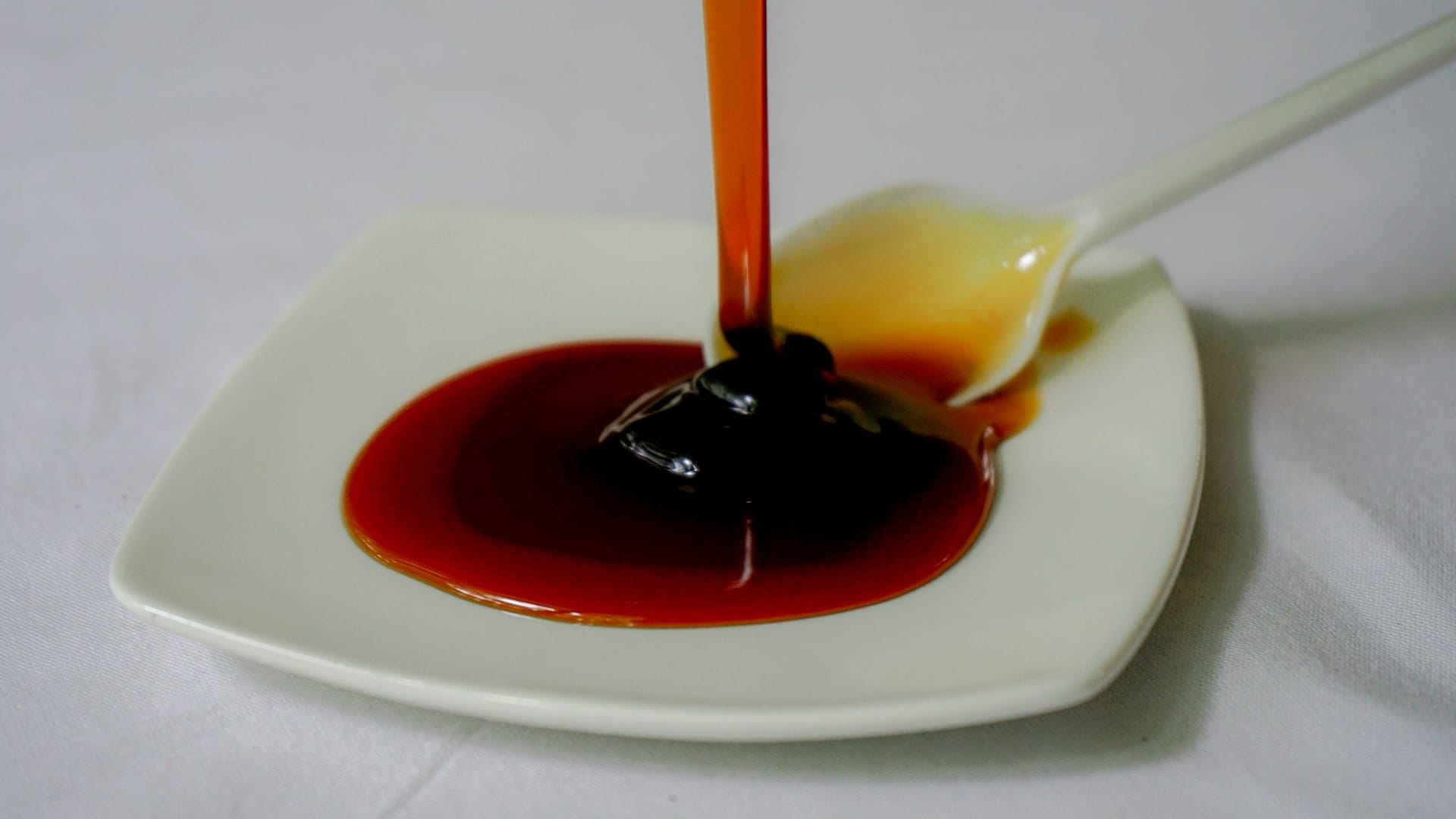
Date syrup brings a rich, fruity sweetness with notes that can resemble caramel. It's particularly appealing in recipes featuring oats, nuts, cocoa, cinnamon, or dried fruit.
You can use it in sauces, bars, granola desserts, and some baked goods. Its liquid consistency means that, just like honey and maple syrup, it can affect the moisture balance of a recipe.
It's also important not to confuse date syrup with whole dates. Whole fruit contains naturally occurring sugars within the intact fruit matrix, while a syrup is a concentrated sweetening ingredient. The FDA's definition of added sugars distinguishes naturally occurring sugars in whole fruits and vegetables from sugars added to foods, while syrups and honey used as sweeteners are included among added sugars. (26)
How These Sweeteners Compare
Here's a quick way to think about their main characteristics:
| Sweetener | Form | Flavor | Moisture Contribution | Useful For |
|---|---|---|---|---|
| Honey | Liquid | Floral, Fruity, Caramel-Like | High | Muffins, Cakes, Sauces |
| Pure Maple Syrup | Liquid | Distinct Maple, Caramel-Like | High | Cakes, Granola, Sauces |
| Agave Syrup | Liquid | Relatively Mild | High | Sauces, Drinks, Selected Desserts |
| Coconut Sugar | Granulated | Caramel-Like | Lower Than Syrups | Cookies, Cakes, Bars |
| Date Syrup | Liquid | Fruity, Rich, Caramel-Like | High | Bars, Sauces, Granola Desserts |
The table makes one thing obvious: the form of the sweetener matters almost as much as its sweetness.
If you replace dry sugar with a liquid, you've changed more than the flavor. You've changed the amount of liquid in the recipe.
Liquid to Dry Ingredient Adjustments
This is where many homemade sugar alternatives for baking experiments go sideways.
Imagine a recipe that was designed around granulated sugar. The recipe already has a carefully balanced amount of flour, eggs, butter, milk, and other liquids. If you replace a substantial amount of dry sugar with honey or maple syrup, you're introducing additional liquid.
That can make the batter thinner or change the texture after baking.
A useful rule is to avoid making a blind 1:1 volume substitution between dry sugar and liquid sweeteners. The sweetener's sweetness, water content, density, and behavior can all differ.
Instead, start with a recipe that was developed specifically for the liquid sweetener you're using. This is especially helpful for cakes and quick breads, where moisture balance has a major effect on the crumb.
If you're adapting an existing recipe, make a small test batch first. Watch the batter consistency before baking, and then evaluate the finished dessert for moisture, structure, browning, and sweetness.
Why Recipe Specific Testing Matters
A cookie dough and a muffin batter don't respond to liquid in the same way.
A muffin can often tolerate a moist batter. A crisp cookie may not.
A quick bread can benefit from a tender crumb. A delicate cake may require much tighter control over moisture and structure.
That's why the best sugar substitute depends on the recipe rather than simply the ingredient's sweetness.
Flavor Differences Matter, Too
One of the most enjoyable things about these sweeteners is that they don't all taste alike.
- Honey can add floral or fruity notes.
- Maple syrup brings a recognizable maple character.
- Agave syrup tends to have a milder flavor.
- Coconut sugar offers a darker, caramel-like taste.
- Date syrup contributes a rich fruitiness with caramel notes.
That means you can use the sweetener as part of the flavor architecture of a dessert.
For example, maple syrup can complement pecans and cinnamon. Honey can work beautifully with lemon and almonds. Date syrup can pair nicely with chocolate and warm spices.
So instead of asking only, "Which sweetener is closest to sugar?" ask:
"Which flavor makes sense for this dessert?"
That's a much more useful question when developing sweeteners and sugar alternatives.
When Liquid Sweeteners Work Best
Liquid sweeteners can be especially convenient in recipes where extra moisture isn't a problem—or where the recipe has been specifically designed to accommodate it.
Muffins
Muffins are one of the easiest places to experiment with honey, maple syrup, or another liquid sweetener.
Their naturally moist texture means the additional liquid can often fit more comfortably into the recipe than it would in a crisp cookie.
Honey pairs well with banana, apple, carrot, cinnamon, and citrus. Maple syrup is particularly good with oats, pumpkin, pecans, and warm spices.
Still, use a recipe designed for the chosen sweetener whenever possible. A traditional muffin recipe may need adjustments to its dry ingredients and other liquids.
Quick Breads
Banana bread, pumpkin bread, zucchini bread, and similar recipes can be well suited to liquid sweeteners.
These recipes already tend to have a moist, tender crumb, so honey or maple syrup can complement their texture.
The key is balance. Too much liquid can make the loaf heavy or gummy, while too little can leave it dry.
Sauces
Dessert sauces are a natural match for liquid sweeteners because you're already working with a fluid mixture.
Honey can add body and floral sweetness. Maple syrup can create a rich maple finish. Agave can provide sweetness without introducing as strong a flavor.
You also don't have the same concerns about cake structure or cookie spread.
That makes sauces a relatively flexible place to experiment with sugar alternatives.
Cakes
Cakes can work with liquid sweeteners, but they require more care.
Because cakes depend on a precise relationship among flour, eggs, fat, liquid, leavening, and sweetener, replacing dry sugar with syrup can change the crumb.
Recipes designed around honey or maple syrup are usually the easiest starting point.
If you're adapting a conventional cake, pay close attention to batter consistency and don't assume that equal volumes of sugar and syrup will behave identically.
Granola Desserts
Granola bars, baked oat clusters, and similar desserts can be especially friendly to liquid sweeteners.
Honey and maple syrup can help bind oats, nuts, seeds, and other ingredients while contributing sweetness and flavor.
Here, the sweetener can perform more than one useful job.
Instead of thinking of it simply as a sugar substitute, think of it as part of the binder and flavor system of the recipe.
Are These Sweeteners Healthier Than Sugar?
It's tempting to turn this into a simple "natural versus refined" comparison, but that's not particularly useful.
Honey, maple syrup, agave, coconut sugar, and date syrup may differ in flavor, processing, composition, and culinary properties. But replacing table sugar with one of these ingredients doesn't automatically make a dessert sugar free.
The FDA's Nutrition Facts guidance specifically includes sugars from syrups and honey among added sugars.
The agency also explains that the Dietary Guidelines for Americans recommends limiting calories from added sugars to less than 10% of total daily calories.
So, if you're trying to reduce added sugar, the more useful question is often how much sweetener the finished recipe contains, rather than whether the sweetener came from a particular source.
"No White Sugar" Is Not the Same as "Sugar-Free"
This distinction is worth making very clear in any article about sugar alternatives.
A dessert can contain:
- No white granulated sugar
- No refined cane sugar
- Honey instead of table sugar
- Maple syrup instead of table sugar
- Dates instead of table sugar
…and still contain sugars.
So descriptions such as "made without white sugar" and "sugar free" should not be treated as interchangeable.
If you're developing recipes for sugar free baking, use terminology carefully and check the applicable labeling rules if you're making a regulated food claim. The FDA's definition and labeling guidance provide the relevant framework for added sugars and single-ingredient sweeteners.
Fruit-Based Sugar Swaps for Desserts
If you're looking for sugar alternatives for baking that feel less like a traditional sweetener swap, fruit is a great place to start. Instead of relying entirely on granulated sugar, you can use naturally sweet fruits to contribute sweetness, moisture, flavor, and texture at the same time. The American Heart Association specifically suggests ingredients such as unsweetened applesauce, dried fruit, mashed banana, 100% fruit juice, sweet potato, and carrot as ways to add natural sweetness and potentially replace some added sugar in recipes. It also recommends adjusting recipes as needed to achieve the desired taste and texture. (27)
This approach is different from simply reaching for another packaged sugar substitute. Fruit doesn't just make a dessert taste sweet; it can become part of the recipe itself. A ripe banana can soften a muffin, applesauce can add moisture to a cake, dates can create a thick caramel-like paste, and berries can bring both sweetness and acidity. That's what makes fruit-based sugar alternatives particularly interesting for homemade desserts.
There's another advantage: fruit gives you plenty of room to experiment with flavor. A banana-based brownie won't taste exactly like a conventional brownie, and that's okay. The goal isn't always to make an ingredient disappear. Sometimes the best desserts are the ones where the natural character of the fruit becomes part of what makes the recipe special.
Current recipe oriented guidance also demonstrates how fruit can play a central role in desserts. For example, the American Heart Association features desserts built around naturally sweet fruit, including fruit centric frozen treats, apple cakes, parfaits, and baked fruit desserts. (28, 29, 30)
Ripe Bananas
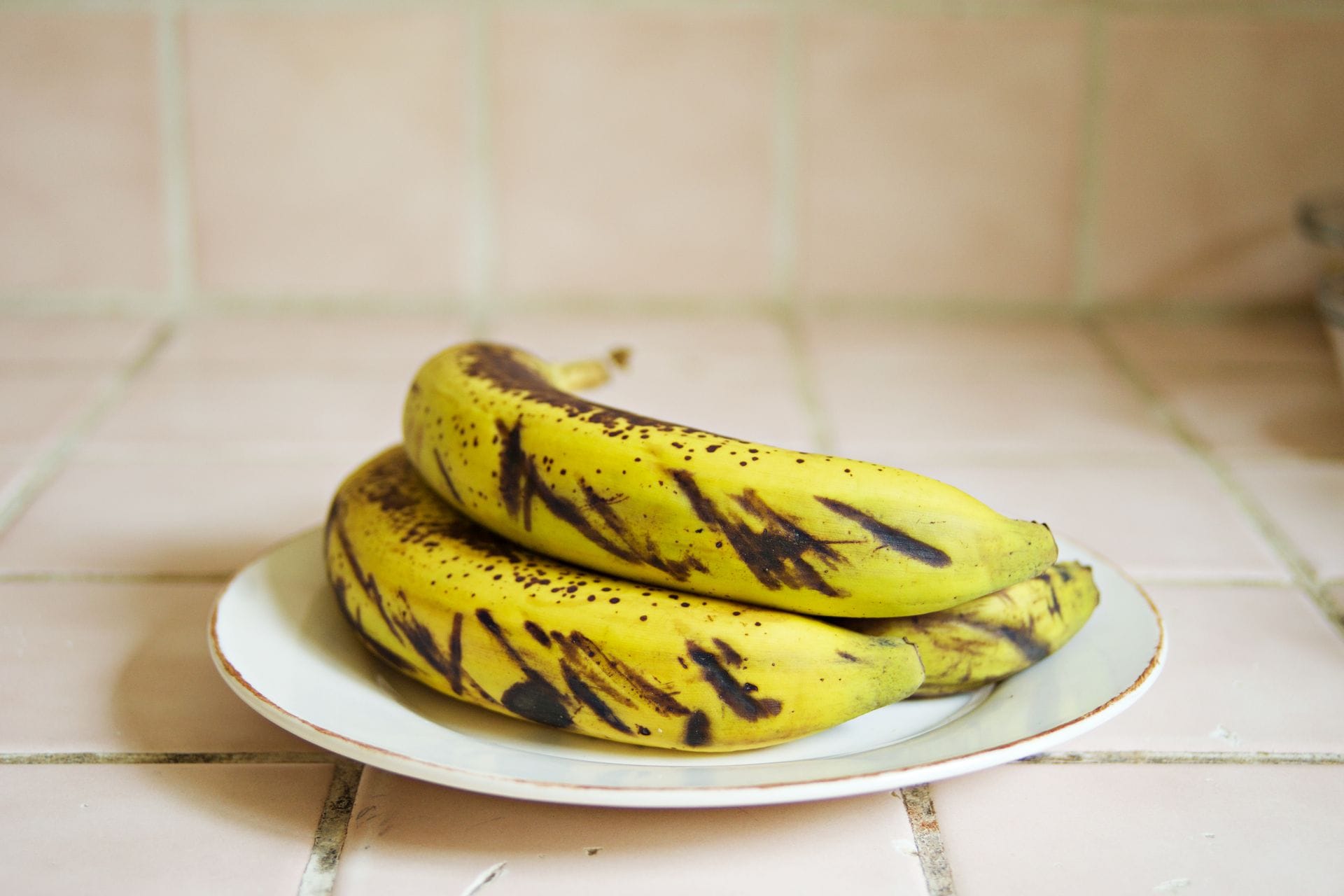
Ripe bananas are one of the easiest whole-food sugar alternatives to experiment with because their texture changes dramatically as they ripen. A very ripe banana becomes soft, fragrant, and naturally sweeter, making it easy to mash into batters.
That makes bananas especially useful for muffins, quick breads, pancakes, snack cakes, baked oatmeal, and some brownie-style desserts.
Bananas contribute more than sweetness. Their moisture can soften a recipe, while their thick texture adds body. They also bring a recognizable banana flavor, so they're best suited to desserts where that flavor complements the other ingredients.
Try pairing ripe banana with:
- Cinnamon and nutmeg
- Vanilla
- Cocoa powder
- Peanut or nut butter
- Walnuts or pecans
- Oats
- Dark chocolate
- Coconut
The American Heart Association specifically lists mashed banana among ingredients that can add natural sweetness and be used to replace some added sweeteners in recipes. (31)
The key is ripeness. A barely ripe banana won't provide the same sweetness or soft texture as one with plenty of brown spotting.
Unsweetened Applesauce
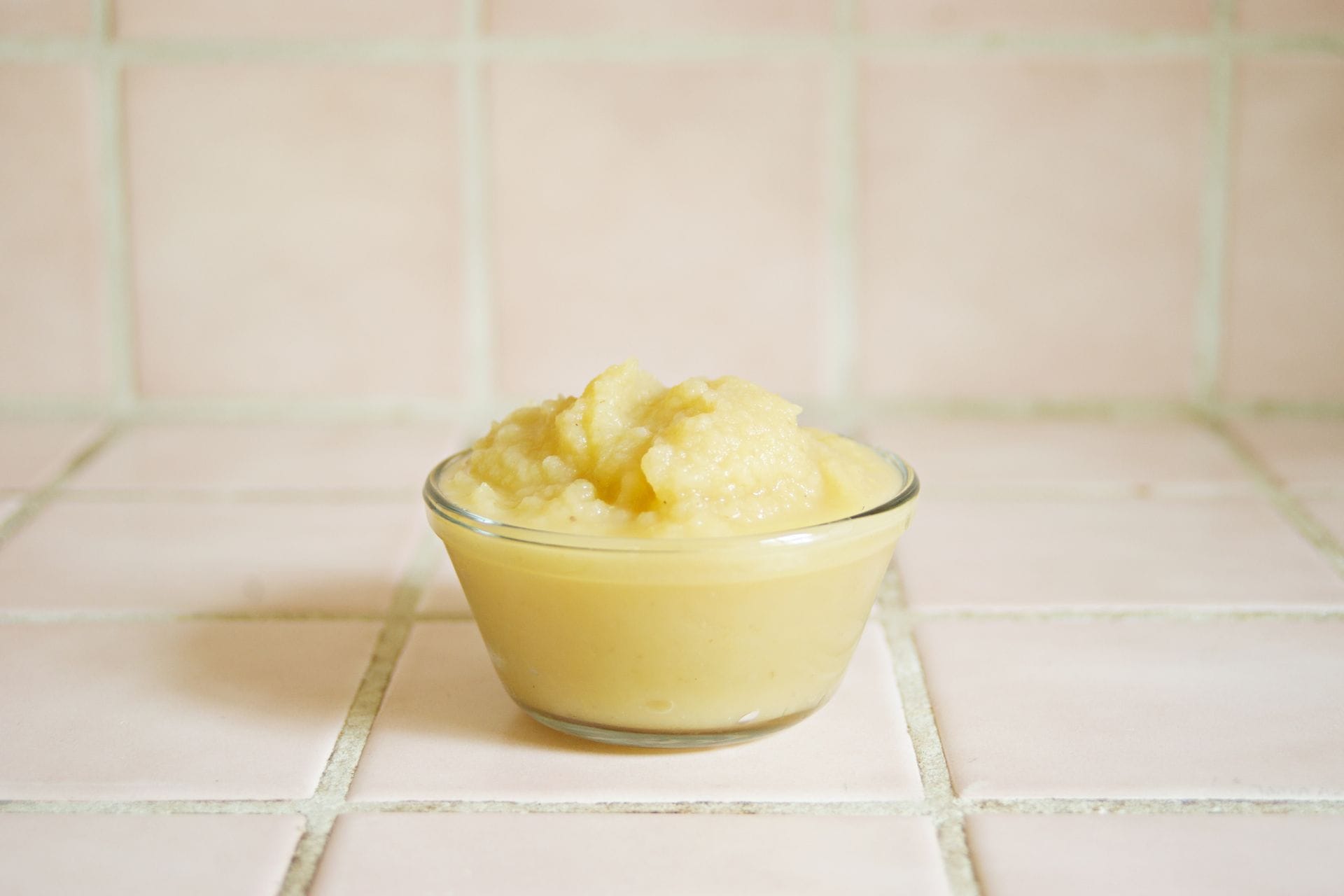
If bananas are bold and noticeable, applesauce is often a quieter ingredient.
Unsweetened applesauce can add moisture and mild sweetness without completely taking over the flavor of a dessert. That's why it works particularly well in cakes, muffins, quick breads, and some cookie recipes.
The American Heart Association recommends unsweetened applesauce as an option for replacing some sugar in recipes and notes that you may need to adjust other ingredients to achieve the texture you want.
An excellent example is the American Heart Association's apple walnut cake, which uses unsweetened applesauce and is described as a moist dessert with 0 grams of added sugar per serving.
That doesn't mean applesauce can automatically replace all the sugar in every cake recipe. Sugar contributes sweetness and also affects structure, browning, spread, and tenderness. Applesauce primarily adds moisture and fruit character, so the recipe may need to be designed around it.
Always choose unsweetened applesauce when your goal is to control added sweetness. Sweetened applesauce can contain added sugars, which defeats part of the purpose of the swap.
Dates and Date Paste
Dates are one of the most versatile fruit-based options for creating sweet desserts. Their soft texture and concentrated sweetness make them particularly useful when blended into a paste.
Instead of sprinkling granulated sugar into a recipe, you can sometimes blend softened dates with a small amount of liquid to create a thick, smooth ingredient that contributes sweetness, moisture, and body.
Dates work especially well in:
- Brownies
- Energy-style bites
- No-bake bars
- Oat-based desserts
- Chocolate desserts
- Homemade caramel sauces
- Nut and seed snack bars
The result isn't identical to a recipe made with table sugar. Date paste contains fruit solids, so it can change the texture and appearance of the finished dessert.
That's actually part of its appeal.
A chocolate dessert made with dates can have a dense, fudgy texture rather than the light, crisp texture you'd get from a traditional sugar-based recipe.
Prune Puree
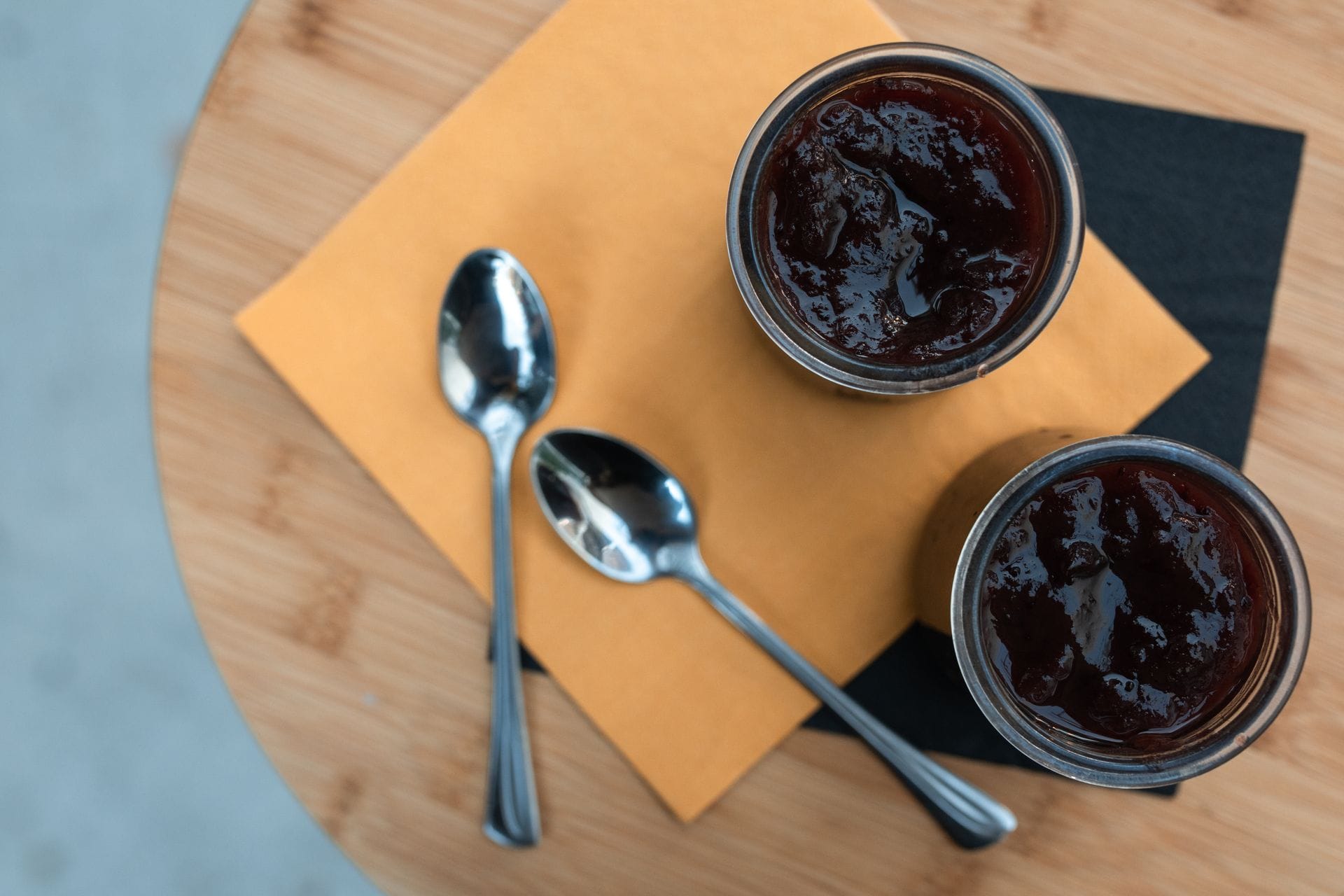
Prune puree is another interesting option when you're experimenting with sugar free baking and fruit-based formulations.
Its deep fruit flavor and thick consistency can work particularly well in chocolate desserts, brownies, cakes, and baked goods where a rich, moist texture is desirable.
Because prune puree has a relatively strong personality, you don't necessarily want it in every dessert. Chocolate, cinnamon, coffee, vanilla, and warm spices can help balance its flavor.
It can also contribute moisture, so you need to think about the overall liquid balance of the recipe.
As with applesauce, the most reliable results come from recipes that were specifically formulated to use fruit puree rather than recipes where a large amount of dry sugar is simply removed.
Pumpkin Puree
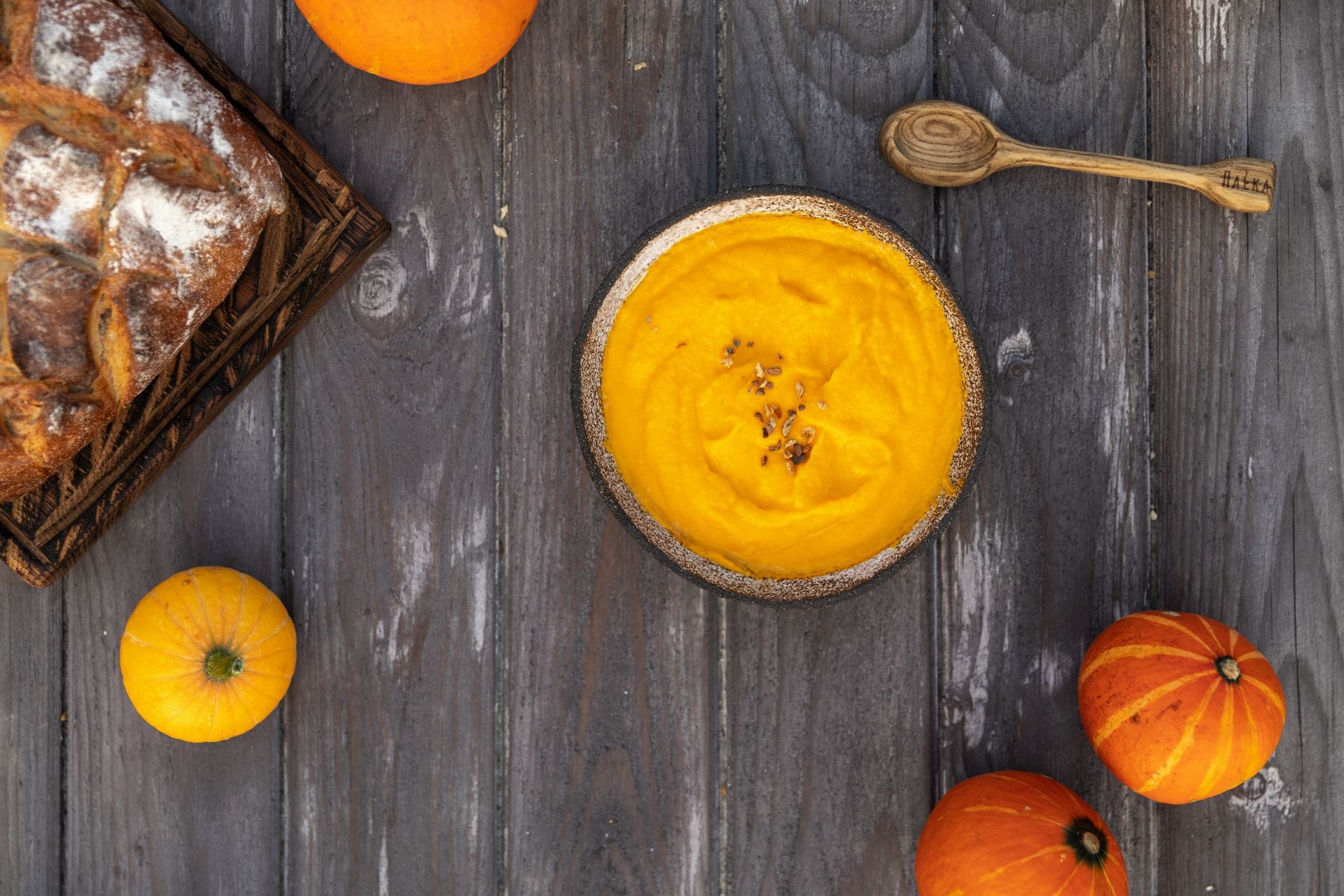
Pumpkin puree may not be the first ingredient you think of when you hear sugar alternatives, but it can play an important role in desserts.
Its natural sweetness is relatively subtle compared with dates or ripe bananas, so pumpkin is often more useful as a moisture and texture ingredient than as a complete replacement for a highly sweet dessert.
Pumpkin works beautifully with:
- Cinnamon
- Ginger
- Nutmeg
- Cloves
- Vanilla
- Pecans
- Walnuts
- Cocoa
It's particularly useful in muffins, snack cakes, baked oatmeal, pumpkin bread, and custard desserts.
When using pumpkin, think about what you're trying to accomplish. If you want sweetness, you may need another source of sweetness. If you want moisture, body, and a naturally rich texture, pumpkin can be extremely useful.
Pear Puree
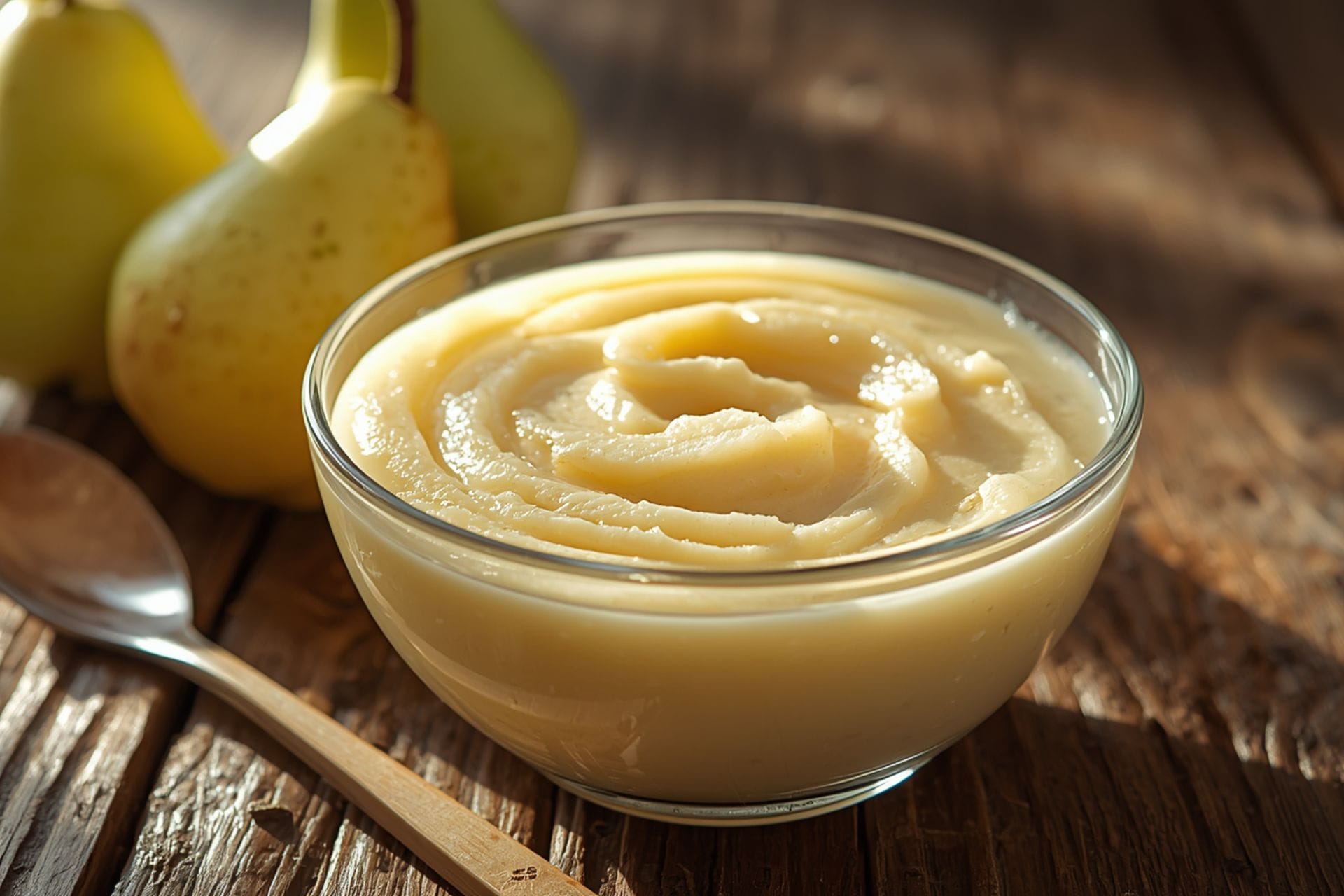
Pears have a naturally soft texture and delicate sweetness that can work nicely in desserts.
A ripe pear can be cooked and pureed into a smooth mixture, then incorporated into cakes, muffins, sauces, or fruit desserts.
Compared with bananas, pears generally have a more subtle flavor. That can make them useful when you want fruit derived moisture and sweetness without a strong banana profile.
Pear also pairs naturally with:
- Cinnamon
- Ginger
- Cardamom
- Vanilla
- Almond
- Walnuts
- Oats
Fruit forward desserts don't have to be complicated. Sometimes a simple baked pear or apple dessert needs very little additional sweetness, especially when the fruit is naturally ripe and flavorful. Recipe examples from the American Heart Association include apple pear crisp preparations that use the fruit as a major component of the dessert. (32)
Mashed Berries
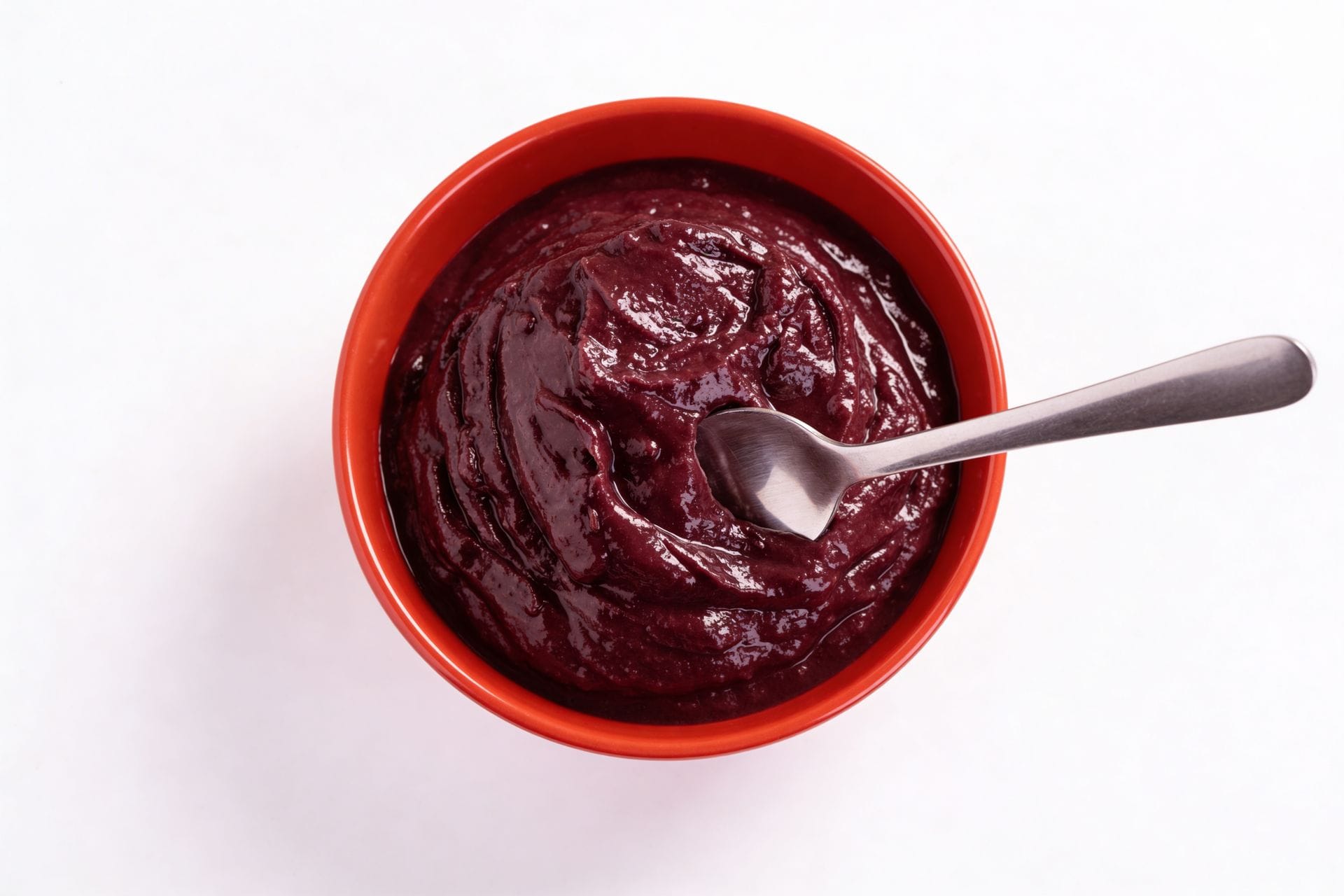
Berries bring something that bananas and dates don't: bright acidity and fresh fruit flavor.
Strawberries, raspberries, blueberries, and blackberries can be mashed or pureed and incorporated into certain desserts, sauces, frozen treats, and fillings.
Because berries contain significant water and have a tart flavor, they're usually better viewed as a component of a dessert than as a direct one-for-one replacement for granulated sugar.
For example, ripe strawberries can provide enough sweetness that a frozen dessert requires less added sugar. The American Heart Association's strawberry lemonade Italian ice specifically notes that sweeter, riper strawberries may allow the recipe to use less sugar.
That's a useful principle for sugar alternatives for baking: start with the sweetness already present in your ingredients before deciding how much additional sweetener you need.
How Fruit Changes a Dessert Recipe
Fruit-based swaps can affect several parts of a recipe at once.
- Sweetness: Ripe fruit can reduce the need for added sweeteners.
- Moisture: Purees can add substantial water to a batter.
- Texture: Banana, applesauce, dates, and pumpkin can make desserts softer or denser.
- Flavor: Every fruit brings its own personality.
- Color: Dark dates, berries, pumpkin, and bananas can visibly change the finished dessert.
- Structure: Removing granulated sugar and replacing it with fruit can alter the way a cake, cookie, or brownie sets.
This is why fruit should not always be treated as a direct sugar substitute. In many cases, it's better to think of it as a multi-purpose recipe ingredient.
Why Fruit Purees Can Be Better Than a Simple Sugar Swap
Traditional sugar is dry and highly concentrated. Fruit puree isn't.
That means you can't always replace one cup of sugar with one cup of applesauce, banana, or date puree and expect the same dessert.
You're changing several variables simultaneously.
The American Heart Association explicitly notes that recipe adjustments may be needed when using ingredients such as unsweetened applesauce, dried fruit, or mashed banana as substitutes for some added sugars.
This is particularly important in baking because flour, eggs, fat, liquid, and sweetener all work together.
If you add fruit puree without considering the rest of the recipe, you may end up with a dessert that's too wet, too dense, or simply not sweet enough.
A recipe developed around fruit puree will generally be more predictable.
How to Use Dates Instead of Refined Sugar
Dates are especially useful because they can be transformed into several different forms. Instead of thinking about dates as simply another sweetener, think of them as a whole-food ingredient that can be processed into a sweet paste, filling, sauce, or batter component.
Date Paste
Date paste is one of the simplest approaches.
Soft dates can be blended into a thick paste, usually with enough liquid to help the blender or food processor work smoothly. The finished paste can then be incorporated into desserts that benefit from moisture and a dense texture.
Date paste works especially well in:
- Brownies
- No-bake bars
- Oat bites
- Energy-style bites
- Cookie dough-style mixtures
- Chocolate desserts
- Homemade dessert sauces
The important thing is consistency.
A very thick date paste behaves differently from a loose date puree. If the paste contains more water, it will contribute more moisture to the recipe.
Blended Dates
Another approach is to blend softened dates directly into a wet mixture.
This works particularly well when the recipe already uses a blender or food processor. The dates become part of the batter instead of remaining as visible pieces.
For chocolate desserts, dates can blend particularly well with cocoa, vanilla, nut butter, and spices.
The finished dessert will generally be denser than one made with a large amount of granulated sugar, but that can be exactly what you want in a brownie or no-bake bite.
Date-Based Caramel
Dates can also form the foundation of a caramel-style dessert sauce.
Blend dates with complementary ingredients until smooth, then adjust the consistency depending on whether you're making a spread, drizzle, filling, or dip.
Vanilla and a small amount of salt can help create the familiar sweet and salty character people associate with caramel-style desserts.
The result won't be identical to traditional caramel made by heating sugar, but it can provide a rich, naturally fruity alternative.
Brownies and Energy-Style Bites
Brownies and energy-style bites are particularly forgiving places to experiment with dates.
Their dense texture means you don't necessarily need the same aeration or crisp structure required by a classic sugar-based cookie or sponge cake.
Dates can provide sweetness while also helping bind ingredients together.
Try combining them with:
- Unsweetened cocoa powder
- Oats
- Almonds
- Walnuts
- Peanut or nut butter
- Coconut
- Vanilla
- Cinnamon
These combinations allow the date flavor to become part of the dessert instead of trying to hide it.
Moisture Considerations
Here's the part that's easy to overlook.
Dates aren't dry sugar.
Even dried dates contain moisture, fruit solids, and other components that behave differently from granulated sucrose. When you blend them into a paste, you're creating an ingredient with a completely different physical structure.
That means you need to consider the recipe's other liquids.
If your date paste is particularly soft, adding the same amount of milk, water, or other liquid from the original recipe could make the mixture too loose.
On the other hand, a very thick date paste may need additional liquid to blend smoothly.
This is why successful sugar free baking with dates is less about finding a perfect universal conversion and more about understanding the texture you're building.
Fruit-Based Swaps: A Quick Comparison
| Fruit Option | Sweetness | Moisture | Flavor Strength | Best Uses |
|---|---|---|---|---|
| Ripe Banana | Moderate to High | High | Strong | Muffins, Banana Bread, Brownies |
| Unsweetened Applesauce | Mild to Moderate | High | Mild | Cakes, Muffins, Quick Breads |
| Date Paste | High | Moderate | Rich | Brownies, Bars, Bites |
| Prune Puree | Moderate | High | Distinctive | Brownies, Cakes, Chocolate Desserts |
| Pumpkin Puree | Mild | High | Moderate | Muffins, Cakes, Quick Breads |
| Pear Puree | Moderate | High | Mild | Cakes, Muffins, Fruit Desserts |
| Mashed Berries | Variable | High | Fresh/Tart | Sauces, Frozen Desserts, Fillings |
The table highlights an important point: fruit isn't one single category of sugar alternative. Each option brings a different combination of sweetness, moisture, texture, and flavor.
How to Choose the Right Fruit-Based Sugar Swap
If you want strong sweetness and a dense texture, dates are worth considering.
If you want moisture with a mild flavor, unsweetened applesauce may be a better fit.
If you want a naturally sweet, banana forward dessert, ripe bananas are an easy choice.
If you want richness and moisture in chocolate desserts, prune puree can be interesting.
If you want seasonal flavor, pumpkin or pear can work beautifully.
If you want bright acidity and fresh fruit flavor, berries are an excellent option.
And if you're making a dessert that already contains plenty of fruit, you may discover that you don't need as much additional sweetener in the first place. The American Heart Association's fruit-based dessert recipes illustrate this approach, including preparations where naturally sweet fruit provides much of the dessert's sweetness. (33, 34)
How to Replace Sugar in Cakes
Replacing sugar in a cake is a little more complicated than swapping one sweet ingredient for another. In a cake, sugar doesn't simply make the batter taste sweet; it also affects moisture, tenderness, browning, aeration, and the final crumb. King Arthur Baking explains that sugar can help retain moisture, tenderize baked goods, support browning and caramelization, and create air pockets when creamed with butter.
That's why a cake can look perfectly fine before it goes into the oven and then emerge unexpectedly dense, dry, pale, or rubbery after a major sugar change. A well-tested cake recipe is a carefully balanced system, and removing a large amount of sugar changes that system. In practical terms, sugar alternatives for baking work best when you consider sweetness and function separately.
The good news is that you don't necessarily need to eliminate sugar. For many homemade cakes, reducing the amount of sugar gradually can be easier and more predictable than replacing every gram with another ingredient. King Arthur Baking's testing found that some alternative sugar cakes had acceptable flavor but noticeably different texture, while simply reducing sugar can sometimes preserve the character of the original recipe more successfully. (35)
Why Cakes Are Especially Sensitive to Sugar Changes
Think of sugar as one of the supporting players in a cake—not the star, but definitely someone who knows all the choreography.
During mixing, granulated sugar can help create tiny air pockets when it is creamed with butter. Those pockets can contribute to a lighter cake. Sugar also attracts and retains water, which helps cakes stay moist, while its interaction with proteins can contribute to tenderness. During baking, sugar participates in browning and caramelization, helping produce the golden color and deeper flavors we associate with many cakes.
When you remove a substantial amount of sugar, you're therefore changing several characteristics at once:
- Sweetness can decrease.
- Moisture can change.
- Crumb can become firmer or denser.
- Volume may change.
- Browning can be different.
- Tenderness may decrease.
- Mouthfeel can change.
This is why a concentrated sugar substitute isn't automatically a perfect replacement. A high-intensity sweetener may reproduce sweetness while contributing very little physical bulk. The FDA distinguishes high-intensity sweeteners from other sweeteners partly because they can be many times sweeter than sugar and therefore are used in much smaller quantities.
Allulose for Cakes
Allulose is one of the more interesting options when you're looking for sugar alternatives that can do more than simply add sweetness. The FDA classifies allulose as a sugar that is metabolized differently from traditional sugars and allows specific labeling treatment for it on the Nutrition Facts label.
From a baking perspective, allulose can be useful because it behaves differently from extremely concentrated sweeteners. It can contribute to the physical characteristics of a recipe rather than requiring only a tiny amount for sweetness.
However, don't assume that allulose will reproduce every characteristic of sucrose. Cake recipes can respond differently depending on the flour, fat, eggs, liquid, leavening, and amount of sweetener.
Allulose is particularly worth exploring when your goal is a soft, moist cake rather than a very dry or crisp dessert. It can also brown differently from traditional sugar, so watch the cake carefully as it approaches the end of its baking time.
The best approach is to begin with a cake recipe specifically developed for allulose or a product whose manufacturer provides baking guidance. That gives you a much better starting point than taking a classic sponge cake and making a dramatic substitution.
Granulated Sugar Alternative Blends
A commercial granulated sugar substitute can sometimes be easier to work with than a highly concentrated sweetener because it is designed to provide enough bulk to measure more like ordinary sugar.
But check the package carefully.
Not every granulated sweetener has the same ingredients or conversion ratio. Some products contain combinations of erythritol, allulose, stevia, monk fruit, fibers, or other ingredients. One King Arthur Baking product, for example, contains a blend of erythritol, soluble corn fiber, allulose, cane sugar derived fructan fiber, monk fruit extract, stevia leaf extract, and natural flavor, and its manufacturer provides specific one-to-one volume guidance. (36)
That example illustrates why you shouldn't assume that every product labeled "baking sugar alternative" will behave identically.
For cake baking, look for three things:
1. Conversion instructions: Does the manufacturer recommend a one-to-one replacement?
2. Baking instructions: Does the package recommend different oven temperatures or baking times?
3. Ingredients: What provides the product's bulk?
A product specifically formulated for baking can be a much more reliable starting point than a concentrated sweetener intended primarily for beverages.
Fruit Purees in Cakes
Fruit-based sugar alternatives take a completely different approach.
Instead of trying to reproduce sugar's sweetness with another concentrated sweetener, you can use ingredients such as unsweetened applesauce, ripe banana, pumpkin puree, pear puree, or date paste to contribute sweetness, moisture, and flavor.
This can work particularly well in snack cakes, banana cakes, spice cakes, chocolate cakes, and muffins.
The trade-off is that fruit puree contains water and fruit solids. It therefore changes the structure of the cake instead of simply replacing sweetness.
For example, ripe banana can make a cake softer and denser while contributing a noticeable banana flavor. Unsweetened applesauce tends to be more subtle and can add moisture without dominating the recipe. Pumpkin puree can contribute body and moisture while bringing a seasonal flavor.
This is why fruit puree works best when the entire recipe is designed around it.
If you're adapting an existing cake recipe, avoid assuming that a cup of applesauce or mashed banana can replace a cup of sugar without other changes.
Honey in Cake Recipes
Honey is a liquid sweetener, so using it in cake introduces both sweetness and moisture.
King Arthur Baking's testing found that honey can produce a moist, delicate cake, although cakes made with liquid sweeteners can differ in density, color, and surface appearance from conventional cakes.
Honey also browns readily, so a cake made with honey may become darker than the original recipe. Its distinctive flavor can be an advantage when paired with vanilla, citrus, almond, cinnamon, or warm spices.
But there's an important technical difference between creamed cakes and oil-based cakes.
A traditional butter cake often relies on creaming solid butter with granulated sugar to create air pockets. Liquid honey doesn't have the same granular structure, so it cannot reproduce that particular mixing function. King Arthur's testing found that honey could still produce a pleasant cake, but the result could be flatter and denser than the conventional version.
So honey can work—but expect a different cake rather than an identical cake.
Maple Syrup in Cakes
Pure maple syrup brings a completely different flavor profile. Instead of trying to hide the alternative sweetener, you can make it part of the cake's identity.
Maple works especially well with:
- Pecans
- Walnuts
- Cinnamon
- Apples
- Pumpkin
- Vanilla
- Oats
- Chocolate
- Orange zest
Like honey, maple syrup is liquid, so replacing dry sugar with maple syrup changes the recipe's moisture balance.
King Arthur Baking notes that liquid sweeteners can affect texture, flavor, browning, and moisture retention, and its testing shows that maple syrup can be incorporated into baked goods with appropriate recipe adjustments.
If you're making a maple cake, therefore, a recipe developed specifically around maple syrup is usually preferable to simply pouring maple syrup into a conventional vanilla cake recipe.
Moisture and Crumb: The Two Things to Watch
If you're experimenting with sugar free baking, don't judge your cake only by sweetness.
Crumb and moisture are just as important.
A cake can taste sweet enough and still be disappointing if it has a dense, rubbery, dry, or gummy texture.
Sugar helps cakes retain moisture, and changing the sweetener changes how water interacts with the rest of the ingredients.
Different sugar alternatives can therefore produce very different crumbs.
| Sweetener Approach | Possible Cake Texture | Main Consideration |
|---|---|---|
| Reduced Granulated Sugar | Similar to Original | Usually the least disruptive approach |
| Allulose | Often Soft and Moist in Suitable Recipes | Browning and Recipe Formulation |
| Granulated Baking Blend | Depends on Formulation | Follow Package Conversion |
| Applesauce | Moist and Tender | Adds Water and Fruit Solids |
| Banana | Moist and Dense | Stronger Flavor |
| Honey | Moist and Delicate | Adds Liquid and Browns Readily |
| Maple Syrup | Moist and Flavorful | Adds Liquid and Maple Flavor |
These are general tendencies rather than guarantees. The exact result depends on the recipe.
Why Reducing Sugar May Be Easier Than Removing It
Here's a strategy that's often overlooked: you don't have to go from full sugar to zero sugar in one step.
If your favorite cake contains a relatively large amount of sugar, try reducing it gradually rather than replacing all of it immediately.
This can preserve more of the recipe's original structure while allowing you to adjust to a less sweet flavor.
King Arthur Baking's testing specifically found that simply reducing sugar can sometimes produce better results than replacing sugar completely with alternative sweeteners.
A gradual approach also gives you more control.
For example, you can make one version with slightly less sugar, taste the result, and decide whether you want to go further. You may discover that you don't actually need a dramatic substitution to achieve the flavor you're looking for.
And if the cake already contains strong flavors such as cocoa, berries, citrus, spices, or vanilla, a slightly lower level of sweetness may still feel satisfying.
Flavor Boosters That Make Cakes Taste Sweeter
Reducing sugar doesn't mean your cake has to taste boring.
This is where flavor layering becomes your friend.
Sugar doesn't just sweeten; it can also enhance other flavors. King Arthur Baking notes that sugar can help complement flavors such as cocoa.
When you reduce the sweetener, consider strengthening the flavors that give the cake personality.
Vanilla
Vanilla can make a cake taste richer and rounder without adding substantial sweetness itself.
Try pure vanilla extract, vanilla bean paste, or vanilla powder depending on the recipe.
Cinnamon
Cinnamon is especially helpful in apple, pumpkin, banana, carrot, and oat-based cakes.
Its warm aroma can make a dessert feel more satisfying even when the overall sweetness is reduced.
Citrus Zest
Lemon, orange, and lime zest are fantastic for brightening cakes.
Because zest contributes aromatic citrus oils, it can make a cake taste more vibrant without requiring additional sugar.
Cocoa
Unsweetened cocoa powder can provide depth in chocolate cakes, although it also introduces bitterness. Pairing it with vanilla, espresso powder, cinnamon, or fruit can create a fuller flavor profile.
Spices
Ginger, cardamom, nutmeg, cloves, and allspice can make a reduced sugar cake feel more complex.
The idea isn't to disguise a less sweet cake. It's to make every flavor count.
Cake Substitution Decision Chart
When choosing sugar alternatives for baking, use the type of cake as your starting point.
| Your Cake Goal | Best Starting Option | Why | Watch For |
|---|---|---|---|
| Keep Texture Close to Original | Reduce Sugar Gradually | Changes fewer variables | Cake may still be quite sweet |
| Soft, Moist Cake | Allulose or Suitable Fruit Puree | Can support a moist texture | Recipe-specific behavior |
| Fruit-Forward Cake | Applesauce, Banana, Pear | Adds sweetness, moisture, and flavor | Extra water and fruit solids |
| Maple-Flavored Cake | Pure Maple Syrup | Adds sweetness and maple character | Liquid changes |
| Honey Cake | Honey | Adds sweetness, moisture, and floral flavor | Faster browning |
| Convenient 1:1-Style Swap | Baking-Specific Granulated Blend | Designed for easier measurement | Check exact product directions |
| Chocolate Cake | Allulose or Carefully Formulated Fruit-Based Recipe | Works with cocoa and moist textures | Sweetness and browning |
| Spice Cake | Applesauce, Pumpkin, or Reduced Sugar | Complements warm spices | Moisture balance |
The chart isn't a universal conversion guide. Think of it as a decision making tool. The right sugar substitute depends on the cake you're trying to create.
A Simple Cake-Swap Strategy
If you're adapting a cake recipe for the first time, keep things simple.
- Step 1: Identify the role of the sugar.
- Is it mainly providing sweetness, or is the recipe also relying heavily on creaming butter and sugar?
- Step 2: Decide whether you need a dry or liquid replacement.
- A granulated blend behaves very differently from honey or maple syrup.
- Step 3: Consider moisture.
- Fruit purees and syrups introduce moisture, so the rest of the recipe may need adjustment.
- Step 4: Choose the flavor direction.
- Maple syrup makes sense in a maple pecan cake. Banana works naturally in banana bread. Applesauce fits beautifully into spice cake.
- Step 5: Test a small batch.
- Don't risk an entire celebration cake on an untested substitution.
- Step 6: Evaluate the crumb, not just sweetness.
- A successful cake should have the texture you want—not simply the sweetness you expect.
Don't Expect Every Sugar Alternative to Bake the Same
This is one of the most important lessons when experimenting with sweeteners and sugar alternatives.
King Arthur Baking's comparative testing found that certain sugar replacements produced cakes that were noticeably different from cakes made with granulated sugar, including differences in rise, crumb, firmness, and moisture.
That doesn't mean those products are inherently bad.
It means the recipe was developed around a particular set of ingredients, and changing one major ingredient can change the entire system.
A commercial baking blend specifically designed to replace sugar may perform much better than a concentrated sweetener used by itself. Likewise, a cake specifically formulated with allulose may perform much better than a traditional cake recipe where all the sugar is suddenly replaced.
Recipe development matters.
How to Replace Sugar in Cookies
Replacing sugar in cookies is one of the trickier parts of sugar free baking because sugar does much more than make cookies taste sweet. It influences spread, crispness, chewiness, browning, moisture, and overall structure. Granulated sugar, for example, helps cookie dough spread as it heats, while sugar also participates in browning and can recrystallize as cookies cool, contributing to a crisp texture. (37)
That means choosing a sugar substitute isn't simply a matter of matching sweetness. A concentrated sweetener might make the dough taste sweet while contributing very little bulk. A liquid sweetener can add moisture that changes the dough's structure. A sugar alcohol may produce a different mouthfeel or texture altogether.
So, what's the best approach? Start by deciding what kind of cookie you're trying to make. A soft, chewy chocolate chip cookie has very different requirements from a thin, crisp butter cookie. Once you understand that difference, choosing among sugar alternatives, allulose, erythritol, monk fruit blends, or fruit-based ingredients becomes much easier.
Why Sugar Matters So Much in Cookies
Sugar acts almost like a behind the scenes engineer in cookie dough.
First, it provides sweetness, but it also affects how the dough behaves in the oven. Sugar attracts and holds water, and as cookies bake, this influences how the dough spreads and sets. King Arthur Baking's testing found that reducing sugar generally leads to less spread and a drier, more crumbly cookie. (38)
Sugar also contributes to browning. During baking, caramelization and Maillard reactions help create the golden brown appearance and deeper flavors associated with many cookies. When sugar is reduced substantially, cookies may brown less, meaning color alone becomes a less reliable indicator of doneness.
Then there's crispness. As cookies cool, sugar can recrystallize, helping create the familiar snap of a crisp cookie. This is one reason simply removing sugar can produce a cookie that is less crisp and more crumbly instead.
And don't forget chewiness. Brown sugar contains molasses derived invert sugars that retain moisture and can contribute to a softer, chewier texture.
In other words, when you replace sugar, you're changing the architecture of the cookie, not just its sweetness.
Allulose for Cookies
Allulose is an interesting option when you're looking for sugar alternatives for baking because it isn't used in the tiny quantities typical of high-intensity sweeteners. That means it can participate more directly in the physical makeup of a cookie.
For cookie recipes, this can be useful when you want sweetness without relying entirely on traditional sucrose. However, allulose doesn't necessarily produce an identical result to granulated sugar.
One important consideration is browning. Alternative sweeteners can behave differently from sucrose during baking, so the finished cookie may have a different color and flavor development.
Allulose can be particularly appealing for cookies where a softer, more tender texture is desirable. It can also work well in recipes that are specifically formulated around its baking characteristics.
The key phrase is specifically formulated.
A recipe developed for allulose is generally a more reliable starting point than taking a classic sugar cookie recipe and replacing all of its sugar without changing anything else.
Erythritol in Cookies
Erythritol belongs to the sugar alcohol family and is widely used in granulated sugar alternatives. Unlike a concentrated high-intensity sweetener, erythritol can provide physical bulk in a recipe.
That sounds ideal, right?
Sometimes—but cookies can be surprisingly unforgiving.
King Arthur Baking's testing of erythritol sugar replacements found that cookies made with one such replacement spread very little and developed a cakey, dry texture, along with a noticeable cooling sensation in the mouth.
This doesn't mean every erythritol containing product will produce the same result. Formulations differ, and some commercial blends combine erythritol with other ingredients specifically to improve baking performance.
Still, the example highlights an important lesson: matching the volume of sugar doesn't guarantee matching its function.
Erythritol can be useful in recipes designed around it, but if you're trying to reproduce a classic thin and crispy cookie, you'll want to test the recipe rather than assuming a perfect one-to-one result.
Monk Fruit Blends for Cookies
Monk fruit extract is highly concentrated, so pure monk fruit extract doesn't provide the same bulk as granulated sugar.
That's why many products marketed as monk fruit sweeteners are actually blends containing monk fruit extract alongside other ingredients that provide volume and help make the product easier to measure.
This distinction matters enormously when baking cookies.
A granulated monk fruit blend may be designed to replace sugar by volume, while a concentrated monk fruit extract may require only a tiny amount.
Never assume that two packages labeled "monk fruit sweetener" have the same conversion ratio. Check the product's instructions first.
For cookies, a baking specific granulated blend can be more practical than pure monk fruit extract because the recipe still needs something to occupy the physical space previously filled by sugar.
And remember: a sweetener can reproduce sweetness without reproducing the exact behavior of sugar during baking.
Fruit-Based Sugar Alternatives for Cookies
Fruit-based sugar alternatives take a completely different route.
Instead of trying to duplicate the sweetness of granulated sugar, you can use ingredients such as:
- Mashed ripe banana
- Unsweetened applesauce
- Date paste
- Prune puree
- Pureed dried fruit
These ingredients can contribute sweetness, moisture, flavor, and body.
Dates are especially useful in soft cookies, no-bake cookie bites, bars, and energy-style treats. Their thick texture can help bind ingredients while their concentrated fruit flavor works naturally with cocoa, nuts, oats, vanilla, and spices.
Banana can work beautifully in soft oatmeal cookies or breakfast cookies, but its distinctive flavor will be noticeable.
Unsweetened applesauce has a milder flavor and can contribute moisture, although it may produce a softer or more cakey cookie.
This is an important distinction: fruit puree is not simply a liquid sugar replacement. It is a whole-food ingredient containing water and fruit solids, so it changes the dough in several ways at once.
Why Liquid Sweeteners Can Change Cookie Structure
Honey, maple syrup, and other liquid sweeteners can be useful in desserts, but cookies require special attention.
When you replace dry granulated sugar with a liquid sweetener, you're adding moisture to the dough while removing a dry ingredient. That changes the ratio of flour, fat, water, and sweetener.
King Arthur Baking's testing of liquid sweeteners in cookies found that maple syrup sweetened soft cookies could become moister, slightly crumbly and cakey, and somewhat more prone to spreading.
Crisp cookies present an even bigger challenge.
A cookie designed to become thin and snappy relies on a particular balance of sugar, fat, flour, and moisture. Introducing syrup can push that balance in another direction.
That's why sugar alternatives for baking shouldn't be selected based solely on sweetness.
Ask instead:
- Is this ingredient dry or liquid?
- Does it add bulk?
- Does it contribute moisture?
- How does it brown?
- What texture is the recipe supposed to produce?
Those questions will lead you toward a much better substitution.
Soft Cookies vs. Crisp Cookies
This is perhaps the most important distinction to make before choosing a sugar substitute.
For Soft, Chewy Cookies
If you love cookies that are thick, tender, and slightly bendy, you have more flexibility.
Suitable starting points can include:
- Baking specific granulated sweetener blends
- Allulose recipes
- Date paste
- Ripe banana in appropriate recipes
- Applesauce in soft cookie formulations
Brown sugar's moisture retaining properties are one reason it produces softer, chewier cookies than some cookies made primarily with granulated sugar.
A fruit puree can move the texture even further toward soft and tender.
That's not necessarily a problem. If your goal is a soft cookie, a moist, slightly cakey result may actually be exactly what you're after.
For Crisp Cookies
Crisp cookies are harder.
If you want a cookie with thin edges, a noticeable snap, and a caramelized surface, you need to preserve more of the structural characteristics that traditional sugar provides.
King Arthur Baking's testing found that substantial sugar reduction can make cookies spread less and become drier and more crumbly rather than crisp.
This is why concentrated sweeteners can be particularly challenging in crisp cookie recipes.
A baking specific granulated blend may be a better starting point, but the exact result depends on its formulation.
Also remember that spread isn't controlled by sugar alone. Butter temperature, flour quantity, dough temperature, and even the baking sheet surface can influence how much cookies spread. (39)
Cookie Troubleshooting: When the Swap Goes Wrong
Sometimes the first batch tells you more than any substitution chart.
That's normal.
Instead of assuming the sugar alternative failed, look at the texture and identify what changed.
Cookies Are Too Dry
If your cookies are dry and crumbly, you may have removed too much of the sugar's moisture retaining function.
Large sugar reductions can produce drier, more crumbly cookies, according to King Arthur Baking's cookie testing.
Possible adjustments include:
- Use a recipe designed for the alternative sweetener.
- Avoid removing additional liquid without a reason.
- Consider whether a small amount of fruit puree fits the recipe.
- Check whether the cookies were simply baked too long.
- Weigh flour rather than relying on heavily packed measuring cups.
Don't automatically add a large amount of liquid. That can create a different problem.
Cookies Are Too Soft
Soft isn't necessarily bad—but if you wanted a crisp cookie, excessive softness may indicate too much moisture or a sweetener that doesn't recreate the original sugar's behavior.
Liquid sweeteners can contribute to softer, more cakey cookies.
If you're using honey, maple syrup, or fruit puree, check whether the recipe was designed around that ingredient.
Also allow cookies to cool completely before judging them. Texture can change considerably as cookies cool.
Cookies Are Too Cakey
A cakey cookie can happen when the replacement changes the dough's moisture or structure.
King Arthur Baking observed cakey textures in cookies made with certain erythritol-based replacements and in cookies using liquid sweeteners.
If you wanted a chewy cookie instead, look for a formulation specifically designed to maintain chewiness rather than simply increasing or decreasing the sweetener.
Cookies Are Too Crumbly
Crumbly cookies can be a sign that the recipe has lost some of the binding and moisture characteristics provided by the original sugar.
This is particularly common when sugar is reduced substantially. King Arthur Baking found that lower-sugar cookies tended to spread less and become drier and more crumbly.
Before making another major substitution, try comparing the original and modified recipes by weight. Measuring sugar and flour by weight makes it much easier to understand exactly how much of each ingredient has changed.
Cookies Don't Spread Enough
This is one of the classic problems with reducing sugar.
Sugar attracts and holds liquid in cookie dough. With less sugar, more liquid can remain available for flour to absorb, which can make the dough stiffer and reduce spread. (40)
King Arthur Baking's experiments similarly found that lower-sugar cookies spread less.
If your cookies are turning into thick little pucks instead of spreading into attractive rounds, the issue may not be your oven at all. The sweetener change itself may be responsible.
Cookies Brown Too Little
Reduced sugar cookies may not brown as deeply because you've removed some of the ingredients involved in caramelization and Maillard reactions.
That means you shouldn't necessarily wait for the cookies to reach the same deep golden color as the original version.
Instead, consider:
- Baking time
- Edge firmness
- Surface appearance
- Texture after cooling
A pale cookie isn't automatically underbaked.
A Practical Cookie Sweetener Comparison
| Sugar Alternative | Bulk | Moisture Effect | Best Suited To | Main Challenge |
|---|---|---|---|---|
| Allulose | Moderate | Can support softer texture | Soft Cookies, Recipe-Specific Baking | Different Browning and Texture |
| Erythritol | Moderate | Relatively different from sucrose | Formulated Low-Sugar Cookies | Can Become Cakey or Dry |
| Monk-Fruit Blend | Depends on Blend | Depends on Formulation | Baking-Specific Recipes | Products Vary Considerably |
| Date Paste | High | High | Soft Cookies, Bars, Bites | Strong Fruit Flavor |
| Banana | High | High | Soft Breakfast Cookies | Noticeable Banana Flavor |
| Applesauce | Moderate | High | Soft Cookies | Can Increase Cakiness |
| Honey/Maple Syrup | Liquid | High | Soft Cookies | Changes Dough Structure |
These aren't universal conversion rules. They're a way to understand why different sugar alternatives produce different results.
A Better Way to Experiment With Sugar-Free Cookies
Instead of changing everything at once, treat your first batch like a small baking experiment.
Start with the original recipe and identify its target texture.
Crisp? Prioritize a formulation that can maintain spread and crispness.
Chewy? Look for ingredients that support moisture retention.
Soft? Fruit puree or certain alternative sweetener formulations may work well.
Cakey? Moisture and structure become especially important.
Then change one major variable at a time.
If you replace sugar with allulose while also changing flour, butter, eggs, and baking temperature, you won't know which change caused the result.
A small test batch is much easier to troubleshoot.
And don't judge the cookies immediately after removing them from the oven. Cooling affects texture, particularly when sugar or a sugar alternative is involved. Traditional sugar can recrystallize as cookies cool, contributing to crispness.
How to Replace Sugar in Brownies and Bars
Brownies and dessert bars are some of the more forgiving places to experiment with sugar alternatives—but only if you keep their texture in mind. A brownie is supposed to be rich, moist, and satisfying, so a substitution that produces a dry or crumbly result can quickly take away what makes brownies enjoyable in the first place.
Sugar contributes more than sweetness in brownies. It helps retain moisture, influences tenderness, and contributes to browning and flavor development. King Arthur Baking explains that sugar is hygroscopic, meaning it attracts water, while also helping tenderize baked goods and contribute to browning and caramelization.
That matters particularly in chocolate desserts because cocoa and unsweetened chocolate naturally bring bitterness.
King Arthur Baking's testing found that brownies are not ideal candidates for dramatic sugar reduction: starting with about a 25% reduction is more practical, while larger reductions can push the texture toward cakey or crumbly.
So, when exploring sugar alternatives for baking, don't focus only on matching sweetness.
Ask what you want your brownie to become: fudgy, chewy, cakey, moist, or dense? That answer should guide the sweetener you choose.
Why Moisture and Richness Matter in Brownies
A good brownie has a certain indulgence built into its texture. Whether you prefer a dense, fudgy center or a chewy edge, moisture plays a major role.
Traditional sugar helps baked goods retain moisture, while fat from butter or oil contributes richness. When you remove a substantial amount of sugar, you're changing the balance between those ingredients.
This is why some sugar replacement experiments produce brownies that taste sweet enough but feel disappointing. King Arthur Baking tested granulated sugar replacements in brownies and found that the resulting brownies were hard and dry, despite having acceptable sweetness.
That's a useful lesson for sugar free baking: sweetness and texture are separate problems.
A sweetener can solve the first problem without solving the second.
Allulose for Brownies
Allulose is worth considering when you want a sweetener that can participate more substantially in the recipe than a highly concentrated sweetener.
Unlike pure high-intensity sweeteners, allulose can be incorporated in quantities that provide more physical presence in a batter. That makes it potentially useful in moist desserts such as brownies.
Still, allulose should not be treated as a replica of sucrose. Different formulations and recipes can produce different results, so a brownie developed specifically with allulose is usually a better starting point than simply replacing every gram of sugar in a conventional recipe.
For brownies, the goal is usually to maintain:
- Moisture
- Dense texture
- Rich chocolate flavor
- Sufficient sweetness
- Pleasant mouthfeel
- Appropriate browning
If an allulose recipe delivers those characteristics, it can be a practical option. If you're adapting a conventional brownie, test a small batch first.
Mashed Banana in Brownies
Ripe banana is one of the simplest whole-food sugar alternatives to experiment with.
As bananas ripen, they become softer and sweeter, making them easy to mash into a batter. The fruit also contributes moisture and body, which can be useful in dense chocolate desserts.
The American Heart Association lists mashed banana among ingredients that can add natural sweetness and be used to replace some added sweeteners in appropriate recipes, while noting that recipes may need adjustments for taste and texture. (41)
Banana is particularly appealing in brownies when you don't mind a subtle banana flavor.
It pairs naturally with:
- Cocoa powder
- Peanut or nut butter
- Vanilla
- Cinnamon
- Walnuts
- Oats
- Dark chocolate
The biggest consideration is texture. Banana can make brownies softer and more cake-like or moist depending on the formulation. If you're chasing an extremely dense, classic brownie texture, a recipe specifically designed around banana will generally give you more predictable results.
Date Paste in Brownies
Dates are another excellent ingredient for experimenting with sugar alternatives for baking, particularly in dense desserts.
When softened and blended, dates can become a thick paste that contributes sweetness, moisture, and body. That combination makes them especially useful in brownies, no-bake bars, energy-style bites, and other dense desserts.
Date paste can be combined with cocoa, vanilla, nuts, nut butter, oats, and spices to create a rich dessert profile.
The important thing is to remember that date paste is not dry granulated sugar. It contains fruit solids and moisture, so it changes the physical structure of the brownie.
That can actually be an advantage.
If your ideal brownie is dense, moist, and almost truffle-like, the characteristics of date paste may work with the dessert rather than against it.
Date Paste vs. Granulated Sugar
| Characteristic | Granulated Sugar | Date Paste |
|---|---|---|
| Form | Dry Crystals | Thick Fruit Puree |
| Sweetness | Concentrated | Concentrated Fruit Sweetness |
| Moisture | Helps Retain Moisture | Adds Moisture Directly |
| Flavor | Relatively Neutral | Rich, Fruity |
| Texture | Supports Classic Brownie Structure | Can Create a Denser Texture |
| Best Fit | Traditional Brownies | Dense, Fruit-Based Brownies |
This isn't a one-to-one conversion chart. It's a reminder that you're replacing an ingredient with a different physical form.
Applesauce in Brownies
Unsweetened applesauce can be useful when your priority is moisture rather than intense sweetness.
Its mild flavor makes it more subtle than banana or dates, so it can work in chocolate desserts without completely changing their flavor profile.
The American Heart Association specifically recommends unsweetened applesauce as an ingredient that can be used to replace some added sugar in certain recipes, with adjustments as needed for the desired texture and taste. (42)
Applesauce can help create a soft, moist brownie, but too much can push the texture away from dense and fudgy toward soft or cakey.
That's why it works best in a recipe developed around applesauce or when used as a partial substitution rather than a dramatic one.
And choose unsweetened applesauce if your goal is to reduce added sweeteners. Sweetened applesauce can introduce additional sugar.
Don't Forget Cocoa, Vanilla, Espresso, and Salt
One of the smartest ways to make a reduced sugar brownie satisfying is to improve its flavor intensity rather than trying to compensate by adding more sweetener.
This is where small ingredients can make a surprisingly large difference.
Cocoa Powder
Cocoa provides deep chocolate flavor, but unsweetened cocoa is naturally bitter. Sugar traditionally balances that bitterness.
If you're reducing sugar, don't simply add huge amounts of cocoa. Instead, balance cocoa with vanilla, salt, and other complementary flavors.
King Arthur Baking notes that sugar functions as a flavor enhancer and can help complement flavors such as cocoa.
Vanilla
Vanilla adds aroma and complexity.
It doesn't replace sugar, but it can make a chocolate dessert taste more rounded and complete.
A brownie with a strong vanilla aroma can feel more flavorful even when it's less sweet.
Espresso
A small amount of espresso powder can intensify the perception of chocolate without turning the brownie into a coffee dessert.
It's particularly useful when you're working with cocoa and want a deeper chocolate profile.
The goal is depth, not necessarily sweetness.
Salt
Salt is another small but important ingredient.
A carefully measured amount can balance bitterness and make chocolate flavors stand out. It doesn't make a brownie "sweet," but it can prevent reduced sweetness from feeling flat.
Think of these ingredients as the supporting cast. They don't replace the sugar substitute, but they can make a lower-sweetness dessert much more satisfying.
Best Swap by Brownie Texture
The "best" sugar alternative depends heavily on the texture you're trying to create.
| Desired Brownie Texture | Best Starting Option | Why It May Work | Main Consideration |
|---|---|---|---|
| Very Fudgy | Date Paste or a Recipe-Specific Allulose Formulation | Adds Sweetness with Moisture/Body | May Change Flavor |
| Moist and Soft | Applesauce or Banana | Contributes Moisture | Can Become Cakey |
| Dense and Chewy | Allulose or Baking-Specific Blend | Can Provide More Physical Bulk Than Concentrated Sweeteners | Test Formulation |
| Fruit-Forward | Dates or Banana | Sweetness Becomes Part of the Flavor | Noticeable Fruit Character |
| Classic Brownie | Partial Sugar Reduction | Changes Fewer Recipe Variables | Won't Be Sugar-Free |
| Cakey Brownie | Applesauce or Banana | Supports a Softer Crumb | May Add Too Much Moisture |
Treat this chart as a starting point, not a universal conversion formula. King Arthur Baking emphasizes that sugar substitutes can produce substantially different textures from conventional sugar, and recipe specific testing matters.
Why Partial Substitution Can Be the Smarter Approach
You don't always have to remove all the sugar.
For brownies, this may actually be one of the easiest ways to preserve the texture you love.
King Arthur Baking recommends beginning with about a 25% sugar reduction when experimenting with brownies and notes that larger reductions can gradually move the texture toward cakey or crumbly.
The American Heart Association also suggests that when baking cookies, brownies, or cakes, you can try reducing the sugar by one-third to one-half and adjust based on taste.
These approaches aren't contradictory.
They highlight an important principle: there isn't one universal sugar reduction percentage that works for every brownie recipe.
A dense brownie with a high proportion of sugar may react very differently from a lightly sweetened cocoa bar.
Start conservatively, evaluate the texture, and make another adjustment if necessary.
Troubleshooting Brownies After a Sugar Swap
Brownies Are Too Dry
A major sugar reduction can remove some of the moisture retaining effect of sugar. Certain sugar replacements may also fail to reproduce the same texture as sucrose. King Arthur Baking's testing found dry, hard brownies with some granulated sugar replacements.
Try starting with a smaller substitution or a recipe designed specifically for the replacement.
Also check baking time. A brownie can become dry simply because it was baked longer than necessary.
Brownies Are Too Cakey
If you wanted fudgy brownies but got something closer to chocolate cake, too much moisture or a major change in the ingredient balance may be responsible.
Fruit purees such as banana and applesauce can contribute moisture but may also change the crumb.
Choose a recipe formulated around the ingredient rather than assuming more puree will make the brownie fudgier.
Brownies Are Not Sweet Enough
Instead of immediately adding more sweetener, look at the entire flavor profile.
Vanilla, salt, espresso, and complementary flavors can make chocolate taste richer and more complete. If the cocoa is particularly bitter, you may also have reduced the sweetener beyond what the recipe can comfortably support.
Brownies Are Too Wet
Fruit purees contain water. If you've added banana, applesauce, or another puree without accounting for that moisture, the center may struggle to set.
A recipe specifically designed around fruit puree is the safest starting point.
A Simple Strategy for Sugar-Free Brownies and Bars
When adapting brownies, think in terms of texture first and sweetness second.
Start by deciding what you want.
- Do you want a dense, fudgy square?
- A soft chocolate bar?
- A chewy oat bar?
- A date-based energy bite?
Once you've answered that question, select the sweetener or fruit ingredient that naturally supports the desired texture.
For classic brownies, a partial reduction may preserve the original structure better than complete replacement. For dense, fruit-based brownies, dates can provide both sweetness and body. For moist brownies, applesauce or banana may fit naturally. For a more conventional low-sugar baking approach, a recipe specific allulose or granulated blend may be worth testing.
The American Heart Association also recommends ingredients such as unsweetened applesauce and mashed banana as possible ways to replace some added sweeteners in appropriate recipes, while emphasizing that recipes may need adjustment for taste and texture.
How to Replace Sugar in Cheesecake, Custards, and Puddings
Replacing sugar in cheesecake, custards, and puddings requires a different strategy from changing sugar in cookies or cakes. These desserts don't depend on flour structure in quite the same way. Instead, their texture often comes from a delicate balance of eggs, dairy, starches, fats, and liquids, which means the form of your sugar substitute can matter just as much as its sweetness.
That's actually good news. Because these desserts are often mixed rather than creamed, you don't necessarily have to reproduce every mechanical function of granulated sugar.
The bigger questions are: Will the sweetener dissolve properly? Will it add extra liquid? Will it affect the final texture? And will its flavor work with the dairy or fruit?
The FDA classifies sweeteners such as purified steviol glycosides and monk fruit extracts as high-intensity sweeteners, meaning they are substantially sweeter than table sugar and therefore used in much smaller amounts. That makes them useful for adding sweetness, but because you use so little, they don't automatically replace the bulk and physical presence of sugar.
For sugar alternatives for baking, this distinction is especially important in cheesecake and custard recipes. A sweetener can make the filling taste sweet while leaving the rest of the recipe structurally different.
Why These Desserts Behave Differently
A cookie depends heavily on flour, fat, and sugar for its final structure. A custard is a different creature entirely.
In a baked custard, eggs help create the set structure. In cheesecake, proteins from eggs and dairy contribute to the final texture, while the mixture's fat and water content influence how creamy it feels. Puddings may rely on starches, eggs, or both to thicken the mixture.
That means changing the sweetener can affect the dessert in several ways:
- Sweetness: How sweet the finished dessert tastes.
- Dissolution: Whether the sweetener dissolves smoothly.
- Moisture: Whether you're adding additional liquid.
- Texture: Whether the filling becomes creamy, firm, soft, or grainy.
- Flavor: Whether the sweetener adds bitterness, cooling sensations, or another aftertaste.
- Bulk: Whether enough physical ingredient remains after removing traditional sugar.
This is why a concentrated sugar substitute such as stevia or monk fruit isn't necessarily a complete replacement for a cup of granulated sugar.
Liquid Sweeteners in Cheesecake and Custards
Honey, maple syrup, and other liquid sweeteners can work beautifully in creamy desserts, particularly when their distinctive flavors complement the recipe.
The catch is right there in the name: liquid.
When you replace dry sugar with a syrup, you're not only changing the sweetener. You're introducing additional water and changing the ratio of wet to dry ingredients. King Arthur Baking notes that liquid sweeteners can produce moister, softer baked goods and recommends adjusting other liquids when making substitutions.
This is particularly important in cheesecake.
Imagine a cheesecake batter as a carefully balanced little ecosystem. Add extra liquid, and you may change how the eggs and other ingredients set during baking. A cheesecake that was supposed to slice cleanly could become softer than expected.
Honey
Honey is sweeter than table sugar, and its strong flavor can pair beautifully with:
- Vanilla cheesecake
- Lemon cheesecake
- Yogurt-based desserts
- Berry toppings
- Cinnamon custards
- Baked fruit puddings
Because honey contributes liquid, don't assume that replacing sugar cup-for-cup will produce the same cheesecake.
King Arthur Baking's general baking guidance recommends using less honey than sugar and adjusting the recipe's liquid balance when making substitutions.
For a cheesecake, however, a recipe specifically developed around honey is preferable to improvising a large substitution in a favorite recipe.
Maple Syrup
Pure maple syrup offers a warmer, more distinctive flavor than refined sugar.
It can work particularly well in:
- Maple cheesecake
- Pumpkin custard
- Cinnamon pudding
- Apple desserts
- Pecan-inspired cheesecake
- Vanilla puddings
King Arthur Baking notes that maple syrup is approximately as sweet as granulated sugar by volume but changes the moisture balance because it is liquid.
The flavor can be a major advantage. Instead of trying to make maple syrup disappear, build the dessert around it.
Powdered Sweeteners for Creamy Desserts
Powdered sugar alternatives can be particularly convenient for puddings, frostings, chilled desserts, and some cheesecake fillings.
Why?
Dissolution.
Granulated crystals have to dissolve into the liquid ingredients. A finely powdered sweetener has a much greater surface area, which can make incorporation easier.
This doesn't mean every powdered sweetener will dissolve identically. Ingredients differ considerably in composition and sweetness intensity.
A powdered high-intensity sweetener may require only a very small quantity. FDA information explains that high-intensity sweeteners can be hundreds of times sweeter than table sugar, so they are used in much smaller amounts.
That creates an important distinction:
Powdered does not automatically mean equivalent to powdered sugar.
A powdered monk fruit extract, for example, isn't necessarily comparable by volume to powdered confectioners' sugar. Always follow the specific product's instructions.
Stevia in Cheesecake, Custards, and Puddings
Stevia can be useful when you want a highly concentrated source of sweetness without adding a large amount of bulk.
FDA information identifies certain purified steviol glycosides as high-intensity sweeteners and notes that they can be roughly 200 to 400 times sweeter than table sugar, depending on the particular steviol glycoside preparation.
That means a little can go a very long way.
For a cheesecake or pudding, this can be useful because you're primarily trying to adjust sweetness rather than reproduce the physical volume of a large amount of sugar.
But there's a catch.
If your original recipe contains a substantial amount of sugar, removing that volume can change the final texture. Stevia provides sweetness, but it doesn't suddenly become the missing cup of bulk.
That's why commercial stevia baking products may contain additional ingredients. A product formulated for baking can behave quite differently from highly concentrated stevia extract.
Watch the Flavor
Some people perceive stevia as having a distinctive aftertaste, especially at higher concentrations.
The easiest way to manage that is not necessarily to keep adding more flavoring. Instead, use the minimum amount needed for the desired sweetness and build the dessert's flavor around complementary ingredients.
Vanilla, lemon zest, berries, cinnamon, and cocoa can all provide additional flavor complexity.
Monk Fruit for Creamy Desserts
Monk fruit is another concentrated sweetener that can work particularly well in puddings, chilled desserts, and cheesecake fillings.
FDA information describes monk fruit extract as a high-intensity sweetener whose sweetness depends on its mogroside content, with extracts reported as roughly 100 to 250 times sweeter than sugar.
Again, this is why checking the label matters.
A container labeled "monk fruit sweetener" might contain a blend designed to measure more like sugar, while another product could be a much more concentrated extract.
Those products aren't interchangeable.
For cheesecake or pudding, a granulated or powdered blend may be easier to incorporate than a tiny amount of concentrated extract, particularly when the recipe depends on a predictable quantity of dry ingredients.
Texture and Dissolution Matter More Than You Might Expect
When working with sugar alternatives, ask yourself a deceptively simple question:
Will this sweetener dissolve smoothly?
A creamy pudding doesn't have anywhere to hide a gritty texture.
If sugar crystals or another sweetener remain undissolved, you can end up with an unpleasant mouthfeel. This is one reason powdered sweeteners may be convenient in certain applications.
Temperature matters, too.
A warm pudding provides a different environment for dissolving ingredients than a chilled cheesecake filling. If you're making a no-bake cheesecake, for example, the sweetener may need to be incorporated differently from a baked cheesecake.
A good technique is to follow the recipe's intended mixing order rather than dumping everything into the bowl at once.
If you're using a concentrated sweetener, distribute it thoroughly through the liquid or creamy ingredients so the sweetness is evenly dispersed.
Sweetness Isn't Just About Sweeteners
Here's where dessert making gets fun.
If you're reducing sugar, you can create a more satisfying flavor profile by making other ingredients work harder.
You don't necessarily need to make the dessert taste sweeter. You can make it taste more flavorful.
Vanilla
Vanilla is one of the easiest ways to add depth to cheesecake and pudding.
It pairs beautifully with dairy and can soften the perception of a less sweet dessert.
Use it in:
- Vanilla cheesecake
- Custard
- Rice pudding
- Chia pudding
- Creamy dessert sauces
Citrus
Lemon, lime, and orange can completely change the personality of a dessert.
A lemon cheesecake, for example, doesn't need to rely exclusively on sweetness because acidity and citrus aroma provide another layer of flavor.
Try combining lemon zest + vanilla for a particularly bright profile.
Berries
Strawberries, raspberries, blueberries, and blackberries can contribute natural sweetness along with acidity and intense fruit flavor.
A less sweet cheesecake topped with ripe berries can taste much more balanced than a plain cheesecake with the same level of sweetness.
This is a useful principle for sugar free baking: pair sweetness with flavor, acidity, aroma, and texture rather than depending on sweetness alone.
Warm Spices
Cinnamon, nutmeg, ginger, cardamom, and allspice can make creamy desserts feel richer and more complex.
They're especially useful in:
- Pumpkin custard
- Cinnamon pudding
- Apple cheesecake
- Chai-inspired desserts
- Vanilla custards
Choosing the Right Sugar Alternative by Dessert
Different desserts have different priorities.
| Dessert | Useful Starting Option | Main Consideration |
|---|---|---|
| Baked Cheesecake | Recipe-Specific Granulated Blend or Allulose Formulation | Texture and Setting |
| No-Bake Cheesecake | Powdered Sweetener or Suitable Blend | Dissolution and Mouthfeel |
| Custard | Carefully Measured Concentrated Sweetener | Sweetness Without Excess Liquid |
| Pudding | Powdered or Granulated Blend | Smooth Dissolution |
| Fruit Pudding | Fruit + Suitable Sweetener | Balance Acidity and Sweetness |
| Chocolate Pudding | Monk Fruit, Stevia, or Formulated Blend | Cocoa Bitterness |
| Vanilla Pudding | Mild Sweetener + Vanilla | Aftertaste Is More Noticeable |
| Citrus Cheesecake | Suitable Sweetener + Citrus | Acidity Changes Perceived Sweetness |
These are starting points rather than universal substitution rules. Product formulations vary, and the amount needed depends on the sweetener's concentration.
How to Balance Sweetness in Cheesecake
Cheesecake is particularly interesting because fat, acidity, and temperature all influence how sweetness is perceived.
A cold cheesecake can taste less sweet than the same filling at room temperature. Cream cheese also contributes tanginess, which can make the dessert feel less sweet even when the measured amount of sweetener hasn't changed.
This is where flavor balancing becomes more useful than blindly increasing a sugar substitute.
For example, a lemon cheesecake might use:
Vanilla + lemon zest + lemon juice + berries
instead of simply adding more sweetener.
The result can taste bright, creamy, and satisfying without requiring the dessert to be overwhelmingly sweet.
How to Replace Sugar in Custards
Custards are delicate, so large changes should be approached carefully.
Egg-based custards depend on controlled coagulation to develop their characteristic texture. The sweetener is only one part of that system.
A concentrated sweetener such as stevia or monk fruit can provide sweetness without introducing substantial additional liquid. However, because these ingredients don't provide the same bulk as sugar, the recipe may need to be specifically formulated around them.
Liquid sweeteners introduce a different challenge.
Honey or maple syrup can contribute moisture and flavor, but they also change the liquid balance. King Arthur Baking's testing shows that liquid sweeteners generally produce moister, softer results and require consideration of the recipe's other liquids.
For custards, therefore, a recipe developed specifically for the chosen sweetener is the safest approach.
How to Replace Sugar in Puddings
Pudding gives you slightly more flexibility because thickening often comes from starch, eggs, or other structural ingredients.
A powdered or granulated sweetener can be incorporated directly into the mixture, while a concentrated sweetener can be added in a much smaller amount.
Chocolate pudding is particularly forgiving from a flavor perspective because cocoa, vanilla, and a small amount of salt can create plenty of complexity.
For vanilla pudding, however, the sweetener's flavor may be more noticeable.
If you're using stevia or monk fruit, taste carefully as you develop the recipe rather than adding a large quantity at once. FDA notes that these are high-intensity sweeteners, so only small amounts are needed compared with table sugar.
What About Allulose?
Allulose is different from high-intensity sweeteners.
The FDA describes allulose as a sugar that is metabolized differently from traditional sugars such as sucrose, rather than as a high-intensity sweetener. FDA also permits specific labeling treatment for allulose under the Nutrition Facts rules.
This distinction matters because allulose can be used in much larger quantities than stevia or monk fruit extract.
That makes it more useful when you want a sweetener that contributes some physical presence to the recipe rather than only sweetness.
FDA documents also identify bakery products and other food applications for D-allulose, including cakes, cookies, pastries, and sauces.
For cheesecake and creamy desserts, the best results will still depend on the specific recipe and formulation. Don't assume that because allulose works well in one dessert, the same substitution will work perfectly in another.
A Simple Substitution Strategy
When adapting a cheesecake, custard, or pudding, use this sequence:
1. Decide whether you want reduction or replacement.
A partial sugar reduction changes fewer variables than complete replacement.
2. Identify whether your sweetener is dry or liquid.
This tells you whether you're changing the recipe's moisture balance.
3. Check the sweetness intensity.
Stevia and monk fruit extracts can be dramatically sweeter than sugar, so they are not automatically one-to-one substitutions.
4. Check the product label.
A "monk fruit sweetener" or "stevia baking blend" may contain other ingredients.
5. Consider dissolution.
Powdered products may be easier to incorporate smoothly in certain creamy desserts.
6. Build flavor around the sweetener.
Vanilla, citrus, berries, cocoa, and spices can help create a balanced dessert.
7. Test before serving.
A small batch is much easier to adjust than a full-size dessert.
How to Replace Sugar in Frosting, Glazes, and Dessert Sauces
Frosting, glazes, and dessert sauces are a little different from cakes, cookies, and brownies because texture is immediately noticeable. A cake can hide a slightly different crumb under a layer of frosting, but frosting itself has nowhere to hide. If it's too thin, too gritty, too stiff, or simply not sweet enough, you'll notice it with the first bite.
That's why choosing a sugar substitute for these recipes involves two separate goals: sweetness and structure. Traditional powdered sugar provides a large amount of physical bulk while also supplying sweetness. A concentrated sweetener such as stevia or monk fruit can provide intense sweetness in a tiny quantity, but it doesn't automatically replace all that missing volume. The FDA classifies certain steviol glycosides and monk fruit extracts as high-intensity sweeteners because they are many times sweeter than table sugar and therefore require much smaller quantities.
This is one reason a direct cup-for-cup substitution can go wrong. If a frosting recipe calls for several cups of powdered sugar and you replace that amount with a concentrated extract, you haven't really replaced the ingredient—you've removed most of the frosting's physical structure.
The good news? There are several practical sugar alternatives for baking that can work much better when they're chosen according to the type of frosting, glaze, or sauce you're making.
Why Frosting Needs Sweetness and Bulk
Think of traditional buttercream as a structure built from several ingredients.
Butter provides fat and body. Powdered sugar provides sweetness, but it also creates much of the frosting's volume and consistency. A small amount of milk, cream, or another liquid adjusts the final texture.
Remove most of the powdered sugar, and you're removing a major structural component.
That's why replacing sugar with a highly concentrated sweetener isn't a simple mathematical swap.
For example, FDA information reports that certain purified steviol glycosides can be around 200–400 times sweeter than table sugar, while monk fruit extracts can be roughly 100–250 times sweeter, depending on the preparation.
You might need only a tiny quantity to create the desired sweetness.
But imagine replacing three cups of powdered sugar with a teaspoon of concentrated sweetener.
Where did the remaining volume go?
That's the problem.
The frosting may become:
- Too loose
- Too buttery
- Difficult to spread
- Poor at holding its shape
- Uneven in texture
- Less stable at room temperature
The lesson is simple: sweetness and bulk are two different jobs.
Powdered Erythritol-Style Ingredients
One of the more practical approaches to sugar free baking is using a powdered sugar alternative that provides both sweetness and physical volume.
Powdered erythritol products are designed to behave more like powdered sugar than concentrated stevia or monk fruit extracts. Because they are used in larger quantities, they can contribute more bulk to frosting and help create a spreadable consistency.
FDA identifies erythritol as a sugar alcohol, a category separate from high-intensity sweeteners. Other sugar alcohols include xylitol, sorbitol, mannitol, maltitol, and lactitol.
That distinction matters when comparing sugar alternatives.
A powdered erythritol ingredient can occupy much more space in a recipe than a tiny amount of stevia.
Why Powdered Matters
Granulated sweeteners can sometimes leave an undesirable texture in frostings because they don't necessarily dissolve as smoothly as powdered ingredients.
A finely powdered product can blend more easily into butter, cream cheese, or other frosting bases.
This makes powdered alternatives particularly useful for:
- Buttercream
- Cream cheese frosting
- Whipped toppings
- Dessert dips
- No-bake bars
- Cheesecake toppings
However, different products contain different ingredients and may have different sweetness levels. Read the package instructions rather than assuming every powdered sweetener substitutes for powdered sugar at the same ratio.
King Arthur Baking, for example, notes that commercial baking alternatives can be formulated as blends containing multiple sweetening and bulking ingredients, rather than consisting of one isolated sweetener.
Stevia and Monk Fruit Concentrates
Stevia and monk fruit can be useful when you want to add sweetness without using a large quantity of sweetener.
But they're generally better thought of as sweetness boosters than automatic powdered sugar replacements.
Certain purified steviol glycosides are intensely sweet, and monk fruit extract derives its sweetness primarily from compounds called mogrosides.
That means you can use a small amount to adjust the sweetness of a frosting or sauce.
But what happens to the bulk?
It's still missing.
This is why a concentrated stevia or monk fruit extract may work better alongside another ingredient that supplies body.
For example, instead of trying to make a traditional buttercream using only concentrated monk fruit, you could build the frosting around ingredients such as:
- Cream cheese
- Greek yogurt
- Mashed fruit
- Nut or seed butter
- Cocoa
- Whipped dairy ingredients
- A powdered sugar alternative
The exact combination depends on the recipe.
Why Product Labels Matter
Here's a common source of confusion:
"Monk fruit sweetener" does not always mean pure monk fruit extract.
Commercial products may combine monk fruit extract with other sweeteners or bulking ingredients. The same principle applies to many stevia products.
Two containers may look similar on the supermarket shelf while behaving very differently in a recipe.
Before making a substitution, check:
1. Is it concentrated or granulated?
2. Is it powdered?
3. Does the label provide a sugar conversion ratio?
4. What other ingredients are included?
5. Is it intended for baking?
This small step can save you from a frosting disaster.
Yogurt-Based Frosting and Toppings
If you're looking for an alternative to traditional powdered sugar frosting, yogurt-based toppings can take a completely different approach.
Plain Greek yogurt, for example, provides thickness and tanginess without relying on a large amount of powdered sugar.
This can work particularly well with:
- Carrot cake
- Berry cakes
- Lemon loaf
- Banana bread
- Pumpkin desserts
- Chocolate cakes
- Fruit bars
The key is to embrace the difference.
A yogurt-based topping isn't trying to imitate a classic buttercream perfectly. It's a creamy, tangy topping with a lighter profile.
You can build flavor with vanilla, cinnamon, citrus zest, cocoa, or mashed berries.
For example:
Greek yogurt + vanilla + cinnamon + berry puree
creates a completely different topping from:
Butter + powdered sugar + vanilla.
Neither has to be the "right" answer. They're simply different dessert styles.
Fruit Reductions as Dessert Glazes
Fruit can be another clever way to add sweetness, color, flavor, and body.
A fruit reduction concentrates the fruit's flavor as some of its water evaporates during cooking. The resulting mixture can become thick enough to drizzle over cheesecake, pancakes, yogurt desserts, cakes, or ice cream.
Popular choices include:
- Strawberry
- Raspberry
- Blueberry
- Cherry
- Peach
- Apple
- Blackberry
Fruit reductions are especially useful when you don't need a traditional frosting.
Imagine a plain cheesecake topped with a glossy raspberry reduction.
You don't necessarily need an intensely sweet white frosting because the fruit provides color, acidity, aroma, and sweetness.
That's one of the most useful principles when working with sugar alternatives: don't ask only, "How can I reproduce powdered sugar?"
Ask:
"What other ingredient could make this dessert delicious?"
How to Replace Sugar in Buttercream
Traditional buttercream is one of the hardest frostings to modify because powdered sugar contributes so much volume.
If you want to experiment with a sugar substitute, a powdered baking blend is generally a more logical starting point than a concentrated extract.
A powdered product can provide some of the physical material needed for a spreadable frosting, while concentrated stevia or monk fruit can be used in much smaller amounts when appropriate.
The exact substitution depends on the product.
A commercial baking blend may specifically be designed for one-to-one use. King Arthur Baking describes one baking sugar alternative made from a blend of ingredients including erythritol, soluble corn fiber, allulose, monk fruit extract, stevia leaf extract, and other ingredients; its packaging states that it can replace granulated sugar by volume. (43)
That's very different from using pure stevia extract.
Never assume the conversion ratio from one product applies to another.
Cream Cheese Frosting With Sugar Alternatives
Cream cheese frosting offers a little more flexibility because cream cheese itself provides body.
A simple starting concept might be:
Cream cheese + butter + vanilla + powdered sugar alternative
The cream cheese contributes richness and structure, while the powdered sweetener provides sweetness and additional volume.
If the frosting tastes too sharp, vanilla and a small amount of citrus zest can help round out the flavor.
For chocolate cream cheese frosting, unsweetened cocoa can provide depth, while vanilla and a carefully selected sweetener balance the cocoa's bitterness.
The important thing is to add concentrated sweeteners cautiously.
You can always increase sweetness.
It's much harder to rescue frosting after you've added too much.
Glazes Need a Different Strategy
A glaze is generally thinner than frosting, so you don't necessarily need as much bulk.
That's where concentrated sweeteners can become more practical.
Instead of creating a thick frosting, you might build a glaze from:
- Fruit puree
- Citrus juice
- Yogurt
- Cocoa
- Milk
- Cream
- A powdered sweetener
- A carefully measured concentrated sweetener
The correct approach depends on the desired consistency.
For example, a lemon glaze needs enough body to cling to a cake without becoming so thick that it won't drizzle.
A berry glaze might obtain much of its body from fruit puree.
A chocolate glaze may rely on cocoa and dairy or another fat source.
Dessert Sauces Are Often More Flexible
Sauces can be easier to modify because their texture is intentionally fluid.
Chocolate sauce, berry sauce, caramel sauce, and fruit coulis don't need to hold peaks the way frosting does.
That gives you more room to use different sugar alternatives.
- Fruit Sauce
- Fruit provides both flavor and body.
- Chocolate Sauce
- Cocoa contributes intense flavor, allowing you to build complexity around a smaller amount of sweetener.
- Yogurt Sauce
- Plain yogurt can provide creaminess and tang.
- Vanilla Sauce
- Vanilla becomes particularly important because there are fewer competing flavors.
The less sweetener you use, the more you'll notice the other ingredients.
Why Cup-for-Cup Substitution Can Ruin Frosting
This is the mistake worth remembering.
Suppose a frosting calls for two cups of powdered sugar.
You find a concentrated monk fruit extract that's hundreds of times sweeter than sugar.
You decide to replace the two cups with the equivalent sweetness in a tiny amount of extract.
The frosting may be sweet.
But it won't necessarily be frosting.
The original recipe needed those two cups for volume and consistency, not just sweetness.
This is exactly why high-intensity sweeteners are fundamentally different from sugar. FDA explains that because these sweeteners are much sweeter than sugar, much smaller quantities are needed to achieve similar sweetness.
So a successful substitution needs to solve both problems:
- How will I replace the sweetness?
- How will I replace the bulk?
Once you ask those two questions, choosing sugar alternatives for baking becomes much easier.
Best Sugar Alternative by Dessert Topping
| Dessert Topping | Useful Starting Point | Main Advantage | Main Consideration |
|---|---|---|---|
| Buttercream | Powdered Sugar Alternative | Provides Sweetness and Bulk | Product Formulation Varies |
| Cream Cheese Frosting | Powdered Blend | Works With Cream Cheese's Structure | Can Become Too Soft |
| Yogurt Topping | Plain Greek Yogurt + Suitable Sweetener | Creamy and Tangy | Not Identical to Buttercream |
| Fruit Glaze | Fruit Reduction | Flavor, Color, and Natural Sweetness | Acidity Varies |
| Chocolate Sauce | Cocoa + Suitable Sweetener | Strong Flavor Can Balance Lower Sweetness | Cocoa Can Be Bitter |
| Berry Sauce | Pureed/Reduced Berries | Sweetness and Fruit Flavor | May Need Straining |
| Vanilla Glaze | Powdered Sweetener or Suitable Blend | Smooth, Simple Flavor | Sweetener Aftertaste Is Noticeable |
Think of this as a decision guide rather than a universal substitution chart. Different products behave differently, particularly when comparing concentrated extracts with granulated or powdered blends.
How to Fix Frosting That's Too Thin
A thin frosting doesn't necessarily mean your sugar substitute was a bad choice.
You may simply have changed the recipe's liquid to solid balance.
If you're working with a powdered sweetener, adding more dry ingredients may help restore thickness.
If you're using yogurt or fruit puree, the ingredients themselves may contain more water than traditional powdered sugar.
If you're working with a concentrated sweetener, adding more of that ingredient isn't necessarily the solution. You could make the frosting sweeter without making it thicker.
Instead, consider whether the recipe needs another source of body.
Depending on the recipe, that might come from:
- More cream cheese
- A thicker yogurt
- Cocoa
- Nut or seed butter
- A powdered sweetener blend
- Chilled ingredients
- A suitable thickening ingredient
The right fix depends on the frosting.
How to Fix Frosting That's Too Thick
The opposite problem is easier to solve.
Add liquid very gradually.
A teaspoon can make a surprisingly large difference in frosting consistency.
Depending on the recipe, options might include:
- Milk
- Cream
- Unsweetened plant milk
- Yogurt
- Lemon juice
- Orange juice
Don't pour in a large amount at once.
Frosting is much easier to loosen slowly than to rescue after it becomes too thin.
How to Make Reduced-Sugar Frosting Taste Better
When you reduce sweetness, flavor becomes even more important.
Instead of continually adding more sweetener, experiment with complementary flavors.
- Vanilla
- A classic choice for buttercream and cream cheese frosting.
- Citrus Zest
- Excellent with vanilla, berry, and cream cheese toppings.
- Cocoa
- Useful for creating deeper chocolate flavor.
- Cinnamon
- Works particularly well with carrot cake, apple desserts, and pumpkin desserts.
- Berries
- Fresh or reduced berries can provide color and fruitiness.
- Espresso
- A small amount can deepen chocolate flavor.
This approach makes sugar free baking feel less like removing something and more like building flavor differently.
A Simple Rule for Choosing Your Sugar Substitute
Before changing a frosting recipe, identify what you're replacing.
If you need bulk, consider a powdered or granulated baking blend.
If you need sweetness only, a concentrated stevia or monk fruit product may have a role.
If you need creaminess, yogurt or cream cheese may help.
If you need fruit flavor and sweetness, use a fruit reduction.
If you need a thin drizzle, a glaze or sauce may be easier to reformulate than a traditional buttercream.
The best sugar substitute isn't necessarily the one that tastes most like sugar.
It's the one that performs the job your recipe actually needs.
How to Reduce Sugar Without Using a Sugar Substitute
You don't always need a sugar substitute to make a dessert less sweet. Sometimes the simplest approach is to reduce the added sugar and build more flavor with whole-food ingredients. Ripe fruit, vanilla, cinnamon, citrus zest, unsweetened cocoa, berries, and naturally sweet vegetables can all make a dessert feel flavorful and satisfying without relying on another concentrated sweetener.
This approach is different from sugar free baking. You're not necessarily trying to remove every gram of sugar from the recipe. Instead, you're reducing the amount of added sugar while allowing ingredients that naturally contain sugars—such as fruit, milk, carrots, pumpkin, or sweet potatoes—to contribute their own flavor and sweetness.
The American Heart Association's current dietary guidance emphasizes eating plenty of fruits and vegetables, choosing minimally processed foods, and minimizing added sugars. Its baking guidance also suggests options such as unsweetened applesauce, mashed banana, sweet potato, and carrot for replacing some added sugar in appropriate recipes. (44)
The beauty of this method is that it doesn't require every dessert to taste like a traditional ultra sweet treat. Instead, you can create desserts where fruit, spices, cocoa, nuts, seeds, and creamy ingredients each contribute something to the final flavor.
Start With Ripe Fruit
One of the easiest ways to reduce added sugar is to let naturally sweet fruit do some of the work.
As fruit ripens, its flavor becomes sweeter and more pronounced, making it particularly useful in desserts. A ripe banana, for example, can bring sweetness, moisture, aroma, and body to muffins, quick breads, pancakes, brownies, and soft cookies.
The American Heart Association specifically lists mashed banana, unsweetened applesauce, dried fruit, and 100% fruit juice among ingredients that can substitute for some added sugars in certain recipes, while noting that recipe adjustments may be necessary for taste and texture.
Try matching fruit to the dessert rather than forcing it into every recipe.
- Ripe banana: brownies, oatmeal cookies, muffins, quick breads
- Unsweetened applesauce: cakes, muffins, baked oatmeal
- Dates: brownies, bars, energy-style bites
- Pear puree: cakes and fruit-based desserts
- Pumpkin puree: muffins, cakes, custards, quick breads
Fruit doesn't merely make a dessert sweeter. It also changes the texture and moisture, which is why the amount used matters.
Use More Vanilla for Flavor Depth
Vanilla can't replace the physical properties of sugar, but it can make a reduced sugar dessert taste much more complete.
Think of vanilla as turning up the volume on the dessert's aroma rather than simply turning up its sweetness.
This works particularly well in:
- Vanilla cakes
- Custards
- Cheesecakes
- Puddings
- Yogurt-based desserts
- Muffins
- Frostings
When you reduce sugar, subtle flavors can become easier to notice. A little extra vanilla can help create a richer sensory experience without requiring another sugar alternative.
For the best result, pair vanilla with another strong flavor rather than expecting it to do everything on its own.
- Vanilla + cinnamon works beautifully in apple desserts.
- Vanilla + citrus zest brightens cheesecake.
- Vanilla + cocoa deepens chocolate desserts.
- Vanilla + berries creates a classic fruit and cream combination.
Add Cinnamon and Other Warm Spices
Spices are another simple tool for reducing the need for sweetness.
Cinnamon, nutmeg, ginger, cardamom, and allspice can make a dessert taste more complex without adding sugar.
The American Heart Association has specifically recommended using spices such as cinnamon, nutmeg, and ginger to enhance foods when cutting back on added sugar. (45)
Cinnamon is especially versatile because it works with both fruit and chocolate.
Try it in:
- Apple crisp
- Pumpkin bread
- Banana muffins
- Oatmeal cookies
- Chia pudding
- Baked pears
- Chocolate brownies
The trick is balance. You don't need to turn a vanilla dessert into a cinnamon bomb. A moderate amount can provide enough aroma to make a less sweet recipe feel much more interesting.
Brighten Desserts With Citrus Zest
Here's a trick that's easy to overlook: acidity and aroma can make reduced sugar desserts feel more vibrant.
Lemon, lime, and orange zest contain aromatic compounds that add a strong citrus character without introducing the same amount of sweetness as sugar.
Try adding citrus zest to:
- Cheesecake
- Greek yogurt
- Pound cake
- Muffins
- Fruit crisps
- Custards
- Berry desserts
- Chocolate cakes
Citrus also works particularly well with fruit. A strawberry dessert with lemon zest can taste brighter and more balanced than the same dessert with simply more sugar.
The American Heart Association's dietary guidance also recommends flavoring foods with options such as lemon and herbs while emphasizing minimally processed foods and lower added sugar patterns. (46)
Use Unsweetened Cocoa for Deep Chocolate Flavor
Chocolate desserts can be challenging when reducing sugar because cocoa has a naturally bitter flavor.
But that doesn't mean you need to compensate by adding more sweetener.
Instead, build a deeper flavor profile.
Unsweetened cocoa can provide intense chocolate character when paired with:
- Vanilla
- Espresso
- Cinnamon
- A small amount of salt
- Fruit
- Nuts
- Nut butter
This is especially useful for brownies, chocolate pudding, muffins, and chocolate snack cakes.
The goal isn't to make cocoa taste sweet. It's to make the dessert taste rich enough that it doesn't depend entirely on sweetness for satisfaction.
A chocolate dessert with cocoa, vanilla, espresso, and a carefully balanced amount of sugar can feel much more complex than a dessert that simply contains a large amount of sugar.
Let Berries Bring Natural Sweetness and Acidity
Berries are another easy way to make a dessert more flavorful while reducing added sugar.
Strawberries, blueberries, raspberries, and blackberries bring a combination of fruit sweetness, acidity, color, aroma, and texture.
That combination makes them particularly useful in desserts where you want sweetness without making the entire recipe depend on added sugar.
Try:
- Fresh berries over Greek yogurt
- Warm berries over pancakes
- Berries folded into muffins
- Raspberry puree in cheesecake
- Blueberries in baked oatmeal
- Strawberries with vanilla yogurt
- Roasted berries over a simple cake
The American Heart Association recommends fruit as an alternative to traditional sugar-based desserts and notes that fresh, frozen, and fruit canned in its own juice or water can all be useful choices.
Use Naturally Sweet Vegetables
Vegetables might not be the first thing you think of when you hear sugar alternatives, but certain vegetables work surprisingly well in desserts.
Carrots, pumpkin, and sweet potatoes naturally bring sweetness, moisture, color, and texture.
They can be especially useful in recipes where their flavor already makes sense.
Carrots
Carrots work naturally in:
- Carrot cake
- Muffins
- Quick breads
- Oatmeal bars
Their sweetness pairs beautifully with cinnamon, ginger, nutmeg, and vanilla.
Pumpkin
Pumpkin is excellent for:
- Pumpkin muffins
- Pumpkin bread
- Custards
- Cheesecake
- Oatmeal
- Chocolate desserts
It has a relatively mild flavor that works particularly well with warm spices.
Sweet Potato
Mashed sweet potato can contribute sweetness and moisture to:
- Brownies
- Muffins
- Puddings
- Cakes
- Pie desserts
The American Heart Association's sugar swap guidance specifically includes sweet potato and carrot among ingredients that can provide natural sweetness and substitute for some added sugars in certain recipes.
Pair Sweetness With Acidity and Salt
When you reduce sugar, you may notice something unexpected: the dessert doesn't necessarily taste bad—it just tastes flat.
That's where balance becomes important.
Sweetness is only one component of flavor. Acidity, bitterness, saltiness, aroma, and texture all contribute to how we experience a dessert.
A small amount of salt can make other flavors more noticeable. Citrus can brighten rich ingredients. Berries can bring both sweetness and acidity. Cocoa can provide bitterness and depth.
Consider these combinations:
| Dessert | Flavor-Balancing Combination |
|---|---|
| Chocolate Brownies | Cocoa + Vanilla + Espresso + Small Amount of Salt |
| Apple Crisp | Apple + Cinnamon + Lemon Zest |
| Cheesecake | Vanilla + Lemon Zest + Berries |
| Pumpkin Muffins | Pumpkin + Cinnamon + Ginger + Nutmeg |
| Berry Yogurt | Berries + Vanilla + Citrus Zest |
| Banana Bread | Banana + Cinnamon + Vanilla + Walnuts |
This approach lets each ingredient contribute something different instead of asking sugar to carry the entire dessert.
Choose Whole-Food Ingredients for More Flavor
Current dietary guidance increasingly emphasizes patterns built around fruits, vegetables, nuts, seeds, whole grains, and minimally processed foods, while recommending that added sugars be minimized. The American Heart Association's 2026 guidance specifically highlights fruits and vegetables, minimally processed foods, nuts and seeds, and lower intake of added sugars. (47)
That doesn't mean every dessert needs to become a bowl of fruit.
Instead, think about incorporating whole-food ingredients into familiar desserts.
For example:
Greek yogurt + berries + walnuts
can become a simple dessert without needing a traditional sugar-heavy sauce.
Or try:
Baked apple + cinnamon + chopped nuts
for a warm dessert built around the natural sweetness of fruit.
You can also combine whole-food ingredients with a smaller amount of traditional sugar.
That's an important point: reducing sugar doesn't have to mean eliminating it.
Reduce Sugar Gradually
If a recipe tastes overly sweet, try reducing the sugar rather than immediately replacing it.
The American Heart Association has suggested reducing the sugar called for in cookies, brownies, and cakes by about one-third to one-half, adjusting according to taste and texture. (48)
However, every recipe behaves differently.
Sugar isn't only a sweetener. In baked goods, it can affect moisture, browning, spread, tenderness, and texture.
So a gradual approach makes sense.
Try reducing a recipe modestly first. Bake it, taste it, and pay attention to texture. If the result is still sweeter than you prefer, make another adjustment the next time.
This is often much more reliable than removing all the sugar at once.
Build a Dessert Around Fruit Instead
Sometimes the easiest way to reduce added sugar is to stop trying to recreate a traditional dessert exactly.
Instead, make fruit the centerpiece.
Think:
- Baked apples with cinnamon
- Warm pears with walnuts
- Berries with plain Greek yogurt
- Grilled peaches with yogurt
- Baked bananas with cinnamon
- Berry chia pudding
- Roasted stone fruit
The American Heart Association recommends enjoying fresh, frozen, or fruit canned in water or its own juice and suggests preparing fruit by baking, grilling, stewing, or poaching.
Cooking fruit can also intensify its flavor.
A warm baked apple with cinnamon tastes completely different from a raw apple—and it can feel much more dessert-like without requiring a sugary coating.
Don't Forget Nuts and Seeds
Nuts and seeds don't replace sugar, but they can make a reduced sugar dessert more satisfying by adding crunch, richness, and texture.
Try:
- Walnuts with banana
- Pecans with pumpkin
- Almonds with berries
- Chia seeds with fruit
- Pumpkin seeds with apple
- Ground flaxseed in muffins
The American Heart Association's 2026 dietary guidance includes nuts and seeds among plant-based foods that can fit into a heart healthy eating pattern.
From a recipe perspective, they're useful because texture becomes more important when you're cutting sweetness.
A dessert doesn't have to be intensely sweet to feel interesting.
Sometimes creamy + crunchy + fruity + aromatic is more satisfying than simply sweet.
Try Yogurt as a Flavor and Texture Partner
Plain yogurt can help create desserts that feel creamy and rich without relying on a sugary frosting or sauce.
Greek yogurt works especially well with:
- Berries
- Vanilla
- Cinnamon
- Cocoa
- Chia seeds
- Nuts
- Citrus zest
The American Heart Association's sugar swap resources also suggest plain Greek yogurt as an alternative to sour cream in some applications.
For a simple dessert, combine plain Greek yogurt with berries and vanilla. If the fruit is tart, a small amount of sweetness may still be useful, but you may find that you need considerably less than you would for a conventional dessert sauce.
A Practical Formula for Lower-Sugar Desserts
If you want to reduce added sugar without using a sugar substitute, think about building the dessert from five flavor elements:
1. Natural sweetness
Use ripe fruit, dates, pumpkin, carrots, or sweet potato where appropriate.
2. Aroma
Add vanilla, cinnamon, ginger, cardamom, or citrus zest.
3. Acidity
Use lemon, lime, berries, or another naturally tart ingredient.
4. Depth
Use cocoa, coffee, nuts, toasted seeds, or warm spices.
5. Texture
Combine creamy, crunchy, chewy, or soft elements.
This formula gives you many more tools than simply asking, "Which sugar alternative should I use?"
Sugar Substitute Conversion Guide for Baking
There’s one baking rule that saves a lot of frustration: there is no universal sugar substitute conversion chart that works for every product. Sweeteners may look similar on a package, but their sweetness, moisture, bulk, crystallization, browning, and behavior under heat can be completely different. Even products made from similar ingredients can be formulated differently, so treating every sugar substitute as interchangeable is a recipe for unpredictable results.
This matters because sugar does much more than make desserts sweet. In baking, it can contribute to browning, moisture retention, tenderness, spread, and structure. King Arthur Baking notes that sugar is hygroscopic, meaning it attracts and holds water, which helps baked goods stay softer and moister. Its testing of alternative sweeteners has also found that some sugar replacements can produce noticeably different textures even when the finished dessert tastes sufficiently sweet.
So instead of asking, "How many cups of my sugar alternatives equal one cup of sugar?" ask a better question:
What kind of sweetener am I using, and what does this particular recipe need?
That small change in thinking makes sugar alternatives for baking much easier to understand.
Why There Is No Universal Sugar Substitute Conversion
Imagine two products sitting next to each other on the baking aisle.
One might be a concentrated stevia extract. Another might be a granulated blend containing erythritol, allulose, monk fruit, and stevia. Both may be marketed as sugar alternatives, but they are not going to behave the same way in a cake.
FDA distinguishes high-intensity sweeteners such as certain steviol glycosides and monk fruit extracts from other categories of sweeteners. These ingredients are used in much smaller quantities because they provide intense sweetness.
A granulated baking blend, on the other hand, may deliberately include bulking ingredients so that it can be measured more like sugar.
One commercial baking blend, for example, specifically instructs consumers to substitute it 1:1 by volume for granulated sugar and states that it contains erythritol, soluble corn fiber, allulose, monk fruit extract, and stevia leaf extract. (49)
That example illustrates the key point: the conversion belongs to the product formulation, not simply to the name of the sweetener.
The Four Main Sugar Substitute Categories
For practical baking purposes, it helps to divide sugar substitutes into four broad groups:
- 1:1 granulated substitutes
- Concentrated sweeteners
- Liquid sweeteners
- Fruit purees
Each category requires a different approach.
1. 1:1 Granulated Sugar Substitutes
A 1:1 granulated sugar substitute is designed to replace granulated sugar by volume.
This is usually the easiest category for beginners because the product manufacturer has already formulated the blend to provide a similar measuring volume.
However, "1:1" doesn't mean identical in every baking property.
The recipe may still brown differently, spread differently, or develop a different texture.
King Arthur Baking describes one baking sugar alternative as a blend that can be substituted 1:1 for granulated sugar by volume, while its packaging also provides specific baking instructions.
That's why the package directions should always come first.
Best uses
A 1:1 granulated blend can be especially convenient for:
- Cakes
- Muffins
- Brownies
- Quick breads
- Cookies
- Some sauces
- Certain frozen desserts
But don't assume that a product labeled "granulated" automatically means it's a 1:1 substitute.
Check the manufacturer's conversion instructions.
2. Concentrated Sweeteners
Concentrated sweeteners are a completely different situation.
Stevia and monk fruit extracts can provide intense sweetness in very small quantities. FDA identifies certain steviol glycosides and monk fruit extracts as high-intensity sweeteners.
If a recipe contains one cup of sugar, you cannot simply replace that cup with a tiny amount of concentrated stevia and expect the cake to behave identically.
You have replaced the sweetness, but not the bulk.
That missing bulk can affect:
- Moisture
- Texture
- Volume
- Spread
- Browning
- Mouthfeel
This is particularly important in sugar free baking, where removing a large amount of granulated sugar can leave a recipe structurally different.
Concentrated sweeteners are often better for:
- Adjusting sweetness
- Beverages
- Puddings
- Custards
- Yogurt desserts
- Sauces
- Recipes specifically developed around the sweetener
They can also be included in commercial baking blends, where other ingredients provide the necessary bulk.
3. Liquid Sweeteners
Honey, maple syrup, molasses, and similar ingredients are liquid sweeteners, so they aren't simply interchangeable with dry sugar.
When you make this kind of substitution, you're changing both the sweetening ingredient and the recipe's moisture balance.
King Arthur Baking's testing found that liquid sweeteners generally create moister, softer baked goods, and recommends adjusting other liquid ingredients when making substitutions.
For example, its tested guidance suggests approximately three-quarters as much honey as sugar, while maple syrup can be used in an approximately equal volume in certain recipes; both substitutions require consideration of the recipe's other liquids.
But those figures should be treated as recipe guidance, not a universal conversion law.
Why?
- Because the result depends on the dessert.
- A muffin may welcome extra moisture.
- A crisp cookie may not.
- A creamed cake may react differently because granulated sugar participates in the butter creaming process.
King Arthur's testing specifically found that liquid sweeteners can make creamed cakes more moist and dense because they don't provide the same granular structure as sugar during creaming.
4. Fruit Purees
Fruit purees are perhaps the least "conversion chart friendly" option.
Ripe bananas, applesauce, pumpkin puree, pear puree, and date paste don't simply replace sugar's sweetness.
They also introduce:
- Water
- Fiber
- Flavor
- Texture
- Color
- Natural sugars
That means the right amount depends heavily on the recipe.
A banana can work beautifully in muffins or brownies but may be a poor choice for a crisp sugar cookie where you want a particular spread and crunch.
Applesauce can contribute moisture to cakes and muffins, while pumpkin can work naturally in spiced breads, muffins, and custard desserts.
With fruit purees, it's usually better to use a recipe developed around the ingredient rather than trying to convert a traditional recipe using a universal ratio.
Practical Sugar Substitute Decision Table
| Sweetener Type | Typical Role | Can It Be 1:1? | Main Issue to Watch | Good Starting Applications |
|---|---|---|---|---|
| 1:1 Granulated Blend | Sweetness + Bulk | Often, If Label Says 1:1 | Texture and Browning May Differ | Cakes, Cookies, Brownies |
| Stevia Extract | Intense Sweetness | Usually Not by Volume | Very Little Bulk | Custards, Drinks, Formulated Recipes |
| Monk Fruit Extract | Intense Sweetness | Usually Not by Volume | Product Concentration Varies | Puddings, Sauces, Formulated Recipes |
| Erythritol-Based Blend | Sweetness + Bulk | Depends on Product | Crystallization and Texture | Cookies, Frostings, Desserts |
| Allulose | Sweetness + Physical Presence | Depends on Recipe/Product | Browning and Moisture | Baked Desserts, Sauces |
| Honey | Sweetness + Liquid | No Universal Ratio | Adds Moisture | Cakes, Muffins, Soft Baked Goods |
| Maple Syrup | Sweetness + Liquid | Depends on Recipe | Adds Moisture and Maple Flavor | Cakes, Sauces, Glazes |
| Applesauce | Sweetness + Moisture | No Universal Ratio | Changes Structure | Muffins, Cakes |
| Mashed Banana | Sweetness + Moisture | No Universal Ratio | Strong Flavor and Texture Change | Banana Bread, Brownies, Muffins |
| Date Paste | Sweetness + Bulk + Moisture | No Universal Ratio | Dense Texture | Brownies, Bars, Bites |
The table is deliberately practical rather than promising exact results. The same ingredient can perform differently depending on the product formulation and recipe.
Always Check the Manufacturer's Conversion Instructions
This may be the most important rule in the entire sugar substitute conversion guide.
Read the package before calculating anything.
Look for phrases such as:
- "Replace sugar 1:1"
- "Use half as much sugar"
- "One teaspoon equals one cup of sugar"
- "Use by weight"
- "Use by volume"
- "Designed for baking"
The distinction between weight and volume can matter enormously.
One commercial baking alternative, for example, explicitly says to substitute 1:1 by volume rather than weight.
Another product may provide completely different instructions.
So even if you have used a monk fruit or erythritol product before, don't automatically apply the same conversion to a new brand.
Why "1:1" Doesn't Mean "Exactly Like Sugar"
When a package says 1:1 sugar substitute, it generally means the product is intended to replace sugar at a particular measuring ratio.
It does not necessarily mean:
"This product will produce the same browning, spread, moisture, chewiness, or crispness as sugar."
King Arthur Baking's testing of alternative sugar replacements found differences in mouthfeel and structure across several baked goods.
So if your 1:1 cookie comes out slightly different, that doesn't automatically mean you measured incorrectly.
The product may simply interact differently with the other ingredients.
Why Liquid Sweeteners Need Extra Attention
A dry ingredient and a liquid ingredient occupy different roles in a recipe.
If you replace a cup of granulated sugar with a cup of honey, you've introduced a substantial amount of water.
King Arthur Baking reports approximately 17% water in honey and 34% in maple syrup, illustrating why these ingredients can change the moisture balance of a recipe.
That can produce a softer, moister dessert.
Sometimes that's exactly what you want.
Other times, it can create a cake that's too dense or a cookie that spreads differently.
So when using liquid sugar alternatives, think in terms of total liquid balance, not just sweetness.
Why Fruit Purees Aren't Simple Sugar Substitutes
Fruit puree is even more complex because it changes several characteristics at once.
Consider mashed banana.
It contributes sweetness, but it also adds moisture, starch, fiber, flavor, and weight.
That's why banana can transform a brownie from a classic fudgy dessert into something softer and more cake-like.
Applesauce has a similar effect in many baked goods.
Date paste brings sweetness and body but can also make a mixture denser.
These aren't necessarily disadvantages.
They're simply recipe changes.
If you want the original texture, a purpose designed sugar substitute may be more appropriate than fruit puree.
If you're happy creating a different style of dessert, fruit can be an excellent option.
Use the Recipe as Your Conversion Guide
Here's a useful rule:
The more important sugar is to the recipe's structure, the more cautious you should be with substitutions.
For example, replacing sugar in a simple fruit sauce may be relatively straightforward.
Replacing sugar in:
- Meringue
- Caramel
- Crisp cookies
- Delicate cakes
- Buttercream
- Certain candies
can be much more complicated.
Sugar contributes specific physical properties in these recipes, so sweetness alone isn't enough.
King Arthur Baking recommends using the specific sugar called for in a recipe when possible because recipe developers choose and test ingredients for particular results.
A Simple Step-by-Step Conversion Method
Instead of reaching for a generic chart, use this process.
Step 1: Identify the original sugar
Is the recipe using:
- Granulated sugar?
- Brown sugar?
- Powdered sugar?
- Honey?
- Maple syrup?
Different forms perform differently.
Step 2: Identify your replacement
Is your sugar substitute:
- Granulated?
- Powdered?
- Liquid?
- Concentrated?
- Fruit-based?
Step 3: Check the package
Find the manufacturer's recommended conversion.
Step 4: Determine whether the product replaces bulk
A 1:1 granulated blend may provide substantial bulk.
A concentrated stevia extract does not.
Step 5: Check the recipe's liquids
This becomes particularly important with honey, maple syrup, and fruit purees.
Step 6: Consider the dessert
A cookie, cake, brownie, custard, and frosting may require completely different strategies.
Step 7: Test a small batch
If you're experimenting with an important recipe, don't change every ingredient at once.
What If the Package Doesn't Give a Conversion?
Don't guess aggressively.
Instead, look for the manufacturer's official baking guidance or recipe instructions for that particular product. If those aren't available, consider using a smaller test batch before modifying a full recipe.
This is especially important for concentrated sweeteners because a tiny difference can have a large effect on sweetness.
For a product specifically formulated as a 1:1 baking replacement, the manufacturer's stated ratio is usually the most useful starting point.
For fruit purees and liquid sweeteners, recipe specific guidance is generally more reliable than a generic chart.
Sugar Reduction Can Be Easier Than Complete Replacement
There's another option that deserves attention: use less sugar rather than replacing all of it.
This can preserve some of the original recipe's functional properties while reducing sweetness.
King Arthur Baking's testing indicates that many recipes can tolerate some sugar reduction, although the effect on texture and moisture depends on the recipe.
This can be especially useful if your main goal is simply to make desserts less sweet rather than completely sugar free.
You might reduce the sugar modestly and then increase flavor with:
- Vanilla
- Cinnamon
- Citrus zest
- Cocoa
- Berries
- Nuts
- Spices
That can sometimes produce a more familiar texture than completely replacing the sugar.
Common Sugar Swap Mistakes That Ruin Desserts
Replacing sugar can make a dessert more flexible, but it can also create some surprisingly strange results when the swap is treated as simple arithmetic. The biggest mistake is thinking that sugar alternatives only provide sweetness. Traditional sugar can also contribute bulk, moisture, tenderness, spread, browning, and texture, so removing it can change several parts of a recipe at once. FDA explains that high-intensity sweeteners are many times sweeter than table sugar, meaning much smaller quantities are needed to create comparable sweetness.
That is why successful sugar free baking is less about finding a magic replacement and more about understanding what the original sugar was doing. A good sugar substitute should be chosen according to the dessert, the desired texture, and the manufacturer's directions. Once you understand the most common mistakes, experimenting with sugar alternatives for baking becomes much more predictable.
Assuming Every Substitute Is 1:1
This is probably the most common mistake.
A package may say that a particular granulated baking blend can replace sugar 1:1, but that doesn't mean every sugar substitute on the market works the same way. A concentrated stevia or monk fruit extract can be dramatically sweeter than sugar, while sugar alcohols such as erythritol can have sweetness levels closer to sugar depending on the ingredient and formulation. FDA notes that sugar alcohols range from about 25% to 100% as sweet as sugar, while certain steviol glycosides are roughly 200–400 times sweeter than table sugar.
Even when a product is designed as a 1:1 replacement, 1:1 sweetness does not necessarily mean identical baking performance. Browning, moisture, spread, and mouthfeel can still change.
Always check the specific product label before making a substitution.
Treating Honey as Sugar-Free
Honey is sweet, but replacing table sugar with honey doesn't automatically make a dessert sugar free.
Honey is a caloric sweetener containing sugars, and when it is added to a recipe, it contributes to the dessert's overall sugar content. The terminology matters because "reduced sugar," "no added sugar," and "sugar free" don't mean the same thing.
Honey also behaves differently in a recipe because it's liquid.
King Arthur Baking's testing found that liquid sweeteners generally create moister and softer baked goods and recommends adjusting the recipe's liquid balance when making substitutions.
So if you replace dry sugar with honey, you're changing both the sweetener and the moisture level.
That can be wonderful in muffins or soft cakes.
It can be much less desirable in a crisp cookie.
Forgetting That Sugar Contributes Bulk
Here's the mistake that explains many disappointing sugar alternatives for baking experiments.
Suppose a recipe uses one cup of sugar.
You replace it with a tiny amount of concentrated stevia because the stevia provides an equivalent level of sweetness.
The dessert is sweet—but where did the rest of that cup go?
It disappeared.
A concentrated sweetener replaces sweetness, not necessarily volume.
FDA explains that high-intensity sweeteners are used in much smaller quantities because they are many times sweeter than sugar.
That missing bulk can affect the recipe's:
- Moisture
- Structure
- Spread
- Volume
- Texture
- Mouthfeel
- Browning
This is why a concentrated sweetener may need to be combined with other ingredients or used as part of a formulated baking blend.
Ignoring Liquid Content
Liquid sweeteners can completely change a recipe's moisture balance.
Honey, maple syrup, and similar ingredients bring liquid along with their sweetness.
King Arthur Baking recommends reducing other liquid ingredients when using liquid sweeteners and notes that the finished baked goods tend to be softer and moister.
Imagine a cookie recipe designed around dry granulated sugar. Replace that sugar with a substantial amount of syrup, and suddenly the dough contains additional moisture.
The result could be:
- More spread
- A softer texture
- Less crispness
- A denser crumb
- Different browning
This isn't necessarily a failure. It simply means the substitution needs to match the type of dessert.
Using Concentrated Stevia Like Granulated Sugar
Stevia is a classic example of why sugar substitute conversions can be misleading.
Certain purified steviol glycosides are intensely sweet. FDA reports that steviol glycosides can be approximately 200–400 times sweeter than table sugar, depending on the preparation.
So adding stevia by the same cup measurement as sugar would be completely inappropriate.
A concentrated product should be used according to its specific directions.
And there's another issue: bulk.
If the original recipe depends on a large amount of sugar, replacing it with a tiny amount of concentrated stevia leaves the recipe missing a significant physical ingredient.
A stevia baking blend can be different because other ingredients may provide bulk and help the product measure more like sugar.
Overusing Sugar Alcohols
Sugar alcohols—including erythritol, xylitol, sorbitol, mannitol, and maltitol—are another category of sugar alternatives. FDA notes that sugar alcohols are used in products such as sugar free baked goods, desserts, and frostings.
They can provide more physical bulk than highly concentrated sweeteners, which can make them useful in baking.
But more isn't automatically better.
Depending on the specific sugar alcohol and the amount used, you may notice differences in texture, sweetness, or mouthfeel. FDA also notes that sugar alcohols can produce a cooling sensation when used at high concentrations.
The practical lesson is simple: don't keep adding a sugar alcohol just because the dessert doesn't taste sweet enough.
First check whether the product is designed to be used 1:1, whether it is part of a blend, and what the manufacturer recommends.
Changing Several Ingredients at Once
This mistake makes troubleshooting almost impossible.
Imagine you're developing a lower-sugar brownie and simultaneously change:
- The sugar
- The flour
- The butter
- The eggs
- The baking temperature
If the brownies become dry, how do you know which change caused it?
You don't.
A better approach is to change one major variable at a time when you're experimenting.
For example, start by changing only the sweetener. Keep the flour, eggs, fat, cocoa, and baking time the same.
Then evaluate:
Taste: Is the sweetness right?
Texture: Is it moist, chewy, soft, or crumbly?
Appearance: Did the browning or spread change?
Structure: Does it hold together after cooling?
This makes your next adjustment much more informed.
Ignoring the Manufacturer's Instructions
The label isn't just marketing copy. For many sugar substitutes, it's your most useful conversion guide.
Different products can contain different combinations of sweeteners, fibers, bulking agents, or other ingredients.
For example, one product may be designed specifically as a 1:1 baking replacement, while another may be highly concentrated.
FDA's information on sweeteners also shows how dramatically sweetness intensity can vary among different sweetening ingredients.
So don't assume:
Brand A's monk fruit = Brand B's monk fruit.
Or:
One stevia product = every stevia product.
Check:
- Serving size
- Suggested sugar conversion
- Whether the product is granulated or powdered
- Whether it is a blend
- Whether it is intended for baking
Following the manufacturer's instructions is usually a much better starting point than relying on a generic internet conversion chart.
Expecting Identical Browning and Caramelization
This is where sugar free baking can become especially tricky.
Traditional sugar participates in browning reactions during heating, which contribute to the familiar golden color and toasted flavors of baked desserts.
A different sweetener may not behave the same way.
Sugar alcohols, for example, have specific baking properties that differ from sucrose; FDA notes that they can help add bulk and texture while also preventing some browning during heating.
That means your cookies might come out pale even though they're fully baked.
Or your cake may develop a different color than the original recipe.
Don't automatically assume that a paler dessert is underbaked.
Instead, evaluate doneness using the recipe's appropriate indicators, such as structure, internal texture, and baking time.
Choosing a Substitute Without Considering the Dessert Type
This might be the biggest lesson of all.
There isn't one universally "best" sugar alternative.
The best option depends on what you're making.
A sweetener that works beautifully in pudding may be frustrating in cookies. A liquid sweetener that makes muffins wonderfully moist may make a crisp cookie too soft.
Consider the dessert first.
| Dessert | What Sugar Contributes | What to Consider When Swapping |
|---|---|---|
| Cookies | Spread, Crispness, Browning, Tenderness | Moisture and Crystallization |
| Cakes | Sweetness, Moisture, Tenderness, Browning | Bulk and Crumb |
| Brownies | Sweetness, Moisture, Texture | Fudginess and Density |
| Cheesecake | Sweetness, Bulk, Texture | Dissolution and Filling Consistency |
| Custard | Sweetness and Texture | Dissolution and Liquid Balance |
| Frosting | Sweetness and Substantial Bulk | Powdered Texture and Stability |
| Sauces | Sweetness, Viscosity, Flavor | Liquid Balance |
| Frozen Desserts | Sweetness and Texture | Freezing Behavior and Crystallization |
The more structural work sugar performs in the recipe, the more carefully you should approach the substitution.
A Better Way to Avoid Sugar-Swap Disasters
Instead of starting with the question, "What can I use instead of sugar?", start with:
"What does sugar need to do in this recipe?"
- If you're making a pudding, sweetness and dissolution may be the priorities.
- If you're making cookies, spread and crispness may matter more.
- If you're making frosting, bulk and consistency become critical.
- If you're making a muffin, moisture may actually be an advantage.
This simple shift makes choosing sugar alternatives much more logical.
Quick Sugar Swap Checklist
Before replacing sugar in a dessert, ask yourself:
- Is my substitute dry, liquid, powdered, or concentrated?
- Is it intended to be used 1:1?
- Does it provide bulk as well as sweetness?
- Will it add moisture?
- Could it change browning?
- Does it have a noticeable aftertaste or cooling sensation?
- What does the manufacturer's label recommend?
- Does this sweetener suit the particular dessert?
- Am I changing too many ingredients at once?
- Am I trying to reduce sugar or completely replace it?
Answering these questions before you start mixing can prevent most common substitution problems.
The Bottom Line: Choose the Swap That Fits the Dessert
Finding the right sugar substitute is less about discovering one magical ingredient and more about understanding what your dessert actually needs.
If you're making a moist muffin, fruit puree may be a natural fit. If you're preparing a creamy pudding, a concentrated sweetener may be easier to incorporate. If you're working on cookies or cake, you need to think about bulk, moisture, browning, and structure as well as sweetness.
That's the secret behind successful sugar alternatives for baking: match the ingredient to the job.
Remember these five questions whenever you modify a recipe:
- How much sweetness do I need?
- How much physical bulk will the substitute provide?
- Will it add moisture?
- Will it affect browning or texture?
- Does it suit this particular dessert?
Once you start thinking this way, sugar free baking becomes much less mysterious. You can experiment without expecting every dessert to behave exactly like its traditional version.
And sometimes the smartest sugar alternative is simply using a little less sugar while amplifying the flavors already in the dessert. Vanilla, cinnamon, cocoa, citrus zest, berries, nuts, and a pinch of salt can make a modestly sweet dessert feel wonderfully complete.
The goal isn't to make every dessert identical to a traditional sugar filled version. It's to create something delicious on its own terms.
That's where sweeteners and sugar alternatives become genuinely useful—not as magic replacements, but as tools you can choose thoughtfully depending on what you're baking.
5 Practical Takeaways for Better Sugar Free Baking
- Don't assume every sugar substitute is a 1:1 replacement.
- Choose the sweetener according to the dessert's texture and structure.
- Remember that honey, maple syrup, and similar ingredients still contribute sugar.
- Read the ingredient label because products within the same sweetener category can differ.
- Test one change at a time so you can learn what actually works.
The best sugar alternatives aren't necessarily the ones with the biggest claims on the package. They're the ones that help you create the flavor and texture you're actually looking for.
FAQs About How to Replace Sugar in Desserts
What is the best sugar substitute for desserts?
There isn't one universal best sugar substitute. The right option depends on whether you're making cookies, cake, brownies, cheesecake, frosting, pudding, or another dessert. Allulose can be useful in some baked applications because it provides more physical bulk than concentrated high-intensity sweeteners, while stevia and monk fruit can provide intense sweetness with very little volume. FDA guidance distinguishes these categories rather than treating them as identical ingredients.
What can I use instead of sugar in baking?
Possible sugar alternatives for baking include allulose, erythritol-based blends, monk fruit blends, stevia-based baking products, honey, maple syrup, applesauce, bananas, and dates. The best choice depends on the recipe. If you're making a cake, for example, you need to think about bulk, moisture, and creaming—not just sweetness.
Can I replace sugar with honey in a cake recipe?
You can use honey in some cake recipes, but it isn't a sugar-free swap. Honey contributes sugar and adds liquid, so replacing dry granulated sugar with honey may require adjustments elsewhere in the recipe. The FDA classifies sugars from honey added to foods as added sugars.
Can I use applesauce instead of sugar?
Applesauce can replace some of the sweetness and moisture in certain cakes and muffins, especially recipes designed for fruit-based ingredients. However, applesauce isn't a concentrated sugar replacement. It contains water and fruit solids, so using it can change the structure and flavor of the finished dessert.
What is the best sugar substitute for cookies?
The answer depends on the cookie you're trying to make. Soft cookies, crisp cookies, shortbread, and chewy chocolate chip cookies rely on sugar differently. Because sugar affects spread and texture, a substitute that works in a soft cookie may not produce the same crisp edges or chewiness you expect from a traditional recipe.
Can I replace sugar with monk fruit in baking?
You can use monk fruit sweeteners in many baking applications, but check whether your product is pure monk fruit extract or a granulated blend. Pure monk fruit is highly concentrated, while baking blends contain additional ingredients that provide volume. Always follow the specific product's conversion instructions.
Is allulose good for baking?
Allulose can be a useful option for certain baked desserts because it provides more physical presence than concentrated high-intensity sweeteners. The FDA recognizes allulose as a sugar metabolized differently from traditional sugars and provides specific guidance concerning its labeling.
Does stevia work in desserts?
Stevia can work well in recipes where you mainly need sweetness, such as some puddings, fillings, drinks, and specially formulated baked goods. The main limitation is that concentrated stevia doesn't provide the same bulk as sugar. For traditional cakes and cookies, a baking blend may be easier to use than pure stevia.
What can I use instead of brown sugar?
Depending on the recipe, possible alternatives include a granulated sugar replacement designed to mimic brown sugar, coconut sugar, or a combination of granulated sugar and molasses when you're simply trying to reproduce brown-sugar flavor. Brown sugar itself contains molasses, which contributes moisture, flavor, and color, so a substitute needs to account for more than sweetness.
Can dates replace sugar in desserts?
Dates can work especially well in dense desserts such as brownies, bars, truffles, and no-bake treats. Blended dates or date paste provide sweetness, but they also add moisture and fruit solids. Expect the finished dessert to have a different texture and flavor from a recipe made with granulated sugar.
How do I reduce sugar without changing the texture of cake?
Reduce sugar gradually rather than removing a large amount at once. Cake is sensitive to ingredient ratios, and sugar contributes moisture, tenderness, browning, and mixing behavior.
What sweetener browns like sugar?
Traditional sugar has distinctive browning and caramelization behavior. Some alternative sweeteners can brown under certain conditions, but you shouldn't assume every sugar substitute will produce the same color, flavor, or crust. If browning is essential to the recipe, test a small batch first.
Is coconut sugar a sugar-free alternative?
No. Coconut sugar is still a sugar-containing sweetener. It may have a different flavor and processing history from refined white sugar, but it shouldn't automatically be described as sugar-free.
Can I completely remove sugar from a cake recipe?
You can develop a cake without traditional sugar, but simply deleting the sugar from a conventional cake recipe isn't usually the best approach. Sugar contributes much more than sweetness, so a complete removal may change moisture, structure, tenderness, browning, and volume.
What is the difference between sugar-free and no added sugar?
These terms aren't interchangeable. "No added sugar" generally refers to a product or recipe without sugars added during preparation, while "sugar-free" has specific regulatory meaning for food labeling. Ingredients such as fruit can naturally contain sugar without being added sugar. The FDA's Nutrition Facts guidance distinguishes total sugars from added sugars.
We may earn a commission when you buy using our links


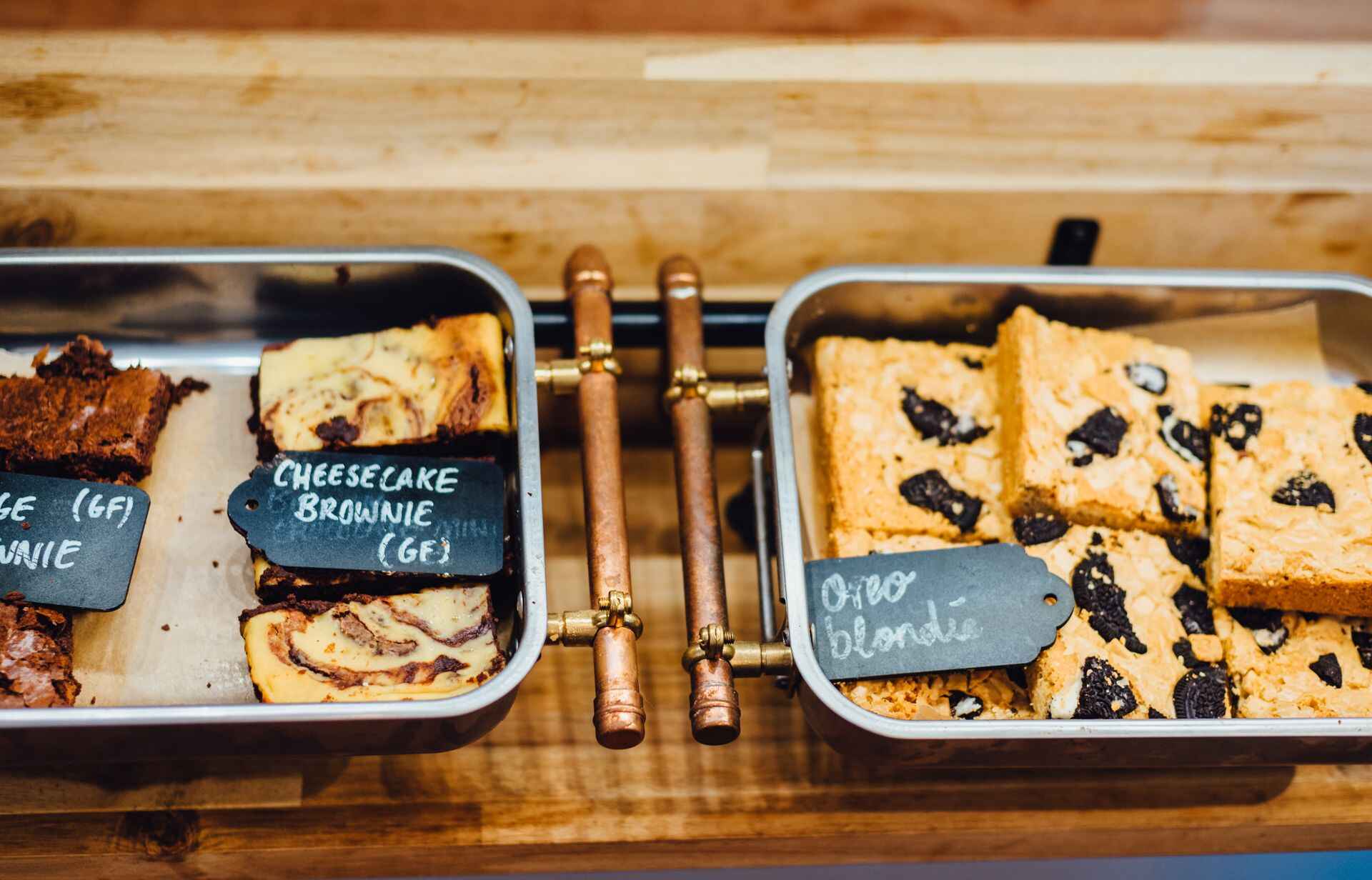

0 Comments