
If you’ve been scrolling health ads, you’ve probably seen glossy bottles promising “keto results” in gummy form — often with apple cider vinegar (ACV) and a pile of buzzwords: BHB, exogenous ketones, and appetite suppression. Sounds dreamy: candy that helps your diet. So, do keto ACV gummies actually work? Short answer: they’re a convenient, tasty supplement with some plausible, limited benefits, but they’re not a magic weight-loss pill, and many marketing claims are overblown. Clinical guidance and fact-checks from reputable health sources indicate that the evidence is mixed, and product quality varies widely.
This guide walks you through everything you need: what’s inside those gummies, what the science supports (and doesn’t), how to spot fake “Shark Tank” or celebrity endorsements, how to pick a safer product, and even DIY low-carb gummy recipes if you prefer to make your own. Read this before you buy so you’re not paying for empty promises — and so you can use gummies safely as a small tool in a bigger diet and lifestyle plan.
What are “Keto ACV Gummies”?
Definitions & product types
What they are (simple):
Keto ACV gummies are chewable dietary supplements that combine apple cider vinegar (ACV) with ingredients commonly promoted for ketogenic diets (most often BHB — beta-hydroxybutyrate — salts). In plain terms: they’re gummy candies sold as a way to get the “benefits” of ACV (e.g., blood-sugar support, appetite control) while also delivering exogenous ketones or keto-friendly ingredients that marketers say support ketosis. Think of them as vitamin-style gummies built for people following low-carb or keto lifestyles. (1, 2)
What they’re not (important):
They are not a magic shortcut into nutritional ketosis. Exogenous ketones can raise blood ketone levels temporarily, and ACV has modest, dose-dependent effects in some studies — but neither turns a high-carb diet into a ketogenic one. Cleveland Clinic and other clinical resources emphasize that gummies alone won’t produce the metabolic adaptations of a strict ketogenic diet. (3)
Difference between “keto gummies”, “ACV gummies”, and “keto ACV gummies”
- ACV gummies: Focus primarily on delivering apple cider vinegar (often in powdered or concentrated form) in a more palatable gummy. Typical claims: “supports digestion,” “helps blood sugar,” or “tastes better than liquid ACV.” These may or may not include ketone ingredients. Goli is the best-known mainstream example of an ACV gummy format.
- Keto gummies: Marketed to people on a ketogenic diet. Core features often include low net carbs, sugar-free sweeteners, and sometimes exogenous ketones (BHB salts) to temporarily raise circulating ketones. These focus on keto compatibility (low carb, low sugar) and may target energy, mental clarity, or appetite suppression. Clinical and consumer guides note that many “keto” gummies are effectively candy alternatives rather than potent metabolic supplements.
- Keto ACV gummies: The hybrid product that mixes the two ideas — ACV for its traditional digestive/weight-support reputation and BHB or similar ingredients to make the product attractive to keto eaters.
- These aim to check both boxes: “ACV benefits + keto compatibility.” Because they combine claims, they’re often the most heavily marketed and the most variable in ingredient quality and dosing.
Quick comparison: ACV gummies = vinegar convenience; Keto gummies = low-carb/ketone support; Keto ACV gummies = both mashed together — useful, maybe, but buyer beware on dosing and claims.
Typical formats, serving sizes, and common label claims
Formats you’ll see:
- Pectin or gelatin gummies (most common — chewable supplement format).
- Sugar-free candy-style gummies marketed as keto snacks (aimed at snacking rather than supplementation).
- Capsules or powders with the same active ingredients (not gummies but often compared side-by-side). Retail product pages and supplement labels show these variations clearly.
Typical serving sizes:
- Most brands list 1–3 gummies per serving. A common label: “Serving = 2 gummies.” The amount of ACV listed varies widely — from a few hundred milligrams of ACV powder to ingredient claims like “1,000–1,500 mg ACV per serving” (which is not the same as one tablespoon of liquid ACV used in some studies). BHB content (if present) can be as low as 50–200 mg per serving in gummy form — far lower than some powdered ketone supplements. Always check the Supplement Facts panel. (4)
Common label claims to expect (and to question):
- “Supports ketosis” or “helps you stay in ketosis” — technically misleading unless the product clearly warns that dietary carbs + metabolic state matter. Exogenous ketones raise blood ketones briefly but don’t replace carbohydrate restriction.
- “Appetite suppression,” “boosts metabolism,” or “helps burn fat” — common marketing language. These are plausible but usually based on small or mixed evidence and often require higher ACV doses or lifestyle changes to matter.
- “Sugar-free / keto-friendly” — check the sweetener type (allulose and erythritol are common choices; some products still use cane sugar or tapioca syrup, which adds carbs).
- “BHB / exogenous ketones included” — look for the exact mg per serving and the salt type (sodium, calcium, magnesium BHB). Low levels may be more marketing than meaningful dosing.
Practical tip: Before you buy, open product images and read the Supplement Facts. If the label doesn’t list ACV milligrams, BHB mg, grams of sugar, or the exact sweetener, treat the product with caution. Retail listings (Amazon, Walmart, brand sites) often show the Supplement Facts so you can compare side-by-side.
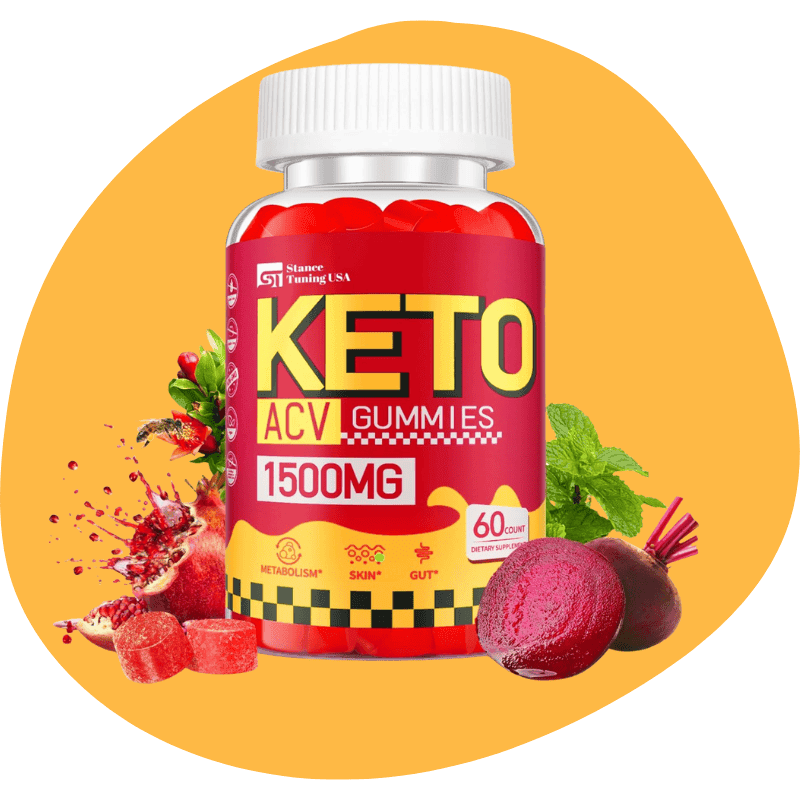
Delicious, keto‑friendly support for your wellness goals — Keto ACV Gummies pack 1500 mg of apple cider vinegar with “the Mother” plus probiotics and vitamins B6 & B12 in every serving. These sugar‑free, vegan, and non‑GMO gummies are designed to support gut health, metabolism, and fat‑burning while satisfying your sweet tooth without carbs. Perfect for women on keto or anyone looking to boost digestion, energy, and daily wellness with a tasty chew.
Features:
- 1500 mg Apple Cider Vinegar with Mother for natural gut support
- Probiotics + B6 & B12 for digestion and metabolism
- Sugar‑free, vegan, non‑GMO — keto‑friendly
- Chewable gummy form makes daily use easy and enjoyable
Enjoy a flavorful way to support your health routine.

Ingredients breakdown: what’s inside these gummies?
Keto ACV gummies mix a few predictable ingredient groups: an apple cider vinegar (ACV) source (usually powdered or concentrated), optional exogenous ketones (most commonly BHB salts), low- or zero-calorie sweeteners, a gelling agent (pectin or gelatin), and sometimes vitamins/minerals or flavor/fruit concentrates. Below, I break each major ingredient down so you know what to look for on the label and what the evidence says.
Apple cider vinegar (ACV) — what form and dose (vinegar, powder, concentrate)
Most clinical studies that show modest benefits used liquid ACV—for example, randomized trials often used 5–30 mL (1–2 tablespoons) daily of a 5% acetic acid vinegar solution and reported small reductions in weight, waist circumference, or post-meal blood sugar when taken over weeks to months. Gummies rarely contain anywhere near that amount of actual liquid-equivalent ACV; instead, they usually include a powdered extract or a small milligram amount of “ACV concentrate.” That means a gummy labeled “ACV” may deliver only a fraction of the dose used in clinical trials, and liquid ACV tends to show stronger effects in published studies than tablets or gummy formats. (5, 6)
Practical takeaway: if a product claims ACV benefits, check the Supplement Facts. If the label doesn’t list an ACV equivalent in mL or mg, or if the amount is far lower than study doses (e.g., only a few hundred mg), treat claims cautiously. Also remember that concentrated/acetic extracts differ from whole-food vinegar (the “mother” in raw ACV), and acidity can matter for effects — and for tooth enamel if you consume acidic products regularly.

Bragg USDA Organic Raw Apple Cider Vinegar with “The Mother” — a natural, unfiltered apple cider vinegar that supports digestion, detoxification, and healthy weight management. Made from organic apples and complete with beneficial enzymes and probiotics (“the Mother”), this 16‑oz bottle is perfect for daily use in dressings, tonics, or rinses. Vegan, gluten‑free, and all‑natural — a classic choice for whole‑food wellness routines.
Exogenous ketones (BHB salts) — claims vs. reality
Many “keto” gummies include BHB (beta-hydroxybutyrate) salts (often paired with sodium, calcium, or magnesium). Clinical evidence shows that oral BHB supplements reliably raise blood BHB levels acutely and can temporarily induce measurable ketosis without carb restriction; they can also lower blood glucose in the short term. However, several important caveats apply:
- Transient effect: Exogenous ketones increase circulating ketones for a few hours but do not recreate the metabolic adaptations of nutritional ketosis (the long-term fat-oxidation state produced by sustained carb restriction). In plain terms: they can make your blood show ketones briefly, but they don’t “turn your body into a fat-burning machine” on their own.
- Form matters: Ketone monoesters raise BHB and lower glucose more strongly than ketone salts; many gummies (for taste and cost reasons) use low-dose salts, which may be modestly effective at best.
- Side effects: BHB supplements can cause GI upset, especially at higher doses or with salts, and some trials report nausea, diarrhea, or bloating. (7, 8)
Practical takeaway: if a gummy lists BHB, look for the mg per serving and whether it specifies monoester vs. salt (most gummies use salts). Expect a short-lived rise in blood ketones and possible GI side effects rather than long-term metabolic change unless you also follow a true ketogenic diet.
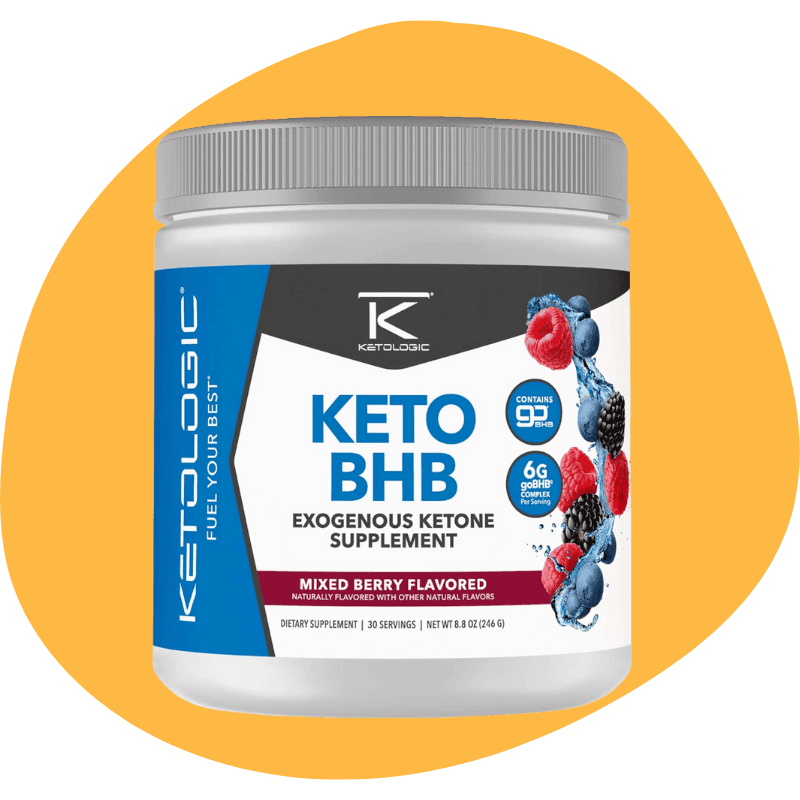
Ketologic Keto BHB (Mixed Berry) — 30 Servings. Boost your ketosis with this exogenous ketone supplement featuring goBHB™ (beta‑hydroxybutyrate salts) in a tasty mixed berry flavor. Designed to help support energy, focus, and fat‑burning when following a ketogenic lifestyle, it mixes easily into water or your favorite beverage. Great for pre‑workout, morning energy, or anytime you want clean, carb‑free fuel. Keto‑friendly and convenient for daily keto support.
Sweeteners used (allulose, erythritol, stevia, sugar alcohols) and carb counts
To be “keto-friendly,” gummies rely on low-impact sweeteners. Here’s the short guide:
- Allulose: A rare sugar with ~0.4 kcal/g that is mostly not metabolized and has minimal blood-sugar effect in studies. It tastes like sugar and is popular in high-quality, low-carb sweets. Some research suggests it may even blunt post-meal glucose. (9, 10)
- Erythritol: A sugar alcohol absorbed in the small intestine and excreted unchanged; it has virtually zero glycemic impact for most people and milder GI effects than many other sugar alcohols. Still, very large amounts can cause gas or loose stools in sensitive people. (11, 12)
- Xylitol/sorbitol / other sugar alcohols: These can be more likely to cause bloating, gas, and diarrhea at moderate doses and are less commonly used in keto gummies. Note: Xylitol is toxic to dogs — important if you have pets. (13)
- Stevia/monk fruit: Non-nutritive plant sweeteners with negligible carbs/calories; often used in combination for taste. Generally well tolerated. (14)
Net carbs on the label matter: some manufacturers subtract sugar alcohol grams to calculate “net carbs,” but different sugar alcohols have different glycemic/metabolic behaviors. Erythritol and allulose are commonly treated as non-impact carbs, while others (like maltitol) have a measurable glycemic effect. Always check the label for total carbs, sugar alcohol grams, and whether the manufacturer lists “net carbs.” (15)
Practical tip: if you have GI sensitivity or IBS, start with a single gummy to test tolerance. If you’re counting carbs tightly for ketosis, prefer products sweetened with allulose, erythritol, or monk fruit/stevia, and verify the net-carb math on the label.

Whole Earth Zero Calorie Stevia, Monk Fruit & Allulose Sweetener Packets — 400 Count
Enjoy sweet taste without calories or carbs with this erythritol‑free sugar substitute made from stevia, monk fruit, and allulose. Keto‑friendly and non‑GMO, these convenient 400 individual packets are perfect for coffee, tea, smoothies, and on‑the‑go sweetness without bitter aftertaste. Great for low‑carb lifestyles and everyday use.
Vitamins & additives commonly included (B12, folate, pectin, gelatin)
Producers often add nutrients and texture agents to boost appeal:
- Vitamins/minerals: B12, B6, folate, vitamin C, or chromium are sometimes included as “value adds.” These can be harmless and useful for people with deficiencies, but they don’t turn gummies into a weight-loss solution. If a product emphasizes vitamins, check the dose and bioavailability.
- Pectin vs. Gelatin:
- Gelatin is animal-derived (collagen) and creates a softer, chewier gummy texture; it's common in traditional supplements.
- Pectin is plant-based (from citrus/apple peels), used for vegan gummies, and tends to produce a firmer texture. Both are legitimate gelling agents; choose based on dietary preferences and allergen concerns. (16, 17)
- Fillers, colors, and flavors: Natural fruit concentrates are better than artificial colors or high-carb syrups. Watch out for tapioca syrup, dextrose, or cane sugar in the ingredients — those can add carbs and defeat “keto” claims.
Practical takeaway: Added vitamins are fine but secondary. Pay more attention to the active doses (ACV mg or BHB mg), the type of sweetener, and the gelling agent so the product actually fits your diet and needs.
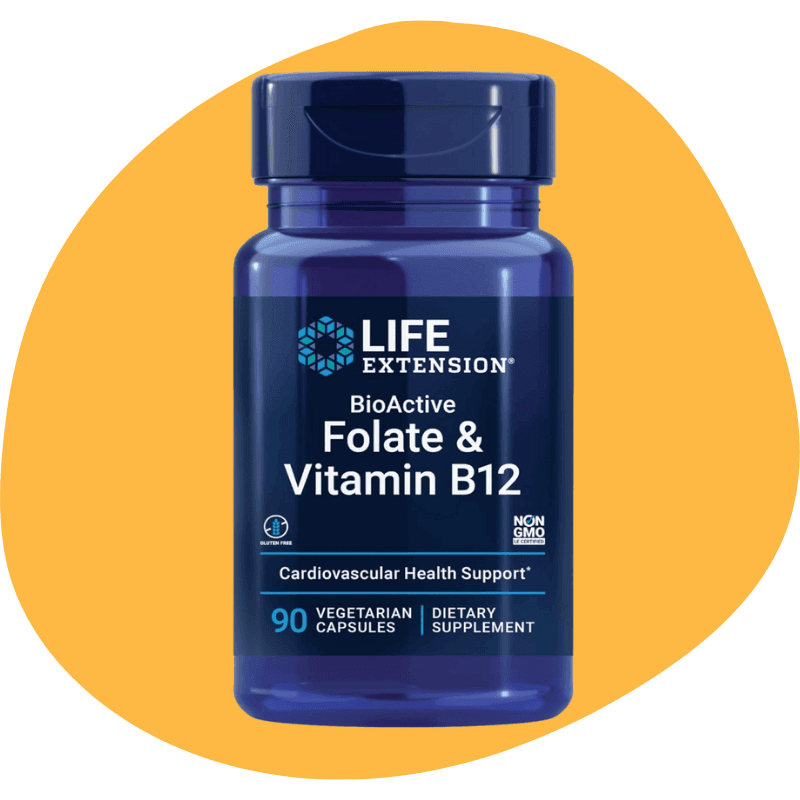
Life Extension BioActive Folate & Vitamin B12
Support your heart, brain, and overall wellness with this powerful blend of bioactive folate and vitamin B12. Non‑GMO, gluten‑free, and vegetarian, these easy‑to‑take capsules help promote healthy energy metabolism, cognitive function, and a strong digestive system. A thoughtful daily supplement for everyday health and vitality.
Short checklist to evaluate a keto ACV gummy
- Supplement Facts visible?
- ACV equivalent listed (mg or mL)?
- BHB (if present) — mg per serving and salt vs. ester specified?
- Total carbs and sugar alcohols shown?
- Sweetener type: allulose/erythritol/stevia/monk fruit?
- Gelling agent (pectin for vegan) / allergens listed?
How manufacturers claim these gummies work (marketing claims explained)
Brands selling keto ACV gummies often stitch together three big selling points into short, punchy claims: “curbs appetite,” “helps you enter or stay in ketosis,” and “boosts fat-burning/metabolism.” Those phrases sound great on a product page and in ads — but each claim has important limits and caveats. Below, I break down what the marketing means, what the evidence actually shows, and what to watch for on the label.
Appetite suppression & blood sugar control claims
What brands say: ACV helps reduce hunger and steadies blood sugar after meals, so you eat less and lose weight.
What the evidence shows: A few short-term studies found that vinegar (acetic acid) can blunt post-meal blood glucose spikes and, in some short trials, reduce subjective appetite. However, long-term trials mostly fail to reproduce meaningful, sustained weight loss from ACV alone. Major clinical resources note that any ACV benefit is generally modest and tends to depend on dose (the trials that show effects usually used measurable amounts of liquid ACV) and on being part of a broader diet change, not as a single “magic” supplement. (18, 19)
Practical reading: Many gummies contain much less ACV (powdered or concentrated) than the liquid doses used in studies, so the gummy format often delivers a fraction of the active dose. If a product leans on appetite or blood-sugar claims, look for a clear ACV equivalent (mg or mL) on the Supplement Facts — and treat dramatic weight-loss promises skeptically. (20)
“Help enter or sustain ketosis,” claims (BHB marketing)
What brands say: BHB (exogenous ketones) in the gummies will put you into ketosis or keep you there, so you’ll burn fat faster.
What the evidence shows: Exogenous ketones (BHB) do reliably raise blood ketone levels for a few hours after ingestion. That’s a real, measurable effect — but it’s temporary. Raising circulating ketones by taking BHB does not produce the full metabolic state of nutritional ketosis that comes from sustained carbohydrate restriction and metabolic adaptation. In short, gummies with BHB can show ketones in your blood, but they don’t replace the physiological adaptations of a ketogenic diet and aren’t a guaranteed way to “stay in ketosis” if you’re eating high carbs. Also note that many gummies use BHB salts at fairly low doses (for taste/cost), which have smaller effects than ketone esters used in controlled research. (21, 22)
Practical reading: If a product claims it will “put you in ketosis” or “keep you keto,” check the mg of BHB per serving and whether the company specifies salt vs. ester. Expect a short-term bump in blood ketones — and remember the only reliable way to maintain nutritional ketosis is a sustained diet (and often) — not a gummy alone.
Fat-burning / metabolism booster claims
What brands say: These gummies speed up metabolism or directly burn fat — often packaged as “fat-burning” or “metabolism support.”
What the evidence shows: The direct claim that a gummy will meaningfully increase fat-burning or metabolic rate in humans — enough to produce noticeable, lasting weight loss — is not supported by strong evidence. Exogenous ketones can temporarily alter substrate use (raise circulating ketones, lower glucose) and some small studies suggest metabolic effects under controlled conditions, but they don’t reliably produce sustained fat loss on their own. Similarly, ACV may modestly help some metabolic markers in tightly controlled studies, but the net effect is small and inconsistent across larger or longer trials. In short, a gummy is unlikely to produce clinically meaningful fat loss unless it’s used alongside proven strategies (calorie control, higher protein intake, exercise, and/or a low-carb diet). (23, 24)
Practical reading: Treat “fat-burning” language as marketing unless the product provides transparent dosing data and there’s independent evidence to back the claim. Look instead for realistic positioning: “may support appetite control” or “temporarily raises blood ketones” rather than claims of independent, dramatic weight loss.
Quick buyer safety notes
- Check doses: If appetite or metabolic effects are the selling point, the label should list ACV equivalents and BHB mg per serving.
- Watch sweeteners: High-sugar fillers defeat keto claims. Prefer allulose, erythritol, monk fruit, or stevia.
- Expect transient results: BHB raises ketones briefly — it’s not a shortcut to sustained ketosis.
- If you’re a teen or under medical care: talk to a parent/guardian and a healthcare provider before taking supplements — ACV can affect digestion and teeth, and BHB salts can cause GI upset or interact with medications.
What the science actually says (ACV & ketones)
Below, I translate the main clinical findings into plain language so you can tell marketing from meaningful evidence. Short version up front: both apple cider vinegar (ACV) and exogenous ketones (BHB) have real, measurable effects in short-term studies — but the effects are generally modest, dose-dependent, and often transient. Gummies can deliver these ingredients, but whether a gummy does enough to match the studies depends on the exact dose and formulation. (25)
Evidence for apple cider vinegar and weight / blood-sugar (clinical trials summary)
What the trials show
- Several randomized trials and reviews find that vinegar (acetic acid) can acutely reduce post-meal blood glucose and insulin responses, especially in people with impaired glucose tolerance or type 2 diabetes. Most positive trials used doses of liquid vinegar in the range of ~10–30 mL (≈2–6 teaspoons/tablespoons) per day. (26)
- Meta-analyses and larger reviews report small but statistically significant reductions in body weight, BMI, waist circumference, and some metabolic markers when ACV is taken regularly — but the overall magnitude is modest, and results vary by study quality and dose. In plain numbers, effects are often a few pounds (or modest BMI reductions) over weeks to months when combined with dietary changes. (27, 28)
Important caveats
- Dose matters. Many lab and clinical benefits were seen with measurable liquid ACV doses. Gummies frequently contain far lower ACV-equivalent amounts (powdered extract), so a gummy may not reproduce the same effect.
- Study context matters. Positive results are more consistent when ACV is used alongside calorie restriction or in people with metabolic risk factors, not as a standalone “slim-down” pill for an otherwise unchanged diet and activity.
Practical takeaway
If you’re buying an ACV gummy because you want the blood-sugar or appetite advantages seen in trials, check the Supplement Facts: does the product list an ACV equivalent (mg or mL)? If the ACV per serving is tiny compared with clinical doses, don’t expect the same benefits.
Evidence for exogenous ketones (BHB) and whether they cause fat loss or real ketosis
What exogenous ketones do (measured effects)
- Oral BHB (both salts and esters) reliably raises circulating beta-hydroxybutyrate (BHB) levels within minutes and can keep levels elevated for a few hours. Acute effects also include transient reductions in blood glucose and subjective increases in energy or mental clarity for some people. (29)
Do exogenous ketones cause fat loss or “real” ketosis?
- They produce biochemical ketosis (higher blood ketones) temporarily, but they do not reproduce the metabolic adaptations of nutritional ketosis (the long-term shift toward fat oxidation that results from sustained carbohydrate restriction and time). In other words, a gummy that contains BHB can make a ketone test read “positive” for a while, but that alone does not mean your body has switched to burning stored fat the way it does on a ketogenic diet. (30)
- Evidence that exogenous ketones alone cause meaningful, sustained fat loss is weak. Some studies suggest they can help with appetite or support metabolic improvements as an adjunct when combined with calorie restriction or a ketogenic diet — but they aren’t a standalone fat-loss drug. (31, 32)
Formulation matters
- Ketone esters drive higher ketone peaks and stronger metabolic effects than ketone salts, but esters are more expensive and taste worse — that’s why most gummies (taste- and cost-driven) use salts at relatively low doses, which produce smaller ketone elevations.
Practical takeaway
If a product promises to “put you in ketosis” or “melt fat” by itself, treat that as marketing spin. Expect short-lived rises in blood ketones from BHB-containing gummies; for durable fat loss, you still need dietary change, energy deficit, and time.
Gummy dosing, bioavailability, and whether the gummy format matters
Does the gummy format change effectiveness?
- For nutrients like vitamins, randomized studies have shown gummies can have similar or even better absorption than tablets for some vitamins (for example, vitamin D), though results vary by nutrient and product design. Gummies may dissolve differently and sometimes enable faster or comparable absorption. That said, absorption of an ingredient depends on dose, ingredient chemistry, and formulation, not just the “gummy” form. (33, 34)
Specifics for ACV and BHB in gummies
- ACV in gummies is usually a powdered extract or flavoring. Because many clinical ACV studies used measured doses of liquid vinegar, a gummy’s lower or differently processed ACV dose may not reproduce study results. Check the label for an “ACV equivalent” value — that tells you how close the gummy comes to clinically studied amounts. (35)
- BHB in gummies: taste and cost limit how much BHB manufacturers can include in a chewable. Many gummies contain modest BHB salt doses that raise ketones only slightly and for a short window; stronger ketone effects in studies often use higher-dose salts or esters in powder or liquid forms.
Other practical considerations
- Stability & heat: gummies can be sensitive to heat and humidity; active ingredient stability (especially for esters) may be affected by storage and shelf conditions.
- Sugars & sweeteners: some cheaper gummies include syrups or sugars that increase carbs and blunt “keto” claims — a critical label check if you track carbs.
- Additives: citric acid and sweeteners can irritate teeth or stomach if consumed frequently; ACV’s acidity can be an additional factor for dental erosion if doses are high. (36)
Practical checklist (quick)
- Look for ACV equivalent (mg/mL) and compare to clinical doses (~10–30 mL liquid in many trials).
- Look for BHB mg per serving and whether it’s a salt or ester; expect only transient ketone increases from salt-based gummies.
- Check total carbs and type of sweetener (allulose/erythritol/stevia are preferable for keto).
- Treat dramatic “fat-burning” claims skeptically — the best evidence supports modest, adjunctive benefits, not miracle results.
Safety, side effects & who should avoid them
Keto ACV gummies are popular, but they’re not risk-free. Below is a clear, readable breakdown of the most common safety issues and which people should be extra careful, along with plain, practical tips you can use when evaluating products.
GI upset, dental erosion (ACV), carb-load risks, interactions (diabetes meds), allergies
GI upset
- Why it happens: Two ingredients commonly linked to digestive issues are exogenous ketones (BHB salts) and sugar alcohols / alternative sweeteners. BHB salts — especially at higher doses — can cause nausea, abdominal cramps, bloating, or diarrhea in some users. Sugar alcohols (like xylitol or maltitol) are well-known for causing gas and loose stools in sensitive people; erythritol and allulose tend to be gentler but can still upset some stomachs at higher amounts. Start with a small serving to see how you tolerate them. (37, 38)
Dental erosion and throat irritation (ACV)
- Why it matters: Apple cider vinegar is acidic. Frequent exposure to even diluted acetic acid can erode tooth enamel or irritate the throat. Clinical and lab studies have documented enamel wear with regular vinegar exposure, and several clinical summaries mention throat/dental risk with long-term or concentrated use. Gummies may reduce the acid contact compared with sipping liquid ACV, but acidity and added citric acid in candy-style gummies can still affect teeth if you take them constantly. Rinse your mouth with water after taking acidic supplements and avoid brushing teeth immediately (wait ~30 minutes) to reduce abrasion risk. (39, 40)
Carb-load risks
- Why it matters: Not all “keto” gummies are truly low-carb. Some use syrups or sugar that add net carbs and can knock you out of ketosis if you rely on them as a snack. Even “net carb” claims can be misleading, depending on which sugar alcohols a brand subtracts. Always check total carbs, sugar, and which sweetener is used (allulose and erythritol are usually better choices for low-carb diets). (41, 42)
Drug interactions (important)
- Big caveat: ACV can interact with diabetes medications (insulin and insulin-sensitizing drugs), and with diuretics/ACE inhibitors/digoxin because chronic vinegar use may lower potassium. That means ACV-containing supplements could increase the risk of low blood sugar or low potassium when taken with some prescription drugs. If you take any medication — especially for diabetes or heart conditions — check with a healthcare professional before starting ACV or ketone supplements. (43, 44)
Allergies & sensitivities
- Watch the label: Gummies contain gelling agents (gelatin or pectin), flavorings, and sometimes natural concentrates that can cause allergic reactions in some people. Gelatin is animal-derived (not vegan); pectin is plant-based. If you have known food allergies, check ingredient lists and avoid products that don’t fully disclose allergens.
Kids, pregnant/nursing teens, people with kidney disease — precautions
Kids & teens
- Extra caution: Children and teenagers’ metabolisms and medication tolerances differ from adults. A supplement that affects blood sugar, electrolytes, or digestion should not be started without parental consent and a pediatrician’s OK. For minors using any supplement, it’s best to consult a parent/guardian and a healthcare provider first — especially if the minor takes medications or has a medical condition. (45)
Pregnant or breastfeeding people
- Limited data — err on the side of caution. There’s not enough high-quality evidence proving ACV or ketone supplements are safe in pregnancy or breastfeeding. Some sources recommend avoiding concentrated or unpasteurized ACV during pregnancy and consulting a provider before use. Because supplements can affect blood sugar and electrolytes, check with your obstetrician or midwife before taking keto ACV gummies while pregnant or nursing. (46)
People with kidney disease, heart failure, or on salt-restricted diets
- Why it’s a concern: BHB salts add minerals (sodium, potassium, magnesium, calcium) to the body. If you have kidney disease, heart failure, or any other condition that requires limiting salts or tightly controlling electrolytes, ketone salts can cause dangerous imbalances. One review cautions that ketone salts may be unsuitable for people who must restrict salt intake. Ask your nephrologist or cardiologist before trying BHB-containing gummies. (47)
People on diabetes meds or with brittle blood sugar control
- Serious caution: Because ACV may lower post-meal blood glucose and because exogenous ketones can also influence glucose, adding these supplements to a regimen that includes insulin or sulfonylureas could raise the risk of hypoglycemia. If you have diabetes, speak with your diabetes care team before trying ACV gummies. Close glucose monitoring is important when any new supplement is started.
Quick practical safety checklist
- If you’re a minor, talk to a parent/guardian and a pediatrician before taking any supplement.
- Start with one gummy to test tolerance (GI effects).
- Check Supplement Facts: ACV mg (or equivalent), BHB mg, and type (salt vs. ester), total carbs, and sweetener.
- If you take diabetes meds, diuretics, ACE inhibitors, ARBs, or digoxin, consult your doctor before use.
- Rinse mouth with water after taking acidic supplements and avoid brushing teeth immediately (wait ~30 minutes) to reduce enamel abrasion.
Scams, misleading “Shark Tank” endorsements & how to spot fake claims
Scammers love the authority glow that comes from a trusted TV show. They slap a Shark Tank logo or a celebrity photo on an ad, whip up fake “reviews” and before/after photos, then drive you to a checkout page with a confusing free-trial/subscription trap. The result: you pay for gummy supplements that weren’t endorsed by the show (or by any credible medical source) and might be low-quality, overpriced, or part of a subscription scheme. Fact-checkers and consumer-protection agencies warn this is a widespread problem — especially for keto, CBD, and weight-loss gummies. (48, 49)
Fake ads using Shark Tank logos/celebrities — how scammers operate
How the scam works (common patterns)
- Doctored photos & videos: Scammers edit images or stitch clips to make it look like Sharks or celebrities are holding or praising a product. These doctored assets get reused across many fake product pages. (50)
- Fake “as-seen-on” articles: Fake sites create phony press pages that look professional and include fake quotes, star photos, and fabricated “Shark Tank” blurbs. (51, 52)
- Bogus review pages: The same operation will often seed the web with hundreds of fake reviews and Google-style “ratings” to create social proof. The reviews usually repeat the same lines and sometimes post identical photos. (53, 54)
- Subscription traps and hidden charges: You click a “free trial,” give card details, then discover monthly charges you can’t easily stop. The BBB and FTC both report many complaints about confusing trial-to-subscription transitions for weight-loss products. (55)
Why is it convincing?
- Ads use recognizable people and logos, emotional before/after photos, and pseudo-science language (e.g., “BHB + ACV blasts fat”) to short-circuit scepticism. If you only skim the landing page, it looks legit — until you try to verify the claim on authoritative sites. Consumer-protection groups say the easiest defense is simple verification steps. (56)
Red flags on product pages, bogus “before/after” photos, fake press logos
Red flags that scream “scam” (copy/paste checklist)
- Claims of “As seen on Shark Tank” without a link to the exact episode — check ABC’s official Shark Tank site or the show’s episode guide. If the product truly appears, you’ll find an official page. (57, 58)
- Celebrity photos or quotes used without verification — cross-check with Snopes, FTC alerts, or a quick Google search; many celebrity “endorsements” have been debunked. (59)
- No real company contact info or only a web form — legitimate brands list an address, phone, and a clear refund policy. Scam pages often hide or omit contact details.
- Before/after images that look identical except for contrast, clothing, or pose — this is a classic manipulation tactic. Reverse-image-search suspicious photos (tools: Google Images, TinEye) to see if the same image appears on many unrelated pages.
- Fake press logos or “featured in” carousels — reputable media have searchable archives; if a product claims coverage, open the linked article on the publisher’s site — don’t trust a logo image alone. (60)
- Free trial with confusing opt-out or steep “processing” fees — the BBB and FTC frequently warn about these subscription traps for diet and supplement ads. Always read the terms before submitting card info.
Practical verification steps (do this fast)
- Search Snopes or a fact-check site for the product name + “Shark Tank” — many scams have already been debunked.
- Check the FTC or BBB alerts for similar complaints — these orgs track recurring scam patterns.
- Reverse-image-search the before/after photos and any celebrity images. If the image shows up on other product pages, it’s probably fake.
- Find independent reviews on reputable retailers (Amazon with verified-purchase filters, Consumer Reports, high-quality health sites). Be wary if all reviews live only on the seller’s site.
- Check for lab testing / COAs (Certificate of Analysis) for active ingredients — real supplement brands often post third-party test results. Scammers rarely do.
Short consumer action checklist
- If an ad claims Shark Tank endorsement → don’t buy until you verify on ABC’s official Shark Tank page or a reputable fact-checker.
- If the site uses a “free trial,” read the fine print and check for automatic renewals; track your card after ordering.
- Report scams: file a complaint with the FTC and BBB Scam Tracker, and tell your bank if you feel you were charged wrongly. Your report helps others.
Customer reviews & real-world experiences (analysis of reviews)
Real buyers are where the rubber meets the road. Product pages are curated; reviews are messy, honest, and full of useful signals — if you know how to read them. Below, I break down the most common themes that show up across Amazon, Walmart, Target, and brand sites, explain how to weigh what people say versus real evidence, and give short, realistic mini case studies and timelines you’ll actually see in the wild.
Patterns from retail reviews (Amazon, Walmart, Target) — what buyers report eating, side effects, perceived benefits
What reviewers commonly praise
- Taste & texture. A huge chunk of positive reviews mention flavor — people love that the ACV bitterness is masked and that gummies feel like candy rather than medicine. That matters: better adherence if you’ll actually take them.
- Convenience. Many reviewers say they prefer gummies to chugging vinegar or mixing powders. Convenience often drives repeat purchases even if the benefits are modest.
- Short-term energy or clarity. Especially with BHB-containing gummies, users sometimes report a quick “alertness” or mild energy lift after taking them.
What reviewers commonly complain about
- GI issues. Nausea, gas, loose stools, or stomach cramps are the top side-effect complaints — usually tied to BHB salts or sugar alcohols (some people are sensitive to erythritol/xylitol).
- No effect on weight. Lots of buyers say the product didn’t help weight loss on its own; where reviewers lost weight, they usually paired gummies with diet changes.
- Hidden costs/subscriptions. Complaints about unexpected recurring charges or confusing “free trial” fine print often appear on the same product lines that use aggressive ad funnels.
- Inconsistent labeling or weak dosing. Reviewers flag when Supplement Facts don’t list ACV equivalents or BHB mg per serving — that usually reduces trust and increases returns.
Signals that matter most (what to look for when scanning reviews)
- Verified purchases — prioritize these.
- Consistent complaints across retailers — if the same side effect or claim shows up on Amazon, Walmart, and Target, it’s more likely real.
- Timing patterns — people reporting side effects instantly versus after weeks suggest different causes (formulation vs. cumulative effects).
- Photos & videos — real, unedited pics from verified buyers usually beat stock photos or model shots.
How to weigh anecdote vs. evidence
Anecdotes are emotional and persuasive — but they’re not proof. Here’s how to parse them:
- Sample size & spread — one glowing or angry review = anecdote. If hundreds of buyers report the same pattern, that’s a signal worth taking seriously.
- Context matters — did the reviewer also change diet/exercise? Many weight-loss claims are confounded by concurrent lifestyle changes. If they mention “I also started keto,” that explains a lot.
- Placebo & expectation effects — people expect results from expensive solutions. Taste, novelty, and attention can create perceived benefits that aren’t physiological.
- Reviewer reliability — look for detailed reviews that list timeframes, dosing (how many gummies/day), and side effects. “This worked!” with no detail is weak evidence; “Tasted great, gave me diarrhea the first two days, then I felt less hungry for 10 days” is stronger and actionable.
- Cross-check with science — use reviews to spot hypotheses (e.g., many users say it curbs cravings). Then check clinical evidence (if it exists) to see if a plausible mechanism matches the anecdote. If not, treat the effect skeptically.
Practical rule: treat consistent, multi-source, verified-review patterns as early observations, but not definitive proof. Use them to prioritize what to investigate (and to decide whether the product’s risk/benefit trade-off is acceptable for you).
Example mini case studies / typical timelines users report
Below are short, realistic user-story archetypes you’ll see in review sections. They help set expectations for what’s likely short-term vs. long-term.
- The Taste-First Buyer (short-term, 1–4 weeks)
- Profile: Wants to ditch liquid ACV.
- Experience: Loves flavor; takes 2 gummies daily. Notices no major weight change in week 1, but it is more consistent than with liquid ACV. Keeps buying because it’s convenient.
- Takeaway: Good adherence + modest lifestyle change may lead to small benefits over time, but the gummy itself isn’t a miracle.
- The Energy/Clarity Tester (immediate → 1 week)
- Profile: Tries a BHB gummy before workouts or work.
- Experience: Reports a mild alertness within 30–60 minutes for a few hours. No sustained weight loss; occasional stomach upset after the first dose.
- Takeaway: Expect a transient subjective effect (placebo or real), but watch for GI tolerance.
- The Mixed-Result Dieter (4–12 weeks)
- Profile: Kombines gummies with lower-carb meals.
- Experience: Over 6–8 weeks, reports “lost a few pounds” but attributes most change to diet. Notes: Cravings were easier early on.
- Takeaway: Gummies may be an adjunct — they can help when paired with dietary change, but they’re not the primary driver.
- The Side-Effect Victim (first days → discontinue)
- Profile: Sensitive to sugar alcohols or BHB salts.
- Experience: GI distress within the first 24–72 hours (gas, bloating, diarrhea) and discontinues use. Leaves a negative review citing ingredients.
- Takeaway: Always try one gummy first; ingredient sensitivity is common.
- The Scam/Subscription Complaint (purchase → customer service nightmare)
- Profile: Bought through an ad funnel with “free trial.”
- Experience: Receives a package, then sees auto-renewal charges. Difficulty contacting the seller for a refund. Leaves a warning review and files complaints.
- Takeaway: Check payment terms and seller reputation before buying.
Quick review-audit checklist
- Only read verified purchases for product-effect signals.
- Flag reviews that mention Supplement Facts details (ACV mg, BHB mg, sweetener).
- Look for patterns across platforms (same pros/cons on Amazon + Walmart + Target).
- If you’re a minor: don’t start any supplement without telling a parent/guardian and checking with a healthcare provider. Reviews are not a substitute for medical advice.
Buying guide: how to choose a safe, useful keto ACV gummy
Choosing a keto ACV gummy is basically quality control + common sense. Lots of products look the same in an ad, but the label, testing, and seller policies tell the real story. Below is a practical checklist (with short explanations) so you can quickly judge whether a product is worth trying — and what to avoid. If you’re under 18, talk to a parent/guardian and a healthcare provider before trying any supplement.
What to look for on the label (serving, ACV equivalent, ketone mg, carb count, sweetener type)
- Serving size & real dosing
- Does the label make it clear how many gummies make a serving? (Common: 1–3 gummies.)
- Check how many servings are in the bottle so you can calculate cost-per-serving.
- ACV equivalent (clear mg or mL)
- Good brands list an ACV equivalent (either mg or mL) or state “X mg ACV powder = Y mL liquid ACV.”
- Clinical studies that show effects typically use measurable liquid doses — if the gummy’s ACV is just a tiny “flavor” amount, don’t expect study-level benefits.
- Ketone content (BHB) — mg per serving and form
- If the product uses BHB, the label should state mg per serving and whether it’s a salt (sodium/calcium/magnesium) or an ester. Salts are common in gummies and produce smaller, shorter ketone boosts than esters.
- Low or unspecified BHB is often marketing — look for transparency.
- Total carbs, sugar, and “net carbs” math
- Read Total Carbohydrate and Sugars on the Supplement Facts, not just the front-of-pack “keto” claim.
- If they list net carbs, check how they calculate it (some subtract sugar alcohols differently). For keto trackers, erythritol and allulose are usually treated as non-impact carbs; others (maltitol, dextrose) can spike glucose.
- Sweetener type
- Prefer allulose, erythritol, monk fruit, or stevia — these have minimal blood-sugar effects for most people.
- Avoid products that use maltodextrin, cane sugar, or tapioca syrup if you want a low-carb gummy.
- Gelling agent & allergens
- Gelatin = animal-derived; pectin = plant-based/vegan.
- Also scan for common allergens (soy, tree nuts, gluten) and any “may contain” warnings.
- Extra ingredients & filler transparency
- Vitamins/minerals are fine, but don’t let them distract from weak active dosing.
- Watch for unnecessary syrups or fillers that add carbs.
Third-party testing, GMP, contact info, and a clear refund policy
- Third-party testing / Certificate of Analysis (COA)
- Best practice: look for a downloadable COA showing tests for potency (ACV & BHB levels) and purity (heavy metals, microbes). The COA should list a lab name and a batch/lot number that matches your bottle.
- Red flag: “Third-party tested” claims with no link or PDF. Real COAs are publicly available or provided on request.
- Manufacturing standards — GMP & facility info
- Look for GMP (Good Manufacturing Practice) statements and the manufacturer’s name. GMP doesn’t guarantee efficacy but indicates basic quality controls.
- If a product hides the manufacturer or uses only a P.O. box, be cautious.
- Clear company contact details
- Legit brands list a customer-service email, phone number, and physical address. Try calling or emailing if you have questions — how they respond tells you a lot.
- No contact info or only a chat widget with vague answers → worry.
- Refunds, returns, and subscription clarity
- Read the returns/refund page before buying. Good signs: 30-day money-back guarantee, easy returns, and a clear cancellation process.
- Beware of “free trial” funnels or subscriptions buried in the checkout. If it’s a subscription model, the cancellation steps should be explicit and simple.
- Label batch/lot & expiry
- Check for a lot/batch number and expiration date. These should be printed on the bottle or label. No expiry = another red flag.
Red flags to avoid (fast)
- No COA, or a COA that doesn’t match the lot number.
- Vague ingredient amounts (e.g., “ACV blend” with no mg).
- “As seen on Shark Tank” or celebrity endorsements without verifiable proof.
- Hidden subscription/auto-renewal fees in the checkout.
- Price that’s much lower than competitors with identical claims — often a sign of inferior ingredients or scam funnels.
Value checks & practical buying tips
- Price-per-serving: divide total price by number of servings. A very cheap per-serving cost often means low active doses.
- Trial first: if you want to test tolerance (GI side effects are common), buy a single bottle rather than committing to a subscription.
- Compare labels: open several product images and compare Supplement Facts side-by-side — that’s where the truth lives.
- Look for verified retail presence: products sold through established retailers (Amazon, Target, Walmart) often have more visible review histories and return options—still check reviews for authenticity.
Quick copy/paste buyer checklist
- Supplement Facts visible & legible
- ACV equivalent listed (mg or mL)
- BHB mg per serving & salt/ester noted (if included)
- Total carbs and sweetener type are clearly shown
- COA available and linked (batch/lot match)
- Manufacturer & contact info present
- Refund policy & subscription terms are clear
Final safety reminder for younger: If you’re under 18, these products are not toys. Talk with a parent/guardian and your healthcare provider before trying any supplement. They can help you weigh benefits, check for drug interactions, and decide whether you really need it.
Top product comparisons (categories, not brand-push)
Below are clear criteria you can use to compare any keto ACV gummy on the market. Rather than naming brands, I’ll give you the features and benchmarks that define winners in each category so you can judge products quickly and confidently.
“Best sugar-free gummy” (criteria)
Look for these features when you want a gummy that tastes like candy but won’t spike blood sugar:
- Sweetener profile: Prefer allulose, erythritol, monk fruit, or stevia. These have the smallest glycemic impact for most people. Avoid maltodextrin, dextrose, cane sugar, and tapioca syrup.
- Total carbs per serving ≤ 2 g (or clearly low net carbs): Check the Nutrition Facts and how the manufacturer calculates “net carbs.”
- No hidden syrups in the ingredient list: If you see tapioca syrup, corn syrup, or cane sugar in the ingredient panel, it’s not truly sugar-free.
- Clean taste & texture: Reviews should repeatedly cite good flavor and lack of unpleasant aftertaste — important because palatability drives adherence.
- No problematic sugar alcohols at high doses: If a product uses xylitol or maltitol (both more likely to cause GI trouble), it’s lower on the list; erythritol tends to be gentler.
- Label transparency: Supplement Facts and sweetener amounts clearly listed.
Quick buyer action: scan the ingredient list and Nutrition Facts first — if sweetener type or carb math is vague, move on.
“Best for low-carb dieters” (criteria)
Low-carb dieters want to keep carbs minimal while not sacrificing benefits. These are the must-have attributes:
- Net carbs reliably low (preferably 0–2 g per serving): Confirm how the company calculates net carbs.
- ACV dose stated and realistic: If you want ACV benefits, a transparent ACV-equivalent (mg or mL) is essential — many gummies don’t reach clinical doses.
- Minimal fillers & no caloric syrups: The ingredient panel should avoid maltodextrin, maltose, or sugary binders.
- Preferred sweeteners: Allulose > erythritol > monk fruit/stevia. Allulose is especially popular for low-carb foods because it tastes like sugar and usually won’t be counted as digestible carbs.
- Optional: BHB transparency: If the gummy includes BHB, the mg per serving and the salt type (sodium/magnesium/calcium) should be listed. Low-carb dieters may want low or moderate BHB for short-term ketone boosts, but don’t expect this to replace diet.
- Sensible serving size: 1–2 gummies per serving is easier to track than 4–6 gummy servings that increase hidden carbs.
Practical tip: Pair the gummy with your macro tracking app and test blood ketones/glucose if you’re strict about ketosis — this will tell you whether the gummy affects your numbers.
“Best value” & “best for sensitive stomachs” — feature checklist
Best value (cost-effectiveness + quality):
- Price-per-serving: Calculate total cost ÷ servings. A reasonable benchmark depends on dosing (higher action doses justify a higher price).
- Potency per serving: Compare ACV equivalent and BHB mg per serving — value = transparency + effective dosing. Cheap products with no listed active amounts are usually poor value.
- COA / third-party testing available: Brands that post Certificates of Analysis are higher value because you’re more likely to get what you paid for.
- No hidden subscription traps: True value is lower when you can’t cancel or when refunds are difficult.
- Good verified-review ratio: A High percentage of verified positive reviews across platforms (Amazon, Walmart, Target) indicates consistent product quality.
Best for sensitive stomachs (gentle digestion + low GI upset risk):
- Sweeteners with low GI and low laxative risk: Allulose and erythritol are usually gentler than maltitol, sorbitol, or high-dose xylitol.
- Lower BHB salt dose (or none): If BHB salts trigger GI issues for you, choose lower-dose BHB or ACV-only gummies.
- Pectin gelling agent: Pectin-based gummies sometimes feel lighter on digestion for people who react to gelatin (though individual responses vary).
- No artificial colors/flavors or excess citric acid: Harsh acids or artificial additives can irritate sensitive stomachs.
- Positive GI tolerance reviews: Look for verified buyers explicitly noting “no GI issues” or “gentle on my stomach.”
- Start-small formulation: Products with recommended “start with 1 gummy” guidance are safer for sensitive users.
Quick action checklist: before buying, try a single bottle or sample (not a multi-month subscription), start with one gummy, and only increase if tolerated.
Quick comparison matrix
- Category: Sugar-free gummy → Top features: allulose/erythritol, ≤2 g carbs/serving, clear label
- Category: Low-carb dieter → Top features: net carbs minimal, ACV equiv listed, no caloric syrups
- Category: Best value → Top features: cost/serving reasonable, effective mg dosing, COA & good reviews
- Category: Sensitive stomach → Top features: gentle sweeteners (allulose/erythritol), low BHB, pectin, few acids/additives
Final buying tip (especially if you’re under 18)
If you’re under 18, don’t start any supplement without talking to a parent/guardian and a healthcare provider. Supplements can affect blood sugar, digestion, and interact with medications — and young bodies can react differently than adults’.
Keto gummies versus other keto supplements
Keto gummies are one convenient way to get ACV, BHB, or “keto-friendly” ingredients — but they’re just one tool among pills, powders, liquids, and whole-food approaches. Below is a clear comparison so you can decide which format fits your goals, budget, and tolerance.
Pills, liquids, powders (MCT oil, exogenous ketone salts/esters) — pros & cons
Pills/capsules (ACV, vitamins, MCT softgels)
- Pros:
- Compact and portable.
- Often flavorless (good if you dislike vinegary taste).
- Easier to get higher doses without added sweeteners or carbs.
- Cons:
- Harder to swallow for some people.
- Slower onset for things meant to act quickly (e.g., ketone boosts).
- Best for: people who want precise dosing, no sugar, and minimal taste.
Powders (BHB salts/esters, collagen, MCT powder)
- Pros:
- Can deliver higher, research-level doses economically.
- Mix into drinks — easy to dose up or down.
- Often faster absorption than pills.
- Cons:
- Taste can be bitter (especially ketone esters).
- Requires mixing — less grab-and-go.
- Best for: keto dieters wanting measurable ketone increases, athletes, or people who track blood ketones.
Liquids (MCT oil, ketone esters, ACV liquid)
- Pros:
- Fast absorption (MCTs go quickly to the liver and can raise ketone production).
- Esters produce the highest, fastest BHB spikes (used in research).
- Cons:
- MCT oil can cause stomach upset if taken too fast or in high amounts.
- Ketone esters taste unpleasant to many people and cost more.
- Best for: performance or therapeutic contexts where speed and potency matter.
Keto gummies (ACV + BHB blends)
- Pros:
- Tasty, high adherence (people actually take them).
- Easier on the go — chew, no measuring.
- Often more kid/teen-friendly in flavor (but always get parental OK).
- Cons:
- Dosing limits — taste and texture restrict how much active ingredient can be included.
- May contain sweeteners or fillers that add carbs.
- Usually produce only modest, short-lived ketone bumps (if they include BHB salts).
- Best for: people who value convenience and taste and want a mild adjunct (not a replacement) to diet.
Quick tech note (salts vs. esters):
- BHB salts (common in gummies/powders) are cheaper, taste better, and raise ketones moderately.
- Ketone esters (used in some liquids) raise ketones far higher and faster, but are bitter and expensive. Gummies rarely contain esters.
When a gummy might make sense versus whole foods & diet changes
Use gummies when:
- You need better adherence. If you hate taking bitter ACV or can’t stomach MCT oil, a tasty gummy means you’ll actually take the supplement consistently — and consistency matters.
- You want a mild, convenient adjunct. Gummies can be a helpful small tool for appetite management, a short energy pick-me-up, or to replace higher-carb candy while on a low-carb plan.
- You’re experimenting with tolerance. Taking one gummy first is an easy way to test for GI sensitivity before trying concentrated powders or MCT doses.
- You prioritize convenience over potency. If your goal is a quick, pleasant experience rather than therapeutic-level dosing, gummies fit.
Choose powders/liquids/pills when:
- You need a measurable effect. If you want to meaningfully raise blood ketones for performance or therapeutic reasons, powders or esters are a better option.
- You’re tracking macros/ketones closely. Powders/pills usually give clearer dosing and fewer hidden carbs than candy-style gummies.
- You need higher ACV doses. Clinical ACV studies often use liquid vinegar at doses gummies can’t match; for similar effects, liquid ACV or high-dose capsules are more realistic.
Whole foods & diet changes (the foundation)
- No supplement can replace a solid diet. Nutritional ketosis, weight loss, and metabolic changes come from consistent carbohydrate restriction, calorie control, and lifestyle (sleep, activity). Gummies are best seen as adjuncts — they might help with cravings or provide a small metabolic nudge, but they aren’t a shortcut.
- Real food wins for long-term health. MCT-rich foods (coconut, MCT oil in coffee), protein, fiber, and whole-food fats are more sustainable and cheaper per calorie than supplements.
Practical recommendations (teen-safe reminder)
- If you’re under 18, talk to a parent/guardian and a healthcare provider before trying any supplement. Teens’ bodies and medicines react differently from adults’.
- Start small: try one gummy/pill/teaspoon of MCT, wait 24 hours, and watch for GI effects.
- If your goal is real ketosis for medical or athletic reasons, consider powders or liquids and consult a professional rather than relying on gummies alone.
DIY low-carb gummy recipes & safer alternatives
Want a keto-friendly gummy you can control? Making your own lets you pick the sweetener, control the ACV dose, avoid sketchy fillers, and test tolerance slowly. Below are an easy pectin-based ACV gummy recipe (vegan option), a gelatin option, storage tips, and safer low-carb snack alternatives. If you’re under 18, ask a parent/guardian to help — and check with a healthcare provider before using ACV regularly or if you take medicines.
Simple recipe for low-carb ACV gummies (pectin-based, allulose/erythritol) — step-by-step
Why pectin? Pectin makes a firmer, fruit-like gummy and is plant-based (good if you want vegan gummies). This version uses allulose or erythritol + stevia, so it has a low impact on blood sugar for most people.
- Yields: about 30 small gummies (depends on mold size)
- Prep + chill time: ~30–45 minutes (mostly chilling)
Ingredients
- 1 cup (240 mL) water
- 2–3 tablespoons apple cider vinegar (ACV) — start with 1 tbsp if you’re testing sensitivity (adult supervision recommended).
- 2 tbsp pectin powder (high-methoxyl pectin for gummy setting)
- 1/3 cup allulose (or 1/3 cup erythritol + 1/4 tsp powdered stevia to taste)
- 1–2 tsp lemon juice (optional — helps flavor and pectin set)
- Pinch of salt (optional)
- Silicone gummy molds or small candy molds
Step-by-step
- Prep: Lightly spray or wipe molds so gummies release easily. Measure ingredients.
- Heat water & sweetener: In a small saucepan, combine 1 cup of water and the allulose (or erythritol + stevia). Heat gently over medium, stirring until sweetener dissolves. Don’t boil hard — a gentle simmer is fine.
- Add pectin: Slowly whisk in 2 tbsp pectin. Keep whisking to avoid lumps. Heat 2–3 minutes until the mixture becomes slightly thicker and glossy.
- Add ACV & lemon: Remove from heat and stir in the apple cider vinegar and lemon juice. Start with 1 tbsp ACV if you’re trying this for the first time — you can increase in later batches if tolerated. Taste and adjust the sweetness if needed.
- Mold & chill: Pour mixture into molds (a small pour spout or syringe helps). Let cool to room temperature, then refrigerate 20–30 minutes until set.
- Unmold & store: Pop gummies from molds. Store in an airtight container in the fridge for up to 10–14 days.
Notes & tips
- ACV dose: clinical ACV studies typically used larger liquid doses; a gummy batch with 2 tbsp ACV spread across 30 gummies yields a small ACV dose per gummy — useful for testing tolerance but not equivalent to a tablespoon each day. If you want a stronger ACV dose, increase total ACV in the recipe, but be cautious about acidity and tooth enamel — rinse with water after consuming.
- Allulose vs. erythritol: Allulose tastes closest to sugar and is often treated as non-impact by many keto trackers; erythritol is more widely available and very low impact for most people. Some people get digestive upset from erythritol in high amounts — start small.
- Texture adjustment: More pectin = firmer gummies. If gummies are sticky, dust lightly with a tiny bit of powdered allulose.
- Kid safety: Don’t give supplements or ACV to kids/teens without parental and medical OK.
Gelatin version (easy, classic gummy)
If you don’t need vegan gummies, gelatin is super simple and produces a chewy gummy.
Ingredients
- 1 cup unsweetened fruit tea or filtered water
- 2 tbsp powdered gelatin (bloomed)
- 1/4–1/3 cup allulose (or erythritol + stevia)
- 1–2 tsp ACV (start with 1 tsp if testing)
- Natural flavoring or a splash of sugar-free juice concentrate (optional)
Method (quick)
- Heat the water/tea and dissolve the sweetener.
- Remove from heat, whisk in bloomed gelatin until smooth.
- Stir in ACV and flavoring. Pour into molds and chill until set (about 1 hour). Store refrigerated.
Why choose gelatin?
- Easy texture control and chewiness.
- Allows slightly higher ACV concentrations per gummy than pectin recipes because gelatin’s mouthfeel masks flavor well.
Storage & shelf life
- Fridge: airtight container — 7–14 days depending on ingredients and hygiene.
- Freezer: can freeze gummies on a tray, then bag them; thaw briefly before eating. Texture can change slightly.
- Label & date: write the made date on the container so you don’t keep them too long.
Other low-carb gummy candy options & snacks
If you’d rather skip ACV or want variety, here are safe, low-carb alternatives that satisfy the gummy/candy craving without wrecking ketosis for most people.
1. Sugar-free gelatin gummy bears
- Use sugar-free flavored powdered gelatin mixes (check sweetener type) or make with unsweetened tea + sweetener + gelatin. Easy, cheap, and low net carbs when sweetened with allulose or erythritol.
2. Collagen gummies
- Make gummies with unflavored collagen powder + flavored water + sweetener + lemon/ACV, optional. These add protein and can double as a snack.
3. Fat bombs (no sugar)
- Small, fridge-chilled bites made from cream cheese + cocoa + allulose or nut butter + MCT oil. More of a creamy snack than gummies, but very keto-friendly.
4. Keto chocolate bites
- Melt unsweetened chocolate or cocoa butter, mix with a low-carb sweetener and nuts or coconut, portion into mini molds, and refrigerate.
- Small servings of berries (raspberries, blackberries) with whipped cream or mascarpone — keeps carbs low and satisfies the sweet tooth.
6. Store-bought keto candies
- Look for gummy brands sweetened with allulose or erythritol and transparent carb labeling. Avoid those with maltitol, dextrose, or syrups.
Safety & practical reminders (short)
- Start small: try one homemade gummy first to test tolerance.
- Supervise in the kitchen: get an adult to help with hot liquids and accurate measuring.
- ACV caution: because vinegar is acidic, don’t over-consume it daily without medical advice; rinse your mouth after use to help protect tooth enamel.
- If you take medicine, especially for diabetes or blood pressure, check with a clinician before adding ACV or regular ketone supplements.
- If you’re under 18: talk to a parent/guardian and a healthcare provider before trying ACV gummies or supplements.
Regulatory, testing & reporting: what consumers need to know
Supplements (including keto ACV gummies) live in a weird in-between world: they’re legal and widely sold, but they’re not pre-approved by the FDA for safety or effectiveness the way drugs are. That means your best defense as a buyer is to know the rules, expect transparency, and verify independent test results when possible. Below is a no-nonsense guide to what the law requires, who does third-party testing, and exactly how to check a Certificate of Analysis (COA) so you don’t buy mystery gummies. (61, 62)
FDA supplement rules (what the agency actually enforces)
- No pre-market approval for supplements. Unlike prescription drugs, dietary supplements are not approved by the FDA before they’re sold. Companies are responsible for ensuring safety and truthful labeling, and the FDA acts after a problem is reported or discovered. That’s why label transparency and third-party testing matter.
- Required label elements. Federal rules require a supplement label to include: product identity, net quantity, nutrition/supplement facts, ingredient list, and the manufacturer/packer/distributor name and place of business. Missing or vague labeling is a red flag. (63)
- Claims must not be deceptive. Health and weight-loss claims are regulated: the FDA/FTC requires that claims be truthful and substantiated. The FTC guidance emphasizes that advertisers need “competent and reliable scientific evidence” for efficacy claims — so outrageous promises (e.g., “burn fat without dieting”) are risky claims to trust. (64, 65)
Third-party labs & certifications: who to trust
- Recognized third-party certifiers: NSF, USP, and ConsumerLab are widely respected because they test products independently for label accuracy and contaminants. A seal from one of these organizations means the product has passed specific, accredited testing (not just a vendor claim). Big retailers (for example, CVS) have moved toward selling only third-party-tested supplements for this reason. (66)
- What third-party testing typically looks for: potency (does the product contain the active amounts listed?), contaminants (heavy metals, microbes, pesticides), and sometimes banned substances (important for athletes). Not every test covers every risk, so a COA should list what was tested.
How to check a Certificate of Analysis (COA): step-by-step
A COA is the document that proves a specific batch was tested. Not every brand posts one, but legit brands make COAs easy to find. Here’s how to read and verify one. (67, 68)
- Find the COA link or ask for it. Check the product page (look for “third-party testing,” “COA,” or “lab results”) or contact customer service and request the COA for the bottle’s lot/batch number. Reputable sellers provide it freely. (69)
- Verify the header details. The COA should name the lab (with contact info or accreditation), the company that ordered the test, the product name, and the specific batch/lot number. If these don’t match your bottle, the COA is meaningless. (70, 71)
- Check the testing panel. Good COAs list the exact analytes tested: active ingredient potency (e.g., mg of ACV equivalent or BHB per serving), heavy metals (lead, arsenic, cadmium, mercury), microbial limits, and any pesticide or solvent screens the lab ran. If the COA only shows a single generic test or lacks key contaminants, push for more detail.
- Look for dates and signatures. A current COA will show the test date and a lab analyst’s signature or stamp. Old or unsigned reports are suspicious. (72, 73)
- Confirm accreditation where relevant. Labs accredited to ISO/IEC 17025 (or similar national standards) are more reliable. Some COAs or lab websites will state accreditation; if not, ask.
- Match lot numbers. The COA must specifically correspond to the lot printed on your bottle. If the company shares only a generic or “representative” COA that doesn’t match your lot, treat that as a red flag.
Red flags on COAs or company pages: no lab name, COA for an unspecified “batch,” missing test list, COA that doesn’t match your lot number, or only vague statements like “third-party tested” with no document. Reputable brands will either post COAs on the product page or email them quickly on request.
Good manufacturing practice (GMP) & other quality cues
- GMP statements are important: Brands manufacturing under GMPs follow procedures that reduce contamination and ensure consistent potency. Look for a clear GMP statement and the name/address of the manufacturer — hiding this is a red flag. The FDA’s labeling guide tells you that the business name and place of business must appear on the package.
- COA + GMP + clear contact info = strong trust signals. If a product checks these boxes and has good verified reviews (especially mentioning quality and no contamination), it’s more trustworthy than a product with flashy ads and no transparency. Consumer testing sites like ConsumerLab also publish independent test results when available. (74)
Quick consumer checklist — what to do before you buy
- Read the Supplement Facts and ingredient list (mandatory on label).
- Look for a downloadable COA or ask customer support for the COA for your lot. Verify lab name, test date, analytes, and lot number.
- Prefer products tested by recognized organizations (NSF / USP / ConsumerLab) or by an ISO/IEC 17025 accredited lab. (75)
- Check the manufacturer contact info and a clear refund/return policy — hard-to-reach sellers are a red flag.
- If you see dramatic health claims (e.g., “melt fat without dieting”), cross-check evidence and beware — the FTC requires substantiation for such claims.
Final note (short & practical)
Because the FDA doesn’t pre-approve supplements, transparency is the consumer’s best tool: clear labels, GMP claims, accessible COAs, and reputable third-party seals are the things that separate honest brands from hype. If a seller hides basic information or refuses to show a COA for your bottle’s lot, consider a different product — it’s a simple risk-avoidance move that protects your health and your wallet.
Frequently Asked Questions (FAQ)
1. Do keto gummies break ketosis?
Not usually — many keto gummies contain exogenous ketones (BHB) that can raise blood ketone levels temporarily, but they don’t replace the metabolic state you get from sustained carb restriction. In short, gummies can make a ketone meter read positive for a while, but they won’t keep you in nutritional ketosis if you’re eating lots of carbs.
2. Can ACV gummies damage my teeth?
ACV is acidic, and prolonged exposure can erode enamel. Gummies may reduce direct sipping of liquid vinegar, but frequent acidic candy still risks enamel wear — rinse with water after taking them and avoid brushing immediately.
3. Will keto ACV gummies make me lose weight?
Short answer: maybe a little as an adjunct, but not by themselves. Clinical studies suggest ACV can have modest effects on blood sugar and weight when used regularly and paired with diet changes — but most gummies contain much smaller ACV doses than those used in trials. Treat gummies as a small tool, not a miracle.
4. Are keto/ACV gummies safe? What side effects should I expect?
Many people tolerate them fine, but common side effects include GI upset (nausea, gas, diarrhea), especially from BHB salts or certain sugar alcohols, plus possible throat/teeth irritation from ACV. If you feel unwell, stop and consult a healthcare provider.
5. Can gummies interact with my medications (like diabetes drugs)?
Yes — ACV and some supplements can affect blood sugar and electrolytes, which may interact with diabetes meds or diuretics. If you take prescription drugs (especially for diabetes, heart conditions, or blood pressure), talk to your clinician before using ACV/ketone supplements.
6. Did these gummies appear on Shark Tank or get celebrity endorsements?
If an ad claims a Shark Tank or celebrity endorsement, verify it — many scams falsely use the show’s name or doctored celebrity images. Independent fact-checkers have repeatedly debunked fake “Shark Tank” gummy claims.
7. Are keto ACV gummies safe for kids, teens, or during pregnancy/breastfeeding?
For kids and teens, most experts advise caution — ketogenic diets and related supplements aren’t generally recommended for children except under medical supervision. Pregnant or breastfeeding people should also consult their provider before using ACV or ketone supplements. Don’t start supplements without a parent/guardian and clinician’s OK.
8. How can I spot fake reviews, “before/after” photos, or scam pages?
Red flags: “As seen on Shark Tank” without verifiable episode links, identical or heavily edited before/after photos, no real company contact info, and hidden “free trial” subscription traps. Reverse-image searches and fact-check sites can quickly reveal fakes.
9. How many carbs are in a typical keto gummy?
It varies widely — some gummies are essentially sugar-free (0–2 g net carbs/serving) while others use syrups and add significant carbs. Always check the Supplement/Nutrition Facts and the sweetener type (allulose/erythritol/stevia are usually better for keto).
10. Will taking a gummy make my ketone meter read “in ketosis”?
Yes — BHB-containing gummies can produce temporary rises in blood BHB that show up on meters. That biochemical result doesn’t always match the longer-term metabolic changes of a ketogenic diet.
11. Can I use keto gummies before a workout for energy?
Some people report a short-lived boost in energy or mental clarity after BHB intake, but evidence is mixed. If you try it, see how your body responds and watch for GI upset. For reliable performance support, many athletes prefer measured powders or MCTs under guidance.
12. What’s the safest way to try keto ACV gummies?
Start small (one gummy), read the Supplement Facts (ACV equivalent, BHB mg, total carbs, sweetener type), check for third-party testing or COAs, avoid hidden subscriptions, and talk to a parent/guardian and healthcare provider if you’re under 18 or on medications. If you experience side effects, stop and consult a clinician.
The Bottom Line
Keto ACV gummies can be a convenient, tasty adjunct for people following a low-carb or keto lifestyle — but they’re not a shortcut to weight loss or a replacement for a real ketogenic diet. The science shows modest, context-dependent benefits for apple cider vinegar and short-lived rises in blood ketones from exogenous BHB, yet most gummies contain lower doses than clinical studies and vary widely in quality. Buyer vigilance — checking labels, sweeteners, dosing, and third-party testing — matters more than flashy marketing.
Practical, bite-size advice
- Start with one gummy to test tolerance (GI upset is common with BHB salts and some sugar alcohols).
- Always read the Supplement Facts: check ACV equivalent (mg or mL), BHB mg and form (salt vs. ester), total carbs, and sweetener type.
- Prefer sweeteners like allulose or erythritol and pectin (if you want vegan gummies) over sugary syrups.
- Verify transparency: downloadable COAs, GMP statements, clear contact info, and an easy refund policy are trust signals.
- Beware ads claiming “Shark Tank” endorsements or miracle results; reverse-image search photos and check fact-check sites before you buy.
- Protect your teeth: rinse with water after acidic supplements and avoid brushing immediately to reduce enamel wear.
- If you’re under 18, pregnant, nursing, or taking medications (especially for diabetes, blood pressure, or electrolytes), talk with a parent/guardian and your healthcare provider before trying any supplement.
Final verdict
Keto ACV gummies are useful as a convenient, adherence-friendly tool for some people, but expect modest effects and use them as part of a broader diet and lifestyle plan — not as a miracle cure.
We may earn a commission when you buy using our links





Remarkable post here
Thanks
Your authenticity makes every piece of content feel genuine and trustworthy
Thank you so much — that truly means a lot to me. I always aim to share honest, well-researched content, so hearing that it feels genuine and trustworthy is incredibly encouraging. If there’s anything you’d like to see covered next, feel free to let me know. I really appreciate your support! 🙏
I conceive this web site has very great written written content content.
Thanks so much — I’m really glad you enjoyed the content! I put a lot of effort into making posts clear and helpful. If there’s a topic you’d like me to cover next, let me know and I’ll add it to the list. Appreciate you stopping by! 🙏