
Think of your low-carb grocery list as a cheat code for healthier weeks. When your cart is stocked with the right basics, meal decisions get faster, cravings get smaller, and the stress of “what’s for dinner?” vanishes. A smart grocery list does more than save time — it shapes your meals, protects your budget, and keeps you steady on your goals without turning eating into a chore. Whether you’re new to low-carb eating or fine-tuning a habitual routine, one well-crafted shopping trip can set the tone for an entire week of wins.
Quick promise — what you’ll get from this guide
By the end of this article, you’ll have everything you need to run a single, powerful shopping trip that supports low-carb eating without drama. Specifically:
- A practical, low carb grocery list you can use right away — organized by category so shopping’s fast.
- Label-reading tips and carb math (net carbs vs total carbs) so packaged foods don’t surprise you.
- Budget-friendly swaps and shopping hacks that keep costs down while keeping quality high.
- Meal ideas & batch-cook templates that turn the same shopping list into breakfasts, lunches, dinners, and snacks.
- Special-case notes for athletes, people with diabetes, and families — how to tailor the low carb grocery list without guesswork.
- Troubleshooting tips for cravings, plateaus, and quick fixes when you’re busy or tired.
This brief introduction sets the stage; next, we’ll delve into the specific foods to purchase, how to compare labels, and practical meal plans that make the list work.
How to Use This Low Carb Grocery List
A great low carb grocery list is more than a shopping script — it’s a tiny system that turns your intentions into real meals. Use this section as your quick-start manual: who it works for, how to read the items, and the simple tricks that make label-reading fast and accurate.
Who this list is for (beginners, keto, low-carb for diabetes, weight loss)
This low carb grocery list is intentionally flexible. It’s useful for:
- Beginners who want a simple, no-fuss set of staples to get started.
- People doing ketogenic (very low carb) diets need to keep daily carbs quite low and prioritize fats and low-starch vegetables.
- People managing diabetes who want to lower overall carbohydrate intake or count carbs more carefully to control blood sugar, but who should pair any change with medical guidance. (1, 2)
- Those aiming for weight loss who prefer reduced-carb approaches for appetite control.
- Busy families or meal-preppers who want a streamlined, low-carb grocery list that scales.
How to pick the right intensity:
- If you’re curious, start with a moderate low-carb approach (cut back on refined carbs and prioritize vegetables + proteins).
- If you’re targeting ketosis or strict carbohydrate control, aim lower and use the low carb grocery list to exclude most starchy foods and high-sugar fruit. For clinical or medication-dependent situations, consult your provider before making big changes. (3, 4)
How to read the list (net carbs vs total carbs, serving sizes, label reading)
Reading a shopping list is one thing; reading nutrition labels is another. Here’s how to make your low-carb grocery list actually work in the grocery aisle.
Net carbs vs total carbs — the quick rule
- Total carbs = everything counted as carbohydrate on the label (starches, sugars, fiber).
- Net carbs = total carbs − fiber − certain sugar alcohols (many people subtract erythritol and allulose fully; others subtract only half of some sugar alcohols). Net carbs are what often matter for blood sugar and ketosis, but remember the term “net carbs” is not regulated by the FDA, and calculations can vary. Use it as a practical guide, not a gospel. (5, 6)
Example (easy math you can use in the aisle):
If a bar lists 20 g total carbs and 5 g fiber, its net carbs = 20 − 5 = 15 g. If it also lists 4 g erythritol, many low-carb trackers will subtract that too, leaving 11 g net carbs. (7)
Serving sizes — don’t skip this
- Always compare the package serving size to what you’ll actually eat. A cookie pack might list carbs per cookie, but you may eat three — multiply accurately.
- Small packages with misleading “servings per container” language are common; do the arithmetic on the label before you toss the item in your cart.
Label-reading checklist (fast scan, 15 seconds)
- Check serving size first (top of the label).
- Look at total carbohydrate (grams per serving).
- Note dietary fiber and common sugar alcohols (erythritol, xylitol, maltitol — some affect blood sugar more than others). (8)
- Scan the ingredient list: if any form of sugar (syrup, maltodextrin, dextrose) or a starch is near the top, it’s probably higher-carb than you want.
- Check added sugars on the label — they’re usually listed separately now.
Sugar alcohols & pitfalls
- Not all sugar alcohols behave the same. Erythritol and allulose are often subtracted fully by trackers because they have minimal glycemic impact; others (like maltitol) can raise blood sugar more and may cause digestive upset if eaten in quantity. When in doubt, be conservative with subtraction or choose whole-food options.
Practical tips for using the low carb grocery list in-store
- Start at the perimeter: fresh proteins, dairy, and produce usually live along the store edge — these are the backbone of a strong low carb grocery list.
- Skip the middle aisles quickly: glance only for specific pantry staples (almond flour, canned tomatoes, broths). If a packaged item triggers label-skepticism, move on.
- Use your phone: a carb-counting app or a simple notes app with your low carb grocery list speeds decisions (scan barcodes when possible).
- Buy whole over “low-carb” processed: many packaged “low-carb” foods are overpriced and highly processed — opt for whole staples first.
Quick reference — when to consult a pro
- If you have type 1 diabetes, take insulin adjustments seriously and consult your medical team before reducing carbs.
- If you’re on medications for diabetes or blood pressure, changing carbs or salt can alter dosing — speak to your clinician.
- If you’re pregnant, breastfeeding, or under 18, get tailored guidance before doing strict carb restriction.
These guardrails keep your low-carb grocery list helpful and safe — and they reflect official carbohydrate-counting advice used in diabetes care.
Use these quick rules every time you shop: they turn a static low carb grocery list into a reliable tool that keeps your pantry useful, your meals predictable, and your goals achievable. (9)
Quick Low-Carb Rules & Carb Targets
This section gives you the rules of the road so your low carb grocery list actually helps you reach your goals. Think of it as the cheat-sheet you tuck into your phone before a shopping trip: clear, practical, and science-friendly — without turning food into a math test.
What counts as “low carb”? (definitions: moderate low-carb, low-carb, very low carb/keto)
Terms vary, but here’s a simple way to think about them so you can match your low carb grocery list to your aim:
- Moderate low-carb — ~100–130 g of carbs per day
- Good if you’re easing into lower carbs, want flexible meals, or exercise regularly and need energy for workouts.
- Low-carb — ~50–100 g of carbs per day
- A common middle ground that cuts refined carbs, keeps veggies, fruits in moderation, and focuses on proteins + healthy fats.
- Very-low carb / ketogenic — ~20–50 g of carbs per day
- A strict approach is used for ketosis or some therapeutic reasons. Requires careful planning (and often medical oversight), because it dramatically limits starchy vegetables, grains, and most fruit.
Quick tip: Use your low carb grocery list to match the category — e.g., if you aim for very-low carb, omit bread, rice, most fruit, and swap potatoes for cauliflower.
If you’re under 18, pregnant, breastfeeding, or managing medical conditions, avoid extreme restriction and talk with a parent/caregiver and a clinician before changing your diet.
How to calculate net carbs & why fiber and sugar alcohols matter
Understanding net carbs helps your low carb grocery list be more accurate — especially with packaged foods.
The basic math (easy to do in the aisle):
- Look at the Total Carbohydrates on the label.
- Subtract Dietary Fiber (fiber does not raise blood sugar for most people).
- Subtract certain sugar alcohols (like erythritol or allulose) when appropriate — but be cautious with others (like maltitol).
Example, step-by-step (do it digit by digit):
- Total carbs = 20 g.
- Fiber = 5 g. Calculate: 20 − 5 = 15 g.
- Erythritol = 4 g. Then: 15 − 4 = 11 g net carbs.
So the net carbs in that item = 11 g.
Important nuance about sugar alcohols:
- Erythritol and allulose generally have minimal effect on blood glucose for most people and are often subtracted fully.
- Maltitol and some others can still raise blood sugar and may cause digestive upset — don’t subtract them fully unless you know how your body reacts.
Why this matters for your low carb grocery list:
- A product labeled “low carb” may still have significant net carbs if it’s high in maltodextrin, maltitol, or added starches. Always do the quick math above before adding it to your cart.
Daily carb target examples and who should consult a clinician
Here are practical daily targets and simple guidance on who should seek professional advice:
Carb target examples (pick the one that fits your goals):
- Casual/maintenance: 100–130 g/day — flexible, easy to follow, still reduces refined carbs.
- Weight-loss focused: 50–100 g/day — often effective for appetite control and steady weight loss.
- Ketosis/therapeutic: 20–50 g/day — very restrictive; may lead to ketosis if calories and protein are balanced.
How to apply targets with your low carb grocery list:
- If aiming for ~50 g/day, plan meals to average ~16–18 g per eating occasion for three meals, plus a small snack.
- If aiming for ~100 g/day, you can include more berries, a small serving of legumes on workout days, or a slice of low-carb bread with lunch.
Who should consult a clinician before changing carb targets:
- Anyone on diabetes medication (insulin, sulfonylureas, etc.) — changing carbs can affect dosing.
- People with kidney disease, liver disease, or other chronic conditions.
- Pregnant or breastfeeding teens — growing bodies need balanced nutrients; get tailored advice.
- Adolescents under 18 in general — major dietary restrictions can affect growth and development, so involve parents/caregivers and a healthcare professional.
- Anyone unsure about nutrient adequacy — a dietitian can help ensure you’re getting enough vitamins, minerals, protein, and healthy fats.
Quick checklist — use this before you shop
- Pick your carb zone (moderate, low, or very-low) and build your low carb grocery list to match.
- Do the net carb math: total carbs − fiber − safe sugar alcohols.
- If you fall into any “consult a clinician” categories above, pause and get professional input before adopting a strict plan.
Keeping these rules in mind will make every item on your low carb grocery list purposeful — not accidental. When the list matches your carb target and lifestyle, shopping becomes simple, and your meals actually support how you want to feel.
Proteins: The Foundation of a Low Carb Grocery List
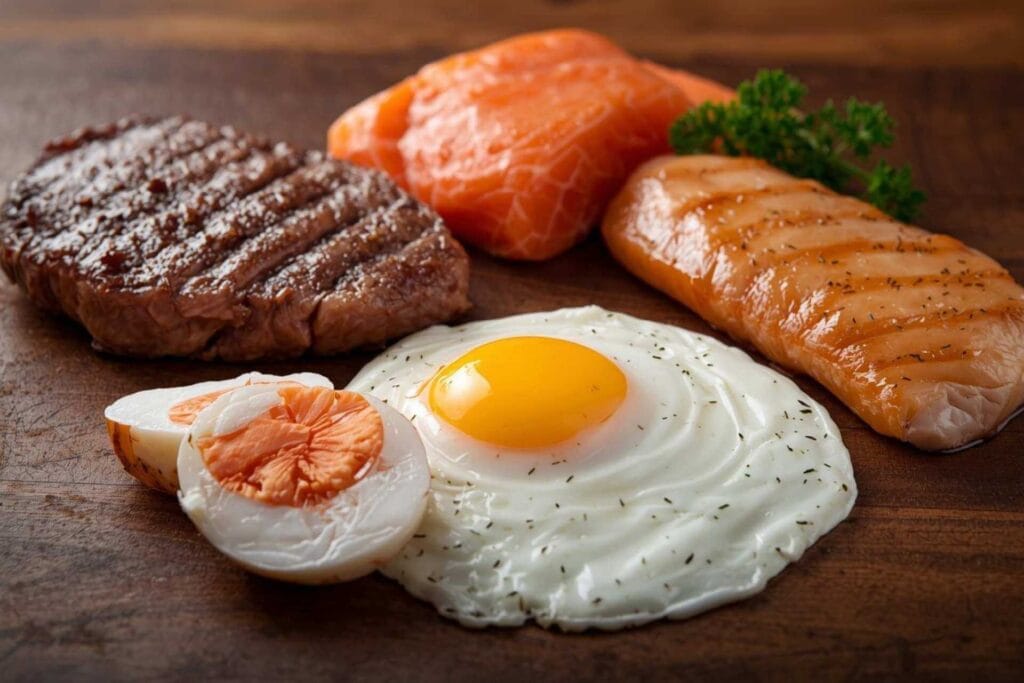
Proteins are the anchor of any practical low carb grocery list. They keep you full, stabilize blood sugar, and make every meal feel satisfying. Below you’ll find what to buy, how to pick the best cuts, storage and portion tips, and smart ways to prep so your protein choices turn into effortless meals.
Fresh meats (beef, pork, lamb): what to look for, portion guidance
What to look for when shopping
- Choose the cut to match your goals.
- For satiety and keto: opt for fattier cuts like ribeye, pork shoulder, and lamb chops — the extra fat helps with hunger and flavor.
- For leaner, calorie-controlled plans: pick sirloin, tenderloin, or lean ground beef.
- Check color & smell. Fresh beef and lamb should be a healthy red (lamb may be slightly darker); pork should be pink. Avoid packages with a sour or off smell.
- Look for minimal added ingredients. Ground or pre-marinated meats can hide sugar, fillers, or starches — read the ingredient list before adding to your cart.
Portion guidance (practical, not prescriptive)
- Aim for one palm-sized portion of cooked meat per meal for most adults, which is roughly a 3–6 oz cooked serving depending on your goals.
- If you’re protein-focused (athletes, heavy strength training), plan slightly larger portions — but keep the low carb grocery list balanced with veggies and fats.
Smart shopping tips
- Buy in bulk when cuts are on sale and freeze in meal-sized portions.
- Fat trimmings: don’t toss them — render for cooking fat or save for flavoring roasted veg.
Storage basics
- Refrigerate at or below 40°F (4°C); use fresh cuts within 3–4 days.
- Freeze raw portions you won’t eat within a few days; label with date and intended meal size.
Poultry & eggs — best buys, storage tips
Best buys
- Whole chicken — the ultimate budget-friendly protein. Roast once, use for multiple meals (salads, soups, tacos with lettuce wraps).
- Chicken thighs — forgiving to cook and more flavorful than breasts; great for slow-cooking or sheet-pan dinners.
- Turkey — lean and often economical, especially ground turkey for swaps.
- Eggs — nutrient-packed, versatile, and a cornerstone of any low carb grocery list.
Storage & handling
- Eggs: keep them in the carton, on a shelf inside the fridge (not the door) to maintain a stable temperature and longer freshness.
- Poultry: Store raw poultry on the bottom shelf to avoid drips onto other foods. Cooked poultry lasts ~3–4 days in the fridge; freeze for longer storage.
Buy-once-use-many ideas
- Hard-boil a batch of eggs for quick breakfasts or snacks.
- Roast a whole chicken and shred for salads, quick soups, or low-carb wraps.
Deli meat and processed meat: how to choose low-carb, watch nitrates & hidden sugars
Why be picky
- Deli and processed meats are convenient but can include hidden sugars, fillers (dextrose, maltodextrin), and curing agents (nitrates/nitrites) that some people prefer to limit.
How to choose smart options
- Scan the ingredient list: look for single-ingredient or short-ingredient options (meat + salt). Avoid entries like “sugar,” “brown sugar,” “maltodextrin,” or “dextrose” near the top.
- Look for labels that match your priorities: “no sugar added,” “uncured/no nitrates” (note: “uncured” products often use natural nitrates like celery powder).
- Check sodium: deli meats can be high in salt; if you’re sodium-sensitive, choose low-sodium varieties.
Convenience balance
- Keep a small supply of nitrate-free turkey or roast beef for fast salads and sandwiches (use lettuce wraps for low carb grocery list meals). Rotate brands until you find one with clean ingredients and acceptable taste.
Plant proteins (tofu, tempeh, edamame): carb considerations
Why include plant proteins
- They add variety, fiber, and different amino acid profiles — great for vegetarians or anyone who wants to lower meat intake while sticking to a low carb grocery list.
Quick carb notes
- Tofu: generally low to moderate in carbs and very versatile — extra-firm tofu grills, silken tofu blends into smoothies or puddings. Always check the package for added marinades or starches.
- Tempeh: slightly higher in carbs than tofu because it’s fermented soy with whole beans, but still reasonable and very nutrient-dense. It’s excellent marinated and pan-fried.
- Edamame (young soybeans): more carbohydrate than tofu per cup than leafy veg, but still a good, protein-rich snack or salad topper in controlled portions.
Buying & prepping tips
- Press tofu (for extra-firm) to remove excess water before frying or baking — it improves texture and flavor absorption.
- Slice tempeh thin and marinate for quick stir-fries or low-carb “tacos.”
- Frozen edamame is a pantry staple — quick to steam and toss into salads.
Label reading reminder
- Processed plant-protein products (plant-based burgers, seasoned tofu packs) may include starches or sugars. Add them to your low carb grocery list only after checking the nutrition facts and ingredient list.
Protein prep & batch-cook tips to maximize your low carb grocery list
- Cook once, eat many: roast several chicken thighs or a whole chicken and portion for the week.
- Freeze in meal-sized packs: reduces waste and makes low-carb dinners foolproof.
- Versatile flavor base: keep a simple spice mix (salt, pepper, smoked paprika, garlic powder) to quickly change the profile of the same protein across meals.
Proteins should be the reliable center of your low carb grocery list: choose cuts and forms that match your budget, cooking skill, and weekly plan — then batch-cook and portion so shopping stays simple and meals stay satisfying.
Seafood & Fish: Low-Carb + Heart-Healthy Options

Seafood is a superstar on any low carb grocery list — it’s high in protein, usually low in carbs, and a wide varieties pack heart-helping omega-3s. Below, I’ll walk you through the best picks, budget-friendly choices, and smart buying tips so seafood becomes an easy, regular part of your shopping routine.
Fatty fish (salmon, sardines, mackerel) — benefits
Why put fatty fish on your low-carb grocery list? Short answer: nutrition density.
- Rich in EPA and DHA — the long-chain omega-3 fatty acids found in salmon, sardines, and mackerel support heart and brain health and have anti-inflammatory effects.
- High satiety, low carbs — these fish deliver filling protein and healthy fat with virtually zero carbs, which is perfect for low-carb eating.
- Versatile cooking — roast, pan-sear, grill, or enjoy canned sardines on salads — they work in fast weeknight meals and fancier plates alike.
- Cost-per-nutrient value — sardines and mackerel are often cheaper than fresh salmon but give many of the same nutrient benefits, making them great staples on your low carb grocery list.
Meal idea: Top a bed of greens with canned salmon, avocado, and a squeeze of lemon for a 5-minute dinner that checks all the low-carb boxes.
Shellfish, white fish, canned fish (tuna, sardines): practicality and cost
Seafood doesn’t need to be expensive or fussy. These options are budget-friendly and low-carb friendly:
- Shellfish (shrimp, mussels, clams, scallops)
- Low in carbs and quick to cook — shrimp, for example, takes 2–4 minutes in a hot pan.
- Great for salads, stir-fries, and soups.
- White fish (cod, haddock, pollock)
- Mild flavor, lean protein — use in fish tacos with lettuce wraps or baked fillets with herbs.
- Often cheaper when bought frozen in fillets.
- Canned fish (tuna, sardines, salmon)
- Shelf-stable, economical, and protein-dense — perfect as a pantry staple on a low carb grocery list.
- Look for canned fish packed in water or olive oil (avoid sugary sauces).
- Canned sardines also offer edible bones, which are a source of calcium.
Budget tip: Keep 3–4 types of canned fish on hand — they stretch meals, add quick protein to salads, and save money compared to frequent fresh fish purchases.
How to buy (frozen vs fresh) and mercury note
Fresh vs frozen — which to pick?
- Frozen
- Often fresher (flash-frozen right after catch), more affordable, and less wasteful. Great for fillets, shrimp, and shellfish.
- Buy vacuum-sealed or well-wrapped packages; freeze immediately if not using within a couple of days.
- Fresh
- Wonderful for special meals — look for bright, moist flesh and a clean, briny smell (not overly fishy).
- Use within 1–2 days or freeze to extend life.
Sustainability & labeling
- If sustainability matters to you, look for credible labels (e.g., MSC/ASC or retailer sustainability guidance). Rotating between species and choosing lower-impact options (like sardines) helps ocean health.
Mercury — the short guidance
- Some large predatory fish (shark, swordfish, king mackerel, tilefish) tend to have higher mercury levels.
- For most people, eating low-mercury fish regularly (salmon, sardines, haddock, trout) is safe and beneficial.
- Special groups (pregnant or nursing people, young children) should follow local or national guidance about how often to eat higher-mercury fish — if that applies to you, check official recommendations or ask your clinician.
Quick checklist for your low carb grocery list, seafood picks
- Favor fatty fish (salmon, sardines, mackerel) for omega-3s.
- Keep canned fish and frozen fillets as budget-friendly staples.
- Avoid packaged fish with sugary sauces; read labels.
- Rotate species for sustainability and to reduce mercury exposure risk.
Adding seafood to your low carb grocery list is an easy win: nutrient-dense, low in carbs, and flexible for fast, tasty meals.
Vegetables: Non-Starchy Favorites to Fill Your Cart
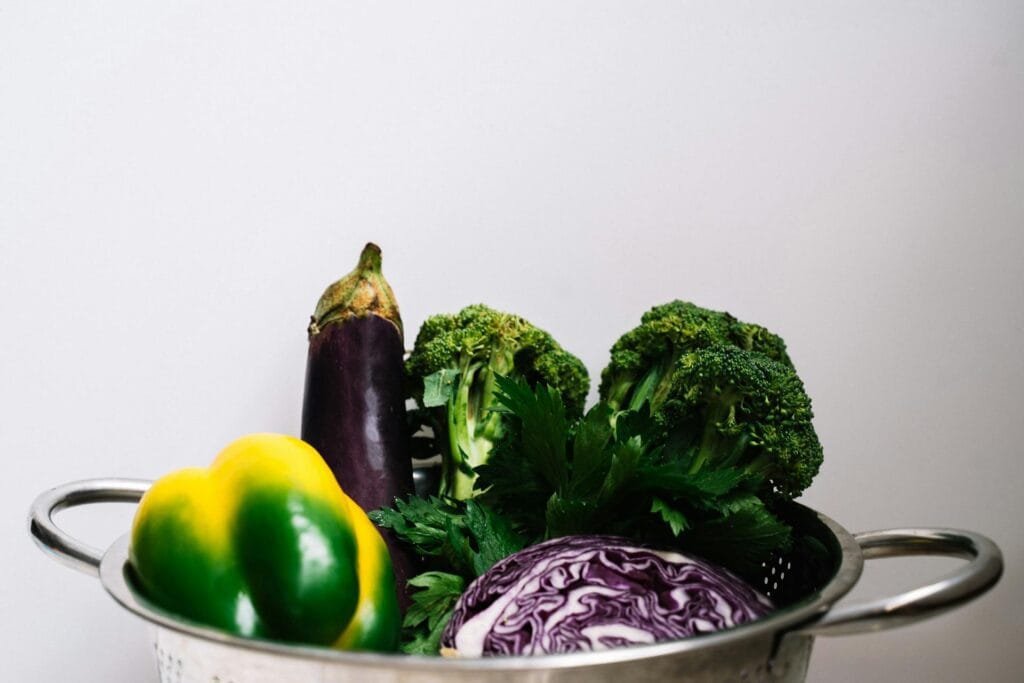
Vegetables are the MVPs of a practical low carb grocery list: they add fiber, volume, micronutrients, and texture — all while keeping carbs low. Fill your cart with the right non-starchy choices, and you’ll eat more, worry less about hunger, and get the fiber your gut needs. (10, 11)
Leafy greens & salad veg (spinach, kale, lettuce)
Why they matter
- Leafy greens are extremely low in carbs per cup yet high in vitamins, minerals, and fiber — perfect for bulking meals without wrecking your carb target.
What to buy & how to use
- Spinach — fresh baby spinach for salads, sautéed for eggs, or blended into smoothies.
- Kale — hearty for massaged salads, oven-baked chips, or stews.
- Lettuce varieties — romaine, butter, and butterhead for wraps and crunchy salads.
Quick tips
- Buy a mix of bagged salad greens (for convenience) and a head or two of sturdier greens (spinach/kale) to last longer.
- Rinse and spin-dry greens, then store in a paper-lined container to extend freshness.
Cruciferous vegetables (cauliflower, broccoli) and creative uses (rice, mash)
Why cruciferous veggies are perfect for a low carb grocery list?
- Cruciferous vegetables like cauliflower and broccoli give you fiber, vitamin C, and low-digestible carbs — and they’re the most useful “swap” vegetables for high-carb starchy sides. (12, 13)
Creative uses & swaps
- Cauliflower rice — pulse raw florets in a food processor or buy pre-riced cauliflower for a fast rice substitute (great for fried rice, bowls). It’s much lower in carbs and calories than white rice.
- Cauliflower mash — steamed cauliflower blended with butter/cream makes a low-carb stand-in for mashed potatoes.
- Roasted broccoli — toss with oil, salt, and lemon; roast until edges caramelize — simple and delicious.
- Stir-fries & bowls — cruciferous veg can bulk a bowl while keeping your low carb grocery list practical and filling.
Practical prep idea
- Buy a head of cauliflower, break into florets, pulse half into rice, and roast the other half — two textures, fewer leftovers.
Low-carb root/bulb choices and caution list (onion, carrot in moderation)
Which roots/bulbs fit a low carb grocery list?
- Use in moderation: onions and carrots add flavor and nutrients but contain more carbs than leafy greens or crucifers. A sprinkle of diced onion or a small carrot can brighten a dish without pushing your carb totals too high.
Caution list
- Potatoes, sweet potatoes, and large servings of beets — higher in starch and usually avoided on strict low-carb or ketogenic plans.
- Onions & carrots — fine for flavoring; watch portions if you’re tracking net carbs closely.
Meal tip
- Swap a large diced potato for extra cauliflower and a small amount of carrot for sweetness if you want the texture without the carb hit.
Canned & frozen veg: how to choose (no added sugars, salt)
Why canned/frozen matter for your low carb grocery list?
- Frozen and canned vegetables reduce waste, extend shelf life, and can be cheaper per serving than fresh — great for busy weeks. The USDA and food guidance resources note that frozen produce is often blanched and frozen soon after harvest, preserving nutrients and value. (14, 15)
How to choose
- Frozen: pick plain, unseasoned packs (cauliflower rice, broccoli florets, spinach) — no sauces or starches.
- Canned: choose no-added-sugar and low-sodium varieties where possible; drain and rinse canned veg to further reduce sodium. (16, 17)
Storage & usage tips
- Freeze small portions of cooked veg for quick reheats.
- Keep a few cans of plain tomatoes (no sugar) and canned green veg on hand for soups and stews — check ingredients for hidden sugars or starchy thickeners.
Quick recipes/uses to reduce waste
Small batch ideas that turn leftover veg into new meals:
- Sheet-pan roast remix
- Roast a tray of mixed cruciferous veg with olive oil and spices. Use leftovers as a salad topping, omelet filling, or blend into a creamy soup.
- Cauliflower fried “rice.”
- Sauté riced cauliflower with a beaten egg, scallions, small-diced carrot (optional), soy/tamari, and bits of cooked protein for an easy single-pan meal.
- Veggie frittata muffins
- Whisk eggs with chopped greens, roasted broccoli, and cheese; bake in muffin tins for grab-and-go breakfasts.
- Broth-based soup
- Simmer leftover roasted veg with broth, blend for a quick, silky soup, and freeze in single portions.
Waste-cutting tips
- Use broccoli stems: peel and slice them into slaws or sautés.
- Freeze herbs and veggie scraps in a bag for later stock-making.
- When you buy a head of lettuce, repurpose the heart into a grilled wedge or quick braise instead of tossing.
Load your low carb grocery list with varied non-starchy vegetables — leafy greens for volume, cruciferous veg for swaps like cauliflower rice and mash, and a pragmatic approach to roots, canned, and frozen choices. Smart prep and creative reuse turn the same vegetables into multiple meals, cut waste, and keep your weekly shopping efficient and budget-friendly.
Fruits: Which Ones Fit a Low Carb Grocery List

Fruits bring vitamins, fiber, and a welcome burst of flavor — but they also pack natural sugars, so picking the right ones (and watching portions) makes your low carb grocery list practical and sustainable. Below is a friendly, no-nonsense guide to the best low-sugar fruits to keep on hand and the fruits you’ll usually want to limit or avoid.
Best low-sugar fruits (berries, avocados, olives)
These are the fruits that most often earn a place on a smart low carb grocery list because they give you nutrients with a relatively small carb cost.
- Berries — raspberries, blackberries, strawberries, blueberries (in moderation)
- Why: Berries are high in fiber and antioxidants and generally lower in net carbs than many tropical fruits. Raspberries and strawberries are among the best picks for low net carbs per serving. For example, raspberries and strawberries tend to have roughly ~5–6 g net carbs per 100 g, while blueberries are higher (see sources). (18)
- How to use: Top plain full-fat Greek yogurt with a small handful of berries, fold into chia pudding, or use a few slices as a sweet finish for a salad.
- Avocados — the creamy winner
- Why: Avocados are high in healthy monounsaturated fats, fiber, and very low in net carbs (often under ~2 g net carbs per 100 g depending on the data source). They’re technically a fruit and one of the most carb-friendly ones you can add to your low carb grocery list. (19, 20)
- How to use: Mash into guacamole, slice onto salads, or blend into smoothies for extra creaminess.
- Olives — small but mighty
Quick shopping notes for your low carb grocery list
- Buy frozen berries (no sugar added) when fresh is out of season—they last longer and are great for smoothies or baking.
- Pick a few ripe avocados each week and a few firmer ones to ripen later.
- Keep a jar of olives for fast flavor boosts.
Fruits to avoid or limit — and portion notes
Some fruits are higher in natural sugars and can quickly eat away at your daily carb target. That doesn’t mean they’re “bad,” but on a strict low carb grocery list, you’ll usually treat them as occasional or measured choices.
Fruits to limit or avoid on strict low-carb/keto plans
- Bananas, grapes, mangoes, pineapple, large apples, pears, dates, raisins — these tend to be high in sugar and have a high net-carb count per serving (e.g., bananas and grapes are often listed among the highest by net carbs). (23, 24)
Practical portion guidance (simple rules you can use while shopping)
- The Mayo Clinic suggests a single fruit serving usually contains ~15 g of carbohydrates — that’s a useful benchmark when planning servings on a low carb grocery list. If your daily target is, say, 50 g net carbs, one medium banana (~25–30 g carbs) would use most of your allotment; berries or a half-avocado are much kinder choices. (25)
- If you love a higher-sugar fruit, plan it as your single daily treat and keep the rest of the day lower in carbs. For example, one small mango or a small handful of grapes can be the “cheat” portion while the rest of your meals stick to lower-carb options.
Portion examples to visualize
- Berries: ~½ cup fresh berries (strawberries/raspberries) = often ~5–8 g net carbs. (26)
- Avocado: ½ medium avocado ≈ ~1–3 g net carbs depending on size (mostly fiber). (27)
- Grapes: 1 cup grapes ≈ ~15–25 g total carbs — so they add up quickly.
How to fit fruit into your low carb grocery list without blowing your carb budget
- Prioritize berries, olives, and avocados for everyday use.
- Weigh or eyeball portions — if you’re not tracking strictly, treat a small handful (about ½ cup) of strawberries or raspberries as a reasonable single serving.
- Use fruit strategically — a few berries to top yogurt, half an avocado with eggs, or a couple of olives with cheese add flavor and nutrients without high carbs.
- If you have diabetes or specific medical needs, follow the “15 grams of carbs per fruit serving” rule and discuss individualized targets with your clinician.
Pack your low carb grocery list with nutrient-dense, low-sugar fruits — berries, avocados, and olives are the simplest, most flexible picks. Reserve higher-sugar fruits for occasional portions and plan them into your daily carb target so you enjoy variety without surprises.
Dairy & Eggs: What to Keep and What to Skip

Dairy and eggs are staples on a practical low-carb grocery list — they’re versatile, nutritious, and usually low in carbs. But not all dairy is created equal for every goal. Below, I’ll walk you through which dairy to prioritize, what to skip or limit, and smart egg-buying and storage hacks so your low carb grocery list actually saves time (and avoids surprises).
Full-fat vs low-fat dairy (cheese, Greek yogurt, cream)
Quick takeaway: Full-fat dairy often fits better on a low carb grocery list because it’s lower in lactose per serving, more filling, and pairs well with a low-carb meal pattern — but quality and portion control still matter. At the same time, public guidance often continues to recommend low-fat dairy for people with certain health risks, so pick based on your goals and health profile. (28, 29)
What to keep on your low carb grocery list
- Cheese (cheddar, mozzarella, feta, Parmesan): very low in carbs, nutrient-dense, and great for snacks, toppings, and cooking.
- Plain full-fat Greek yogurt: lower in carbs than flavored varieties, high in protein; use as a base for dips or with a handful of berries.
- Heavy cream & crème fraîche: useful for sauces, coffee, and rich mashed cauliflower. Use small amounts to boost satiety and flavor.
What to skip or limit
- Flavored yogurts and sweetened dairy drinks often have added sugar that rapidly raises carbs. Always choose plain and add your own berries or sweetener if needed.
- Fat-free dairy products: these often replace fat with sugar or extra processing. If you’re on a low carb grocery list for satiety and blood-sugar control, full-fat options are often more satisfying. (30, 31)
Practical buying tips
- Buy plain Greek yogurt and sweeten lightly with berries or a touch of erythritol/monk fruit if you use sweeteners.
- Choose aged cheeses (Cheddar, Swiss, Parmesan), which are naturally lower in lactose and often better tolerated by people with mild lactose sensitivity. (32)
Egg buying & storage hacks
Eggs are one of the most useful items on any low carb grocery list — affordable, portable, and endlessly adaptable.
Best buys & planning
- Buy eggs in dozens if you use them often — they’re inexpensive and last relatively long.
- Consider pastured or omega-enriched eggs if you want higher omega-3 content; both are fine on a low carb grocery list, depending on budget.
Storage hacks (keep eggs fresher, longer)
- Keep eggs in the carton and store them in the main part of the fridge (not the door) to maintain a steady temperature. The USDA and FDA recommend refrigeration for shelled eggs and note that proper storage keeps quality longer. (33, 34)
- Use-by timing: Use fresh eggs within ~3–5 weeks for best quality; hard-cooked eggs should be eaten within a week. If you freeze eggs, beat yolks and whites together first; don’t freeze whole eggs in the shell.
Quick prep & batch ideas
- Hard-boil a dozen eggs at once for breakfasts and snacks.
- Make an egg-based frittata or muffin batch (egg + veggies + cheese) and refrigerate/freeze portions for grab-and-go meals that fit your low carb grocery list plan.
Lactose concerns and lactose-free options
Not everyone digests lactose well — if dairy causes bloating, gas, or diarrhea, you may have lactose intolerance. That doesn’t mean dairy disappears from every low carb grocery list; there are many tolerable options. (35, 36)
Dairy choices that are often better tolerated
- Aged cheeses (Parmesan, cheddar, Swiss): naturally lower in lactose and often easier to digest.
- Plain yogurt & kefir: fermentation reduces lactose and adds probiotics; plain Greek yogurt is especially popular on a low carb grocery list.
- Lactose-free milk & dairy: made by adding lactase enzyme to break down lactose — use these if milk triggers symptoms.
Non-dairy swaps that work on a low carb grocery list
- Unsweetened almond milk, coconut milk (carton): very low carb if unsweetened — good for coffee, smoothies, and recipes.
- Unsweetened soy milk (fortified): higher in protein than many plant milks; check carbs and pick unsweetened versions.
- Nut and seed yogurts (unsweetened): look for higher-protein options or ones fortified with calcium and B12 if you rely on them regularly.
Practical tips for lactose-sensitive shoppers
- Try small portions of aged cheese or plain yogurt first — many people with mild lactose intolerance tolerate them.
- Use lactase enzyme drops/tablets if you want to consume regular milk occasionally (follow product instructions). If symptoms are severe or new, check with a clinician for testing and personalized advice.
How to list dairy & eggs on your low carb grocery list (quick checklist)
- Must-haves: eggs (dozen), cheddar or mozzarella, plain full-fat Greek yogurt, butter or ghee, heavy cream (small jar).
- Nice-to-haves: Parmesan, cream cheese, cottage cheese (full-fat, plain), lactose-free milk (if needed).
- Avoid on list unless checked: flavored yogurts, sweetened milk drinks, fat-free “diet” dairy with added sugar.
Dairy and eggs are low-carb power players — pack your low carb grocery list with whole, plain, full-fat options for satiety and convenience, store eggs smartly to avoid waste, and choose lactose-reduced or plant-based alternatives if dairy troubles you. When in doubt about health impacts, especially if you have heart disease, lactose intolerance, or other medical conditions, consult a clinician or registered dietitian for tailored guidance.
Fats & Oils: Cooking & Dressing Staples

Fats are the flavor engine of a good low carb grocery list. They keep you full, make food taste amazing, and—when chosen well—support heart health and stable energy. But not all fats are equal for cooking and dressing. Below, I’ll walk you through pantry essentials, animal fats, and what to watch for on dressing labels so your low carb grocery list actually helps you cook like a pro.
Pantry oils (olive, avocado, coconut)
Which oils to keep and why they belong on your low carb grocery list:
- Extra-virgin olive oil
- Why: Best for dressings, drizzling, and low-heat cooking. Full of monounsaturated fats and antioxidants.
- How to use: Use cold for vinaigrettes and finish-roasted veg with a splash. Don’t rely on it for high-heat frying.
- Avocado oil
- Why: High smoke point and neutral flavor make it a great all-purpose oil for sautéing and roasting. It’s rich in monounsaturated fats.
- How to use: Great for searing meat or roasting vegetables—put it on your low carb grocery list if you cook at medium-high heat often.
- Coconut oil
- Why: Stable for higher-heat cooking and gives a subtle tropical note. Contains medium-chain triglycerides (MCTs), which some people prefer in low-carb or ketogenic patterns.
- How to use: Use sparingly for baking or when you want that coconut hint; avoid if you’re limiting saturated fat for personal health reasons.
Quick buying tips
- Buy extra-virgin olive oil in dark glass bottles to protect it from light.
- Keep a neutral high-smoke-point oil (like avocado oil) for frying.
- Rotate oils occasionally—variety gives you a broader nutrient mix.
Butter, ghee, and animal fats
Animal fats are classic low-carb cooking tools—rich in flavor and useful for different techniques.
- Butter
- Why: Wonderful for flavor, sauces, and low- to medium-heat cooking. Contains some water and milk solids, so it browns and can burn at high heat.
- How to use: Use for pan sauces, sautéing at moderate heat, and in low-carb baking.
- Ghee (clarified butter)
- Why: Ghee has milk solids removed, giving it a higher smoke point and a nutty flavor—excellent if you need to cook hotter without burning.
- How to use: Ideal for searing, frying, and for people who are sensitive to lactose (ghee has minimal lactose).
- Rendered animal fats (lard, tallow)
- Why: Traditional, stable fats with great flavor. Lard is excellent for roasting vegetables; beef tallow gives a savory depth to pan cooking.
- How to use: Use sparingly—great for high-heat roasting and for authentic flavor in dishes like roast veggies or crispy chicken skin.
Storage & quality
- Store butter and ghee in the fridge; ghee also stores well at room temperature if kept airtight.
- Buy pasture-raised or grass-fed when possible if animal-farm practices matter to you—taste and fatty-acid profiles can differ.
Salad dressings, mayonnaise, and fat sources to watch for added sugar
Dressings and pre-made condiments are convenient but often hide carbs. If you’re using packaged items, read labels—or better yet, make your own.
- Mayonnaise
- Choose: Full-fat, simple-ingredient mayo (oil + egg + acid) or make your own with olive or avocado oil.
- Watch out for: Added sugars and weird oils (partially hydrogenated or cheap seed oils if you avoid them).
- Salad dressings
- DIY: Whisk extra-virgin olive oil + vinegar + mustard + lemon for a quick, low-carb vinaigrette.
- Store-bought tip: Look for no added sugar labels, short ingredient lists, and check serving sizes—small servings can still contain several grams of carbs.
- Flavored oils & sauces
- Beware sweetened “glazes” and some bottled sauces (honey mustard, sweet chili) that can contain syrups and maltodextrin.
Label-reading quick scan
- Check serving size, then total carbs and added sugars.
- If a dressing lists sugar, high-fructose corn syrup, honey, or maltodextrin early in the ingredients, pass and make your own.
Quick pantry checklist for your low carb grocery list
- Extra-virgin olive oil (for dressings & finishing)
- Avocado oil (high smoke point, all-purpose)
- Coconut oil (for baking / certain flavors)
- Butter and/or ghee (choose ghee for higher-heat cooking)
- Lard/tallow (optional for roasting/searing)
- Full-fat mayonnaise (no added sugar) or ingredients to make your own (eggs + oil + vinegar)
- Mustard, apple cider vinegar, red wine vinegar (for quick dressings)
Fats are essential to a satisfying low carb grocery list. Choose stable, minimally processed oils for cooking, keep a flavorful fat (butter or ghee) for finishing, and be suspicious of store-bought dressings with sugar. Want a few quick dressing recipes you can throw together in under a minute? I can add three failproof vinaigrettes next.
Nuts, Seeds & Butters: Snacks and Baking Staples
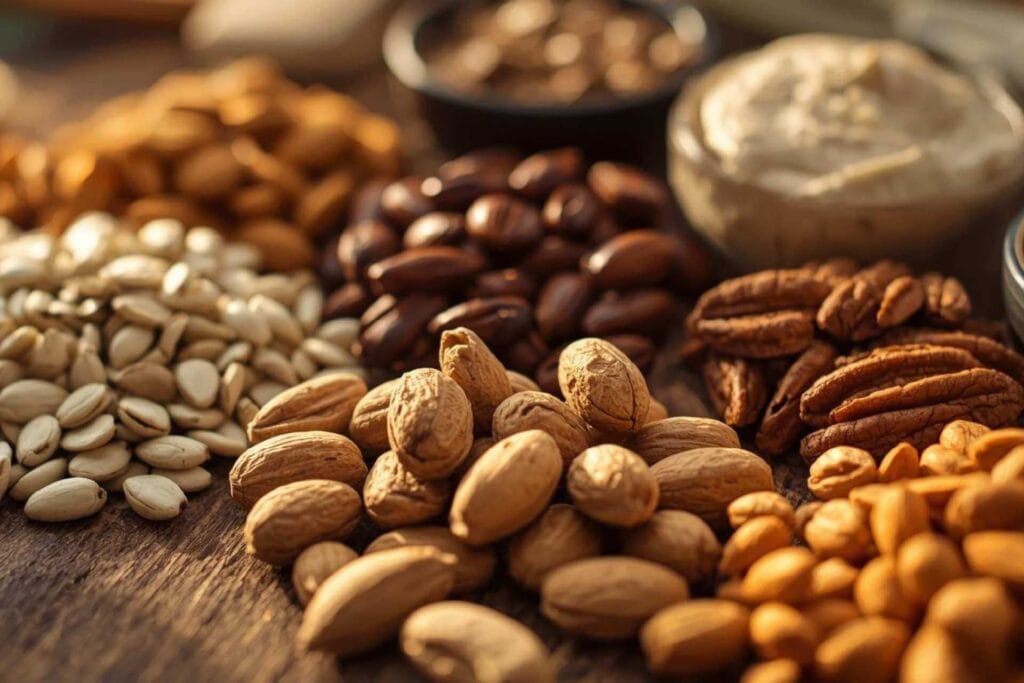
Nuts and seeds are tiny nutrition powerhouses that deserve a permanent spot on your low carb grocery list. They add crunch, healthy fats, fiber, and often protein — perfect for snacks, salad toppers, and low-carb baking. Below you’ll find a low-carb nut list, clear serving-size guidance, and label-smart tips for nut butters so you can snack without surprise carbs.
Low-carb nut list & serving-size guidance
Quick rule: Treat nuts as nutrient-dense treats — they’re low in carbs per typical serving but calorie-dense, so portion control matters.
Good low-carb nut choices (1 oz / ~28 g serving guidance):
- Pecans — very low net carbs, high in monounsaturated fat; excellent for snacking or baking (≈ 1–2 g net carbs per oz). (37)
- Macadamia nuts — among the lowest in digestible carbs and very high in healthy fat (≈ 1–2 g net carbs per oz). Great if you want max fat with minimal carbs. (38)
- Walnuts — a source of omega-3 ALA; modest carbs and good fiber (≈ 2 g net carbs per oz). Use in salads or as a crumb on low-carb bakes. (39)
- Almonds — versatile, decent fiber and protein (≈ 3 g net carbs per oz); almond flour also doubles as a baking staple. (40)
- Pistachios — higher in carbs than the above, but still okay in controlled portions (≈ 5 g net carbs per oz); eating them in the shell can slow snacking. (41)
Nuts to limit on a strict, very-low-carb plan:
- Cashews — tasty but relatively high in carbs (approx 7–8 g net carbs per oz) — fine occasionally, not daily if you aim for 20–30 g carbs/day. (42)
Serving-size practicalities
- A standard serving = 1 ounce (about 28 g) — roughly a small handful.
- Portion tips: Pre-portion into 1-oz bags or small containers so you don’t mindlessly graze a whole jar. Eating slowly (try pistachios in the shell) helps satiety and reduces overeating. (43)
Seeds that pair well with a low carb grocery list
- Chia seeds (2 tbsp): high fiber, great for puddings — very low digestible carbs after subtracting fiber.
- Flaxseeds (1–2 tbsp): add fiber and binder power (great in low-carb baking).
- Pumpkin & sunflower seeds (1 oz): crunchy toppings with moderate net carbs — check salt levels.
Quick takeaway: rotate nuts and seeds for variety and nutrients — pecans, macadamias, walnuts, and almonds are your safest low-carb bets; watch cashews and pistachios for portion size.
Nut butters: ingredient label tips
Nut butters are convenience gold — but the label is everything. Many commercial spreads sneak in sugars, seed oils, or stabilizers that raise carbs or reduce quality. Here’s how to pick winners for your low carb grocery list.
Label checklist (scan these fast):
- Single ingredient: look for “100% almonds” or “peanuts” (or “nuts + salt”) — the shorter the ingredient list, the better.
- No added sugar: avoid words like sugar, cane sugar, honey, molasses, agave, and maple syrup — all add carbs. (44)
- Healthy oil & no hydrogenated fats: avoid partially hydrogenated oils; if oil is added, prefer high-quality oils (or choose brands that don’t add oil).
- Salt: a pinch is fine; if sodium is extremely high, skip or pick unsalted.
- Texture stabilizers: ingredients like palm oil or mono-/di-glycerides aren’t always harmful, but they’re signs the product is processed — judge by your priorities.
Serving guidance for nut butter
- Typical serving = 1–2 tablespoons (≈ 16–32 g).
- Two tablespoons of many nut butters = ~6–8 g total carbs and ~3–5 g fiber (net carbs vary by nut), so count that into your daily carb target if tracking.
Home-made nut butter:
- Make it in a food processor with one ingredient (nuts) plus a pinch of salt — roast nuts lightly for flavor, blend until smooth. Homemade lets you control sugar, oil, and salt — perfect for a tight low carb grocery list.
Watch for blends & “reduced-sugar” claims
- Some “reduced sugar” nut spreads replace sugar with sugar alcohols (maltitol, etc.) that can affect blood sugar and digestion; others add low-calorie sweeteners like erythritol, which have a minimal glycemic effect. If you tolerate a specific sugar alcohol, that’s fine — but test portion tolerance first.
Snack ideas & baking swaps using nuts & seeds
- Quick snacks: 1 oz mixed nuts + 6–8 berries; or 1 tbsp almond butter on celery sticks.
- Breakfast: chia pudding (chia + unsweetened almond milk + small handful of berries).
- Baking: use almond flour or a mix of almond + coconut flours; add ground flax or chia for structure and fiber.
- Savory uses: chopped pecans or toasted walnuts as salad toppers; macadamia-crusted fish for a rich dinner.
Allergy & safety notes (important)
- If cooking for others, always flag tree-nut and peanut usage — nut allergies can be life-threatening.
- Store nuts in the fridge or freezer if you buy in bulk — unsaturated fats can go rancid at room temperature.
- For toddlers or kids (and some teens), chop nuts finely or use seed butters to reduce choking risk — adapt portions accordingly.
Pack your low carb grocery list with a rotating mix of pecans, macadamias, walnuts, and almonds; use seeds for fiber and structure; and choose single-ingredient nut butters to avoid hidden sugars. Portion, pre-pack, and enjoy—nuts and seeds make low-carb eating easy, satisfying, and nutritious. (45)
Pantry Staples: Low-Carb Flours, Thickeners & Alternatives
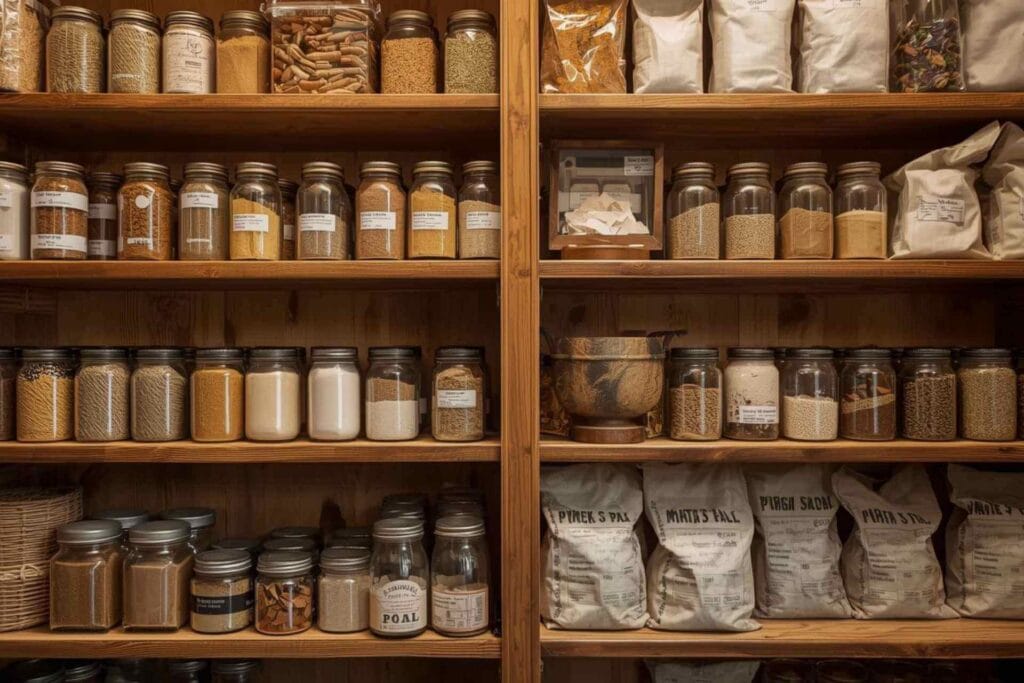
These pantry staples make low-carb baking and cooking possible. Below you’ll get clear pros/cons, substitution ratios, and practical usage and safety notes so your low carb grocery list isn’t just a shopping list — it’s a kitchen toolkit.
Almond flour, coconut flour, psyllium — pros/cons & substitution ratios
Almond flour
- Why use it: Mild, buttery flavor; great for cakes, cookies, and as a base for low-carb bread and crusts.
- Pros: Low net carbs compared with wheat flour, good fat and some protein, bakes well.
- Cons: Denser than wheat flour; can be heavy if used alone; contains nuts (allergy risk).
- Baking tip: Use blanched superfine almond flour for the best texture.
- Substitution note: Almond flour is often used as a 1:1 substitute for some recipes that call for other low-carb flours, but expect different hydration and crumb. For replacing wheat flour, recipes usually require additional eggs or binders.
Coconut flour
- Why use it: Extremely absorbent and fiber-rich — a little goes a long way.
- Pros: Very low net carbs per usable volume, works well for cakes and quick breads with eggs.
- Cons: Sucks up liquid; recipe adjustments are essential (more eggs/liquid). Texture is more cakey and crumbly when used alone.
- Substitution ratio: A common working rule is ~3:1 almond flour →coconut flour (i.e., 1 cup almond flour ≈ 1/3 cup coconut flour) — but you must increase eggs and liquid when switching because coconut flour is highly absorbent. Sources with practical baking guidance recommend starting at this ratio and testing in small batches. (46, 47)
Psyllium husk (powder or whole) — binder & texture wizard
- Why use it: Psyllium creates structure, elasticity, and a bread-like crumb in many low-carb recipes (it forms a gel with water).
- Pros: Great for bread, buns, and recipes that need chew/structure; adds fiber.
- Cons: Too much psyllium can make recipes gummy; hydration matters. Some people experience digestive upset if they don’t drink enough water.
- Usage guidance: Start small — many recipes call for 1–2 tablespoons of psyllium husk per recipe (adjust by weight for precision). If substituting, ground chia or xanthan gum can sometimes replace psyllium (ratios differ), but psyllium is unique for that breadlike chew. Practical baking guides and low-carb recipe sites offer step-by-step amounts for specific loaf sizes. (48, 49)
Practical combo strategy for your low carb grocery list
- Keep almond flour as your everyday baking flour.
- Buy coconut flour for recipes that call for it and to reduce carbs in specific bakes — remember the 3:1 rule and add eggs/liquid.
- Add psyllium husk if you want true bread texture (rolls, sandwich bread) — it’s a small-volume, high-impact additive.
Alternative sweeteners (erythritol, stevia, monk fruit) — safety & usage notes
If your low carb grocery list includes sweeteners, pick wisely and use them with awareness. Here’s a quick, evidence-based primer.
Erythritol
- What it is: A sugar alcohol used widely in low-carb products; tastes similar to sugar with fewer calories.
- Why people choose it: Low glycemic impact for most people; often measured 1:1 sweetness with sugar in recipes.
- Safety & recent findings: The FDA considers erythritol safe for use, and many clinical studies support tolerability. However, recent research has raised questions about possible associations between very high plasma erythritol levels and cardiovascular risk markers — the evidence is still evolving, and causation is not settled. If you include erythritol on your low carb grocery list, use moderate amounts and watch how your body reacts. (50, 51, 52)
Stevia (steviol glycosides)
- What it is: A zero-calorie natural sweetener derived from the stevia plant; commercial products are usually purified steviol glycosides.
- Safety & usage: Purified steviol glycosides have GRAS (Generally Recognized as Safe) acceptance for food use in many jurisdictions and are widely used as tabletop sweeteners and in foods. Flavor can be bitter at high concentrations, so start small (many people blend stevia with erythritol). (53, 54)
Monk fruit (luo han guo)
- What it is: A natural, high-intensity sweetener — often sold as a concentrate or blended with erythritol for bulk.
- Safety & usage: FDA files show monk fruit extract (certain preparations) has been evaluated and found acceptable as GRAS in specific uses. It’s heat-stable and works well in many recipes, though, like stevia, some products are blended for texture and sweetness balance. Watch for product recalls/mislabelling occasionally and buy reputable brands. (55, 56)
Practical sweetener tips for your pantry
- Start small. Try a pinch in coffee, taste, then adjust.
- Blend sweeteners. A mix (e.g., erythritol + stevia or monk fruit) often mimics sugar better and reduces aftertaste.
- Bake carefully. Erythritol can recrystallize and create cooling sensations in the mouth when used in large quantities; consider recipes specifically developed for sugar alcohols.
- Listen to your body. Some people experience digestive upset from sugar alcohols — if that happens, reduce or switch sweeteners.
All three sweeteners are commonly used on low-carb plans; FDA and other health organizations track their safety. Use them judiciously and prioritize whole-food sweetness (berries) when possible.
Broths, stocks, canned tomatoes, and low-carb canned goods
These items are kitchen workhorses — they add flavor, bulk, and convenience while keeping carbs in check when you choose wisely.
Broth & bone broth
- Why keep it: Broth (vegetable, chicken, beef) and bone broth add savory depth to soups, stews, and sauces with essentially zero carbs in most unsweetened varieties. Bone broth is also touted for collagen, minerals, and its savory mouthfeel, though research on specific “health miracle” claims is still emerging. Use broths to boost flavor with minimal carb cost. (57, 58)
- Buy or make: Look for no-sugar-added, low-sodium options, or make your own and freeze in portions for the week.
Canned tomatoes & canned veg
- Label check: Many canned tomato products are low in carbs, but some tomato sauces and canned mixes add sugar or starches. For a safe low carb grocery list, choose plain canned tomatoes (diced/pureed) with no added sugar and low sodium whenever possible. Rinse canned veg to reduce sodium when needed. Always read the ingredient list and nutrition facts.
Other low-carb canned goods to consider
- Canned fish (tuna, salmon, sardines) — zero carbs, high protein — a pantry staple.
- Olives and artichokes (in water or brine) — flavorful, low-carb additions for salads and antipasti.
- Canned coconut milk (unsweetened) — useful for curries and creamy soups; check for additives.
Practical storage & usage tips
- Keep an assortment: one carton of low-sodium chicken broth, one jar/bottle of unsweetened coconut milk, two cans of plain tomatoes, and 3–4 canned fish varieties.
- Freeze broth in ice-cube trays for single-serving sauce boosts.
- Rotate canned goods every 12–24 months and label with purchase date.
Quick checklist to add to your low carb grocery list (pantry staples)
- Almond flour (superfine/blanched)
- Coconut flour (small bag — high absorption)
- Psyllium husk powder (small jar)
- Erythritol, stevia, or monk fruit (test blends to taste)
- Low-sodium broth/bone broth (cartons or jars)
- Plain canned tomatoes (no sugar added)
- Canned tuna/salmon/sardines, olives, unsweetened coconut milk
Final practical tips
- If you’re new to low-carb baking, follow recipes by trusted low-carb authors or trusted sites the first few times — they’ll give precise weights and hydration guidance.
- When experimenting with flour swaps, make one change at a time (e.g., swap 1/3 of almond flour for coconut flour and adjust eggs) so you can learn how each ingredient affects texture.
- Keep a small test notebook or a recipe note on your phone with successful substitution ratios — you’ll build a personal cookbook that matches your taste and carb targets.
Condiments, Sauces & Baking Additives

Condiments and sauces punch up flavor — but they can also quietly add carbs and sugar to meals. The goal: keep the convenience and ditch the sneaky carbs. Below is a practical guide to what’s low-carb-friendly, what to read on labels, quick swaps you can make on the fly, and low-carb baking additives that actually work.
Soy sauce/tamari, vinegar, mustard — what’s low-carb
These staples are almost always safe for a low carb grocery list — but a few nuances matter.
- Soy sauce / tamari
- Tamari is a great swap if you want a gluten-free option; both are very low in carbs per serving (usually ≤1 g).
- Tip: Watch sodium. If you need less salt, buy low-sodium versions or dilute with a little water for marinades.
- Vinegar (apple cider, red wine, balsamic — with caveats)
- Most vinegars (apple cider, white, red/white wine) have negligible carbs in typical uses — they’re perfect for vinaigrettes and quick pickles.
- Balsamic vinegar is richer and sweeter — use sparingly or choose reduced-carb balsamic if you want that flavor without the sugar hit.
- Mustard
- Plain mustards (Dijon, yellow, whole grain) are low-carb and add big flavor. Avoid “honey mustard” styles unless you check the label.
How to use them in a low-carb kitchen
- Make quick dressings: extra-virgin olive oil + vinegar + mustard = almost zero-carb vinaigrette.
- Use tamari instead of sugary sauces in stir-fries and marinades — finish with a squeeze of citrus for brightness.
Hidden sugar offenders (BBQ sauce, ketchup) — swap ideas
Many beloved premade sauces are sugar-loaded. Here’s how to spot offenders and simple swaps that keep flavor without wrecking your carb totals.
Why do they hide carbs?
- BBQ sauces, ketchups, and many bottled glazes use sugar, high-fructose corn syrup, molasses, or maltodextrin — ingredients that pile on carbs quickly. A single tablespoon of some ketchups can be 3–4 g of carbs or more.
Label quick-scan (15 seconds)
- Check serving size first.
- Look at total carbs and added sugars.
- Scan the ingredient list for sugar, corn syrup, honey, molasses, maltodextrin, and dextrose. If any of these are high in the list, skip them.
Low-carb swap ideas
- DIY sugar-free ketchup: blend plain tomato paste + apple cider vinegar + water + pinch of salt + erythritol/monk fruit + smoked paprika — simmer 5–8 minutes. Store in the fridge.
- Quick BBQ substitute: mix sugar-free ketchup (above) + a splash of tamari + apple cider vinegar + smoked paprika + a tiny sweetener to taste. Warm and brush on grilled proteins.
- Flavorful condiment alternatives: chimichurri, pesto (no-sugar), olive tapenade, or plain mustard all deliver punch without carbs.
- Store-bought tip: look specifically for “no added sugar” or “keto” labeled ketchups and BBQ sauces — but still scan the ingredients for sugar alcohols or starch thickeners.
Baking additives & thickeners that work on a low carb grocery list
In low-carb cooking, traditional thickeners like cornstarch or arrowroot are off-limits (high carbs). These alternatives give you texture without carbs.
- Xanthan gum
- Use: A powerhouse thickener and stabilizer for sauces, gravies, and gluten-free baking. Start with very small amounts (¼–½ teaspoon) — too much = gummy texture.
- Guar gum
- Similar to xanthan for thickening; use sparingly and blend well to avoid clumps.
- Psyllium husk (mentioned earlier)
- Works beautifully for bread texture and thickening when hydrated — adds fiber and structure.
- Glucomannan (konjac powder)
- A powerful thickener and gelatin substitute used in some low-carb jellies and noodles — use tiny amounts and hydrate properly.
- Low-carb flours (almond, coconut)
- Useful for absorbing liquids and creating structure in bakes — remember substitution ratios and hydration differences.
Baking tips
- Measure xanthan or guar gum very carefully — a kitchen scale or precise spoon helps.
- For glossy, silky sauces, whisk a tiny amount of xanthan into cold liquid before adding to hot — it prevents clumping.
- Avoid cornstarch, tapioca, and potato starch if you’re keeping strict carbs.
Quick checklist — add these to your low carb grocery list
- Tamari or low-sodium soy sauce
- Apple cider vinegar, red wine vinegar
- Plain Dijon mustard
- Tomato paste (no sugar added) — for DIY ketchup/BBQ
- Xanthan gum or psyllium husk (small jars)
- Sugar-free ketchup / no-sugar BBQ (or ingredients to make your own)
Condiments and sauces should amplify flavor — not sabotage your carb goals. Keep tamari, vinegars, and mustards as core staples on your low carb grocery list, avoid sugary bottled ketchups and BBQ sauces (or make your own), and use low-carb thickeners like xanthan gum or psyllium for baking and sauces. With a few pantry swaps and a tiny bit of prep, your condiments will work for your plan, not against it.
Snacks, Convenience Items & Quick Meals
Snacks and convenience options can make or break a low carb grocery list. The trick is to keep things convenient without handing your carb goals to sneaky sugars, starches, or mindless portions. Below are smart, realistic choices and label-reading tips so you can grab something fast and stay on track.
Best packaged snacks (jerky, pork rinds, cheese crisps)
Packaged snacks are perfect for busy days — just pick the right ones. These are the go-to low-carb packaged items that deserve space on your low carb grocery list.
Top low-carb packaged snack types
- Jerky (beef, turkey, or biltong-style):
- Why: High protein, portable, very low carbs when unsweetened.
- What to check: Avoid added sugar, honey, teriyaki-style marinades, and maltodextrin in the ingredients. Look for short ingredient lists (meat + salt + spices).
- Serving tip: 1–2 oz servings — don’t treat a big bag as a single serving.
- Pork rinds/chicharrones:
- Why: Zero or near-zero carbs, crunchy alternative to chips.
- What to check: Flavor coatings can include sugar or starch — pick plain or simply salted varieties.
- Use: Great with guacamole or as a crunchy topper on salads.
- Cheese crisps / baked cheese snacks:
- Why: High-fat, high-protein, usually negligible carbs.
- What to check: Watch portion sizes and any starchy binders in cheaper products.
- Nuts & seed packs (pre-portioned):
- Why: Healthy fats, fiber, and portable.
- What to check: Salt level and added sugar (some “candied” or honey-roasted versions sneak in carbs). Pre-portion to control calories.
- Seaweed snacks:
- Why: Very low carbs, mineral-rich, light crunch.
- What to check: Watch for sugar in flavored varieties.
Packaged snack label checklist (quick 10–15 second scan)
- Serving size — is the bag one serving or multiple?
- Total carbs and added sugars — keep net carbs in mind for your target.
- Ingredient list — short and recognizable is good.
- Sodium and preservatives — some snacks are deliciously salty; rotate and hydrate.
Practical snack habits
- Pre-portion larger bags into single servings so you don’t over-snack.
- Pair a packaged snack with a fresh item (e.g., jerky + a small apple if your plan allows) for balance and satisfaction.
- Keep a mix of crunchy, creamy, and protein bites on your low carb grocery list so you never reach for sugary convenience.
Ready meals to buy cautiously — reading labels and macros
Ready meals are lifesavers when time is short, but they vary wildly. Some are good low-carb options; many are not. Here’s how to choose wisely when a ready meal lands on your low carb grocery list.
What to check first
- Serving size — always check this first and multiply the macros by how much you actually eat.
- Net carbs — calculate total carbs minus fiber (and subtract safe sugar alcohols like erythritol if you use that convention).
- Protein & fat balance — a good low-carb ready meal should have moderate–high protein and adequate healthy fat to keep you full.
- Sodium & preservatives — many frozen/ready meals are high in sodium; if you’re sensitive, look for “low sodium” or make smaller portions.
- Ingredients list — long lists with fillers (maltodextrin, modified starch, hydrolyzed starch) often mean hidden carbs.
Red flags on labels
- Added sugars, corn syrup, dextrin, or starches are listed high in the ingredients.
- Thickening agents like modified starch or tapioca starch — these add carbs.
- Carb-heavy sides bundled into the meal (rice, pasta, sweet sauces) — even small portions can spike carb counts.
Good ready-meal choices & hacks
- High-protein bowls with lots of vegetables and minimal grains—check that veggies aren’t in sweet sauces.
- Single-ingredient frozen proteins (grilled chicken strips, salmon fillets, shrimp) + frozen veg = quick, balanced meal.
- Pre-made salads with protein — pick those with dressing on the side (or swap for your own olive oil + vinegar).
- Heat-and-eat rotisserie-style dinners without sugary glazes — check ingredients for added sweeteners.
Smart quick-meal alternatives (DIY convenience)
- Rotisserie chicken from the deli + bagged salad = <10 minutes meal—control the dressing.
- Canned fish + avocado + cucumber = quick protein-rich bowl.
- Frozen cauliflower rice + pre-cooked sausage/ground meat — sauté for a quick fried-rice style meal.
- Egg scrambles / omelets (eggs cook fast and are cheap) with pre-cut frozen veg — ultra-fast and low-carb.
How often should to buy ready meals
- Use ready meals sparingly as backups or for travel. Routinely relying on them can increase sodium intake and expose you to hidden carbs. If they’re a weekly staple, pick high-quality options and rotate brands to avoid nutrient gaps.
Quick low carb grocery list snack checklist (drop-in items)
- Beef/turkey jerky (no sugar)
- Pork rinds (plain)
- Cheese crisps or pre-sliced cheese packs
- Pre-portioned mixed nuts (unsweetened)
- Seaweed snacks
- Single-serve tuna or salmon pouches (make quick salads)
- Pre-cooked grilled chicken strips (check for added sugars)
- Frozen cauliflower rice and frozen veg packs for quick meals
Treat packaged snacks and ready meals as backup tools on your low carb grocery list, not the whole plan. Buying a few high-quality convenience items and pairing them with fresh or frozen whole foods will keep you on target without sacrificing speed or flavor. And if you’re under 18 or making major dietary changes, run meal plans by a parent/guardian or a healthcare professional so your nutrition stays balanced and safe.
Frozen Foods & Meal Components
Frozen staples are secret weapons on a good low carb grocery list. They cut waste, save time, and — when chosen smartly — keep carbs low while making weeknight meals effortless. Below are the best picks, what to watch for on packaging, and quick ways to use frozen items so they actually make life easier.
Frozen veg, pre-chopped cauliflower rice, frozen fish — benefits & picks
Why frozen belongs on your low carb grocery list
- Long shelf life — less waste and fewer emergency grocery runs.
- Often just as nutritious — flash-freezing preserves vitamins and texture.
- Convenience = fewer takeout temptations — quick-to-cook options keep you on plan.
Top frozen picks to add to your low carb grocery list
- Pre-chopped cauliflower rice — instant rice swap; great for fried-“rice,” bowls, and stuffing.
- Frozen broccoli, spinach, green beans, Brussels sprouts — pick plain packs (no sauces).
- Frozen riced veggies blends (cauli + broccoli) — saves time and adds variety.
- Frozen wild-caught or responsibly farmed fish fillets (salmon, cod, pollock) — portion-friendly and protein-packed.
- Frozen shrimp — fast-cooking and versatile for salads, stir-fries, and low-carb tacos (lettuce wraps).
How to choose smart
- Ingredient list: should be the veggie/fish name + maybe water or oil — avoid sauce-coated bags.
- Size & packaging: vacuum-sealed or resealable bags are best for freezer organization.
- Wild-caught vs farmed: prioritize what fits your values and budget; wild often has a stronger flavor and omega-3s, frozen farmed can be more affordable.
Quick usage ideas
- Sauté frozen spinach with garlic and finish with lemon + feta for a fast side.
- Pan-sear a frozen salmon fillet straight from the freezer—cook a bit longer and finish under the broiler for a crispy top.
- Make cauliflower fried “rice” with pre-riced cauliflower, a beaten egg, and pre-cooked protein for a 10-minute meal.
Healthy frozen convenience (meals, meatballs) — what to check
Frozen convenience foods can be lifesavers — but they’re a mixed bag for a low carb grocery list. Here’s how to pick winners.
Label checklist — the 60-second scan
- Serving size: multiply macros by how much you’ll actually eat.
- Total carbs & fiber: calculate net carbs (total − fiber).
- Protein & fat: a balanced frozen meal for low-carb should have decent protein (15–30 g) and adequate fat to keep you full.
- Added sugars & starches: look for maltodextrin, dextrose, corn syrup, rice/starch thickeners — these raise carbs fast.
- Sodium: frozen meals are often high in salt; factor that into your daily intake.
- Ingredient quality: Short and recognizable ingredient lists are best.
Specific items to watch for (and swap ideas)
- Meatballs & patties: many contain breadcrumbs, flour, or added sugars. Choose brands labeled gluten-free or no added starch, or make a baking sheet of meatballs using almond flour/psyllium at home and freeze.
- Frozen “bowls”: check that the veg aren’t drenched in sweet sauces. Swap a frozen bowl for a frozen protein + frozen veg mix and add your own low-carb sauce.
- Pre-seasoned proteins: read for sugar in marinades; plain frozen chicken/salmon is usually safer.
Healthy convenience winners for your low carb grocery list
- Single-ingredient frozen proteins (salmon fillets, shrimp, chicken breasts).
- Frozen meatballs made with almond flour or no-breadcrumb recipes (check ingredients).
- Low-carb frozen veggie blends (cauliflower rice, riced broccoli).
- Ready-to-heat protein packs (plain grilled chicken strips) — check for added sugar.
Cost & time hacks
- Buy larger family packs of frozen proteins on sale; portion and freeze in meal-sized bags.
- Keep a small rotation of 3–4 trusted frozen convenience items so you can always reach for something that fits your plan.
Reheating, texture & taste tips
- Avoid soggy veg: don’t microwave frozen crucifers directly for long — toss in a hot pan or roast to preserve texture.
- Crisp up proteins: finish frozen fish or chicken under a high broiler for 1–2 minutes after baking to get a better crust.
- Boost flavor with simple add-ins: a drizzle of olive oil, a squeeze of lemon, fresh herbs, or a pat of butter instantly upgrades a frozen meal without adding carbs.
Quick freezer organization tips for a practical low carb grocery list
- Label packages with date and portion size.
- Keep “quick meals” in one drawer or bin and proteins in another so you can assemble in under 5 minutes.
- Rotate older items forward (first in, first out).
Frozen foods should be a staple on your low carb grocery list — choose plain, single-ingredient proteins and unseasoned frozen veg first; use convenience frozen meals selectively and always read labels for hidden carbs and sodium. With a smart freezer and a few time-saving tricks, frozen items will keep your low-carb weeks easy, tasty, and budget-friendly.
Sample 7-Day Grocery List + Shopping Cart (Practical)
Below are two realistic, ready-to-use low carb grocery list plans — one for a single person and one scaled for a family of four — plus shopping tips, qualitative price cues (budget / mid / premium), and a clipboard-friendly checklist you can use. Use these as templates: tweak quantities, swap proteins, and adjust produce seasonally.
Tip: Save the single-person list to your phone as a note before you shop. It turns a low carb grocery list into a 10– to 20-minute trip.
7-day list for a single person (quantities & approximate price cues)
Pantry/staples
- Olive oil — 1 bottle (mid)
- Avocado oil — small bottle (mid)
- Almond flour — 1 small bag (mid–premium)
- Erythritol or monk fruit sweetener — small jar (mid)
- Bone broth or low-sodium chicken broth — 2 cartons (budget–mid)
- Canned tuna (water) — 3 cans (budget)
- Canned tomatoes (no sugar) — 2 cans (budget)
Proteins
- Eggs — 2 dozen (budget–mid)
- Chicken thighs (bone-in) — 2–3 lb (budget)
- Ground beef (80/20) — 1 lb (mid)
- Salmon fillet or 2 cans salmon — 1 lb fresh or 3 cans (mid–premium/ budget if canned)
- Bacon or nitrate-free bacon — 8–12 oz (mid)
Dairy & fats
- Butter or ghee — 1 block (mid)
- Cheddar or mozzarella — 8 oz (mid)
- Plain full-fat Greek yogurt — 1 small tub (mid)
Vegetables & fruit
- Large bag baby spinach or mixed greens — 1 (budget–mid)
- Cauliflower (or 1 bag riced cauliflower) — 1 head or 1 bag (budget–mid)
- Broccoli florets (fresh or frozen) — 1–2 lb or 1 bag frozen (budget)
- Zucchini — 3 medium (budget)
- Avocados — 3 (mid)
- Berries (frozen or small fresh pack) — 1 pack (mid)
Nuts/snacks
- Almonds or mixed nuts (pre-portioned if possible) — 1 small bag (mid)
- Pork rinds or jerky (no sugar) — 1 pack (mid)
Extras/condiments
- Tamari or soy sauce (low-sodium) — 1 bottle (budget–mid)
- Dijon mustard, apple cider vinegar — 1 each (budget)
Rough weekly rhythm: breakfast options — eggs + spinach/avocado or Greek yogurt + berries; lunches — salad + protein; dinners — protein + roasted cauliflower/broccoli or zucchini noodles.
7-day list for a family of four (scaling tips)
How to scale: multiply core fresh proteins by ~3–4× for four people, increase veg by ~2–3×, and keep pantry items similar (they last beyond one week).
Quick scaled shopping tips
- Proteins: buy whole chickens (2–3) or larger bulk packs of chicken thighs (6–8 lb) — cheaper per pound than singles (budget).
- Ground meat: 3–4 lb (bulk pack) — use for meatballs, tacos (lettuce wraps), casseroles.
- Eggs: 6–8 dozen, depending on breakfast habits.
- Veg: buy larger family bags (e.g., 3–5 lb frozen broccoli, 3 heads of cauliflower, or multiple bags of riced cauliflower).
- Dairy & cheese: buy blocks and shred at home — cheaper than pre-shredded.
- Snacks: buy nuts in larger containers and pre-portion into snack bags for kids/adults.
- Meal scaling trick: cook 2× proteins at once (e.g., roast two chickens), use slices for salads and soups across days.
Budget note: bulk fresh proteins and frozen veg typically reduce per-serving cost — add one cheap carbohydrate-style swap (extra cauliflower rice) to stretch meals without upping carbs.
Clipboard-friendly version & pantry restock checklist
Copy this exact block into your phone’s notes app as a 1-page low-carb grocery list checklist.
Single-Person Shopping Checklist:
- Proteins
- Eggs — 2 dozen
- Chicken thighs — 2–3 lb
- Ground beef — 1 lb
- Salmon (fresh or canned) — 1 lb / 3 cans
- Bacon — 1 pack
- Vegetables & Fruit
- Baby spinach / mixed greens — 1 bag
- Cauliflower or riced cauliflower — 1 head / 1 bag
- Broccoli (fresh or frozen) — 1–2 lb / 1 bag
- Zucchini — 3
- Avocados — 3
- Berries (frozen or fresh) — 1 pack
- Dairy & Fats
- Butter/ghee — 1 block
- Cheddar/mozzarella — 8 oz
- Plain full-fat Greek yogurt — 1 tub
- Pantry Staples
- Olive oil — 1 bottle
- Almond flour — 1 small bag
- Erythritol/monk fruit — 1 jar
- Bone broth/chicken broth — 2 cartons
- Canned tuna — 3 cans
- Canned tomatoes (no sugar) — 2 cans
- Snacks & Extras
- Almonds / mixed nuts — 1 bag
- Pork rinds/jerky (no sugar) — 1 pack
- Tamari/soy sauce (low sodium) — 1 bottle
- Dijon mustard — 1 jar
Pantry Restock Checklist (monthly review):
- Olive oil — top up
- Avocado oil — top up
- Almond flour/coconut flour — check levels
- Sweetener jar — refill if <¼ full
- Broth cartons — rotate/replace expired
- Canned fish — top to 6–8 cans
- Frozen veg — refill to 3–4 bags
Practical shopping & meal-prep hacks to save time and money
- Shop perimeter first: stick to proteins, dairy, and produce — that’s the low-carb grocery list backbone.
- Buy frozen when it’s cheaper: frozen fish, riced cauliflower, and spinach reduce waste and lower cost.
- Batch cook once: roast two chickens or a big tray of mixed veg to create 4–6 meals’ worth of building blocks.
- Portion as you go: freeze single-meal portions from bulk buys — makes night-of dinner effortless.
- Keep a short list of “backup” convenience items: canned tuna, pre-cooked chicken strips (check labels), and a couple of trusted frozen low-carb meals for busy nights.
Budgeting Tips: Low-Carb on a Budget
Keeping a low carb grocery list doesn’t have to break the bank. With the right swaps, planning tricks, and a cost-per-serving mindset, you can eat satisfying, low-carb meals for less. Below are practical, immediately usable tips to stretch every dollar/euro while staying on plan.
Cheaper protein swaps, seasonal veg, bulk buying
Think of protein as the star of your low carb grocery list — but the way you buy it makes the price. These swaps and buying strategies cut costs dramatically without sacrificing nutrition.
Cheaper protein swaps
- Whole chicken instead of packaged breasts — roast one, shred into multiple meals (salads, soups, wraps).
- Eggs are one of the cheapest, most versatile proteins: breakfasts, bakes, and quick dinners.
- Canned fish (tuna, sardines, mackerel) — shelf-stable, nutrient-dense, and often cheaper per serving than fresh fillets.
- Ground meats (beef, turkey, pork) — buy in bulk and portion; flavorful and easy to stretch into meatballs, casseroles, and stir-fries.
- Tofu & tempeh — budget-friendly plant proteins for vegetarians/omnivores; often cheaper when bought in larger packs or at Asian markets.
- Organ meats (liver, heart) — extremely nutrient-rich and often underpriced; use in pâtés or stews if you can accommodate the flavor.
Seasonal veg & where to save
- Buy seasonal vegetables — they’re cheaper, fresher, and tastier. In winter, look for cabbage, root parsley, cauliflower, and frozen greens. In summer, fill the cart with zucchini, cucumbers, and tomatoes.
- Use frozen veg (cauliflower rice, spinach, broccoli) — often cheaper than fresh and reduces waste because it keeps longer.
Bulk buying & smart storage
- Buy proteins on sale and portion immediately into meal-sized packs before freezing.
- Stock pantry staples (almond flour, canned tomatoes, broth) when they’re on discount — but only if you’ll use them before expiry.
- Join a community bulk-buy or split large cuts with a friend/family to lower per-person cost.
Where the real savings come from
- A little extra prepwork (portioning, freezing, batch-cooking) turns bulk buys into weeks of cheap, healthy meals — and prevents expensive takeout.
Cost-per-serving mindset and meal-prep tricks
Adopt the cost-per-serving lens: it changes how you shop and cook. Instead of thinking “this pack costs X,” think “how many meals will this give me?” Then plan those meals so nothing goes to waste.
How to calculate cost-per-serving (simple)
- Look at the package price and the number of servings it contains.
- Divide the total price by the number of servings to get the cost per serving — then compare proteins on that basis.
- Example idea (no prices): A whole chicken that makes 6 portions will usually beat buying 6 single chicken breasts separately.
Meal-prep tricks to lower cost-per-meal
- Cook once, eat many: Roast large protein and use it across meals — salads, stir-fries, wraps, soups.
- Mix expensive with cheap: Pair smaller portions of a pricier protein (salmon) with large portions of low-cost veg and a high-fat dressing (adds satiety, not carbs).
- One-pan batches: Make a tray of roasted cauliflower + chicken thighs + olive oil + spices — fast, cheap, and multiplies into 3–4 meals.
- Soup & stew strategy: Stretch meat into soups with broth and veg — one piece of meat can feed more people without upping carbs.
- Freezer-friendly prepping: Freeze single-serve portions of stews, meatballs (made with almond flour binders), and cooked proteins for quick reheats.
Portion control & leftovers
- Pre-portion snacks and nuts into 1-oz bags so you don’t eat the whole jar in one go.
- Turn leftovers into new dishes: last night’s roast → today’s salad topper or omelet filling. This reduces waste and increases value per purchase.
Shopping & cooking hacks that save money
- Compare unit prices: Look at the price per kilogram/liter rather than the package price.
- Use cheaper cuts creatively: Slow-cook tougher cuts (pork shoulder, beef chuck) — they become tender and delicious after a long braise.
- Store brands often win: Many store-label items (olive oil, canned tomatoes, broth) match national brands but cost less.
- Plan around promotions: Build your weekly low carb grocery list around the store’s sale of proteins or veg.
Extra micro-savings that add up
- Swap single-serve convenience items for bulk alternatives that you portion at home (big packs of cheese vs single snack packs).
- Use the whole vegetable (stems, leaves) for stocks and sides — broccoli stems, and cauliflower leaves are edible and nutritious.
- Learn a handful of cheap, flavorful spice blends to transform the same cheap protein into multiple cuisines (Mexican, Italian, Middle Eastern).
Quick checklist — Budget low carb grocery list essentials
- Whole chicken or bulk thighs (portion & freeze)
- Eggs (multi-dozen if you eat them often)
- Canned tuna/sardines, canned salmon
- Frozen cauliflower rice & mixed veg
- Almond flour (small bag) or combo baking staples, only if you bake often
- Bone broth/carton (for soups & stews)
- Bulk nuts (pre-portioned for snacks)
Meal Planning & Batch Cooking: Make the List Work for You
Turning a low carb grocery list into real meals comes down to meal planning + batch-cooking. Do a little prep once, and you get fast, satisfying dinners all week. Below are three simple weekly templates, hands-on batch-cook steps, and a practical freezer-friendly labeling system you can put into practice today.
3 simple weekly meal templates (breakfast/lunch/dinner/snack)
Pick one template and repeat or mix-and-match across the week. Each keeps carbs in check, uses overlapping ingredients from your low carb grocery list, and minimizes waste.
Template A — Lazy & Low-Prep (for busy weeks)
- Breakfast: 2–3 eggs scrambled + handful spinach (cook in butter or olive oil).
- Lunch: Salad bowl — leftover protein (chicken/ salmon) + mixed greens + avocado + olive oil vinaigrette.
- Dinner: Sheet-pan protein (chicken thighs) + roasted cauliflower & broccoli.
- Snack: 1 oz mixed nuts or 1 hard-boiled egg.
Template B — Meal-Prep Friendly (batch-cook once)
- Breakfast: Egg muffins (eggs + zucchini + cheese) — make 8, grab 2/day.
- Lunch: Mason jar salad (leafy greens bottom, protein, dressing on top, assemble in the morning).
- Dinner: Stir-fry bowl — cauliflower rice + sautéed beef + broccoli + tamari.
- Snack: Greek yogurt + a few berries or 1 tbsp almond butter on celery.
Template C — Flexible Family Style (mix & match)
- Breakfast: Quick omelet with veggies and cheese.
- Lunch: Lettuce-wrap sandwiches (deli meat, cheese, avocado).
- Dinner: Soup or stew (bone broth base + meat + low-carb veg) — doubles as next-day lunch.
- Snack: Pork rinds + guacamole or cheese crisps.
Why these templates work: they reuse the same proteins, fats, and veg from a single low carb grocery list, so shopping is simple and cooking time drops.
Batch-cook proteins & veg for fast weeknight meals
A focused batch-cook session (60–120 minutes) sets you up for the week. Do it once — eat better all week.
A simple Sunday plan (90 minutes)
- Roast a protein: Preheat oven to 400°F (200°C). Roast 2–3 lb chicken thighs with olive oil, salt, pepper, paprika — ~35–45 minutes.
- Sheet-pan veg: On a second tray, roast chopped cauliflower & broccoli with garlic and olive oil — ~25–30 minutes.
- Stovetop protein batch: Brown 2 lb ground beef with taco spice for bowls or salads — 10–15 minutes.
- Eggs: Hard-boil 10 eggs (12 minutes simmer, cool) for snacks & breakfasts.
- Portion: Divide into meal-sized containers (protein + veg), add a small container of dressing/fat.
Batch tips
- Use one high-heat oven to roast two trays — stagger start times so everything finishes together.
- Cool foods before sealing and refrigerating to avoid condensation (this helps shelf-life).
- Label containers with date and contents (see labeling system below).
- Reheat with a splash of water or a pat of butter to revive texture — microwaves are fine; pans or oven re-crisp better.
Timing & storage
- Refrigerate prepared meals within 2 hours of cooking.
- Eat refrigerated meals within 3–4 days.
- Freeze single-serve portions you won’t eat within 3–4 days.
Freezer-friendly meals & labeling system
Freezer organization = dinner success. Freeze in meal-sized portions and label clearly so nights stay stress-free.
Good freezer candidates
- Cooked shredded chicken or pulled pork (no sauce or with low-sugar sauce on the side).
- Meatballs made with almond flour/psyllium (freeze before saucing).
- Soups & stews with non-starchy veg (use thicker broths to avoid sogginess).
- Cauliflower rice portions (freeze flat in freezer bags for quick thaw).
- Egg muffins (freeze after cooling; reheat from frozen).
Labeling system (quick & visible)
Use masking tape freezer labels. Each label should include:
- Contents: e.g., “Pulled chicken, taco seasoned.”
- Portion size: e.g., “1 serving / 300 g.”
- Date cooked/frozen: e.g., “Cooked 2025-12-20.”
- Use-by: e.g., “Use by 2026-03-20 (3 months).”
- Reheat note: e.g., “Thaw overnight fridge or microwave 2–3 min.”
Label sample format:
Pulled Chicken | 1 serving | Cooked 12/20/25 | Use by 03/20/26 | Thaw overnight
Freezer safety & best practices
- Freeze portions flat in zip bags for easy stacking and faster thawing.
- Cool foods to near room temperature (but <2 hours) before freezing.
- Use within 3 months for best quality (some items are okay longer, but flavor/texture may change).
- When reheating frozen meals, ensure they reach safe internal temperatures (steaming hot) — this is especially important for proteins.
Quick assembly & reheating hacks for weeknights
- Microwave + crisp hack: microwave a covered container 1–2 minutes, then pan-sear or broil 1–2 minutes to refresh texture.
- One-pan upgrades: toss reheated protein and veg into a hot skillet with garlic and a splash of tamari — quick flavor booster.
- Sauce on the side: keep dressings/separates in small containers to keep salads crisp.
Wrap-up tips: pick one template and one batch-cook schedule this week. Add clearly labeled frozen portions to your low carb grocery list routine, and you’ll cut decision fatigue, save money, and eat better with minimal daily effort.
Reading Labels & Spotting Hidden Carbs
Labels are where a low carb grocery list lives or dies. A quick, confident label read will save you from sneaky sugars and starches that add up fast. Below you’ll get clear, repeatable steps to scan nutrition facts, a short list of suspicious ingredients, and the exact net carb math to use in the aisle.
Serving sizes — start here every time
- Always check serving size first — that’s the baseline for everything else on the label.
- A package may look like a single snack but contain 2–3 servings. If the label lists 1 serving = 30 g and you eat 90 g, multiply the carbs by 3.
- Quick shopper rule: if you’ll eat more than the listed serving, do the arithmetic on the label before you toss the item in your cart.
Suspicious ingredients to avoid (sugar, maltodextrin, dextrose, syrups)
Scan the ingredient list (not just the front of the pack). If any of these appear near the top, be cautious — they add digestible carbs fast:
- Sugar (sucrose, cane sugar, raw sugar)
- High-fructose corn syrup, corn syrup, glucose syrup
- Honey, molasses, maple syrup, agave
- Maltodextrin, dextrose, maltose — common in savory sauces and “low-fat” seasonings
- Rice starch, tapioca starch, potato starch, modified starch — used as thickeners
- Fruit concentrates or fruit juice solids (often added to “natural” dressings/sauces)
- Maltitol (a sugar alcohol that still raises blood sugar for many people)
Fast label trick: if any of the above appear in the first five ingredients, the product is likely higher in carbs than you want for a tight low carb grocery list.
Nutrition facts tricks: fiber, sugar alcohols, ingredient order
1. Fiber helps reduce net carbs
- Net carbs = Total carbs − Dietary fiber − (sometimes) certain sugar alcohols.
- Fiber does not meaningfully raise blood sugar for most people, so subtract it when estimating how a food affects your carbs.
2. Sugar alcohols — not all created equal
- Erythritol and allulose: many people subtract these fully because they have minimal glycemic effect.
- Maltitol, sorbitol, mannitol: these can raise blood glucose and often cause GI upset in larger amounts — be conservative with subtraction.
- If the label lists “sugar alcohols” but not the type, treat them cautiously and test how your body responds.
3. Ingredient order reveals proportion
- Ingredients are listed by weight from highest to lowest. If sugar or maltodextrin is listed before the protein or vegetable, the item likely contains a meaningful amount of added carbs.
How to calculate net carbs — do the math digit by digit
When you’re in the aisle, do this quick subtraction to estimate net carbs:
- Look at Total carbohydrates (g).
- Subtract Dietary fiber (g).
- Subtract safe sugar alcohols (g) if the label lists them, and you plan to treat them as non-glycemic (commonly erythritol, allulose). Be conservative with others.
Example — step-by-step arithmetic (exact digits):
- Total carbs = 20 g.
- Dietary fiber = 5 g. Calculate: 20 − 5 = 15.
- Erythritol = 4 g. Calculate: 15 − 4 = 11.
- Net carbs = 11 g.
Do this math for the portion you’ll actually eat. If you’ll eat two servings, multiply the final net carbs by 2.
A 15–second label-reading checklist (carry this in your head)
- Serving size — does it match what you’ll eat?
- Total carbs — note the grams per serving.
- Dietary fiber — subtract from total carbs.
- Sugar alcohols — identify type (erythritol/allulose vs maltitol). Subtract cautiously.
- Added sugars — listed separately; avoid if present in meaningful amounts.
- Ingredient list — look for sugars, starches, maltodextrin, and dextrose near the top.
- Sodium & preservatives — not carbs, but worth noting for overall health.
Practical label-reading examples (real-world swaps)
- Pre-made salad dressing: if the label shows 8 g total carbs with 2 g fiber, and “sugar” appears among the top three ingredients, skip it — make a quick vinaigrette (olive oil + vinegar + mustard) instead.
- “Low-carb” packaged cookie: package claims “low-carb” but ingredient list includes maltodextrin and maltitol; do the net-carb math and compare to a simple homemade almond-flour cookie — often the homemade option is cleaner and more predictable.
If you have special health needs
- If you’re managing diabetes or taking medications that respond to carb changes, talk with your clinician about how to count net carbs and whether to subtract sugar alcohols — small differences can require medication adjustments.
- If you’re under 18 or have concerns about restrictive eating, discuss your approach with a parent/guardian and a healthcare professional to make sure your meal plan supports healthy growth and wellbeing.
Last-minute shopping hacks
- Keep a small list on your phone of safe sugar alcohols (erythritol, allulose) and bad actors (maltodextrin, dextrose).
- Use a barcode-scanner app for packaged foods when in doubt — but still do the digit-by-digit net-carb check yourself.
- When in doubt, choose whole-food options (fresh protein, plain veg, olive oil) — they remove label guesswork and keep your low carb grocery list reliable.
Doing this one simple label habit — check serving size, do the net-carb math digit-by-digit, and scan the ingredient list for sneaky sugars and starches — will protect your goals and keep your low carb grocery list working exactly as intended.
Special Considerations & Populations
Some people need to tailor a low carb grocery list to keep it safe and effective. Below are clear, evidence-backed notes for people with diabetes, athletes, and pregnancy/children/seniors. If you’re a teen (or shopping for one), make sure a parent/guardian and a clinician review any major diet changes — that’s the safest move.
Low-carb for people with diabetes — carb counting & glycemic control
- Carb counting is a proven tool. For many people with diabetes, counting grams of carbohydrate at meals helps match insulin dosing and improve blood-sugar control. Learning to count carbs (and using net-carb math when appropriate) is a skill recommended by diabetes educators and organizations. (59)
- Work with your diabetes team. If you’re taking insulin or glucose-lowering drugs, any change to daily carbs can change medication needs — so consult your clinician (endocrinologist/diabetes educator) before adopting a strict low-carb or ketogenic plan. Continuous glucose monitoring (CGM) or frequent finger sticks are commonly used to adjust the plan safely. (60, 61)
- Practical grocery implications: emphasize whole-food proteins, non-starchy vegetables, and predictable packaged items (so carbs are easier to count). Keep quick sources of fast carbs (juice, glucose tabs) available if you or someone you care for uses insulin — this is about safety, not punishment. (62)
Takeaway: Carb counting (and involving your healthcare team) turns a low carb grocery list from a guess into a safe, manageable plan for people with diabetes. (63, 64)
Athletes and higher-carb timing (pre/post workout)
- Carbs still matter for performance. Athletes doing moderate-to-high intensity or long-duration training need more carbs than someone who is sedentary. Sports nutrition guidance recommends tailoring carbohydrate intake to training load — daily needs for athletes often range widely (for intense training, the upper ranges are 5–12 g/kg bodyweight per day). Timing carbs strategically around workouts (pre/during/post) supports performance and recovery. (65, 66)
- Practical timing rules you can use:
- Before exercise: a small carb snack 30–120 minutes before intense sessions can help (individual tolerance varies).
- During long endurance sessions: 30–60+ g carbs per hour may be needed for exercise >60–90 minutes.
- After exercise: combining carbs + protein within a couple hours helps glycogen repletion and muscle repair; sports sources often recommend aiming to restore carbs progressively, not necessarily all at once.
- How this affects a low carb grocery list: athletes may include selective higher-glycogen foods on training days (e.g., more fruit, oats, rice, or starchy veg) and keep the rest of the week lower in carbs. Planning “training-day” meals keeps the grocery list purposeful and avoids blanket restrictions that would impair performance.
Takeaway: If you train hard, your low carb grocery list should be flexible — add targeted carbs timed around workouts. For precise sport goals, work with a sports dietitian.
Pregnancy, children & seniors — what to check with clinicians
- Pregnancy: Pregnancy increases minimum carbohydrate needs (guidelines commonly reference a minimum of ~175 g/day to support maternal and fetal glucose needs). Very-low-carb or ketogenic diets during pregnancy are not standard recommendations — any major carb reduction should be discussed with an obstetrician or registered dietitian to ensure nutrient adequacy and fetal safety. If gestational diabetes is present, clinicians will give individualized carbohydrate targets and monitoring plans. (67, 68)
- Children & teens: growing bodies need balanced energy and nutrients. Restricting carbs strictly in adolescents can risk inadequate calories, micronutrients, and normal growth — parents/guardians and pediatric clinicians should supervise any significant dietary shifts.
- Seniors: older adults may need higher protein and attention to bone, muscle, and micronutrient needs. If a senior is starting a low-carb plan, check medications, kidney function, and appetite changes with their clinician.
- General rule: any of these groups should not self-prescribe a strict low-carb or ketogenic diet without clinical oversight. A tailored plan from an obstetrician, pediatrician, geriatrician, or registered dietitian ensures safety and adequacy.
Takeaway: pregnancy, childhood, and older age are times to be cautious — use a clinician-guided low carb grocery list so nutrition supports health and life stage needs.
Quick practical checklist (if you or someone you shop for is in one of these groups)
- People with diabetes: consult your diabetes team before major carb shifts; keep fast-acting carbs available for lows.
- Athletes: add targeted carbs around workouts (choose whole-food carbs when possible) and work with a sports dietitian for precise g/kg planning.
- Pregnant/children/seniors: ask a clinician/dietitian before strict carb restriction; follow pregnancy carb minima and specialized guidance.
Troubleshooting: Cravings, Plateaus & Keto Flu
Even with a solid low carb grocery list, bumps happen — cravings pop up, weight loss stalls, or you might feel off for a few days when your body is adjusting. That’s totally normal. Below are clear, practical fixes you can try right away, focusing on the biggest quick wins: electrolytes, fiber, and protein. If you’re under 18, always check with a parent/guardian or your clinician before making big changes or taking supplements.
Why these three matter
- Electrolytes help with energy, headaches, and dizziness that sometimes come when you cut carbs quickly.
- Fiber helps blunt cravings, keeps you full, and steadies digestion.
- Protein preserves muscle, reduces hunger, and increases daily calorie burn slightly through digestion.
Together, they’re the fastest, safest way to feel better and get back on track.
Quick fixes — fast, practical actions
Electrolytes — fast ways to rebalance (no dosing, food-first)
- Drink salty broth or bouillon. One cup of warm low-sodium bone or chicken broth with a pinch of salt is an instant, gentle way to restore sodium and fluids.
- Eat potassium-rich foods from your low carb grocery list: avocado, cooked spinach, and small portions of mushrooms.
- Magnesium-friendly foods: pumpkin seeds, almonds, and leafy greens help keep magnesium up; if you think you need a supplement, ask a parent/guardian and your clinician first.
- Keep sipping water (but don’t overdo it — balance fluids with salt). A simple rule: drink when thirsty, and include a salty snack or broth if you’re feeling lightheaded or crampy.
Fiber — add slowly to calm cravings and digestion
- Choose fiber-rich, low-carb veggies: broccoli, cauliflower, Brussels sprouts, and leafy greens.
- Use seeds: 1–2 tablespoons of chia or ground flax added to yogurt or smoothies thickens and adds filling fiber.
- Increase gradually: add a little more fiber each day (too fast can cause gas or bloating). If you get bloated, slow the increase and drink more water.
- Make high-fiber snacks: celery with almond butter, or a small chia pudding (chia + unsweetened almond milk + a few berries).
Protein — quick fixes to reduce cravings and preserve muscle
- Keep high-protein snacks on your low carb grocery list: hard-boiled eggs, canned tuna, plain Greek yogurt, jerky (no sugar), and single-serve cottage cheese.
- Prioritize protein at meals: aim to have a clear protein source at every meal (eggs, chicken, fish, tofu). That single habit reduces next-meal cravings.
- Protein-first snacks: if you get hit by a craving, eat a small protein portion (1 egg, a few slices of turkey, 1–2 oz cheese) — it often halts the urge to binge.
Other quick wins for cravings and plateaus
- Sleep & stress: Poor sleep and stress raise hunger hormones. Aim for consistent sleep timing; use brief breathing breaks when stressed.
- Move gently: a short walk after meals helps digestion and reduces the urge to snack.
- Reevaluate carbs and calories: if weight loss stalls for weeks, track what you actually eat for 3–7 days — small added sauces, nuts, or cheese can add up.
- Swap rather than deny: crave something sweet? Try a few berries with plain Greek yogurt or a cinnamon almond flour mug cake using a low-carb sweetener. That keeps you satisfied without derailment.
When it’s more than a bump — check in with someone
- If you experience fainting, prolonged dizziness, chest pain, severe weakness, or symptoms that worry you, stop and get medical help.
- If you’re on medications (especially for diabetes or blood pressure), changing carbs can change how meds work — talk to your clinician before adjusting your low carb grocery list or starting supplements.
- If you’re under 18, pregnant, breastfeeding, or have a chronic condition, run any big changes by a parent/guardian and clinician first.
Mini action plan you can use right now
- If you feel “off” today: sip warm broth, eat half an avocado or a hard-boiled egg, and rest a bit.
- For cravings: have a protein-first snack and a fiber-rich veg within 20 minutes.
- For plateaus: track intake 3 days, check hidden extras (dressings, nuts), and adjust portions or meal composition (more protein, more veg).
- If symptoms persist or you’re on meds, call your clinician or a parent/guardian.
Most common low-carb bumps are temporary and fixable with simple, food-first steps — electrolytes, fiber, and protein. Use your low carb grocery list to keep these easy wins on hand so you can troubleshoot quickly and keep feeling good.
Tools, Apps & Resources to Build Smart Lists
Smart apps turn a low carb grocery list from a paper note into a reliable, shareable system. Use them to track pantry inventory, scan barcodes for net carbs, and build reusable shopping templates that save time and cut waste. Below are short, practical recommendations (apps grouped by role), what each one does well, and quick tips for using them with your low carb grocery list.
Grocery list apps — quick picks & why they belong on your phone
- AnyList — great for collaborative, organized grocery lists that auto-sort by category (produce, dairy, etc.), so shopping is fast and low-stress. Share lists with family or roommates and rearrange categories to match your store layout. (69
- Bring! / Out of Milk / Listonic — visual and simple apps for people who want fast checklists, recipe-to-list features, or pantry tracking. They’re useful if you want quick templates for recurring low carb grocery list runs. (Roundups from consumer sites confirm these as top grocery apps.) (69, 70)
How to use grocery apps with your low carb grocery list
- Create a “staples” list (almond flour, eggs, olive oil) and a “weekly” list — reuse staples to save time.
- Share the list with a family member or housemate so shopping stays in sync.
- Re-order categories to match your usual store aisles — it makes shopping faster and reduces impulse buys.
Carb counters & nutrition trackers — pick one that fits your goals
- Carb Manager — made specifically for keto / low-carb eaters. It includes a barcode scanner, net-carb calculations, recipe import, and keto macros tracking — very handy for logging items from your low carb grocery list. (71, 72)
- Cronometer & MyFitnessPal — solid all-round trackers with big food databases and macro/micronutrient detail. Cronometer is often recommended for accuracy; MyFitnessPal is popular for ease of use and restaurant logging. Use whichever one you find easiest to stick with. (73, 74)
- Fooducate — useful if you want quick food-quality scoring (it grades foods and highlights added sugars/undesirable ingredients) and includes barcode scanning to reveal hidden carbs and additives. (75)
Quick tips for carb counters
- Scan the barcode of packaged items to get instant macros and net-carb estimates. Carb Manager and many trackers can do this.
- Save common items (your favorite cheese, almond flour, a go-to salad dressing) as “favorites” so logging or adding them to shopping lists is one tap.
- If you’re tracking for medical reasons (diabetes), share logs with your clinician and follow their counting rules (some teams treat sugar alcohols differently).
Barcode scanners & food-quality tools — fast truth in the aisle
- Built-in barcode scanners in apps like Carb Manager and Fooducate let you instantly check macros, ingredient lists, and hidden sugars without guessing. Snap the barcode and compare brands in seconds.
- Why it helps your low carb grocery list: the scanner prevents label surprises (maltodextrin, added sugar, or starches listed in the top ingredients) and speeds up the decision to add or skip an item.
Scanner habit to adopt
- Scan before you add a packaged item to your cart — do the net-carb math (total carbs − fiber − safe sugar alcohols) right away so the product earns its place on your list.
Free vs premium — what to expect
- Free tiers usually cover list-making, simple tracking, and barcode scanning. They’re perfect for beginners or teens who want to test an app.
- Premium features (recipe import, photo recognition, advanced macro targets, richer food databases) are helpful if you track closely or need keto-specific tools — but only pay if you’ll actually use those extras. Many apps offer trial periods. Carb Manager and Fooducate both have premium features that power up barcode and macro handling.
Practical app combo I recommend (easy setup)
- AnyList for weekly low carb grocery list organization and sharing.
- Carb Manager for barcode scanning and net-carb tracking while you shop.
- Fooducate (optional) to quickly check ingredient quality and spot added sugars/odd additives.
Use AnyList for the shopping plan and Carb Manager or Fooducate during the trip to double-check packaged items — this combo keeps your low carb grocery list clean and reliable.
Final quick tips to get the most from apps
- Save a “low carb staples” list in AnyList and a “favorites” list in your tracker so both shopping and logging are one-tap.
- Pre-scan new packaged items at home and add the ones that pass your net-carb test to your weekly list.
- If you’re under 18, check with a parent/guardian before buying premium subscriptions or sharing health data.
Sourcing, Seasonality & Sustainable Choices
Making smart sourcing decisions turns your low carb grocery list into a win for your health, budget, and the planet. Buy the right items in season, choose frozen when it makes sense, and favor sustainable options without overcomplicating shopping. Here’s a practical guide that keeps your cart low-carb, affordable, and kinder to the environment.
Farmers’ market vs supermarket — pros, cons & how to decide
Farmers’ market — why add it to your routine
- Freshness & flavor: produce is often harvested within days of sale, so veggies (like leafy greens, zucchini, and herbs on your low carb grocery list) taste better and last longer.
- Seasonal variety: you’ll find unusual heirloom varieties that make meals exciting.
- Support local growers: money stays in your community, and you can ask growers how items were grown (pesticides, practices).
- Good for small buys: perfect for picking up a few bunches of greens, herbs, or seasonal squash.
Supermarket — when it’s the smarter pick
- Consistency & price: supermarkets usually offer a stable supply, a wider selection (especially off-season), and sales that can beat market prices.
- One-stop shopping: when you need pantry staples (almond flour, canned fish, oils) and fresh items in a single trip, supermarkets save time.
- Certified labeling: easier to find organic, MSC-certified seafood, and other labeled sustainable options.
How to choose (quick rules)
- Use farmers’ markets for seasonal veg, herbs, and direct questions about farming methods.
- Use supermarkets for pantry staples, frozen staples, and labeled sustainability-certified products.
- Combine both: shop the market for weekly veg and the supermarket for bulk pantry items on your low carb grocery list.
When to buy frozen — smart seasonality & quality tips
Why frozen often wins
- Flash-frozen at peak ripeness — nutrients and flavor are preserved, often matching or beating “fresh” out-of-season produce.
- Less waste & lower cost: frozen veg and fruit reduce spoilage and are usually cheaper per serving.
- Convenience: pre-riced cauliflower, chopped spinach, and frozen berries speed meal prep without adding carbs.
When to choose frozen vs fresh
- Buy frozen when: the item is out of season, you’d use less than a whole fresh head (e.g., cauliflower rice), or you want to minimize waste.
- Buy fresh when: the produce is in-season at the market, or you need a crisp texture (salad greens, fresh herbs).
- Hybrid approach: buy a mix — fresh salad greens + frozen cruciferous veg for cooked sides keeps the low carb grocery list flexible and budget-friendly.
Quality checks for frozen items
- Choose plain packs (no sauces or added starch).
- Check packaging date/“frozen on” claims when present.
- Prefer vacuum-sealed or resealable bags for longer freezer life.
Sustainability tips — practical choices that matter
You don’t need to be perfect—small, consistent choices add up. Use these easy rules to make your low carb grocery list more sustainable.
1. Rotate proteins and pick lower-impact options
- Favor sardines, mackerel, and tuna (when sustainably sourced) over large predatory fish. These small fish are nutrient-dense, cheap, and typically more sustainable.
- Include plant proteins (tofu, tempeh, pulses on moderate days) to lower your overall environmental footprint.
2. Buy seasonal, local produce when practical
- Seasonal veg = less transport, lower cost, better taste. Plan meals around what’s in season to keep your low carb grocery list fresh and cheap.
3. Reduce packaging & plastic
- Bring reusable produce bags and a tote. Choose bulk bins for nuts/seeds if available.
- When buying packaged items, prefer recyclable containers or larger sizes you’ll actually use.
4. Use imperfect produce
- “Wonky” vegetables are often discounted and perfect for soups, mashes, and roasting — great for cauliflower mash, roasted broccoli, or stews on a low-carb grocery list week.
5. Buy frozen to cut food miles and waste
- Frozen items reduce spoilage and often come from peak-harvest flash-freeze—good for both budget and sustainability.
6. Check seafood certifications, but don’t obsess
- Look for credible labels (e.g., MSC, ASC) or retailer sustainability guides. If labels aren’t available, favor small oily fish (sardines) and rotate species to reduce pressure on any single stock.
7. Compost or reuse food scraps
- Save vegetable scraps for stock, roast broccoli stems, and compost peels—small steps reduce waste and extend the value of each item on your low carb grocery list.
Fast seasonal swaps — plan your low-carb grocery list around what’s best now
- Spring: asparagus, spinach, spring cabbage — great for omelets and salads.
- Summer: zucchini, bell peppers, cucumbers, berries (use frozen if not local) — perfect for salads, zoodles, and cold soups.
- Fall: cauliflower, Brussels sprouts, winter squash (use sparingly) — roast or mash for warming sides.
- Winter: cabbage, frozen greens, root herbs — rely more on frozen veg and hearty greens to keep carbs low.
(Adjust by your local climate — season windows vary by region.)
Quick checklist — sustainable shopping add-ons for your low carb grocery list
- Buy at least one item from the farmers’ market weekly.
- Keep 2–3 frozen veg staples (cauliflower rice, spinach, broccoli) in the freezer.
- Rotate seafood: include small oily fish (sardines, mackerel) twice weekly.
- Bring reusable bags and buy bulk nuts/seeds when possible.
- Save veggie scraps for stock; freeze if not using right away.
Combine farmers’ markets (for flavor and seasonality) with supermarkets (for staples and labeled sustainable choices), lean on frozen items when out of season, and make small sustainability swaps—rotating fish, reducing packaging, and using imperfect produce. These straightforward moves keep your low carb grocery list practical, affordable, and better for the planet.
Recipe Ideas & “Swap This For That” Tables
Swapping a high-carb ingredient for a low-carb alternative is the fastest way to make a recipe fit your low carb grocery list. Below are practical swaps, quick recipes that use them, and five compact swap tables you can screenshot or drop into your meal plan. Each swap includes why it works, how to prepare it, and a realistic note on carb savings so you can plan meals without guessing.
Quick recipe ideas that use swaps from your low carb grocery list
- Cauliflower Fried “Rice”
- What: Riced cauliflower sautéed with egg, scallion, a splash of tamari, frozen peas (small amount), and diced cooked chicken.
- Why: Fast, one-pan, uses frozen riced cauliflower for speed.
- Serve with: Chili oil or a squeeze of lime.
- Zoodle Puttanesca
- What: Spiralized zucchini (zoodles) tossed with a quick sauce of canned tomatoes (no sugar), olives, capers, garlic, and anchovies; finish with grated Parmesan.
- Why: Keeps the pasta feeling with a bright, savory sauce.
- Chia Pudding Breakfast Jar
- What: 3 tbsp chia seeds + 3/4 cup unsweetened almond milk, whisk, refrigerate 4+ hours; top with a few raspberries and chopped almonds.
- Why: Cereal texture without the carbs; fiber + fat keeps you full.
- Lettuce-Wrap BLT
- What: Thick-cut bacon, tomato slices (thin), avocado, and mayo wrapped in large romaine leaves.
- Why: Breadless sandwich satisfaction, portable, and quick.
- Cauliflower Mash with Garlic & Butter
- What: Steam cauliflower, blend with butter, cream, salt, and roasted garlic for a silky mash replacement for potatoes.
- Why: Familiar comfort-food texture with far fewer digestible carbs.
Swap Table 1 — Rice → Cauliflower Rice
- Replace this: White rice (½ cup cooked)
- With this: Riced cauliflower (½ cup cooked)
- Why: Much lower net carbs, similar rice texture when sautéed.
- How to prepare: Pulse raw cauliflower in a food processor or buy pre-riced; sauté 4–6 min in oil with garlic.
- Carb savings (approx): Significant — cauliflower is far lower in digestible carbs than white rice.
Swap Table 2 — Pasta → Zucchini Noodles (Zoodles)
- Replace this: Pasta (1 cup cooked)
- With this: Spiralized zucchini (1–2 cups)
- Why: Zoodles provide noodle mouthfeel with minimal carbs and add veg volume.
- How to prepare: Spiralize fresh zucchini; sauté 2–3 min to warm and soften; toss with sauce—don’t overcook or they go watery.
- Carb savings (approx): High — zoodles are mostly water and fiber versus starchy pasta.
Swap Table 3 — Cereal → Chia Pudding
- Replace this: Sweetened cereal (1 bowl)
- With this: Chia pudding (3 tbsp chia + almond milk)
- Why: Cereal is often grain + sugar; chia pudding adds fiber, omega-3s, and sustained satiety.
- How to prepare: Mix chia + unsweetened milk, rest 4 hours or overnight; stir before serving and top with a few berries.
- Carb savings (approx): Moderate to high, depending on the cereal — chia pudding keeps usable carbs low.
Swap Table 4 — Bread → Lettuce Wraps / Cloud Bread
- Replace this: Sandwich bread (2 slices)
- With this: Romaine leaves OR cloud bread (2 pieces)
- Why: Lettuce offers crunch and zero starch; cloud bread (egg-based) mimics bread structure with minimal carbs.
- How to prepare: Use large romaine or iceberg leaves as wraps; for cloud bread, beat egg whites + cream cheese, bake small rounds.
- Carb savings (approx): Very high — most sandwich breads are mostly carbs.
Swap Table 5 — Potatoes → Roasted Radish / Cauliflower Mash
- Replace this: Roasted potatoes or mashed potatoes (1 cup)
- With this: Roasted radishes or cauliflower mash (1 cup)
- Why: Radishes roast sweet and soft; cauliflower mash gives a fluffy potato texture with much lower carbs.
- How to prepare: Roast radishes 20–25 min with oil and salt; or steam cauliflower, blend with butter and cream for a mash.
- Carb savings (approx): High — starchy potatoes are dense in digestible carbs.
Extra mini-recipes that pair perfectly with swaps
- Quick Cauli-“Risotto”: Sauté onion in butter, add riced cauliflower, a splash of broth, Parmesan, and a knob of butter at the end.
- Zoodle Carbonara: Toss hot zoodles with whisked egg + Pecorino + pancetta off heat until silky.
- Savory Chia Porridge: Use bone broth + chia + soft herbs, top with shredded chicken for a savory breakfast bowl.
Practical tips for successful swaps (so meals don’t feel like compromises)
- Texture matters: add a pat of butter, a sprinkle of cheese, or roasted nuts to boost mouthfeel.
- Season boldly: acid (lemon, vinegar), umami (tamari, anchovy), and herbs make low-carb swaps sing.
- Control moisture: zucchini and some frozen veg release water—salt lightly, let sit, then squeeze or cook hot and fast to avoid sogginess.
- Keep one comfort fallback: if you crave the exact original texture occasionally, plan one portioned treat so you stick with the low carb grocery list long term.
Wrap-up & action steps
- Pick two swaps from the tables to try this week (e.g., cauliflower rice and chia pudding).
- Add the alternative items to your low carb grocery list and note a simple recipe beside each so shopping and cooking are frictionless.
- Use the texture & seasoning tips above to make the swaps feel indulgent—great swaps don’t taste like compromise, they taste like better choices.
The Bottom Line: Your Actionable Low Carb Grocery List Shopping Plan
You’ve got the ingredients, the rules, and a toolbox of swaps — now turn it into real, repeatable habits. Here’s a compact, no-nonsense plan you can use the next time you shop so your low-carb grocery list actually makes weeknight life easier, tastier, and more consistent with your goals.
Quick 7-step shopping plan
- Pick your carb target for the week (moderate, low, or very-low) and keep it visible on your phone.
- Create a one-week menu using the templates provided above (breakfast, lunch, dinner, and snack).
- Create a checklist from that menu — group items by store section (produce, proteins, dairy, pantry).
- Start at the perimeter in-store: fill your cart with proteins, veg, and dairy first.
- Scan packaged items quickly: check serving size → total carbs → fiber/sugar alcohols → ingredients.
- Batch-cook one big protein + two veg and portion into fridge/freezer containers for fast meals.
- Review & tweak weekly: after one shop, note what you used or wasted and adjust quantities next time.
Two-minute checklist (copy to your phone)
- Proteins: eggs, chicken, canned fish, ground meat
- Veg: spinach, cauliflower (riced), broccoli, zucchini
- Fats & dairy: olive oil, butter/ghee, cheese, Greek yogurt
- Pantry basics: almond flour, unsweetened broths, canned tomatoes
- Snacks: nuts, jerky (no sugar), pork rinds
Final tip
Start small. Add one swap (rice → cauliflower rice) and one batch-cook session this week. That tiny change will prove the plan works — and once it does, your low-carb grocery list becomes an effortless habit, not homework.
FAQs — Quick answers for common low carb grocery list questions
What should I put on a low carb grocery list for beginners?
A: Start simple: eggs, chicken, leafy greens, cauliflower, olive oil, cheese, almonds, and plain Greek yogurt. Build from there.
Can I eat fruit on a low-carb grocery list? Which ones?
A: Yes — berries and avocados are top picks; limit high-sugar fruits like grapes and mangoes.
How many carbs a day is considered ‘low carb’?
A: Common ranges: moderate (100–130 g), low (50–100 g), and very-low/keto (<20–50 g). Tailor your low carb grocery list accordingly.
Diabetes UK
Are dairy and nuts allowed on a low carb grocery list?
A: Yes — full-fat cheese, plain Greek yogurt, and many nuts fit well; watch portions and added sugars.
How do I shop low-carb on a tight budget?
A: Buy whole chickens, frozen fish, seasonal veg, and bulk pantry staples. Shop sales and plan meals around protein deals.

Real fantastic visual appeal on this internet site, I’d rate it 10 10.
Thank you so much — that means a lot! 😊 I’m glad the design resonated with you. Thanks for the generous 10/10 — I really appreciate your support! 🙏