
If you want sandwichable, toastable bread while keeping carbs low, almond and coconut flours are the two heavy hitters. Almond flour gives a tender, slightly nutty crumb with higher fat and protein; coconut flour brings structure through massive fiber and powerful water-absorption, which can let you create nut-free loaves for paleo or allergy-friendly needs. Both flours behave very differently from wheat — they don’t substitute 1:1 — so the key to success is formulas, binders (eggs, psyllium, flax), and technique rather than “just swap the flour.” For keto and low-carb lifestyles, these flours are popular because they usually keep net carbs per slice very low while offering satisfying texture and satiety.
This guide shows you: the science behind how the flours behave, practical starter formulas (not just one recipe), troubleshooting tricks (dense center? crumbly slices?), and a vetted list of top recipe approaches and when to use each. Whether you’re making your first loaf or you bake often and need better texture for sandwiches, this article covers everything — from macronutrients and conversions to freezer strategies and special-diet swaps.
Why Choose Low Carb Bread?
If you love bread but want to cut carbs, low carb bread recipes let you have your toast and keep your goals intact. Below, I break down the main health and diet reasons people switch — and the everyday ways these loaves actually get used.
Health & diet contexts (keto, blood sugar, weight, satiety)
- Keto & very low carb goals. For people following a ketogenic or very low carb plan, replacing wheat bread with almond flour or coconut flour loaves helps keep daily digestible carbs within a target range that supports ketosis or reduced carb intake. Many reliable low carb resources publish tested low carb bread recipes specifically to help people keep carbs low while still enjoying sandwich-style breads. (1, 2)
- Blood sugar control. Lowering intake of refined starches can blunt post-meal glucose spikes. Swapping a high-carb sandwich for a slice of almond or coconut based bread reduces available starch and can help people who are managing diabetes or insulin resistance — though individual responses vary, and people on medication should monitor closely and consult a clinician. (3, 4)
- Weight management. Short-term clinical evidence shows low-carb strategies often produce faster initial weight loss than higher-carb plans, in part because they reduce insulin-driven fat storage and often lead to spontaneous appetite reduction; choosing low carb bread recipes can be part of that approach when you still want bread-like foods in your rotation. (Note: long-term results depend on total calories, food quality, and adherence.) (5)
- Satiety & nutrient profile. Almond flour brings healthy fats and protein; coconut flour brings lots of fiber. Together, loaves made from these flours tend to be more filling per slice than white bread, which helps reduce snacking and keeps meals satisfying — a practical win for people trying to eat less overall without feeling deprived. (6)
Quick practical note: while these breads lower net carbs, they’re not automatically “healthier” in every way (calorie, fat, or sodium content varies by recipe). If you have medical conditions (especially diabetes or are on glucose-lowering drugs), check with your healthcare provider before making big diet changes.
Everyday use cases: sandwiches, toast, meal prep
People don’t bake low carb bread recipes for novelty — they want practical, day-to-day replacements. Here’s how these loaves typically fit into real life:
- Sandwiches for work or school — sliceable almond-psyllium loaves hold up well to fillings (egg salad, deli meats, grilled veggies).
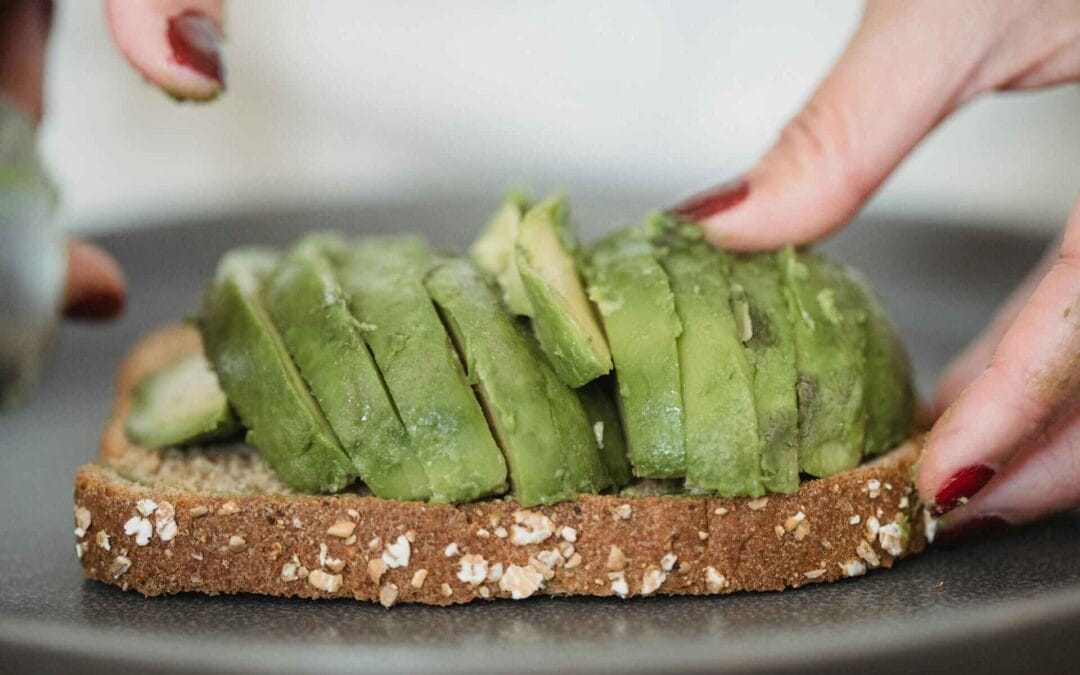
- Toast for breakfast — thick slices toasted until crisp make a great base for avocado, nut butters, or cottage cheese.
- Burger & sandwich buns — shaped rolls or small loaves become sturdy burger buns that don’t fall apart when loaded.
- Meal-prep slices — bake a couple of loaves, slice, and freeze portions for quick breakfasts and lunches all week.
- Quick snacks & toasts — single-serve mug breads or toaster-friendly slices satisfy cravings without high carbs.
- Special diets & swaps — when nut allergies are a concern, coconut flour or seed-based recipes provide nut-free, low carb bread recipe alternatives.
Bottom line: low carb bread recipes are about preserving familiar meals (sandwiches, toast, burgers) while lowering digestible carbs. That makes them useful for busy cooks who want practical swaps rather than radical recipe reinvention.
Almond Flour: What It Is & Why Bakers Love It
How it’s made (blanched almonds → fine meal)
Almond flour is ground almonds — but the details matter:
- Blanching first removes the skins (that’s what makes it blanched almond flour).
- The blanched almonds are finely milled until they reach a soft, flour like texture (not coarse meal).
- Good commercial almond flour is milled to a superfine particle size so it behaves predictably in baking; home ground nuts can be coarser unless processed carefully.
- The natural oils in almonds remain, so almond flour is richer and moister than most grain flours.
- Pro tip: for the smoothest crumb in low carb bread recipes, use superfine blanched almond flour rather than coarse almond meal. (See industry overview for processing notes.) (7)
Nutrition snapshot (per 100 g) — calories, fat, protein, carbs
Here are common nutrition values you’ll see for blanched almond flour (these are typical commercial averages; check your brand label for exact numbers):
- Calories: ~640 kcal per 100 g
- Fat: ~56 g (mostly unsaturated fats)
- Protein: ~24 g
- Total carbs: ~24 g
- Dietary fiber: ~10–12 g → net carbs often reported ≈ 12 g per 100 g (total carbs − fiber)
These numbers make almond flour much lower in digestible carbs than wheat flour and much higher in fat and protein — a reason it’s so common in low carb bread recipes. For authoritative breakdowns and comparisons, see nutrition resources and USDA FoodData Central. (8, 9)
Flavor & texture profile; best uses in breads vs. pastries
Almond flour brings a unique combination of flavor, tenderness, and moisture that shapes how you use it in low carb bread recipes:
Flavor & mouthfeel
- Mildly nutty and slightly sweet — a pleasant background note that complements both savory and sweet bakes.
- Because it contains natural oil, it gives baked goods a moist, rich crumb and good browning.
Texture behavior
- Produces a tender, somewhat crumbly crumb when used without strong binders (no gluten to form an elastic network).
- Works beautifully with binders — eggs, psyllium husk, ground flax, or small amounts of xanthan — to give structure for sliceable loaves.
- Does not absorb liquid like coconut flour; batters/rubs feel wetter and a bit denser.
Best uses — breads vs. pastries
- Breads (savory & sandwich loaves):
- Use almond flour as the base for sandwich loaves, buns, rolls, and burger buns when combined with eggs + psyllium or whipped egg whites. These combinations create structure and chew while keeping carbs low.
- Pastries & sweets:
- Ideal for cakes, muffins, cookies, and quick breads — almond flour shines in recipes where tenderness, moist crumb, and rich flavor are desired (e.g., almond cakes, financiers, macarons alternatives).
- When to avoid almond flour:
- If you want a chewy, airy white-bread texture like commercial wheat sandwich bread without adding structure building binders, almond flour alone will fall short.
Practical swaps & rules of thumb
- Almond flour ≠ 1:1 swap for wheat flour. Expect to reduce liquids and add binders.
- In many low carb bread recipes, pairing almond flour + a small amount of coconut flour or oat fiber helps control texture while keeping net carbs low.
- If you need a nut-free loaf, avoid almond flour and favor coconut flour or seed flours instead.
Quick shopping & storage tips
- Buy blanched, superfine almond flour for the best low carb bread recipe results.
- Store in a cool, dark place or refrigerate/freezer after opening — almond flour’s oils can turn rancid if kept warm for long.
- Check the label for “blanched” vs “almond meal” — the meal is coarser and may produce a grittier crumb.
Coconut Flour: Properties, Pros & Cons
Coconut flour is a pantry MVP for many low carb bread recipes — but it behaves nothing like wheat flour (or almond flour). Below, I break down the practical stuff: what makes it unique, the pros and cons, why it’s nut-free/paleo-friendly, and when you should pick coconut over almond in your baking.
How coconut flour differs — very high fiber & extremely absorbent
- Coconut flour is made from the dried, defatted flesh of the coconut after milk/oil extraction. That process leaves a powder that’s packed with fiber and very thirsty for liquid.
- Practically speaking, a little coconut flour goes a long way. It soaks up moisture and expands, which means recipes using it need far more eggs or liquid than recipes with wheat or almond flour. If you try a 1:1 swap with almond flour, you’ll end up with a dry, crumbly, or gummy mess.
- Nutritionally, coconut flour is notably higher in fiber and lower in digestible carbs than most pantry flours — that’s why it’s popular in low carb bread recipes. Health guides list coconut flour among the healthiest flour swaps for its high fiber and lower glycemic impact. (10, 11)
Pros (why bakers reach for coconut flour)
- High fiber content — helps reduce net carbs per serving and can improve satiety in low carb bread recipes. (12)
- Nut-free option — coconut is a fruit (not a tree nut for many people), so coconut-based loaves are useful when avoiding tree nuts.
- Low glycemic impact — the fiber and fat profile slows digestion, which can blunt blood sugar spikes compared with white flour. (13)
- Good source of micronutrients — depending on processing, coconut flour can contribute iron, potassium, and some protein relative to other gluten-free flours.
Cons & limitations (what trips people up)
- Absorbency is unforgiving. Use too much, and the batter becomes paste-like; use too little, and the bake is gummy. You must balance eggs/liquid precisely.
- Distinct flavor. Coconut flavor can be obvious; in savory loaves, you may need herbs and salt to balance it. In sweet loaves, it’s often a benefit.
- Texture differences. Coconut flour doesn’t create a light, airy crumb on its own — it makes dense, sturdy loaves that benefit from binders (eggs, psyllium, flax).
- Saturated fat content. Coconut byproducts contain saturated fats; some people moderate intake for heart health reasons — balance and portion control matter.
Nut-free advantage & paleo compatibility
- Because coconut isn’t a common tree-nut allergen for most people, coconut flour is a practical choice when you need nut-free but grain-free low carb bread recipes. That makes it a go-to for schools, shared households, or customers with tree-nut restrictions. (If someone has a specific coconut allergy, obviously don’t use it.)
- Paleo compatibility: coconut flour fits most paleo guidelines (it’s grain-free, minimally processed, and plant-based), so it’s often used in paleo low carb bread recipes as the main flour or as part of a blend.
When to choose coconut over almond (practical rules)
Choose coconut flour when one or more of these apply:
- You need a nut-free loaf for allergy or preference reasons.
- You want very high fiber / lower net carbs per slice and are willing to accept a denser texture.
- You’re making dense quick breads, dense sandwich loaves for toasting, or sweet loaves where coconut flavor pairs well (e.g., banana-style low-carb loaves).
- You want a flour that stabilizes blood sugar better than refined wheat in a recipe context (paired with protein/fat).
Choose almond flour instead when you want: a milder, nutty flavor; a moister, more tender crumb; easier 1:1-ish swaps into baked goods that need less egg; or a base for classic sandwich-style low carb bread recipes where sliceability and tenderness are top priorities.
Quick practical tips when baking with coconut flour
- Start with recipes that were designed for coconut flour — don’t swap it into a wheat recipe without rebalancing liquids and eggs.
- Expect to use lots of eggs (or egg whites plus extra liquid) — many 100% coconut flour loaves use multiple eggs per cup of flour.
- Combine coconut flour with almond flour or bulking fibers (psyllium, oat fiber) to soften texture and reduce egg counts.
- Let batters rest briefly so the flour hydrates before baking — that improves crumb and reduces gummy centers.
- Measure by weight when possible — coconut flour volume can compact, changing hydration needs.
Almond vs Coconut: Nutritional Comparison & Quick Table
Below is a clear, easy-to-scan comparison you can use when planning low carb bread recipes. Nutrient values vary by brand and milling (blanched vs. natural, defatted vs. full-fat), so I give representative averages per 100 g and explain how to interpret them for real recipes.
| Nutrient (per 100 g) | Almond flour (typical) | Coconut flour (typical) |
|---|---|---|
| Calories | ~580 kcal | ~420–450 kcal |
| Total fat | ~50–56 g (mostly unsaturated) | ~10–15 g (more saturated) |
| Protein | ~20–22 g | ~18–22 g |
| Total carbohydrates | ~18–22 g | ~60–65 g |
| Dietary fiber | ~9–12 g | ~30–36 g |
| Net carbs (Total − Fiber) | ~6–12 g (typical ≈9–10 g) | ~24–35 g (typical ≈28–29 g) |
Quick note on numbers & sources: these are representative averages drawn from nutrition databases and summaries (USDA/FoodData Central, Verywell, Healthline, and product nutrition labels). Exact values vary by brand and whether a product is defatted, how finely it’s milled, or if the label reports “almond meal” vs “blanched almond flour.” Always check your package or USDA FoodData Central for product-specific data.
Glycemic impact & portion considerations (practical guidance for low carb bread recipes)
- Glycemic effect: both almond flour and coconut flour tend to have a low glycemic impact compared with refined wheat flour, largely because of their fat, protein, and/or fiber content — but they behave differently. Almond flour is higher in fat and protein, which blunts glucose rises; coconut flour is extremely high in fiber, which also slows digestion.
- Per-weight vs. per-recipe reality: per 100 g, almond flour generally has fewer net carbs than coconut flour (see table). But here’s the important practical point for low carb bread recipes: you rarely use 100 g of coconut flour alone in a loaf because it’s so absorbent. Most coconut flour recipes call for small amounts (e.g., 1/4 cup ≈ , 28 g) combined with many eggs or with almond flour. That means per slice net carbs often end up low when coconut flour is used correctly.
- Portion control matters:
- If you’re tracking net carbs for keto or diabetes management, calculate macros per serving of your finished loaf (total recipe carbs − total recipe fiber, divided by # slices). Don’t rely on per 100 g flour numbers alone.
- Example rule: a typical almond flour sandwich loaf that uses mostly almond flour will usually yield lower net carbs per slice than an equal-weight loaf made mostly from coconut flour — but many coconut-heavy loaves use far less flour by volume, which evens things out.
- Which to pick for carb goals?
- Choose almond flour if you want a naturally lower net carb base by weight and a tender, moist crumb ideal for sandwiches.
- Choose coconut flour when you need a nut-free, high-fiber option or when a recipe is intentionally coconut-heavy but uses small quantities of the flour (so net carbs per slice stay low).
Practical takeaway (so you can act right now)
- When building low carb bread recipes, treat the flours as ingredients with different jobs: almond flour = fat/protein + tenderness; coconut flour = fiber + structure (but very absorbent).
- Always calculate net carbs per finished serving for accuracy. Use ingredient labels or USDA/FoodData Central as your source data.
- If your goal is the lowest net carbs per slice with a familiar sandwich texture, start with an almond dominant loaf (with psyllium for structure) and use coconut flour only in small amounts or in hybrid recipes.
Baking Science: How Almond & Coconut Flours Behave
Bakers who switch to almond flour and coconut flour quickly learn these flours aren’t “drop-in” substitutes for wheat. The way they take up liquid, hold gas, and form crumb comes down to hydration, binders, density, and structure — and once you get those pieces right, your low carb bread recipes go from dense experiments to dependable loaves.
Hydration — the single biggest trick
- Coconut flour is extremely absorbent. It drinks liquid fast and swells, so recipes using it need many more eggs or other liquids than wheat or almond flour recipes. Let batters rest briefly so the flour can hydrate — the batter will thicken as it sits. (14, 15)
- Almond flour contains natural oils and doesn’t soak up water the same way; batters feel wetter, and the crumb stays moist. Because almond flour is oil-rich, you’ll often reduce added fat compared with wheat recipes. (16)
Practical tip: measure liquids and flours by weight if you can — hydration differences between brands (and between “almond meal” vs “superfine blanched almond flour”) can change texture dramatically.
Binders — what replaces gluten
Gluten provides elasticity and gas-holding ability in wheat bread. In low carb bread recipes, you mimic that role with binders:
- Eggs — the workhorse binder: they coagulate during baking, trap air when whipped (see egg-white-lift methods), and give structure. Many almond-based loaves rely on several eggs or a mix of whole eggs + whipped whites to get lift. (17, 18)
- Psyllium husk — a game changer. Psyllium forms a gel when hydrated that mimics some elasticity of gluten, improves crumb resilience, and reduces crumbliness and staling in gluten-free loaves. It’s widely used in tested low carb bread recipes to create sandwich-worthy texture. If you want a chewy, sliceable loaf, add psyllium (measured either as whole husk or powder, following the recipe’s guidance). (19)
- Ground flaxseed/chia — bind and add mucilage; they can replace some egg function in hybrid or vegan attempts, but they don’t give the same spring as eggs or psyllium. (20)
- Hydrocolloids (xanthan/guar gum) — help with crumb cohesion in small amounts; xanthan is better for softer baked goods, whereas psyllium gives a more “bready” chew. (21)
Quick rule: psyllium + eggs = breadiest results for many almond flour loaves. If you need eggless, expect a different (often denser) texture.
Density & crumb structure — why some loaves feel like cake and others like sandwich bread
- Almond dominant loaves tend to be moist and tender but can be crumbly unless binders are used. To get a closed, sliceable crumb, increase the binder ratio (more psyllium or egg whites) and avoid overloading on almond flour alone.
- Coconut-heavy loaves are denser and firmer; they can be very sliceable for toast and buns, but will never mimic the airiness of wheat without lots of lift techniques (see below). Because coconut flour is fiber-dense, it also helps the loaf retain shape when toasted. (22)
How to tweak crumb:
- For lighter crumb: fold in whipped egg whites (meringue method) or reduce psyllium slightly and add more eggs/whites.
- For chewier sliceability: add psyllium or a tbsp of ground flaxseed; let the loaf cool fully before slicing to let the crumb set. (23, 24)
Leavening strategies — baking powder, yeast, and gluten-free lifts
- Baking powder/soda is reliable for quick breads and many low carb bread recipes. They give immediate lift and are the default in most almond/coconut quick loaves. (25)
- Yeast can work in gluten-free/low-carb formulas but requires a different approach: since there’s no gluten network to trap gas, recipes either (a) combine yeast with binders like psyllium and xanthan to trap gas, or (b) use yeast primarily for flavor and rely on egg structure for rise. Yeasted low carb loaves exist, but expect more recipe testing than with wheat breads. (26, 27)
- Egg white aeration (whipping whites to stiff peaks and folding them into batter) is a popular alternative to yeast for a lightercrumb in almond flour recipes — it adds noticeable volume without depending on gluten.
Pro tip: if a recipe includes both yeast and psyllium, let the dough rest/hydrate so the psyllium gel forms and helps the dough hold gas during proofing and baking.
Temperature & pan choices — practical oven rules
- Typical bake temps for almond flour loaves: many successful recipes call for 325–350°F (160–175°C); lower & slower often helps set the interior without overbrowning the crust. Check a toothpick or internal probe (target ~190–205°F / 88–96°C depending on density).
- Pan size matters. A 9×5 (or 8×4 for smaller loaves) loaf pan is standard for sandwich loaves — tall pans give more rise but longer bake times; shallow pans bake faster and dry the loaf slightly, which can be good for toastability. Line pans with parchment for easier removal. (28)
- Tent with foil if the top browns too fast, but the center needs longer. Remove foil for last 10–15 min to re-crisp crust.
- Cooling is critical: most low carb bread recipes continue to set for 20–60 minutes after removal; slicing too early = gummy or crumbly slices.
Short checklist — to bake a reliable low carb bread recipe every time
- Measure flours by weight.
- Hydrate psyllium separately or allow batter to rest 5–10 minutes. (29)
- Use the binder combo that matches the flour: almond = eggs + optional psyllium/xanthan; coconut = more eggs + psyllium/flax.
- Choose the right lift: baking powder for quick loaves, whipped egg whites for lightness, yeast + psyllium if you’re experimenting with yeasted low carb bread.
- Bake at 325–350°F and cool fully before slicing.
Basic Formulas & Conversion Ratios (starter recipes and “formulas”, not just a single recipe)
Below are practical, scale-ready starter formulas you can copy, test, and tweak. I give both weights and baker’s percentages so you can scale up/down and maintain reliable results for low carb bread recipes. I also include a coconut-heavy quick loaf ratio (because coconut behaves wildly differently) and clear substitution rules — remember: these flours are not 1:1 swaps.
Starter: Almond-Dominant Sandwich Loaf (9×5 loaf — reliable starter)
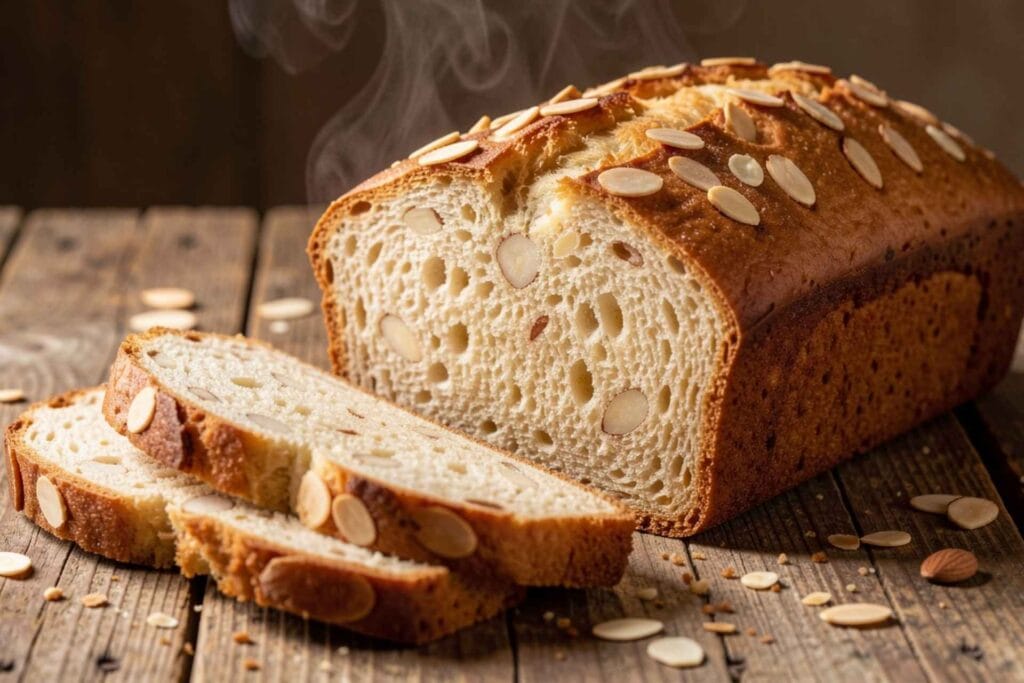
Intended yield: one 9×5 loaf, ~12 slices
Ingredient weights (grams):
- Almond flour — 240 g (this is the reference = 100%)
- Whole eggs — ~250 g (≈ 5 large eggs; 104.2%)
- Psyllium husk powder — 24 g (10.0%)
- Melted butter or oil — 30 g (12.5%)
- Water or milk — 60 g (25.0%)
- Baking powder — 6 g (2.5%)
- Salt — 6 g (2.5%)
Baker’s summary (rounded):
- Flour = 100%
- Hydration (eggs + water) ≈ 129% by weight (egg weight + liquid weight relative to flour)
- Psyllium ≈ 10% —— this level gives chew + sliceability without gummy texture
Method (quick):
- Whisk dry ingredients (almond flour, psyllium, baking powder, salt).
- Whisk eggs + melted fat + water. Combine, rest 5–10 minutes to let the psyllium hydrate.
- Pour into a lined 9×5 pan, smooth top, bake 325–350°F (160–175°C) for ~45–55 minutes (probe ~190–205°F / 88–96°C for dense loaves). Cool fully before slicing.
Why this works: the psyllium (10%) gels and mimics gluten elasticity, eggs coagulate to trap structure, and modest water keeps the crumb tender without being wet. This formula is the backbone for many low carb bread recipes intended for sandwiches.
Coconut-heavy Quick Loaf (nut-free option — HIGH absorption)
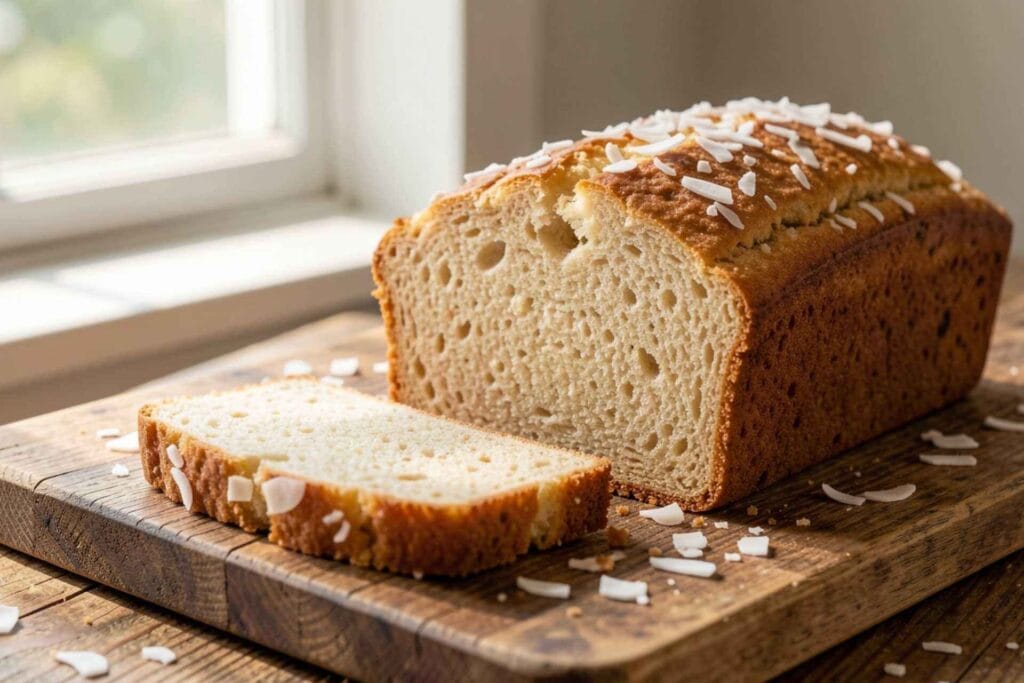
Intended yield: small loaf (9×5 style) or dense quick loaf
Ingredient weights (grams):
- Coconut flour — 60 g (reference = 100%)
- Whole eggs — 300 g (≈ 6 large eggs; 500.0%)
- Liquid (milk/water) — 120 g (200.0%)
- Psyllium husk powder — 18 g (30.0%)
- Melted butter or oil — 30 g (50.0%)
- Baking powder — 6 g (10.0%)
- Salt — 4 g (6.7%)
Baker’s summary (rounded):
- Coconut flour = 100%
- Eggs are very high (often 4–8 eggs per cup of coconut flour in many tested recipes) — they provide both hydration and structure.
- Psyllium at ~30% helps the loaf hold together and slice without falling apart.
Method (quick):
- Mix coconut flour, psyllium, baking powder, and salt. Whisk eggs + liquid + fat; combine and rest 8–10 minutes so the coconut flour hydrates and the psyllium forms gel. Bake 325–350°F (160–175°C) for ~45–60 minutes (probe for set).
Why this works: coconut flour soaks up huge volumes of liquid; if you under-egg or under-hydrate, you’ll get a dry paste or crumbly loaf. This formula intentionally uses large egg weight and extra liquid to compensate, producing a dense but sliceable loaf for low carb bread recipes where nut-free is required.
Hybrid formula (Almond + Coconut blend — balanced texture)
- Almond flour 180 g (base ~100%)
- Coconut flour 20–30 g (≈ 11–17% of almond weight)
- Whole eggs 200–220 g (≈ 110–122% of almond)
- Psyllium 18 g (≈ 10% relative to almond)
- Water/milk 60–80 g (≈ 33–44%)
- Fat 25–30 g (≈ 14–17%)
- Baking powder/salt to taste
Why use a hybrid? A little coconut (10–20%) adds fiber and dry structure, while almond keeps the crumb tender. Hybrids are forgiving and common across successful low carb bread recipes.
Conversion rules & practical substitution “rules of thumb” (NOT 1:1)
- Almond → Coconut (by volume): Do not swap 1:1. Use ~1/4 to 1/3 cup coconut flour for every 1 cup almond flour you remove, and increase eggs by 1–2 eggs per cup of coconut added. Coconut is ~3–4× more absorbent than almond by volume.
- Example: if a recipe calls for 1 cup almond flour (≈96 g), replacing it with coconut flour, you might start with 1/4 cup (≈28 g) coconut + add 1 extra egg and extra liquid — then test.
- Coconut → Almond: If a recipe is coconut-heavy and you want to swap toward almond for a moister crumb, multiply the coconut flour weight by ~3–4 to estimate almond flour grams — then reduce eggs/liquid. But because coconut recipes rely on eggs for structure, when you move to almond, you can often reduce eggs by 1–2 and cut hydration.
- Volume vs weight warning: Always prefer weights. Coconut flour compacts; a “cup” measurement is inconsistent. Use grams to avoid gummy/dry disasters.
- Psyllium substitution: If a recipe calls for psyllium husk powder and you only have whole husks, grind them to powder or increase the quantity by ~25–30% by weight (whole husk is less concentrated per gram). Ground flax or chia can replace some psyllium for binding, but they won’t create the same chew or elasticity — expect a more crumbly result.
- Liquid adjustments: When moving from almond → coconut, increase eggs & liquid; when moving from coconut → almond, decrease eggs & liquid slightly (or add a bit more almond flour to compensate). Make changes in small steps, logging results.
Quick substitution cheat-sheet (practical examples)
- If the recipe uses 240 g of almond flour and you want to replace half with coconut:
- Replace 120 g of almond with ~30 g coconut flour and add 1 extra egg + 20–30 g extra liquid. Add psyllium 5–10 g to help binding.
- If a recipe calls for 60 g of coconut flour and you want to use only almond flour:
- Replace with ~180–220 g almond flour, reduce egg count by 2, and reduce liquid by ~50–80 g (test and adjust).
Notes on eggs, psyllium, and texture tuning
- For sandwich-style low carb bread recipes: aim for psyllium 8–12% (of flour weight) + eggs around 100–120% — this gives a sliceable crumb.
- For dense toasting loaves (coconut heavy): eggs frequently exceed 200–500% of the coconut flour weight — that’s normal.
- If you want a lighter crumb, fold in whipped egg whites (separate, whip to soft/stiff peaks) and fold gently into the batter; this is a standard trick for almond-based recipes that want extra volume without gluten.
Practical testing plan (how to iterate fast)
- Bake one loaf exactly to the formula above. Don’t tweak the first time.
- Record oven temp, time, egg count, psyllium weight, and hydration.
- If crumb is too crumbly → increase psyllium by 2–6 g or add 1 egg white.
- If crumb is gummy → bake longer at 15–25°F (10–15°C) lower temp for longer, or reduce liquid by 10–30 g next try.
- If flavor needs balancing → add salt, herbs for savory loaves, or a touch of sweetener and vanilla for sweet loaves.
Short checklist you can copy/paste
- Use weights for all ingredients (grams).
- Treat almond and coconut as different base ingredients — plan formulas around their behavior.
- Psyllium is your friend for sliceability (measure precisely).
- Expect lots more eggs when coconut is the main flour.
- Keep notes: small tweaks (±5–10 g) produce big texture changes.
- When in doubt, blend almond + a small % coconut for balanced, forgiving low carb bread recipes.
Common Add-Ins, Bulking Agents & Sweeteners
(Practical tricks to make your low carb bread recipes sliceable, tasty, and reliable.)
Below are the most useful add-ins and sweeteners for low carb bread recipes, what they do, how to use them, and quick dosage tips so you can stop guessing and start baking.
Psyllium husk — the glue that acts like gluten
- What it does: Psyllium husk forms a gelatinous network when hydrated that mimics gluten’s elasticity, improves crumb resilience, reduces crumbliness, and helps trap gas for better rise in gluten-free/low-carb loaves. (30)
- Typical use: 6–12 g (≈1–2 tbsp) psyllium powder per 100–240 g almond-flour base; for coconut-heavy formulas, you’ll often use ~15–30 g depending on recipe size. Let the batter/dough rest 5–10 minutes so the psyllium fully hydrates. (31)
- Tip: prefer whole husk or powdered psyllium depending on the recipe. Powdered mixes faster; whole husks give a slightly chewier texture. Psyllium also helps slow staling.
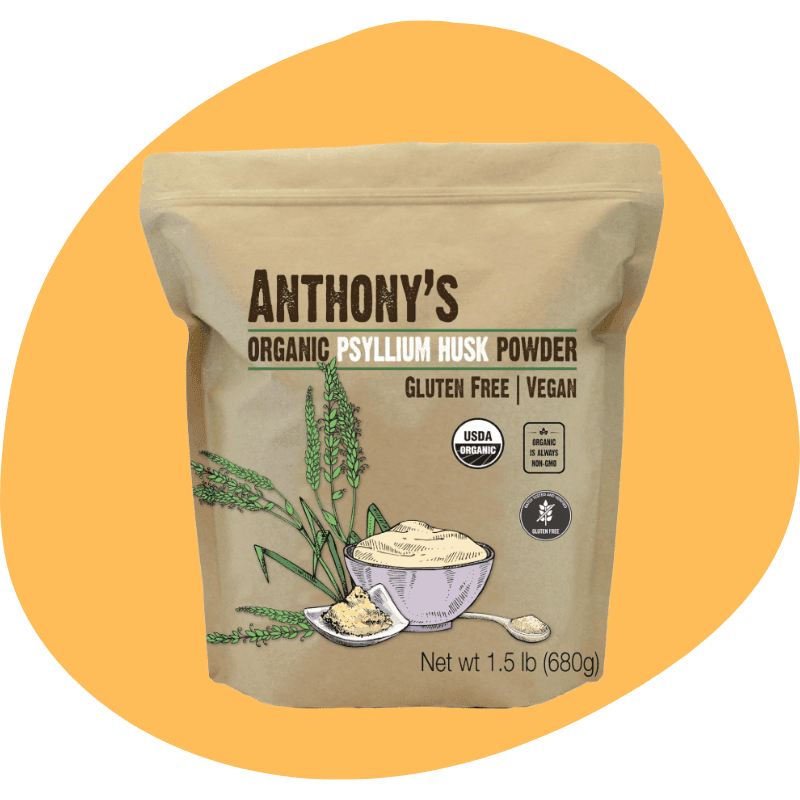
Anthony’s Organic Psyllium Husk Powder — 1.5 lb
Finely ground, organic psyllium husk in a 1.5-lb bag—gluten-free, non-GMO, and keto-friendly. A concentrated source of soluble fiber that smooths into smoothies, yogurt, or water, thickens low-carb bakes, and supports gentle regularity. Start with a small scoop and drink plenty of water.

Ground flaxseed (and “flax eggs”) — fiber + binder
- What it does: Ground flaxseed provides mucilage when mixed with water (the classic “flax egg”), adding binding and extra fiber — great for partial egg replacement or added structure. Use it to bulk up texture and add a nutty note. (32)
- Typical use: 1 tbsp ground flax + 3 tbsp water = 1 flax egg (use to replace one egg in many quick loaves). For bulk, 1–3 tbsp ground flax per loaf is common.
- Tradeoffs: Flax can add density and a darker crumb; it’s best combined with psyllium or eggs for sandwich-grade loaves.
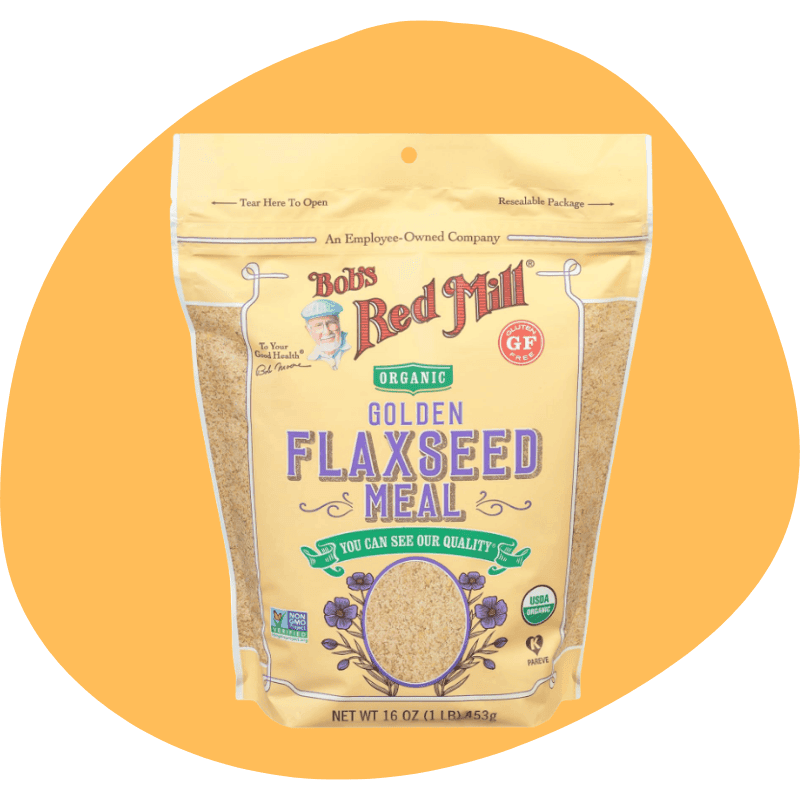
Bob’s Red Mill Organic Golden Flaxseed Meal — 16 oz
Light, nutty, and finely milled organic golden flaxseed meal that blends effortlessly into smoothies, oatmeal, yogurt, and baking. High in soluble fiber and plant-based ALA omega-3s, it’s non-GMO, vegan, paleo- and keto-friendly, and kosher—perfect as an egg-replacer in recipes or a daily fiber boost. Store in a cool, dry place (refrigerate after opening for maximum freshness).
Oat fiber — zero net carb bulk (not the same as oat flour)
- What it does: Oat fiber is nearly pure insoluble fiber (not oat flour) and adds volume and “dry structure” without adding digestible carbs — a favorite for keto bakers who want a more traditional crumb. It soaks up liquid aggressively, so adjust hydration. (33, 34)
- Typical use: 1–3 tbsp per loaf to add body, or up to ~10–20% of total dry weight in hybrid blends (measure by weight for consistency).
- Warning: don’t confuse oat fiber with oat flour — flour contains digestible carbs and won’t behave like pure fiber.
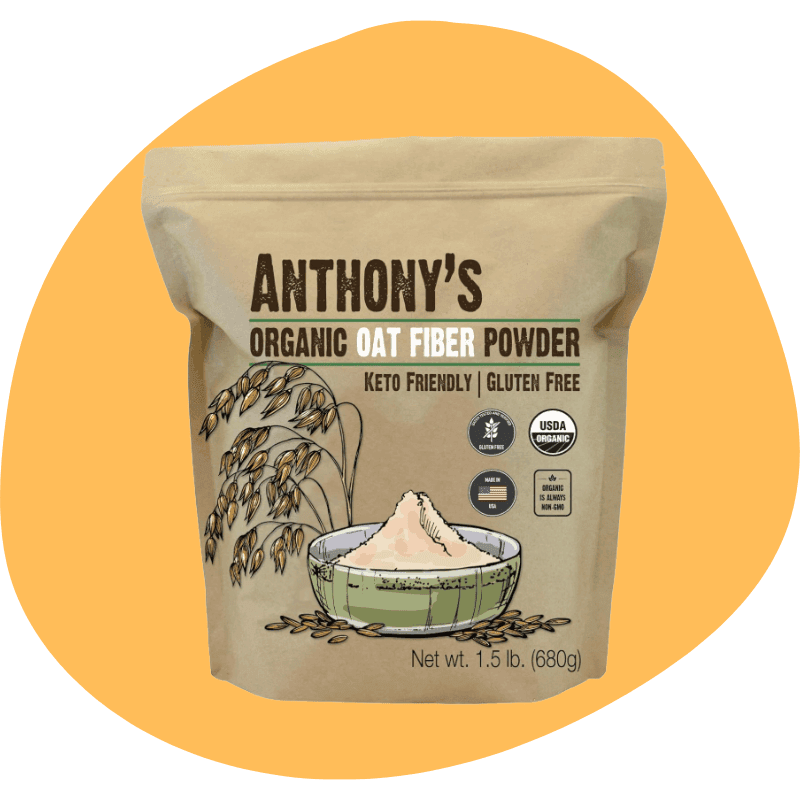
Anthony’s Organic Oat Fiber — 1.5 lb
Ultra-fine, zero-net-carb oat fiber for adding bulk and light texture to low-carb baking, smoothies, and recipes. Gluten-free, non-GMO, keto-friendly, and made in the USA — neutral taste, highly absorbent, and great for thickening or boosting fiber without extra carbs. Store in a cool, dry place.
Vital wheat gluten — powerful structure (only if you’re NOT GF)
- What it does: Vital wheat gluten is concentrated wheat protein that dramatically improves elasticity, rise, and chew in yeasted breads. It’s the quickest way to add “bread-like” chew and oven-spring — but it is not gluten-free. Use only if you don’t need a gluten-free end product. (35, 36)
- Typical use: 1–2 tbsp per 2 cups of flour (small amounts go a long way). Add gradually and adjust hydration because it absorbs water. (37)
- Reminder: avoid nut-free / gluten-free low carb bread recipes — it will break dietary constraints.
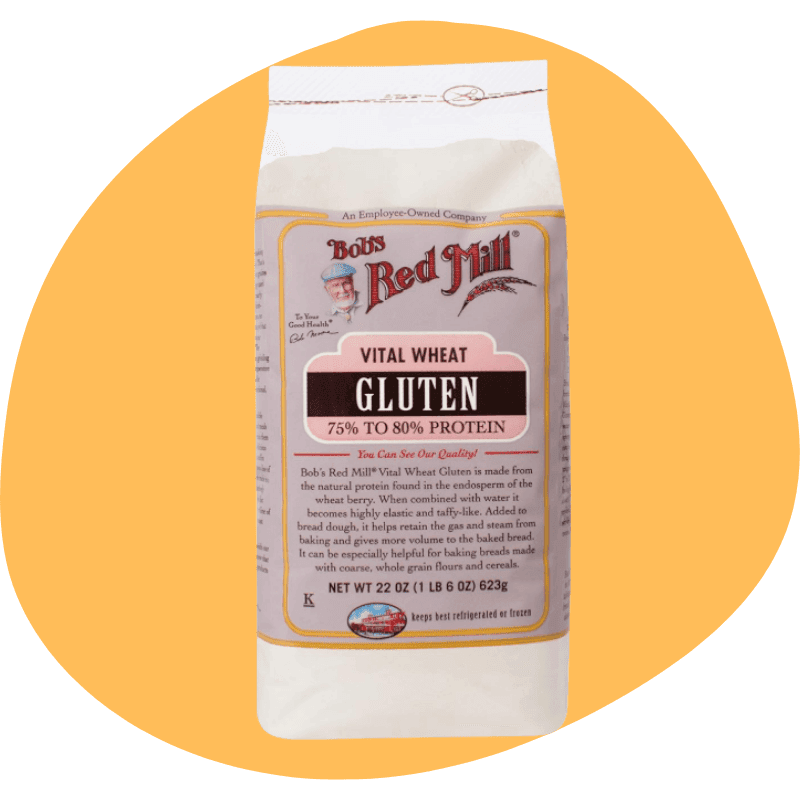
Bob’s Red Mill Vital Wheat Gluten — 22 oz
High-protein vital wheat gluten that boosts dough structure, chew, and rise—perfect for bread, bagels, and homemade seitan. Add a tablespoon or two to low-gluten flours for better elasticity, or use as directed for high-gluten recipes. Shelf-stable 22-oz bag; store in a cool, dry place.
Xanthan gum & guar gum — small amounts, big effect
- What they do: both are hydrocolloids that improve dough viscosity, prevent crumbling, and help trap moisture. Xanthan gum is usually preferred for baked goods (better for elasticity in breads); guar gum excels in cold applications and pastry fillings. Use tiny amounts. (38, 39)
- Typical use: ~1/4–1/2 tsp xanthan per cup of almond flour (adjust downward for psyllium blends). Guar gum can substitute 1:1 but behaves slightly differently — test in small batches.
- Safety note: generally recognized as safe, but large amounts can cause digestive upset in sensitive people; check labels if you have allergies (some xanthan is fermented from corn/soy/wheat). (40)
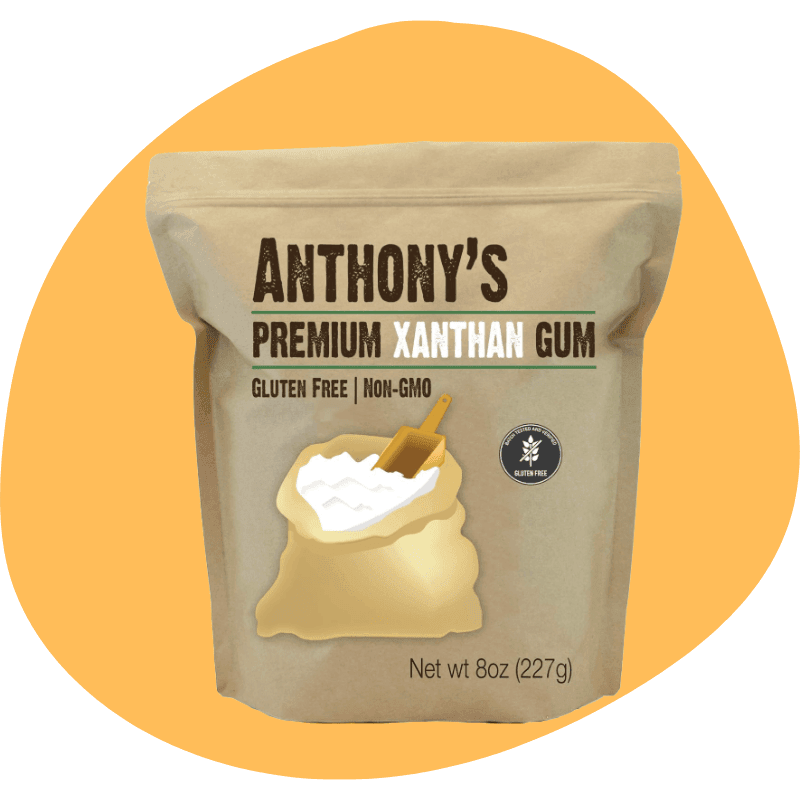
Anthony’s Premium Xanthan Gum — 8 oz
A versatile, finely powdered xanthan gum perfect for gluten-free and low-carb baking, sauces, and dressings. Acts as a powerful thickener, stabilizer, and emulsifier — a pinch goes a long way (start with ¼–½ tsp per recipe). Made in the USA, gluten-free, and keto-friendly; store in a cool, dry place.
Sweeteners: Erythritol, Monk Fruit, Allulose & syrup options
- Erythritol — a sugar alcohol with ~70% sweetness of sugar, good bulk, cool after taste for some, and moderate browning ability when mixed with other sweeteners. Large amounts can cause GI upset in sensitive people. (41, 42)
- Monk fruit — intense, clean sweetness with no calories; best used blended with a bulk sweetener (erythritol or allulose) to match sugar’s volume and browning. Pure monk fruit is ultra-sweet, so use conversion charts. (43)
- Allulose — browns and caramelizes more like sugar and often gives the best texture & crust for baked goods; it’s rapidly growing in low-carb baking circles for that reason. (Note: availability and labeling vary by country.) (44)
- Quick rules:
- For cookies & crusts where browning matters, erythritol + allulose or allulose alone is excellent.
- For sweet bread where aftertaste matters, erythritol + monk fruit blends give clean sweetness with minimal cooling.
- Pet warning: Xylitol is NOT safe for pets — avoid in households with dogs.
Low carb syrups & liquid sweetening options
- Options: commercially available sugar-free syrups or homemade reductions (fruit compote reduced and sweetened with a keto sweetener) can add moisture and flavor to sweet low carb bread recipes. For pancake/bread toppers, consider unsweetened nut butter, berry compote (sweetened with monk fruit), or a small amount of allulose syrup for better mouthfeel.
- Tip: Liquid sweeteners affect hydration — reduce other liquids slightly when adding syrups to a batter.
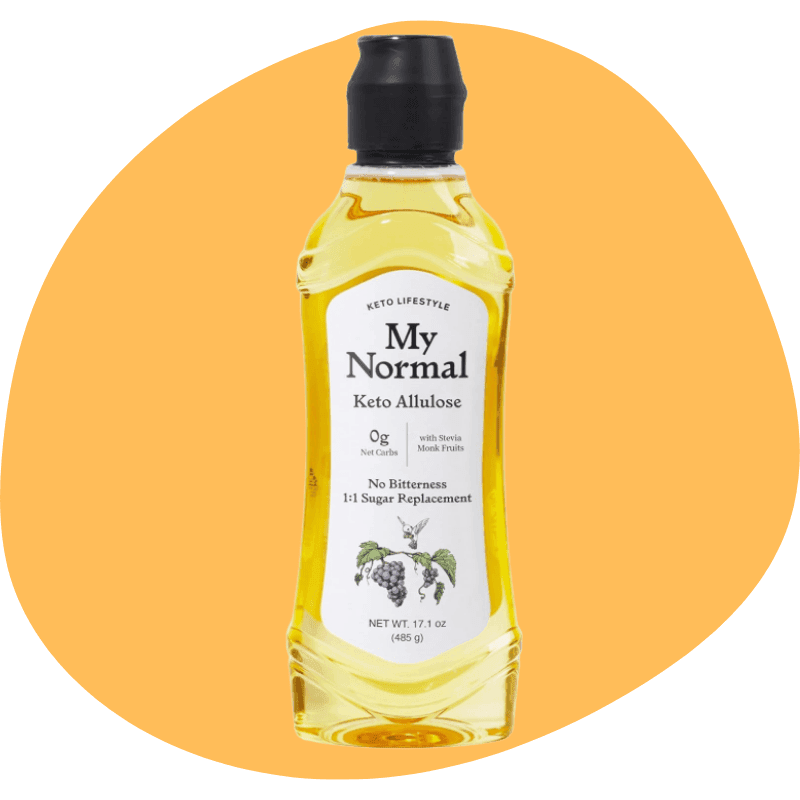
My Normal Keto Allulose Syrup — 17.10 oz Liquid Sweetener
A clean, zero-calorie, 1:1 sugar replacement made from 99.52% allulose with a monk fruit & stevia blend that tastes like sugar without net carbs or artificial additives. It’s keto, paleo, vegan, and gluten-friendly, dissolves easily in hot or cold drinks, enhances sauces and desserts, and caramelizes in cooking for a natural sweet flavor with no bitter aftertaste.
Key points:
- Cup-for-cup sugar swap that blends right into recipes.
- Zero calories, zero net carbs, and low glycemic impact for low-carb lifestyles.
- Clean, watery syrup consistency with no bitter finish.
Great for sweetening coffee, tea, smoothies, sauces, baking, and desserts without sugar.
Quick use cheat sheet
- Psyllium husk: 6–12 g per 240 g almond flour (sliceable loaf).
- Ground flax: 1 tbsp + 3 tbsp water = 1 egg substitute (good for partial egg replacement).
- Oat fiber: 1–3 tbsp per loaf to add body, don’t confuse with oat flour.
- Xanthan gum: 1/4–1/2 tsp per cup of almond flour for crumb cohesion.
- Erythritol + monk fruit blends: best all-round sweetener combo for taste + volume; use conversion charts.
Final notes for low carb bread recipe success
- Combine agents — psyllium + egg + a touch of xanthan often outperforms any single binder alone.
- Measure by weight, not cups — the single best change to make your experiments repeatable.
- Start small when testing new sweeteners or gums — they can change texture and flavor noticeably.
Common Mistakes & Quick Fixes
Baking low carb bread recipes is equal parts science and patience — and most failures are fixable. Below, I break down the usual problems (dense loaf, too crumbly, eggy taste, dry/crumbly, undercooked center), explain the likely causes, give immediate quick fixes, and share prevention tips so your next bake is textbook perfect.
Dense loaf — why it happens & how to fix it
Likely causes
- Too much almond flour or too little binder (eggs/psyllium).
- Not enough aeration (no whipped whites or not enough leavener).
- Overmixing batter (deflates trapped air).
- Oven temp too high — crust sets before interior rises.
Quick fixes (mid-bake)
- If the top is browning but the center feels dense: tent with foil and reduce oven temp by 15–25°F (8–14°C) to finish the interior without overbrowning.
- Give it extra time — dense often means under-risen, and a longer, gentle bake can help set the crumb.
Fixes for the next bake
- Add or increase psyllium husk by 2–6 g (small increments) to improve structure and chew.
- Try separating eggs: whip egg whites to soft/stiff peaks and fold them into the batter for lift.
- Reduce flour slightly (10–15 g) or increase the liquid/egg ratio to loosen overly stiff dough.
- Lower oven temp and bake longer for more even oven spring.
Salvage ideas
- Slice thinly and toast — toasting transforms dense crumb into a pleasant texture.
- Cube and pan-fry for savory croutons or use in strata/frittata.
Too crumbly / falls apart when sliced
Likely causes
- Not enough binder (psyllium/eggs) or too much almond meal (coarser grind).
- Sliced too soon — internal structure hasn’t set.
- Not enough fat (oil/butter) to bind the crumb.
Quick fixes (post-bake)
- Let the loaf cool completely (often 1 hour or longer). If still crumbly after cooling, refrigerate 1–2 hours — chilled loaves slice cleaner.
- Use thick slices and toast to compress the crumb slightly.
Fixes for the next bake
- Increase psyllium husk to ~8–12% of total flour weight or add one more egg.
- Use superfine almond flour rather than coarse almond meal.
- Add a small amount of xanthan gum (1/8–1/4 tsp per cup of almond flour) for crumb cohesion.
- Consider adding 1–2 tbsp melted butter or oil for moistness and binding.
Salvage ideas
- Turn into panzanella style cubes for salads, blitz into crumbs for low-carb stuffing or crust, or make grilled sandwich halves (the heat helps compress and hold them together).
Eggy taste — causes & how to tone it down
Likely causes
- Too many whole eggs (common in coconut-heavy recipes).
- Low fat content — eggs dominate flavor when fat is low.
Quick fixes
- Serve with bold toppings (savory: smoked salmon, spicy mayo; sweet: cinnamon + erythritol + butter) to balance egginess.
- If the loaf is usable: slice thin and toast — toasting reduces egg aroma.
Fixes for the next bake
- Replace 1–2 whole eggs with egg whites (reduces egg flavor while maintaining structure).
- Add a small acid (½ tsp apple cider vinegar or lemon juice per loaf) to round flavor and enhance oven lift.
- Increase fat slightly (1–2 tbsp butter/olive oil) to balance egg notes.
- Add herbs, spices, or a teaspoon of vanilla for sweet loaves to mask egginess.
Salvage ideas
- Make savory French toast (dip slices in milk + spices, pan fry) — the dip dilutes egg intensity and adds flavor.
Dry/crumbly texture (too dry) — why & what to do
Likely causes
- Too much coconut flour or not enough liquid/eggs (coconut is very absorbent).
- Overbaking or the oven is too hot.
- Too much fiber (oat fiber, excess psyllium) without balancing fat.
Quick fixes
- Brush hot slices with butter, olive oil, or a light sugar-free syrup to add moisture.
- Warm and cover slices with a damp towel for a few minutes to soften (works for toastable slices).
Fixes for the next bake
- Reduce coconut flour by ~10–25% and increase eggs or liquid.
- Add 10–20 g extra fat (butter, oil) or 20–50 g extra liquid to the batter.
- Shorten bake time by 5–10 minutes and lower oven temp 10–25°F to avoid drying.
- Use a mix: add some almond flour or 1–2 tbsp cream cheese/yogurt to increase moisture.
Salvage ideas
- Use crumbled dry loaf as a crunchy topping for yogurt or salads, or pulse into crumbs and rehydrate for a meatloaf binder.
Undercooked / gummy center — causes & rescue tactics
Likely causes
- Batter too wet or loaf too tall for pan (center insulated, undercooked).
- Oven hotspots or inaccurate temperature (calibrate!).
- Too much psyllium or coconut flour without the correct bake time — they can trap moisture if not baked long enough.
Immediate rescue (mid-bake or post-bake)
- If discovered mid-bake and top already browned: tent with foil and continue baking at 25°F lower temperature until probe reaches ~190–205°F (88–96°C) depending on density.
- If you’ve removed it and the center is gummy: return to oven at 300°F (150°C) covered with foil for 10–20 minutes, checking frequently. Be cautious — repeated heating can dry the crust.
Fixes for the next bake
- Use an instant-read thermometer; aim for ~200°F (93°C) for dense almond loaves, slightly higher for coconut-heavy loaves.
- Reduce loaf height (use a larger pan or split batter into two smaller loaves) so the center cooks through.
- Lower oven temp and extend bake time for even heat transfer.
- Reduce liquid by 10–30 g next test if batter seems overly wet.
Salvage ideas
- Cut out the gummy center and repurpose as bread pudding, savory strata, or cube & dry into breadcrumbs in a low oven (250°F / 120°C) for a longer time.
Troubleshooting table — quick at-a-glance guide
- Problem: Dense → Try: tent & lower temp mid-bake; next time add psyllium or whipped whites.
- Problem: Crumbly → Try: chill & slice later; next time add psyllium/xanthan or more fat.
- Problem: Eggy → Try: strong toppings; next time, swap some whole eggs for whites & add fat.
- Problem: Dry → Try: brush with butter; next time, reduce coconut flour or add more liquid/fat.
- Problem: Gummy/Undercooked → Try: tent & bake longer at lower temp or return to oven; next time reduce height & use probe.
Final tips to avoid most mistakes
- Weigh ingredients — grams, remove guesswork.
- Let loaves cool fully — it’s the single best step to stop crumbling and gummy centers.
- Use a thermometer — don’t guess doneness.
- Log each bake — record egg count, psyllium grams, oven temp, bake time; small changes quickly lead to the perfect loaf.
Techniques & Troubleshooting (step-by-step)
This section gives the practical, repeatable steps you need to make low carb bread recipes reliably — from mixing order to slicing and toasting. Follow these techniques, and you’ll fix most problems before they happen.
Mixing order: the simple, fail-safe workflow
Treat low carb bread recipes like a two-part system: dry and wet, then marry them carefully.
- Weigh everything first. Use grams whenever possible — tiny tweaks matter.
- Whisk dry ingredients together: almond flour, coconut flour (if used), psyllium, baking powder, salt, xanthan, seeds, etc. This evens out leaveners and removes clumps.
- Mix wet ingredients separately: eggs, melted fat (butter/olive oil), any milk or yogurt, extracts or sweeteners. Whisk until uniform.
- Combine wet + dry: pour wet into dry and fold gently until combined. Don’t overwork — gluten isn’t present, but overmixing can deflate whipped elements or make batter overly dense.
- Rest (very important): let batter/dough sit 5–12 minutes so psyllium and coconut flour hydrate. Texture will change dramatically during this rest — it should thicken and become easier to shape.
- Final fold & pan: after resting, do a final gentle fold (see next section) and transfer to the prepared pan.
Why this order? Hydrating the dry ingredients after combining lets binders (psyllium, flax) form gels and gives a reliable crumb. Skipping the rest is the #1 reason for gummy centers in low carb bread recipes.
Folding vs. beating — when to use each
- Beat (whisk) when: you’re mixing wet ingredients, or when you want to aerate whole eggs with sugar for a sweet loaf. Use a hand mixer or whisk for 20–40 seconds to fully emulsify fat and eggs.
- Fold when: you’ve whipped egg whites, or you’ve combined dry and wet ingredients and want to preserve air. Folding keeps trapped air intact — essential for lighter crumb in almond-based loaves that use whipped whites.
- Technique: cut through the center, scoop under and over, rotate the bowl, and repeat until streaks disappear.
- Don’t overbeat whites — overbeating makes them dry, and they’ll deflate when folded. Stop at soft-to-stiff peaks depending on the recipe.
Tip: for lighter low carb bread recipes, separate eggs and whip whites to soft peaks; fold whites into the batter as the last step.
Loaf pan prep — get the best lift & crust
- Pan type: metal (aluminum) heats fastest — expect quicker browning. Dark pans brown even faster; reduce oven temp 10–15°F (5–8°C) if using dark pans. Glass heats slower; add 5–15 minutes to bake time.
- Pan size: Use the size recipe specified (9×5 or 8×4). Too small = tall loaf with gummy center; too large = flat, dry loaf.
- Line & grease: line with parchment for clean removal and minimal sticking. Grease sides lightly to promote even expansion.
- Fill level: fill the pan no more than ~¾ full to give room for rise and oven spring. For denser coconut loaves, reduce the filling a bit to ensure the center cooks through.
Cooling & slicing tips — patience pays
- Cool fully: remove the loaf from the pan, place on a wire rack, and cool for at least 60 minutes (often 90) before slicing. Low carb bread recipes rely on setting proteins and psyllium gel; cutting too soon = crumbling or gummy centers.
- Chill for cleaner slices: for ultra-clean slices (sandwiches), refrigerate the cooled loaf for 1–2 hours or chill briefly in the freezer (15–30 minutes) — chilling firms the crumb.
- Knife choice: Use a long serrated bread knife or an electric knife. Sawing gently with even pressure gives the best results. Avoid pressing straight down.
- Slice thickness: Thicker slices toast better and handle fillings; for sandwiches, aim for ¾–1″ slices.
How to test for doneness (real, reliable methods)
Use a combination of probe temp, spring back, and toothpick:
- Probe temperature (most reliable):
- Almond-dominant loaves: target ~195–205°F (90–96°C) internal.
- Coconut-heavy, dense loaves: target ~200–210°F (93–99°C).
Insert the instant-read probe into the center without touching the pan. If it’s below target, continue baking tented with foil to avoid overbrowning.
- Spring-back test: lightly press the center with a finger — it should feel set and spring back slowly. If it stays indented, it needs more time.
- Toothpick test: insert in center — it should come out with dry crumbs or slightly moist crumbs, not wet batter. A few moist crumbs are fine for dense loaves; wet batter indicates an underbaked center.
Pro tip: oven temps vary — always use an instant-read thermometer rather than relying only on times.
Toasting & texture improvements — make every slice sing
Toasting transforms the crumb and elevates low carb bread recipes:
- From frozen: toast slices straight from the freezer — the quick high heat evaporates extra moisture and crisps the crust without overcooking the interior.
- Oven/toaster oven: broil for 1–2 minutes per side for a crunchy exterior, or use convection to get an even crisp at 375°F (190°C) for 6–8 minutes.
- Pan-fry/griddle: butter or olive oil in a skillet on medium heat, grill slices 1–2 mins per side for a golden, savory finish (great for grilled cheese).
- Add moisture & mouthfeel: spread with butter, mayonnaise, ricotta, or sugar-free syrup to offset the denser crumb and enhance mouthfeel.
- Recrisp soggy crumb: lay slices on a baking sheet and bake at 300°F (150°C) for 8–12 minutes to dry and restore texture.
Advanced tip: brushing the top with egg wash (1 egg + 1 tbsp water) right before baking improves browning and crust sheen on many almond flour loaves (skip for heavily sweetened or delicate batters).
Quick troubleshooting checklist
- Batter too wet → rest 5–10 min, add 5–10 g almond flour or 3–6 g psyllium next time.
- Gummy center → bake longer at 25°F lower temp, test with probe.
- Crumbly slices → cool fully and chill; add psyllium or egg white next bake.
- Lack of lift → whip egg whites or add 2–4 g extra baking powder and ensure eggs are fresh.
Follow these step-by-step techniques and your low carb bread recipes will be consistent, sliceable, and delicious — no guesswork, just a few reliable rituals that always pay off.
Top 10 Almond & Coconut Low Carb Bread Recipes (mini-reviews + usage ideas)
1. Wholesome Yum — Low Carb Bread (Almond Flour Bread)
- What’s special: Very simple 5-ingredient formula that produces a chewy, crusty loaf with a tender crumb — beginner-friendly and easy to scale.
- Macros per slice (author): ~2 g net carbs/slice (recipe yields ~18 slices).
- Best use: Sandwiches, toast, pan-toasted grilled cheese. A reliable everyday low carb bread recipe. (45)
2. Wholesome Yum — Keto Bread (Easy, Fluffy — 5 ingredients)
- What’s special: Designed for extra airiness — uses minimal ingredients and techniques that give a lighter, softer crumb than many almond loaves.
- Macros per slice (author): ~1 g net carbs/slice (small loaf yield; check portioning).
- Best use: Soft sandwich bread, breakfast toast, French toast. Great when you want bread-like softness with very low carbs. (46)
3. KetoConnect — Best Keto Bread (Almond/Coconut hybrid)
- What’s special: Heavily tested, widely shared keto classic — balanced texture that’s neither too eggy nor too dense; often praised for real-bread mouthfeel.
- Macros per slice (author): ~1 g net carbs/slice (depending on slice count).
- Best use: Everyday sandwich loaf, meal-prep slices, great for toasting and sandwiches. (47, 48)
4. SugarFreeLondoner — Almond Flour Keto Bread
- What’s special: A straightforward, low-ingredient recipe emphasizing minimal eggy flavor and a soft crumb — popular for families who want reliable sandwich bread.
- Macros per slice (site): author lists low net carbs (see recipe for exact slice counts).
- Best use: Sandwiches, school lunch swaps, breakfast toast. Excellent as a test loaf when you’re tuning almond flour hydration and binders.
5. Wholesome Yum — Coconut Flour Bread (Nut-free, Seed-loaded)
- What’s special: A nut-free coconut flour loaf that’s seeded for texture and flavor — formulated to mimic whole-wheat bread in look and sliceability.
- Macros per slice (author): site reports very low net carbs per slice (see recipe card for exact numbers; yields ~17 slices).
- Best use: Nut-free sandwiches, toast, and for anyone avoiding tree nuts — a top pick among low carb bread recipes for allergy-friendly baking. (49)
6. KetoConnect — Coconut Flour Bread (Herb-flavored, nut-free)
- What’s special: Uses coconut flour + psyllium for structure; often flavored with rosemary/herbs — produces a firm, toasty loaf that holds up well for fillings.
- Macros per slice (author): example page shows ~147 kcal per slice (nutrition table available on the recipe).
- Best use: Toasting, hearty sandwiches (think egg/cheese or avocado), and as a nut-free, low carb bread recipe. (50)
7. iFoodReal — Almond Flour Bread (Yeast-free, simple loaf)
- What’s special: Yeast-free, fuss-free loaf that emphasizes pantry ingredients and quick turnaround — produces a light, moist crumb without complex technique.
- Macros per slice (site): recipe page lists nutrition details (check author card for per-slice).
- Best use: Everyday sandwiches, dipping with soups, and quick meal prep — great when you want a no-fuss almond flour loaf. (51)
8. Fathead Dough (various authors / Fathead classic)
- What’s special: Cheese + almond flour + egg base (the “Fathead” method) — extremely versatile: pizza crusts, flatbreads, bagels, and quick sandwich breads. Elastic, chewy texture because of melted cheese.
- Macros per serving (representative): many Fathead recipes average ~1–3 g net carbs per serving, depending on the almond flour portion and slice size.
- Best use: Pizza crusts, flatbreads, bagels, and crisper sandwich bases — excellent for low carb bread recipes that need chew and flexibility. (52)
9. Wholesome Yum — Keto Buns (Low Carb Hamburger Buns)
- What’s special: Formulated to be airy & chewy like a classic bun, but low carb and often nut-free options exist — great texture for burgers/bigger sandwiches.
- Macros per bun (author): ~3.3 g net carbs/bun (recipe yields multiple buns).
- Best use: Hamburger buns, pulled pork sandwiches, or any meal where you want a resilient bun that won’t fall apart. (53)
10. 90-Second Keto Mug Bread (various bloggers: Daily Yum / Nutters / MugMealMagic)
- What’s special: Fast single-serve microwave bread using almond flour (or blended nut flours) — perfect emergency bread for one.
- Macros per serving (representative): varies by recipe, but many versions fall in the ~1–3 g net carbs range per mug loaf (check the recipe variant you follow).
- Best use: Single-serve toast, avocado on toast in a pinch, or a quick sandwich when you don’t want a whole loaf. Great for testing ratio tweaks for low carb bread recipes. (54, 55)
Freezing, Storage, Meal Prep & Reheating
Keeping your low carb bread recipes tasting fresh all week (or months) is all about cooling, portioning, packaging, and the right reheating method. Below are practical, kitchen-tested tactics so your almond or coconut-based loaves stay delicious, sliceable, and ready for quick meals.
Cool first, always
- Cool completely on a wire rack before wrapping — do not freeze warm bread. Trapped steam = soggy crumb and faster freezer burn.
- For the best texture, let loaves rest 60–90 minutes after baking; for very dense coconut loaves, 90–120 minutes helps the interior set.
Portioning: whole loaf vs. slices vs. single-serve
Decide how you’ll use the bread before you freeze it:
- Slice before freezing if you’ll pull out individual pieces for toast or sandwiches. Freeze slices separated by parchment so you can pull single slices easily.
- Freeze whole loaves if you want to preserve moisture for longer or for gifting — wrap tightly (see below). Whole loaves take longer to thaw.
- Freeze single-serve portions (mug bread, buns) for quick breakfasts — store in freezer-safe containers or bags.
Tip: slice to ¾–1 inch for sandwich use; thinner (½ inch) is handy for toast.
Best packaging methods (prevent freezer burn)
- Double wrap method (best balance of convenience & protection):
- Wrap the loaf/sliced stack tightly in parchment paper or plastic wrap.
- Wrap again with aluminum foil or place inside a heavy-duty freezer bag.
- Squeeze out air (or use a straw) before sealing.
- Vacuum sealing (best long-term): removes air and gives the best texture retention — excellent for both whole loaves and slices.
- Portion in meal-prep bags: place 2–4 slices per bag (or one bun) for grab-and-go convenience. Use label + date.
- Avoid thin supermarket bags — they let moisture migrate and encourage freezer burn.
Labelling & dating
Always label with:
- Recipe name (e.g., Almond-Psyllium Sandwich Loaf),
- Freeze date,
- Number of slices or portion size (so you can track per-slice macros).
This makes meal prep and carb tracking simple.
Freezer timelines & expectations
- Short term (best quality): up to 4–6 weeks for peak flavor/texture.
- Longer term (still safe): up to 3 months — quality may drop after that (drying/freezer burn).
- Avoid indefinite storage — fat in almond flour can oxidize over very long storage.
Thawing: quick & safe methods
- Toast from frozen: the fastest method. Pop frozen slices straight into the toaster — they’ll crisp up without sogginess. Great for both almond flour and coconut flour slices.
- Counter thaw (sliced): place the bag on the counter for 20–40 minutes to soften; use within a few hours.
- Fridge thaw (whole loaf): Put the whole wrapped loaf in the refrigerator overnight to thaw gently and keep the texture stable.
- Microwave (in a pinch): 10–20 seconds per slice on medium power — be careful, microwaving can make the crumb gummy if overdone.
Reheating for the best texture
- Toaster/toaster oven: best for immediate crispness — 1–3 minutes depending on thickness.
- Oven: preheat to 350°F (175°C), lay slices on a baking sheet, bake 6–10 minutes for a crisp exterior and warm interior. For whole loaves, wrap in foil and heat 12–20 minutes (depending on size).
- Skillet/griddle: medium heat with a bit of butter or oil — 1–2 minutes per side for golden crust; ideal for grilled cheese.
- Avoid prolonged microwave reheating for multiple slices — it makes the crumb rubbery.
Meal prep ideas using frozen low carb bread recipes
- Sandwich packs: freeze 2-slice sandwich bundles with protein (wrapped separately) — assemble and toast on demand.
- French toast ready: flash-freeze slices; thaw briefly and soak in egg/milk mix to make quick French toast.
- Breadcrumbs & croutons: stale or frozen loaves pulsed in a food processor make low-carb crumbs — toast at 300°F (150°C) until dry/crispy. Store crumbs in the fridge or freezer.
- Breakfast kits: freeze egg + cheese + toasted bread components separately for fast morning assembly.
Signs of spoilage & safety
- If refrigerated: use within 5–7 days. If you see mold, discard it immediately.
- Off smells (rancid, sour) or odd textures = toss. Freezing halts microbial growth but does not undo prior spoilage — always freeze only fresh, fully cooled bread.
Tips to restore “fresh-baked” quality
- Steam trick: place slices on a rack over a pan of hot water in a 300°F oven for 5–8 minutes to reintroduce moisture before a final crisp in the broiler — helps with slightly dried loaves.
- Butter + oven: brush slices lightly with butter and bake 5–7 minutes at 350°F for a richer mouthfeel.
Quick checklist
- Cool 60–90 min → slice as needed → layer with parchment → double-wrap or vacuum seal → label/date → freeze.
- Thaw: toaster from frozen for best result; fridge overnight for whole loaves.
- Use within 3 months for best quality.
Nutrition Labels, Macros & Portion Strategies
This is the practical section: how to calculate per-slice macros for your low carb bread recipes, what to show on a simple nutrition label, and smart portion strategies for keto/low-carb tracking. I’ll walk you through a repeatable method, give a worked example (step-by-step math), and finish with easy spreadsheet and tracking tips you can copy.
Quick note: use the exact nutrition facts from the products you actually use (or USDA / FoodData sources) whenever possible — small changes in almond flour brand, egg size, or butter will change the totals. The example below uses representative values so you can follow the method exactly.
Step-by-step method to calculate per-slice macros
- List every ingredient and its weight (grams). Weight = reproducibility.
- Get nutrition per 100 g for each ingredient (kcal, fat, protein, total carbs, fiber). Use product labels or a reliable database.
- Multiply each ingredient’s per-100g values by (ingredient_grams ÷ 100) to get its totals for the recipe.
- Sum each nutrient across all ingredients to get recipe totals.
- Calculate net carbs = total carbs − total fiber − sugar alcohols counted as digestible (see note on sugar alcohols below).
- Divide totals by the number of servings/slices to get per-slice macros.
Worked example — Almond-Dominant Sandwich Loaf (illustrative)
Recipe (weights used for example)
- Almond flour: 240 g
- Eggs (total): 250 g (≈5 large eggs)
- Butter: 30 g
- Psyllium husk powder: 24 g
- Water: 60 g (no macros)
- Baking powder & salt: negligible macros
Representative nutrition per 100 g used in this example (replace with your labels when you do the math):
- Almond flour — 580 kcal; 50.0 g fat; 21.0 g protein; 20.0 g carbs; 10.0 g fiber.
- Eggs — 143 kcal; 10.0 g fat; 13.0 g protein; 1.1 g carbs; 0 g fiber.
- Butter — 717 kcal; 81.0 g fat; 0.85 g protein; 0.06 g carbs; 0 g fiber.
- Psyllium — 200 kcal; 0 g fat; 2.0 g protein; 88.0 g carbs; 78.0 g fiber (most is insoluble fiber).
Calculate each ingredient’s totals (example shown as formula → result):
- Almond flour (240 g):
- kcal: 580 × (240/100) = 1392 kcal
- fat: 50.0 × 2.4 = 120.0 g
- protein: 21.0 × 2.4 = 50.4 g
- carbs: 20.0 × 2.4 = 48.0 g
- fiber: 10.0 × 2.4 = 24.0 g
- Eggs (250 g):
- kcal: 143 × (250/100) = 357.5 kcal
- fat: 10.0 × 2.5 = 25.0 g
- protein: 13.0 × 2.5 = 32.5 g
- carbs: 1.1 × 2.5 = 2.75 g
- fiber: 0 × 2.5 = 0 g
- Butter (30 g):
- kcal: 717 × 0.3 = 215.1 kcal
- fat: 81.0 × 0.3 = 24.3 g
- protein: 0.85 × 0.3 = 0.255 g
- carbs: 0.06 × 0.3 = 0.018 g
- fiber: 0
- Psyllium (24 g):
- kcal: 200 × 0.24 = 48 kcal
- fat: 0
- protein: 2.0 × 0.24 = 0.48 g
- carbs: 88.0 × 0.24 = 21.12 g
- fiber: 78.0 × 0.24 = 18.72 g
Sum recipe totals (add the columns):
- Total kcal ≈ 2012.6 kcal
- Total fat ≈ 169.3 g
- Total protein ≈ 83.6 g
- Total carbs ≈ 71.89 g
- Total fiber ≈ 42.72 g
Net carbs = total carbs − total fiber = ≈ 29.17 g for the whole loaf.
If you slice into 12 slices, divide each total by 12:
- Per slice ≈ : 167.7 kcal, 14.11 g fat, 6.97 g protein, 5.99 g carbs, 3.56 g fiber, ~2.43 g net carbs.
Bottom line for this example: one slice ≈ 2.4 g net carbs (illustrative). Replace my per-100g numbers with your product labels for precise results.
How to handle sugar alcohols and allulose when calculating net carbs
- Erythritol: generally counted as 0 g net carbs (many trackers subtract it fully).
- Allulose: many tools treat it as 0 g digestible carbs for net carbs.
- Other sugar alcohols (maltitol, sorbitol, xylitol): behave variably — many trackers subtract 50% or treat per product labeling rules.
- Rule: follow your food database or label and be consistent. For keto tracking, many people subtract erythritol and allulose fully and count others partially.
Sample mini nutrition label (per slice) — copy & tweak for your recipes
Serving size: 1 slice (1/12 loaf)
- Calories: 168 kcal
- Total Fat: 14 g
- Saturated Fat: 5 g (estimate from butter/eggs)
- Cholesterol: ? mg (use egg label if you need)
- Sodium: ? mg (from salt and baking powder)
- Total Carbohydrate: 6.0 g
- Dietary Fiber: 3.6 g
- Total Sugars: 0.2 g
- Sugar Alcohols: 0 g
- Net Carbs: ≈ 2.4 g
- Protein: 7.0 g
(Replace “?” with values from your labels; round to logical units.)
Spreadsheet/tracking layout (columns to include)
Create a sheet with these columns — it makes future batches trivial:
- Ingredient | Weight (g) | kcal/100g | fat/100g | protein/100g | carbs/100g | fiber/100g | kcal_total | fat_total | protein_total | carbs_total | fiber_total
- Then: Recipe totals row (sum the _total columns).
- Add Net carbs total = carbs_total − fiber_total − sugar_alc_counted.
- Add Servings (slices) and Per-serving columns = totals ÷ servings.
- Optional: column for notes (brand, grind, oven temp).
This is how you turn a recipe into a label in ~10 minutes once ingredient data is plugged in.
Keto/portion strategies (practical rules)
- Aim per-serving net carbs: many ketoers aim for ≤ 2–5 g net carbs per slice of sandwich bread. This keeps a two-slice sandwich within a 5–10 g net carb window.
- Plan meals by carb budget: if your daily target is 20 g net carbs, know how many slices you can safely eat — e.g., two 2.5 g net carb slices = 5 g net carbs.
- Use fat/protein pairing: because low carb bread recipes often deliver higher fat, plan fillings with lean protein/veggies if you’re tracking calories.
- Log consistently: weigh your slice (if you cut nonuniform slices) and log the measured weight + per gram macro values from your spreadsheet for precise tracking.
Labeling tips & consumer-friendly wording
- Use “Net carbs per serving” prominently (your audience wants quick numbers).
- Show both total carbs and dietary fiber so people can verify your math.
- If you used erythritol or allulose, add a line: “Net carbs calculated subtracting erythritol/allulose per current guidelines.”
- Round sensibly: calories to the nearest whole number, grams to 1 decimal for small servings.
Quick checklist: get accurate per-slice macros every time
- Weigh every ingredient (grams).
- Pull per 100g nutrition for each ingredient (product label or USDA).
- Multiply, sum, subtract fiber, then divide by slices.
- Round logically and label any sugar alcohol rules you used.
- Save the recipe spreadsheet so future batches are instant.
Adapting for Special Diets (Paleo, Nut-Free, Vegan options)
Adapting low carb bread recipes for special diets is absolutely doable — but it’s worth being realistic: each restriction changes the chemistry of the bake. Below, I give clear, practical swaps, tested-style ratios, and troubleshooting notes so your loaf still performs well, whether you need paleo, nut-free, vegan, or dairy-free.
Quick overview — what changes when you adapt
- Almond flour is common in low carb bread recipes because it supplies fat, protein, and structure. Remove it → you must replace both bulk and binding.
- Coconut flour behaves very differently (high fiber, very absorbent) — great for nut-free loaves, but needs lots of eggs/liquid or strong binders.
- Vegan + low-carb is the hardest combo because eggs are the primary binder for many low-carb loaves. Expect different textures (denser, more fragile) and accept tradeoffs.
Paleo adaptations (grain-free, usually dairy optional)
Goal: keep it grain-free and avoid processed ingredients.
What to use:
- Use almond flour or coconut flour as the base (both are paleo-friendly).
- Use ghee or coconut oil instead of butter if your paleo approach excludes dairy.
- Use eggs as the binder (eggs are paleo). Psyllium is plant-based and usually OK for paleo, but some strict paleo followers avoid isolated fibers — if so, use ground flax + chia as alternatives.
Practical paleo sandwich loaf formula (9×5, paleo-friendly):
- Almond flour 240 g
- Eggs 5 large (~250 g)
- Psyllium husk powder 18–24 g (optional; use ground flax 20–30 g if avoiding psyllium)
- Melted ghee 30 g
- Salt 6 g, baking powder 6 g
Method: same as almond sandwich loaf — rest to hydrate, bake at 325–350°F.
Notes:
- Paleo loaves can be high-fat; if you want lower calories, reduce fat slightly and add more psyllium/flax for bulk.
- If you want a paleo, nut-free bake, use mostly coconut flour + eggs (see nut-free section).
Nut-Free options — coconut-heavy & seed flours
If you need to avoid tree nuts, coconut flour, plus seed flours and fiber bulking agents are your best friends.
Options to replace almond flour:
- Coconut flour (use small amounts + lots of eggs/liquid).
- Sunflower seed flour (made from ground, blanched sunflower seeds) — behaves more like almond flour, but watch for a green tint with some alkalines (benign).
- Pumpkin seed flour (similar to sunflower).
- Oat fiber (not oat flour) can bulk without adding digestible carbs.
Nut-free sandwich loaf starter (9×5):
- Coconut flour 40–60 g + sunflower seed flour 150–180 g (blend gives milder flavor)
- Eggs 6–8 (~300–400 g)
- Psyllium husk powder 18–24 g
- Oil (avocado or light olive) 30 g
- Salt, baking powder to taste
Tips:
- If using sunflower or pumpkin seed flour exclusively, expect a greenish crumb if you include baking soda or high-heat reactions — flavor is fine, and color doesn’t affect safety.
- For allergy-conscious kitchens, verify seed source cross-contact with nuts.
Vegan options — realistic expectations & best strategies
Vegan + low carb bread recipes are the trickiest—eggs are structural and provide leavening/setting. You can get bread like results, but expect a different texture and more testing.
Vegan binder options (limitations included):
- Aquafaba (chickpea brine) — whips like egg whites and can provide lift. Good for lighter crumb (whipped aquafaba folding technique). Limitation: It adds some carbs and can impart a legume flavor if used heavily.
- Flax/chia “eggs” (1 tbsp ground + 3 tbsp water = 1 flax egg) — add mucilage and binding, but are weaker than eggs for structure; best combined with psyllium.
- Commercial vegan egg replacers (like Ener-G) — useful for structure but often require recipe specific testing and sometimes add starches (not always low-carb).
- Textured tofu / silken tofu — can add moisture and bulk, but adds carbs and changes mouthfeel; better in quick breads, not sandwich loaves.
Vegan low carb loaf strategy (realistic):
- Use a seed-flour base (sunflower/pumpkin) + high psyllium (20–30% of flour weight) + aquafaba + flax slurry for lift & binding. Expect a denser, more crumbly loaf than egg-based loaves. Chill well before slicing.
Vegan starter idea (experiment):
- Sunflower seed flour 200 g
- Oat fiber 30 g
- Psyllium husk powder 30 g
- Aquafaba (whipped) 180–240 g (volume equivalent to 6–8 large egg whites when whipped)
- Ground flax 30 g + 90 g water (flax slurry)
- Oil 30–40 g
- Baking powder, salt, herbs
Reality check:
- You’ll likely need to bake in smaller loaves or muffins (better heat penetration).
- Texture will be denser and may be better used as toast or for open face sandwiches rather than classic sandwich slices.
- Many vegans on low-carb opt to shift to seed crackers, flatbreads, or use egg-free savory pancakes rather than trying to mimic a wheat sandwich loaf.
Dairy-free swaps (easy & impact on texture)
If you want dairy-free, low carb bread recipes:
- Replace butter with neutral oil (avocado, light olive, grapeseed) or coconut oil (adds coconut flavor).
- Replace milk/cream with unsweetened almond milk, coconut milk (thin), oat milk (watch carbs), or soy milk (higher protein but may add carbs).
- For cream cheese or yogurt replacements: use full-fat coconut yogurt (unsweetened) or cashew cream (if not nut-free). These add moisture and fat, similar to dairy.
Notes:
- Switching butter→oil slightly increases perceived moistness; reduce oil by 10–15% if the batter seems loose.
- Coconut milk (full fat) boosts richness and works especially well in coconut-forward loaves.
Troubleshooting special diet bakes (practical tips)
- If the nut-free loaf is too green with sunflower flour, it’s usually a harmless reaction; reduce baking soda or swap to baking powder.
- If the vegan loaf is crumbly: increase psyllium by 5–10 g, chill fully, and cut thicker slices.
- If the dairy-free loaf is dry, add 10–30 g extra oil or 20–50 g unsweetened non-dairy yogurt.
Final checklist for adapting any low carb bread recipe
- Identify the role almond flour plays (bulk, fat, flavor).
- Choose replacement(s) that cover both bulk and binding (e.g., sunflower + psyllium).
- Expect to tweak eggs/liquid when swapping flours — more coconut = more eggs/liquid.
- Measure by weight and log every change.
- Chill before slicing and use toasting/grilling to improve structure on first use.
FAQs — Common Questions About low carb bread recipes
Can I substitute almond flour 1:1 with coconut flour?
No — coconut flour is far more absorbent. Use much less coconut flour and increase eggs/liquids.
How do I make low carb bread recipes less eggy?
Use more egg whites than whole eggs, add fat (butter/oil), and include psyllium for structure.
Will low carb bread recipes taste like regular wheat bread?
They won’t be identical, but with the right binders and formulas, you can get very sandwich-friendly slices.
Can I use yeast in low carb bread recipes?
Yeast struggles without gluten. If you want a yeasted loaf, include some vital wheat gluten (not keto) or use whipped egg whites for lift.
Are low carb bread recipes healthy?
“Healthy” depends on your diet goals. They often reduce net carbs and increase fiber/protein — useful for blood sugar control and satiety.
The Bottom Line
Ready to try a loaf? Start with the Almond Psyllium Sandwich Loaf formula above. Bake one loaf, slice half to freeze, and enjoy the other half toasted the next day. Keep notes: egg counts, bake time, and how it sliced — small tweaks lead to big improvements. These low carb bread recipes let you reclaim bread in your meal plan without the carb baggage.
We may earn a commission when you buy using our links


0 Comments