
Snacking when you have diabetes doesn’t have to be a patience-sapping guessing game. Think of the right snack as a small, strategic tool: one that steadies blood sugar, tames hunger, and keeps energy steady between meals. Here are evidence-backed basics, then 12 tasty, low-carb snack recipes for diabetics (with carb counts and portion guidance) so you can snack smart. Always check with your clinician or dietitian before changing what you eat.
Low-carb snacking & diabetes — evidence-based basics (disclaimer: consult clinician)
Snacking smart is less about willpower and more about strategy. For people with diabetes, the when, what, and how much you eat between meals can help prevent blood-sugar rollercoasters, reduce overeating later, and keep medications working as intended. Below, I break the evidence into bite-sized, practical pieces you can use right away — with clinical references and real examples. Always check any changes with your healthcare team. (1, 2)
Why snacking matters for people with diabetes — blood sugar, medications, and hunger
Think of snacks as “micro-meals” that can either stabilise your day or sabotage it. Here’s why they matter:
- Blood-sugar timing. Snacks add carbohydrates that raise blood glucose; how fast and how high depends on the carb amount, the food’s fiber/protein/fat, and your personal response. Spreading carbs evenly across the day often helps avoid big peaks and valleys. (3, 4)
- Medication interactions. If you use insulin or insulin-stimulating drugs (like some sulfonylureas), an ill-timed low-carb or too-low snack can increase the risk of hypoglycaemia (low blood sugar). Conversely, a high-carb snack without an insulin adjustment can cause a spike. Coordination matters. (5, 6)
- Real-world hunger and weight control. Hunger between meals can drive overeating later. Strategically chosen snacks (protein + fiber + a little fat) help satiety with a smaller spike in glucose than pure carb snacks. That’s useful for weight management and glycaemic control. (7)
Practical takeaway: snacks are tools — use them when needed (before exercise, to stop hypoglycaemia, or to bridge a long gap between meals) and choose composition and portion to match your meds and goals.
Carb counting basics for snacks (what 1 carb serving = 15 g carbohydrate)
Carb counting is the bread and butter (pun intended) of predictable blood-sugar control. The simplest rule used in many guidelines:
1 carbohydrate serving ≈ is 15 grams of carbohydrate. Many clinicians and nutrition resources use this as a reference point for insulin dosing, “carb exchanges,” and snack planning. (8)
How to use that at snack time:
- Read the total carbohydrate on the food label (not “net carbs” unless you know how your clinician wants you to count fiber/sugar alcohols).
- Compare that number to 15 g. e.g., a snack with 30 g total carbs = about 2 carb servings.
- For mixed foods (homemade), measure portions with cups/grams and use an app or nutrition table to estimate grams of carbs.
Quick examples:
- 6–8 raspberries ≈ ~2–4 g carbs (tiny).
- 1 small apple ≈ 15 g carbs (1 serving).
- 1 slice whole-wheat bread ≈ 12–15 g carbs (about 1 serving).
Pro tip: start by practicing with a blood-sugar meter — eat a snack, note the grams of carbs, test 1–2 hours later, and build a personal dataset. That’s how you learn your responses, which is what really matters.
How to set a snack target: <10–30 g carbs depending on goals (examples for type 1, type 2, prediabetes)
There’s no one-size-fits-all number, but here are actionable ranges based on common goals and clinical contexts — with real examples you can copy:
Low-impact “maintenance” snack (common starting point): 8–15 g carbs
- Best for: people who want minimal glucose rise; those on medications that don’t cause hypoglycaemia; as a between-meal mini-boost.
- Example snacks: 1 boiled egg + 4 baby carrots (≈8–10 g), 1 string cheese + 6 almonds (≈2–3 g carbs).
Moderate carb snack for activity or longer gaps: 15–30 g carbs
- Best for: people planning exercise (to prevent exercise-related hypoglycaemia), those with long intervals between meals, or people who need a fuller snack. The Mayo Clinic often recommends 15–30 grams of carbs before exercise for people on insulin to prevent low blood sugar levels.
- Example snacks: 1 small banana + 1 tbsp peanut butter (≈20–25 g), 1 small whole-grain sandwich (≈25–30 g).
Very low-carb snack (under 10 g carbs)
- Best for: those strictly limiting carbs for glycaemic control or weight loss, or as a quick “tide-over” to stop hunger. Many NHS and UK resources list options under 10 g that won’t meaningfully affect BG. (9, 10)
- Example snacks: cheese crisps, celery with tuna, a few olives + 1 oz cheese (≈0–3 g carbs).
Tailoring by diabetes type:
- Type 1: Carb targets must be coordinated with insulin dosing (insulin-to-carb ratios are individualized). A 15 g carbohydrate snack may require insulin if it’s being used to correct or cover carbs — consult your diabetes educator.
- Type 2 (not on insulin): smaller snacks (8–15 g) often work well; people on sulfonylureas should be cautious about hypoglycaemia and may need scheduled snacks based on symptoms/readings.
- Prediabetes: snacks can be mini-opportunities for fiber and protein to blunt glucose and support weight goals — aim lower on carbs and prioritize veggies, nuts, and yogurt.
Bottom line: pick a range first (e.g., 8–15 g), test how your BG responds, then adjust up or down. Your clinician or registered dietitian will help you set precise targets.
Safety note for low-carb snack recipes for diabetics: medications (insulin, sulfonylureas) and hypoglycaemia risk — consult your clinician
Safety first: insulin and certain oral meds (like sulfonylureas or meglitinides) increase the risk of low blood sugar if carbohydrate intake is inadequate or if timing is mismatched. The standard rescue rule for low blood sugar — the 15-15 rule — is to consume 15 grams of fast-acting carbohydrate, wait 15 minutes, and recheck your glucose; repeat if needed. Keep glucose tablets or a simple carb source accessible. (11)
Practical safety checklist:
- If you use insulin, never reduce carbs dramatically without clinician guidance — your insulin regimen may need adjusting.
- If you take sulfonylureas, be alert for hypoglycaemia, especially with skipped meals or alcohol.
- Carry a small, measured carb source (e.g., 4 glucose tablets = ~16 g carbs, or 4 oz fruit juice) if you’re at risk of lows. CDC guidance recommends 15 g as the initial treatment for hypoglycaemia.
Closing safety note: these are practical, evidence-based pointers — not a treatment plan. Review specific snack sizes, timing, and rescue strategies with your prescribing clinician or diabetes educator, and consider wearing a Medic Alert identification if you’re at risk of severe hypoglycemia.
12 Diabetic-Friendly Low-Carb Snack Recipes (with carb counts & portion guidance)
Below are 12 tightly described, blood-sugar-friendly snack recipes. Each recipe includes: a short intro, exact ingredients, step-by-step method, portion + net carb estimate, tips & swaps, storage/make-ahead notes, and quick nutrition notes. Net carbs = total carbs − fiber. Use a glucose meter to confirm how each snack affects you personally.
(Recipe 1): Savory Cottage-Cheese & Cucumber Boats — Net carbs: ~4 g
Crisp, hydrating, and creamy — this snack pairs slow-digesting protein with crunchy veg for satiety and minimal carbs.
Ingredients
- ¼ cup (60 g) full-fat cottage cheese (unsweetened)
- 1 small English cucumber or 6–8 thick slices (about 100 g)
- 1 tsp chopped fresh chives
- ⅛ tsp freshly ground black pepper
- 1 tsp toasted sesame seeds (optional)
Method
- Slice the cucumber into rounds or halve lengthwise and scoop a shallow trough.
- Spoon 1–2 tbsp cottage cheese onto each piece or into the trough.
- Sprinkle chives, pepper, and sesame seeds. Serve chilled.
Portion & carb count
Makes 2 snack servings. Net carbs ≈ 4 g per serving.
Tips & swaps
- Swap cottage cheese for ricotta (similar carbs). Add a tiny splash of lemon zest for brightness.
- For more fat and satiety, top with 1 tsp olive oil.
Storage & prep time
Prep time: 5–8 minutes. Best eaten the same day; cottage cheese loses texture after 48 hrs.
Nutrition notes
High in protein (~10–12 g depending on cottage cheese), low carbs, good for blunting hunger.
(Recipe 2): Smoked Salmon & Avocado Lettuce Cups — Net carbs: ~3–5 g
Luxurious, savory, and rich in omega-3s — these cups are a deli-style snack that stabilizes blood sugar.
Ingredients
- 1/4 medium avocado (about 40 g), mashed
- 1 oz (28 g) smoked salmon, torn into pieces
- 2–3 butter or Boston lettuce leaves
- 1 tsp lemon juice
- Pinch of black pepper and dill
Method
- Mash avocado with lemon juice and pepper.
- Spoon mashed avocado into lettuce leaves, top with smoked salmon and dill. Fold and eat.
Portion & carb count
Serves 1–2. Net carbs ≈ 3–5 g per serving (avocado provides most carbs).
Tips & swaps
- Use canned salmon or leftover poached salmon if needed. Add a teaspoon of capers for tang.
- For lower sodium, rinse smoked salmon briefly or choose low-sodium varieties.
Storage & prep time
Prep time: 5–7 minutes. Assemble just before eating to keep lettuce crisp.
Nutrition notes
Rich in healthy fats and protein, minimal carbs make it a great pre-meal or between-meal snack.
(Recipe 3): Mini Egg-Muffins with Spinach & Feta — Net carbs: ~2–3 g
Portable, protein-dense, and freezer-friendly — egg muffins are perfect for grab-and-go glucose control.
Ingredients (makes 6 mini muffins)
- 4 large eggs
- ½ cup chopped baby spinach (about 30 g)
- 2 tbsp crumbled feta
- Salt & pepper to taste
- Nonstick spray or 1 tsp olive oil
Method
- Preheat oven to 350°F (180°C). Whisk eggs and season.
- Stir in spinach and feta. Grease a mini muffin tin, and pour the mixture evenly.
- Bake 14–16 minutes until set. Cool for 5 minutes, then release.
Portion & carb count
One mini muffin = ~2–3 g net carbs. Two muffins = ~4–6 g.
Tips & swaps
- Swap feta for cheddar or goat cheese. Add chopped bell pepper (adds ~1–2 g carbs per muffin).
- For dairy-free, omit cheese and add nutritional yeast for flavor.
Storage & prep time
Prep + cook: 20–25 minutes. Refrigerate up to 5 days or freeze for 2 months.
Nutrition notes
Each muffin delivers ~6–8 g protein, low carbs, and high satiety — ideal for morning or mid-afternoon.
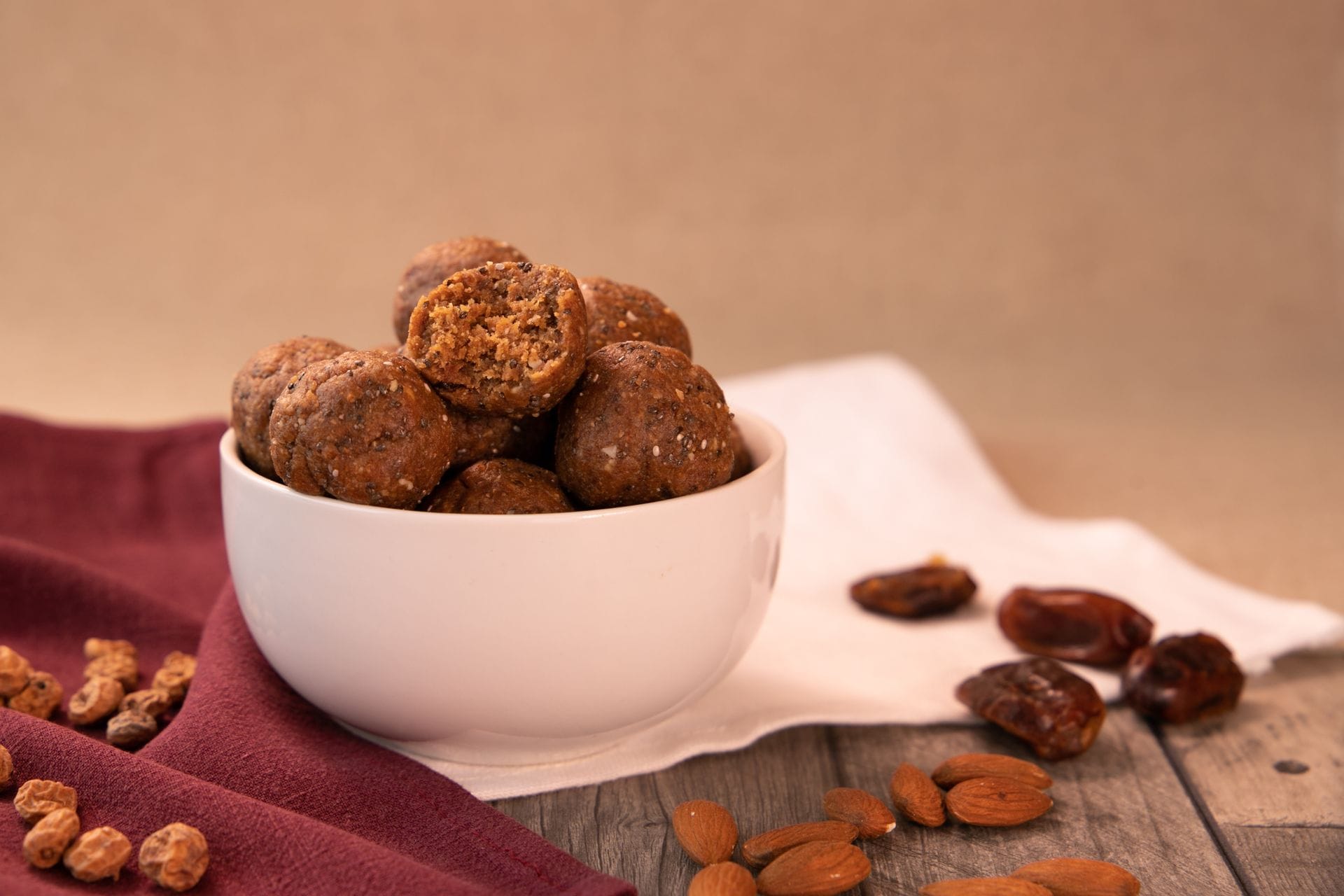
(Recipe 4): Almond-Flour Peanut-Butter Energy Bites (no added sugar) — Net carbs: ~5–6 g
A small energy bite that tastes indulgent but keeps carbs in check — great when you want something chewy and sweet without sugar.
Ingredients (makes ~10 bites)
- ¾ cup almond flour (90 g)
- ¼ cup unsweetened natural peanut butter (60 g)
- 1 tbsp chia seeds
- 1–2 tbsp powdered erythritol or monk fruit (optional)
- ½ tsp vanilla extract
- Tiny pinch of salt
Method
- Combine all ingredients in a bowl; stir until uniform.
- Roll into 10 equal balls; refrigerate 20–30 minutes to firm.
Portion & carb count
One bite = ~5–6 g net carbs (depends on exact almond flour/peanut butter brands).
Tips & swaps
- Use almond butter instead of peanut butter for a slightly different fat profile. Add 1 tbsp unsweetened cocoa powder for chocolate flavor (adds negligible carbs).
- Watch portion — these are calorie-dense.
Storage & prep time
Prep time: 10–12 minutes (+ chilling). Keep refrigerated up to 10 days, or freeze.
Nutrition notes
Good protein + fat blend; ideal for when you need a quick, filling snack that won’t spike glucose.
(Recipe 5): Greek Yogurt (unsweetened) + Berries + Chia — Net carbs: ~6–8 g
A classic balanced snack — creamy yogurt for protein, berries for antioxidants, chia for fiber to blunt glucose.
Ingredients (single serving)
- ½ cup plain Greek yogurt (100–120 g)
- ¼ cup raspberries or blueberries (about 35–40 g)
- 1 tsp chia seeds
- Optional: a few drops of liquid stevia or a sprinkle of cinnamon
Method
- Spoon yogurt into a bowl, top with berries, and sprinkle chia seeds and cinnamon. Stir or enjoy layered.
Portion & carb count
Net carbs ≈ 6–8 g per serving (berries vary—raspberries lower than blueberries).
Tips & swaps
- Choose full-fat Greek yogurt for greater satiety. For dairy-free, use unsweetened plain soy yogurt (check carbs).
- Add 1 tbsp chopped nuts if you want more fat/protein (adds ~1–2 g carbs).
Storage & prep time
Prep time: 2–3 minutes. Assemble fresh berries; berries can be prepped in bulk, but add them just before eating.
Nutrition notes
Protein-rich (about 10–12 g), a moderate carb snack that behaves well for most people.
(Recipe 6): Tuna-Stuffed Celery Spears with Greek Yogurt Dill — Net carbs: ~2–3 g
Crunchy, savory, and protein-packed — an oldie but a goodie that’s extremely low in carbs.
Ingredients (serves 2)
- 1 can (3 oz/85 g) tuna in water, drained
- 2 tbsp plain Greek yogurt
- 1 tsp Dijon mustard
- 1 tbsp chopped dill or parsley
- 2–3 celery stalks, washed and halved
Method
- Mix tuna, yogurt, mustard, and herbs. Season to taste.
- Spoon mixture into celery halves; slice into snackable pieces.
Portion & carb count
One filled celery stalk ≈ ~1–1.5 g net carbs; typical serving of two stalks ≈ 2–3 g.
Tips & swaps
Use canned salmon or shredded chicken for variety. Add a few capers for briny flavor.
Storage & prep time
Prep time: 5–7 minutes. Tuna mix keeps in fridge for up to 3 days; assemble on demand.
Nutrition notes
Very high protein, virtually no carbs — great as a hypo prevention snack if paired correctly with meds.
(Recipe 7): Cheese Crisps with Everything Seed Mix — Net carbs: ~1–2 g
Crispy, cheesy, and crunchy — a zero-grain cracker substitute that’s addictive in a good way.
Ingredients (makes 12 small crisps)
- 1 cup shredded sharp cheddar or Parmesan (100 g)
- 1 tbsp mixed seeds (sesame, poppy, pumpkin, flax)
Method
- Preheat oven to 400°F (200°C). Line a baking sheet with parchment.
- Place small mounds (1 tbsp) of shredded cheese, flatten slightly. Sprinkle seeds.
- Bake 5–7 minutes until golden and crisp. Cool fully to set.
Portion & carb count
Two crisps ≈ ~1–2 g net carbs (cheese has near-zero carbs; seeds add minimal carbs).
Tips & swaps
Mix in spices (smoked paprika, garlic powder) for variety. Use Gruyère for a nuttier flavor.
Storage & prep time
Prep time: 10 minutes. Store in an airtight container for 3–4 days; they soften over time in humid climates.
Nutrition notes
High fat/protein, very low carbs — but calorie dense; keep portions modest.
(Recipe 8): Roasted Edamame & Spiced Pumpkin Seeds — Net carbs: ~4–6 g
A toasty, savory seed + legume mix that offers plant protein and fiber for a steady glucose response.
Ingredients (single serving)
- ¼ cup shelled edamame (thawed if frozen) — ~40 g
- 1 tbsp pumpkin seeds (pepitas)
- ⅛ tsp paprika, pinch of salt, ½ tsp olive oil
Method
- Toss edamame and pumpkin seeds with oil and paprika.
- Roast at 375°F (190°C) for 10–12 minutes until toasty. Cool before eating.
Portion & carb count
Net carbs ≈ 4–6 g per ¼ cup serving (edamame contains more carbs than seeds).
Tips & swaps
Add a squeeze of lime or sprinkle of chili powder for flavor. Use dry-roasted edamame if short on time (check label for added salt).
Storage & prep time
Prep time: 12–15 minutes. Store cooled mix in an airtight jar for up to 5 days.
Nutrition notes
Good plant protein + fiber; slightly higher carbs than pure seed snacks but more bulk.
(Recipe 9): Cottage-Cheese Pancake (2 small) — low-carb sweet option — Net carbs: ~6–7 g
A fluffy, slightly sweet pancake that keeps carbs low using cottage cheese and eggs — a dessert for breakfast.
Ingredients (2 small pancakes)
- 1 large egg
- 3 tbsp cottage cheese
- 1 tbsp almond flour
- ½ tsp vanilla extract
- Optional: 6 raspberries to top
Method
- Whisk egg, cottage cheese, almond flour, and vanilla until smooth.
- Heat a nonstick pan over medium; cook two small pancakes for ~2 minutes per side until golden. Top with raspberries.
Portion & carb count
Two small pancakes ≈ , 6–7 g net carbs (raspberries add ~1–2 g).
Tips & swaps
Add 1 tsp cinnamon to the batter for warmth. For a keto version, omit raspberries or use fewer berries.
Storage & prep time
Prep time: 8–10 minutes. Best fresh; refrigerate leftovers up to 48 hrs and reheat gently.
Nutrition notes
High protein from cottage cheese and egg; a satisfying sweet option without refined sugar.
(Recipe 10): Chicken Salad Lettuce Wraps (Greek style) — Net carbs: ~3–4 g
Mediterranean flavors meet ultra-low carbs — a great make-ahead snack or light lunch.
Ingredients (serves 1–2)
- ½ cup shredded cooked chicken
- 2 tbsp plain Greek yogurt
- 1 tbsp diced cucumber
- 1 tsp olive oil, ½ tsp lemon juice
- 1 tsp chopped dill or oregano
- 2 large romaine or butter lettuce leaves
Method
- Mix chicken, yogurt, cucumber, oil, lemon, and herbs. Season.
- Spoon into lettuce leaves and fold.
Portion & carb count
One lettuce wrap (half recipe) = ~3–4 g net carbs.
Tips & swaps
Use leftover rotisserie chicken for convenience. Add 1 tbsp chopped olives for extra fat and flavor.
Storage & prep time
Prep time: 7–10 minutes. Chicken salad keeps 3 days refrigerated; assemble wraps on demand.
Nutrition notes
Balanced protein and moderate healthy fat; excellent for sustaining energy without sugar spikes.
(Recipe 11): Keto-Friendly Mini Protein Bars (oven-baked) — Net carbs: ~6–8 g
Homemade bars let you control sweeteners and fiber — ideal for travel or a work snack.
Ingredients (makes 8 small bars)
- 1 cup almond flour (100 g)
- ¼ cup whey or plant protein powder (unsweetened)
- 2 tbsp shredded unsweetened coconut
- 2 tbsp almond butter
- 2 egg whites
- 2 tbsp powdered erythritol or monk fruit to taste
- ½ tsp vanilla
Method
- Preheat oven to 325°F (160°C). Mix dry ingredients. Stir in almond butter, egg white, and vanilla into a sticky dough.
- Press into a small lined baking pan; bake 12–15 minutes until set. Cool and slice into 8 bars.
Portion & carb count
One small bar ≈ , 6–8 g net carbs depending on protein powder and sweetener.
Tips & swaps
Add 1 tbsp chopped dark chocolate (85%+) across bars sparingly (adds ~1–2 g carbs). Use collagen peptides for a different texture.
Storage & prep time
Prep + bake: 25 minutes. Refrigerate up to 7 days; freeze for 1 month.
Nutrition notes
Good protein hit—tailor macros by changing protein powder and nut flour ratios.
(Recipe 12): Berries + Mascarpone ‘Dessert’ with a pinch of cinnamon — Net carbs: ~5–7 g
Dessert that behaves — creamy mascarpone paired with low-GI berries for a sweet end without the spike.
Ingredients (single serving)
- 2 tbsp mascarpone (30 g)
- ¼ cup mixed berries (raspberries, blueberries) ~35 g
- Pinch cinnamon
- Optional: 2 crushed almonds for crunch
Method
- Spoon mascarpone into a small bowl. Top with berries and cinnamon. Finish with crushed almonds.
Portion & carb count
Net carbs ≈ 5–7 g per serving (berries drive the carbs).
Tips & swaps
For lower carbs, use raspberries (lower sugar) and reduce the portion to 3 tbsp berries. Swap mascarpone for full-fat Greek yogurt to increase protein.
Storage & prep time
Prep time: 2–3 minutes. Best fresh, mascarpone can be kept in the fridge for weeks unopened.
Nutrition notes
A small dessert rich in fat and moderate carbs — great for satisfying sweet cravings without refined sugars.
How to pair snacks with medication/meals for stable glucose
Snacks can be powerful tools — they prevent hypoglycemia, blunt post-meal spikes, and stop overeating — but only when paired correctly with your meds, activity, and timing. Use this section as a practical playbook: precise timing examples, the food-science behind why protein/fat/fiber matter, and a clean rule-set for when to snack (and when to skip).
Timing snacks around insulin and rapid-acting meds — practical examples
Key idea: Rapid-acting (bolus) insulin is designed to cover the carbohydrate you eat. Matching when you inject (or dose via pump) to when the carbs hit your bloodstream improves control and reduces lows.
Practical timing rules (evidence-based):
- Many people taking rapid-acting insulin get the best post-meal control when insulin is given ~10–20 minutes before a meal or snack (when safe/feasible), because the insulin’s action lines up better with glucose absorption. Try this under a clinician's guidance. (12, 13)
- If you use an insulin pump with a bolus option, your pump/clinician may recommend delivering a bolus immediately before or at the start of the snack, depending on insulin type and your personal response. Check device-specific guidance. (14)
Examples (do not change insulin doses without clinician/educator input):
- Small low-carb snack (≤15 g carbs) and you use rapid-acting insulin for meals: some people don’t take extra insulin for <10–15 g carbs, especially if the snack contains protein/fat. Others do—learn your response by testing. (15)
- Planned exercise: if you take insulin, have a 15–30 g carb snack (typical guidance) before moderate-intensity exercise to prevent exercise hypoglycemia — coordinate with your care team on exact grams and insulin adjustments. (16)
- If your glucose is low (<70 mg/dL / <4.0 mmol/L): treat first with ~15 g of fast-acting carbohydrate (glucose tablet, 4 oz juice), retest at 15 minutes, then follow with a protein/fat snack or a meal if your next meal is >1 hour away. This is a standard, safety-first rule. (17)
Quick decision matrix (one-line rules):
- BG <70 mg/dL (3.9 mmol/L): treat now with 15 g fast carbs; retest 15 min.
- BG 70–120 mg/dL and >3 hours until next meal: small low-carb protein/fat snack (e.g., 1 boiled egg + cucumber).
- BG >250 mg/dL (13.9 mmol/L): avoid extra carbs; check for ketones if type 1 and seek clinical advice. (High BG + carbs can worsen hyperglycemia).
Why this matters: Mistimed insulin vs food explains many avoidable hypos and spikes. Work with your diabetes educator to map your insulin-to-carb ratio or pump settings — then practice safe timing with a meter or CGM.
Combining protein, fat, and fiber to blunt glucose rise (food-science explanation)
Adding protein, fat, or fiber to a carbohydrate slows digestion and absorption — that flattens and delays the post-meal glucose peak. Multiple clinical studies and reviews show mixed-meal composition matters for postprandial glycemia. (18, 19)
How it works (plain language):
- Fiber (especially viscous soluble fiber) forms a gel in the gut that slows carbohydrate absorption, less the rapid glucose entry into the blood. Meta-analyses show a benefit for glycemic control when fiber intake is higher. (20, 21)
- Protein triggers insulin and glucagon release and increases satiety. When eaten with carbs, protein helps moderate blood glucose rises — but very large protein loads can increase glucagon and have mixed effects, so aim for reasonable portions. (22)
- Fat delays gastric emptying (food stays in the stomach longer), so glucose from carbs is released into the bloodstream more slowly. That often reduces the early glucose peak but can extend the glucose rise later — useful to pair, but be mindful of calories. (23)
Practical snack compositions that use this science:
- Protein + fiber: Greek yogurt + raspberries + chia (protein + fiber and a little fat) — moderate carb, blunted response.
- Protein + fat: Hard-boiled egg + 6–8 almonds — very low carb, high satiety.
- Fiber + fat: Veg sticks + 2 tbsp hummus — fiber from veg, fat/protein from hummus.
Study snapshot: a controlled mixed-meal study found that adding protein, fat, and fiber to carbohydrates reduced the incremental area under the glucose curve (iAUC) compared with carbs alone — meaning lower and/or slower postprandial glucose excursions. That’s the physiological rationale for our snack recipes above. (24)
Practical tip: if a snack contains fat/protein (e.g., nut butter + apple), expect a smaller early spike but possibly a longer low-level elevation; test and note timing with your meter.
When a snack is the right call vs. when it's better to skip — activity, BG reading thresholds
Snacking should be purposeful. Ask: “Am I snacking to treat or prevent hypoglycemia, to fuel activity, to bridge a long gap, or out of boredom?” Use the table below.
When to snack
- Hypoglycemia (<70 mg/dL / <4.0 mmol/L): treat immediately with ~15 g fast carbs (glucose tablets/juice), retest 15 min, then have a protein/fat snack if you won’t eat a meal soon.
- Before exercise (if you’re on insulin or prone to exercise-related hypos): take a planned snack (often 15–30 g carbs, individualized) 15–60 min before activity, depending on intensity and med regimen. (25)
- If the next meal is >3 hours away and BG is trending low or you’re hungry: choose a low-to-moderate carb snack (8–15 g) with protein/fat.
- If you’re symptomatic (shaky, sweaty, confused) even without a meter: treat as hypoglycemia until proven otherwise.
When to skip or delay a snack
- BG already high (>250 mg/dL / 13.9 mmol/L): avoid extra carbs; focus on hydration and check ketones if applicable. Eating more carbs will worsen hyperglycemia.
- You just ate and glucose is within range: skip unless meds (like meglitinides) require scheduling or you’re about to do a long/exhausting activity.
- Snacking from boredom or habit: use a 10-minute check — drink water, walk 5 minutes, reassess hunger before eating.
BG thresholds (quick reference)
- Treat hypoglycemia: <70 mg/dL (3.9 mmol/L). (26)
- Caution for high BG (avoid snacks): >250 mg/dL (13.9 mmol/L) — check ketones if type 1.
- Maintenance range (typical target varies): many guidelines aim for pre-meal levels ~80–130 mg/dL, but targets are individualized — confirm with your clinician. (27)
Practical “Snack Timing Cheat Sheet”
- If BG <70 mg/dL: treat with 15 g fast carbs → wait 15 min → retest → if still low, repeat → once >70, eat a small protein/fat snack if next meal >1 hr away.
- If planning exercise and on insulin: eat 15–30 g carbs 15–60 min before, depending on intensity; adjust insulin per provider.
- If BG 70–150 mg/dL and hungry: 8–15 g carbs paired with protein/fat/fiber (e.g., Greek yogurt + berries).
American Diabetes Association - If BG >250 mg/dL: skip extra carbs; hydrate, test ketones (if type 1), contact clinician if ketones present.
Final safety & testing advice
- Test to learn: use your meter or CGM to see how specific snacks and their timing affect your readings. Everyone responds differently.
- Work with your team: insulin timing and adjustments must be individualized — your clinician or diabetes educator will help you find the right insulin-to-carb ratio and timing strategy. (28)
- Carry hypo supplies: glucose tablets, juice, or a small snack, and know the 15-15 rule.
Glycemic index, portion control, and label reading
Understanding the glycemic index (GI), how to control portions, and how to read Nutrition Facts labels are three of the best ways to make low-carb snacking actually work for blood sugar. Below, I break each idea down into usable chunks: what GI can and can’t tell you, how to calculate net carbs for a snack, and simple label-reading rules (with real examples) so you stop guessing and start snacking with confidence. (29)
What GI tells us and its limits — practical use
What GI measures (quick): Glycemic Index ranks carbohydrate-containing foods from 0–100 by how quickly they raise blood glucose compared with pure glucose. Low-GI foods (lower numbers) generally cause slower, smaller blood-sugar rises than high-GI foods. That makes GI a useful concept for choosing snacks that won’t blow up your glucose. (30)
Why GI can mislead you (the limits):
- GI is measured for a fixed amount of carbohydrate (usually 50 g) — not a typical portion. Eating a small serving of a high-GI food may still give less glycaemic impact than a large portion of a low-GI food. That’s why glycemic load (GL) — which factors in portion size — is often more practical. (31)
- Mixed meals change GI. Protein, fat, and fiber lower the effective GI of a meal because they slow digestion. A slice of white bread eaten alone behaves differently from the same bread eaten with peanut butter and cheese.
- Individual response varies. Two people can have different glucose responses to the same food due to gut, insulin sensitivity, microbiome, medication, and activity. So GI is a guide, not a rule.
Practical takeaway for snack planning:
- Use GI as a tiebreaker when choosing between similar snacks (e.g., whole-grain cracker vs. rice cake), but always pair that choice with portion control and protein/fat/fiber to blunt spikes.
- Prefer glycemic load or plain grams of carbs for dosing insulin or planning a snack — GL = (GI × grams of available carbs in serving) ÷ 100. GL is a better real-world predictor than GI alone.
Net carbs vs. total carbs vs. fiber — how to calculate for snacks
What people mean by “net carbs”: Many low-carb plans use net carbs (digestible carbs) to estimate the carbohydrate that actually raises blood glucose. A common calculation is:
Net carbs = Total carbohydrates − fiber − (some or all sugar alcohols)
But there are important caveats. The FDA does not define “net carbs,” and the metabolic impact of fiber and sugar alcohols varies by type. That means net-carb math is a useful shortcut — not a legal or clinical absolute. (32)
Practical step-by-step (with examples):
- Start with the Nutrition Facts panel and note Total Carbohydrate (g). Example: yogurt shows Total Carbs = 12 g (33).
- Subtract fiber (most fiber isn’t digested and won’t raise BG appreciably). If fiber = 4 g, then 12 − 4 = 8 g.
- Consider sugar alcohols: some (like erythritol) contribute virtually zero BG effect and are often fully subtracted in net-carb math; others (maltitol, sorbitol) can raise BG partially. Manufacturers may list sugar alcohols separately; check the ingredient list and FDA guidance. If the label shows 3 g sugar alcohols and it’s mostly erythritol, many people subtract it — but be cautious. (34, 35)
Example calculation (yogurt):
- Total carbs = 12 g
- Fiber = 0 g → subtotal 12 g
- Sugar alcohols = 0 g → Net carbs = 12 g
Example calculation (a packaged “low-carb bar”):
- Total carbs = 22 g
- Fiber = 8 g → 22 − 8 = 14 g
- Sugar alcohols (erythritol) = 6 g → 14 − 6 = 8 g net carbs (if you choose to subtract erythritol fully — but check what sugar alcohol it is).
Tips:
If you’re on insulin, confirm with your clinician whether to use net carbs or total carbs for dosing — many diabetes educators recommend using total digestible carbs (which may differ by guidance). Medtronic and other diabetes tech sources warn that net carbs can be misleading for dosing. (36)
Quick rules for label reading (serving size, sugar alcohols, hidden carbs)
Make label reading a 30-second habit. Use these quick rules in order every time you plan a snack:
- Check the serving size first. Nutrition facts are per serving — a package may contain multiple servings. Double (or triple) the carbs if you eat more than one serving. (FDA & ADA guidance). (37)
- Count Total Carbohydrate (g) for dosing/GL calculations — then adjust for fiber and sugar alcohols if your clinician approves using net carbs. Don’t rely on a “net carbs” claim on the front label without checking the panel. (38)
- Watch for sugar alcohols and which ones they are. Labels may list “sugar alcohols.” Erythritol is mostly non-glycaemic (often subtracted), while maltitol and sorbitol can still raise BG. Also note FDA warnings: some sugar alcohols can cause GI upset at high amounts. (39)
- Look at added sugars separately. The updated label shows “Added Sugars” — aim to minimize added sugar in snacks. A product with “no sugar added” can still be high in starches or sugar alcohols, so inspect the Total Carb line.
- Scan the ingredient list. Ingredients are listed by weight — if sugar, maltodextrin, dextrose, or syrups appear high on the list, the product will likely spike glucose despite a “low-carb” front label. (40)
- Be aware of rounding and portion math. FDA rounding rules allow small values to be shown as zero on labels; for small-serving foods, this can add up. When in doubt, weigh your portion or use an app linked to reliable databases (USDA) for precise grams. (41)
Quick real-world example:
Product label shows: Total carbs 10 g, fiber 6 g, sugar alcohols 2 g (xylitol). If your clinician allows subtracting fiber but not xylitol for dosing, you’d count 10 − 6 = 4 g toward your carb target. If xylitol impacts your glucose, you may count more — verify with testing.
Short, practical wrap
- Use GI as a guide, GL or grams as the action metric.
- For snacks, practice a simple net-carb method (Total − Fiber, cautiously subtract sugar alcohols) — but confirm with your clinician if you dose insulin by net carbs.
- Always check serving size, total carbs, fiber, added sugars, and ingredient order — and test how a snack affects your BG.
Customization — snacks by goal (weight loss, night-time, workout, hypo prevention)
Not every snack serves the same purpose. Tailoring the type, size, and timing of a snack to your goal (lose weight, fuel a workout, prevent a low at night, or treat/prevent hypoglycemia) is the single best trick to keep blood sugar steady and results predictable. Below are goal-specific rules, real snack examples, portion guidance, and why each choice works.
Lower-calorie low-carb snack ideas for weight loss
Goal: keep calories modest while staying satisfied long enough to avoid overeating at the next meal. Focus on high protein, high fiber, moderate fat, and low added sugar.
Why it works: protein + fiber increase satiety and blunt appetite hormones; keeping carbs modest reduces post-snack glucose and insulin peaks that can stimulate hunger. Clinical guidance for diabetes-friendly eating emphasizes whole foods and portion control for weight and glycemic benefit. (42)
Smart snack rules for weight loss
- Aim for 100–200 kcal and <10–12 g net carbs per snack for most people trying to lose weight.
- Prioritize protein (6–12 g) + fiber (≥3 g) to increase fullness.
- Keep portion sizes visually simple (palm/hand portions, 1 small bowl, or 2–3 bites of something calorie-dense).
Low-calorie, low-carb snack ideas (grab-and-go)
- 1 hard-boiled egg + 5 baby carrots (~90–120 kcal, ~5–6 g net carbs).
- ¾ cup plain Greek yogurt (low-fat) + 6 raspberries + 1 tsp chia (protein + fiber).
- 10 raw almonds + 1 small cucumber sliced (satisfying crunch; portion-controlled).
- 2 mini egg-muffins (spinach & feta) — batch and reheat for 2–3 days.
Prep & habit tips
- Pre-portion snacks into small containers to avoid overeating.
- Pair snacks with a 5–10 minute walk after eating — short post-meal activity lowers postprandial glucose and may help weight outcomes. (43)
Pre/post-workout low-carb snacks for diabetics on exercise
Goal: avoid exercise-related hypoglycemia, preserve performance, and support recovery — while still managing carbs for glucose control.
Evidence at a glance: For many people with diabetes, especially those on insulin or insulin-secretagogues, ingesting 15–30 g of carbohydrate before moderate exercise can prevent lows; the exact amount depends on activity length/intensity and body size. After exercise, a mixed snack with carbs + protein helps recovery without excessive glucose spikes. (44, 45)
Practical pre-workout rules
- Short/low-intensity (<30 min): 0–15 g carbs may suffice (or none if BG is adequate).
- Moderate (30–60 min): ~15 g carbs.
- Long or high-intensity (>60 min): 30+ g carbs or follow sports nutrition guidance (0.5–1.0 g/kg/hr). Always test and adjust.
Pre-workout snack examples (15–30 g carbs)
- 1 small banana + 1 tbsp peanut butter (≈20–25 g carbs).
- 4 oz (120 ml) fruit juice + 6 almonds (fast carbs + a little fat).
- 6–8 whole-grain crackers + 1 oz cheese (for longer sessions).
Post-workout recovery snacks
- 1 small protein bar (low-sugar) or ¾ cup Greek yogurt + 1 tbsp chia (protein + modest carbs).
- For weight loss goals, focus on protein-rich recovery (whey/casein or eggs) with only modest carbs. ADA guidance suggests personalized plans around exercise for people with diabetes. (46)
Practical testing plan
Test BG before, during (for long sessions), and 30–60 min after exercise to see how your body reacts — build a personal rulebook. (47)
Bedtime snacks to reduce nocturnal hypoglycemia risk
Goal: prevent overnight lows (especially important for people on insulin or sulfonylureas) without producing a big overnight hyperglycemia.
Clinical insight: A bedtime snack can prevent nocturnal hypoglycemia in people who are at risk, particularly when pre-bed glucose is low or when evening insulin/physical activity increases overnight risk. Studies show the composition matters: low-GI/slow-release carbohydrate plus protein/fat works best to provide sustained glucose release. (48, 49)
Bedtime-snack rules
- If pre-bed BG is <7 mmol/L (~126 mg/dL) or your clinician has warned you about overnight lows, consider a small snack with ~15–20 g slower-acting carbs + protein. (Local clinic guides often recommend 15–20 g slow-release carbs.) (50, 51)
- Avoid large sugary snacks or high-GI carbs that spike then crash. Prefer mixed macros.
Bedtime snack ideas (sustained release)
- 1 small slice whole-grain toast + 1 tsp peanut butter (slow carbs + fat/protein).
- ¾ cup plain yogurt or a small pot of Greek yogurt.
- 1 small banana + 1 tbsp almond butter (if advised by clinician).
- 1 small bowl (30 g) of low-GI cereal with milk (per clinic guidance for slow carbs).
Safety & monitoring
If you have a continuous glucose monitor (CGM), review overnight trends for a week after changing bedtime snacks. If you’re type 1 and ketones appear with high BG, contact the care team. If nocturnal lows persist despite snacks, discuss insulin timing/dose with your clinician. (52, 53)
Quick wrap & next steps
- Match snack size and composition to the goal (weight loss → keep calories low; exercise → carbs for fuel; bedtime → slow carbs + protein).
- Test — meter or CGM data is how you learn which snacks you tolerate best.
- Coordinate with your diabetes team for insulin/medication adjustments — especially for pre-exercise and bedtime strategies. (54)
Shopping list & meal-prep plan — 2-week low-carb snack strategy
Assumption: this two-week plan is built for one person (adjust quantities for more people). The goal: keep snacks low in net carbs, high in protein/fiber, minimize waste, and make weekday snacking grab-and-go. Below you’ll find a pantry + fridge shopping list with suggested quantities, a clear batch-prep schedule (what to cook on “prep day”), and storage & freezing rules so food stays safe and tasty. I cite reputable sources for safety and best practice (CDC, ADA, USDA, Mayo Clinic, NCHFP).
Pantry staples (buy once, use often)
These items keep well and power most low-carb snacks (nuts, seed mixes, quick bars, dressings, and baking for protein bars/energy bites).
Shopping list — 2-week quantities (1 person)
- Almond flour — 1 lb (450 g) (for protein bars, pancakes).
- Natural nut butters (peanut or almond) — 16–20 oz jar.
- Raw nuts (almonds, walnuts, pistachios) — 1–1.5 lb total (store part in freezer for freshness).
- Chia seeds + flaxseed (ground) — 8–12 oz each (for puddings, energy bites).
- Pumpkin/sunflower seeds (pepitas) — 8 oz.
- Canned tuna & canned salmon — 6 cans (use for 8–10 snacks).
- Jarred olives/capers — 1 jar (flavor boosters).
- Extra-virgin olive oil & avocado oil — small bottles.
- Spices (dill, paprika, cinnamon, everything-bagel seasoning).
- Unsweetened shredded coconut — 8 oz.
- Low-carb protein powder (optional) — 1 tub (for bars/shakes).
- Sea salt, pepper, and baking essentials (baking powder, vanilla). (55, 56)
Why these? They provide long-shelf life, flexible uses (mix into egg muffins, energy bites, seed crisps), and deliver protein/fat/fiber to blunt glucose rises. ADA and Diabetes Food Hub recommend combining protein, fiber, and healthy fats when snacking. (57)
Fridge & fresh items (buy weekly — quantities for 2 weeks)
Buy the fresh items once per week (split shopping into two trips or use a weekend shop plus a midweek top-up).
Week-by-week (per 7-day shop — repeat once)
- Eggs — 2 dozen (make egg-muffins & hard-boiled eggs).
- Full-fat Greek yogurt (unsweetened) — 2 × 32 oz tubs (or 4 × 8 oz).
- Cottage cheese — 2 × 16 oz (note: freezing is not recommended; see storage tips).
- Avocados — 4–6 (ripen timing plan).
- Mixed berries (fresh or frozen) — 2–3 cups fresh or 24 oz frozen (frozen berries are excellent for consistency).
- Leafy lettuce (butter/Boston or romaine), celery, cucumber, baby carrots — enough for salads & wraps.
- Pre-cooked chicken or rotisserie — 2 small birds or 2–3 lb cooked chicken (for chicken salad).
- Smoked salmon or canned salmon — 4–6 oz smoked / 2 cans.
- Cheese (block cheddar or Parmesan) — 8–12 oz (hard cheeses freeze better than soft). (58)
Tip: Frozen berries are calorie- and carb-consistent and reduce waste. Eggs and yogurt are the backbone of many make-ahead snacks. ADA suggests planning snacks that combine protein and fiber.
Two-week batch prep schedule (Sunday = prep day)
Prep once, snack all week. Below is a practical schedule with timings so you don’t spend hours each weekend.
Sunday (Prep Day — 90–120 minutes total)
- Baked goods/protein
- Make mini egg-muffins (12–18 muffins). Bake 20–25 min. → Refrigerate (4 days) or freeze individually for up to 2 months for quality.
- Bake keto mini protein bars (8 bars). Cool completely, then slice and wrap. Freeze extras.
- Roast seeds & edamame
- Cook & portion proteins
- Roast or shred 2–3 lb chicken (or use rotisserie). Portion into 3–4 small containers for chicken salad, wraps. Refrigerate 3–4 days; freeze extras.
- Prep veggies & portions
- Wash & cut cucumbers, celery, carrots; portion into containers for quick assembly. Store in fridge 4–7 days. Use water in containers to crisp celery if needed.
- Assemble a few ready snacks
- Make 4–6 servings of tuna or chicken salad (use Greek yogurt as a binder). Store in airtight containers; use within 3–4 days.
Midweek top-up (Wednesday, 20–30 minutes)
Replenish perishables (berries, avocados), top up Greek yogurt/cheese if needed, and move snacks from freezer to fridge for next-day thawing.
Why freeze some things? Freezing extends the shelf life for baked items and cooked proteins, reducing waste and saving time — but some dairy (cottage cheese, yogurt) doesn’t freeze well (texture changes). Use fresh ones for those. (61)
Storage & freezing tips (food-safety + quality)
Follow these evidence-based rules so your snacks are safe and still tasty.
- Cool before freezing. Hot or warm food raises freezer temp and can create unsafe zones; cool to fridge temp first. Freeze in thin, flat portions to speed freezing and preserve quality.
- Freeze at 0°F (−18°C) or below. This preserves quality and safety; USDA/FSIS guidance says quality storage times are recommendations — frozen foods are safe indefinitely, but degrade in quality. Label with date and use within recommended times (e.g., 2–3 months for cooked egg dishes/baked goods for best quality).
- Know which dairy doesn’t freeze well. Soft cheeses (cottage cheese, ricotta, mascarpone) typically become grainy/separated after freezing and are best used fresh. If you must freeze cottage cheese, plan to use it in cooked dishes rather than for fresh eating. Hard/semi-hard cheeses freeze better (texture changes, but OK for cooking).
- Use airtight, moisture-resistant packaging. Vacuum sealing is ideal; otherwise, use freezer bags with air removed or rigid freezer containers. Press flat to stack and speed thawing.
- Label everything. Include contents and freeze date. First in, first out. Keep a small permanent marker and masking tape, or use printable freezer labels. (Simple but reduces waste massively.)
- Reheating & thawing safety. Thaw in the fridge (not on the counter) and reheat to steaming hot for cooked proteins. Eat thawed items within 24–48 hours after fridge thaw. Never refreeze thawed perishable foods.
- Portion before freezing. Freeze individual snack portions (egg muffins individually, 1–2 bars per wrap) so you only thaw what you’ll eat. This keeps carbs consistent and prevents waste.
- Shelf-life quick guide (quality/fridge)
- Cooked chicken/shredded meat: 3–4 days refrigerated; freeze for 2–6 months for best quality.
Food Safety and Inspection Service - Egg-based muffins: 3–4 days refrigerated; freeze 1–2 months for quality.
- Hard cheeses: up to 6 months frozen for best quality; soft cheeses are not recommended. (62)
- Greek yogurt/cottage cheese: best fresh; refrigeration shelf life ~1 week (check package), freezing not recommended for texture.
- Cooked chicken/shredded meat: 3–4 days refrigerated; freeze for 2–6 months for best quality.
Quick, 2-week grocery checklist
- Pantry: almond flour 1 lb; almonds 1 lb; chia 8 oz; pumpkin seeds 8 oz; canned tuna 6; nut butter jar; olive oil small bottle; protein powder tub (opt).
- Fridge/Weekly: eggs 2 dozen; Greek yogurt 2 × 32 oz; cottage cheese 2 × 16 oz; mixed berries (fresh or frozen) 24 oz; avocados 4–6; leafy greens 2 heads; pre-cooked chicken 2–3 lb; cheese block 8–12 oz; celery & cucumbers.
Final SEO-friendly prep & waste-cutting tips
- Freeze the extras you won’t eat within 3–4 days — saves money and keeps macros consistent for planned snacks.
Food Safety and Inspection Service - Batch only what you’ll realistically eat in the next 7 days — fresh yogurt, cottage cheese, and some vegetables are best bought weekly. (63)
- Test one new snack per week with your meter/CGM to see personal glucose response before you scale up portions. Use this data to tweak portion sizes and timing.
Common mistakes & troubleshooting
Small mistakes with low-carb snacks can quietly undo blood-sugar control or your weight goals. Below I unpack the two most common traps — and give you clear, evidence-based fixes you can use right away (portion rules, label checks, swaps, and testing tips). Sources and trustworthy links are included so you can read the originals. (64, 65, 66, 67)
Overdoing ‘keto snacks’ that are calorie bombs
The problem in one line: many “keto” or low-carb snacks are low in carbs but high in calories — mostly because fat contains ~9 kcal per gram. That makes it easy to overeat energy while thinking you’re doing “the right thing.” Nuts, cheese, seed-crisps, and many keto bars are prime examples.
How this plays out (real examples)
- Almonds (1 oz / ~23 nuts) ≈ 160 kcal, ~6 g carbs — nutrient-dense and healthy, but one handful a day can add a lot of calories quickly.
- Cheese (1 oz cheddar) ≈ 110–115 kcal — tasty and low-carb, but a few slices add up. (68, 69)
- Keto bars or energy bites: brands vary — many are 150–250 kcal per bar despite “low net carbs.” (Front-of-pack claims don’t equal portion control.)
Why it matters for diabetics and weight goals
Even if blood sugar looks good, excess calories → weight gain → worsened insulin resistance over time. For many people with diabetes, the priority is both glycemic control and maintaining/losing weight where appropriate. Whole-food, portion-controlled snacks win more often than calorie-dense novelty bars.
Action plan — how to avoid the calorie-bomb trap (quick, practical)
- Pre-portion: buy or bag nuts/cheese into 1-oz or 100–150 kcal snack packs — don’t nibble from the tub. (Portioning prevents “mindless” calories.)
- Use visual portions: 1 oz nuts ≈ , a small handful; 1 oz cheese ≈ , a matchbox-sized slab. Put these into small containers.
- Set a calorie guideline: for weight loss, aim for 100–200 kcal per snack; for maintenance, 150–300 kcal depending on hunger and meds.
- Prefer bulk + low-calorie volume: pair a small high-fat item (10 almonds, 1 oz cheese) with filling, low-cal veggies (cucumber, celery, bell pepper) — this reduces the urge to reach for a second handful.
- Track for a week: use a food diary or an app to see how “keto snacks” affect your daily calories and weight trend — testing beats guessing.
Swap ideas (same satisfaction, fewer calories)
- Instead of 1 oz nuts (≈160 kcal) — try 10 almonds + 1 cup cucumber slices (same satiety cue, fewer overall cheat-minutes).
- Instead of an entire keto bar (200 kcal, try 2 mini egg muffins + a few berries (~150 kcal, more protein).
Bottom line: low-carb ≠ , low-calorie. Be intentional about portions and pair high-fat snacks with volume (veggies) or protein to keep satiety high with fewer calories.
Mistaking sugar alcohols / ‘diabetic’ labeled foods for safe choices
The problem: food packaging can be sneaky. “Sugar-free,” “no added sugar,” or “diabetic” stamped on a product doesn’t automatically make it blood-sugar-friendly, calorie-light, or gut-friendly. Sugar alcohols and marketing claims can hide carbs, calories, and side effects.
Quick primer — what sugar alcohols are
Sugar alcohols (erythritol, xylitol, sorbitol, maltitol, etc.) are sweeteners often used in “sugar-free” products. They aren’t sugar chemicals, and many have a smaller effect on blood glucose than table sugar, but effects vary by type. Some (erythritol) have minimal glycemic impact; others (maltitol, sorbitol) raise glucose somewhat. Many are partially absorbed and fermented in the gut, which can cause gas or diarrhea at high doses. The FDA allows (and sometimes requires) sugar-alcohol warnings for laxative effects. (70)
What new research means (balanced view)
Most reviews find that sugar alcohols cause smaller glucose rises than sugar and can be useful in moderation for people with diabetes. However, recent observational and small experimental studies—particularly around erythritol—have raised questions about possible cardiovascular signals and platelet effects; those findings are early and not conclusive, so moderation remains sensible until more is known. If you have heart disease risk factors, talk with your clinician about the frequency of intake. (71, 72)
Why “diabetic” / “sugar-free” labels can mislead
- Calories still count. Sugar-free cookies or “diabetic” bars often contain fats, nuts, or starches that add calories. “Sugar-free” ≠ calorie-free. (73)
- Net-carb shortcuts vary. Manufacturers may subtract sugar alcohols when advertising “net carbs,” but not all sugar alcohols behave the same metabolically. Always read the Nutrition Facts and ingredient list. (74)
- Some “diabetic” foods cost more and offer little nutritional advantage. Diabetes advocacy groups warn that “diabetic foods” are often unnecessary and can be expensive; whole-food options usually perform better for blood sugar and overall health.
How to evaluate a “sugar-free” or “diabetic” snack — a 60-second checklist
- Check Total Carbohydrate on the Nutrition Facts first (this matters for dosing/GL).
- Look for sugar alcohols (listed under Total Carbohydrate or in the ingredient list). Note the type (erythritol vs maltitol vs sorbitol). Erythritol tends to have minimal glycemic effect; maltitol and sorbitol can raise blood glucose more.
- Watch calories & fat — a low-sugar cookie may still be a 200-300 kcal treat. If weight is a goal, factor calories in.
- Be cautious with “net carbs” on the front — calculate yourself: Total carbs − fiber − (certain sugar alcohols if advised by your clinician) and then test with your meter for personal response.
- Test once: if you’re unsure how a sugar-free product affects you, eat a measured portion and check your blood glucose 1–2 hours after. Personal data beats marketing copy.
Practical examples (what to do instead)
- If you crave something sweet, try a small serving of berries + 2 tbsp mascarpone (low net carbs, natural food, predictable response) instead of a “sugar-free” cookie with an unknown sugar alcohol load.
- For a crunchy snack, swap a commercial “low-carb bar” for 2 mini egg-muffins + a few raw veggies — lower calories, high protein.
Quick troubleshooting summary (copy this card)
- If weight is creeping up despite “low-carb” choices → check calories and pre-portion. (Nuts/cheese are common culprits.)
- If a sugar-free product spikes your BG → check which sugar alcohol it contains and test again; don’t assume all sugar alcohols are inert.
- If a product is labeled “diabetic,” → treat the label skeptically; read the Nutrition Facts and prefer whole-food swaps when possible.
The Bottom Line
Snacking with diabetes can be simple, satisfying, and blood-sugar friendly if you follow three rules:
- Watch portion size.
- Pair carbs with protein/fat/fiber.
- Tailor snacks to your meds and activity.
The 12 recipes above are a launchpad — mix and match them into a 1–2 week snack plan and tweak based on glucose readings and personal preference. For personalized dosing around insulin or medication adjustments, always consult your clinician or registered dietitian.
FAQs
Are low-carb snacks safe for people with diabetes?
Generally, yes — low-carb snacks that combine protein, healthy fats, and fiber are safe and often helpful for glucose control, but individual needs vary, especially if on insulin or sulfonylureas. Discuss with your clinician.
How many carbs should a diabetic snack have?
Common guidance uses 1 carb serving = 15 g. Many people aim for snacks under ~10–15 g net carbs, though some may require 20–30 g depending on activity and medication. Confirm your target with your healthcare team.
What snacks help prevent blood sugar spikes?
Protein-rich snacks (eggs, tuna, cheese), fiber-rich vegetables, and snacks that include healthy fats (nuts, avocado) blunt post-meal glucose rises when paired with small amounts of carbs.
Which sweeteners are safe for diabetics?
FDA-approved nonnutritive sweeteners (e.g., stevia, sucralose, aspartame, erythritol) are commonly used; they have minimal caloric impact, but individual tolerance varies. Use them judiciously and monitor how they affect appetite/food choices.
Should diabetics avoid all fruit snacks?
No — many fruits (berries, apples, citrus) are lower GI and high in fiber. Keep portions modest and pair with protein or fat to reduce impact. Dried fruits and fruit juices are higher in concentrated sugars and should be limited.
Clinician / Nutritionist note
This article is educational and not a substitute for medical advice. People with diabetes should consult their clinician or a registered dietitian before making substantial diet changes or if they are adjusting medications. Test how new snacks affect your own blood glucose and keep a log to discuss at appointments.
We may earn a commission when you buy using our links


You have remarked very interesting details! ps decent web site. “Every man over forty is a scoundrel.” by George Bernard Shaw.
Thanks — I’m glad you enjoyed the details! That Shaw line is a classic: “Every man over forty is a scoundrel.” It’s attributed to George Bernard Shaw (appears among his Maxims/Stray Sayings, often linked to Man and Superman, 1903).
You made some nice points there. I looked on the internet for the subject and found most guys will consent with your website.
Thanks — I appreciate you checking around and letting me know! I’m glad the points resonated and it’s great to hear other sources echo them. If there’s a particular point you found most useful (or a link you’d recommend), I’d love to see it — always happy to add references or expand the post. Thanks for stopping by! 🙏