
If you love rice bowls, pasta nights, and fresh-baked treats but want to cut carbs without giving up the foods you enjoy, this guide is for you. Swapping a few ingredients — not the whole menu — can let you keep favorite dishes, cut carbs, control blood sugar, and feel fuller after meals. Small, smart swaps make low-carb eating sustainable and tasty, not a chore.
- Practical payoff: keep the comfort and flavor of the dishes you love while trimming carbs and smoothing blood sugar.
- Real-world benefit: Many people report better appetite control and steadier energy when they use low carb substitutes regularly. (See notes on cauliflower rice and shirataki below.)
Quick snapshot — top categories of low carb substitutes
Here are the most useful groups to learn and experiment with:
- Vegetable “rices” — riced cauliflower, riced broccoli, and mushroom rices that mimic grain texture with far fewer carbs. Cauliflower rice is especially popular for its neutral taste and easy prep.
- Konjac/shirataki products — miracle noodles and “rice” made from glucomannan fiber (konjac) that deliver almost no digestible carbs and a chewy noodle texture. These are go-to swaps for very low-carb or keto plans.
- Veggie pastas — spiralized zucchini, spaghetti squash, hearts-of-palm, and kelp noodles that replace wheat pasta with vegetable matter and dramatically lower net carbs.
- Nut & seed flours — almond, coconut, sunflower, and flax-based flours for baking and thickening; they behave differently from wheat but make excellent low carb substitutes when you adjust liquids and binders.
These categories cover most everyday swaps: some are ultra-low-carb (konjac/shirataki), some reduce carbs while adding veg volume (cauliflower & zoodles), and others let you bake or thicken without wheat (almond/coconut flours).
What you’ll learn in this guide
By the time you finish reading, you’ll be able to:
- Shop smart: what to buy frozen vs. fresh, and what labels really mean.
- Cook confidently: prep and seasoning tips so swaps don’t feel “weird.”
- Track macros: compare net carbs, fiber, and protein so you can hit goals without guesswork.
- Replace, not remove: practical recipe swaps for fried rice, spaghetti, pancakes, and pizza crust.
- Plan meals: a sample 7-day plan that uses swaps so you don’t stare at the fridge wondering what to eat.
You’ll also get quick troubleshooting fixes (e.g., how to stop zoodles from getting soggy, or how to remove the konjac odor) and evidence-based notes on why swaps matter for blood sugar and satiety. For example, swapping starchy white rice for a vegetable base or konjac product can lower the meal’s glycemic effect and add fiber — two wins for steady energy.
If you want, I’ll now expand into the next section (the TL;DR table and the full Rice Alternatives deep dive) and include exact macro comparison tables sourced from USDA data.
Quick reference: TL;DR — best swaps + mini table
Short and fierce — the swaps you’ll actually use. Below are ultra-simple, one-line swaps plus a compact carb comparison table so you can pick the right low carb substitutes fast.
One-line swaps
- Cauliflower rice = rice (huge carb cut, same look/role). (1)
- Zoodles (spiralized zucchini) = pasta (fresh, crunchy, low-carb). (2)
- Shirataki/konjac = noodles or “rice” (near-zero digestible carbs). (3)
- Spaghetti squash = spaghetti (light, stringy, slightly higher carbs than veg rices). (4)
- Almond flour or coconut flour = wheat flour (use conversion rules — not 1:1). (5, 6)
Tip: use a veg-based swap (cauliflower, zoodles) when you want the lowest carbs; pick legume/seed-based swaps when you want more protein or a closer bite (but expect extra carbs).
Mini comparison table — Carbs per typical serving (easy visual)
Notes: Net carbs = total carbs − fiber. Serving sizes shown are typical/ready-to-eat portions (cups cooked for veg/pasta/rice; ¼ cup for flours). Numbers are approximate — check product labels or USDA FoodData Central for exact values. (7)
| Substitute (typical serving) | Total carbs | Fiber | Net carbs |
|---|---|---|---|
| Cauliflower rice — 1 cup (≈107 g) | 5 g | 2 g | 3 g |
| Zucchini noodles (zoodles) — 1 cup (≈85 g) | ~3 g | ~0–1 g | ~2–3 g |
| Spaghetti squash — 1 cup cooked (≈155 g) | 10 g | 2.2 g | ≈8 g |
| Shirataki / konjac — 100 g drained | ~0–3 g (mostly fiber) | ~2–3 g | ~0–1 g |
| Cooked white rice — 1 cup | ~53 g | ~0.6–1 g | ~52 g |
| Cooked pasta — 1 cup | ~43 g | ~2–3 g | ~40–41 g |
| Almond flour — ¼ cup (≈28 g) | ~5 g | ~3 g | ~2 g |
| Coconut flour — ¼ cup (≈28 g) | ~18 g | ~10 g | ~8 g |
How to use this mini table (fast)
- Want the biggest carb drop? Swap white rice (≈52 g net) for cauliflower rice (≈3 g net) — dramatic reduction. (8)
- Need near-zero carbs for strict keto? Choose shirataki/konjac.
- Baking swap rules: almond flour is low-net-carb (use binders), coconut flour is fiber-dense but very absorbent — not 1:1 with wheat.
How low carb swaps actually help (science & benefits)
Swapping rice, pasta, or wheat flour for low carb substitutes isn’t just about cutting numbers on a label — it changes how a meal affects your blood sugar, appetite, and body weight. Below are the main, evidence-based benefits, who tends to gain the most, and the important tradeoffs to watch.
Health wins — quick, evidence-based
- Better short-term glycemic control. Replacing high-carb staples with lower-carb options (vegetable “rices,” konjac/shirataki, etc.) reduces the amount of rapidly digestible carbohydrate in a meal, which typically produces smaller post-meal blood glucose spikes. Reviews of clinical trials show carbohydrate-restricted patterns can improve blood-glucose control in people with type 2 diabetes. (9)
- Faster initial weight loss and improved weight maintenance for some people. Many randomized trials and meta-analyses find low-carb approaches produce greater weight loss than higher-carb (or low-fat) approaches over the first 3–12 months; mechanisms include reduced appetite, changes in energy expenditure, and greater water loss early on. Longer-term differences tend to shrink, and individual response varies. (10, 11)
- Increased satiety for many eaters. Diets higher in protein and fat (and/or more fiber from veg and some flours) can blunt hunger between meals. Clinical work on appetite regulation shows that low-carb patterns can reduce hunger signals for some people, helping them naturally eat less. (12)
Who benefits most
- People with type 2 diabetes or prediabetes. Lowering meal carbs is a practical way to reduce post-meal glucose excursions and, in many cases, lower medication needs —at least in the short term— when done under clinical guidance. Organizations that guide diabetes management highlight low-carb options as one evidence-supported approach. (13)
- People aiming for weight loss. If a low-carb pattern helps someone eat fewer calories, feel fuller, or better adhere to meals, it can be effective for losing weight. Individual preference and sustainability are key.
- People are sensitive to blood sugar swings. Those who notice big energy crashes after carb-heavy meals often report steadier energy when they use low carb substitutes to lower glycemic load.
Important tradeoffs & cautions
- Not all “low-carb” swaps are nutritionally identical. Swapping white rice for riced cauliflower drops carbs dramatically and raises vegetable intake — but swapping rice for a legume pasta will reduce net carbs less while adding protein and fiber. Different swaps change micronutrients, fiber, and overall calorie density. (So read labels and plan for balance.)
- Lipids and long-term effects vary. Some reviews report that very-low-carb and ketogenic diets can raise LDL cholesterol in some people even while improving triglycerides and HDL; that matters for cardiovascular risk and should prompt lipid monitoring. Evidence for long-term superiority (beyond 1–2 years) is mixed, so ongoing follow-up and personalized planning are important. (14)
- Adherence matters as much as the diet itself. The best approach is the one you can sustain. Swapping in tasty, practical low carb substitutes (instead of trying to eliminate whole food groups overnight) is usually easier to keep up and therefore more likely to deliver benefits.
Practical bottom line
- Using low carb substitutes (cauliflower rice, zoodles, shirataki, nut flours, etc.) is a sensible, evidence-based way to lower meal carbs and often improve short-term blood glucose, satiety, and weight outcomes — especially for people with type 2 diabetes, those trying to lose weight, or anyone sensitive to post-meal energy dips. But pick the right swap for your goals (ultra-low-carb konjac for strict keto; legume pastas for extra protein; vegetable rices for nutrients), watch lipids if you increase saturated fat a lot, and check in with a healthcare provider if you have diabetes or other medical conditions.
Net carbs, fiber, and how to track servings
Knowing how to count net carbs is one of the fastest ways to make low carb substitutes actually useful — not just a buzzword. Below is a plain-English primer, label-reading cheats, portion-control tips, and the best apps/tools to make tracking simple and accurate.
What are net carbs vs total carbs?
- Total carbs is the number you see on the Nutrition Facts panel — it includes sugars, starches, and fiber. The U.S. Food and Drug Administration (FDA) requires this value on food labels. (15)
- Net carbs are a commonly used, unofficial metric that estimates the carbs your body can digest and use for energy. A common formula is:
Net carbs = Total carbs − Fiber − (certain sugar alcohols). For many whole foods, a simpler approach is Total carbs − Fiber = Net carbs. Health resources explain that sugar alcohols (e.g., erythritol, maltitol) affect blood sugar differently, so some people subtract them partially or fully depending on the type. Net carbs are useful for people who are watching blood sugar or following low-carb/keto plans — but it’s not an official FDA label term. (16, 17)
Why fiber matters (and why it lowers net carb counts)
- Fiber is mostly indigestible by our small intestine, so it doesn’t raise blood glucose the way digestible carbs do. Subtracting fiber from total carbs gives a better estimate of how many carbs will be digested and impact blood sugar. That’s the core reason net carbs are a helpful figure for choosing low carb substitutes. (18)
- Quick caveat: not all “fiber” on labels behaves the same. Some products add isolated fibers (inulin, polydextrose, chicory root) that count as fiber on labels but may have different digestive effects for some people — be cautious and test how your body responds. (19)
Simple steps to track net carbs (fast method)
- Read the serving size first. Labels report all numbers per serving — not per package. The FDA updated serving-size rules to reflect what people typically eat; always check the serving amount. If you eat two servings, double the numbers.
- Find total carbs and fiber. Subtract fiber from total carbs to get a quick net carbs number. Example: 20 g total carbs − 8 g fiber = 12 g net carbs.
- Watch sugar alcohols (if present). Some people subtract erythritol fully (because it has a negligible glycemic effect), but subtract maltitol only partially because it can raise blood sugar. When in doubt, use a conservative subtraction or check product documentation.
- Track portions honestly. If you spoon more than the listed serving, scale the math — or use a food scale for speed and accuracy.
Label reading cheat sheet (what to scan fast)
- Serving size (top of the label) — is this per slice or per package? The difference matters.
- Total carbohydrates (g) and Dietary Fiber (g) — subtract fiber from total carbs for net carbs.
- Sugar alcohols (if listed) — note the type; erythritol ≈ is negligible for many people, maltitol ≈ can affect glucose.
- Ingredients list — if you see a lot of isolated fibers or sugar alcohols, expect the label’s “net carbs” claims might rely on those additives. Consider whole-food alternatives first.
Portion control — practical rules that actually work
- Use cups or a food scale for accuracy: eyeballing often underestimates carbs. A cheap digital kitchen scale is the fastest way to scale nutrition labels.
- Remember the FDA’s serving-size reality: many packaged items (large yogurt, bottled drinks, snack bags) contain multiple servings even though they look like one. Check the label.
- If you’re transitioning your family, use half-swap tactics: serve 50% regular rice + 50% cauliflower rice on the plate so everyone’s satisfied while your personal net carbs go down.
Tools & apps that make tracking painless
- Cronometer — praised for database accuracy and micronutrient tracking; great if you want precise nutrient and fiber breakdowns. (Useful when comparing low carb substitutes nutritionally.) (20, 21)
- MyFitnessPal — huge food database and easy logging; fast for everyday tracking, but watch user-entered entries for accuracy. Pair with a scale and correct entries when possible.
- Carb Manager — built for low-carb/keto lifestyles and shows net carbs by default for many users; useful if you want an app tailored to net carb tracking.
- Macro calculators / MacroFactor / Macro Max — if you want algorithmic macro targets (fat/protein/carbs) rather than manual tuning, consider modern macro apps or calculators; review recent comparisons to pick the one that fits your goals.
Quick tip: whichever app you choose, pair it with a kitchen scale and the USDA FoodData Central or manufacturer nutrition panel when accuracy matters (e.g., for portions or packaged low carb substitutes). USDA and product labels are the gold standard for per-serving numbers. (22)
A short tracking workflow you can start today
- Weigh or measure your portion.
- Check the nutrition label or look up the food in Cronometer / USDA FoodData Central.
- Subtract fiber (and appropriate sugar alcohols) to get net carbs.
- Log it in your app and check daily totals against your macro target. Adjust portion sizes if you overshoot.
One last practical note
Net carbs are a helpful tool — especially when you use low carb substitutes to lower the glycemic effect of meals — but it’s not a perfect science. The FDA uses total carbs for legal labeling; net carbs are a user-level shortcut. Use it wisely, track how your body responds (energy, hunger, blood glucose if you monitor), and prefer whole-food swaps (veggie rices, unprocessed nut flours) over ultra-processed products that rely on added fibers or sugar alcohols.
How to evaluate a substitute: 5 checklist principles
Picking the right low carb substitute is part art, part science. Use this simple 5-point checklist to judge candidates fast — then follow the quick decision flow to choose the best swap for the dish, your goals, and your budget.
1) Texture & mouthfeel — does it feel right on the fork?
- Ask: Do you need chew (pasta), creaminess (risotto), or a loose grain (fried rice)?
- Score it: 1 = totally different, 3 = workable, 5 = almost identical.
- Practical tip: If you need chew, prefer egg-based or legume pastas; if you need a soft, neutral base, choose cauliflower rice or shirataki.
2) Cooking method compatibility — will it survive your recipe?
- Consider: Roasting, boiling, baking, frying, or finishing in a sauce — some swaps change with heat.
- Quick rules:
- Veg noodles (zoodles) = quick sauté or raw salads.
- Konjac/shirataki = best in saucy, hot dishes after rinse & dry-saute.
- Nut flours = dry-bake or quick breads; they don’t handle long yeast rises.
- Tip: Match the substitute to the dominant cooking technique rather than forcing the technique to suit the substitute.
3) Macros (net carbs, protein, fat) — does it meet your goals?
- Always check net carbs (total carbs − fiber). For strict keto, target near-zero net carbs. For flexible low-carb, prioritize protein + fiber.
- Quick calculator: multiply serving net carbs × servings to see meal impact. If it pushes your daily target, pick a lower-carb option.
- Example: swapping 1 cup white rice (~50 g net) → 1 cup riced cauliflower (~3 g net) = massive drop.
4) Micronutrients & satiety — beyond calories and carbs
- Some swaps add vitamins/minerals: cauliflower adds vitamin C; hearts of palm give potassium; legume pastas add iron and folate.
- Satiety check: higher protein + fiber options (legume pastas, lupin, seeds) keep you fuller longer, even if they have modest carbs.
- Tip: If the meal is light, choose a swap with protein or pair it with a protein-rich side.
5) Cost & availability — can you buy it regularly?
- Score by local access and price: 1 = rare/expensive, 3 = seasonal or specialty, 5 = cheap & everywhere (frozen cauliflower is often a 5).
- Practical tactic: rotate swaps. Use inexpensive veg rice for daily meals and keep pricier almond flours or konjac for special recipes.
Quick decision flow — two questions to pick the right swap
- Do you want a low-carb texture match or a nutrient boost?
- If texture match → choose konjac/shirataki for noodles, egg/pea/soy protein pastas, or commercial keto pastas for baked/pasta dishes.
- If nutrient boost → choose legume pastas, riced broccoli/mushroom mixes, lupin/hemp seed blends.
- Is your priority a strict carb limit or flexible balance?
- If strict carb limit → pick near-zero options (shirataki, cauliflower rice, kelp noodles).
- If flexible → pick combos that trade a little carbs for more protein/fiber (legume pastas, quinoa mixes, almond-flour baked goods).
Put together as a one-line rule:
- Need the same mouthfeel? → pick a texture-first substitute.
- Need better nutrition or satiety? → pick a nutrient-first substitute.
Rapid scoring grid (use in 30 seconds)
| Substitute | Texture (1–5) | Cooking Fit (1–5) | Net-Carb (1 = high → 5 = very low) | Cost / Availability (1–5) | Quick Verdict |
|---|---|---|---|---|---|
| Cauliflower rice | 3 | 5 | 5 | 5 | Everyday go-to for bowls & fried rice. |
| Shirataki | 2 | 4 | 5 | 3 | Best for strict keto noodles; needs bold sauce to shine. |
| Zoodles (zucchini noodles) | 2–3 | 4 | 5 | 5 | Fresh and light — great with pesto or olive-oil sauces. |
| Legume pasta | 4 | 5 | 2–3 | 4 | Good for extra protein & fiber but not keto-friendly. |
| Almond flour (baking) | 3 | 3 | 4 | 2–3 | Great for moist baked goods; tends to be pricier. |
(Score 4–5 = great fit; 2–3 = workable with tweaks; 1 = avoid for that dish.)
Final practical checklist to use before you cook
- Does the substitute match the key texture of the dish? If not, will the sauce/seasoning compensate?
- Can the substitute survive your chosen cooking method without getting soggy or gummy?
- Will the serving sizes keep you within your macro target for the meal?
- Does the swap add meaningful micronutrients or satiety to the plate?
- Is it affordable/repeatable in your regular grocery run?
If you answer yes to at least three of these, go for it. If not, pick an alternative or try a half-swap (50% rice + 50% cauliflower) to test family acceptance.
Rice Alternatives (comprehensive section)
If you’re swapping out grains, knowing why you’re doing it makes all the difference. Whether your goal is weight control, steadier blood sugar, or just more veggies at dinner, smart low carb substitutes let you keep the meals you love while changing the math on carbs and fiber. Below is a practical, cook-friendly run-through of rice alternatives — from ultra-low-carb konjac options to heartier seed and legume choices — and exactly when to choose each.
Overview: why replace rice and degrees of “low-carb.”
- Why replace rice?
Rice is versatile and comforting, but it’s high in digestible carbohydrates. Swapping it out can reduce post-meal glucose spikes and overall daily carbs while keeping texture and plate composition similar. - Degrees of low-carb:
- Ultra-low-carb: Konjac/shirataki — almost zero digestible carbs. Best for strict keto or very low carb targets.
- Vegetable “rices”: Cauliflower, broccoli, mushroom rices — big drop in carbs vs. white rice and a boost in vitamins/fiber. Great everyday swap.
- Lower-carb grains/seeds: Quinoa, hemp, lupin — still contain carbs but more protein/fiber; useful for flexible low-carb plans that prioritize nutrients over absolute carb minimalism.
- Moderate swaps (ancient grains): Wild rice, farro — higher carbs than veg bases but more nutrients than white rice; good for people on a moderate low-carb approach.
Cauliflower rice (how to make, best uses, macros)
- Why it works: Cauliflower rice mimics the texture of cooked rice well when riced and lightly cooked — it’s neutral in flavor, so it takes on spices and sauces easily.
- Fresh vs frozen:
- Freshrice gives the best texture if you cook it yourself and cook it briefly.
- Frozen riced cauliflower is convenient, consistent, and often pre-steamable — great for busy weeknights.
- How to rice it:
- Pulse florets in a food processor in short bursts until pebble-sized.
- Or shave a head of cauliflower with a box grater (medium-sized holes).
- Cooking tips:
- Dry-sauté in a hot pan with a little oil to evaporate moisture — this prevents sogginess.
- Finish with a squeeze of lemon or a splash of soy/tamari for flavor.
- Best dishes: fried “rice,” burrito bowls, curry bases, risotto-style cauliflower (cook low and slow with stock + parmesan).
- Macro snapshot & texture notes:
- Much lower carbs than white rice and higher in fiber/vitamins. Texture is slightly softer and crumblier — if you want a more “chewy” bite, mix in a small portion of cooked quinoa or seeds.
Shirataki/konjac “rice” (what it is, prep, pros & cons)
- What it is: Shirataki products are made from konjac root (glucomannan fiber) and come as noodles or a rice-like granular product. They’re extremely low in digestible carbs.
- Prep & how to cook:
- Drain and rinse thoroughly under running water to remove packaging odor.
- Boil briefly or dry saute to improve texture and to remove excess moisture.
- Toss into saucy dishes where the liquid coats and flavors the konjac.
- Pros:
- Near-zero net carbs, high soluble fiber, long shelf life sealed. Excellent for strict ketogenic approaches.
- Cons & caveats:
- Texture is unique — a bit gelatinous and chewy. Some people dislike the mouthfeel at first.
- May require strong, flavorful sauces to feel satisfying.
- Best uses: bolognese, stir-fries, saucy curries — anywhere the noodle/rice is a vehicle for bold flavors.
Mushroom rice and other umami veg rices (mushroom, eggplant)
- How to make mushroom “rice”:
- Finely dice mushrooms (or pulse them briefly) and sauté until deeply browned to concentrate flavor. Mix with a small amount of riced cauliflower or a handful of cooked barley/quinoa for body.
- Flavor profile: mushrooms add savory umami that replaces the hearty mouthfeel rice provides. Eggplant, when finely chopped and roasted or sautéed, gives a silky, substantial base.
- Best pairings:
- Heavier meat sauces (think beef or mushroom ragù).
- Mediterranean bowls with tahini or miso dressings — the umami plays well with bold condiments.
- Why use them: These low carb substitutes are great when you want a more “meaty” or textured rice alternative without adding many carbs.
Broccoli, cabbage, zucchini rices (nutrient notes, taste)
- Texture & taste differences:
- Broccoli rice tends to be firmer and slightly crunchy if not overcooked.
- Cabbage rice softens into a silky, mildly sweet base.
- Zucchini rice is delicate and watery — salt and squeeze after grating to remove excess moisture.
- When to mix veggies: Combining two or three riced veggies balances texture and flavor. Example: broccoli + cauliflower for crunch and mildness; mushroom + cabbage for umami and silkiness.
- Nutrient highlights: these options boost vitamin C, K, folate, and fiber per serving compared with white rice.
Legume & seed bases (quinoa, lentils, lupin, hemp seed) — when they fit
- Who they suit: If you want more protein and fiber while cutting some carbs — but aren’t on a strict keto diet — these are smart choices.
- Characteristics:
- Quinoa cooks up fluffy and has a slightly nutty flavor; it’s richer in protein and minerals than white rice.
- Lentils add creaminess or texture depending on type (red lentils break down; green/brown hold shape).
- Lupin and hemp seeds are higher-protein, lower-carb seed options that work well in bowls or mixed into riced cauliflower for a boost.
- Best uses: grain bowls, salads, stuffed peppers — places where the base benefits from protein and chew.
- Note on carbs: These are not as low in net carbs as vegetable options or konjac; portion control is key to keep them fitting within a low-carb plan.
Wild rice & ancient grains (moderate swaps)
- Why consider them: Wild rice and other ancient grains (like farro or barley) contain more fiber, minerals, and character than plain white rice. They’re a moderate swap — lower impact than white rice for some nutrients, but still significant in carbs.
- When sensible: If you follow a moderate, low-carb, or balanced approach (not strict keto) and want the nutrition benefit and toothsome texture of whole grains.
- Culinary notes: Wild rice makes excellent pilafs and pairs beautifully with nuts, herbs, and roasted veg.
Packaged low-carb “rice” products (lupin rice, low-carb orzo, commercial options)
- What to look for in the package:
- Short, recognizable ingredient lists.
- High fiber and/or protein claims that are supported by the nutrition facts panel (not just marketing).
- No hidden starches or long lists of gums unless you want a breadlike texture.
- Common product types:
- Lupin rice — lupin bean-based riced products that are higher in protein and lower in net carbs than rice.
- Low-carb orzo or “keto” grains made from pulses, seeds, or isolated proteins.
- Buyer’s guide (quick tips):
- Check the serving size and calculate net carbs (total carbs minus fiber).
- If the product is very low in carbs but also very low in fiber, double-check what the carb replacement is — some use sugar alcohols or added fibers that can cause digestive upset in sensitive people.
- Choose packaged options when you need convenience, but keep a veg-based DIY swap handy for cost savings and fresher taste.
- When to choose packaged: travel, meal prep, or if you prefer texture consistency (many commercial products mimic rice texture more closely than homemade veg rices).
Practical takeaway
- Start with cauliflower rice for the simplest, most reliable low carb substitute.
- Use konjac/shirataki when you need near-zero carbs and don’t mind a different texture.
- Combine mushroom or mixed veggie rice when you want umami and substance.
- Bring in legume or seed bases for protein-rich bowls when you’re not strictly keto.
- Keep an eye on packaged low-carb products for convenience, and always read labels for net carbs and fiber.
Pasta Alternatives (comprehensive section)
Overview: texture vs carb tradeoffs
Pasta is as much about mouthfeel as it is about flavor — that’s why swapping it feels risky. The best low carb substitutes for pasta balance texture, cooking resilience, and how well they carry sauce. Some options (like zucchini or spaghetti squash) cut carbs dramatically but are delicate; others (legume or egg-based pastas) keep chew and bite at the cost of more carbs or different digestion. Choose the swap based on whether you want a near-zero-carb blank canvas or something that behaves like traditional pasta in baked dishes and heavy sauces.
Zucchini “zoodles” & spiralized veg (how to prep, sauce pairing)
- Prep & spiralizer tips
- Use a sharp spiralizer or mandoline attachment for consistent strands. Thicker ribbons (fettuccine style) hold up better under warm sauces than ultra-fine spaghetti strands.
- Salt shredded zucchini lightly and let it sit in a colander 10–15 minutes, then squeeze or pat dry with paper towels to remove extra water. This prevents watery, limp dishes.
- If you’re short on time, a vegetable peeler gives nice, wide ribbons for quick sautés or salads.
- Best cooking times to avoid sogginess
- Raw: great for cold salads or lightly dressed bowls.
- Quick sauté: 1–2 minutes in a hot pan just to warm and slightly wilt (keeps bite).
- Steam/boil: avoid long boils; 2–3 minutes maximum or they’ll get mushy.
- Oven-baked: spread in a single layer and roast for crisp edges, but watch closely.
- Ideal sauces
- Light, oil-based dressings (pesto, aglio e olio) and chunky, meaty sauces work best.
- Creamy sauces cling nicely but don’t drown the zoodles — toss off-heat to finish.
- Avoid very watery tomato sauces unless reduced first — zoodles + watery sauce = sogginess.
Spaghetti squash (bakes, boats, texture tips)
- Roast vs microwave
- Roasting concentrates flavor and gives more of a “toothy” strand — slice in half, scoop seeds, roast cut-side down until strands pull apart easily.
- Microwaving is faster and fine for weeknight meals, but the texture is softer and slightly wetter than roasted.
- Texture & portioning
- Spaghetti squash yields tender, noodle-like strands that are lighter than wheat pasta. One medium squash usually serves 2 as a main with sauce — split or blend it with a small portion of legume pasta if you want more chew.
- Use a fork to shred into strands and fluff to separate — squeezing will make it mushy.
- Best sauces & “boat” ideas
- Chunky Bolognese, chunky marinara with meatballs, or garlicky shrimp scampi are classic pairings.
- Use halved roasted squash as a boat: fill with ragù, top with cheese, and broil briefly for a comforting, low-carb presentation.
Shirataki & tofu shirataki noodles (prep, taste, best recipes)
- What to expect
- Made from konjac (glucomannan) and sometimes mixed with tofu or other binders, shirataki noodles are nearly calorie- and carb-free but have a slippery, springy texture that’s not identical to wheat pasta.
- Prep steps for best texture
- Drain, rinse thoroughly under running water, and boil for 1–2 minutes or simmer briefly to remove the packaging scent.
- Dry-saute in a hot, oil-coated pan for several minutes to evaporate surface moisture — this firms them up and improves sauce adhesion.
- Taste and mouthfeel
- Mild and neutral; they absorb sauce flavors well after proper prep. Expect a slight chew and a slippery mouthfeel.
- Best recipe pairings
- Bolognese, peanut or sesame-based dressings, rich coconut curries, and stir-fries. These bold sauces compensate for the noodles’ milder texture.
- Avoid delicate, watery broths unless you’ve thickened them because shirataki can make a soup feel thin.
- Pros & cons at a glance
- Pros: ultra-low-carb, long shelf life sealed, versatile in saucy dishes.
- Cons: Some people dislike the texture and initial odor if not rinsed; it can be more expensive than veg swaps.
Hearts of palm & kelp noodles (ready-to-use options)
- Flavor profile & handling
- Hearts of palm are tender with a mild, slightly tangy flavor and a fibrous bite; they work like short, shaved strands or small “pasta pieces.”
- Kelp noodles are virtually flavorless and firm; they’re made from seaweed and have almost no carbs.
- Rinse & dress
- Hearts of palm benefit from a quick rinse and can be used straight from the jar in warm or cold dishes.
- Kelp noodles should be rinsed and soaked briefly, then tossed in a flavored dressing or warmed in a pan to soften.
- When they work best
- Cold salads, ceviche-style bowls, or chilled noodle salads with bold dressings. Hearts of palm also take heat well in sautés and light stir-fries. Kelp noodles are better in cold or lightly heated applications to avoid rubberiness.
Legume-based pastas (red lentil, chickpea) — protein & fiber tradeoffs
- Nutritional tradeoffs
- These pastas deliver higher protein and fiber than white pasta, which reduces net carbs and increases satiety — useful for people who want a filling, nutrient-forward pasta that’s still lower-carb than white flour pasta.
- They’re not keto; expect a different digestion profile (slower absorption) and sometimes a bean-like aftertaste.
- Cooking & texture tips
- Cook slightly less than the package directions for a firmer bite — pulse-test early. Rinse briefly after draining to stop cooking and reduce stickiness.
- Mix with generous sauces — tomato and cream-based sauces hide legume flavors well, while olive oil + herb combinations showcase the pasta’s nuttier notes.
- Best use cases
- Hearty salads, baked pasta casseroles (watch moisture), and one-pot dinners where protein content from the base removes the need for added meat.
Egg-based and commercial keto pastas (high protein alternatives)
- What to expect from brands
- Many commercial “keto pasta” products are made from concentrated proteins (pea protein, egg white, soy, or wheat protein isolates) plus fiber or gums for texture. They aim to mimic wheat’s chew and hold up in hot dishes.
- Ingredient lists vary: look for short ingredient lists with recognizable items if you prefer minimally processed options.
- Cooking tips
- Follow package instructions closely — some high-protein pastas require different water ratios or shorter cook times.
- Dry-sauteing or finishing in sauce can improve mouthfeel and keep the strands separate.
- When to choose these
- Use them where you need a more traditional pasta texture — lasagna layers, baked ziti swaps, or when feeding a crowd unfamiliar with veg-based noodles.
Pairing sauces to substitute base (stability, water, fat)
- Why sauce choice matters
- The sauce is the supporting actor that makes or breaks a substitute. Some bases release water (zucchini, spaghetti squash), while others are neutral (konjac, kelp); sauces must match the base’s behavior.
- Guidelines for pairing
- Oily or fatty sauces (pesto, butter, cream, oil-anchored dressings) cling well to delicate veg noodles and add mouthfeel where the base lacks chew.
- Thicker, reduced sauces (reduced tomato ragù, cheese-based sauces) work with shirataki and egg-based pastas because they coat and provide heft.
- Chunky & textured sauces (meat ragù, vegetable ragù) pair well with spaghetti squash and mushroom “rices” — the solids add balance and chew.
- Avoid watery sauces unless reduced: watery tomato or broth-based sauces will make vegetable noodles soggy quickly.
- Quick hacks to improve sauce adhesion
- Reduce watery sauces on the stove to concentrate flavor and remove excess liquid.
- Add a small amount of cheese, nut butter, or tahini to help emulsify and cling to slippery noodles like shirataki.
- Toss the noodles gently off the heat with the sauce so the heat won’t break down the vegetable structure.
Practical takeaway: pick your low carb substitutebased ony the dish concept. Want zero carb and don’t mind texture differences? Reach for konjac/shirataki. Want a veg-forward, fresh-tasting swap? Try zoodles or spaghetti squash. Need something that behaves most like wheat pasta in baked dishes? Consider egg-based or certain commercial keto pastas. Always match the sauce style to the substitute’s water content and texture for the best outcome.
Flour Alternatives & Low-Carb Baking
Overview: why straight swap rarely works
Swapping wheat flour for a low carb substitute sounds simple — but baking is chemistry. Wheat brings gluten (protein) and a predictable starch structure that traps air, gives chew, and builds crumb. Most low-carb flours (nuts, seeds, coconut, legumes) have very different protein, fat, and fiber profiles, so desserts or breads made with them need different liquid ratios, more binders, and adjusted baking times. Expect to tinker — but once you learn the rules below, you’ll consistently get tender cakes, sturdy loaves, and pancakes that flip.
Key structural differences:
- Protein — wheat’s gluten network creates elasticity; almond/coconut don’t provide this.
- Fat — nut flours add fat, giving moistness but a denser crumb.
- Fiber — high-fiber flours (coconut, psyllium) absorb loads of liquid and need eggs or extra wet ingredients to stay workable.
Almond flour: baking uses, moisture & egg balance
- What it is: Finely ground blanched almonds (or occasionally almond meal with skins). Almond flour is the go-to for many low carb substitutes because it bakes tender, browns nicely, and tastes mildly nutty.
- How to convert:
- Do not use 1:1 for wheat flour. A common starting point: use 1:1 almond flour by volume, but reduce liquids by ~10–20% and increase binders (see psyllium/eggs below). For weight-based recipes, replace ~120 g wheat flour with ~100–110 g almond flour and reduce added fat slightly.
- Best pastries: Cakes, muffins, cookies, crumbly pie crusts, and quick breads. It’s excellent for moist loaves and dense cakes.
- Loaf vs cookies tips:
- Loaves: add more eggs (structure) and a binder (psyllium or xanthan) for sliceable bread.
- Cookies: less binder, shorter bake time for chewier centers.
- Shelf life & storage: Keeps well refrigerated (~6–12 months) or frozen longer. Store airtight to prevent rancidity.
- Allergies: Nut allergy? Avoid almond flour — use sunflower seed flour (see below), but note color/taste changes and possible reactions with baking soda (color can turn green unless acid is added).
Coconut flour: absorbency, conversion math, best uses
- Absorbency rule of thumb: Coconut flour is extremely absorbent — roughly 4× the water absorption of wheat flour. That means tiny amounts swell and thicken.
- Conversion basics:
- If a recipe calls for 1 cup wheat flour, start with ¼ cup coconut flour plus 3–4 eggs (per cup-equivalent) and extra liquid (milk/yogurt/oil). Coconut flour cannot be swapped 1:1.
- Egg requirement: Coconut works best with multiple eggs (structure + moisture). For cakes and pancakes, expect 2–4 eggs per cup of coconut flour equivalent.
- Best uses: Pancakes, dense quick breads, blondies, and some cookies. It’s excellent for recipes where eggs are welcome.
- Tricks:
- Mix coconut flour with almond flour (e.g., 3:1 almond: coconut) to balance texture.
- Let batters rest 5–10 minutes to hydrate the coconut flour before baking.
Other nut & seed flours (sunflower, hazelnut, pecan)
- Flavor & color impacts: These flours bring distinct tastes — hazelnut (rich, dessert-forward), pecan (buttery, southern desserts), sunflower seed flour (neutral, nut-like). Use them to add character, but expecta darker color and more pronounced flavors than almond.
- When to use as blends: Blending these with almond flour or a small amount of coconut flour often yields better structure and flavor balance. Example blend: 70% almond flour + 30% sunflower or hazelnut for cakes.
- Allergy-friendly tip: Sunflower seed flour is a nut-free option — but when combined with baking soda and certain ingredients, it can turn green; add a little acid (lemon juice or vinegar) to prevent discoloration.
Legume & pulse flours (chickpea, lupin, soy)
- What they offer: Higher protein and sturdy texture, savory flavor profile — great for flatbreads, socca-like pancakes, and dense savory loaves.
- Flavor & usage:
- Chickpea (gram) flour has a distinct beany taste that’s magnificent in savory pancakes, fritters, and binding for veggie burgers.
- Lupin flour is higher in protein and lower in carbs than many legume flours — popular in specialized low-carb baking.
- Soy flour adds structure and protein; use it sparingly due toits strong flavor.
- Best savory uses: Flatbreads, pizza crusts (paired with gums), fritters, and savory quick breads. For sweet baked goods, blend with almond flour and add sweeteners to tame the flavor.
Binding & texture helpers (psyllium husk, flax, xanthan, eggs)
- Why you need them: Without gluten, dough lacks elasticity. Binders replicate the network that holds air and moisture.
- Common helpers & amounts:
- Psyllium husk (powder or whole) — excellent for bread structure and a spongy crumb. Start with 1–2 tsp psyllium husk per cup of almond flour for sandwich-style loaves. For dense breads, 1 tbsp per cup adds chew.
- Ground flaxseed (flax meal) — makes a sticky “egg” when mixed with water (1 tbsp flax + 3 tbsp water = 1 egg substitute). Great for binding in muffins or pancakes.
- Xanthan gum — adds elasticity; use ¼–½ tsp per cup of nut flour in cookies/cakes, and 1 tsp per cup in breads where more chew is desired.
- Eggs — the most reliable binder: one large egg ≈ , 2 tbsp of liquid + structure. Low-carb baking often requires more eggs than wheat-based recipes.
- Texture fixes: If the crumb is too dense, add acid (yogurt or buttermilk) + baking soda for lift; if the crumb is gummy, reduce hydration or increase oven temperature slightly to dry the crumb.
Conversion charts + 3 example low-carb baking formulas
Quick conversion pointers (starting points — test & tweak for your oven/altitudes):
- Almond flour: start near 1:1 by volume, but reduce liquid 10–20%.
- Coconut flour: Use ¼ cup coconut flour for every 1 cup of wheat flour replaced, and add 3–4 eggs per cup-equivalent plus extra liquid.
- Blends: 70% almond + 30% coconut often yield a reliable texture.
Example Formula 1 — Fluffy Almond-Flour Pancakes (approx. 6 small pancakes)
- 1 cup almond flour
- 2 large eggs
- 3 tbsp milk (dairy or unsweetened plant milk)
- 1 tsp baking powder
- 1 tbsp sweetener (optional)
- 1 tsp vanilla, pinch salt
- Method: Whisk eggs + milk, stir in dry ingredients, rest 3 minutes, cook 2–3 min per side in a medium skillet.
- Tips: Add 1 tbsp melted butter/oil for a richer mouthfeel. If batter is too thin, add 1–2 tbsp almond flour.
Example Formula 2 — Sandwich-Style Almond Bread (loaf that slices)
- 2 ½ cups almond flour
- 4 large eggs
- 2 tbsp psyllium husk powder
- 1 tsp baking powder
- 2 tbsp melted oil (olive or butter)
- ½ tsp salt
- Method: Whisk eggs + oil, mix dry, combine, and let sit 5 minutes (psyllium hydrates). Bake at 175°C / 350°F for 40–50 minutes until set. Cool fully before slicing.
- Notes: Psyllium is the secret to sliceable, elastic crumb.
Example Formula 3 — Coconut-Flour Blueberry Muffins (8 muffins)
- ½ cup coconut flour
- 6 large eggs
- ¼ cup melted butter or oil
- ¼ cup sweetener (erythritol/monk fruit)
- 1 tsp baking powder
- 1 cup fresh blueberries
- Method: Beat eggs + sweetener + fat, fold in coconut flour and baking powder, rest 5–10 minutes, fold in berries, bake 180°C / 350°F for ~18–22 min.
- Tip: Coconut flour batter is thicker — scoop with a wet spoon.
Practical wrap-up
- Don’t expect 1:1 swaps — learn the rules (more eggs, less liquid with nut flours; tiny amounts of coconut flour, more binders).
- Use psyllium and xanthan sparingly to build structure; blend flours for more reliable results.
- Always let low-carb batters rest when coconut or psyllium is used — hydration is key.
- Store nut flours cold to prevent rancidity and test small batches when converting family recipes.
Cooking techniques, 10 recipe ideas & quick how-tos
Below are ten fast, reliable mini-recipes using smart low carb substitutes. Each includes ingredients, step-by-step method, quick timing, and flavor-pairing tips so you can jump into the kitchen and win dinner tonight.
1) Fried Cauliflower Rice
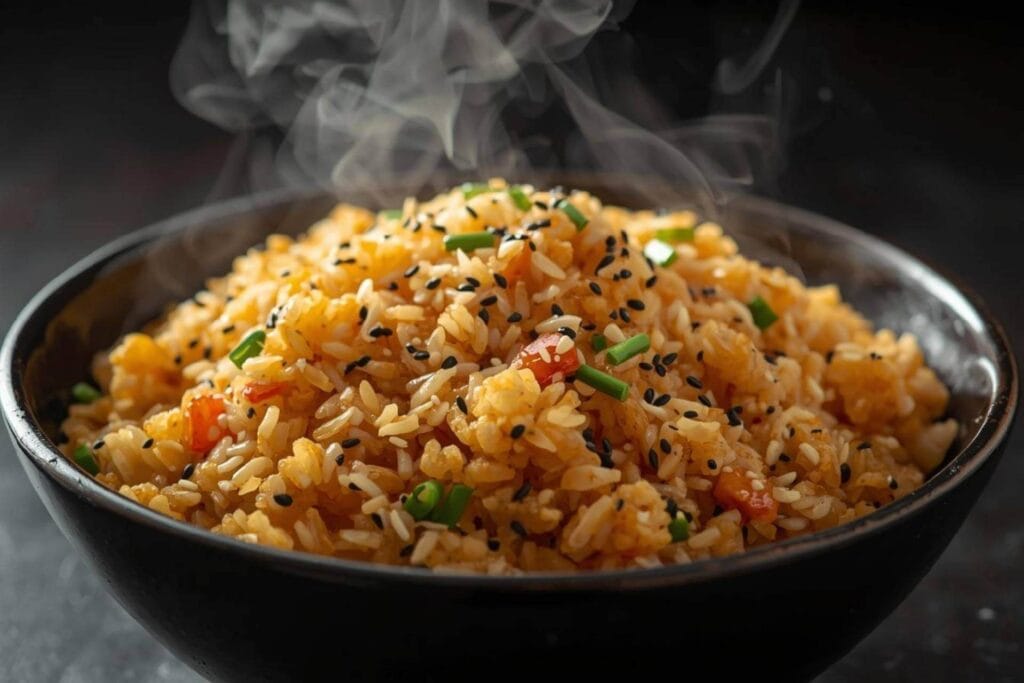
Great for: stir-fries, burrito bowls, egg fried rice swaps.
Ingredients (2 servings)
- 4 cups riced cauliflower (fresh or frozen, thawed + drained)
- 1 tbsp oil (sesame or neutral)
- 1 egg, beaten (optional)
- 2 tbsp scallions, chopped
- 1 clove garlic, minced
- 1 tbsp tamari or soy sauce
- Salt + pepper, pinch of chili flakes (optional)
Steps
- If using frozen cauliflower, squeeze out excess moisture with a towel.
- Heat oil in a large skillet on high until shimmering. Add garlic and scallions; sauté 20–30 seconds.
- Add riced cauliflower and spread into an even layer. Cook undisturbed 2 minutes to dry a little, then stir-fry 2–3 more minutes until tender but not mushy.
- Push the cauliflower to one side, pour beaten egg into the empty side, scramble quickly, then mix through.
- Finish with tamari, toss, and serve.
- Timing: ~10 minutes active.
- Flavor pairings: Sesame oil + toasted sesame seeds, chopped cilantro + lime, spicy sambal for heat. Works as a vehicle for low carb substitutes in any Asian bowl.
2) Zoodle Pesto with Cherry Tomatoes
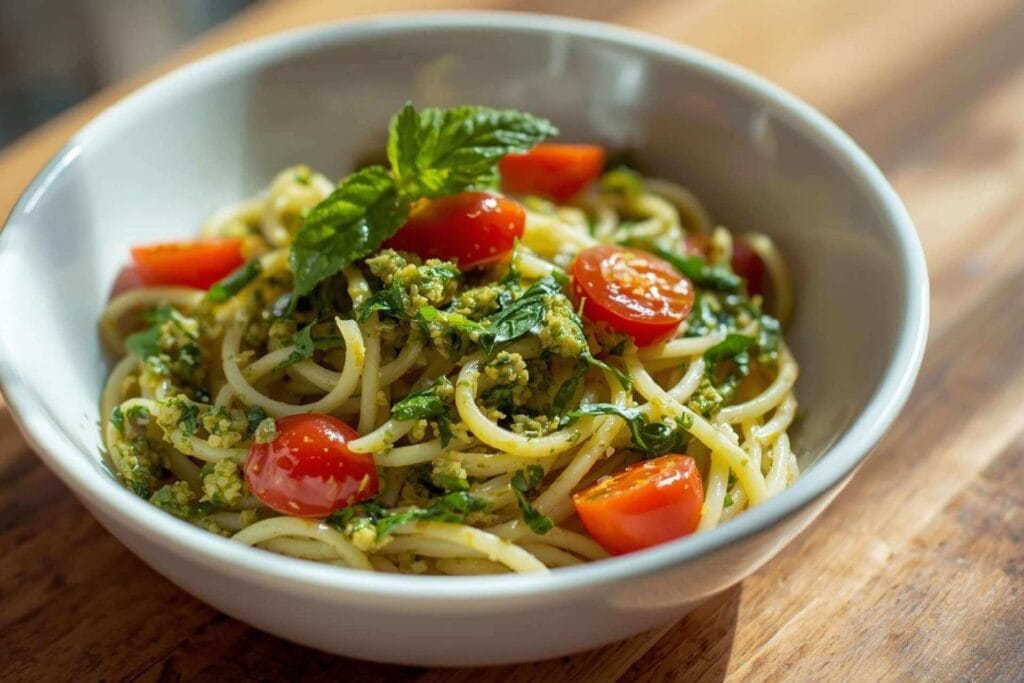
Great for: light lunches, warm salads.
Ingredients (2 servings)
- 3 medium zucchinis, spiralized (or 4 cups zoodles)
- ½ cup pesto (store-bought or fresh)
- 1 cup cherry tomatoes, halved
- 1 tbsp olive oil
- Parmigiano or nutritional yeast to finish
Steps
- Salt zoodles lightly and let drain 5–10 minutes on paper towels; pat dry.
- Heat olive oil in a skillet over medium-high heat, add zoodles and sauté 60–90 seconds—just to warm.
- Off heat, toss with pesto and tomatoes. Top with cheese or yeast.
- Timing: ~15 minutes (including draining).
- Flavor pairings: Bright lemon zest & crushed walnuts complement pesto; add grilled chicken or shrimp for protein.
3) Shirataki Pad Thai
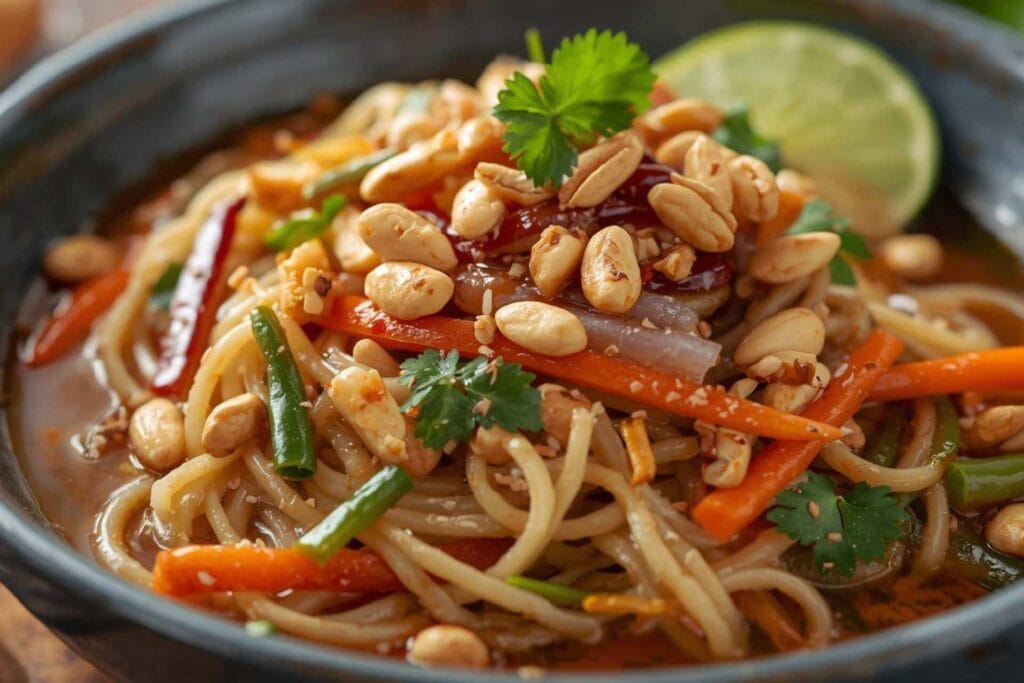
Great for: saucy, comforting noodle dishes with near-zero carbs.
Ingredients (2 servings)
- 1 package shirataki noodles, rinsed and drained
- 1 tbsp oil
- 1 small shallot, thinly sliced
- 1 cup bean sprouts
- 2 eggs (optional)
- 2 tbsp tamari, 1 tbsp fish sauce, 1 tbsp lime juice, 1 tsp sweetener (optional)
- Chopped peanuts, cilantro, lime wedge
Steps
- Rinse shirataki thoroughly; boil 1–2 minutes and drain. Dry-saute in a hot, oiled skillet 3–4 minutes to firm.
- Push noodles aside, sauté shallot 1 minute, add eggs and scramble.
- Toss everything with the sauce, and add bean sprouts last for crunch. Top with peanuts and cilantro.
- Timing: ~12–15 minutes.
- Flavor pairings: Lime + peanuts + chili flakes. Bold, umami-packed sauces make shirataki shine.
4) Almond Flour Flatbread

Great for: sandwiches, quick pizzas, wraps.
Ingredients (makes 4 small flatbreads)
- 2 cups almond flour
- 2 large eggs
- 1 tbsp olive oil
- ½ tsp salt, 1 tsp baking powder
Steps
- Whisk eggs + oil, stir into dry ingredients until a thick dough forms.
- Divide into 4 balls, press or roll between parchment to ~⅛–¼" thick.
- Pan-fry 2–3 minutes per side on medium until golden, or bake 8–10 minutes at 200°C / 400°F.
- Timing: ~20–25 minutes.
- Flavor pairings: Garlic-herb butter, za’atar + labneh, or use as a base for tomato + mozzarella.
5) Coconut Flour Pancakes

Great for: weekend breakfasts — very filling thanks to eggs.
Ingredients (2 servings)
- ¼ cup coconut flour
- 4 eggs
- 2 tbsp milk (dairy or plant)
- 1 tsp baking powder, pinch salt
- 1 tbsp sweetener (optional)
Steps
- Whisk eggs, milk, and sweetener. Stir in coconut flour + baking powder; rest 5 minutes to hydrate.
- Drop 2–3 tbsp batter per pancake on a hot nonstick pan; cook 2–3 minutes per side.
- Timing: ~15 minutes (includes rest).
- Flavor pairings: Toasted coconut flakes, berries, or a smear of nut butter for added fat and texture.
6) Legume Pasta Primavera
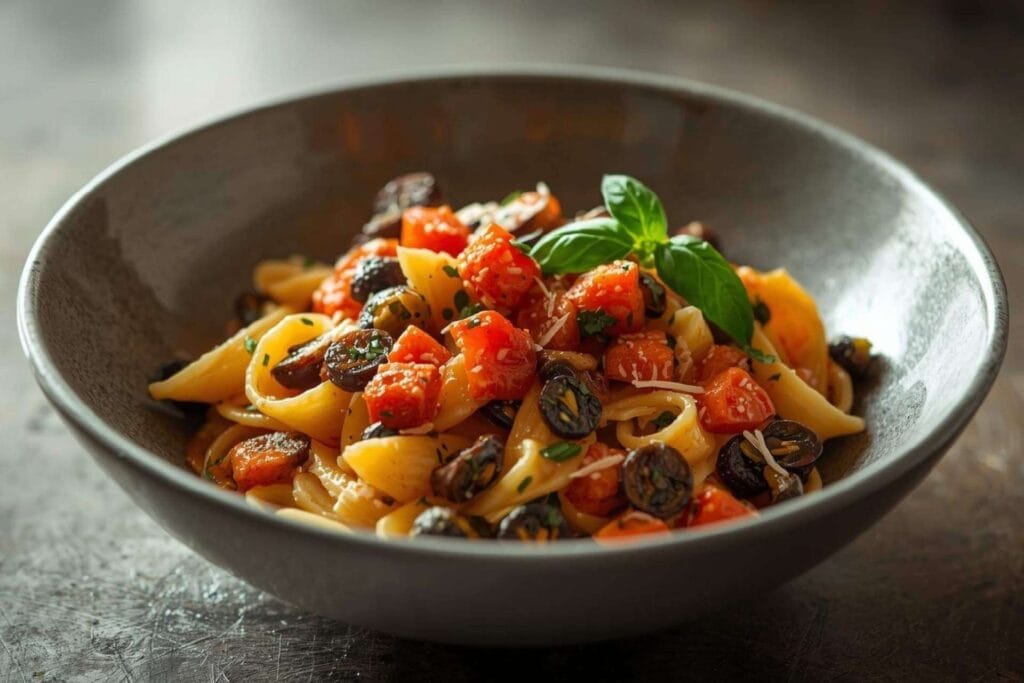
Great for: filling, nutrient-dense weeknight meals (not keto).
Ingredients (2–3 servings)
- 6 oz red-lentil or chickpea pasta
- 1 cup asparagus tips, sliced
- 1 cup cherry tomatoes
- 1 garlic clove, olive oil, lemon zest, parsley, Parmesan
Steps
- Cook legume pasta 1–2 minutes less than package directions; drain and reserve ¼ cup pasta water.
- Sauté asparagus + garlic 2–3 min, toss with pasta, tomatoes, and reserved water. Finish with lemon zest and parsley.
- Timing: ~12–15 minutes.
- Flavor pairings: Bright lemon & herb notes; add grilled chicken or chickpeas for more protein.
7) Mushroom “Rice” Pilaf
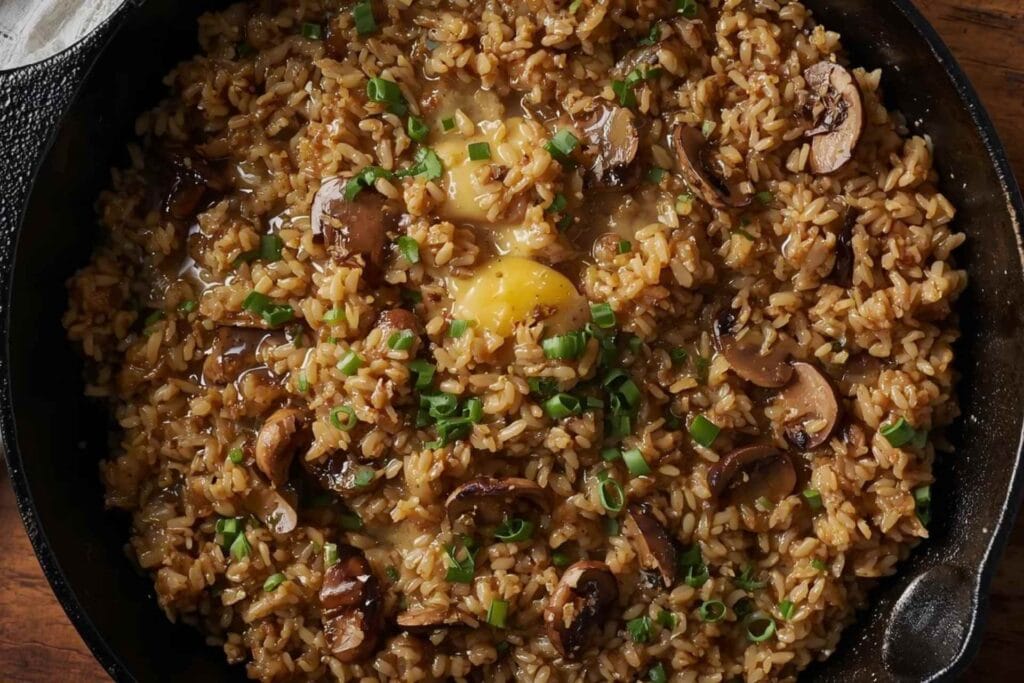
Great for: umami-rich sides and vegetarian mains.
Ingredients (2 servings)
- 3 cups finely chopped mushrooms (or pulsed in a food processor)
- 1 cup riced cauliflower (optional mix)
- 1 small onion, minced
- 1 tbsp butter or oil, thyme, salt, pepper
Steps
- Sauté onion in butter until translucent (2–3 min). Add mushrooms, high heat to brown (~6–8 min).
- Stir in riced cauliflower if using, season, and cook 3–4 more minutes. Finish with fresh thyme.
- Timing: ~12–15 minutes.
- Flavor pairings: Parmesan & a splash of white wine while sautéing, or miso + scallions for an Asian twist.
8) Hearts of Palm Carbonara
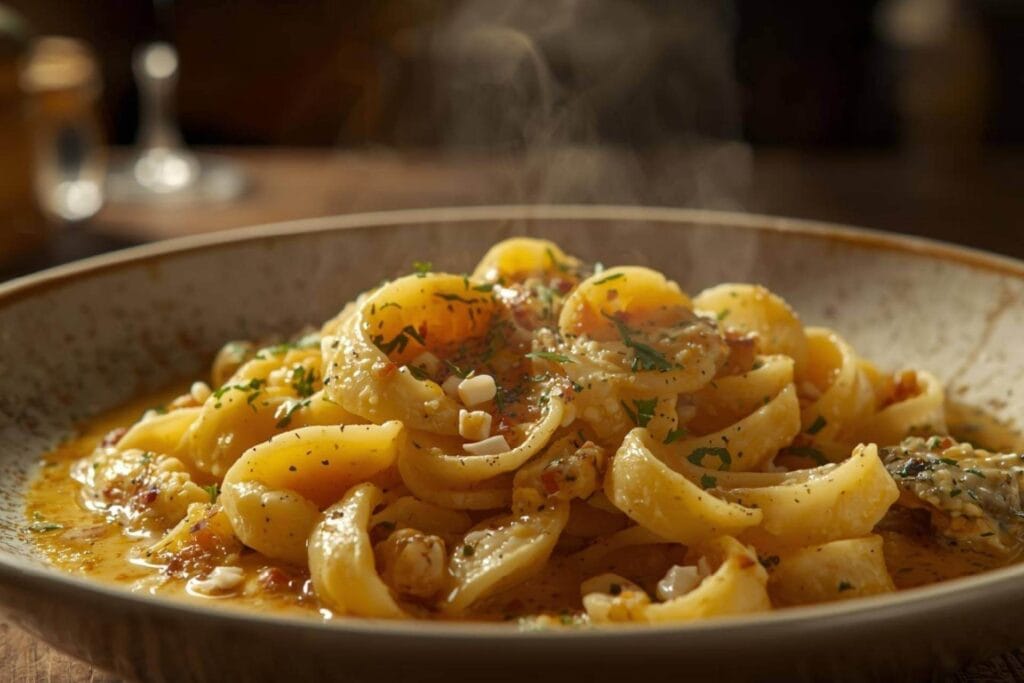
Great for: creamy, fast “pasta” with minimal carbs.
Ingredients (2 servings)
- 2 cans hearts of palm, drained & sliced into ribbons
- 2 egg yolks + 1 whole egg
- ¼ cup grated Parmesan
- 2 slices of pancetta or bacon, cooked crisp
- Black pepper
Steps
- Warm hearts of palm briefly in a pan (1–2 min). Off heat, whisk eggs + cheese, then toss with hearts of palm quickly to create a silky sauce (residual heat cooks eggs). Top with bacon and lots of pepper.
- Timing: ~10 minutes.
- Flavor pairings: Pecorino instead of Parmesan for tang; lemon zest for brightness.
9) Keto “Risotto” with Riced Cauliflower
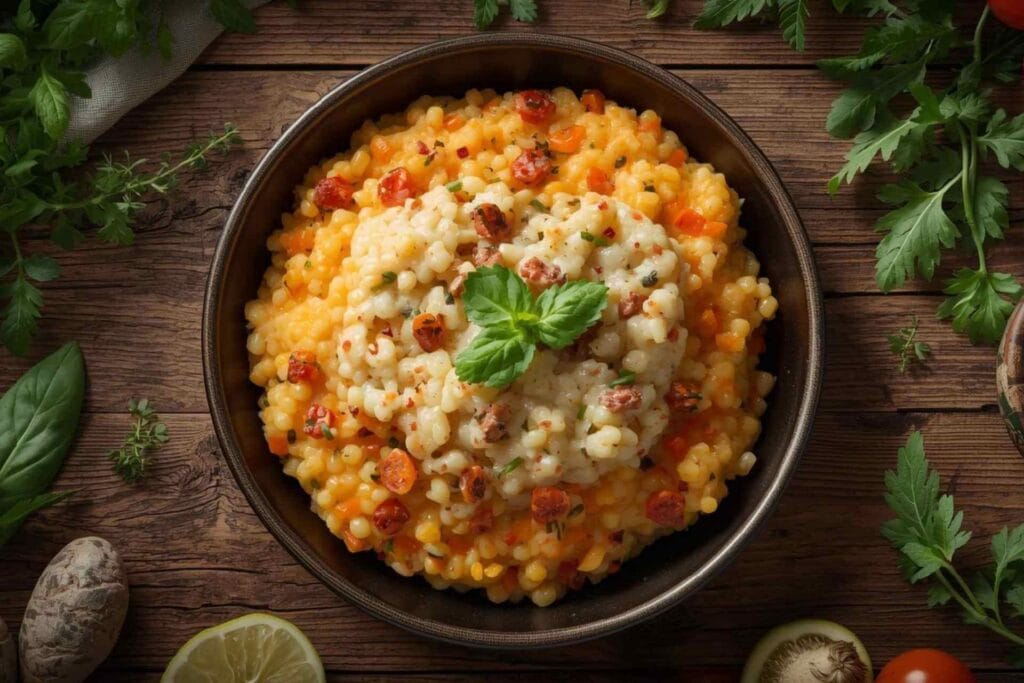
Great for: creamy, comforting side without the carbs.
Ingredients (2 servings)
- 4 cups riced cauliflower
- 1 tbsp butter + 1 tbsp olive oil
- ½ cup finely chopped onion
- ½ cup grated Parmesan, ¼ cup white wine (optional)
- Salt, pepper
Steps
- Sauté onion in butter/oil until soft (~3–4 min). Add riced cauliflower and cook 4–5 min until tender.
- Stir in wine (or a splash of stock) and simmer 1–2 min until absorbed. Remove from heat and fold in Parmesan for creaminess.
- Timing: ~12–15 minutes.
- Flavor pairings: Thyme + lemon, mushroom ragù on top, or smoked salmon for a luxe plate.
10) Cooled-and-Reheated Rice (Resistant Starch Boost)
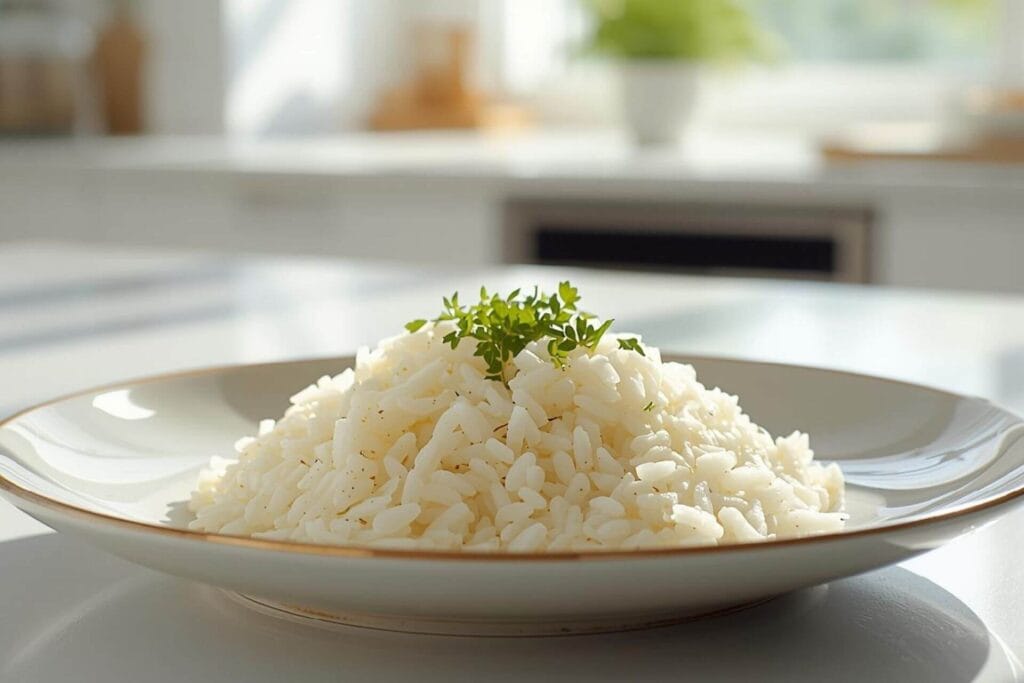
Great for: occasional real-rice lovers who want a lower glycemic hit.
Steps & Tips
- Cook rice normally (white, brown, or basmati). Spread to cool quickly and refrigerate within 1 hour. Chill for 24 hours to convert some starch to resistant starch.
- Reheat gently (microwave or steam) before serving. Use small portions as a side or mixed into a bowl with lots of veg and protein.
Timing: Cooking time + 24-hour chill.
Flavor pairings: Cold rice salads with vinegar dressing, or reheated rice in a spicy stir-fry — the texture is slightly firmer and pleasantly chewy.
Quick hacks & final tips
- Remove excess water from vegetable-based bases (zoodles, riced veg) to avoid soggy results.
- Match sauce weight to substitute type: oily/fatty sauces for delicate veg noodles; reduced, thick sauces for shirataki.
- Start modestly: replace half the rice or pasta in a recipe on your first try to ease the family into texture differences.
- Season boldly: many low carb substitutes are neutral — seasoning and acid (lemon, vinegar) make them sing.
Nutrition comparison tables & macro guides
Three tables deliver the highest value for a guide about low carb substitutes:
- Per-serving macros table — quick carb/fiber/protein comparison for each substitute (so you can compare net carbs at a glance).
- Glycemic impact & suitability notes — short GI / blood-sugar guidance + who it’s best for (keto, low-carb, flexible).
- Baking substitution chart — conversion rules and binder suggestions for common flour swaps (so baking recipes work the first time).
Below: structure + example data. All sample numbers come from reputable sources (USDA/Healthline/Atkins/product pages) — citations are shown after tables.
Table 1 — Per-serving macros (example)
Use consistent serving sizes (I recommend: 1 cup cooked or prepared for veg substitutes; 1/4 cup for flours; typical package serving for shirataki or legume pasta).
Show: Total carbs, Dietary fiber, Net carbs, Protein.
| Substitute (serving) | Total carbs | Fiber | Net carbs | Protein | Notes |
|---|---|---|---|---|---|
| Cauliflower rice (1 cup ≈107 g) | 5 g | 2 g | 3 g | 2 g | Very low-carb vegetable base; versatile for bowls and fried rice. |
| Zucchini noodles (1 cup) | 3–7 g | 1–2 g | 2–6 g | 1–2 g | Values vary by zucchini size/source; use exact database values for tracking. |
| Spaghetti squash (1 cup, cooked) | 10 g | 2.2 g | ≈8 g | 1 g | Mild vegetable “pasta” with moderate carbs compared to zucchini/shirataki. |
| Shirataki / konjac rice (100 g drained) | ~1–3 g | ~2–3 g | ~0–2 g | 0 g | Near-zero digestible carbs; rinse and prepare per package instructions. |
| Mushroom “rice” (1 cup chopped/cooked) | 2–4 g | 1–2 g | 1–3 g | 2–3 g | Umami-rich low-carb base; good for pilafs and bowls. |
| Legume pasta (chickpea / red lentil) — 56 g dry | 30–35 g | 6–8 g | 22–29 g | 12–18 g | Higher protein & fiber than white pasta but still relatively high net carbs. |
| Almond flour (¼ cup ≈ 28 g) | ~5 g | ~3 g | ~2 g | ~6 g | High fat and protein; useful in low-carb baking (not 1:1 with wheat flour). |
| Coconut flour (¼ cup ≈ 28 g) | 18 g | 10 g | ~8 g | 6 g | Very absorbent — recipes must be adjusted; high fiber lowers net carbs. |
| Hearts of palm (1 cup ≈ 146 g) | 6–8 g | 3–4 g | ~3–5 g | 2–3 g | Low-carb noodle/short-pasta alternative with neutral flavor. |
Sources for this table: USDA / Healthline / Atkins / manufacturer pages. Example pages used above: USDA cauliflower entry, Healthline spaghetti squash/coconut flour entries, Atkins rice swap guide, product nutrition pages.
Table 2 — Glycemic impact & practical suitability
This short table gives context beyond numbers: GI category, who it’s best for, and a one-line cooking tip.
| Substitute | Glycemic impact (GI / effect) | Best for | Quick tip |
|---|---|---|---|
| Cauliflower rice | Very low GI / minimal blood-sugar effect | Keto, T2D-friendly, calorie-controlled | Dry-sauté to remove moisture and add chew for a rice-like texture. |
| Shirataki / konjac | Negligible digestible carbs — minimal glycemic impact | Strict keto, zero-carb swaps | Rinse well, boil briefly, then dry-sauté to improve texture and remove odor. |
| Zoodles / spaghetti squash | Low GI but higher than konjac/cauli | Low-carb or flexible low-carb | Salt and drain zoodles; roast squash to concentrate flavor and reduce water. |
| Legume pastas | Moderate GI but lowered by fiber & protein | Low-carb-flexible, protein-forward diets | Cook al dente and pair with fat & protein to blunt glucose spikes. |
| Almond / coconut flour | Lower post-meal glucose vs wheat (more fat & fiber) | Low-carb baking & paleo | Follow conversion rules and add binders (eggs, psyllium) for structure. |
Table 3 — Baking substitution chart (practical conversions + binders)
This is the single most actionable table for you who bake. Give rule-of-thumb swaps and the binder you must add.
| Original (1 cup wheat) | Low-carb substitute & amount | Binder / extra liquid | Notes |
|---|---|---|---|
| 1 cup wheat flour | Almond flour: ~1 cup (by volume) | Add 1–2 extra eggs or 1 tbsp psyllium | Reduce liquid by ~10–20%; produces a denser crumb suitable for quick breads and bars. |
| 1 cup wheat flour | Coconut flour: use ¼ cup + 3–4 eggs | Add ~½ cup extra liquid (milk, yogurt, or water) | Extremely absorbent — not 1:1. Let batter rest to hydrate fully for best texture. |
| 1 cup wheat flour | Blend: 70% almond + 30% coconut (by weight/experiment) | 1–2 eggs + 1 tsp xanthan gum or 1 tbsp psyllium | Balanced crumb and structure; good for cakes & muffins with a softer crumb than pure almond or coconut. |
| 1 cup wheat flour | Chickpea (gram) flour: ~1 cup (savory use) | Add 1 egg or 1 tbsp oil | Stronger, savory flavor — great for flatbreads, socca-style pancakes, and savory batters. |
| 1 cup wheat flour | Commercial low-carb baking mix (brand-dependent) | Follow package instructions; often add eggs | Convenient — check carb/fiber per serving and adjust liquids as mixes vary widely. |
Food safety, storage & the “cool-and-reheat” trick (resistant starch)
Smart low carb substitutes and cooking tricks can help your blood sugar — but food safety must come first. Below is a short, practical roadmap for using the cool and reheat method to increase resistant starch in cooked rice (and reduce glycemic effect), plus clear safety rules to avoid Bacillus cereus food poisoning.
Quick roadmap (practical steps)
- Cook rice (or starchy side) as normal.
- Cool quickly — spread the rice thin on a shallow tray or transfer to shallow containers so it loses heat fast. Rapid cooling reduces the time spent in the “danger zone.” (23)
- Refrigerate at ≤ 4°C (≈39°F) within 2 hours (sooner if room temperature is hot). Store for ~24 hours to allow starch retrogradation (formation of resistant starch). This is the step that increases resistant starch and lowers how fast the starch is digested. (24, 25)
- Reheat thoroughly to piping hot (all parts at eating temperature) before serving — or enjoy cold in salads. Note: reheating kills viable bacteria but does not always destroy pre-formed toxins. If rice is left at room temperature for too long, toss it. (26)
Why this works (science, in plain language)
- When starchy foods cool, some of their starch molecules reorganize into resistant starch — a form that resists digestion in the small intestine and behaves more like fiber. Studies have shown that rice cooled at low temperature for ~24 hours and then reheated contains more resistant starch and can produce a lower post-meal blood-glucose response than freshly cooked rice. These results have been reported in human trials. (27)
- Recent research also suggests microwave reheating after refrigeration still preserves or can even tailor the resistant-starch profile (so reheating with a microwave is a reasonable option for home cooks). That said, methods and rice types vary, so effects are not identical for every recipe. (28)
Food-safety warnings you must follow (non-negotiable)
- Don’t leave cooked rice at room temperature for long. Cooked rice may contain Bacillus cereus spores from raw rice; if rice sits in the danger zone (roughly 4–60°C / 40–140°F), spores can germinate and produce heat-stable toxins. Those toxins can cause vomiting/diarrhea and are not reliably destroyed by reheating. Store cooked rice in the fridge within 2 hours (1 hour if it’s very warm).
- Cool safely: Spread rice in shallow containers to chill faster; don’t bulk-pack hot rice and shove it into the back of the fridge — that slows cooling and raises risk. Target is getting it below 10°C quickly and into the refrigerator as soon as possible. (29)
- Storage time: Use refrigerated cooked rice within 3–4 days. If anything smells off, looks slimy, or shows discoloration or mold, throw it out. Consumer guidance also recommends reheating to at least 74°C (165°F) when you plan to serve it hot. (30)
Practical tips & troubleshooting
- Speed up cooling: Spread rice in a single layer on a rimmed baking sheet, then transfer to shallow containers after it’s mostly cooled. Placing containers in an ice bath (briefly) can speed things up in a busy kitchen.
- Portion before refrigerating: Store in small portions so you only reheat what you’ll eat — this shortens cooling time and improves safety.
- When in doubt, toss it: If rice was left out overnight or more than a few hours, don’t risk it — reheating won’t neutralize some toxins.
- Use cold rice creatively: Cold, cooled rice makes great salads (vinegar dressings) or can be mixed into bowls with lots of veggies and protein to lower the glycemic effect of the meal. (31)
Bottom line (short & shareable)
- The cool and reheat trick can increase resistant starch and lower the glycemic response to rice, but only if you cool and refrigerate rice safely — rapid cooling and prompt refrigeration are essential. Never leave cooked rice at room temperature for hours; reheating doesn’t make badly handled rice safe.
Key studies & sources
- Sonia S. Effect of cooling of cooked white rice on resistant starch content and glycemic response (human trial showing lower glycemic response after 24-hour cold storage).
- Strozyk S. Influence of resistant starch resulting from the cooling of rice on postprandial glycemia (type 1 diabetes study).
- Cheng Z. Microwave reheating enriches resistant starch in cold stored rice (mechanistic work on reheating).
- CDC MMWR & guidance on Bacillus cereus and rice foodborne illness (outbreak investigations and safety practices).
- Consumer Reports / food-safety guidance on leftover rice handling and safe reheating temperatures.
Cost, availability & sustainability (how to choose long-term)
When you commit to using low carb substitutes regularly, cost, where you can buy them, and their environmental footprint matter. Below is a practical buying guide: realistic price comparisons, seasonality notes, sustainability flags (what to watch for), and budget-friendly swaps so low-carb eating stays affordable and eco-aware.
Price snapshot — what you’ll typically pay (approximate, US retail examples)
Prices change by store and region; these examples give a realistic ballpark and are cited so you can update them later.
- Frozen riced cauliflower — often $2–$4 per 10–12 oz bag at mainstream retailers. Frozen brands and store labels (e.g., Walmart, Target) commonly land in this range and are usually the cheapest ready-made veg “rice.”
- Shirataki/konjac noodles (single pack) — a single pouch typically runs $2–$4 at mainstream or Asian grocers; multi-packs or online deals can lower the per-pack cost. Expect some price variation by brand and country.
- Almond flour — retail prices vary with brand and pack size: bulk or club-store almond flour (3–5 lb) can work out to ~$6–$9 per lb (Kirkland/Costco-style value packs) while name-brand smaller bags run higher. Buying in larger quantities cuts the per-unit cost.
- Hearts of palm (canned/jarred) — often about $2–$5 per can/jar depending on brand and pack size; buy multipacks for savings.
Quick takeaway: For many households, frozen riced cauliflower and store-brand shirataki are the most budget-friendly low carb substitutes by serving; almond flour is a recurring cost but gets cheaper per unit when bought in bulk.
Availability & where to buy
- Big-box supermarkets: Frozen cauliflower, almond flour, and hearts of palm are widely available. Bulk almond flour is easy to find at warehouse stores.
- Asian grocers & online markets: The best place to find konjac/shirataki at a good price and in larger pack sizes. Online retailers often carry multi-packs and flavor/texture variants.
- Farmers’ markets / seasonal produce: Fresh cauliflower, zucchini, and other veg for DIY riced options will be cheapest and best when in season — a great money-saver if you have a reliable local source.
- Specialty health stores: Sunflower-seed flour, premium nut flours, and commercial “keto” pastas are common here; compare prices vs. bulk online sellers.
Seasonality & budget tips
- Buy frozen when out of season. Frozen riced cauliflower is often cheaper and less wasteful than buying fresh out-of-season heads. Frozen is also ready-to-use and reduces prep time.
- Use seasonal veg for DIY “rices.” When cauliflower is inexpensive in season, buy heads and slice them yourself — you’ll save money versus branded frozen packs.
- Buy flour in bulk (or subscribe): Almond flour gets markedly cheaper per pound in 3–5 lb packs; check club stores, wholesale suppliers, or bulk online sellers.
- Rotate cheaper flours & seeds. Sunflower seed flour or a small amount of oat fiber (if acceptable for your plan) can stretch almond flour while keeping the recipe low-carb.
- Watch unit size on labels. Packaged items sometimes display nutrition per unusual serving; calculate net carbs per realistic serving when comparing prices.
Sustainability & environmental notes (what to watch for)
- Hearts of palm: harvesting can be sustainable if it’s from managed plantations where palms are not killed indiscriminately. However, poorly managed harvesting can lead to deforestation and biodiversity loss. Look for responsible sourcing claims or certifications, and prefer canned/jarred hearts of palm from suppliers who disclose origin/harvesting practices. Research shows impacts depend strongly on harvest intensity and management. (32)
- Konjac cultivation (glucomannan/shirataki): Konjac is typically grown in parts of Asia; studies and agricultural reports note that konjac production can be an income source for small holders and may be adapted to local conditions, but like any crop, it has environmental footprints (land use, inputs). Sustainable sourcing transparency is still spotty—look for brands that disclose origin or partner with traceable supply chains. Policy/academic papers discuss konjac’s socio-economic potential and agricultural considerations. (33, 34)
- Nut flours (almond): almonds are water-intensive crops (notably in some regions), and large-scale almond farming has documented environmental impacts in areas with water stress. If sustainability is a high priority, consider sourcing almond flour from brands that use responsible water/practice disclosures or diversify with seed flours that have lower water footprints. (Regional variation matters a lot.)
Practical sustainability rule: prefer traceable brands, rotate your swaps (don’t rely on a single imported product), and when possible, buy local veg (cauliflower, zucchini) to reduce food miles.
Practical budget swaps and meal planning tactics
- Do a partial swap first. Replace half your usual rice/pasta serving with riced cauliflower or zoodles to cut carbs and costs while keeping family acceptance high.
- Batch-cook & freeze. Make large batches of riced cauliflower, portion into freezer bags, and use frozen portions all week to reduce waste and per-meal cost.
- Mix stretchers into recipes. Add a small amount of cheaper legume pasta (when not keto) or a mix of cauliflower + a handful of quinoa for texture and satiety, which can lower total cost per bowl.
- Buy multipacks of shirataki or konjac online to reduce the per-pack cost if you like them often.
- Use nut flours sparingly: treat almond flour like an ingredient rather than a bulk filler — combine with eggs, psyllium, or cheaper seed flours to stretch it. Bulk-buying lowers unit cost if you bake frequently.
Decision checklist — choosing long-term
- If cost is the priority, start with frozen riced cauliflower and seasonal fresh cauliflower for DIY — best $/serving and low prep.
- If near-zero carbs are required (keto strict): budget for shirataki/konjac (buy multipacks to save).
- If baking is frequent, calculate bulk almond flour prices vs. small-bag costs — bulk usually wins.
- If sustainability matters: favor local veg swaps, check hearts of palm sourcing, and diversify flours to reduce reliance on water-intensive crops.
7-Day Sample Meal Plan Using Swaps (compact)
Below are two 7-day sample plans you can use right away: a strict low-carb version and a flexible low-carb version. Both show breakfast, lunch, dinner, and 1–2 snacks, plus the exact practical swaps used (so you can copy them). I’ve also listed approximate daily macros so you know what each approach targets.
Approximate daily macros (per day)
- Strict low-carb version: ~25 g net carbs, 110 g protein, 130 g fat — total ≈ 1710 kcal.
- Flexible low-carb version: ~90 g net carbs, 100 g protein, 80 g fat — total ≈ 1480 kcal.
These are sample targets to show how swaps change macros. Adjust portions, snacks, and oil/butter to match your own calorie needs.
Strict low-carb 7-day plan (Vegetable-first / keto-lean)
Day 1
- Breakfast: 2-egg scramble with spinach + ¼ avocado.
Swap: Use scrambled eggs with sautéed zoodles or spinach if you want more volume. - Lunch: Chicken bowl: grilled chicken, 1½ cups cauliflower rice, roasted broccoli, drizzle of tahini.
Swap: cauliflower rice for white rice. - Snack: 10 almonds + 1 string cheese.
- Dinner: Shirataki stir-fry: prepped shirataki noodles, ground pork, garlic, tamari, sesame oil, scallions.
Swap: shirataki for wheat noodles. - Notes: High fat from avocado + sesame oil helps satiety.
Day 2
- Breakfast: Almond-flour pancakes (small) with butter.
Swap: almond flour for wheat flour. - Lunch: Tuna salad over mixed greens + hearts-of-palm “short pasta” for texture.
Swap: hearts-of-palm for short pasta. - Snack: Celery sticks + 2 tbsp almond butter.
- Dinner: Baked salmon with lemon, garlic & a side of sautéed mushroom rice (finely chopped mushrooms + a handful of riced cauliflower).
- Notes: Mushrooms add umami and body without carbs.
Day 3
- Breakfast: Greek yogurt (full-fat, small portion) with 1 tbsp chia seeds and a few raspberries.
- Lunch: Zoodle salad with pesto, cherry tomatoes, grilled shrimp.
Swap: zoodles for spaghetti. - Snack: 2 boiled eggs.
- Dinner: Keto “risotto” (riced cauliflower cooked with butter, parmesan, a splash of stock) + braised chicken thighs.
- Notes: Parmesan and butter make cauliflower feel indulgent.
Day 4
- Breakfast: Omelet with cheddar, mushrooms, and chopped kale.
- Lunch: Leftover salmon on a bed of mixed greens + 1/2 cup cooled-and-reheated (small) rice only if you need it — otherwise keep it cauliflower-based.
Swap: an optional small portion of cooled rice to raise resistant starch (and a tiny carb bump). - Snack: Small handful of macadamia nuts.
- Dinner: Hearts-of-palm carbonara (hearts-of-palm ribbons, egg yolk sauce, pancetta).
- Notes: Use strict portioning if you include even a small amount of rice.
Day 5
- Breakfast: Coconut-flour pancakes (2 small) + nut butter.
Swap: coconut flour for wheat flour (much higher absorbency — recipes need eggs). - Lunch: Beef & broccoli bowl with cauliflower rice.
- Snack: Olives + baby cucumber.
- Dinner: Shirataki bolognese (rich meat sauce over well-prepared shirataki).
- Notes: Bold sauces are best for konjac texture.
Day 6
- Breakfast: Chia pudding (chia + unsweetened almond milk + vanilla).
- Lunch: Cobb salad: bacon, hard egg, blue cheese, avocado — no croutons.
- Snack: Cheese slice + a few walnuts.
- Dinner: Grilled pork chops + roasted Brussels sprouts and a mushroom-cauli pilaf.
- Notes: Aim for fiber with veg sides.
Day 7
- Breakfast: Bulletproof coffee or café au lait + 1 small almond-flour muffin.
- Lunch: Chicken Caesar with romaine + parmesan + anchovies; swap croutons for toasted almond flour crumb topping if you want crunch.
- Snack: Pepper strips + guacamole.
- Dinner: Zoodle Pad Thai with shrimp (use spiralized zucchini + tamarind-peanut sauce).
- Notes: Finish the week with a fun textured bowl.
Flexible low-carb 7-day plan (more carbs allowed, veg + legume options)
Day 1
- Breakfast: Oat-free muesli: ¾ cup Greek yogurt + 2 tbsp chopped nuts + 2 tbsp cooked quinoa.
Swap: small quinoa instead of all veg rice — moderate carbs. - Lunch: Turkey bowl: roasted turkey, ½ cup quinoa, roasted veg.
- Snack: Apple slices + 1 tbsp peanut butter.
- Dinner: Chickpea-pasta primavera (red-lentil pasta, sautéed peppers, asparagus, light cream).
Swap: legume pasta for wheat pasta — higher protein & fiber, lower net carbs than white pasta.
Day 2
- Breakfast: Smoothie (unsweetened milk, ½ banana, spinach, protein powder).
- Lunch: Lentil salad with chopped veg, feta, and lemon dressing.
- Snack: Carrot sticks + hummus.
- Dinner: Spaghetti squash with turkey meatballs and marinara (small side of roasted root veg if activity is higher).
Swap: spaghetti squash for pasta.
Day 3
- Breakfast: 2 eggs + 1 slice sprouted-grain toast (or almond-flour toast for lower carb).
- Lunch: Grain bowl: ½ cup farro or wild rice + roasted salmon + kale.
- Snack: Handful of mixed nuts.
- Dinner: Baked red-lentil pasta casserole with veggies and melted mozzarella.
- Notes: Legume pastas provide extra protein and fiber — they’re a flexible low carb substitute that still satisfies carb cravings.
Day 4
- Breakfast: Cottage cheese with pineapple chunks (small) + sunflower seeds.
- Lunch: Quinoa tabbouleh + grilled chicken.
- Snack: Greek yogurt + a few berries.
- Dinner: Stir-fry with ½ cup cooked brown rice or 1 cup cauliflower rice (choose based on your day’s carbs).
- Notes: Flexible plan lets you pick rice vs cauliflower depending on activity.
Day 5
- Breakfast: Almond-flour pancakes (2) with a small drizzle of maple or sugar-free syrup.
- Lunch: Chickpea salad sandwich on thin sprouted rye or a dense almond-flour flatbread.
- Snack: Orange or clementine.
- Dinner: Grilled steak + mushroom barley risotto (smaller portion of barley, or riced cauliflower risotto for lower carbs).
Day 6
- Breakfast: Scrambled eggs + ¼ cup cooked quinoa mixed into the scramble for volume.
- Lunch: Bean-and-veg chili (small bowl) with a side of hearts-of-palm slaw.
- Snack: Pear slices + cheddar.
- Dinner: Pesto zoodles (zucchini noodles tossed with pesto) + a small serving of chickpea pasta tossed in for chew (half-and-half).
Day 7
- Breakfast: Smoothie bowl (small banana, berries, 2 tbsp hemp seed, unsweetened milk).
- Lunch: Buddha bowl: ½ cup farro, roasted tofu, kale, tahini drizzle.
- Snack: Roasted chickpeas (portion-controlled).
- Dinner: Family-style: mix 1 cup cooked wild rice with riced cauliflower and grilled vegetables + protein (keeps carbs moderate while stretching servings).
Practical swap notes & tips (how to use the plan)
- Half-swap for family meals: If others eat regular rice/pasta, serve half-and-half: 50% regular rice + 50% cauliflower rice — same plate, lower net carbs.
- Batch-cook bases: Roast a tray of cauliflower rice, spiralize 4 zucchinis, and pre-boil a couple of shirataki packs so evening cooks are fast.
- Portion control: Flexible plan includes more whole-grain/legume carbs — keep servings to ½ cup cooked to stick to target macros.
- Protein sizing: A palm-sized serving of meat or fish ≈ , 20–25 g protein — scale to hit daily protein targets.
- Snack strategy: Favor fat + protein snacks (nuts, cheese, nut butters) on strict low-carb days; include fruit or legumes on flexible days.
Quick troubleshooting & customization
- If you feel hungry on strict low-carb days: add healthy fats (extra olive oil, an extra tablespoon of nut butter, or more avocado) and check protein portions.
- If energy is low during workouts, pick the flexible plan on training days (add a small serving of quinoa/chickpea pasta before exercise).
- Want to track precisely? Use a calorie/macros app and scan labels — the low carb substitutes here make it easy to lower net carbs while keeping meals familiar.
Troubleshooting: common problems & fixes
Even the best low carb substitutes can act up in the kitchen. Below are the most frequent pain points and fast, practical fixes so you spend less time stressing and more time eating delicious food.
“Zoodles soggy” — why it happens & how to fix it
Why: Zucchini holds a lot of water. When you cook it too long or don’t remove moisture first, the strands release liquid and go limp.
Quick fixes
- Salt & drain: After spiralizing, sprinkle with a pinch of salt, let sit 10–15 minutes, then pat or squeeze out moisture with a clean towel.
- Use a thick spiral or ribbons: Wider ribbons hold up better than paper-thin spaghetti strands.
- High heat, short time: Sauté 1–2 minutes only, or serve raw in salads. Avoid long simmering.
- Toss off-heat: Add sauce off the stove to avoid steam breakdown.
Pro tip: If a dish is already soggy, drain on paper towels, then pan-crisp in a hot skillet to revive texture.
“Baked goods collapse” — causes & rescue steps
Why: Low-carb flours lack gluten and often need extra binders, correct hydration, and proper leavening. Overmixing or underbaking also causes collapse.
Quick fixes
- Add structure: Increase eggs or psyllium husk slightly (e.g., 1 tsp psyllium per cup of almond flour for extra lift).
- Check bake time & temp: Low-carb cakes can look done but still be underbaked. Use a thermometer (internal ~95–99°C / 203–210°F for loaves) or toothpick test.
- Don’t over-hydrate: Reduce liquid by 10–15% when converting wheat recipes to almond flour.
- Let it cool completely: Many low-carb breads set as they cool—slicing hot can make them crumble or collapse.
Pro tip: If crumb is gummy, bake 5–10 minutes longer at slightly lower temp to dry the center without over-browning.
“Odd aftertaste from konjac/shirataki” — elimination strategies
Why: Packaging liquid and natural konjac scent can create a mild “earthy” odor or taste if not rinsed well. Some people perceive a mineral or fishy note.
Quick fixes
- Rinse thoroughly: Drain and rinse under running water for at least 30–60 seconds.
- Boil briefly: Boil 1–2 minutes to neutralize odor.
- Dry-saute: Pan-fry in a little oil for 3–5 minutes to firm the texture and remove moisture.
- Use bold sauces: Peanut, sesame, coconut curry, or rich tomato ragù mask any lingering taste.
Pro tip: Occasionally soak in a splash of rice vinegar or lemon water for 5–10 minutes to brighten flavor before cooking.
“Legume pasta too chewy or gummy” — tweak for perfect al dente
Why: Legume-based pastas cook differently from wheat pasta and can become gummy if overcooked or if too much starch is left on the surface.
Quick fixes
- Under-cook slightly: Reduce cook time by 1–2 minutes compared to package directions and test for firmness.
- Rinse briefly: For some legume pastas, a quick cold rinse after draining reduces surface starch and tackiness (useful in salads).
- Finish in sauce: Drain a bit early and finish cooking for 1–2 minutes directly in the sauce — this absorbs flavor and controls texture.
- Add acid/fat: A splash of lemon or a pat of butter reduces perceived chewiness and rounds flavor.
Pro tip: If the pasta is gummy after cooking, toss with a little olive oil, spread on a baking sheet, and bake 3–5 minutes at 200°C / 400°F to dry the top layer slightly.
Mini troubleshooting checklist
- Remove extra water from veg swaps (zoodles, riced veg).
- When baking with low carb substitutes, add eggs/psyllium and reduce liquids.
- Rinse + boil + dry-saute konjac before saucing.
- Undercook legume pasta; finish in sauce.
- When in doubt: taste, adjust, repeat — seasoning and texture fixes are usually two steps away.
Conclusion
Quick recap: low carb substitutes let you keep the foods you love while cutting carbs, stabilizing blood sugar, and boosting veggies and protein on your plate. Start small—swap half your rice for cauliflower rice or trade one pasta night for zoodles—and you’ll see how simple changes add up.
Encouragement to experiment: treat the kitchen like a lab. Try one new swap each week, tweak cooking times and sauces, and note what your family actually likes. Bold flavors (garlic, lemon, cheese, nut butters) make most swaps feel familiar fast.
Reminder to track portions and macros: measure servings with a kitchen scale or cups, log meals in an app (Cronometer, Carb Manager, or MyFitnessPal), and use net carbs = total carbs − fiber to judge impact. If you monitor blood sugar, compare readings after a usual meal versus a swapped meal to see real effects.
Final tip: consistency beats perfection. Small, sustainable swaps win over time—so pick the ones you enjoy, track what matters, and keep iterating.
FAQs
Is cauliflower rice suitable for keto?
Yes — cauliflower is low in carbs and works as a common low carb substitute for rice in keto diets.
Are shirataki noodles safe, and how do I cook them?
Yes — rinse well, boil or dry-saute to improve texture. Shirataki is a top ultra-low-carb substitute.
Can I swap almond flour 1:1 for wheat flour?
No — almond and coconut flours require recipe adjustments and binders; they’re low carb substitutes but not direct 1:1 swaps.
Do legume pastas count as low-carb?
They’re lower in net carbs than white pasta and higher in protein/fiber, but not as low as vegetable or konjac options. Use them when you want more protein.
Does cooling rice reduce its glycemic impact?
Cooling cooked rice increases resistant starch and can reduce glycemic response when reheated later — but refrigerate promptly for safety.
We may earn a commission when you buy using our links


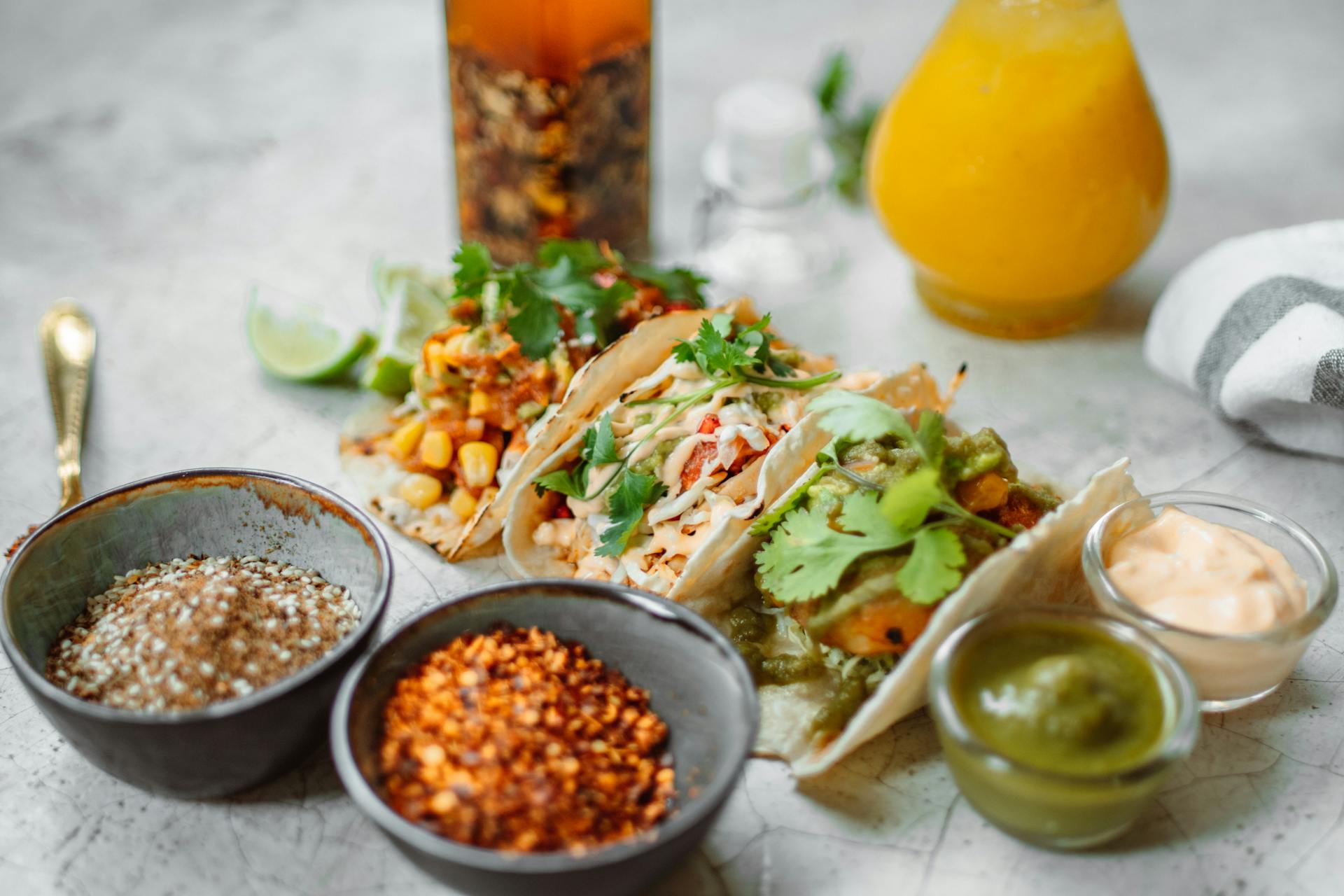



0 Comments