
A high protein low carb breakfast can feel like a small win before the day even starts. It gives you something satisfying, flavorful, and easy to build without leaning on toast, cereal, or a pile of carbs that leave you hungry again an hour later. That is exactly why breakfast bowls have become such a go-to option. They are flexible, fast, and easy to customize, which means you can make them work on busy weekdays, slow weekends, or meal prep days when you just want breakfast to take care of itself.
The best part is that a high protein low carb breakfast does not need to be complicated. You do not need fancy ingredients or a chef-level kitchen. You just need a smart formula, a few reliable protein choices, and a couple of low carb vegetables or toppings that bring everything together. Once you learn the pattern, the bowl becomes a kind of breakfast template, like a blank canvas with a very tasty purpose.
In this guide, you will find the building blocks, flavor ideas, meal prep tips, and recipe combinations that make a high protein low carb breakfast feel exciting instead of repetitive.
The goal is simple: help you make breakfasts that are easy to love and easy to repeat.
Why This Breakfast Bowl Style Is So Popular
A high protein low carb breakfast bowl has become popular for one simple reason: it solves a real morning problem. People want breakfast to be fast, but they also want it to feel complete, satisfying, and worth eating. A bowl does that beautifully because it combines protein, texture, and flavor in one easy meal. Instead of grabbing something random and hoping it holds you over, you get a breakfast that feels intentional from the first bite.
Another big reason this style works so well is that it fits a busy life. A high protein low carb breakfast bowl can be cooked fresh in just a few minutes, or prepped ahead and assembled quickly when you are half awake. That makes it appealing for workdays, school mornings, post-workout meals, and even slow weekends when you still want something simple. It is the kind of breakfast that feels like a shortcut, but not a compromise.
Set the stage with the promise of a breakfast that is fast, filling, and macro-friendly
The best breakfasts usually do three things well: they save time, they keep you full, and they taste good enough that you actually want to eat them again. That is exactly why a high protein low carb breakfast bowl stands out. It does not rely on a long ingredient list or a bunch of complicated steps. Instead, it gives you a straightforward formula that works, which is a huge relief on rushed mornings.
“Macro-friendly” is another reason this style keeps showing up in meal plans and recipe searches. People like knowing that a high protein low carb breakfast can fit into a bigger nutrition goal without feeling restrictive or boring. Protein helps anchor the meal, while lower-carb ingredients keep things balanced and easier to adjust. That combination makes the bowl feel practical, especially for anyone who wants breakfast to support energy, focus, and satiety without a sugar crash.
The beauty of the bowl format is that it is flexible enough to fit different routines. Some people want something warm and savory, while others prefer a cool yogurt bowl with fruit and seeds. Some want a meal prep option they can grab in seconds, while others want a breakfast that feels fresh and customized. A high protein low carb breakfast bowl works in all of those situations, which is part of why it has become such a repeat favorite.
Explain the appeal of bowls for readers who want something more exciting than plain eggs
Plain eggs are fine, but they can start to feel repetitive fast. That is where breakfast bowls come in. A bowl lets you take the same core ingredients and build something that feels more layered, colorful, and interesting. A high protein low carb breakfast does not have to mean the same scrambled eggs every morning. It can mean eggs with avocado and salsa one day, cottage cheese with cucumber and herbs the next, and smoked salmon with greens on another day.
Bowls also make breakfast feel more satisfying because they create variety in every bite. You are not just eating one texture or one flavor. You get creamy, crunchy, salty, fresh, warm, and savory all in the same dish. That matters more than people realize. A high protein low carb breakfast bowl is often easier to stick with because it feels like a real meal, not just a protein checkpoint.
There is also a visual appeal that people love. A bowl looks abundant and colorful, even when the ingredients are simple. That makes breakfast feel a little more special without adding extra work. When the meal looks inviting, it is easier to enjoy it and easier to repeat it.
Introduce the 20g+ protein target and why it matters for a satisfying morning meal
The 20g+ protein target is one of the most useful ideas behind a high protein low carb breakfast. It gives the meal enough structure to feel substantial, not just light and snack-like. A bowl with that much protein is more likely to keep you satisfied, support a steady morning routine, and reduce the urge to snack too early. That makes it a practical target for people who want breakfast to do more than just fill time.
A lot of breakfast foods are built around carbs first and protein second, which is why they sometimes leave you hungry before lunch. A high protein low carb breakfast flips that pattern. It puts protein at the center, then builds around it with low carb vegetables, healthy fats, and flavor boosters. That shift creates a more balanced meal and often a more enjoyable one, too. It is a small change in structure, but it makes a noticeable difference in how breakfast feels.
The 20g+ goal is also helpful because it is easy to remember. You do not need to measure every bite or turn breakfast into a math problem. You need to build smartly with ingredients like eggs, Greek yogurt, cottage cheese, turkey sausage, salmon, chicken, or tofu. Once you understand how those pieces work together, creating a high protein low carb breakfast becomes almost automatic. And when something is easy to repeat, that is usually a good sign that it will last.
What Makes a Breakfast Bowl “High Protein” and “Low Carb”?
A high protein low carb breakfast bowl works because it keeps the math simple in the best possible way: more protein, fewer fast-digesting carbs, and enough volume to feel like a real meal. Instead of building breakfast around bread, oats, pastries, or sugary add-ins, you build it around ingredients that do more of the heavy lifting. That usually means eggs, dairy, lean meat, seafood, tofu, vegetables, herbs, and a few smart toppings that add flavor without turning the bowl into a carb-heavy meal. The result is a breakfast that feels hearty, but still stays aligned with a lower-carb approach. (1, 2)
The easiest way to think about a high protein low carb breakfast is to imagine a balance between four things: protein, carbs, fats, and volume. Protein gives the bowl its staying power; fats make it taste richer and more satisfying; low carb vegetables add bulk and texture; and the carb count stays lower because you are not leaning on the usual breakfast staples like toast, granola, or cereal. That balance matters because breakfast is the first meal of the day, and it sets the tone for how full and focused you feel afterward. A good bowl should feel like breakfast actually happened, not like you just had a snack disguised as a meal. (3)
That is also why the American Heart Association’s protein guidance is helpful when you are planning a high protein low carb breakfast. The AHA says the adult RDA baseline is 0.8 g/kg per day, and it also notes that 10% to 35% of daily calories can come from protein.
That does not mean every breakfast has to be huge or perfectly measured, but it does give you a useful frame: breakfast should contribute meaningfully to your protein intake, not just nibble around the edges. In other words, your morning bowl should help you move toward your day’s protein target instead of leaving all the work for lunch and dinner.
What 20g+ Protein Looks Like in Real Life
A high protein low carb breakfast does not need to be complicated to hit 20 grams of protein.
In real life, that amount can come from very ordinary ingredients: eggs, Greek yogurt, cottage cheese, turkey sausage, chicken, salmon, tuna, tofu, or other protein-rich foods. The American Heart Association specifically points out eggs, fish and seafood, legumes, lean meats, poultry, low-fat dairy, nuts, seeds, and soy as smart protein choices, which makes breakfast bowls a very natural fit for this style of eating.
A 20g target is useful because it gives you a practical, easy-to-remember benchmark. You are not trying to build a restaurant-sized plate, and you are not trying to turn breakfast into a science experiment. You are simply making sure the bowl is protein-forward enough to feel substantial.
For many dieters, that is the sweet spot: enough protein to feel steady and satisfied, but not so much that breakfast becomes a huge production. A bowl with two or three eggs plus cottage cheese, or Greek yogurt with seeds and nuts, or salmon with eggs and vegetables can get you there quickly. That is why a high protein low carb breakfast bowl works so well in everyday life.
Once you understand the pattern, it becomes easy to move beyond 20 grams and build toward 25g, 30g, or more when you need it. That might mean adding egg whites, increasing the portion of Greek yogurt, using a larger serving of chicken or turkey, or pairing your main protein with a second supporting ingredient like cheese or seeds. The point is not to chase a perfect number every morning. The point is to make your high protein low carb breakfast strong enough to match your appetite and your schedule. Some days that means a lighter bowl, and some days it means a bigger one. Both can still fit the same basic structure.
Why Low Carb Breakfasts Often Feel More Satisfying
One reason a high protein low carb breakfast often feels so good is that protein tends to be more satiating than refined carbs alone. Harvard Health notes that protein can increase satiety, and research on higher-protein breakfasts has linked them to reduced hunger later in the day.
That is a big reason these bowls have such staying power: they are built to help you feel full and more stable, not just temporarily fed. When breakfast leaves you less interested in snacking an hour later, the whole morning tends to run more smoothly. (4, 5)
Fiber and fat help with that feeling, too. Harvard’s Nutrition Source explains that fiber helps regulate the body’s use of sugars and can help keep hunger and blood sugar in check, which is one reason low carb bowls often feel more balanced when they include vegetables, nuts, seeds, or berries in the right portions. Add a little healthy fat from avocado, olive oil, cheese, nuts, or seeds, and the bowl feels even more complete. That combination of protein, fiber, and fat is a major reason a high protein low carb breakfast can feel more satisfying than a breakfast built mostly around starch or sugar.
There is also a very practical kitchen reason this style works: it is easy to control the texture and the ingredients. A bowl with eggs, vegetables, and avocado does not get the same quick sugar and crash effect as a breakfast pastry. A bowl with cottage cheese, cucumber, and herbs feels cool and creamy without becoming heavy. A bowl with salmon, greens, and feta feels rich but not overly dense. That is what makes the format so useful. A high protein low carb breakfast gives you options, but it also gives you structure. You can keep it simple, mix it up, and still know the meal is doing its job.
The Best Building Blocks for Breakfast Bowls
A strong high protein low carb breakfast bowl usually starts with a very simple formula: protein + low carb base + veggies + fat + flavor. That formula works because each part has a clear job. Protein brings staying power, the base gives the bowl structure, vegetables add volume and freshness, fat adds richness, and flavor elements keep the whole thing from tasting flat. When those pieces work together, breakfast feels more like a complete meal and less like a random pile of ingredients. (6)
The nice thing about this formula is that it keeps a high protein low carb breakfast flexible without making it complicated. You are not forced into one exact recipe or one “perfect” ingredient list. Instead, you can swap one protein for another, change the vegetable base, or shift the flavor profile from savory to fresh to spicy.
That is a big reason breakfast bowls are so useful in real life: they feel customizable, but they still have enough structure to be easy. Current breakfast bowl recipes also show this pattern over and over again, with eggs, cottage cheese, Greek yogurt, sausage, and salmon appearing as the core building blocks. (7, 8, 9, 10)
Protein Sources That Make 20g Easy
Protein is the anchor of a high protein low carb breakfast. The American Heart Association recommends choosing healthier protein sources, especially plant-based options, fish and seafood, low-fat dairy, and lean, unprocessed meats or poultry.
That gives you a very practical menu of breakfast-friendly choices: eggs, egg whites, cottage cheese, Greek yogurt, turkey, chicken, salmon, tuna, sausage in moderation, tofu, tempeh, and protein-enhanced blends like egg and cottage cheese mixtures. These ingredients are popular for a reason. They are easy to cook, easy to portion, and easy to combine with vegetables or other toppings. (11)
That is also why 20g of protein is such a useful target for a high protein low carb breakfast. It is high enough to feel meaningful, but not so high that breakfast becomes a giant project. A bowl built with two or three eggs, plus cottage cheese or turkey sausage, can get you there quickly. So can Greek yogurt with seeds and nuts, or salmon with eggs and vegetables. Some newer breakfast bowl recipes even push well past that mark, showing 33g or more in a single bowl when eggs, egg whites, and cottage cheese are blended or paired with another strong protein.
A helpful way to think about protein is to mix a main source with a support source. For example, eggs can do the heavy lifting while cottage cheese or cheese fills in the gaps. Chicken or turkey can be the anchor while yogurt-based sauce or seeds round out the bowl. This makes it easier to build a high protein low carb breakfast without having to count every bite. You are simply stacking a few smart ingredients in a way that naturally gets you to the protein range you want.
Low Carb Bases That Still Feel Hearty
The base is what gives a bowl its shape, and it has a bigger impact on the final feel than people sometimes realize. A high protein low carb breakfast does not need toast, oats, or granola to feel complete. Instead, it can lean on cauliflower rice, sautéed spinach, zucchini, mushrooms, shredded cabbage, chopped romaine, or a mixed veggie medley. These bases add bulk and texture without taking over the carb budget, which is why they work so well in bowl recipes. (12)
The base also changes the personality of the bowl. Cauliflower rice makes a bowl feel more like a breakfast hash. Spinach or romaine makes it feel lighter and fresher. Mushrooms and zucchini add a softer, more savory texture. Cabbage gives a little crunch and holds up well if you are meal prepping. That means a high protein low carb breakfast can feel cozy, crisp, creamy, or hearty just by changing the base. You are not only changing the ingredients. You are changing the whole mood of the meal.
This is also where the bowl format gets really smart for busy mornings. If you already have a cooked protein, a quick vegetable base, and one or two toppings ready, breakfast takes almost no effort. You just assemble, season, and eat. That makes a high protein low carb breakfast much easier to repeat, which is usually the real secret behind any good morning routine.
Healthy Fats and Finishers That Pull It Together
Healthy fats are the finishing touch that makes a high protein low carb breakfast feel polished instead of plain. Avocado, olives, pesto, nuts, seeds, cheese, and herb oils all add richness and depth. They also help a bowl feel more satisfying, especially when the breakfast is built around lean protein and vegetables. Harvard’s Healthy Eating Plate emphasizes healthy plant oils in moderation, which is a good reminder that fat is not just a bonus here. It is part of what makes the meal taste complete. (13)
Small finishing touches matter more than most people think. A little feta can make eggs taste brighter. A few pumpkin seeds can add crunch. A spoonful of pesto can make chicken and zucchini taste more interesting. A drizzle of herb oil can make even a simple bowl feel restaurant-worthy.
That is the beauty of a high protein low carb breakfast: the ingredients can stay basic, but the final bowl still feels thoughtful.
There is also a practical reason these finishers work so well. Protein and fiber are important, but they are not the whole story. A bowl usually feels best when it has contrast. Creamy eggs plus crunchy seeds. Savory chicken plus bright herbs. Cool cottage cheese plus salty olives. That contrast gives the meal texture and keeps the bowl from feeling one-note. When a high protein low carb breakfast has that kind of balance, it is much easier to look forward to it again the next day.
Flavor Frameworks That Keep the Bowls Exciting
The best thing about a high protein low carb breakfast is that it never has to taste repetitive. That is the real magic of the bowl format. You can use the same core ingredients again and again, then shift the flavor direction with just a few small changes. A different herb, a different cheese, a different sauce, or a different spice blend can take the same bowl from cozy to bright, from bold to fresh, and from simple to restaurant.
That is why low carb breakfast bowls are so easy to love. They do not rely on bread, oats, or sweet add-ins to create comfort. Instead, they lean on seasoning, texture, and smart ingredient combinations. A high protein low carb breakfast can be savory and warm one day, cool and crisp the next, and zesty or smoky the day after that. When the flavor framework changes, the whole bowl changes with it.
One of the smartest ways to keep breakfast interesting is to think in flavor lanes. That means building a few repeatable styles you can use over and over without getting bored. You do not need endless recipes. You need a handful of strong flavor patterns that make a high protein low carb breakfast feel easy, flexible, and worth repeating.
Classic Savory Bowl
This is the kind of bowl that feels familiar in the best way. Eggs, bacon or turkey sausage, cheese, spinach, and avocado create a rich, satisfying high protein low carb breakfast that works almost any morning.
It has everything people usually want at breakfast: protein, creaminess, a little salt, and enough green to keep it from feeling too heavy.
What makes this bowl so reliable is the balance of textures. The eggs are soft, the cheese melts into the warm ingredients, the spinach adds body, and the avocado brings a smooth finish. Bacon gives the bowl a deeper savory note, while turkey sausage keeps it a little leaner. Either way, this flavor lane feels like a comforting classic without needing toast or hash browns to hold it together.
This is also one of the easiest bowls to customize. Add mushrooms for extra depth, swap cheddar for feta, or use egg whites with whole eggs if you want a lighter version. A high protein low carb breakfast does not need to be complicated to feel complete. Sometimes the most satisfying option is the one that tastes familiar, steady, and easy to repeat.
Mediterranean Bowl
The Mediterranean flavor lane is perfect when you want a high protein low carb breakfast that feels fresh instead of heavy. Greek yogurt or eggs give you the protein base, while cucumber, tomato, feta, olives, dill, and olive oil bring brightness and depth. This style has a clean, layered flavor that feels especially nice on mornings when you want something lighter but still filling.
What makes this bowl stand out is the contrast between cool and salty. The cucumber and tomato add crunch and freshness, the feta brings sharpness, and the olives deepen the flavor without making the bowl feel rich in a heavy way. If you use Greek yogurt as the base, the bowl gets creamy and tangy. If you use eggs, it becomes warmer and more savory. Either way, it stays firmly in high protein low carb breakfast territory while still feeling elegant.
This flavor framework is also very easy to prepare ahead of time. Chop the vegetables, portion the feta, and keep the herbs ready. In the morning, all you have to do is assemble. That makes the Mediterranean bowl a smart choice for anyone who wants a breakfast that feels clean, colorful, and quick.
Southwest Bowl
If you like breakfast with a little kick, the Southwest bowl is a strong choice. Eggs, salsa, peppers, sausage or turkey, avocado, and chili spices make a high protein low carb breakfast that feels bold and satisfying. It is the bowl to make when you want something with warmth, color, and a little energy behind it.
The key here is seasoning. A good Southwest bowl does not need a long ingredient list. It just needs the right spice profile. Chili powder, cumin, paprika, garlic powder, and black pepper can completely shift the personality of the bowl. Salsa adds acidity and freshness, avocado smooths everything out, and the protein keeps the meal grounded.
That is what makes this style so effective: it tastes big without requiring a lot of effort.
This flavor lane is especially good for meal prep because the ingredients hold up well. Cooked peppers, sausage, turkey, and eggs can be reheated easily, then finished with salsa and avocado right before serving. A high protein low carb breakfast like this feels hearty enough to power you through a busy morning, but still simple enough to make again tomorrow.
Fresh and Bright Bowl
The fresh and bright bowl is all about lightness, contrast, and clean flavor. Smoked salmon or cottage cheese, herbs, lemon, cucumber, and greens create a high protein low carb breakfast that feels crisp and refreshing. This is the bowl to reach for when you want something that wakes you up a little instead of weighing you down.
This style works because it keeps the ingredients simple but intentional. Smoked salmon brings salt and richness. Cottage cheese brings creaminess and protein. Lemon adds brightness. Cucumber gives crunch. Greens make the bowl feel fresh and balanced. A little dill, parsley, or chives can tie the whole thing together. The result is a breakfast that feels polished without trying too hard.
This is also one of the best flavor frameworks for readers who do not love heavy breakfasts. Not every morning calls for eggs and sausage. Sometimes a high protein low carb breakfast should feel cool, clean, and easy to digest. That is where this bowl really shines. It gives you the protein you need while keeping the flavor light, fresh, and surprisingly satisfying.
The real advantage of using flavor frameworks is that they make breakfast easier to repeat. Once you know your favorite style, you can swap ingredients without losing the idea. That is how a high protein low carb breakfast becomes a habit instead of a one-off recipe.
10 High Protein Low Carb Breakfast Bowl Recipes and Combinations
This is the heart of the whole guide, and it is where a high protein low carb breakfast really starts to feel practical instead of theoretical. The best part is that none of these bowls need to be exact. You can make them bigger or smaller depending on your appetite, add more protein if you need it, or keep things lighter on slower mornings. That flexibility is a big reason breakfast bowls keep showing up in current recipe content, especially in bowls built around eggs, cottage cheese, Greek yogurt, sausage, salmon, and tofu. (14, 15, 16, 17)
The key is to think of each bowl as a template, not a rigid recipe. A high protein low carb breakfast should be easy to repeat, easy to customize, and easy to enjoy. If you keep the protein strong and the carb-heavy extras out of the spotlight, the bowl does its job beautifully. From there, the flavor, texture, and toppings are just there to make the meal something you actually look forward to eating.
Egg, Avocado, and Spinach Bowl
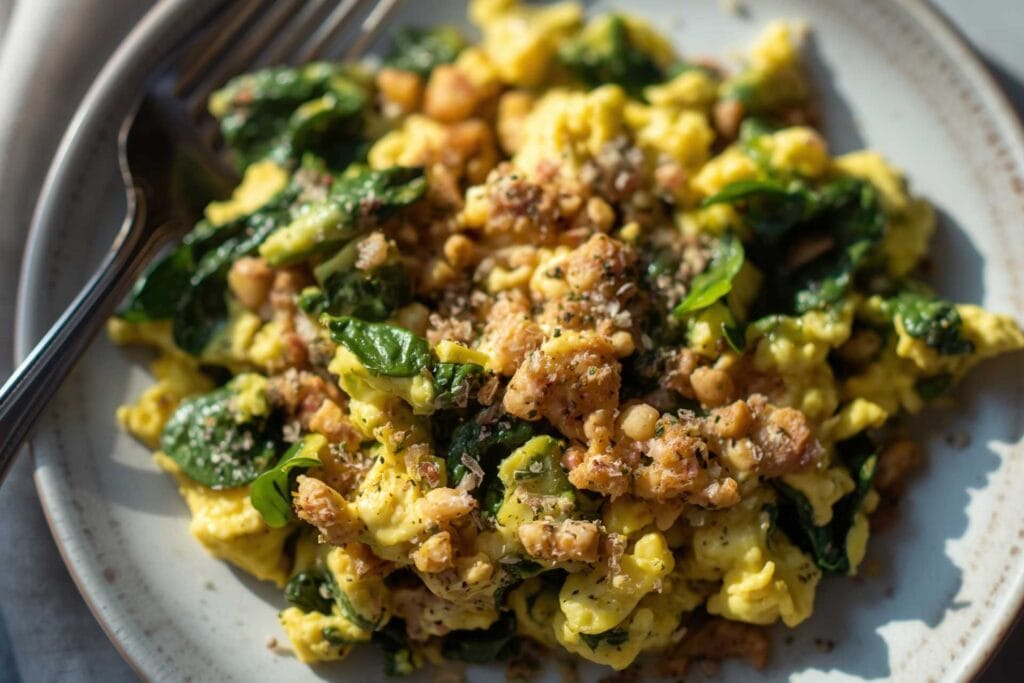
This is one of the easiest ways to build a high protein low carb breakfast that feels comforting right away. Scrambled eggs or soft-scrambled eggs over sautéed spinach create a warm, tender base, while avocado adds creaminess and cheese brings a salty finish. It is simple, but it never feels plain when the ingredients are seasoned well. A little black pepper, garlic powder, or chili flakes can make the whole bowl come alive.
The reason this bowl works so well is that it checks all the boxes without getting fussy. The eggs bring protein, the spinach adds volume and color, and the avocado makes the texture richer and more satisfying. If you want to push the protein higher, add a few extra egg whites or pair the bowl with turkey sausage. This is the kind of high protein low carb breakfast that feels reliable on a weekday morning and still pleasant enough for a slow weekend.
You can also change the mood of this bowl with very small tweaks. Use feta instead of cheddar for a brighter flavor. Add mushrooms if you want more savoriness. Finish with hot sauce if you like heat. The structure stays the same, but the personality shifts a little each time, which is exactly what makes breakfast bowls so easy to keep in rotation. (18)
Cottage Cheese Breakfast Bowl with Savory Add-Ins
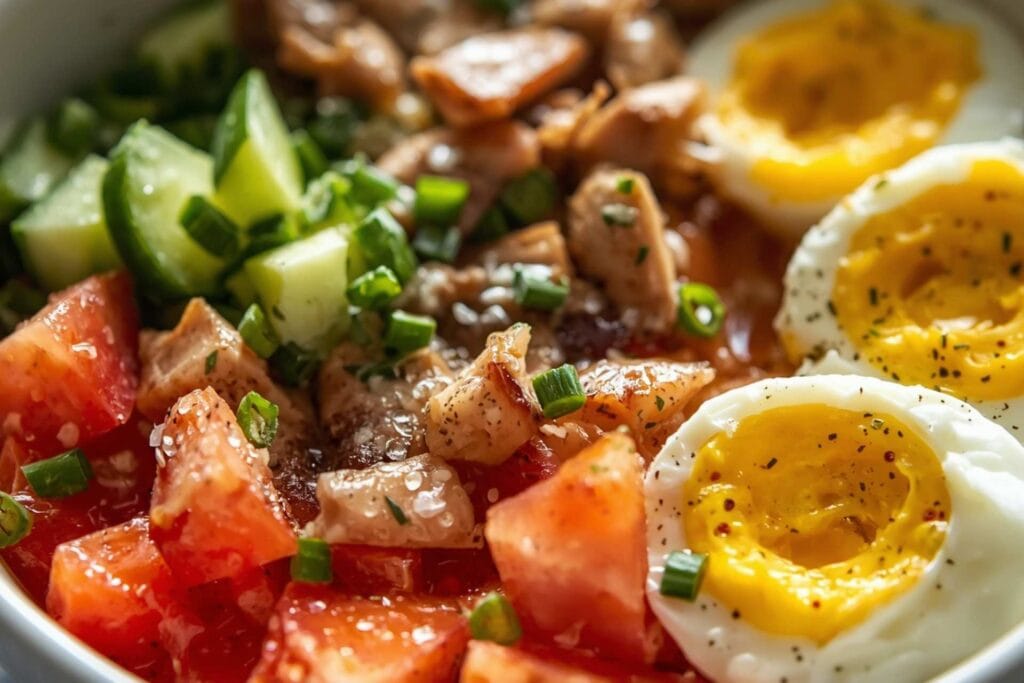
Cottage cheese has become one of the most searched bases for a high protein low carb breakfast, and that makes sense. It is creamy, fast, and naturally protein-rich, so it fits the bowl format without much effort. Current recipe examples often pair cottage cheese with savory ingredients like eggs, beef, sausage, turkey, herbs, and fresh toppings, which shows how flexible this bowl can be. (19)
For a savory version, start with cottage cheese and layer on chopped tomatoes, cucumber, black pepper, chives, and smoked turkey or boiled eggs. The result is cool, salty, creamy, and satisfying in a way that feels very different from a typical sweet breakfast bowl. This is a great option when you want a high protein low carb breakfast that comes together fast and does not require cooking much, if anything.
What makes this bowl especially smart is that it works across different appetites. If you want something light, keep it simple with vegetables and herbs. If you need more staying power, add more eggs, turkey, or even a spoonful of nuts or seeds for texture. The cottage cheese base gives you a strong protein foundation, while the savory add-ins make the bowl taste more like a real meal than a snack. (20)
Greek Yogurt Bowl with Berries, Chia, and Nuts
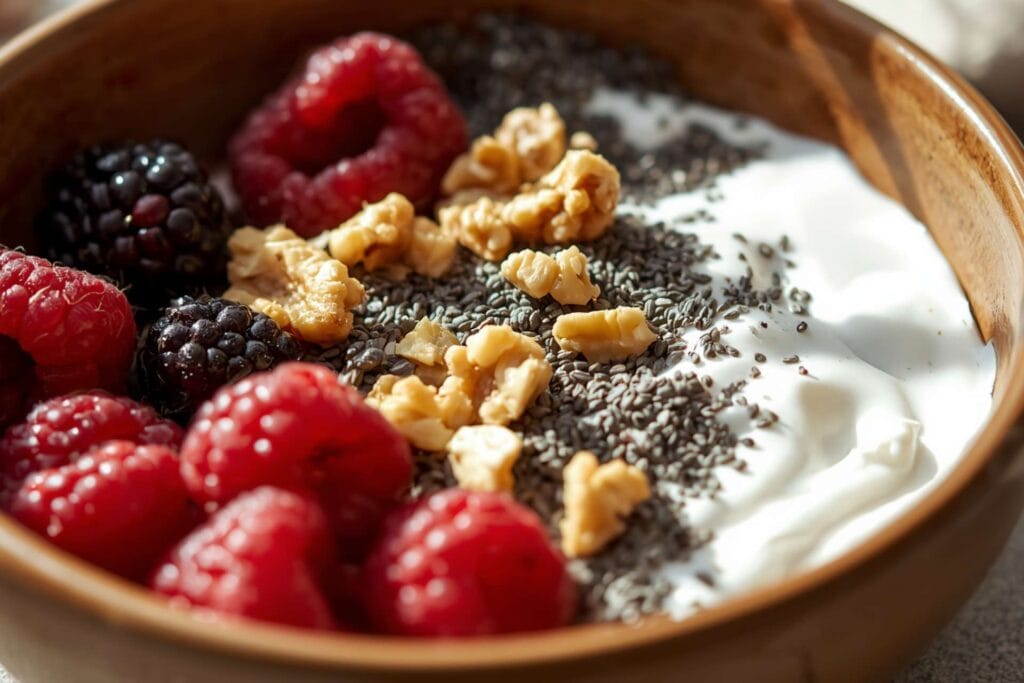
A Greek yogurt bowl is a great example of how a high protein low carb breakfast can be slightly sweet without losing its low carb feel. The trick is to keep the fruit portion small and focused on berries, since berries tend to work better than higher-sugar fruits when you want a more balanced bowl. Current breakfast content also shows this pattern clearly, with Greek yogurt topped with berries and almonds appearing as a popular high-protein option. (21, 22)
Use plain Greek yogurt as the base, then top it with a few berries, chia seeds, and chopped nuts. That combination gives you creaminess, a little crunch, and enough protein and fat to help the bowl feel more complete. It is a very good high protein low carb breakfast for people who want something cold, fast, and lightly sweet without turning breakfast into dessert.
This bowl also gives you plenty of room to adjust. More chia seeds make it thicker and more filling. A few almonds or walnuts add crunch and staying power. Cinnamon, vanilla, or a tiny drizzle of nut butter can deepen the flavor without making the bowl too heavy. The structure stays simple, but the experience feels polished and satisfying. (23)
Smoked Salmon, Cucumber, and Herb Bowl
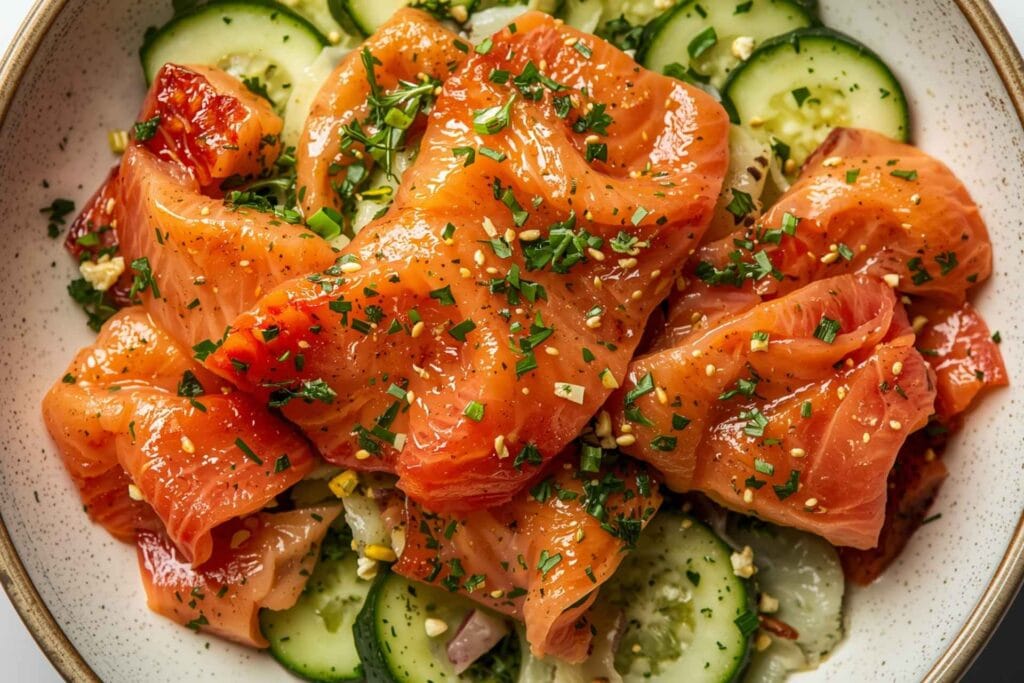
If you want a high protein low carb breakfast that feels a little more elegant, this is the one. Smoked salmon pairs beautifully with cucumber, fresh herbs, and a creamy base like cottage cheese, Greek yogurt, or softly scrambled eggs. It feels almost like a deconstructed brunch plate, which is part of the charm. Current recipe content around salmon bowls and salmon bites also leans into cucumber, dill, chives, lemon, and creamy spreads, so this flavor direction is very much on trend. (24, 25, 26)
Start with your base, then layer on smoked salmon, sliced cucumber, dill, chives, cracked pepper, and a squeeze of lemon. A few capers can add a salty pop if you like that kind of flavor. The final bowl feels fresh, bright, and surprisingly substantial, especially when the protein base is strong enough to carry the meal. This is a great choice when you want a high protein low carb breakfast that feels clean and brunch-worthy at the same time.
The beauty of this bowl is how little it needs. The salmon does a lot of the flavor work, and the cucumber keeps the texture crisp and refreshing. If you want to make it more filling, add a few slices of avocado or a spoonful of cottage cheese. That gives you a richer version without changing the basic idea.
Turkey Sausage, Cauliflower Rice, and Pepper Bowl

This bowl is built for busy mornings. Turkey sausage, cauliflower rice, and peppers make a high protein low carb breakfast that reheats well and feels hearty without relying on bread or potatoes. It is the kind of bowl you can make ahead, store in portions, and warm up when you need breakfast to be as low-effort as possible.
Cauliflower rice gives the bowl body, while peppers add sweetness and color. Turkey sausage brings the protein and savory flavor, and a little cheese or salsa can pull the whole thing together. Because the ingredients are sturdy, this bowl is especially useful for meal prep. It does not need to be fancy to work. It just needs to be filling, flavorful, and easy to reheat.
You can also shift the flavor profile pretty easily. Add chili powder and cumin for a Southwest feel, or keep it simple with garlic, onion powder, and black pepper for a more classic savory bowl. Either way, this is a dependable high protein low carb breakfast that holds up well in real life, not just in recipe photos. (27)
Bacon, Egg, and Mushroom Bowl
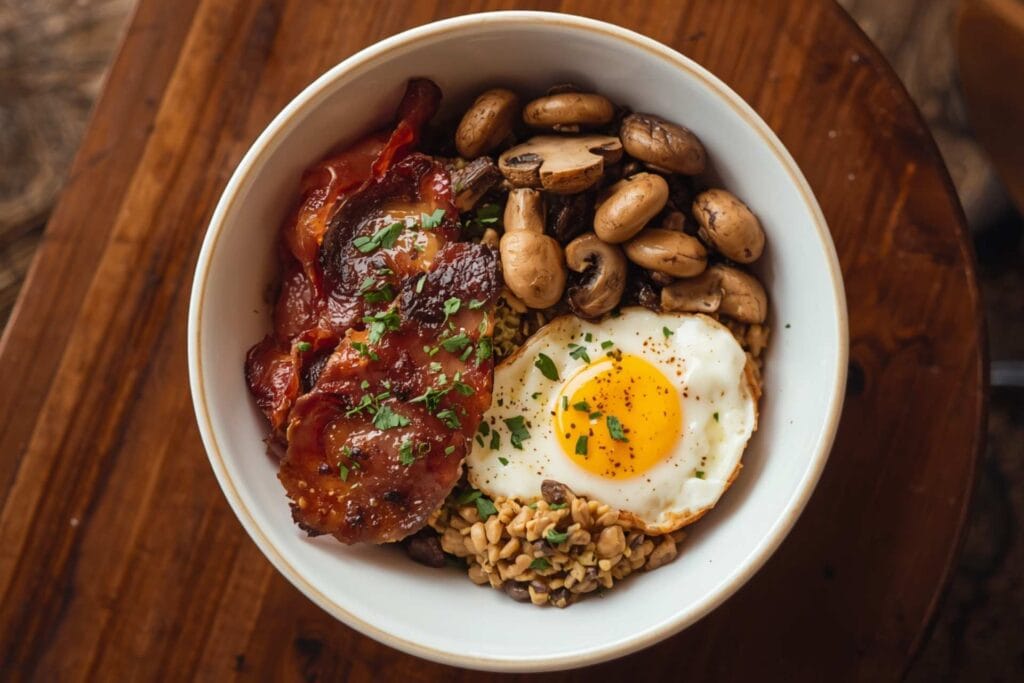
This is the comfort food version of a high protein low carb breakfast. Bacon, eggs, and mushrooms are a classic combination because they bring salt, richness, and texture in a way that feels familiar almost instantly. The mushrooms are especially helpful because they add bulk and a savory, meaty feel without adding a lot of carbs.
To build it, cook the mushrooms until golden, add scrambled or fried eggs, then finish with bacon and maybe a little cheese or avocado. The result is warm, hearty, and very satisfying. It is a great bowl for mornings when you want something cozy but still want to keep the carbs lower than a traditional breakfast plate.
This bowl is also easy to adjust based on what you have. Swap bacon for turkey bacon or turkey sausage. Add spinach for more volume. Use a sharper cheese if you want more contrast. The basic formula still gives you a strong high protein low carb breakfast, but the flavor can move in different directions depending on your pantry. That kind of flexibility makes it much easier to use again and again.
Chicken, Pesto, and Veggie Bowl
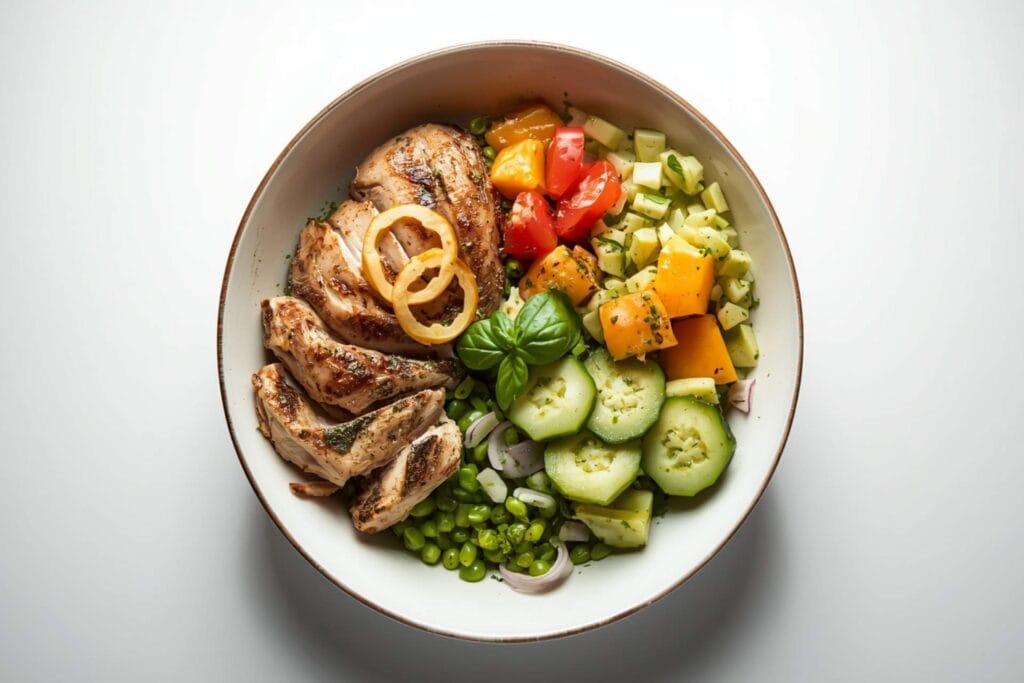
Chicken may not be the first thing people think of for breakfast, but it works extremely well in a high protein low carb breakfast bowl. Add it to sautéed zucchini, spinach, cauliflower rice, or mushrooms, then stir in a little pesto for a fast, savory meal that feels more like a hearty brunch bowl than a typical breakfast.
The pesto matters here because it gives the bowl instant flavor. Without it, the ingredients are still good, but with it, the bowl feels brighter and more cohesive. Chicken provides the protein, vegetables add volume, and pesto ties everything together in a way that tastes intentional. This is a really good option if you want a breakfast that feels more lunch-like without actually becoming lunch.
It is also one of the easiest bowls to make from leftovers. If you already have cooked chicken in the fridge, you are halfway done. That makes this a very practical high protein low carb breakfast for readers who want speed and simplicity. Add parmesan or mozzarella if you want a richer version, or keep it lighter with fresh herbs and lemon.
Tofu Scramble Breakfast Bowl
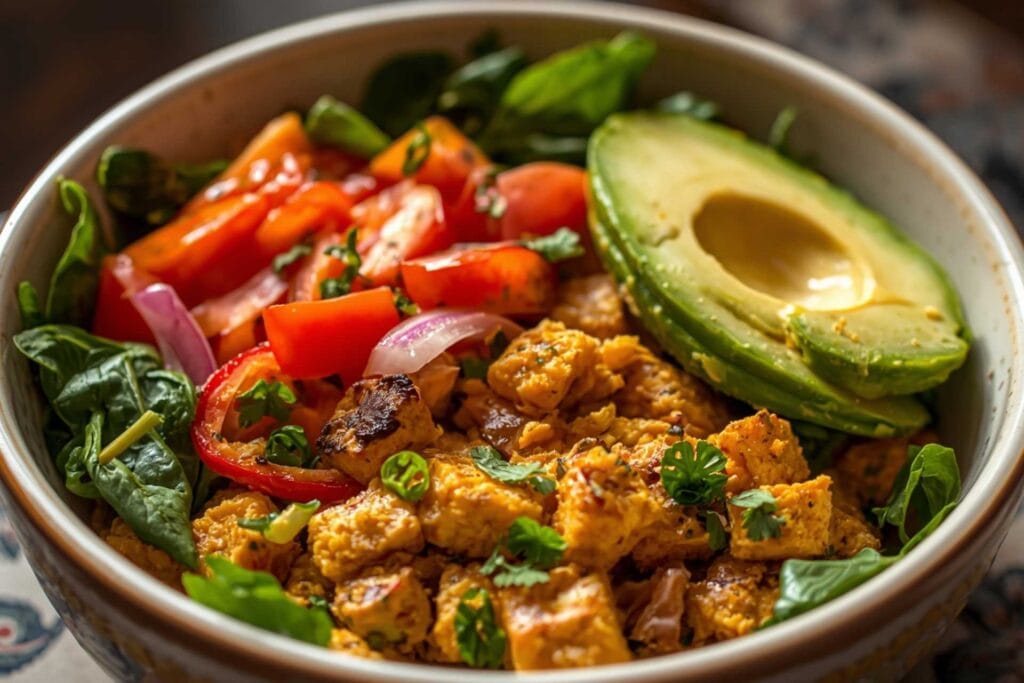
A tofu scramble is a smart plant-forward way to make a high protein low carb breakfast that still feels savory and satisfying. Tofu works especially well with peppers, onions, spinach, avocado, turmeric, garlic powder, and black pepper. The texture becomes soft and egg-like, which makes it a great fit for bowl-style breakfasts. Love & Lemons and Minimalist Baker both show how flexible tofu scramble can be, including savory and Southwest-style versions. (28, 29, 30)
The best thing about this bowl is that it can be as mild or as bold as you want. Add cumin and salsa for a Southwest version. Keep it simple with spinach and avocado for a gentler flavor. Use cauliflower rice underneath if you want more volume. This is the kind of high protein low carb breakfast that works well for people who want a meatless option but still want something hearty enough to feel like a real meal.
It is also easy to prep ahead because tofu scramble reheats well. That matters a lot on busy mornings. If you already have the tofu cooked and the vegetables chopped, breakfast becomes almost effortless.
That is what makes this bowl so useful: it is flexible, filling, and easy to fit into an ordinary weekday routine. (31)
Taco Breakfast Bowl
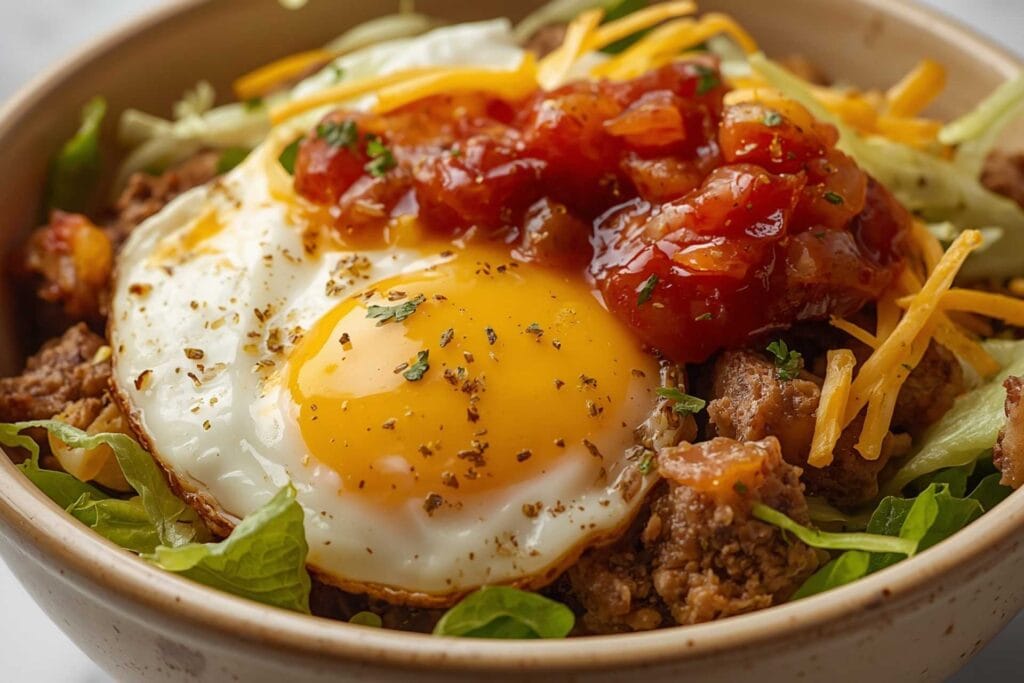
A taco bowl is one of the most fun ways to build a high protein low carb breakfast. Eggs, seasoned beef or turkey, salsa, cheese, and shredded lettuce come together to make something bold, colorful, and highly customizable. It feels like breakfast with a little extra personality, which is a big reason people love it.
What makes this bowl work so well is the seasoning. Cumin, chili powder, garlic powder, paprika, and black pepper turn simple ingredients into something much more exciting. Add avocado or a spoonful of sour cream if you want richness, or keep it lighter with extra lettuce and salsa. Either way, the bowl stays firmly in high protein low carb breakfast territory while still feeling playful and satisfying.
This is also a strong bowl for meal prep because the cooked components can be stored separately and assembled quickly later. The eggs or meat provide the protein, the lettuce keeps things fresh, and the salsa wakes everything up. If you are looking for a breakfast that feels a little more fun than the usual egg bowl, this is a great one to keep in rotation.
“Brunch in a Bowl” with Mushrooms, Feta, and Herbs
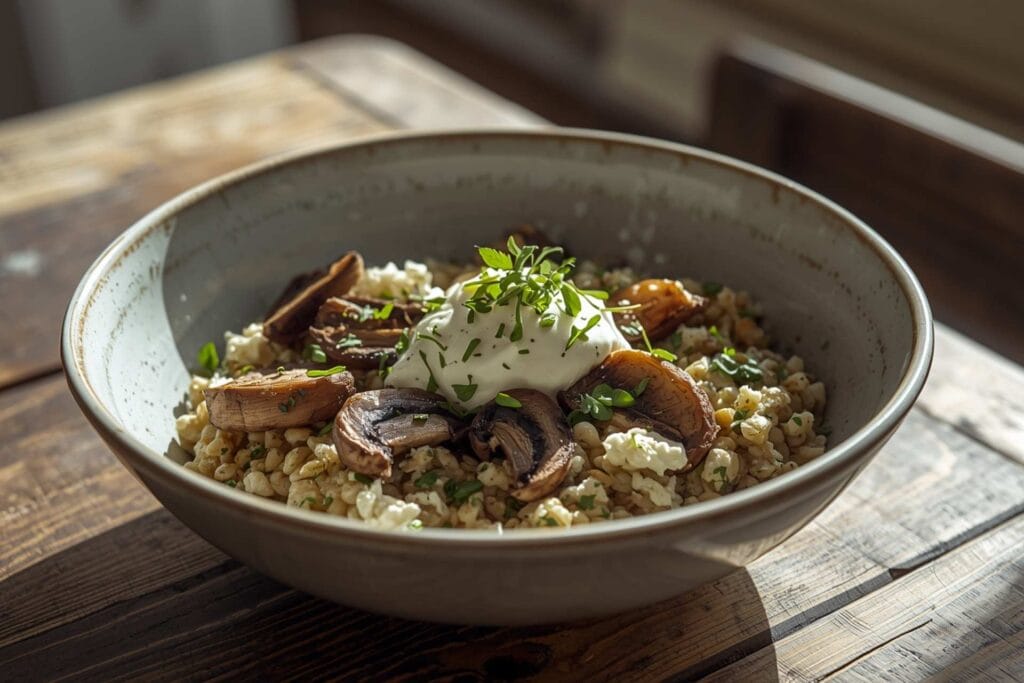
This bowl is for readers who want a more refined, fresher-feeling high protein low carb breakfast. Mushrooms, feta, and herbs create a flavor combination that feels simple but elegant. Add eggs, cottage cheese, or Greek yogurt as the base protein, then build around it with greens, cucumber, or avocado, depending on the texture you want.
The mushrooms bring depth, the feta adds saltiness, and the herbs make the whole bowl taste brighter. A little dill, parsley, or chives can go a long way here. This is the kind of bowl that feels calm and balanced, almost like a weekend brunch plate made easier and lighter. It still hits the core goals of a high protein low carb breakfast, but it does so in a softer, more flexible way.
It is also one of the easiest bowls to personalize. Add smoked salmon for more protein, swap feta for goat cheese, or layer it over greens if you want extra freshness. The formula stays the same, but the final bowl can shift depending on what you like. That makes it a really strong closing recipe in a high protein breakfast roundup.
Meal Prep, Storage, and Reheating Tips
Meal prep is where a high protein low carb breakfast bowl really starts to shine. The whole point is to make mornings easier, not busier, so the best strategy is to prep the parts ahead of time instead of assembling the entire bowl days in advance. Cook your proteins, wash and chop your vegetables, portion out your toppings, and keep the finishing ingredients separate until serving time. That way, your bowls stay fresher, taste better, and come together fast when you actually need them. USDA guidance says leftovers can be refrigerated for 3 to 4 days, which makes this kind of prep especially useful for weekday breakfasts. (32, 33)
A smart high protein low carb breakfast prep routine usually starts with the ingredients that hold up best. Eggs, turkey sausage, chicken, tofu scramble, roasted vegetables, cauliflower rice, and cooked mushrooms are all good candidates because they reheat well and still taste good after a day or two in the fridge. Softer toppings like avocado, fresh herbs, cucumber, salsa, or yogurt-based sauces are usually better added right before eating, so the texture stays bright and fresh.
That simple split—prep the sturdy parts ahead, finish with the delicate parts later—makes the bowls feel much more appealing. FDA guidance also says perishable foods should be refrigerated or frozen within 2 hours of cooking or purchasing, or 1 hour if the temperature is above 90°F, which is a useful rule to remember when you are meal prepping breakfast bowls. (34, 35, 36)
How to prep components ahead so the bowls stay fresh and fast
The easiest way to prep a high protein low carb breakfast is to think in layers. Cook your proteins in batches, roast or sauté your vegetables, and portion your extras into small containers. Then, when morning comes, you only have to build the bowl instead of cooking everything from scratch. This keeps breakfast fast without making it feel like an assembly line. It also gives you more control over flavor, because you can switch up the toppings and seasonings even if the base ingredients stay the same. (37)
A helpful meal prep setup might look like this:
- Protein: cooked eggs, turkey sausage, chicken, salmon, tofu, or cottage cheese portions
- Veggie base: cauliflower rice, spinach, zucchini, mushrooms, cabbage, or mixed vegetables
- Finishers: avocado, herbs, cheese, seeds, olives, salsa, pesto, or lemon
- Sauces and extras: packed separately so the bowl does not get soggy
This approach works well because it keeps the bowl components in their best condition until you are ready to eat. It also makes a high protein low carb breakfast easier to repeat, since you can mix and match ingredients instead of making the same exact bowl every day. USDA and FDA guidance both support keeping leftovers cold, sealed, and handled quickly so they stay safe and taste better later.
Practical storage guidance
Storage matters just as much as prep. Keep your cooked ingredients in airtight containers and get them into the refrigerator quickly after cooking. FDA guidance says perishable foods should go into the refrigerator or freezer within 2 hours of cooking or purchasing, and within 1 hour if the temperature is above 90°F. For refrigerator storage, the FDA also notes that your fridge should stay at 40°F or below, which is important for keeping a high protein low carb breakfast safe after prep. (38)
For best results, store the bowl parts separately instead of mixing everything too early. Put wet ingredients in one container, crisp vegetables in another, and sauces in a small cup or jar. That helps preserve texture and keeps ingredients from breaking down before breakfast time. USDA also notes that cooked leftovers are best used within 3 to 4 days, so a 3-day meal prep plan is usually a good sweet spot for breakfast bowls. If you want to prep longer than that, freezing some components is a better option than stretching the fridge window. (39)
Reheating tips that keep the texture right
Reheating can make or break a high protein low carb breakfast. The goal is not to blast everything until it is dry or rubbery. Instead, reheat the sturdy components gently, then add the fresh toppings afterward. Eggs, sausage, chicken, cauliflower rice, and cooked vegetables usually do best with a short microwave burst or a quick warm-up in a skillet. Fresh ingredients like avocado, herbs, cucumber, and salad greens should go on at the end so they keep their texture and flavor. USDA recommends reheating leftovers thoroughly and handling them with care so the food stays safe and enjoyable.
A few simple reheating habits help a lot:
- Reheat only the portion you plan to eat.
- Use shallow containers so food warms more evenly.
- Add fresh toppings after reheating, not before.
- If a bowl contains sauce or cheese, stir once partway through warming.
- If something smells off, looks odd, or has been stored too long, do not use it.
That last point matters because a high protein low carb breakfast is only useful if it is still safe and appetizing. Following the 3-to 4-day refrigerator window, the 2-hour cooling rule, and proper cold storage keeps the whole system simple and dependable.
How to Customize the Bowls for Different Goals
One of the biggest reasons a high protein low carb breakfast bowl works so well is that it is easy to shape around your day. You can make the same basic bowl more filling, lighter, creamier, or more budget-friendly without changing the whole recipe. That flexibility is a major part of why breakfast bowl content keeps performing well in search and recipe roundups, especially because many current recipes emphasize customization and meal prep as their biggest strengths.
The core idea is simple: keep the bowl structure the same, then adjust the protein, veggies, fats, and toppings based on what you need. That means you are not starting over every time. You are just fine-tuning the same high protein low carb breakfast so it fits your appetite, your schedule, and your budget. That is a huge reason these bowls feel so practical. They are not rigid recipes; they are adaptable breakfast systems.
Make the bowl more filling
When the goal is staying power, the easiest move is to increase the protein first. A high protein low carb breakfast becomes more satisfying when you add another egg, a few extra ounces of turkey or chicken, a larger scoop of cottage cheese, or a second protein source like sausage plus eggs. Many breakfast bowl recipes already lean into this idea by pairing eggs with cottage cheese, salmon with greens, or sausage with vegetables, because those combinations naturally push the protein higher without making the bowl feel heavy.
You can also make the bowl more filling by increasing volume with low carb vegetables. Add more spinach, mushrooms, cabbage, peppers, or cauliflower rice so the bowl looks and feels bigger. That matters because fullness is not only about protein. It is also about the amount of food on the plate and the texture you get from each bite. A high protein low carb breakfast that has enough volume tends to feel much more complete than one that is just a small scoop of protein in a bowl.
A little fat can also help when you want the bowl to last longer. Avocado, cheese, pesto, nuts, or seeds can make the meal feel richer and more satisfying. The trick is not to overload the bowl, but to use fat as the finishing layer that rounds everything out. That way, the high protein low carb breakfast still stays balanced instead of turning into something too dense.
Make the bowl lighter
There are also days when you want a high protein low carb breakfast that feels lighter and cleaner. On those mornings, reduce the heavier toppings and lean more on vegetables, herbs, and lean proteins. A bowl with egg whites, Greek yogurt, cottage cheese, cucumber, tomato, spinach, or smoked salmon can feel much fresher than a bowl loaded with cheese, sausage, and avocado.
A lighter bowl works especially well when you are not very hungry first thing or when you want breakfast to support a busy morning without feeling heavy. The best part is that you do not need to rebuild the recipe from scratch. Just adjust the proportions. Use less cheese, smaller portions of fat, and more crisp or watery vegetables. That keeps the high protein low carb breakfast feeling bright and easy, while still giving you enough protein to be useful.
This is one of the reasons breakfast bowls are so easy to repeat. The same ingredients can be rearranged into a heavier bowl or a lighter bowl, depending on what your body actually wants that day. That kind of flexibility is a big part of the appeal, and it is something current bowl recipes clearly lean into.
Make the bowl creamier
Creamy bowls are especially good when you want comfort without a lot of effort. A high protein low carb breakfast can feel creamier with cottage cheese, Greek yogurt, avocado, soft scrambled eggs, or a drizzle of herb oil or pesto. Those ingredients change the texture immediately and make the bowl feel more indulgent without adding much complexity.
This is also where layering matters. A creamy base with crunchy toppings makes the bowl far more interesting. For example, Greek yogurt with nuts and berries, or cottage cheese with cucumber and seeds, gives you that contrast between smooth and crisp. Breakfast bowl recipes often use this exact idea because it keeps the bowl from feeling flat or repetitive.
If you want a creamier high protein low carb breakfast, do not rely on the sauce alone. Think about the whole texture pattern. Soft eggs, mashed avocado, a spoonful of yogurt, and a few crunchy toppings can make the bowl feel rich and balanced without turning it into a heavy meal.
Make the bowl more budget-friendly
A budget-friendly high protein low carb breakfast is all about choosing smart staples and stretching them well. Eggs, cottage cheese, plain yogurt, frozen vegetables, and canned tuna are often easier on the grocery bill than smoked salmon, specialty cheeses, or premium cuts of meat. The good news is that you do not need expensive ingredients to make a bowl feel satisfying. Simple ingredients can still create a strong breakfast when the seasoning and structure are right. Recipe sites that focus on breakfast bowls often show this clearly by using basic ingredients in flexible, repeatable ways.
Frozen vegetables are especially useful here because they reduce waste and save prep time. A bag of cauliflower rice, spinach, peppers, or mixed vegetables can provide several breakfasts with minimal effort. You can also lean on eggs as the main protein and use smaller amounts of cheese or meat as accent ingredients instead of the main event. That keeps the high protein low carb breakfast affordable while still feeling complete.
The easiest budget trick is to build the bowl around one strong protein source and one or two supporting ingredients. That way, you still get a full meal without needing a long grocery list.
Current breakfast bowl content often highlights meal prep for exactly this reason: the more you prep and reuse smart ingredients, the easier it is to keep breakfast affordable and convenient.
Adjust protein, veggies, and fats without changing the whole recipe
The easiest way to customize a high protein low carb breakfast is to think in ratios rather than recipes. If the bowl needs more protein, add eggs, cottage cheese, yogurt, chicken, turkey, or salmon. If it needs more volume, add vegetables. If it needs more richness, add avocado, cheese, nuts, or seeds. That small adjustment system lets you keep the same bowl template while changing the outcome.
That is the real strength of breakfast bowls. They give you a repeatable structure without trapping you in one exact formula. A reader can make the same high protein low carb breakfast feel different every day just by changing one layer. And that is exactly why these bowls keep showing up in search results and recipe roundups; they are practical, adaptable, and easy to make your own.
Common Mistakes to Avoid When Making High Protein Low Carb Breakfast Bowls
A high protein low carb breakfast bowl can look perfect on the outside and still miss the mark in real life. The bowl may be colorful, neatly arranged, and full of “healthy” ingredients, but if the protein is too low, the carbs sneak up through toppings and sauces, or the texture turns soggy, it may not keep you satisfied for long.
That is why the best breakfast bowls are not just about appearance. They are about balance, and balance is what turns a pretty bowl into a breakfast that actually works. Protein is a key part of that balance, and the American Heart Association notes that adults generally need an RDA of 0.8 g/kg per day, with 10% to 35% of daily calories coming from protein.
One of the biggest mistakes is treating a high protein low carb breakfast like a garnish instead of a real meal. A few spoonfuls of yogurt, a sprinkle of cheese, or one egg on top of vegetables may look healthy, but they usually are not enough to create lasting fullness. Harvard’s Nutrition Source notes that protein foods move more slowly through digestion, and fiber can help reduce hunger by slowing digestion as well, which is why bowls built around both protein and fiber tend to feel more satisfying. If the bowl is missing either piece, it often leaves people hungry again much sooner than they expected. (40)
Under-seasoning makes healthy ingredients taste flat
A very common problem with a high protein low carb breakfast is that it has all the right ingredients but none of the energy. Eggs, cauliflower rice, cottage cheese, spinach, and chicken are all great building blocks, but without salt, pepper, herbs, spices, lemon, hot sauce, or another flavor booster, the bowl can taste dull and unfinished. That is one reason some bowls look great in photos but feel underwhelming at the table. Flavor is not a bonus here. It is part of what makes the bowl worth eating. (41)
The fix is simple: season in layers. Add seasoning while cooking, then finish with something bright at the end. A high protein low carb breakfast can use garlic powder, chili flakes, dill, chives, paprika, cumin, lemon juice, or a small drizzle of pesto or herb oil to wake everything up. This keeps the bowl from tasting like plain protein plus plain vegetables, which is where many healthy breakfasts go wrong. The goal is not to make breakfast complicated; it is to make it memorable enough that you want it again tomorrow.
Too many hidden carbs can sneak into a “low carb” bowl
Another mistake is assuming that every breakfast bowl labeled “healthy” is automatically a high protein low carb breakfast. In reality, many bowls quietly pick up extra carbs through sweetened yogurt, granola, flavored sauces, syrupy fruit toppings, or large portions of starchy add-ins. The FDA makes it clear that added sugars are listed on the Nutrition Facts label, which is exactly why reading labels matters so much when you want a breakfast that stays genuinely low carb. If you do not check the label, it is easy for a bowl to look balanced while packing more sugar than you expected. (42, 43)
The fix is to keep the ingredient list tight and intentional. Use plain Greek yogurt instead of flavored versions, choose berries instead of large portions of sweeter fruit, and rely on nuts, seeds, herbs, or vegetables for texture rather than sugary toppings. A high protein low carb breakfast does not need to be bland, but it does need to be chosen with care. USDA FoodData Central can also help you compare ingredients and see what is actually in the foods you use most often.
Too little protein turns the bowl into a snack
A bowl can look full and still not have enough protein to do its job. That is one of the easiest ways to end up with a breakfast that feels good for ten minutes and then disappears. If a high protein low carb breakfast only contains a small amount of yogurt, a thin layer of cottage cheese, or one egg stretched across too many vegetables, it may not feel very different from a snack. Protein is what gives the bowl structure, so if it is too low, the whole meal weakens.
The best fix is to think about protein first and everything else second. Start with a meaningful portion of eggs, cottage cheese, Greek yogurt, chicken, salmon, turkey, tofu, or another strong protein source, then build the rest of the bowl around it. If you want a high protein low carb breakfast that really holds you over, it usually helps to combine one main protein with a second supporting source, like eggs plus cheese or yogurt plus seeds. That kind of pairing makes the bowl feel more complete without making it complicated.
Soggy textures can ruin an otherwise good bowl
Texture matters more than people think. A high protein low carb breakfast can have excellent ingredients, but still feel disappointing if the vegetables are watery, the sauce is added too early, or everything gets mixed before eating. Soft scrambled eggs can turn mushy next to wet vegetables, greens can wilt too fast, and toppings like avocado or yogurt can make the whole bowl feel heavy if they are not balanced with crunch. A bowl should feel layered, not collapsed.
The fix is to keep dry and wet ingredients separate until the last possible moment. Store sauces on the side, add avocado right before serving, and use vegetables with a bit of structure, like cucumber, peppers, cabbage, or sautéed mushrooms, instead of overloading the bowl with watery ingredients. If you are meal prepping, this is especially important because breakfast bowls are meant to be quick and fresh, not soggy and tired. The more you protect the texture, the better your high protein low carb breakfast will taste when it actually hits the table.
Forgetting fiber can make the bowl feel unfinished
Protein gets most of the attention, but fiber helps a high protein low carb breakfast feel more complete, too. Harvard’s Nutrition Source explains that soluble fiber can slow digestion and help reduce hunger, which is one reason bowls with vegetables, seeds, nuts, or berries in reasonable portions tend to feel more satisfying. If the bowl is only protein and fat, it may still work, but it can miss that extra bit of fullness and balance that fiber provides.
The fix is to add low carb fiber sources on purpose. Spinach, cauliflower rice, zucchini, mushrooms, cabbage, cucumber, chia seeds, flax seeds, and small amounts of berries can all help build a more satisfying bowl. That does not mean every bowl needs to be loaded with fiber-heavy ingredients. It just means your high protein low carb breakfast should not be built on protein alone if you want it to feel truly complete.
Using too much fat can crowd out the rest of the bowl
Healthy fats are useful in a high protein low carb breakfast, but too much of a good thing can make the bowl feel heavy without making it more satisfying. A little avocado, cheese, pesto, nuts, or seeds can improve flavor and texture, but if the fat portion gets too large, the bowl can stop feeling balanced. That is especially true when the rest of the ingredients are already rich, like eggs, sausage plus cheese.
The fix is to use fat as a finishing layer, not the whole foundation. A few slices of avocado, a sprinkle of seeds, or a small spoonful of pesto can do a lot without overwhelming the bowl. That approach keeps the high protein low carb breakfast flavorful and satisfying while leaving room for vegetables and protein to do their job. The result is a bowl that feels polished instead of overloaded.
Overcomplicating the bowl makes it harder to repeat
Sometimes the biggest mistake is trying to make breakfast too impressive. A high protein low carb breakfast does not need ten toppings, three sauces, and a long prep list to be good. In fact, the more complicated it gets, the less likely it is to become a regular habit. The best breakfast bowls usually rely on a few ingredients that work well together and can be repeated without stress.
The fix is to keep a few reliable combinations on hand and rotate them. Maybe one bowl is eggs, spinach, and avocado. Another is cottage cheese, cucumber, and turkey. Another is Greek yogurt, chia, and berries. When the structure is simple, a high protein low carb breakfast becomes easier to build, easier to shop for, and much easier to stick with. That consistency matters more than trying to make every bowl look different.
Why do some bowls look healthy but still leave people hungry?
This is usually the result of weak protein, too many quick carbs, or not enough fiber and volume. A bowl can look beautiful on the surface and still fail because it is not built to keep hunger in check. Protein helps slow digestion, and fiber helps support fullness, so a high protein low carb breakfast works best when both are present in meaningful amounts. If either one is missing, the bowl may feel light in the moment but not very useful an hour later.
The practical fix is to ask one simple question before you eat: Does this bowl have a real protein anchor, enough vegetables or fiber, and a little fat for flavor? If the answer is yes, the bowl is probably on the right track. If not, add more eggs, yogurt, cottage cheese, vegetables, or a small amount of healthy fat until the balance feels right. That is the easiest way to turn a pretty dish into a high protein low carb breakfast that actually works in real life.
The Bottom Line
A high protein low carb breakfast does not have to be complicated, expensive, or repetitive. It can be a bowl of eggs and spinach, a creamy cottage cheese bowl, a salmon brunch bowl, or a meal prep friendly taco bowl. What matters most is that the bowl gives you enough protein, enough flavor, and enough satisfaction to carry you into the rest of the day.
The nice thing about breakfast bowls is that they grow with you. Once you learn the formula, you can keep changing the ingredients without losing the structure. That means your high protein low carb breakfast can stay fresh even when your routine gets busy. And when breakfast feels easy, the whole morning tends to feel easier too.
FAQs
How much protein should a high protein low carb breakfast have?
A good target is usually around 20 grams or more. That gives the bowl enough staying power to feel satisfying without needing a huge portion.
What is the best base for a high protein low carb breakfast bowl?
It depends on the style you like. Eggs, cottage cheese, Greek yogurt, cauliflower rice, and sautéed greens are all strong options.
Can I meal prep a high protein low carb breakfast for the week?
Yes. Prep the proteins and vegetables separately, then combine them when you are ready to eat. That keeps textures fresher and makes the bowls easier to customize.
Are breakfast bowls with cottage cheese actually low carb?
Yes, cottage cheese can fit well into a low carb breakfast bowl, especially when you pair it with savory toppings like cucumbers, tomatoes, eggs, or herbs.
How do I keep a high protein low carb breakfast from getting boring?
Use different flavor profiles. Try savory, Mediterranean, Southwest, or fresh herb-heavy combinations so the bowl feels new even when the base ingredients stay familiar.



0 Comments