
Intermittent Fasting — Best Schedules, Science-Based Weight-Loss Tips & Sample Plans
Intermittent fasting: how to pick the right schedule for weight loss (and stick with it)
If you want a simple way to cut calories, steady your appetite, and lose weight without counting every gram, intermittent fasting (IF) can work — especially when you pick a schedule that fits your life. This page explains the main intermittent fasting schedules, how IF helps with weight loss, what the science says, sample daily windows you can try, and safety tips so you do it without harming your health.
Quick overview — what is intermittent fasting?│How intermittent fasting can help you lose weight│Popular intermittent fasting schedules│Which intermittent fasting schedule should you choose?│Sample daily intermittent fasting schedules│What to eat during your eating window│Evidence snapshot — what the science says│Safety — who should avoid intermittent fasting│Practical tips to succeed with an intermittent fasting schedule│Common mistakes and how to avoid them│30-Day Starter Plan│FAQs
Quick overview — what is intermittent fasting?
Intermittent fasting is an eating pattern that alternates periods of eating with periods of little or no calorie intake. It’s not about what you eat so much as when you eat. Common forms include daily time-restricted eating (for example, 16:8), alternate-day fasting, and the 5:2 approach (eat normally five days, restricted calories two days).
How intermittent fasting can help you lose weight (simple explanation)
Most weight loss from IF happens because people naturally eat fewer calories when they shorten their eating window. IF can also improve appetite regulation and reduce evening snacking for many people. Randomized trials and meta-analyses show IF produces weight loss comparable to standard calorie-restriction diets — sometimes slightly better short-term — but the biggest advantage is simplicity and adherence for many users.
Popular intermittent fasting schedules (pick one that fits your life)
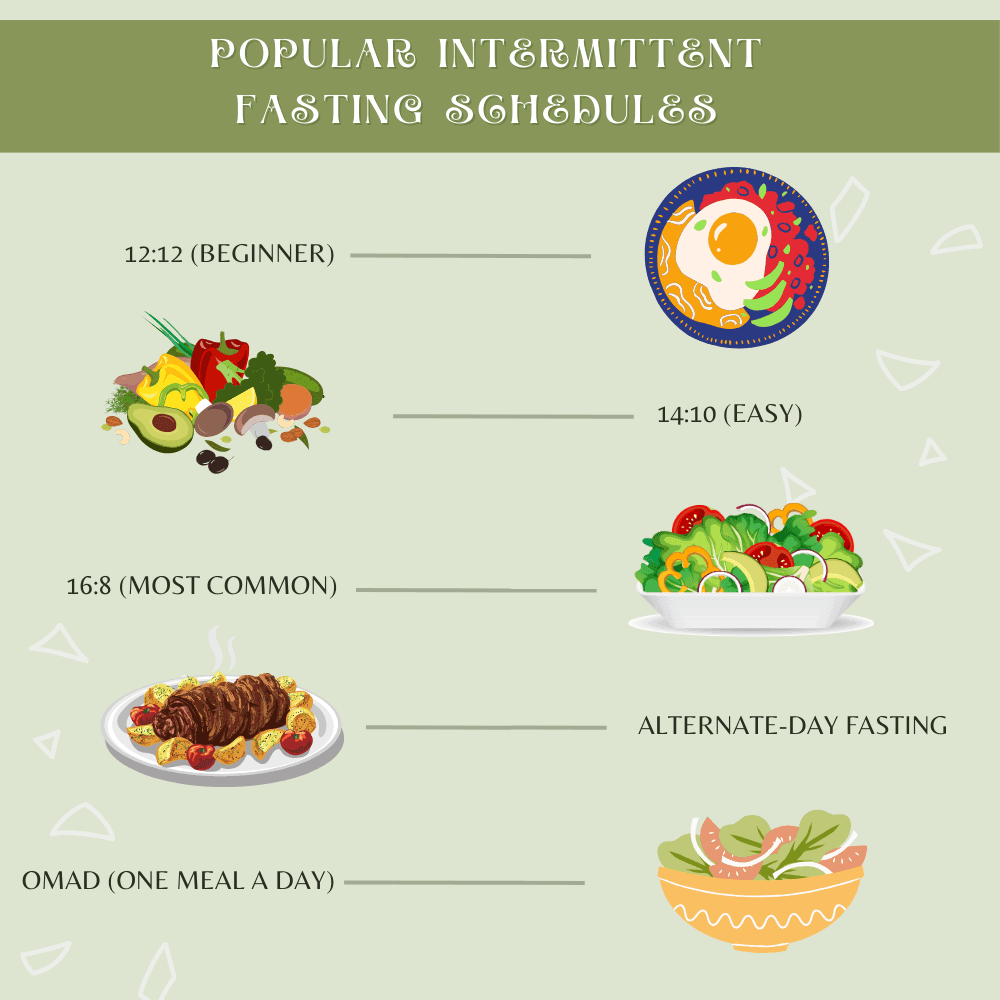
- 12:12 (Beginner) — 12 hours eating / 12 hours fasting (gentle, safe for most people).
- 14:10 (Easy) — 14 hours fasting / 10 hours eating — a gentle next step.
- 16:8 (Most common) — 16 hours fasting / 8 hours eating (skip breakfast or dinner). Great for busy people.
- 5:2 — Normal eating 5 days; ~500–600 calories on 2 non-consecutive days.
- Alternate-day fasting — Fast every other day (often with a small calorie intake on “fast” days). More aggressive and harder to sustain.
- OMAD (One Meal a Day) — Highly restrictive; can work short-term but often hard to sustain and may be risky for some groups. Use caution.
Which intermittent fasting schedule should you choose?
Choose the easiest schedule you’ll actually stick with. If you’re new: start with 12:12 for 1–2 weeks, then move to 14:10 or 16:8 if comfortable. If you want bigger, faster losses and can handle more restriction, 5:2 or alternate-day fasting are options — but they require planning and attention to food quality on eating days. Evidence suggests similar long-term weight loss across many IF methods when adherence is equal.
Sample daily intermittent fasting schedules (examples you can use)
- Beginner — 12:12: Eat 7:00 AM — 7:00 PM. Sleep counts toward fasting.
- Gentle — 14:10: Eat 8:00 AM — 6:00 PM. Skip late-night snacks.
- Popular — 16:8: Eat 12:00 PM — 8:00 PM (lunch + dinner ± one snack).
- Early time-restricted eating (for metabolic benefits): Eat 8:00 AM — 4:00 PM (may help blood sugar in some people).
What to eat during your eating window (quality > quantity)
Fasting helps, but food quality still matters. Aim for:
- Protein at each meal (satiety + preserve muscle).
- Plenty of non-starchy vegetables and fiber.
- Whole foods, moderate healthy fats, and controlled starchy carbs depending on goals.
- Avoid “overeating” ultra-processed, high-sugar foods during the eating window — they reduce IF benefits
Evidence snapshot — what the science says (short)
- Weight loss: Multiple systematic reviews and RCTs show IF produces weight loss similar to continuous calorie restriction; some studies report modestly greater short-term losses.
- Metabolic markers: IF can improve blood sugar control, cholesterol, and blood pressure in the short to medium term for some adults.
- Adherence: Simplicity often helps people stick with IF better than strict daily calorie counting. But long-term adherence varies between individuals.
Safety — who should avoid intermittent fasting (important)
- Do not start aggressive fasting without medical advice if you:
- They are under 18 (teens need consistent nutrition for growth).
- Have type 1 diabetes, are on insulin or certain diabetes meds (risk of low blood sugar).
- Are you pregnant or breastfeeding?
- Have an eating disorder or a history of disordered eating.
- They are frail, elderly, with undernutrition, or on multiple medications.
Always check with your clinician before starting IF — especially if you have chronic health conditions.
Note for teens: Intermittent fasting is usually not recommended for people under 18 because your body still needs steady nutrition. Talk to a parent/guardian and a doctor if you’re curious about weight or health changes. (If the goal is healthier eating, focus on balanced meals, portion control, and physical activity instead.)
Practical tips to succeed with an intermittent fasting schedule
- Start slowly: try 12:12 → 14:10 → 16:8.
- Hydrate during fasts (water, black coffee, plain tea). Avoid calorie drinks.
Diet Doctor - Schedule workouts during your eating window or right before your first meal if strength is a priority.
- Prioritize sleep and stress management — stress and poor sleep may undermine results.
- Track progress in non-scale ways too: sleep, energy, mood, clothing fit.
Common mistakes and how to avoid them
- Mistake: Using IF as a license to overeat junk. Fix: Plan nutrient-dense meals.
- Mistake: Expecting immediate results — weight loss can be gradual. Fix: Give a schedule of 4–12 weeks to judge effects.
- Mistake: Ignoring medical safety (especially for teens & people with meds). Fix: Ask a clinician first.
30-day starter plan
- Week 1: 12:12 (sleep + short fast) — focus on water and balanced meals.
- Week 2: 14:10 — skip late-night snacks; add a protein breakfast or early lunch.
- Week 3–4: 16:8 if comfortable — keep meals balanced, track weight and energy.
Adjust based on hunger, energy, and mood. If you feel dizzy, faint, or excessively weak — stop and consult a doctor
FAQs — Intermittent Fasting
Will intermittent fasting make me lose muscle?
If you eat enough protein and do some resistance training, muscle loss is minimal in most IF plans. Meta-analyses show similar lean-mass outcomes to continuous calorie restriction.
Does skipping breakfast slow my metabolism?
Short-term fasts do not meaningfully reduce resting metabolic rate; weight loss largely reflects calorie balance and body composition changes.
How do I handle social meals?
Be flexible — many people move the eating window for social dinners or take a day off when needed; consistency matters most over time.
Is IF safe for women?
Many women do well with moderate IF, but some experience menstrual or hormonal changes with aggressive fasting. Start gently and stop if cycles change — consult your clinician.
All Intermittent Fasting Articles

Best Supplements for Low Carb Fasting: Boost Your Results and Health
If you’re new to low-carb fasting, you might wonder: What’s the secret to staying energized and avoiding those dreaded side effects? The answer lies in supplements. These tiny...

How Low Carb and Fasting Boost Fat Loss: Science-Backed Strategies for Success
Low-carb diets and fasting for fat loss have emerged as game-changing approaches in weight management. Each method offers unique benefits, but when combined, they create a...

7-Day Low Carb and Intermittent Fasting Meal Plan
Looking for an effective way to balance low carb eating with intermittent fasting? This 7-day low carb and intermittent fasting meal plan is designed to boost weight loss,...

Low Carb Diet + Intermittent Fasting: The Ultimate Guide to Weight Loss & Health
Combining a Low Carb Diet + Intermittent Fasting is like hitting the jackpot for your health and fitness goals. It’s a powerhouse duo that can help you shed stubborn weight,...
How to Combine Low-Carb Diet and Intermittent Fasting for Maximum Results
Combining low-carb diets with intermittent fasting is an effective way to optimize your weight loss journey, improve your health, and simplify your eating habits. This guide will...

Intermittent Fasting Combined with Low-Carb: A Deep Dive Into Effective Weight Loss
Intermittent Fasting Combined with Low-Carb has gained immense popularity among those seeking to lose weight, enhance metabolic health, and maintain energy throughout the day....

Intermittent Fasting & Keto Diet: The Ultimate Guide
A cursory scan of the headlines on most health-related websites will reveal that intermittent fasting (IF) and the Ketogenic diet are two of the most popular dietary fads. Both...

How to Create an Intermittent Fasting Meal Plan a Complete Guide
Adopting an intermittent fasting regimen is not always straightforward. It frequently entails breaking long-held routines, such as cuddling up on the couch after dinner with a...

What Foods And Drinks Are Best to Eat And What to Limit on an Intermittent Fasting Diet?
Deciding what to eat within your eating window might be challenging when fasting. After all, intermittent fasting emphasizes when you eat rather than what you consume. However,...

Why the Intermittent Fasting 16/8 Method Might Be Right For You Health
You've undoubtedly heard about the several advantages of intermittent fasting by now. Many individuals swear by intermittent fasting and its numerous health advantages, which...

Is Intermittent Fasting Good And Safe For Women?
Intermittent fasting is becoming a popular strategy for weight loss, energy, mental clarity, and other benefits. The concept of intermittent fasting is clear. You consume all...

Keto vs. Intermittent Fasting: Which One is Right for Weight Loss?
In the world of weight loss, numerous strategies and approaches have gained popularity. The ketogenic diet and intermittent fasting are two main methods that have generated...

How Intermittent Fasting Diet Can Help Your Heart Health?
For many people, optimizing their lifespan entails lowering their risk of heart disease. After all, heart disease is the world's leading cause of mortality. The most effective...
Extended Fasting: Benefits By Hours, Tips, and How To Succeed Doing It
Intermittent fasting, or fasting for 12 to 36 hours at regular intervals, is now famous. However, once you reach 36 hours, you leave intermittent fasting behind and join the...