
Craving a sandwich that doesn’t wreck your day? You’re not alone. For lots of people, bread is comfort — the quick lunch, the toast that starts the morning — and low carb bread recipes let you keep that comfort without the carb crash. Think of this as a permission slip: you can still enjoy bread, just smarter and tuned to your goals.
- Tired of dry, crumbly loaves that fall apart the second you try to make a sandwich? Low carb bread recipes are designed to fix that—so you get the joy of bread without the guilt.
- Want steadier energy, better blood-sugar control, or to stay in ketosis? These recipes give you real, usable options that fit into everyday life, not just special occasions.
What this guide covers (quick overview)
- Pantry essentials — the small list of flours, binders, and tools that show up in nearly every recipe.
- Master loaf template — one adaptable method that becomes sandwiches, toast, flatbreads, or pizza bases.
- 10 tested recipes — from fluffy almond-flour loaves to cloud bread and seeded crackers.
- Troubleshooting & texture fixes — bite-size solutions for dense, gummy, or crumbly results.
- Macros & storage — how to calculate net carbs, store loaves, and freeze slices without losing taste.
- Serving ideas — quick lunches, snacks, and dinner switches that make low-carb living effortless.
Quick note on carb-count expectations & texture tradeoffs
- Carb ranges: A typical slice from many low carb bread recipes falls roughly between 0.5–3 g of net carbs, depending on the ingredients (almond-based loaves tend to have higher carb counts than pure-egg options like cloud bread).
- Texture tradeoffs: If you want a super-sliceable, chewy loaf, expect more binders (such as psyllium and egg) and a different mouthfeel than wheat bread. If you prefer airy, egg-forward breads (like cloud bread), you’ll sacrifice some chew for lightness.
- Rule of thumb: denser = more almond/seed flour; lighter = more whipped egg whites or cheese-based (fathead) structure.
Ready to dive in? Next, we’ll unpack the key ingredients you should keep on hand and why they matter for every low carb bread recipe.
Why choose low carb bread? Benefits & who it’s best for
Benefits at a glance
- Better blood-sugar control: Swapping standard bread for low-carb loaves can reduce post-meal glucose spikes — a helpful option for individuals managing insulin sensitivity or diabetes.
- Easier weight management: Lower-carb and higher protein/fat options can help with satiety, so you eat less overall.
- Keto adherence: If you follow keto, many low carb bread recipes keep you in ketosis while letting you enjoy toast and sandwiches.
- Gluten-free options: Using almond, coconut, or seed flours makes many recipes naturally gluten-free, so they work for people with celiac or gluten sensitivity.
- Versatility for meal planning: From sandwich loaves to flatbreads and crackers, these recipes slot into breakfasts, lunches, and snacks easily.
Who benefits most?
- Keto followers — want bread without the carb bump.
- People with type 2 diabetes or insulin resistance — who need tighter glucose control (always monitor with your healthcare provider).
- Gluten-sensitive or celiac eaters — who need wheat-free alternatives.
- Anyone trying to cut refined carbs — without sacrificing texture or flavor.
- Paleo-adaptable eaters — some recipes can be tweaked to meet paleo rules (skip dairy and processed sweeteners).
Pick the right low carb bread recipe for your goal
- Want something sliceable and sandwich-ready? Look for psyllium-forward loaves or almond-flour recipes with beaten whites.
- Want ultra-low carbs and single-serve convenience? Try cloud bread / oopsie bread or a microwaved single-serve recipe.
- Need nut-free? Seed-based crackers and oat-fiber blends can replace almond flour.
- Craving chewy, yeasty flavor? Try a hybrid yeasted keto loaf, but expect a different crumb than wheat.
Practical note
Low carb bread recipes aren’t magic — they trade gluten structure for eggs, psyllium, and fats. That means slightly different texture, but the payoff is huge: real bread that fits your plan.
Anatomy of low carb bread recipes: how they differ from wheat bread
If you’ve ever wondered why a low-carb loaf feels… different, it’s all down to structure. Traditional wheat bread is basically a stretchy, airy web of gluten holding gas bubbles in place. When you remove the gluten (or the wheat flour that makes it), you have to replace that web with other tricks. Here’s the playbook so you can understand, tweak, and predict outcomes when you bake low carb bread recipes.
Where gluten normally helps
- Gluten is a protein network created when wheat flour hydrates and is kneaded.
- It traps CO₂ from yeast or leaveners, giving wheat bread chew, stretch, and that satisfying “tear.”
- In short: gluten = elasticity + structure + that familiar crumb.
When you take gluten away, you lose elasticity. Low carb bread recipes intentionally replace it with other ingredients that mimic (not copy) gluten’s job.
How alternative binders step in
Think of binders as the “glue” in low carb bread recipes. Each binder brings a different texture:
- Eggs/egg whites
- Provide protein structure when cooked; beaten whites trap air (great for lift).
- Use: beaten-whites method for lighter loaves (cloud bread, some almond loaves).
- Psyllium husk (powdered) — the texture engine
- Absorbs lots of liquid and forms a gel that gives chew and sliceability.
- Use: 1–4 tablespoons per cup of almond flour, depending on desired chew (more psyllium = more “bread-like” chew).
- Flax meal
- Forms a sticky gel when mixed with water (a good egg substitute in some contexts) and adds density + nuttiness.
- Cheeses (mozzarella, cream cheese) — Fat + protein binder
- Melted & mixed (fathead-style) creates a cohesive dough with elastic-like behavior.
- Oat fiber & seed meals
- Add structure and reduce crumb greasiness without adding many net carbs.
- Commercial gums (xanthan/guar)
- Mimic elasticity at low doses; useful when you want a very uniform crumb.
Texture drivers: what actually creates crumb and lift
- Air & steam — Any trapped air (from beaten whites or chemical leaveners) expands in the oven and creates lift.
- Tip: Whipping egg whites into glossy peaks (and folding gently) is huge for lightness.
- Egg proteins — Coagulate as they heat and “set” the loaf. They form the basic internal scaffolding.
- If your recipe is egg-heavy, expect a firmer, custardy crumb.
- Psyllium gel — Gives chew and elasticity. It’s often the single most important ingredient when you want sliceable low carb bread recipes.
- Bloom psyllium in hot water when the recipe calls for it — the gel stage is where structure forms.
- Cheeses/dairy — Contribute chew, moisture, and umami. Fathead dough gets a pleasant chew that mimics gluten’s mouthfeel.
- Leavening agents — Baking powder/soda and (occasionally) yeast. In low-carb contexts, they add height but not the same open crumb you get with gluten.
How mouthfeel is created with alternative flours
Different flours give you different mouths:
- Almond flour
- Mouthfeel: moist, slightly crumbly, rich.
- Use: great base for denser sandwich loaves and sweet quick breads.
- Tip: Blanching (finely ground) almond flour tastes less gritty.
- Coconut flour
- Mouthfeel: dry if overused — it soaks up liquid like a sponge.
- Use: small percentages for texture and flavor; always add extra eggs or fat.
- Seed flours (sunflower, pumpkin)
- Mouthfeel: hearty, slightly gritty, very filling.
- Use: excellent for nut-free or seed-forward crackers and loaves.
- Oat fiber
- Mouthfeel: very light and dry — helps lower perceived density when used with wetter flours.
Combine these flours deliberately:
- Want chewy, sliceable sandwich bread? Use almond flour + psyllium + eggs.
- Want light, airy? Use more egg whites (cloud-style) and less dense flours.
- Want crisp crackers? Lean into seeds + lower hydration and bake low & slow.
Practical ratios & quick rules of thumb
- Almond flour base: ~1 cup almond flour; 1–2 eggs; 1–2 tbsp psyllium (adjust water).
- Psyllium-heavy loaf (chewy): 1 cup almond flour; 3–4 tbsp psyllium; 3–4 eggs + 1/2 cup hot water. Bloom psyllium in hot water first for the best texture.
- Coconut-forward recipes: 1/4–1/3 cup coconut flour for every 1 cup almond flour — never 1:1 coconut-to-almond by volume. Add extra eggs/fat.
- Fathead dough (cheese-based): 1 cup shredded mozzarella + 2 oz cream cheese heated + 1 cup almond flour + 1 egg = pliable dough for pizza & rolls.
Mini troubleshooting (based on anatomy)
- Gummy inside? Likely underbaked or too much water for the psyllium/flour ratio. Bake a bit longer at 325–350°F; check internal temp ~200–205°F.
- Too dense? Try folding in whipped egg whites or add 1 tsp more baking powder.
- Crumbly slices? Increase psyllium slightly or reduce almond flour; ensure the loaf cools fully before slicing.
Understanding the anatomy of low carb bread recipes turns guessing into predictable baking. Replace gluten’s role with a smart mix of egg proteins, psyllium, and chosen flours — control hydration, use air strategically (whipped whites or leaveners), and you’ll be far closer to the bread you remember — only smarter.
Key low-carb flours & binders (what to stock and why)
If you want reliable results from your low carb bread recipes, your pantry matters. Below, I break down the workhorses — what they do, when to reach for them, and the little tricks that make each one shine. Keep these on hand, and you’ll solve most texture problems before they start.
Almond flour — properties, best uses, pros/cons
Almond flour is the single most common base for low carb bread recipes. It’s mild, moist, and gives a rich, slightly nutty crumb.
- Best uses
- Sandwich loaves, quick breads, muffins, and fathead-style dough (when combined with cheese).
- Works great where you want a tender, moist crumb.
- Properties
- High in fat and protein, low in carbs (compared to wheat).
- Finely ground blanched almond flour gives the smoothest texture; almond meal (with skins) is coarser and more rustic.
- Pros
- Tastes “bread-like” in many recipes.
- Keeps loaves moist and flavorful.
- Easy to find and versatile.
- Cons / watchouts
- Can make a denser loaf if used alone — needs binders like eggs or psyllium.
- More expensive than coconut or seed flours.
- Not nut-free (allergy concern).
- Pro tip: Sift or pulse store-bought almond flour in a food processor if it clumps — a finer grind improves mouthfeel.
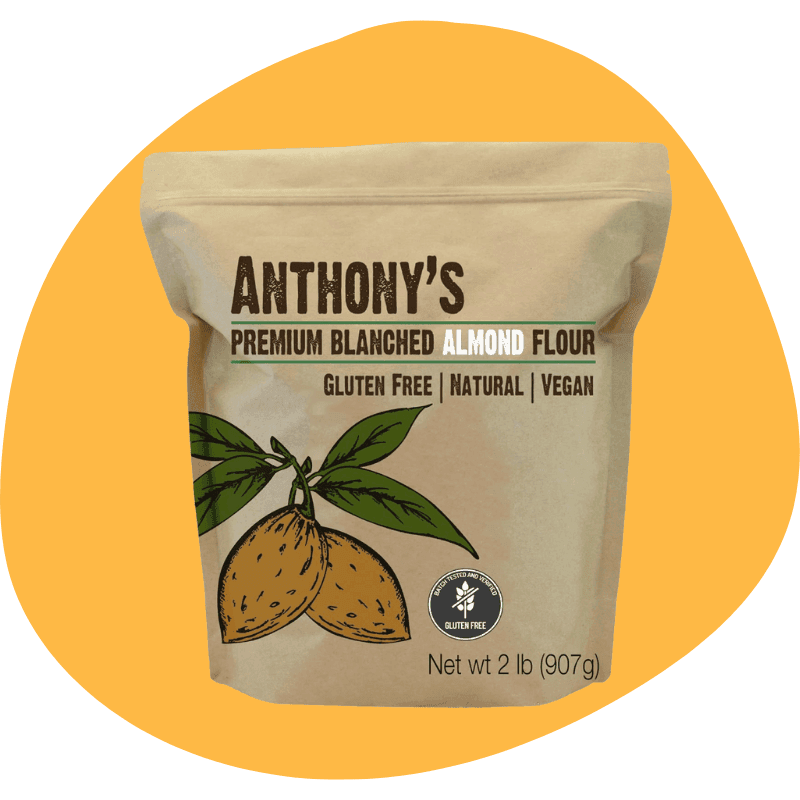
Anthony’s Blanched Almond Flour
Fine, silky almond flour made from blanched, skin-free almonds for a light texture that bakes and cooks beautifully. Gluten-free, non-GMO, vegan, and keto-friendly, this 2-lb bag is perfect for low-carb baking, pancakes, cookies, and breading — delivers moist, tender results and mixes smoothly into batters and doughs.

Coconut flour — absorbency, dosage rules, tricks
Coconut flour behaves nothing like almond flour — it’s ultra-absorbent and can dry a loaf out fast if you treat it like a 1:1 substitute.
- Best uses
- Small percentages in blended flours, dense quick breads, certain single-serve cakes, and flatbreads, when you want a hint of coconut flavor.
- Dosage rules
- Don’t replace almond flour 1:1. As a rough rule: use about 1/4 to 1/3 cup coconut flour for every 1 cup almond flour in recipes, and increase eggs or liquid accordingly.
- When a recipe is primarily coconut flour, expect to use extra eggs — they’re part of the structure, not optional.
- Pros
- Very low net carbs and high fiber.
- Adds pleasant flavor and dryness that’s great for some crumbly quick breads.
- Cons / watchouts
- It will make baked goods gummy or dry if ratios are off.
- Needs more eggs or fat to maintain moisture.
- Pro tip: Add coconut flour gradually and allow batter to rest a few minutes so coconut can absorb liquid — you’ll see the texture and can adjust with more egg or liquid.
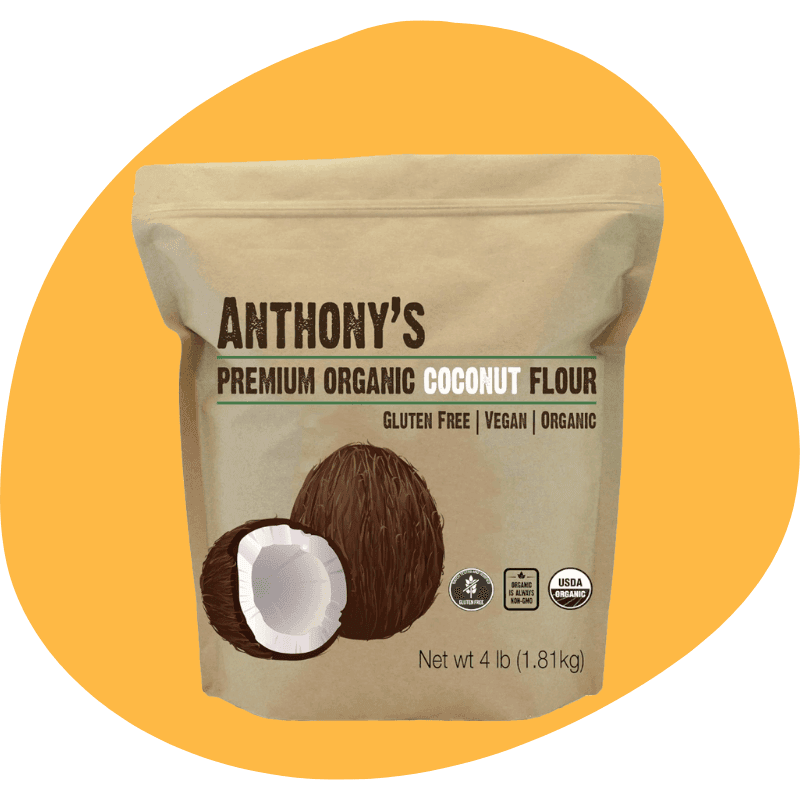
Anthony’s Organic Coconut Flour
Super-fine, high-fiber coconut flour made from organic coconut meat. Batch-tested for purity, gluten-free, non-GMO, vegan, and keto-friendly — perfect for low-carb baking, pancakes, muffins, and as a grain-free thickener. Highly absorbent (uses more liquid and less flour than wheat), mixes smoothly, and stores well in a cool, dry place.
Psyllium husk powder — the texture engine; use percentages
Psyllium husk powder is the secret weapon for low carb bread recipes that slice like real bread. It gels with water and mimics gluten’s elasticity.
- Best uses
- Sandwich loaves, bagels, chewy rolls, and any recipe where sliceability matters.
- How to use
- Common practical rule: start with about 1–3 tablespoons of psyllium powder per 1 cup of almond flour. Many successful sandwich loaves sit near 1–2 tbsp per cup; for very chewy, elastic loaves, move toward the higher end.
- When a recipe calls for hot or boiling water, that step “blooms” the psyllium into a gel — that gel is what gives the loaf chew.
- Pros
- Creates a flexible, moist crumb that doesn’t fall apart.
- Adds soluble fiber and helps the dough hold together.
- Cons / watchouts
- Too much psyllium can make a dense, gummy loaf; too little gives crumbly slices.
- Some people need to increase water gradually when adding psyllium for gut comfort.
- Pro tip: If your loaf is crumbly, add 1 tsp–1 tbsp more psyllium next bake and re-bloom in hot water; if gummy, reduce psyllium slightly or bake a bit longer at a slightly lower temp.
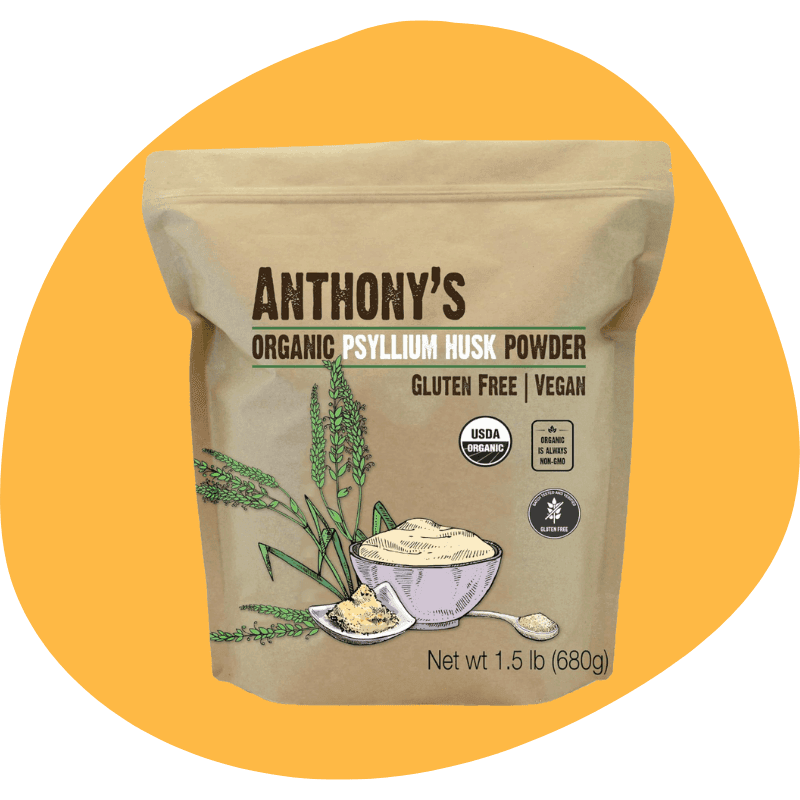
Anthony’s Organic Psyllium Husk Powder
Finely ground, organic psyllium husk that’s gluten-free, non-GMO, and keto-friendly. A concentrated source of soluble fiber to support digestive regularity, thicken smoothies, and add body to low-carb baking. Mix easily into water, yogurt, or recipes — start with a small amount and increase as needed. Store in a cool, dry place. (If you’re pregnant, nursing, or taking medication, check with your healthcare provider before use.)
Flaxseed & golden flax meal — moisture + nutty flavor
Flax meal is a great binder and flavor booster — it gels a little like psyllium and gives a toasty nuttiness.
- Best uses
- Egg replacer in some recipes (flax “egg”), crusty rolls, seeded loaves, and crackers.
- Properties
- Flax creates a gel when mixed with liquid (use 1 tbsp flax + 3 tbsp water ≈ , 1 “flax egg”).
- Golden flax has a milder color/flavor than brown flax.
- Pros
- Adds fiber and omega-3s; great for nut-free seed blends.
- Helps with moisture and sliceability when combined with psyllium.
- Cons
- Strong flavor if overused; can be greasy in high quantities.
- It should be used alongside other binders for the best texture in sandwich loaves.
- Pro tip: Toast flax gently in a dry pan before milling or using pre-milled golden flax for deeper flavor in crackers and loaves.
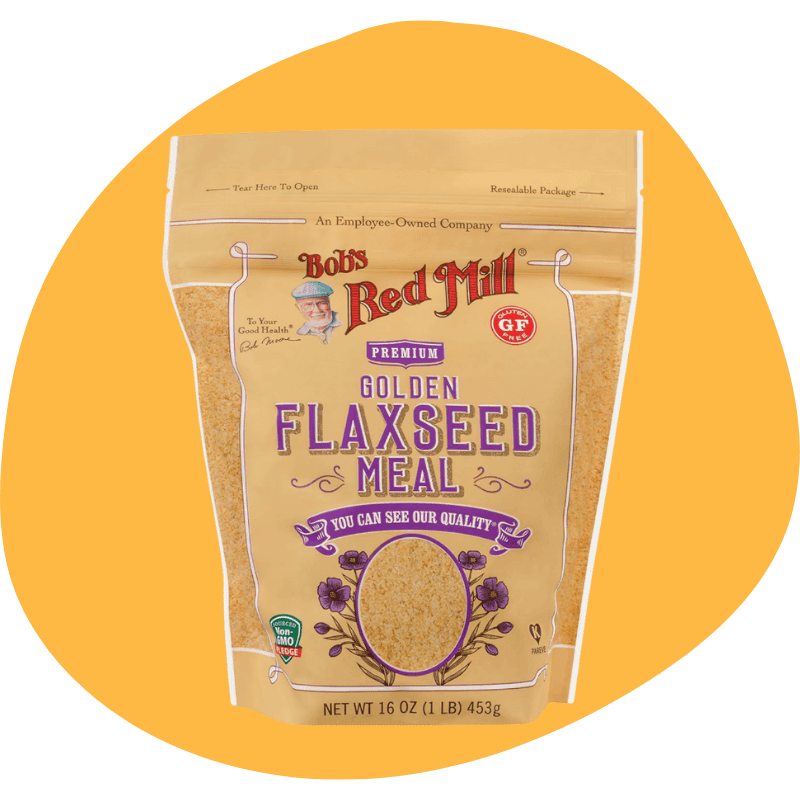
Bob’s Red Mill Golden Flaxseed Meal
Lightly nutty, finely ground golden flaxseed that blends into smoothies, yogurt, and batters or acts as an egg-replacer in baking. High in fiber and plant-based ALA omega-3s, non-GMO, vegan, paleo/keto-friendly, and kosher — store in a cool, dry place (refrigerate after opening for best freshness).
Oat fiber, vital wheat gluten, whey & egg white powders — special cases
- Oat fiber
- Not the same as oat flour. Oat fiber is mostly insoluble fiber and adds bulk without carbs. Great in small amounts to lighten texture.
- Vital wheat gluten
- Adds elasticity and chew — but it’s wheat-derived (not gluten-free). Useful in hybrid loaves if you’re not avoiding gluten but want a yeasty, stretchy crumb.
- Whey protein & egg white powder
- Concentrated proteins that help structure and dry-out control in some commercial keto mixes. Use in moderation: they can tighten the crumb and speed browning.
- When to use
- Reach for these when you’re fine with dairy or gluten and want to push texture toward a more traditional, chewy loaf.
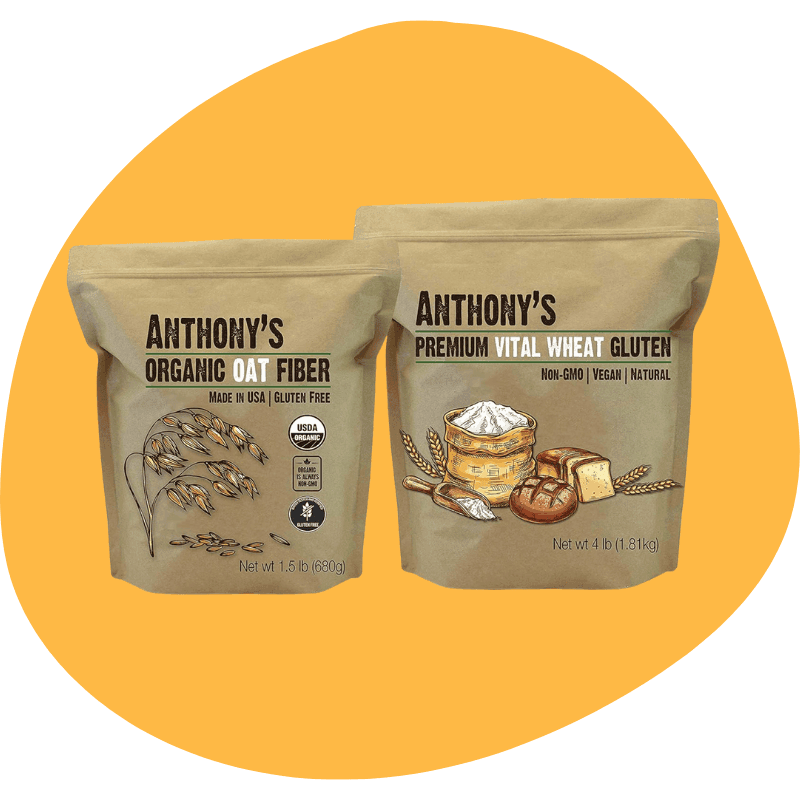
Anthony’s Vital Wheat Gluten (4 lb) & Organic Oat Fiber (1.5 lb) — Bundle
Power up your baking with this two-product combo: vital wheat gluten adds chew, rise, and structure (perfect for hearty breads and homemade seitan), while organic oat fiber brings dry bulk and extra soluble fiber for low-moisture recipes, thickeners, and lightening low-carb batters. Pantry essentials for home bakers and recipe tinkerers who want better texture, more protein from gluten, and fiber-friendly volume from oat fiber.
Quick uses: boost bread elasticity, make seitan, improve crumb in low-carb breads, thicken sauces, or add fiber to smoothies and recipes.
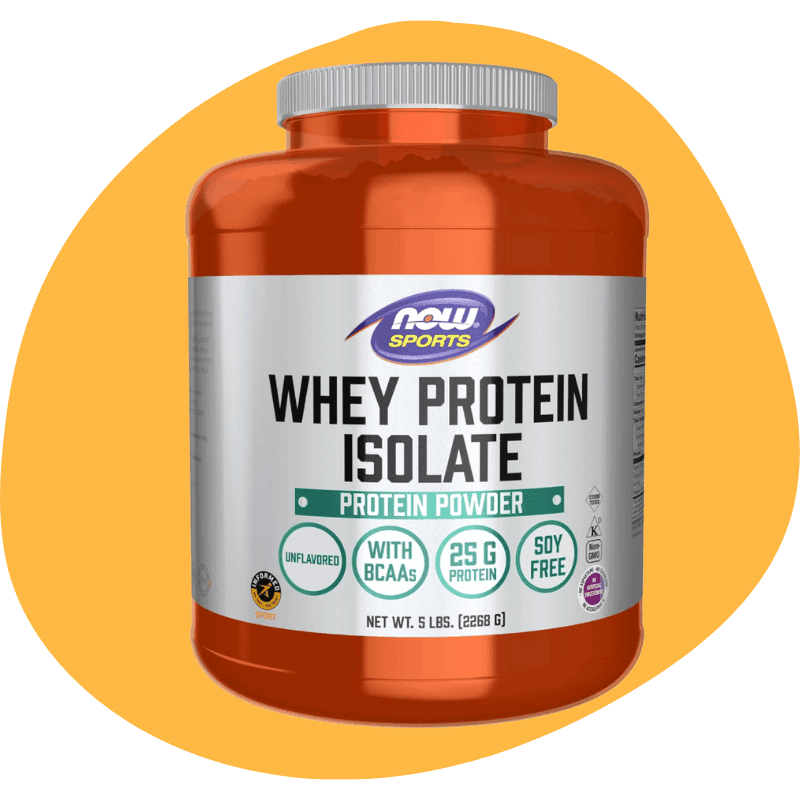
NOW Sports Whey Protein Isolate — Unflavored, 25 g Protein, 5 lb
Clean, high-protein whey isolate that delivers 25 g of protein per serving with naturally occurring BCAAs to support muscle recovery and daily protein goals. Unflavored and virtually neutral, it mixes smoothly into water, coffee, smoothies, or recipes without changing taste — perfect for post-workout shakes, baking, or adding protein to meals. The 5-pound tub gives great value for regular use.
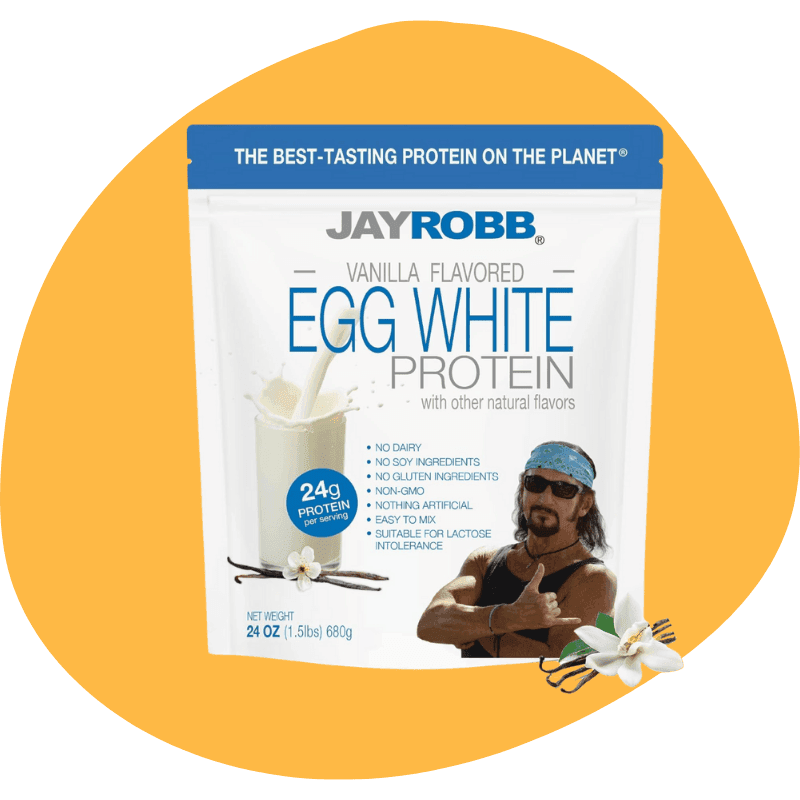
JAYROBB Vanilla Egg White Protein — 24 oz (1.5 lb)
Clean, high-quality protein from 100% egg whites with a smooth vanilla flavor. Naturally lactose-free and gluten-free, it mixes easily into shakes, smoothies, pancakes, or baking recipes to boost protein without extra carbs or fat. Great for post-workout recovery, meal prep, or anytime you need a neutral, versatile protein boost.
Key points:
- 100% egg white protein, vanilla flavored
- Lactose-free, gluten-free, low in carbs/fat
- Mixes well in drinks & recipes; ideal for keto or low-carb diets
Pre-mixed keto flours & commercial blends — short note (what to look for)
Pre-made keto flour blends can be a huge shortcut — but read the label.
- What to look for
- Minimal fillers (avoid added starches like tapioca or potato starch if you want very low net carbs).
- Clear macronutrient breakdown (fiber vs total carbs).
- No hidden wheat (if you need gluten-free).
- When to use
- Ideal for convenience and consistent results, making it perfect for beginners or those looking to scale recipes.
- Pro tip: If a blend behaves oddly, compare its ingredient list to the homemade mix you usually use and tweak liquid and binder levels accordingly.
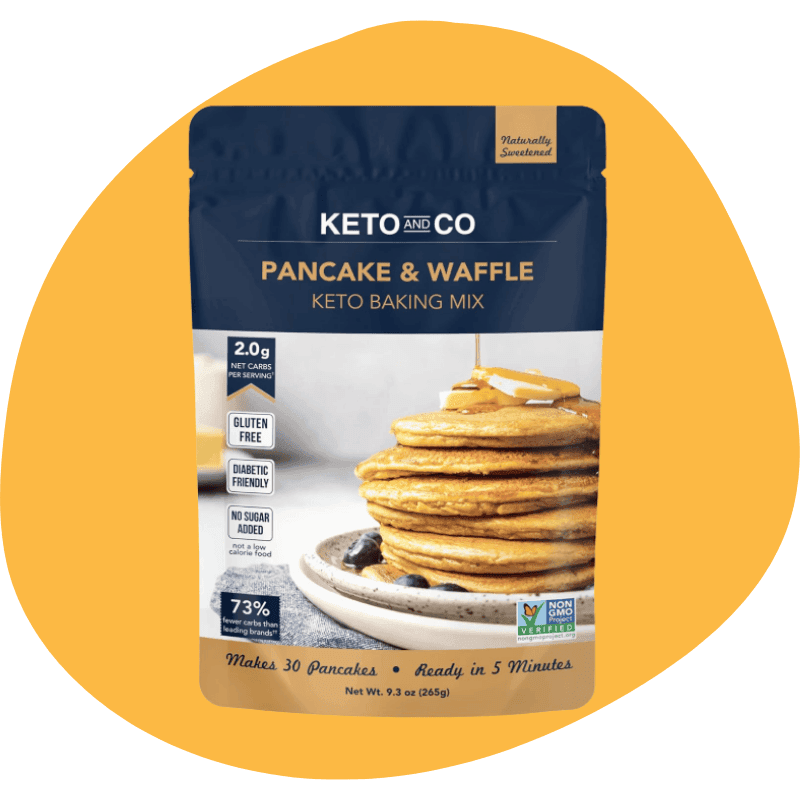
Keto & Co Pancake & Waffle Mix — pack of 6
Whip up fluffy, bakery-style pancakes or crispy waffles in minutes with this low-carb, gluten-free mix — just what busy mornings (and low-carb cravings) need. With only 2.0 g net carbs per serving, no sugar added, and labeled diabetic- & keto-friendly, it’s perfect for guilt-free breakfasts, brunches, or quick snacks.
Stock almond flour, psyllium husk powder, and at least one secondary flour (coconut or a seed flour). Those three cover most low carb bread recipes — then mix, match, and adjust hydration to dial in the texture you want.
Leavening, sweeteners & stabilizers: science-backed choices for low carb bread recipes
Baking low carb bread recipes is equal parts chemistry and creativity. Get the leavening, sweeteners, and stabilizers right, and your loaf will rise, brown, and slice like a champ. Get any of them wrong, and you’ll be troubleshooting instead of enjoying toast. Below, I break down the practical, science-backed choices you’ll actually use — with dosages, swap ideas, and real-world tips.
Baking powder & baking soda — the quick lifters
- What they do: Baking powder and baking soda produce gas (CO₂) quickly through chemical reactions — perfect for fast-rise low carb bread recipes and quick breads.
- When to use:
- Baking powder (double-acting) is the safe default for most quick, low-carb loaves and muffins.
- Baking soda needs an acid (yogurt, buttermilk, cream of tartar) to react, so use it when your recipe contains an acidic ingredient.
- Typical amounts:
- ~1 to 1½ teaspoons baking powder per 2 cups of dry low-carb flour mix (adjust by recipe).
- ~¼ to ½ teaspoon baking soda when paired with an acid—start small; too much gives an off-taste.
- Pro tip: Because low carb bread recipes often include dense, moist flours (almond, coconut), sift your leaveners with dry ingredients and consider folding in whipped egg whites for extra lift.
Yeast — when (and how) to use it in low-carb loaves
- Why yeast is tricky here: Yeast feeds on simple sugars to produce CO₂ and flavor. Most low carb bread recipes lack enough fermentable sugar, so yeast-based loaves need special handling.
- Options:
- Hybrid yeasted loaves: Use a small, controlled amount of fermentable sugar (or a tiny bit of mashed root veg/pureed apple) OR use a keto-wheat or gluten-containing hybrid flour to give yeast something to work with.
- Non-fermented alternatives: If you want low carbs and zero rise time, use chemical leaveners (baking powder/soda) and beaten egg whites instead.
- Practical tip: If you use yeast, proof it the usual way with a pinch of sugar to confirm it’s active, but be mindful that adding sugars increases net carbs. Expect a different crumb and longer proof times than wheat bread.
Cream of tartar — small but mighty
- Main use: Stabilizes and strengthens whipped egg whites (think cloud bread or meringue-style techniques used in many low carb bread recipes).
- Dosage guideline: ~⅛ to ¼ teaspoon cream of tartar per 2 egg whites.
- Why it matters: Helps create a stable foam that traps air — essential for light, airy low-carb loaves that rely on eggs for lift.
Low-carb sweeteners that help crust & browning
- Allulose — the browning champion
- Why: Allulose behaves most like sugar in the oven: it caramelizes and browns, improving crust color and Maillard reactions without adding many net carbs.
- How to use: Replace a small percentage of sugar (or add 1–2 tablespoons to the tops of loaves) to improve crust color. Watch out — in large amounts, allulose can have laxative effects for sensitive people.
- Erythritol — sweet but poor browning
- Why: Erythritol is a popular no-calorie sugar alcohol, but it doesn’t brown well and can recrystallize, causing a slightly gritty or cooling sensation.
- Usage note: Avoid relying on erythritol to darken crust. It’s fine for sweetness but not for color.
- Monk fruit/stevia — sweet without browning
- Why: Natural non-nutritive sweeteners add sweetness but don’t contribute to crust formation.
- Practical crust hack: If you want better color without adding carbs, brush loaves with beaten egg or butter before or after baking — this mimics sugar’s effect on crust.
Xanthan gum, guar gum & alternatives: when they help
- What they do: Gums mimic gluten’s viscosity and elasticity, improving crumb structure and binding in low carb bread recipes.
- Typical dosages:
- Xanthan gum: ~¼ to ½ teaspoon per cup of low-carb flour mix for quick breads; ½–1 teaspoon per cup for yeast or roll-style doughs.
- Guar gum: Use slightly less than xanthan (similar range); it hydrates differently and works best in cold batters.
- When to choose which:
- Xanthan is heat-stable and great for most baked goods; it gives a slightly elastic, chewy crumb.
- Guar excels in cold-set recipes (no-bake bars) and can make dough denser if overused.
- Alternatives to gums:
- Psyllium husk powder — creates a natural gel and is often preferred for sandwich-style low carb bread recipes (gives chew and sliceability).
- Flax gel — (flax meal + water) can act as a binder in egg-free recipes.
- Egg whites / beaten eggs — great structural proteins; whipping them traps air instead of relying on gums.
- Caution: Gums are powerful; too much yields a gummy, gluey texture. Start low, test, and adjust.
Practical combinations that work (real recipes, simplified)
- Sliceable sandwich loaf: Almond flour + psyllium + 1 tsp baking powder + beaten eggs + ¼–½ tsp xanthan (optional).
- Cloudy, airy, quick loaf: Egg whites + cream of tartar + a touch of almond flour.
- Crackers/crispbreads: Seed mix + psyllium + egg whites, bake low & slow.
- Hybrid yeasted loaf: Yeast + small fermentable sugar or keto-friendly yeast feed + vital wheat gluten (if not avoiding gluten) or xanthan for binding.
Safety & tolerance notes
- Sugar alcohols (erythritol, xylitol) in larger amounts can cause digestive upset in some people — start small. (Note: Xylitol is toxic to pets; keep it away from dogs.)
- Allulose browns well but can also cause digestive sensitivity at high doses; test tolerance.
- Gums (xanthan/guar) can cause texture issues if overused — they’re potent, so measure.
Quick checklist before you bake
- Use baking powder for fast rises; baking soda only with an acid.
- If you want a browned crust in low carb bread recipes, add a bit of allulose or use an egg wash / melted butter.
- Prefer chew & sliceability? Reach for psyllium and a small amount of xanthan if needed.
- Using yeast? Be prepared to give it a little fermentable food or use recipes specifically formulated for yeast with low-carb flours.
Getting leavening, sweeteners, and stabilizers right is half the battle. Use the right combo for your target texture — airy, chewy, or crisp —, and you’ll see how low carb bread recipes can feel less like a compromise and more like a craft.
Tools, pans & small kit: what actually matters for low carb bread recipes
Having the right kit won’t turn a bad recipe into a great one, but the right tools make reliable results WAY easier — and that’s half the battle with low carb bread recipes. Below is a short, practical toolkit you’ll use again and again, with why each item matters and how to get the most from it.
Essential pans & bakeware
- 9×5 loaf pan (metal, light-to-medium weight)
- Best for most sandwich-style low carb bread recipes. Metal gives an even browning and predictable crust. If your pan is dark, drop oven temp by ~10–15°F to avoid overbrowning.
- Smaller/medium loaf pans (8×4 or 8.5×4.5)
- Use these for denser recipes or when you want taller, faster-cooked loaves.
- Silicone mats or baking sheets
- Perfect for flatbreads, crackers, and anything you want to slide off easily. They keep bottoms from burning and don’t need oil.
- Parchment paper (cut to fit)
- Line loaf pans for easy removal and cleaner edges. For sticky cheese-based doughs (fathead style), parchment is a game-changer.
- Baking stone or steel (optional)
- Helpful if you make flatbreads or want a better bottom crust on rustic loaves.
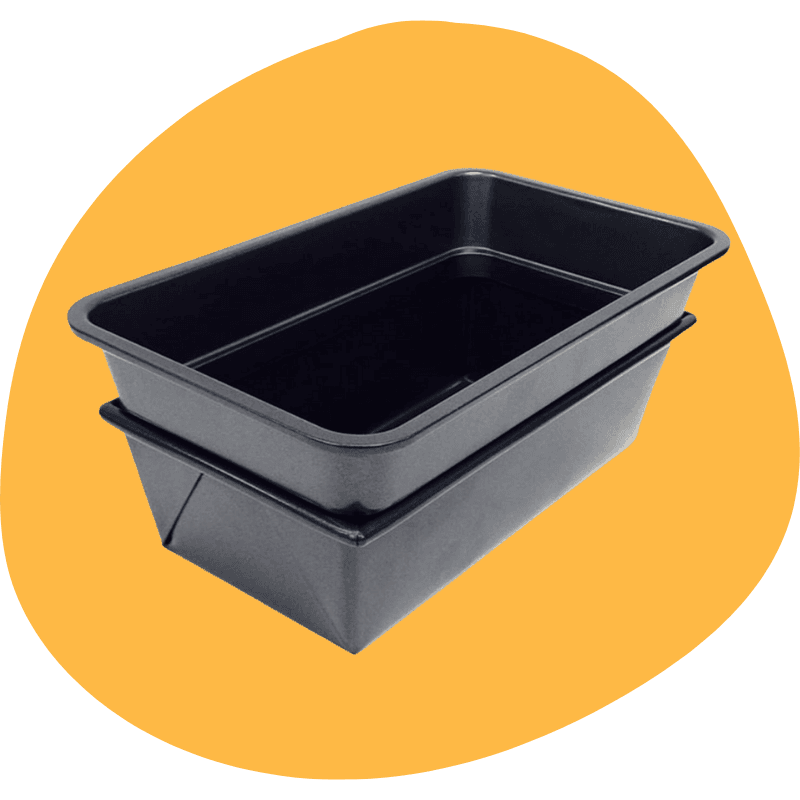
Chicago Metallic Professional Gluten-Free Loaf Pan — 9″ x 4.25″
Bake perfect gluten-free loaves every time with this professional-grade loaf pan. The roomy 9″ x 4.25″ size and sturdy construction promote even browning and a straight, bakery-style rise—ideal for bread, pound cakes, and meatloaf. Finished in a durable metallic surface that resists warping, it’s a go-to for home bakers who want reliable, consistent results.

Silpat Half-Size Nonstick Baking Mats — Set of 2 (11.6″ × 16.5″)
Reusable, dishwasher-safe nonstick mats sized to fit 13″ × 18″ baking pans. Perfect for baking cookies, roasting veggies, and rolling dough—they promote even browning, eliminate sticky messes, and cut down on parchment and oil use for cleaner, easier baking.
If You Care Parchment Baking Paper — 70 sq ft roll (Pack of 2)
Unbleached, chlorine-free, silicone-coated parchment that’s greaseproof and sized to fit standard 13″ pans. Perfect for baking cookies, roasting veggies, and lining cake pans for easy release and quick cleanup—an eco-minded choice for everyday baking.
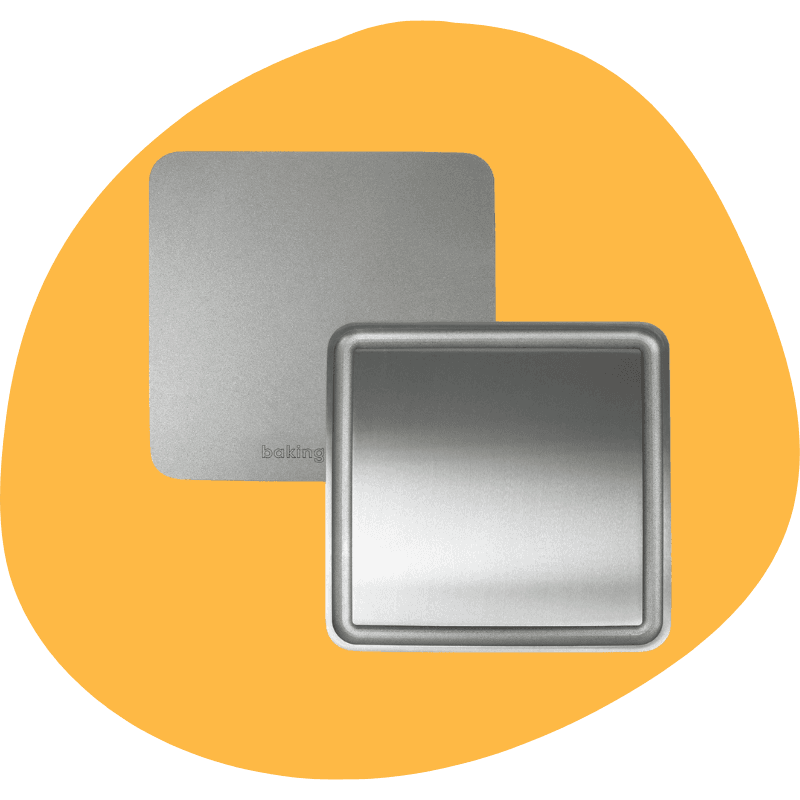
Baking Steel — The Original Ultra-Conductive Pizza Steel (14″ × 16″ × 1/4″)
Get restaurant-quality pizza and bakery-style bread at home with this heavy-duty, crack-proof baking steel. Its ultra-conductive carbon steel delivers intense, even heat for faster bake times, blistered crusts, and airy interiors. Pre-seasoned for a naturally non-stick surface, it’s built for indoor ovens or outdoor grills and designed to last a lifetime.
Measuring & mixing: precision = consistency
- Digital kitchen scale (grams)
- Critical. Low-carb flours are sensitive — a cup of almond flour can vary a LOT. Weighing removes guesswork.
- Measuring spoons (for leaveners & gums)
- Small errors in baking powder or psyllium can change the texture markedly; measure carefully.
Hand tools: what to own and when to use them
- Hand mixer vs whisk
- Hand mixer (or stand mixer) — use when recipes call for whipping egg whites or creaming ingredients. It saves time and gives a more stable foam for low carb bread recipes.
- Whisk — great for small batches, beating eggs, or folding in dry ingredients when you want more control. If you’re whipping whites frequently, upgrade to a hand mixer.
- Silicone spatula & wooden spoon
- For folding, scraping bowls, and smoothing batter into pans.
- Rubber scraper & offset spatula
- An offset spatula helps smooth loaf tops and press crackers evenly.

Escali Primo Digital Food Scale — Chrome
Compact, reliable kitchen scale for precise weighing and portion control. The sleek chrome finish and small footprint (8.5 × 6 × 1.5 inches) make it perfect for countertops or storage. Easy-to-read display, tare/zero function, and simple unit conversion let you measure ingredients, portion meals, and bake with confidence. Great for cooks, bakers, and anyone tracking servings.

OXO Good Grips 4-Piece Stainless Steel Measuring Spoons — Accurate, durable, and tidy. This set includes four nesting stainless spoons with comfortable, non-slip Good Grips handles and magnetic snaps that keep the set neatly stacked for storage. Clearly marked measurements, dishwasher-safe construction, and a sturdy design make them perfect for everyday baking and cooking.

KitchenAid 5-Speed Ultra Power Hand Mixer — compact, reliable mixing with five speed settings that handle everything from gentle folding to quick whipping. Lightweight but powerful enough for batters, frostings, and light doughs, it’s a countertop workhorse for baking, meal prep, and everyday mixing.
Key features:
- Five-speed control for precise mixing (slow to fast).
- Sturdy motor designed for consistent performance on batters and creams.
- Includes versatile attachments for mixing, whipping, and light kneading; easy-release eject for fast cleanup.

DI ORO Silicone Spatula — Black
A go-to, heavy-duty kitchen spatula built for baking and cooking. Heat-resistant up to 600°F, seamless and BPA-free, it’s flexible enough to scrape every last bit from bowls yet sturdy enough for mixing and folding. Safe on nonstick cookware, dishwasher-safe, and designed to resist staining and odor — perfect for batter, frosting, sauces, and everyday prep.

Totally Bamboo Mixing Spoon — a sturdy, eco-friendly bamboo utensil built for everyday cooking. Smooth, lightweight, and comfortable to hold, it’s ideal for stirring, sautéing, and serving while being gentle on nonstick and stainless cookware. Made from renewable bamboo—durable, naturally attractive, and easy to use (hand wash recommended).

OXO Good Grips Small Silicone Spatula
A handy, all-purpose mini spatula with a flexible silicone head and a soft, non-slip Good Grips handle. Great for scraping jars and bowls, folding batter, smoothing frosting, and stirring small batches. Dishwasher-safe and safe on nonstick cookware—perfect for precise work and everyday kitchen tasks.

Ateco Offset Spatula — 9.75″ Stainless Steel Blade, Wood Handle
A professional-quality offset spatula that makes frosting, spreading, and smoothing cake layers effortless. The thin, flexible 9.75-inch stainless steel blade gives excellent control for icing, ganache, and lifting delicate pastries, while the angled (offset) design keeps your knuckles clear of the work surface. The classic wood handle feels balanced and comfortable for precise decorating work.
Key features:
- 9.75″ stainless steel blade for smooth, even spreading
- Offset blade keeps hands away from the surface
- Comfortable wood handle with good balance
- Ideal for cake decorating, spreading batter, and lifting pastries
- Hand wash recommended to preserve the wood handle and finish
Temperature tools & finishing gear
- Instant-read thermometer
- Don’t guess doneness. Many low carb bread recipes are dense; aim for an internal temp around 200–205°F (93–96°C) for fully set sandwich loaves. For cheese-heavy loaves, slightly lower temps can keep them tender.
- Oven thermometer
- Oven dials lie. Use one to confirm actual oven temp — this fixes many “underbaked vs overbaked” mysteries.
- Cooling rack
- Let the loaves cool completely on a rack. Cooling sets the crumb and makes slicing less crumbly.
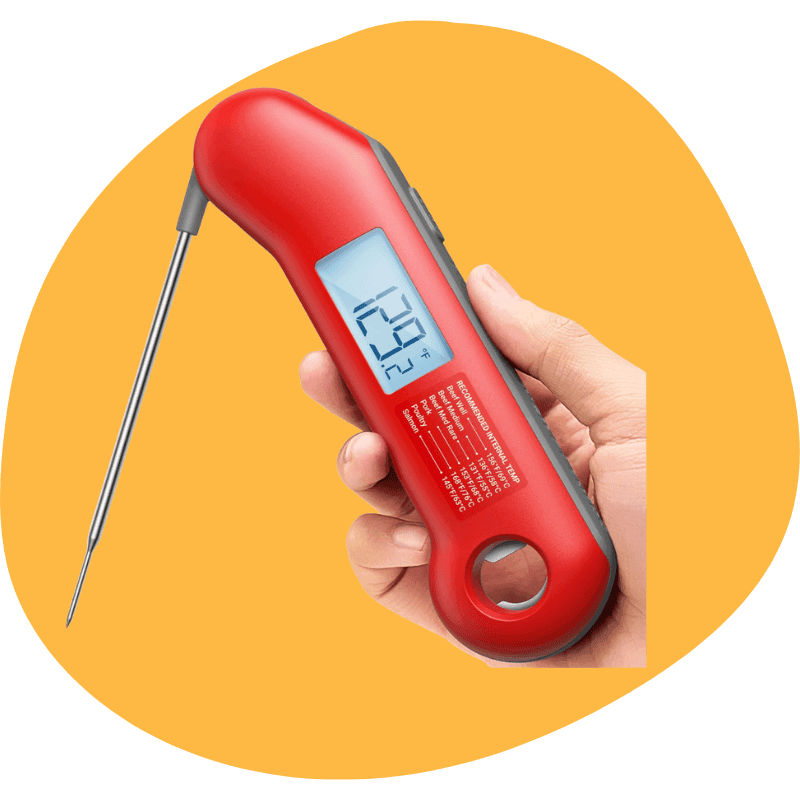
ThermoMaven Professional Digital Meat Thermometer — ultra-fast, ultra-accurate cooking control. Delivers instant readings in just 0.5 seconds with ±0.5°F accuracy (NIST certified), so you nail doneness every time. Fully waterproof, with an auto-rotating backlit display and lift-to-wake feature, it’s perfect for grilling, BBQ, roasting, candy making, and everyday cooking. Durable, precise, and easy to use for both home cooks and pros.

Heavy-Duty Stainless Steel Baking & Cooling Rack — 11″ × 17″
Built for durability and even airflow, this oven-safe stainless steel rack fits standard jelly roll pans and handles high-heat baking, roasting, and cooling with ease. The sturdy wire design promotes crisping on all sides and cools desserts quickly without warping — a reliable choice for home kitchens, coffee shops, and bakeries.
Useful extras that pay off
- Serrated bread knife — essential for clean, even slices.
- Loaf pan liners or parchment strips — for easy removal when the loaf is sticky.
- Small sieve/sifter — for evenly distributing baking powder and removing lumps from almond flour.
- Mixing bowls of different sizes — metal bowls are great for whipping egg whites (they get colder and whisk up faster).

Victorinox Swiss Army Serrated Bread Knife — 10¼”
A razor-sharp, long, serrated blade that slices cleanly through crusty bread, bagels, cakes, and tomatoes without crushing. The ergonomic Fibrox handle offers a secure, non-slip grip for comfort and control, making this lightweight, professional-grade knife a favorite for both home bakers and chefs. Durable, precise, and built for everyday use.
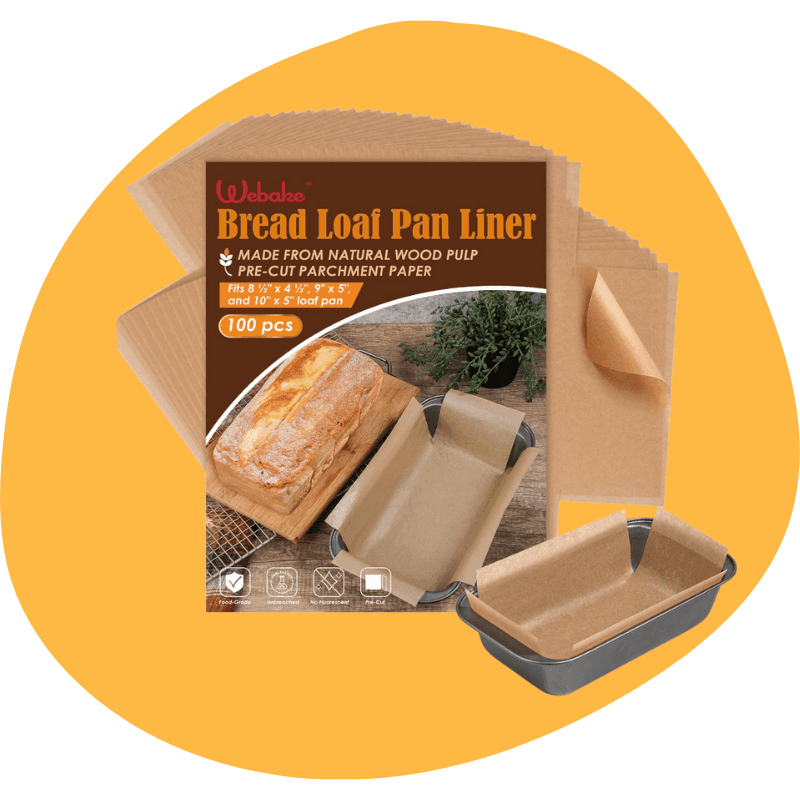
Webake Unbleached Parchment Paper Loaf Pan Liners
Precut, non-toxic parchment liners sized for 9×5 loaf pans (fits 1 lb–2 lb loaves) make bread baking cleaner and easier. Unbleached and greaseproof for effortless release, they prevent sticking, protect pans, and speed cleanup—perfect for sourdough, sandwich bread, and quick loaves.
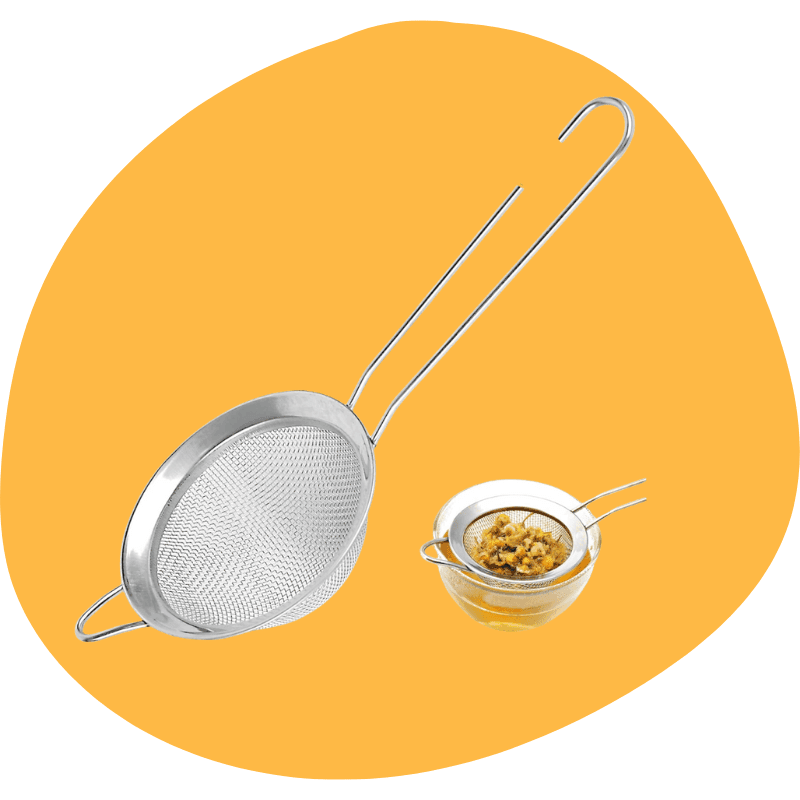
Fine Mesh Stainless Steel Strainer — (Silver)
A compact, sturdy mini strainer with ultra-fine mesh for smooth, residue-free results. Perfect for tea, coffee, cocktails, juice, dusting sugar or spices, and double-straining drinks. Features a durable stainless steel build, conical sieve design, and long handle for comfortable, controlled pouring and everyday kitchen or bar use.
Quick workflow tips
- Weigh dry ingredients first, then set up wet ingredients — saves time and reduces mistakes.
- Line pans with parchment before preheating so you can pour batter immediately and not lose oven spring.
- Use the thermometer instead of a toothpick for dense loaves — it’s more reliable.
- Cool fully before slicing — patience here dramatically improves texture and prevents crumbling.
Having this small kit on hand makes baking low carb bread recipes repeatable and less stressful.
Step-by-step: basic low-carb sandwich loaf (master recipe template)
This is the master loaf I reach for when I want a dependable, sliceable sandwich bread that fits into most low carb bread recipe rotations. Think of it as a template: swap a flour, tweak psyllium, or fold in whipped whites — and you’ve got a dozen variations.
Master ratio & measurements for a 9×5 loaf (guideline)
Use a digital scale for consistency — small changes in flour weight change texture more than you think.
- Almond flour: 220–260 g (about 2–2½ cups lightly packed)
- Psyllium husk powder: 3–4 tbsp (start at 3 tbsp for a tender loaf; 4 tbsp for chewier, sliceable texture) — the texture engine
- Eggs: 4 large (room temp) — whole-egg method; see whipped whites option below
- Fat (butter, ghee, or olive oil): 60–80 ml (¼–⅓ cup) — keeps crumbs moist
- Baking powder: 1 tsp
- Salt: 1 tsp
- Warm water: ¾–1 cup (180–240 ml) — add gradually; psyllium absorbs a lot
- Optional: 1 tbsp apple cider vinegar or lemon juice (helps lift), 1 tsp sweetener (allulose) if you want slight browning
Master ratio, simplified:
- Dry base: Almond flour + psyllium ≈ 1 (almond): 0.12–0.18 (psyllium) by weight
- Eggs: ~1 large egg per 50–70 g almond flour (for this template, 4 eggs cover the structure)
- Hydration: Start low, add warm water until batter is spreadable but not soupy.
Method — whole-egg (easy, forgiving)
Use this when you want a reliable loaf with minimal fuss.
- Preheat oven to 350°F (175°C). Line a 9×5 pan with parchment (leave an overhang for easy removal).
- Mix dry: In a bowl, sift or whisk almond flour, psyllium husk, baking powder, and salt. Sifting helps remove lumps.
- Mix wet: In another bowl, whisk the eggs, melted butter (or oil), and vinegar/sweetener if using.
- Combine: Pour wet into dry and stir. Add warm water slowly — start with ¾ cup and add more by tablespoon if the mixture seems too stiff. You’re aiming for a thick, spreadable batter that holds shape in the pan.
- Rest (optional but helpful): Let the batter sit 5–10 minutes so the psyllium hydrates — you’ll see it thicken into a dough-like texture.
- Bake: Smooth into the prepared pan, tap to remove air pockets, and bake 45–60 minutes. Test: a toothpick should come out mostly clean, and internal temp should be ~200–205°F (93–96°C) for a fully set loaf.
- Cool completely: Remove from pan using parchment overhang and cool on a wire rack at least 2 hours (overnight is even better). Cooling sets the crumb and makes slicing clean.
Method — whipped-white (lighter crumb, airier slices)
This technique uses whipped egg whites folded into the batter for extra lift — excellent for low carb bread recipes when you want a less dense sandwich loaf.
- Separate 4 eggs into whites and yolks.
- Whip whites with ¼ tsp cream of tartar to glossy, stiff peaks.
- Mix yolks with the fat and fold into the dry mix as above, creating a thick batter.
- Gently fold in 1/2 of the whipped whites, keeping as much air as possible.
- Pour into pan and bake at 325–350°F (160–175°C) — lower temp helps set without over-browning — for 45–55 minutes.
- Cool fully before slicing.
Why it works: whipped whites trap air that expands in the oven, giving a more open crumb than a pure whole-egg method.
Rest times & temperature profile (why these matter)
- Resting batter 5–10 minutes after mixing lets psyllium fully hydrate — a hydrated psyllium gel is what provides chew and prevents crumbs from falling apart.
- Bake at 350°F for a reliable crust and interior set; if your pan is dark, drop to 325°F.
- Internal temp 200–205°F for dense almond-based loaves is the best doneness gauge — toothpicks can be misleading with moist low-carb crumbs.
- Cool 2+ hours (ideally overnight): slicing hot loaves = crumb collapse + crumbly slices. Patience transforms texture.
Notes on scaling & timing
- Double the recipe for two loaves, but bake in separate pans — a packed oven with multiple pans can lower oven temp and increase bake time.
- Half the recipe for an 8×4 pan; reduce bake time ~10–15 minutes and check earlier.
- High altitude: increase oven temp by 10–15°F and reduce baking powder slightly.
- Small batch (single-serve): divide batter and bake in ramekins for 20–25 minutes at 350°F.
Alt substitutions & troubleshooting swaps
- Nut-free / seed option: Replace almond flour 1:1 with sunflower seed flour BUT: it can brown or turn green when reacting with baking soda — use baking powder and acid cautiously. Add 1–2 tbsp flax or psyllium to improve binding.
- Egg-reduced / egg-free: Use flax eggs (1 tbsp flax + 3 tbsp water = 1 egg) and increase psyllium by 1 tbsp. Expect denser, moister crumb and shorter slices.
- Dairy-free: Swap butter for neutral oil (avocado or olive oil) — crumb will be slightly wetter; reduce water a bit.
- Lower-fat: Use 2–3 egg whites plus 1–2 whole eggs and reduce fat, but you’ll get a drier loaf; add 1–2 tbsp extra water or 1–2 tbsp Greek yogurt for moisture (not strictly carb-free).
- For browning/color: Add 1–2 tbsp allulose to the batter or brush the top with an egg wash before baking.
Quick troubleshooting (during & after bake)
- Batter too loose: Add 1 tbsp psyllium, wait 5 minutes to hydrate, then bake.
- Gummy center: Likely underbaked — tent with foil and continue baking; confirm internal temp.
- Crumbly slices: Increase psyllium by ½–1 tbsp next bake, or let loaf cool longer (overnight helps).
- Too dense: Try folding in whipped egg whites next time or reducing almond flour slightly.
This master sandwich loaf is your starting point for building dozens of low carb bread recipes. Once you’ve nailed the ratio and the bake timing in your oven, you’ll be able to adapt confidently; seed loaves, cheese breads, sweet quick loaves — all from the same reliable foundation.
10 recipes (each with quick notes, variations & macros)
Below are 10 practical, testable recipes you can use right away. Each one is written so you can plug it into your rotation of low carb bread recipes — quick method, swap ideas, and approximate macros (use a nutrition app for exact values based on your brands). I’ve italicized the most important ingredients and keywords to help you scan and bake.
1) Almond flour sandwich loaf (fluffy, family-friendly)
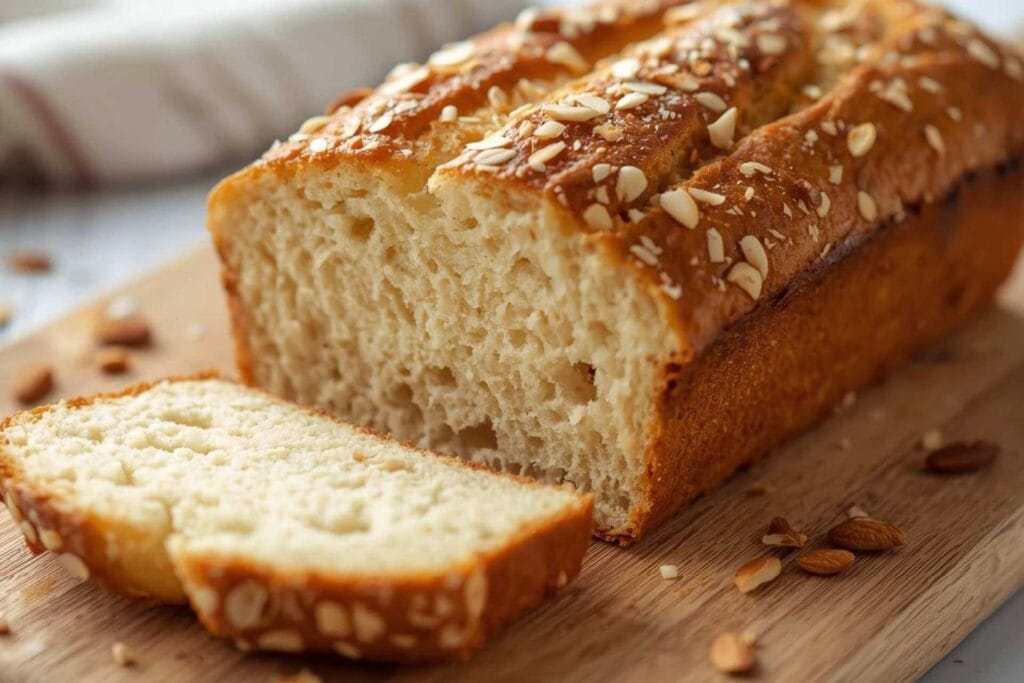
Ingredients (9×5 loaf)
- Almond flour: 250 g (≈ 2–2½ cups lightly packed)
- Psyllium husk powder: 30 g (≈ 3 tbsp) — texture engine
- Eggs: 4 large (≈ 200 g)
- Butter (melted) or oil: 60 g (≈ ¼ cup)
- Baking powder: 1 tsp
- Salt: 1 tsp
- Warm water: ¾–1 cup (add until batter is spreadable)
Method (fast)
- Preheat to 350°F (175°C). Line 9×5 pan.
- Whisk dry ingredients (almond flour, psyllium, baking powder, salt).
- Whisk eggs + melted butter; combine with dry. Add warm water slowly until spreadable. Rest 5–10 minutes for psyllium to hydrate.
- Bake 45–60 minutes until internal temp ≈ 200–205°F. Cool completely before slicing.
Quick notes & variations
- For lighter crumb: separate eggs and fold in whipped egg whites.
- Add 1 tbsp allulose or brush an egg wash for a browner crust.
- Make it savory: fold in rosemary + sesame seeds.
Approximate macros (total loaf / per slice — 12 slices)
- Total kcal: ~2253 kcal — Total net carbs: ~4.4 g
- Per slice: ~188 kcal, ~0.4 g net carbs, ~6.6 g protein, ~17 g fat
2) Psyllium real-bread loaf (chewy, sliceable, minimal egg taste)
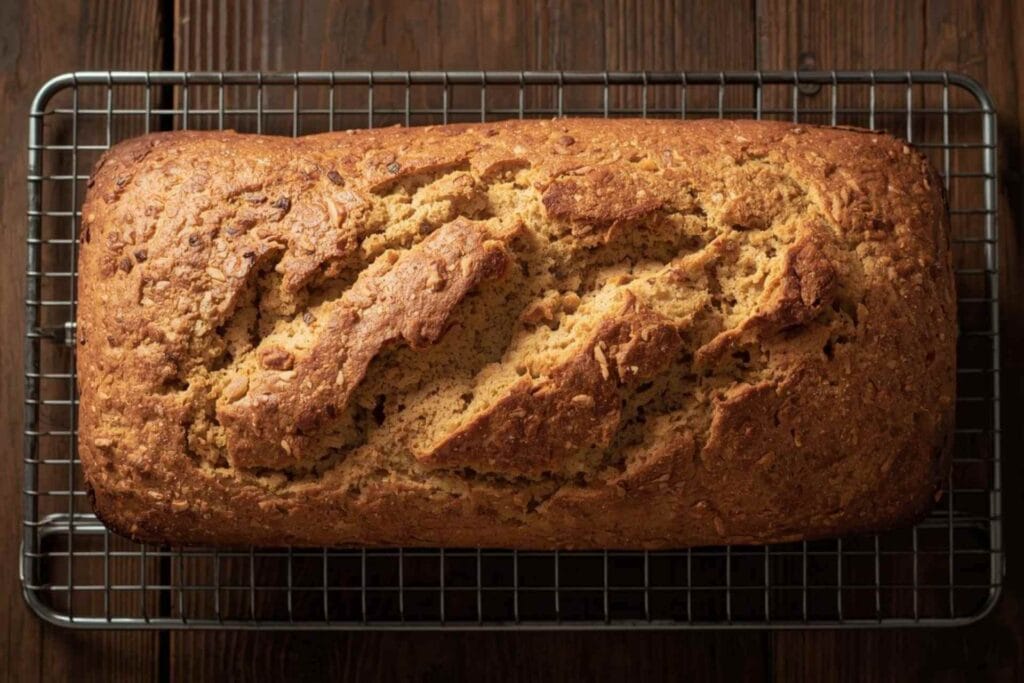
Ingredients (9×5 loaf)
- Almond flour: 200 g
- Psyllium husk powder: 50 g (≈ 5 tbsp — intentionally higher)
- Eggs: 5 large (≈ 250 g)
- Butter/oil: 40 g
- Salt + baking powder as usual
- Hot/boiling water to “bloom” psyllium: ~½ cup added during mixing
Why psyllium matters
- Psyllium forms a gel when hydrated that mimics gluten’s elasticity, giving chew and sliceability unmatched by nut flours alone. This recipe leans into that property for a truly sliceable loaf.
Method (fast)
- Mix dry. Whisk eggs + fat. Add hot water to the dry mix to bloom psyllium, then combine with eggs. Rest 5–10 minutes. Bake 40–55 min at 350°F; cool thoroughly.
Quick notes & variations
- For extra chew, increase psyllium by 1 tbsp. For less chew, reduce 1 tbsp.
- Nut-free swap: use sunflower seed flour 1:1 (watch for color changes with baking soda).
Approximate macros (total loaf / per slice — 12 slices)
- Total kcal: ~1927 kcal — Total net carbs: ~0 g (very high fiber content)
- Per slice: ~161 kcal, ~0 g net carbs, ~6.2 g protein, ~13.8 g fat
Note: recipes with heavy psyllium often show negligible net carbs because most of the carbohydrate is insoluble fiber — still track with your app for accuracy.
3) Coconut flour quick loaf (single-bowl, speedy)
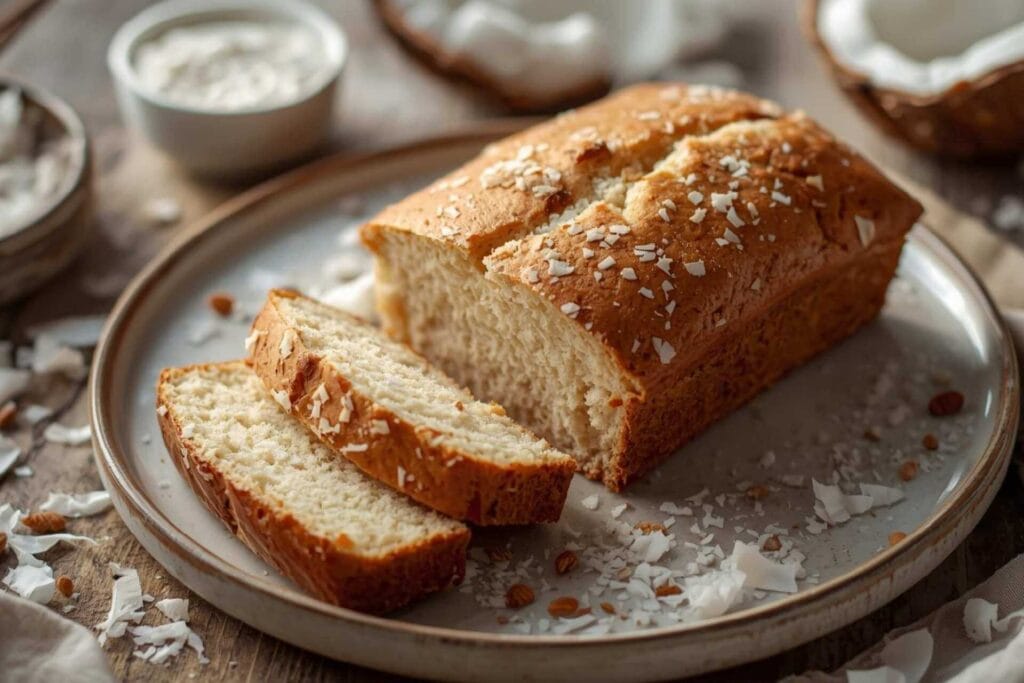
Ingredients (9×5 loaf)
- Coconut flour: 120 g (≈ 1 cup)
- Eggs: 6 large (≈ 300 g) — coconut needs more eggs
- Butter/oil: 60 g
- Psyllium husk powder: 10 g (≈ 1 tbsp)
- Baking powder + salt
Method
- Whisk eggs + melted fat. Stir in dry ingredients. Let it sit for 5 minutes for the coconut to absorb. Bake 35–50 minutes at 350°F. Cool fully.
Tips to avoid dryness
- Do not substitute coconut flour 1:1 for almond—it’s super absorbent. Use additional eggs or fat. Let the batter rest for the flour to swell before baking.
Variations
- Sweet version: add cinnamon, vanilla, and allulose or monk fruit.
- Savory: mix in garlic powder and grated Parmesan.
Approximate macros (total loaf / per slice — 12 slices)
- Total kcal: ~1362 kcal — Total net carbs: ~20.9 g
- Per slice: ~114 kcal, ~1.7 g net carbs, ~4.6 g protein, ~6.4 g fat
4) Cloud bread / Oopsie bread (3-ingredient, ultra-low carb)
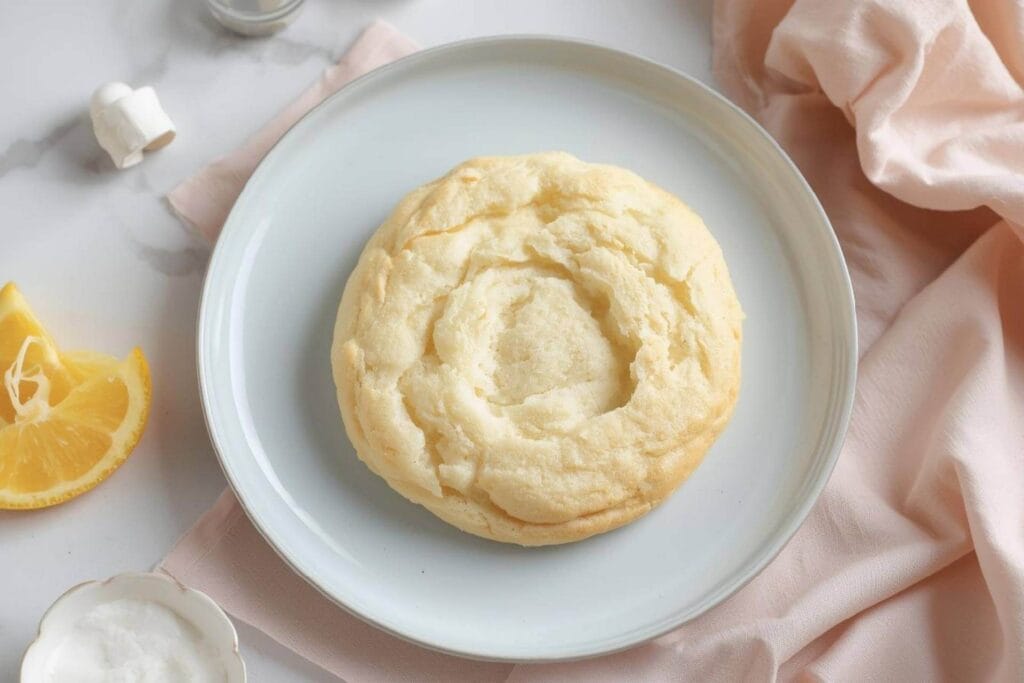
Ingredients (yields ~6 rounds)
- Eggs: 4 large (200 g), separated
- Cream cheese (softened) or Greek yogurt: 60 g
- ¼ tsp cream of tartar (optional; stabilizes whites)
- Salt + optional herbs
Method
- Whip egg whites + cream of tartar to stiff peaks. Fold beaten yolks mixed with cream cheese into whites gently. Spoon onto parchment, bake 20–25 min at 300–325°F until set and lightly golden.
Best uses
- Sandwiches for one, burger buns, or toast replacement. Light, airy, and ultra-low carb.
Approximate macros (total yield / per round — 6 pieces)
- Total kcal: ~498 kcal — Total net carbs: ~4.1 g
- Per round: ~83 kcal, ~0.7 g net carbs, ~4.0 g protein, ~6.5 g fat
5) Cheese & egg loaf (fathead style — mozzarella + almond)
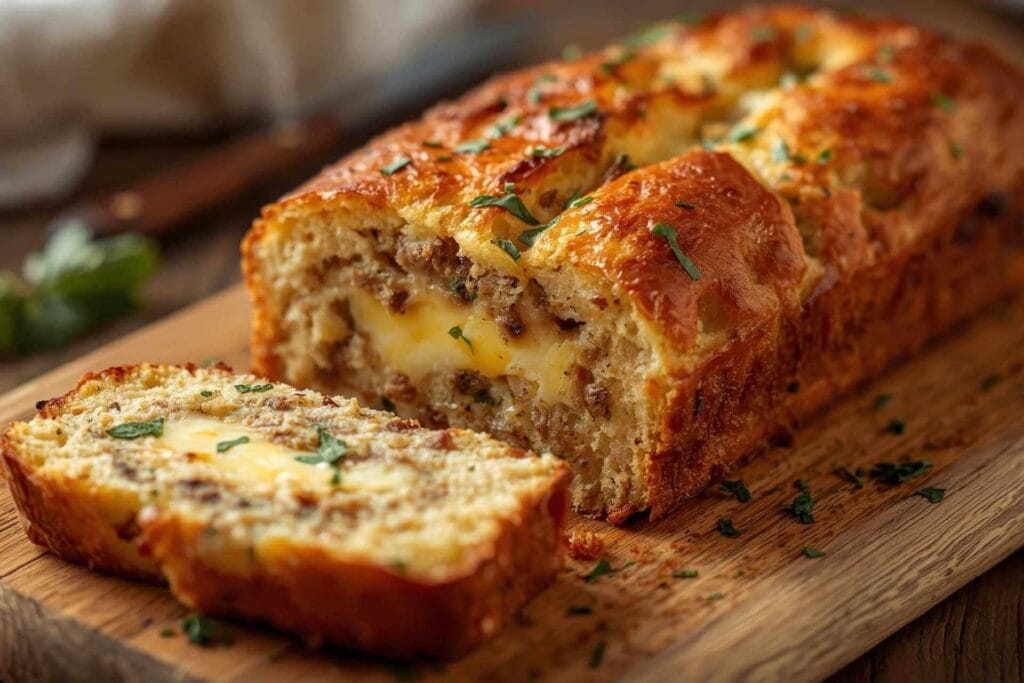
Ingredients
- Mozzarella (shredded): 200 g
- Almond flour: 80 g
- Cream cheese: 80 g
- Eggs: 2 large (≈ 100 g)
- Salt, garlic powder, Italian herbs
Method
- Melt mozzarella + cream cheese gently; stir in almond flour and eggs until cohesive. Form into a loaf or press into a pan. Bake 25–35 minutes at 350°F until golden.
Uses & variation
- Great pizza base, sandwich bread, or dinner rolls. Add garlic & oregano for pizza-style crust.
Approximate macros (total loaf / per slice — 8–10 hearty slices)
- Total kcal: ~1135 kcal — Total net carbs: ~12.3 g
- Per slice (10 slices): ~114 kcal, ~1.2 g net carbs, ~6–7 g protein, ~9.3 g fat
6) Yeasted keto loaf (using keto-wheat or vital gluten hybrid)
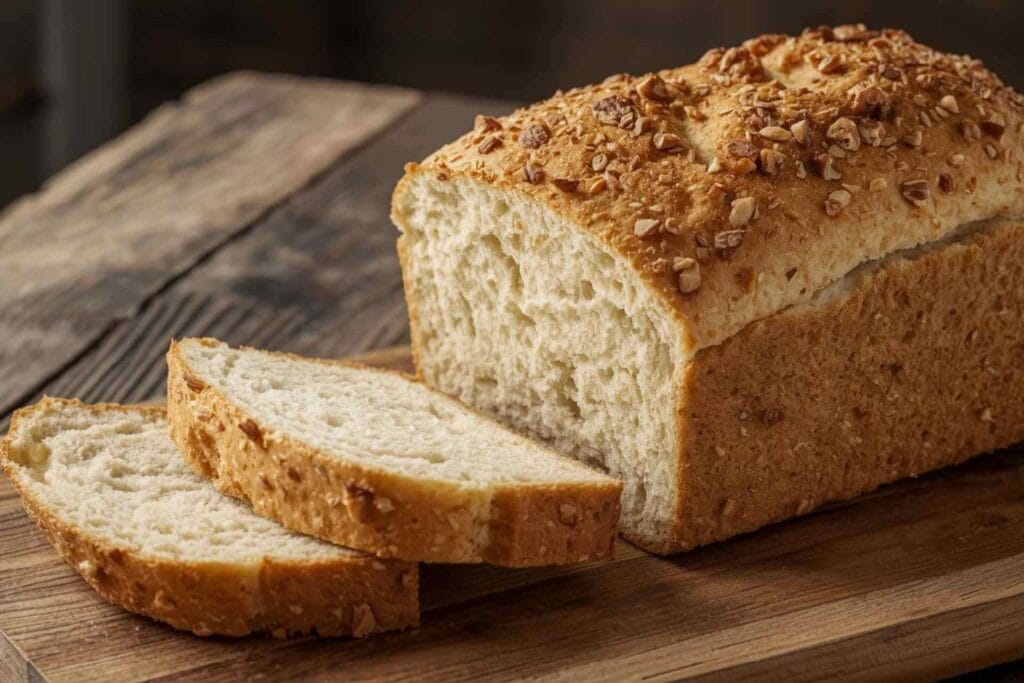
Ingredients (hybrid approach)
- Almond flour: 180 g
- Vital wheat gluten (optional for chew): 80 g (omit if gluten-free)
- Eggs: 2 large (≈ 100 g)
- Olive oil: 30 g
- Water: 150–200 g warm
- Active dry yeast: 7 g (1 packet) — proof briefly with a tiny pinch of sugar or honey (or a small yeast food replacement)
Method & fermentation tips
- If using yeast, give it time: knead/bind for 5–8 min, then allow a longer, slower rise (60–90 min) because low-carb doughs ferment more slowly.
- Keep proofing at a warm (~80°F) temperature and expect a smaller rise than wheat bread. Bake at 375°F for 30–45 minutes, depending on pan.
Notes
- This gives a more traditional, yeasty aroma and crisp crust, but won’t match classic wheat crumb unless you’re using a significant amount of gluten or a specially formulated keto flour blend.
Approximate macros (total loaf / per slice — 12 slices)
- Total kcal: ~1509 kcal — Total net carbs: ~12.3 g
- Per slice: ~126 kcal, ~1.0 g net carbs, ~8–9 g protein, ~10.9 g fat
(net carbs will vary more if you add proofing sugar — keep it tiny and account for it)
7) Flatbreads & tortillas (almond/coconut wraps)
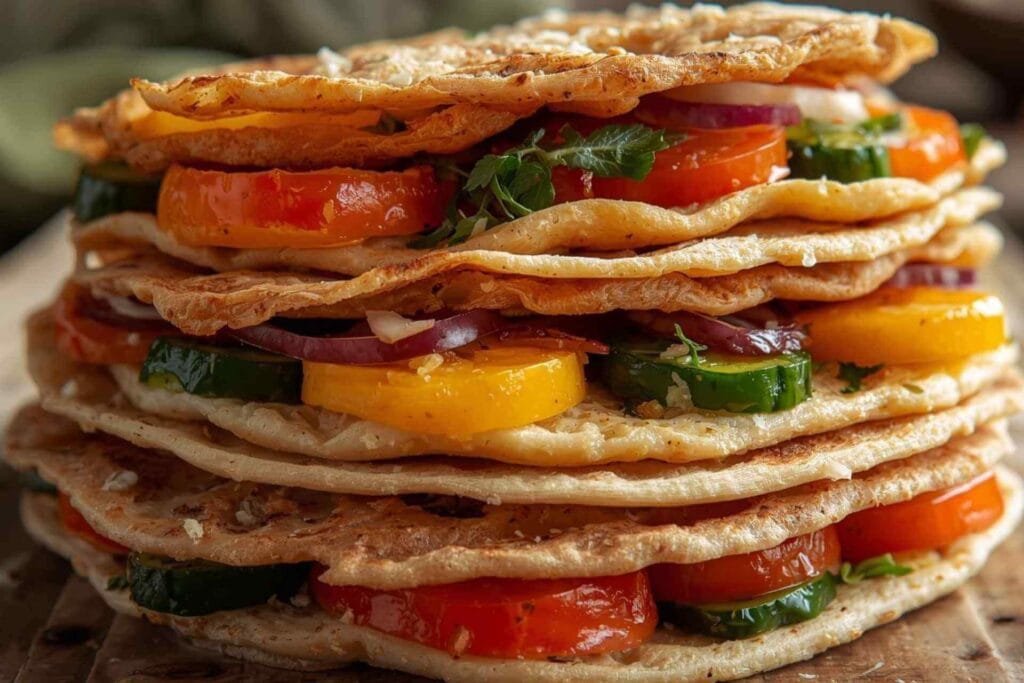
Ingredients (makes ~6 small wraps)
- Almond flour: 120 g
- Coconut flour: 30 g
- Psyllium husk: 10 g
- Eggs: 2 (≈ 100 g)
- Butter/oil: 20 g
- Salt, garlic powder (optional)
Method (stovetop)
- Combine the dry ingredients, and add the wet to make a pliable dough. Divide into 6, roll between parchment, or press thin with hands. Cook on a dry skillet 1–2 min per side until browned.
Quick uses
- Tacos, wraps, quesadillas. Reheat on a skillet for best pliability.
Approximate macros (total / per wrap — 6)
- Total kcal: ~681 kcal — Total net carbs: ~10.4 g
- Per wrap: ~114 kcal, ~1.7 g net carbs, ~3.8 g protein, ~5 g fat
8) Seeded crispbread & crackers (zero-bake or low-bake option)
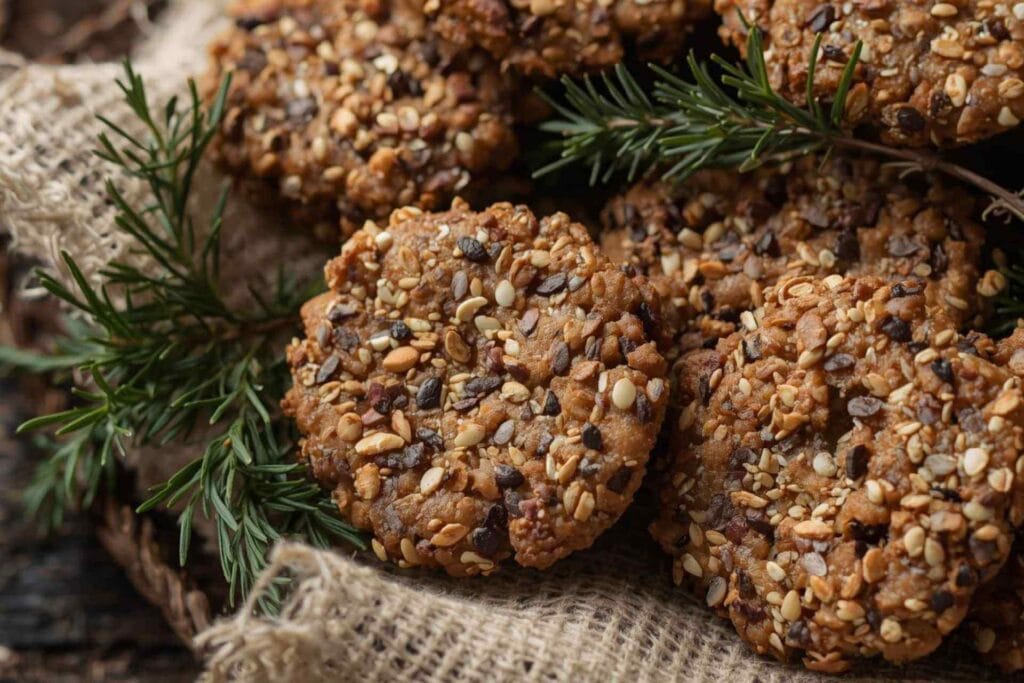
Ingredients (makes ~12 servings)
- Mixed seeds (sunflower/pumpkin/sesame): 200 g
- Flax meal: 50 g
- Psyllium: 20 g
- Egg whites: 60 g (or 2 whole eggs)
- Salt, pepper, herbs
Method
- Mix everything into a thick paste; spread thinly onto parchment and score into crackers. Bake low & slow (300°F) for 30–45 minutes until dry and crisp. For a “zero-bake” oven-free version, pulse seeds and press into bars and refrigerate until set (texture differs).
Snack ideas
- Serve with tuna, cream cheese, or as a crunchy topping on salads.
Approximate macros (total / per serving — 12)
- Total kcal: ~1378 kcal — Total net carbs: ~0 g (very high fiber)
- Per serving: ~115 kcal, ~0 g net carbs, ~4.6 g protein, ~9.3 g fat
9) Single-serve microwave / 90-second keto bread

Ingredients (single mug)
- Almond flour: 30 g (≈ 3 tbsp)
- Egg: 1 large (≈ 50 g)
- Butter: 10 g (≈ 2 tsp)
- Baking powder, pinch, salt
Method
- Mix in a microwave-safe mug and microwave 60–90 seconds. Let cool 1–2 minutes before slicing.
Tips
- Texture is denser than oven bread, but brilliant for an instant sandwich. Use for toast or avocado smash when you’re short on time.
Approximate macros (single serving)
- Total kcal: ~321 kcal — Net carbs: ~3.6 g
- High-protein, high-fat single serving — adjust portions if you want fewer calories.
10) Sweet low-carb quick bread (pumpkin/“banana” style with substitutes)
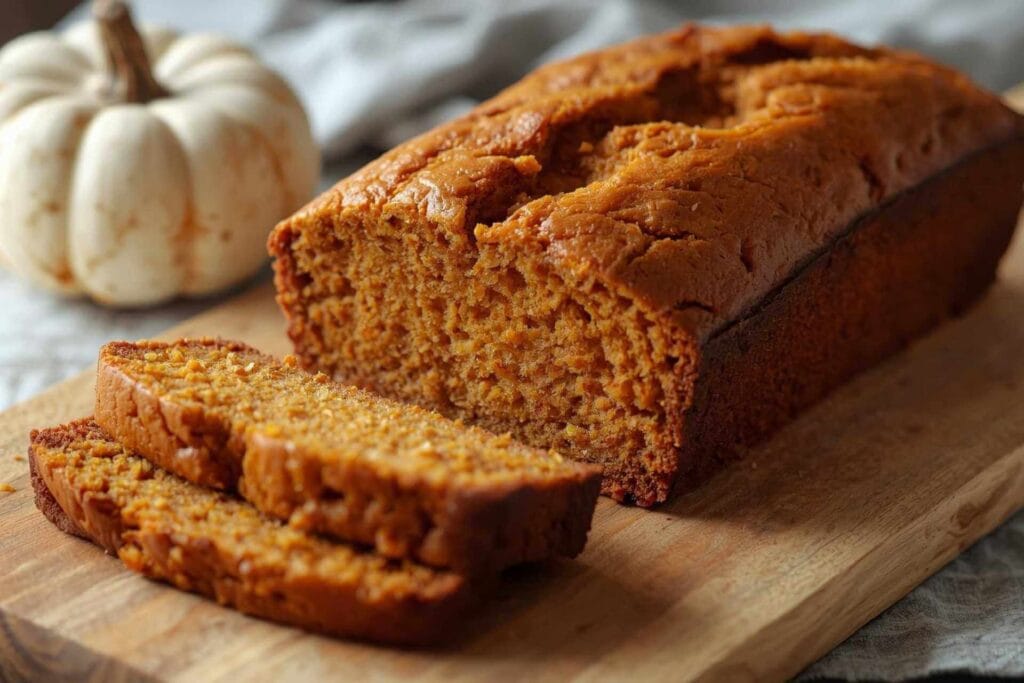
Ingredients (9×5 loaf)
- Almond flour: 200 g
- Pumpkin purée: 150 g (low-carb binder and moisture)
- Eggs: 3 large (≈ 150 g)
- Butter/oil: 50 g
- Psyllium: 10 g
- Allulose or preferred sweetener: 30 g (adjust)
- Spices: cinnamon, nutmeg, vanilla
Method
- Mix wet & dry, combine, rest 5 minutes to let psyllium hydrate, bake 40–55 minutes at 350°F. Cool fully.
Serving ideas
- Toast, top with mascarpone or butter, or slice thin for dessert-style sandwiches.
Approximate macros (total loaf / per slice — 12)
- Total kcal: ~1814 kcal — Total net carbs: ~23.7 g
- Per slice: ~151 kcal, ~2.0 g net carbs, ~5.3 g protein, ~13.6 g fat
Quick closing notes on macros & accuracy
- The macros above are approximations based on typical nutrition values for each ingredient and the recipe ingredient weights. Net carbs were calculated as total carbs − fiber and then divided per serving.
- Why the numbers may vary: brand differences (especially almond flour grind and mixed seeds), egg sizes, and the use of commercial flour blends will shift totals. Always plug your specific brands into a nutrition calculator (MyFitnessPal, Cronometer, etc.) for exact numbers.
Variations & flavor add-ins for low carb bread recipes (savory, sweet, herbs, seeds)
Want to keep low carb bread recipes interesting? Tiny add-ins transform a plain loaf into something memorable — and most of them won’t wreck the net carb count. Below, I’ll walk through safe add-ins, sensible amounts, flavor combos, and how each change affects texture and bake times.
Savory add-ins: herbs, cheeses, olives, and savory mix-ins
These make sandwiches taste gourmet without adding carbs.
- Fresh/dried herbs (rosemary, thyme, oregano, dill)
- Use 1–2 tbsp fresh or 1–2 tsp dried per loaf. Fresh herbs add brightness; dried herbs add concentrated flavor.
- Tip: Chop fresh rosemary finely — big needles can poke through the crumb.
- Cheeses (cheddar, Parmesan, feta, mozzarella)
- Add 50–150 g shredded or crumbled cheese to the batter, or sprinkle on top.
- Effect: Cheese increases fat and moisture, gives chew (fathead effect), and can help bind. Watch salt levels and reduce added salt slightly when using salty cheeses like Parmesan or feta.
- Olives & sun-dried tomatoes
- Chop ¼–½ cup and fold in. These add umami and moisture — great in savory quick breads.
- Carb note: Sun-dried tomatoes add a few carbs; olives are very low-carb but add sodium.
- Onion & garlic flavors
- Use 1–2 tsp onion powder or 1–2 cloves minced garlic (lightly sauté first to mellow). Fresh alliums add moisture — reduce other wet ingredients slightly if batter seems loose.
Savory combo ideas
- Rosemary + sea salt + sesame seeds (great for toasting)
- Cheddar + chives + cracked pepper (melty, savory sandwich loaves)
- Feta + olive + oregano (Mediterranean flatbreads or rolls)
Seeds & crunch (no carb wreckers)
Seeds add texture, healthy fats, and fiber — often lowering net carbs per slice.
- Good picks: chia, sesame, pumpkin, sunflower, poppy.
- Amounts: 1–3 tbsp per cup of flour in the batter; 1–2 tbsp on top as a finishing touch.
- Texture effects: Seeds increase density and crunch; pumpkin & sunflower add heft, chia creates a gel if hydrated (helpful binder).
Seed mix idea: 1 tbsp chia + 1 tbsp sesame + 1 tbsp sunflower — fold into master loaf for an earthy, crunchy bite.
Sweet add-ins (keep it low-carb)
Want dessert-style low carb bread recipes? Use low-carb sweeteners and modest fruit/heels.
- Low-carb sweeteners: Allulose is best for browning; erythritol/monk fruit for sweetness without color. Use 1–3 tbsp depending on the sweetness level.
- Flavor add-ins: cinnamon, vanilla, nutmeg, citrus zest (1–2 tsp), or unsweetened cocoa (1–3 tbsp for chocolate notes).
- Berry note: Small amounts of fresh berries (a few tablespoons) can be used in pumpkin-style loaves — they contribute carbs, so track them.
Sweet combos
- Cinnamon + vanilla + chopped pecans (toasted)
- Pumpkin + spice + a touch of allulose glaze
- Lemon zest + poppy seeds for a bright, quick bread
Swapping umami for depth: yeast extracts & nutritional yeast
Umami = savoriness without sugar. Both are low-carb ways to add bakery-like depth.
- Nutritional yeast
- Use 1–2 tbsp in savory loaves for a cheesy, slightly nutty flavor. It’s dehydrated, low-carb, and adds B-vitamins.
- Yeast extract (Marmite/Vegemite/yeast flakes)
- Use ¼–½ tsp (very strong). Adds a deep, savory backbone that mimics long fermentation in yeasted breads. Great in hybrid loaves when you want that bakery aroma without feeding yeast sugars.
Pro tip: If you want that “bready” aroma of yeast without actual fermentation, add 1 tsp nutritional yeast + ¼ tsp yeast extract to your dry mix. It makes low carb bread recipes smell and taste more like traditional wheat bread.
How add-ins affect bake chemistry
- Moisture: Olives, sun-dried tomatoes, and fresh fruit increase wetness — reduce warm water by 1–2 tbsp or add extra psyllium to compensate.
- Density: Seeds and cheese add weight — if adding >½ cup total solids, consider increasing baking powder by ¼ tsp or folding in whipped egg whites for lift.
- Browning: Cheese and sweeteners encourage better crust. Brush with an egg wash or butter for extra gloss and color without carbs.
Final quick rules
- Start small: 1–2 tbsp for potent flavors (herbs, yeast extract), ¼–½ cup for chunks (cheese, olives).
- Track carbs: even low amounts of sun-dried fruit or certain nuts add carbs — log them if you’re strict.
- Test in small batches: fold a spoonful into a mug-sized test bake before committing to a full loaf.
Flavoring your low carb bread recipes is where the fun begins. A few smart add-ins make weekday sandwiches feel special and keep meal boredom at bay — without sacrificing your carb goals.
Troubleshooting: 20 common low carb bread recipes problems & fixes
Baking low carb bread recipes can feel like a science experiment — until you know the usual suspects. Below are 20 common problems, a one-line diagnosis, and a one-line fix for each. Save this as your quick reference when a loaf misbehaves.
- Dense loaf
- Diagnosis: Too much heavy flour or not enough trapped air.
- Fix: Reduce almond/seed flour slightly, fold in whipped egg whites, or add ½ tsp extra baking powder.
- Wet or undercooked center
- Diagnosis: Underbaked or too much liquid for the flour ratio.
- Fix: Bake longer at 325–350°F and check internal temp (aim ~200–205°F); reduce added water next time.
- Gummy/chewy crumb
- Diagnosis: Excess psyllium or underbaked dough.
- Fix: Reduce psyllium by ½ tbsp or bake a bit longer at a slightly lower temp.
- Crumbly slices that fall apart
- Diagnosis: Not enough binder (psyllium/eggs) or sliced too soon.
- Fix: Increase psyllium ½–1 tbsp, or let the loaf cool fully (ideally overnight) before slicing.
- Strong eggy flavor
- Diagnosis: Too many whole eggs relative to other ingredients.
- Fix: Add fat (butter/cheese) or more almond flour; try using extra whites instead of whole eggs.
- Dry texture
- Diagnosis: Too much absorbent flour (coconut) or overbaked.
- Fix: Add more fat or egg next time, reduce coconut flour, and watch bake time.
- Too-tough crust
- Diagnosis: Oven too hot or loaf exposed too long to direct heat.
- Fix: Lower oven temp by 10–15°F or tent with foil for the last 10–15 minutes.
- No rise / flat loaf
- Diagnosis: Old baking powder/yeast, or missing leavening action.
- Fix: Replace leavening, whisk egg whites for lift, or use fresh active yeast if applicable.
- Collapsed after cooling
- Diagnosis: Rapid air expansion during bake, followed by insufficient structure to hold it.
- Fix: Reduce initial oven temp slightly, use more psyllium or egg whites for structure.
- Overly dense bottom
- Diagnosis: Batter packed too tightly or pan too small.
- Fix: Use the correct pan size and tap out large air pockets before baking.
- Large air holes/tunnels
- Diagnosis: Overmixing or too much trapped air in batter.
- Fix: Fold gently and avoid vigorous stirring once dry and wet are combined.
- Pale, unbrowned crust
- Diagnosis: No sugar/allulose or low oven surface temp.
- Fix: Brush top with egg wash or add 1–2 tbsp allulose for better browning.
- Bitter or off taste
- Diagnosis: Overused baking soda or rancid nut flour/seed meal.
- Fix: Use fresh almond flour and check leavener amounts; reduce baking soda.
- Greenish crumb (sunflower seed reaction)
- Diagnosis: Sunflower seed flour can react with baking soda and turn green.
- Fix: Use baking powder instead, or add a small acid (lemon juice) and avoid high amounts of baking soda.
- Soggy bottom / under-baked underside
- Diagnosis: Oven hot spots or too much moisture in batter.
- Fix: Bake on a middle rack or preheat a baking stone; reduce wet ingredients slightly.
- Oily or greasy crumb
- Diagnosis: Too much nut oil from almond flour or added fats.
- Fix: Reduce fat by 10–20% or blend some almond flour with oat fiber to absorb oil.
- Cracks across the top
- Diagnosis: Oven temp too high or surface dried too quickly.
- Fix: Lower temp 10–15°F and tent with foil mid-bake if top browns too fast.
- Rubbery/elastic texture
- Diagnosis: Too much xanthan/guar gum or overworked dough.
- Fix: Cut the gum in half next bake and mix just until combined.
- Soggy seeds or nuts on top
- Diagnosis: Toppings added too early or oven moisture trapped.
- Fix: Toast seeds separately or add them after an initial 10–15 minute bake.
- Microwave mug bread collapsed
- Diagnosis: Rapid steam expansion and then collapse; batter too wet.
- Fix: Reduce the water slightly and let the mug bread rest 2–3 minutes in the microwave before removing.
Quick troubleshooting checklist for low carb bread recipes
- Always weigh your ingredients.
- Let psyllium hydrate (rest 5–10 minutes) before baking.
- Use an instant-read thermometer to confirm doneness.
- Cool fully before slicing — patience = cleaner slices.
Baking low carb bread recipes gets easier the more you practice — treat each failed loaf as a datapoint, tweak one variable at a time, and you’ll dial in perfect results for your oven and tastes.
Texture & flavor hacks that make low carb bread recipes taste “real.”
Want your low carb bread recipes to stop tasting like “keto bread” and start tasting like the real deal? Small, targeted tricks—some chemistry, some old-school bakery moves—will change everything. Below are practical, testable hacks for better browning, crumb, and flavor that you can use on any loaf, flatbread, or cracker.
Browning tricks — get a crust that looks & smells like bakery bread
- Egg wash (classic): Whisk one egg with 1 tbsp water and brush the loaf just before baking. For a glossier, darker crust, use the yolk only. This is the fastest visual upgrade to most low carb bread recipes.
- Butter or oil finish: Brush melted butter (or olive oil) on warm loaves immediately after they come out of the oven — it softens the crust and adds sheen and flavor without carbs.
- Allulose for color: Add 1–2 tbsp allulose to the batter or sprinkle on top for better caramelization; it browns more like sugar than erythritol and boosts crust color. (Test tolerance first — large amounts can upset some stomachs.)
- Preheat a stone or steel: For flatbreads and crusty bottoms, preheat a baking stone/steel in the oven; slide your loaf or flat dough onto it for immediate bottom heat and superior browning.
- Broil finish: If the top isn’t brown enough near the end, move the loaf up a rack and broil for 30–60 seconds—watch carefully to avoid burning.
Crumb structure hacks — tricks for lighter, sliceable loaves
- Beat the whites: Whipping egg whites to glossy peaks and folding them into batter is the single best hack for airy crumb in low carb bread recipes. Fold gently to keep the air.
- Bloom psyllium correctly: If your recipe uses psyllium husk, mix it with hot water and let it gel for 3–5 minutes before combining—this gel is what mimics gluten elasticity and prevents the crumb from collapsing.
- Use a short rest: Letting the mixed batter sit for 5–10 minutes hydrates flours and psyllium evenly, giving you a more consistent crumb.
- Acid helps lift: A small splash (1 tsp) of vinegar or lemon juice can improve oven spring by strengthening egg proteins and reacting with baking powder.
- Layered hydration: Add liquid gradually—aim for a thick, spreadable batter instead of a loose, wet batter. Too wet = gummy center; too dry = dense crumb.
- Temperature control: Bake slightly lower (325–350°F) for a longer time if the exterior browns too fast, but the center stays underdone.
Steam & humidity techniques — subtle but effective
- Steam in the oven: For hearth-style loaves, add steam during the first 8–12 minutes: place a small tray with hot water on the oven floor or spritz the oven walls once right after placing the loaf. Steam helps create a thin, crisp crust and improves oven spring—useful for certain low carb bread recipes like crusty flatbreads.
- Don’t overdo it with psyllium loaves: Heavy psyllium gels already retain moisture, so use steam sparingly; you want a crust, not sogginess.
Flavor-depth hacks — make the loaf taste richer and “bready.”
- Nutritional yeast & yeast extract: Add 1–2 tbsp nutritional yeast to the dry mix or a scant ¼ tsp yeast extract (Marmite/Vegemite) for that bakery-like umami without fermenting—great for yeasty aroma in non-yeast low carb bread recipes.
- Toasted crumbs & seeds: Lightly toast seeds or chopped nuts before folding them in—the toasting deepens flavor and aroma.
- Brown butter or browned cheese: Use browned butter for richer flavor in sweet or savory loaves; crisped cheese on top adds both texture and toasty flavor.
- Finish with infused oils: Brush warm slices with a garlic-infused olive oil or chili oil for flavor upgrades with zero carbs.
- Salt & acid balance: A pinch of flaky sea salt on top plus a tiny acid (a squeeze of lemon in savory loaves or a touch of apple cider vinegar in the batter) brightens flavor and mimics complex bakery bread notes.
Quick cheat sheet — what to try first
- For immediate impact on most low carb bread recipes: egg wash + butter finish + 1 tbsp allulose on top.
- For lighter crumb: whip egg whites + bloom psyllium.
- For bakery aroma without yeast: 1 tbsp nutritional yeast + ¼ tsp yeast extract.
Use one or two hacks at a time so you can see what each change does in your oven. These tweaks turn low carb bread recipes from functional into delightful—crispy crust, pleasant chew, and real flavor that makes you forget you’re on a low-carb plan.
Nutrition & macros: how to calculate, typical ranges per slice
Knowing how to actually calculate carbs and macros is the difference between guessing and tracking. Below, I walk you through the simple math, show realistic example tables for four common low carb bread recipes, and give practical portion-control tips so your sandwich game stays on track.
How to calculate net carbs (the quick rule)
- Net carbs = Total carbohydrates − Dietary fiber − Sugar alcohols (when applicable).
That’s the commonly used formula for low-carb tracking because fiber and many sugar alcohols aren’t fully absorbed the same way sugars/starches are. Different authorities use slightly different conventions (some subtract all fiber and all sugar alcohols; others subtract only some sugar alcohols), so when accuracy matters — especially for diabetes or strict keto — always double-check with your own meter or clinician.
Practical tips about sugar alcohols and fiber
- Erythritol is often treated as 0 net carbs (largely excreted), while others like maltitol raise blood sugar more and are sometimes only partially subtracted.
- Packaged foods may report fiber differently; use the nutrition label or USDA/FoodData Central for raw ingredients for the best accuracy.
Example macro tables — 4 typical loaves (estimates)
Below, I used the recipe ingredient weights from the recipe section you already have (scaled to whole loaf weights) and standard nutrition values for common ingredients. These are estimates to show the ballpark net-carb ranges you can expect from real low carb bread recipes. I list both loaf totals and per-slice values (common slice counts used below).
Important: these numbers are illustrative. Always plug your exact brands and weights into a nutrition app (Cronometer, MyFitnessPal) or USDA FoodData Central to get precise values for your bake.
Sources used for ingredient nutrition (examples): almond flour averages (energy, carbs, fiber), psyllium nutrition, egg nutrition, cream cheese, and mozzarella facts. These public sources are standard references for recipe calculations.
A — Almond-flour sandwich loaf (example recipe: 250 g almond flour, 30 g psyllium, 4 eggs (200 g), 60 g butter)
Loaf totals (approx):
- Calories: ~2,318 kcal.
- Total carbs: ~80.6 g
- Total fiber: ~53.4 g
- Net carbs (loaf): ~27.2 g
Per slice (12 slices):
- Calories ≈ 193 kcal per slice
- Protein ≈ 6.6 g per slice
- Net carbs ≈ 2.27 g per slice
(Why it looks this way: almond flour contributes carbs but also significant fiber; psyllium is very high-fiber and pushes net carbs way down when you subtract fiber.)
B — Psyllium “real-bread” loaf (example: 200 g almond, 50 g psyllium, 5 eggs (250 g), 40 g butter)
Loaf totals (approx):
- Calories: ~2,013 kcal.
- Total carbs: ~88.3 g
- Total fiber: ~63.0 g
- Net carbs (loaf): ~25.3 g
Per slice (12 slices):
- Calories ≈ 168 kcal per slice
- Protein ≈ 6.2 g per slice
- Net carbs ≈ 2.11 g per slice
(This loaf leans heavier on psyllium for chew and sliceability, so per-slice net carbs are low even if total carbs look higher — fiber makes the difference.)
C — Cloud bread / Oopsie rounds (example: 4 eggs + 60 g cream cheese, total yield ~6 rounds)
Loaf (batch) totals (approx):
- Calories: ~497 kcal (batch) — very light overall.
- Total carbs: ~3.04 g
- Total fiber: ~0 g
- Net carbs (batch): ~3.04 g
Per round (6 pieces):
- Calories ≈ 83 kcal each
- Protein ≈ ~4.8 g each
- Net carbs ≈ 0.51 g each
(Cloud bread is essentially egg + dairy — super low in carbs per piece, great for single-serve sandwiches or buns.)
D — Cheese & egg (fathead-style) loaf (example: 200 g mozzarella + 80 g almond flour + 80 g cream cheese + 2 eggs)
Loaf totals (approx):
- Calories: ~1,511 kcal.
- Total carbs: ~21.65 g
- Total fiber: ~9.6 g
- Net carbs (loaf): ~12.05 g
Per slice (10 slices):
- Calories ≈ 151 kcal per slice
- Protein ≈ ~8.36 g per slice
- Net carbs ≈ 1.21 g per slice
(Cheese adds protein/fat and very little carb — that’s why fathead-style loaves often have excellent macros for low-carb plans.)
Why these numbers differ from packaged “keto bread” labels
- Ingredient grind & brand matter. Almond flour from brand A may be more finely ground (different carb/fiber profile) than brand B.
- Manufacturers may subtract fiber differently or list sugar alcohols that affect the net-carb math — check the label. Some sugar alcohols are only partially absorbed.
Portion control & serving-size tips (practical, not preachy)
- Slice thickness: a thinner 12–14 slice loaf reduces per-slice calories and carbs; a thicker 8–10 slice loaf increases them. Decide by your goals.
- Pairings matter: top a 2-g-net-carb slice with 1 tbsp nut butter (+ ~1 g net carb depending on brand) — account for that in your tracker.
- Use cloud bread for portions: when you want ultra-low net carbs per “slice,” cloud rounds are the fastest way.
- When in doubt, weigh: if you’re tracking macros closely, weigh your slice and input the grams into your app rather than relying on a generic “slice” number.
- Consistency hack: keep the recipe & slice count the same each time you bake — reproducibility = easy tracking.
Final notes — be precise when it matters
- The net carb approach is a helpful rule of thumb, but it isn’t an official FDA metric, and there’s nuance (type of fiber, specific sugar alcohols). When you’re managing diabetes, strict keto, or competing, measure precisely: weigh ingredients and use USDA FoodData Central or your registered nutrition app to compute totals.
Storage, freezing & reheating — best practices for low carb bread recipes
Storing and reheating low carb bread recipes the right way keeps texture and flavor — so your loaf tastes like it just came out of the oven, not like a sad, dried-out brick. Below are practical, kitchen-tested tips for short-term storage (1–5 days), freezing slices, thawing, and refreshing — plus how to avoid sogginess.
Before you store: cool completely
- Always cool your loaf completely on a wire rack (2 hours minimum; overnight is best).
- Why: Warm loaves trap steam when wrapped, which leads to soggy crusts and a gummy crumb — especially an issue with psyllium-rich or cheese-based loaves.
Short-term storage (1–5 days)
- Room temperature (1–2 days):
- Wrap cooled loaf loosely in a clean tea towel or place in a paper bag, then keep in a bread box or cupboard. This preserves crust character for the first 24–48 hours.
- Best for: cloud bread or if you plan to eat within 48 hours.
- Refrigeration (up to 5 days):
- For longer freshness, slice the loaf, place slices in a single layer separated by parchment or wax paper, then stack and put in an airtight container or zip-lock bag.
- Refrigeration slows mold and staling for almond flour and coconut flour loaves, but can dry them out — reheat before eating to restore softness.
Quick tip: Label with the bake date so you always know freshness.
Freezing (best for long-term storage)
- Slice before freezing. Freeze individual slices (or sandwich-sized pairs) so you can pull only what you need — this prevents repeated thaw/refreeze cycles.
- Layer with parchment. Place parchment between slices and stack; slide the stack into a freezer-safe bag and press out extra air. Or vacuum-seal for best freezer life.
- Freeze flat. Lay single-layer stacks flat on a tray and flash-freeze 1–2 hours before bagging to prevent sticking.
- Timing: Most low carb bread recipes freeze well for 2–3 months; beyond that, you risk loss of flavor/texture.
Thawing & refreshing
- From frozen to ready (fast, toaster method):
- Toast directly from frozen (1–2 cycles depending on your toaster) — this crisps and reheats while avoiding sogginess.
- From frozen to ready (oven method):
- Preheat oven to 350°F (175°C). Place slices on a rack or tray and bake for 8–12 minutes (flip halfway). For a softer result, wrap in foil for the first 6–8 minutes, then open for the last few minutes to crisp.
- Thaw in fridge (slow method):
- Move slices from freezer to fridge overnight; then reheat briefly in toaster or oven to revive texture.
- Microwave caution:
- Microwaving can make low carb bread recipes rubbery or soggy; if you must, zap briefly (10–15 seconds) then finish in a toaster or skillet to restore crust.
Cloud bread note: Cloud bread is fragile; classically best eaten fresh or gently toasted from the fridge/frozen for single-serve use.
Avoiding sogginess
- Don’t seal warm bread. Let cool fully.
- Use parchment separators when stacking slices — they reduce trapped moisture between slices.
- Avoid condensing trays in fridge: don’t store loaves on a metal tray that promotes condensation; use a breathable container or wrap loosely.
- Refresh with dry heat: toast/oven methods evaporate excess surface moisture and restore a pleasant mouthfeel.
Best reheating hacks for flavor
- Butter-brush finish: Brush warm slices with a little butter, olive oil, or garlic-infused oil immediately after reheating — restores richness and melts into the crumb.
- Skillet revive: Heat a nonstick skillet over medium, add a tiny pat of butter, and toast slices 60–90 seconds per side for a grilled-cheese–style crisp.
- Steam + oven trick (for dense loaves): Place a small oven-safe dish of hot water on the lower rack while reheating — the short burst of steam softens dry interiors without soggy crusts.
Practical checklist
- Cool completely → slice if freezing → parchment between slices → airtight bag/vacuum seal → label with date → toast from frozen or oven-reheat.
- Eat refrigerated loaves within 3–5 days; freeze extras for 2–3 months.
Follow these steps and your low carb bread recipes will stay enjoyable and convenient — whether you bake a weekly sandwich loaf or a batch of single-serve mug breads.
Meal ideas: 20 ways to use low carb bread recipes (breakfast, lunch, snacks, dinner)
If you’ve got a loaf (or cloud rounds, or fathead crust) ready, low carb bread recipes unlock way more than just sandwiches. Here are 20 tasty, practical ways to use your bakes — quick instructions, smart pairings, and tiny hacks so each idea performs like a winner.
Breakfast (5 quick, delicious starts)
- Avocado smash on toasted low-carb slice
- Toast a slice, mash ½ avocado with lemon, salt, and chili flakes, spread, and top with microgreens or a soft-boiled egg.
- Tip: Use a skillet rather than a toaster for fathead slices to keep pliability.
- Keto French toast
- Whisk 2 eggs, 2 Tbsp heavy cream (or almond milk), ½ tsp vanilla, and cinnamon. Soak slices 20–30 seconds per side, pan-fry in butter on medium-low 2–3 min per side.
- Finish with a dusting of allulose or a smear of mascarpone.
- Breakfast sandwich with greens
- Layer sliced low carb bread with folded eggs, avocado, spinach, and a thin slice of cheddar. Press in a skillet for a warm, melty handheld.
- Toasted fathead with smoked salmon
- Crisp a fathead slice, spread cream cheese, top with smoked salmon, capers, dill, and lemon zest — restaurant vibes in five minutes.
- Sweet quick bread parfait
- Crumble a lightly sweetened pumpkin low-carb slice into a bowl, layer with Greek yogurt and berries (watch carbs), and sprinkle chopped nuts.
Lunch (5 satisfying mains)
- Classic deli sandwich (sliceable almond loaf)
- Use thin slices, mustard, turkey, tomato, lettuce, and a smear of mayo. Press in a panini press or skillet for a warm, compact sandwich.
- Open-faced “toast” with savory toppings
- One slice, layered with ricotta, roasted cherry tomatoes, basil, and a drizzle of olive oil — quick, elegant, low-carb.
- Grilled cheese alternative
- Butter the outsides, use thin queso slices (cheddar or gruyère), grill over medium until golden and melty — use a lid for faster melting without burning.
- Club-style layered stack
- Three slices (or two slices doubled up): turkey, bacon, tomato, avocado, lettuce, mayo — hold with a skewer and cut in half. Use cloud rounds for smaller portions.
- Low-carb BLT salad “croutons.”
- Dice stale low carb bread, toss with oil and smoked paprika, bake 10–15 min at 325°F until crunchy; top a salad for bacon-and-toast nostalgia.
Snacks & small plates (4 crunchy, quick bites)
- Seeded crackers + dip
- Bake thin, crispy seed crackers from your low carb bread recipes, serve with tzatziki, hummus (check carbs), or guacamole.
- Mini bruschetta (low-carb)
- Toast small rounds, rub with garlic, top with tomato-basil mix (limit tomato to keep carbs low), finish with balsamic reduction (small drizzle).
- Keto “chips” from flatbreads
- Cut flatbread into wedges, brush with oil & seasoning, bake at 300°F until crisp — great for soups or dips.
- Tiny open-faced tartines
- Use bite-sized rounds topped with blue cheese, pear slices (or a sliver of apple for a treat), and walnuts — portion-controlled and elegant.
Dinner (4 hearty swaps)
- Low-carb pizza base
- Use fathead dough or a thin almond flatbread base, top with tomato sauce (low-sugar), mozzarella, and toppings; bake at 425°F until cheese bubbles. Crisp edges in a hot skillet first for a crisper crust.
- Grilled panini-style melt with veggies
- Layer roasted peppers, pesto, provolone, and grilled chicken between two almond-flour slices; press and finish until golden.
- Open-faced steak sandwich
- Toast a sturdy slice, smear with horseradish mayo, top with thin-sliced grilled steak and arugula — upscale but fast.
- Breaded (ish) chicken tenders — low carb
- Crumble toasted, stale low carb bread into coarse crumbs, dip chicken strips in egg, dredge in crumbs + Parmesan, and pan-fry until cooked. Serve with lemon and herb dip.
Creative & meal-prep ideas (3 ready-now, 3 make-ahead)
- Croutons & breadcrumbs for use in recipes
- Blitz stale slices into crumbs for use in meatloaf, crusts, or topping casseroles. Toast to dry fully before pulsing.
- Make-ahead sandwich packs
- Assemble sandwiches, wrap tightly in parchment, refrigerate for up to 48 hours — press lightly in a panini press before serving to refresh.
Quick serving & nutrition tips
- Portion control: keep slice thickness consistent (12–14 slices per loaf for lower per-slice carbs).
- Pair smart: balance higher-fat, low carb bread recipes with lean proteins and fibrous veggies to keep meals satisfying.
- Revive texture: toast or pan-sear slices for immediate crispness; an oven at 350°F for 6–10 minutes refreshes the crumb without drying.
- Track extras: avocado, jam, or roasted tomato, add carbs — log them if you’re strict about macros.
Use these ideas to rotate breakfasts, lunches, snacks, and dinners so low carb bread recipes don’t become one-note.
Pantry shopping list & staple substitutions for low carb bread recipes
Want to be ready to bake low carb bread recipes any day of the week? Stocking a smart, compact pantry makes it easy. Below, I list the exact staples to keep, suggested starter quantities, storage tips, and budget-friendly swaps you can use without wrecking texture or flavor.
Core staples to always have on hand
(Items italicized are the most useful across recipes.)
- Almond flour (blanched, finely ground) — Starter qty: 2–4 lb (900 g–1.8 kg)
- Why: Primary base for many low carb bread recipes — gives a moist crumb and good flavor.
- Storage: Airtight container in fridge (longer shelf life) or freezer. Use within 3–6 months refrigerated; 6–12 months frozen.
- Psyllium husk powder (not whole husks) — Starter qty: 8–16 oz (225–450 g)
- Why: The texture engine provides chew and sliceability.
- Storage: Airtight in a cool, dry place; keeps well for a year.
- Coconut flour — Starter qty: 1 lb (450 g)
- Why: Ultra-low-carb, high-fiber; use sparingly (very absorbent).
- Storage: Airtight jar; keep in pantry or fridge.
- Flaxseed meal (ground flax / golden flax) — Starter qty: 12–16 oz (350–450 g)
- Why: Egg replacer, binding, nutty flavor.
- Storage: Refrigerate or freeze once opened (oil in flax can go rancid).
- Oat fiber (not oat flour) — Starter qty: 8–12 oz
- Why: Bulking agent that adds fiber with minimal net carbs; useful to lighten texture.
- Eggs — Starter qty: keep 1–2 dozen on hand (freshness rotates weekly)
- Why: Primary structural protein in most low carb bread recipes. Always check size (large eggs are used in most recipes).
- Fats: butter, ghee, or neutral oil (olive/avocado) — Starter qty: 1–2 sticks butter + 1 bottle oil
- Why: Moisture, tenderness, flavor.
- Baking powder & baking soda — Starter qty: 1–2 canisters each (fresh)
- Why: Chemical leavening for quick breads; replace every 6–12 months for reliability.
- Salt (fine + flaky sea salt) — small jars
- Why: Salt amplifies flavor and controls fermentation in yeasted hybrids.
- Allulose (optional) + erythritol/monk fruit blend — Starter qty: small packages
- Why: Allulose helps browning; erythritol/monk fruit for sweetness. Use sparingly.
- Seeds & nuts: chia, sesame, sunflower, pumpkin seeds — Starter qty: 8–16 oz mixed
- Why: Toppings, crackers, seed-loaf bases; add fiber, crunch, healthy fat.
- Cheeses: cream cheese, shredded mozzarella, Parmesan (if you use fathead-style dough) — modest fridge stock
- Why: Cheese + egg doughs (fathead) create great pizza crusts, rolls, and loaves.
- Optional stabilizers: xanthan gum or guar gum — Starter qty: small tub (50–100 g)
- Why: Use sparingly to mimic elasticity in some recipes; psyllium often replaces them.
Suggested “starter kit” quantities (baker who bakes weekly)
- Almond flour — 2 lb
- Psyllium powder — 8 oz
- Coconut flour — 1 lb
- Flax meal — 12 oz
- Mixed seeds — 1 lb total (split among varieties)
- Baking powder & soda — 1 each
- Eggs — 1–2 dozen (rotate weekly)
- Butter/oil — standard household quantities
- Allulose/erythritol — small package
Budget and allergy-friendly swaps
- No nuts/nut allergy (nut-free):
- Swap: sunflower seed flour or pumpkin seed flour 1:1 for almond flour in many recipes (BUT note the green reaction risk: sunflower can oxidize/turn green with baking soda — use baking powder or add a small acid like lemon juice). Add extra psyllium or flax to improve binding.
- If almond flour is expensive:
- Swap/budget option: Use a seed-based mix (sunflower + flax + chia) or blend some oat fiber + flax to extend almond flour. Buying almond flour in bulk or frozen often reduces unit cost.
- No psyllium available:
- Alternative: Use ground flax + egg white combination for some recipes, but expect less chew and more crumbly slices; increase egg whites and consider adding a small amount of xanthan (¼–½ tsp per cup flour) if you tolerate it.
- Coconut flour substitution rules:
- Rule of thumb: 1 cup almond flour ≠ , 1 cup coconut flour. Use ~¼–⅓ cup coconut flour per cup of almond flour and increase eggs/fat. Coconut is highly absorbent.
- No eggs (egg-free):
- Swaps: Use flax “eggs” (1 tbsp flax meal + 3 tbsp water = 1 egg), increase psyllium 1 tbsp per missing egg, and expect denser texture. Consider recipes specifically formulated to be egg-free.
Storage & shelf-life tips (keep ingredients fresh)
- Almond flour: refrigerate after opening; freeze for long-term storage. Smell before use—if the nutty smell turns sharp, it’s rancid.
- Flax & ground seeds: refrigerate or freeze; they oxidize quickly.
- Psyllium: store airtight at room temp, away from humidity.
- Coconut flour & oat fiber: keep sealed in a cool, dry spot; coconut flour can clump if humid.
- Cheeses & eggs: rotate and note best-by dates; freeze shredded cheese in portions to prevent waste.
- Bulk buying: split into smaller jars, so you open a fresh container less often—this slows spoilage.
Small tools & pantry extras that matter (not groceries, but useful)
- Airtight glass jars (for flours & seeds) — label with date opened.
- Digital kitchen scale (grams) — reduces waste & increases recipe success.
- Fine-mesh sieve — for sifting almond flour and removing lumps.
- Small spice jars for allulose, xanthan, and cream of tartar — keep them organized and labeled.
Quick printable shopping checklist (copy/paste to your phone)
- Almond flour — 2–4 lb
- Psyllium husk powder — 8–16 oz
- Coconut flour — 1 lb
- Flaxseed meal — 12 oz
- Oat fiber — 8–12 oz
- Eggs — 1–2 dozen
- Butter/ghee/oil — household qty
- Baking powder & baking soda — 1 each
- Allulose/erythritol/monk fruit — small packages
- Mixed seeds (chia, sesame, pumpkin, sunflower) — 1 lb total
- Cream cheese + mozzarella (optional for fathead) — small fridge stock
- Xanthan/guar gum (optional) — small tub
Final buying tips (smart shopper’s notes)
- Buy bulk, freeze, rotate. For nut flours and seeds, bulk saves money—freeze into usable portions.
- Check labels. Avoid blends with hidden starches (tapioca, potato) if you need strictly low net carbs.
- Shop seasonally & locally. Nut prices fluctuate—local co-ops or bulk bins sometimes have better deals.
- Test small first. If trying a new flour (sunflower seed flour, commercial keto blends), buy a small bag to test how it behaves in your recipes.
Stocking this compact pantry will let you confidently bake low carb bread recipes every week.
Keto, diabetic & allergy considerations for low carb bread recipes
Baking and eating low carb bread recipes is great — but if you’re following keto, managing diabetes, or avoiding nuts/dairy, there are a few important rules and tradeoffs to know. Below you’ll find clear, practical guidance on carb counting vs keto targets, glycemic impact, dairy/lactose tips, nut-free seed alternatives, and a short note about psyllium and gut tolerance.
Carb counting: keto vs general low-carb vs diabetes
- Keto approach: Most people aiming for nutritional ketosis target 20–50 g net carbs per day, often leaning toward the lower end. Low carb bread recipes let you enjoy slices while keeping daily net carbs manageable — but you still need to count. (1)
- Diabetes/medical approach: Carb counting for diabetes focuses on grams of carbohydrate per meal to match medications or insulin; the American Diabetes Association recommends learning how to count carbs and tailoring targets to your care plan. If you have diabetes, track total grams and net carbs and coordinate with your healthcare team. (2)
- Practical tip: Always log the net carbs of your homemade loaf (total carbs − fiber − applicable sugar alcohols) and add any toppings. That single habit keeps low carb bread recipes working for your goals. (If you’re on insulin, talk to your clinician before changing carb intake.)
Glycemic impact & blood-sugar considerations
- Low-GI / low-carb foods help glycemic control: Diets emphasizing lower-glycemic foods (and lower total carbs) improve blood sugar control and related metabolic markers for people with prediabetes or type 2 diabetes — swapping standard bread for low carb bread recipes can reduce post-meal glucose spikes. (3)
- Practical application: Choose psyllium-forward or high-fiber loaves and avoid adding high-sugar spreads; fiber and fat slow glucose absorption and blunt spikes. If you have diabetes, test your blood sugar after trying a new recipe so you know how it affects you personally.
Lactose & dairy: what to pick (and what to avoid)
- Not all dairy is equal for lactose-sensitive people. Hard, aged cheeses (Parmesan, cheddar) and butter/ghee contain very little lactose and are usually better tolerated; soft cheeses, milk, and some cream products contain more lactose and may cause symptoms in sensitive people. Low carb bread recipes that use cheese (fathead dough) often use low-lactose cheeses and are usually fine for many with lactose intolerance, but individual tolerance varies. (4)
- Keto note: full-fat dairy fits well on keto (fat adds satiety), but if you’re lactose-intolerant, choose lactose-free options or swap with dairy-free fats (coconut oil, ghee) or plant-based cream cheeses labeled low-carb.
- Practical tip: If a recipe uses cream cheese or shredded mozzarella and you suspect lactose sensitivity, try a small test portion and watch symptoms; or substitute with a dairy-free cream cheese made from nuts or coconut (and remember to recalculate macros).
Nut-free options: seed flours & substitutions
- Seed flours (sunflower, pumpkin) work well as 1:1 substitutes by weight for almond flour in many recipes — they keep loaves low-carb and are great for nut-allergic households, though they sometimes need small tweaks (psyllium or flax added for binding). Many home bakers make sunflower-seed flour in a blender for cost savings. (5, 6)
- Watch for an odd color reaction: when baking with sunflower seed flour and baking soda, an off-green color can appear due to oxidation reactions — swap baking powder or add a touch of acid (lemon juice) to avoid it. Practical recipe guides (nut-free keto blogs) give tested formulas if you want to avoid trial-and-error.
- Practical swaps & texture tips: If you replace almond flour with seed flour 1:1 by weight, add ½–1 tbsp extra psyllium or a flax “egg” (1 tbsp flax + 3 tbsp water) to improve binding and sliceability.
Fiber & gut notes — psyllium sensitivity and safety
- Psyllium helps glycemic control and loaf structure, and clinical reviews show psyllium can lower fasting glucose and HbA1c when taken regularly — that’s part of why psyllium-heavy low carb bread recipes are popular for people managing blood sugar. (7)
- But use psyllium carefully: it must be taken with adequate fluid and introduced gradually — some people experience bloating, gas, or even constipation/obstruction if psyllium is taken without enough water or in very high doses. If you have a history of bowel obstruction, delayed gastric emptying, or significant GI issues, check with your clinician before adding psyllium-heavy breads to your diet. (8, 9)
- Practical dosing tip: Many recipes use 1–4 tbsp psyllium per loaf; if you’re new, start lower and watch how your body responds, and always drink extra water with psyllium-rich foods.
Quick action checklist (apply this to any low carb bread recipe)
- If you’re keto: track net carbs and keep daily totals within your target (20–50 g net carbs typical).
- If you have diabetes, count grams of carbohydrate per meal and test your response to new recipes (ADA guidance).
- Lactose sensitive? Use hard cheeses, ghee, or dairy-free swaps and test small amounts.
- Nut allergy? Try sunflower or pumpkin seed flour 1:1 by weight and add a little extra psyllium or flax for binding; avoid recipes heavy in nuts.
- Using psyllium? Start low, drink water, and increase gradually — stop and ask your clinician if you have GI issues.
The Bottom Line
Baking low carb bread recipes is a skill you build. Start with the master loaf, weigh ingredients, learn your oven, and tweak one variable at a time. With psyllium, a reliable fat source, and a couple of smart hacks, you’ll have sandwich-ready loaves, crisp crackers, and pizza nights back on the menu — without the carb crash.
FAQs
Are almond-based breads keto?
Yes — most almond-flour loaves are keto-friendly; track slice size and toppings.
Can I make low carb bread without eggs?
You can substitute flax “eggs” and extra psyllium, but expect a denser texture.
How do I get a brown crust on low-carb loaves?
Brush with egg wash or add 1–2 tbsp allulose; butter after baking also helps.
Is psyllium safe daily?
Often yes, and it helps blood sugar and satiety — but introduce slowly and drink water; consult your clinician if you have GI issues.
How long does low carb bread keep?
Refrigerated 3–5 days; frozen slices keep 2–3 months — always cool loaves fully before storing.
We may earn a commission when you buy using our links

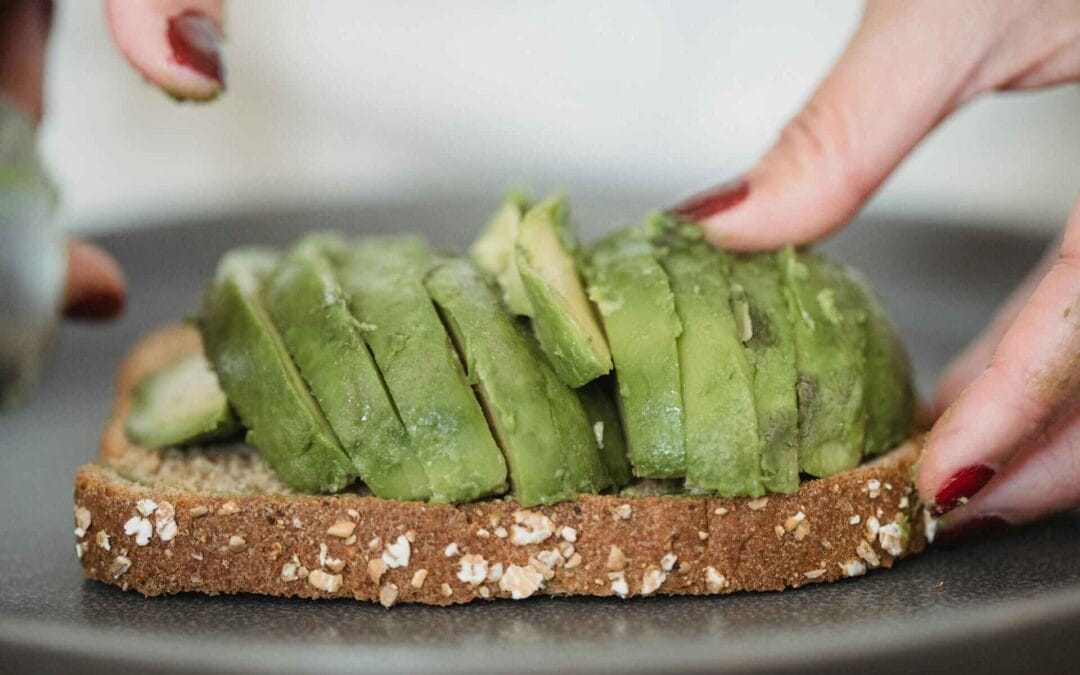
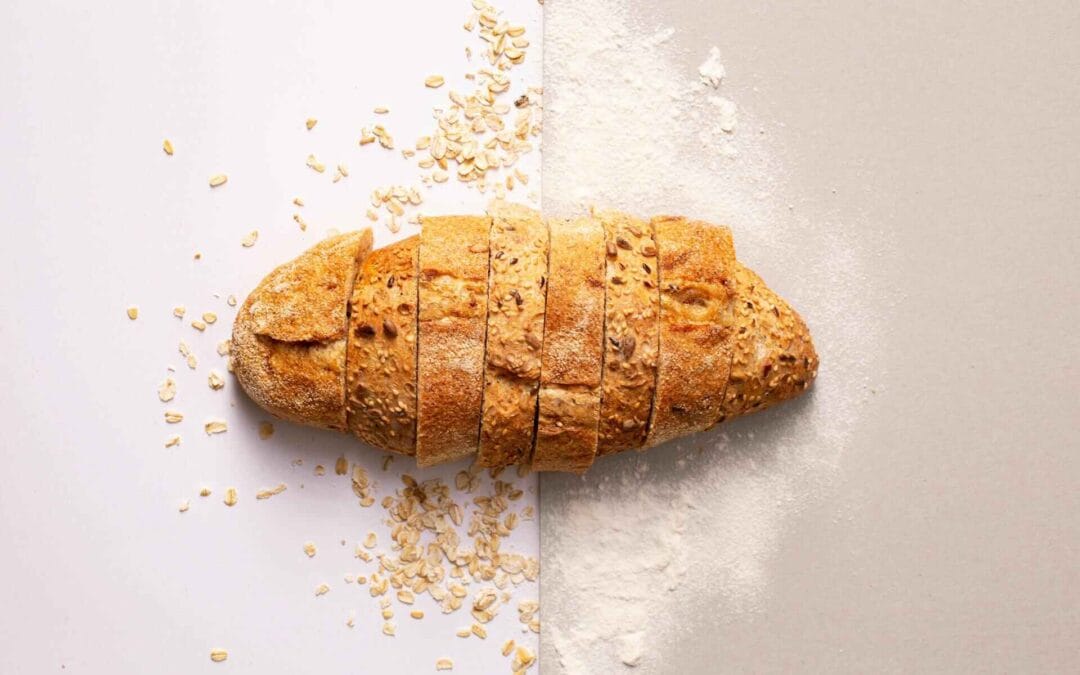
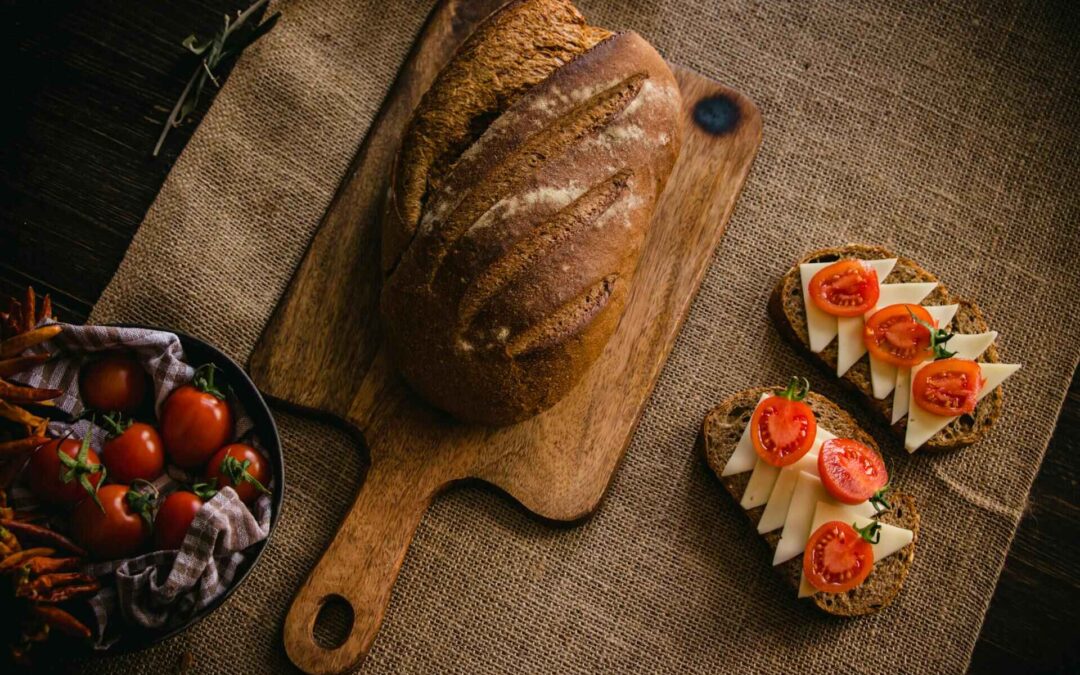
Great write-up, I am normal visitor of one?¦s blog, maintain up the excellent operate, and It’s going to be a regular visitor for a long time.
Thanks so much — I really appreciate you being a regular reader! 💛 Your support means a lot and I’ll keep working to publish helpful, high-quality posts. If there’s a topic you’d like to see, let me know and I’ll add it to the queue. Thanks for sticking around!