
Gluten free dessert recipes are having a real moment, and honestly, it makes sense. People do not want a “diet dessert” that feels like a compromise; they want something sweet, beautiful, and genuinely worth serving to a full table of guests. The most popular current roundups lean hard into desserts that already feel familiar and crowd-friendly, like flourless chocolate cake, pavlova, coconut macaroons, fruit crisps, and no-bake treats.
That tells us something important: the best gluten-free dessert recipes are not trying to be trendy for the sake of it. They are trying to be memorable, easy to love, and easy to share. At the same time, gluten-free baking comes with a few nonnegotiables. In the U.S., the FDA says a packaged food labeled gluten-free must meet a defined standard, which gives shoppers a clearer baseline when they are choosing ingredients.
For oats, the story gets a little more nuanced: trusted celiac organizations emphasize that oats can be part of a gluten-free diet only when they are specifically labeled gluten-free or otherwise verified to avoid cross-contact. That is why the smartest gluten-free dessert recipes balance comfort and caution at the same time. They taste like dessert first, but they are built with ingredient awareness in mind.
Why Gluten-Free Desserts Can Win Over Everyone At The Table
The new dessert standard: inclusive, familiar, and still indulgent
Gluten-free dessert recipes do not need to feel like a separate category sitting off to the side of the menu. The best ones act like the desserts people already know and love, just built with smarter ingredient choices.
That is exactly why this space has grown so much: current recipe roundups keep favoring desserts that feel familiar first, like flourless chocolate cake, cookies, fruit crisps, pavlova, and chilled no-bake sweets. Those are the kinds of desserts that naturally fit into family dinners, holiday spreads, and casual weeknight baking because they do not ask anyone to lower their expectations. They simply deliver.
That matters because dessert is emotional. People are not only looking for something sweet; they are looking for something that feels generous, comforting, and worth sharing.
A good gluten-free dessert should offer the same things any great dessert offers: a satisfying texture, a clear flavor, and a finish that makes you want one more bite. In that sense, the label on the plate is not the main event. The real test is whether the dessert tastes rich, balanced, and inviting enough that everyone at the table leans in without hesitation. When gluten-free baking is done well, it stops reading like a workaround and starts reading like the obvious choice.
What today’s search results are really telling us about dieter intent
A quick look at what ranks well right now makes the pattern pretty clear: people want gluten-free dessert recipes that are approachable, recognizable, and low-stress. The top-performing results are packed with desserts that already have mainstream appeal, especially chocolate-heavy cakes, chewy cookies, fruit desserts, and no-bake ideas that require little technical finesse. That tells us searchers are not hunting for complicated substitutions or niche technique experiments. They are looking for recipes that feel safe to try and easy to serve, which is a big clue about what actually earns clicks and saves.
It also suggests that readers are thinking beyond the recipe itself. They want planning help, ingredient guidance, storage tips, and desserts that can handle real-life settings like birthdays, potlucks, holiday tables, and last-minute guests. That is why the strongest gluten-free dessert content usually includes more than a list of sweets. It explains why certain desserts work, how to avoid common texture problems, and how to make the whole process feel manageable instead of intimidating. In other words, the best guide is not just about what to bake. It is about making baking feel easy, reliable, and worth repeating.
What Makes a Dessert Truly Gluten Free?
Naturally gluten-free desserts vs. adapted recipes
Not every gluten-free dessert recipe starts in the same place. Some desserts are naturally gluten-free because they were never built around wheat flour in the first place, while others are classic desserts that get rebuilt with substitutions. That difference matters because it changes how confident you can feel about the final texture. A mousse, panna cotta, or pavlova usually belongs to the naturally gluten-free camp, while a chocolate cake or cookie often needs a gluten-free flour blend or another structural swap to work properly. The first group tends to feel easier and more predictable; the second group gives you more of the familiar bake-sale or birthday party experience people expect. (1, 2, 3)
The nice part is that both approaches can produce excellent results. Naturally gluten-free desserts are often elegant in a quiet way, because their structure comes from ingredients like eggs, cream, sugar, chocolate, fruit, or nut flour instead of wheat flour. A flourless chocolate cake, for example, can be dense, rich, and deeply chocolatey without ever pretending to be a sponge cake. A pavlova leans on whipped egg whites and a crisp shell, which makes it light and dramatic at the same time. That is why so many gluten-free dessert recipes lean on these desserts when the goal is to impress a crowd without making the kitchen feel complicated.
Adapted recipes are a little more technical, but they open the door to the desserts many people miss most. Think cookies, brownies, layer cakes, and bars. In these recipes, gluten-free flour blends, almond flour, starches, eggs, and dairy often do the heavy lifting that wheat once handled. That does not make the dessert less appealing; it just means the baker has to be more intentional about balance. The best gluten-free dessert recipes in this category are the ones that still taste like the original dessert first, with the gluten-free part quietly doing its job in the background. (4, 5, 6)
Ingredient labels, certified oats, and cross-contact basics
Even simple gluten-free dessert recipes deserve careful label reading. A recipe may look safe on paper, but packaged ingredients can still introduce gluten through hidden sources, shared equipment, or unclear processing. The FDA’s gluten-free labeling rule gives consumers a clear standard for packaged foods, requiring that “gluten-free” claims meet a defined threshold so the label is consistent and meaningful. That protects dieters because it takes some of the guesswork out of shopping, especially when they are choosing ingredients for a dessert they plan to serve to family or guests. (7, 8)
Oats deserve special attention because they are one of the most common ingredient surprises in gluten-free baking. Pure oats are naturally gluten-free, but they are often exposed to wheat, barley, or rye during growing, harvesting, and milling. Celiac-focused organizations emphasize that oats should be chosen carefully and should be labeled gluten-free or certified gluten-free, because regular oats can carry cross-contact risk. That matters in dessert recipes because oats show up in cookies, crusts, crumbles, and bars, where they can make up a big part of the final bite. When a recipe uses oats, the safest move is to treat the oat ingredient like a key decision, not a background detail. (9, 10, 11, 12)
Cross-contact is the other big piece of the puzzle. It happens when a gluten-free food touches something that has gluten on it, either in the kitchen or earlier in the supply chain. That can happen through shared spoons, baking pans, cutting boards, measuring cups, flour dust in the air, or ingredients processed on shared equipment. For gluten-free dessert recipes, this is especially important because desserts are often handled with multiple ingredients and shared surfaces. A recipe can be technically gluten-free and still become unsafe if the kitchen setup allows cross-contact, which is why the safest desserts are not only about ingredients but also about preparation. (13)
A good rule of thumb is this: naturally gluten-free dessert recipes are the easiest to trust when you want simplicity, while adapted recipes need a little more care but can still be delicious and crowd-pleasing. The smartest bakers pay attention to both the recipe and the labels behind it. That way, the dessert does not just look gluten-free on the outside. It stays that way all the way through the mixing bowl, the oven, and the serving plate. (14)
Best Gluten-Free Dessert Categories For a Mixed Crowd
Flourless cakes, tortes, and chocolate showpieces
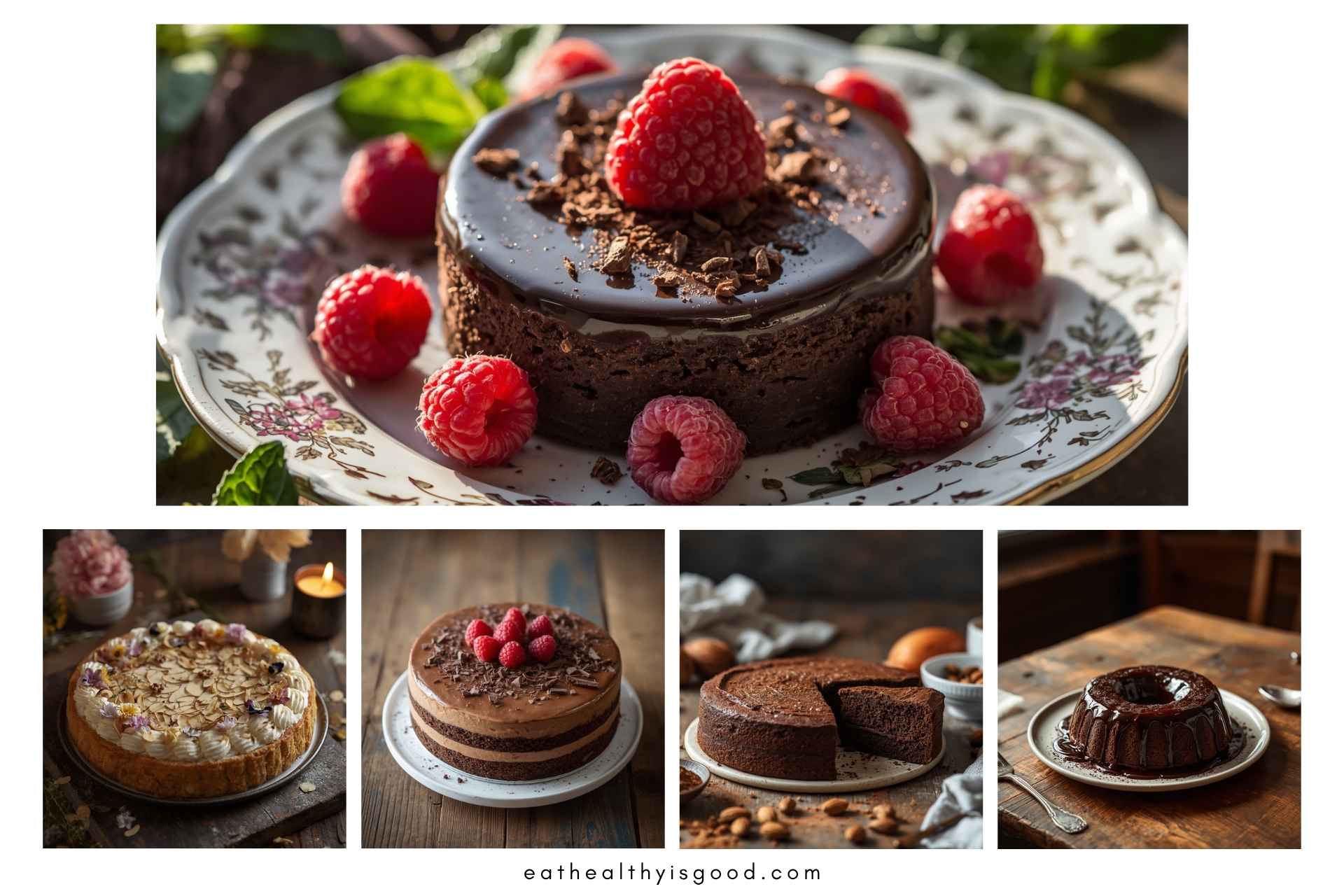
When you are serving a mixed crowd, a flourless chocolate cake is one of the safest bets in the world of gluten-free dessert recipes. It has a deep chocolate flavor that feels rich and special, but it does not rely on wheat flour to provide structure. Instead, it leans on ingredients like eggs, butter, and chocolate to build a dense, almost truffle-like texture that feels luxurious rather than “missing something.”
That is exactly why flourless cakes keep showing up in current gluten-free dessert roundups: they look elegant on a table, slice beautifully, and feel at home at birthdays, holidays, dinner parties, or any occasion where you want dessert to make a little entrance. (15, 16, 17)
What makes this category especially strong is its flexibility. A flourless cake can be dramatic and polished when you serve it with ganache and berries, or it can feel rustic and homey with a dusting of powdered sugar and whipped cream. That versatility matters in gluten-free dessert recipes because not every guest wants the same thing, and not every occasion calls for the same level of fuss. Current recipe coverage from trusted baking sources keeps emphasizing desserts that are easy to mix by hand, use a short ingredient list, and still deliver that “wow” factor, which is exactly what flourless cakes do so well. They are simple enough for a weeknight but refined enough for a celebration.
Tortes and nut cakes fit beautifully into the same lane. Almond torte, hazelnut cake, and similar recipes bring richness from nuts instead of wheat, which gives them a tender crumb and a naturally elegant flavor profile. That kind of dessert is useful when you want your gluten-free dessert recipes to feel intentional rather than adapted as an afterthought. Nut-forward cakes also pair well with fruit, chocolate, caramel, or espresso, so they can be dressed up in a hundred different ways without losing their identity. In practice, that means they perform especially well for special dinners because they taste layered and complex without requiring a long ingredient list or complicated technique. (18)
Mousse-like cakes deserve a mention too, because they often sit right on that sweet spot between light and indulgent. A chocolate mousse cake or a flourless layered dessert gives you the richness people expect from a special occasion treat, but with a softer, airier feel than a standard layer cake. That makes them a smart choice for mixed crowds, especially when some guests are gluten-free, and others are not. A dessert like this does not ask for separate handling or a long explanation at the table; it simply arrives as a beautiful, crowd-friendly centerpiece. That is one reason this category remains such a dependable anchor for gluten-free dessert recipes.
There is also a practical reason these desserts work so well at celebrations: they create a strong sense of occasion without a lot of risk. Cakes that rely on wheat flour can sometimes dry out, sink, or turn dense if the batter is slightly off. Flourless cakes and tortes often avoid that problem because the structure comes from eggs, chocolate, and fat, which are naturally good at holding richness together. A lot of current gluten-free baking guidance emphasizes that moisture and structure have to be built intentionally, and flourless desserts do that elegantly from the start.
That makes them one of the most dependable categories when you want gluten-free dessert recipes that feel special and still behave predictably. (19, 20)
Cookies, bars, brownies, and blondies that disappear fast
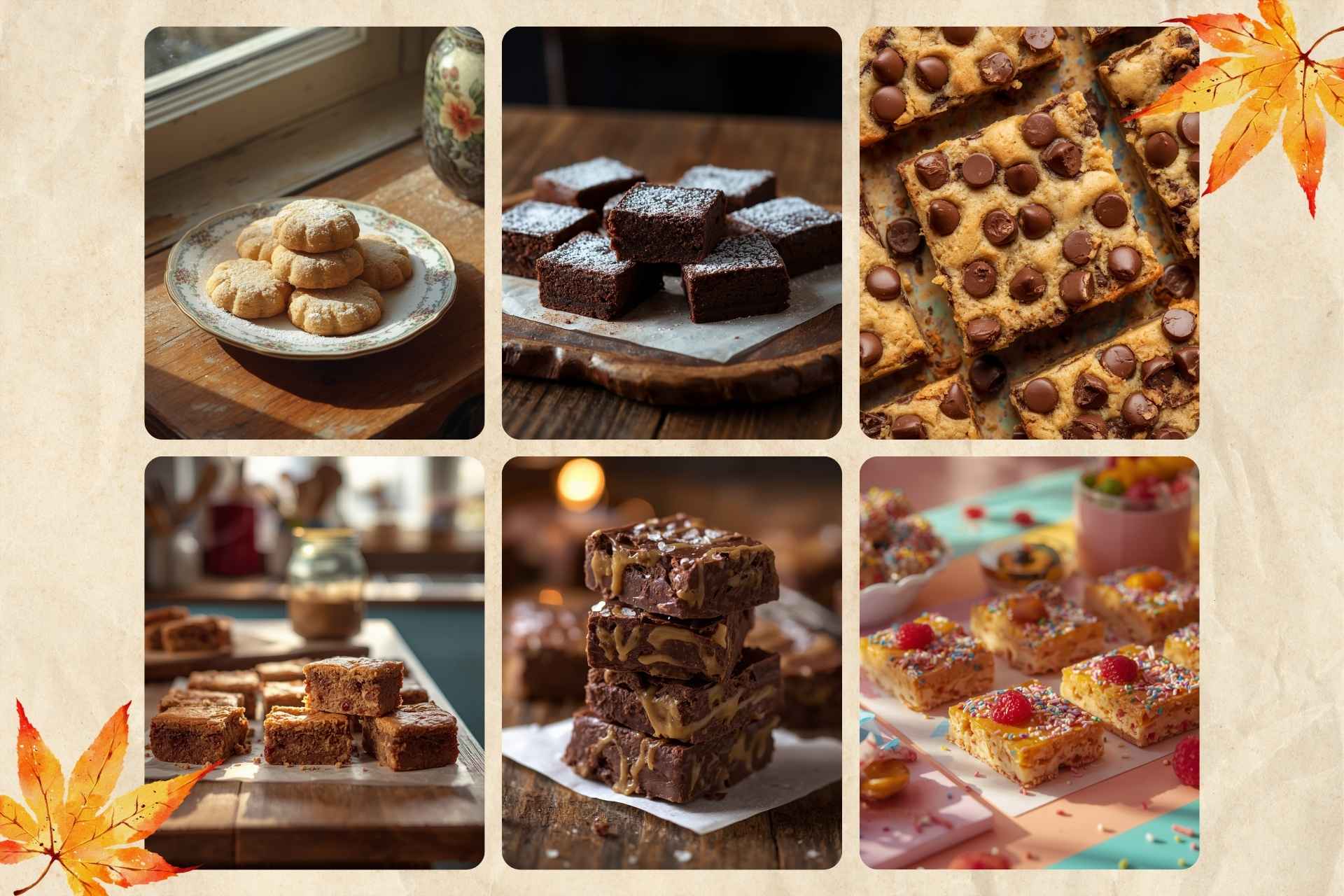
If flourless cakes are the showpieces, cookies and bars are the easy crowd-pleasers in gluten-free dessert recipes. They are the desserts people reach for without overthinking, which is exactly what you want for bake sales, lunchbox treats, after school snacks, office potlucks, and casual gatherings.
Current gluten-free recipe collections highlight simple, hand-mixed desserts for a reason: they are fast, familiar, and easy to portion. That means they fit the rhythm of real life instead of demanding a special event to justify baking them. (21)
Almond flour cookies are especially useful because they often deliver the soft, chewy texture people expect from a good cookie while still keeping the ingredient list short. Sally’s current almond butter chocolate chip cookie recipe, for example, is naturally gluten-free, uses just five ingredients, and comes together quickly without a mixer or long chill time. That is the kind of dessert that makes gluten-free baking feel approachable rather than intimidating.
It also shows why this category performs so well in gluten-free dessert recipes: people want cookies that are easy enough for a weeknight but tasty enough to serve to guests without hesitation. (22)
Brownies belong in the same category because they are naturally suited to rich, chocolate-heavy gluten-free baking. Current sources keep emphasizing fudgy, moist brownies, including one-bowl gluten-free versions and flourless brownies that lean on chocolate, eggs, and butter for structure.
That tells us something important about what dieters actually want: not a dry brownie that “happens to be gluten-free,” but a brownie that tastes deeply chocolatey and holds together with that perfect dense bite. In other words, brownies are one of the strongest ways to make gluten-free dessert recipes feel just as indulgent as their traditional counterparts. (23, 24, 25)
Bars and blondies are another smart fit because they solve the “easy to serve, easy to share” problem. King Arthur’s guidance on cookie bars points out how useful bar desserts can be for lunch boxes and after school snacking, which makes perfect sense for gluten-free baking as well.
A square pan of cookie bars or blondies is a low-drama dessert: no stacking, no frosting, no piping, no last-minute assembly. Just bake, cool, slice, and serve. That kind of simplicity is a huge advantage in gluten-free dessert recipes because it makes the whole process more repeatable. If a dessert is simple enough to bake on a regular Tuesday but good enough for a party tray, it has real staying power. (26)
Blondies deserve special attention because they are often the dessert version of a comfort blanket. They are soft, chewy, buttery, and adaptable enough to carry add-ins like chocolate chips, nuts, candy pieces, or fruit. That flexibility is useful in mixed crowds because it gives you room to keep the base recipe simple while still making the dessert feel exciting. The best blondies in the gluten-free dessert recipes category are the ones that taste rich and familiar right away, so nobody at the table is trying to “understand” the dessert before they enjoy it. They just take a bite, nod, and reach for another square. (27)
If you are planning dessert for a group, the smartest move is to pair one polished centerpiece, like a flourless chocolate cake, with one or two easy trays of cookies, bars, or brownies. That combination gives you contrast in texture, sweetness, and serving style, which is exactly what makes a dessert spread feel complete. It also works beautifully for gluten-free dessert recipes because the cake handles the “special occasion” role while the cookies and bars handle the “grab-and-go” role. Together, they make the table feel generous, balanced, and very hard to walk away from.
No-bake and make-ahead gluten-free desserts for busy hosts
Cheesecake jars, parfaits, puddings, and chilled desserts
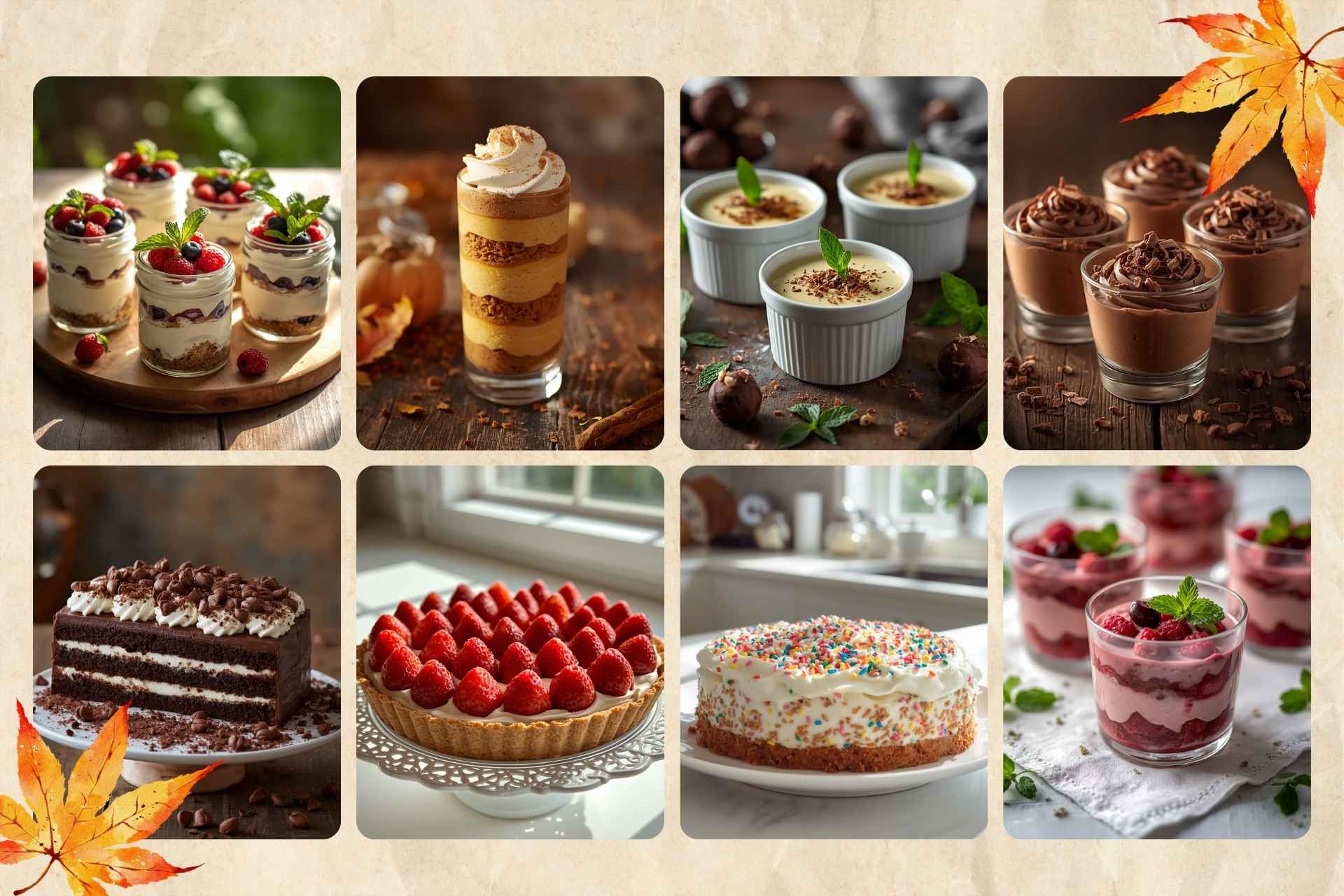
No-bake desserts are one of the easiest ways to make gluten-free dessert recipes feel calm instead of complicated. When the fridge or freezer does the heavy lifting, you do not have to spend your energy worrying about flour substitutions, oven timing, or whether a cake will sink in the center. King Arthur’s no-bake collection leans into exactly that idea, with recipes like Cheesecake in a Jar, Chocolate Icebox Cake, No-Bake Fresh Strawberry Pie, and Quick Pots de Crème showing how well chilled desserts can work when you want something reliable and crowd-friendly.
That is a big reason this category is so useful for busy hosts: it saves time without making dessert feel like an afterthought. (28, 29)
Cheesecake jars are a perfect example of how gluten-free dessert recipes can be both practical and polished. Sally’s No-Bake Cheesecake Jars recipe notes that if you use certified gluten-free graham crackers, the dessert easily fits a gluten-free menu, which is exactly the kind of detail that matters when you are serving guests with different needs. Individual jars make portioning simple, and they also turn a familiar dessert into something that looks intentional and a little fancy.
That is the sweet spot for entertaining: low stress in the kitchen, but still impressive at the table. (30)
Parfaits and pudding desserts work the same way. They let you layer creaminess, crunch, and fruit without relying on a wheat-based crust or cake structure, which keeps the recipe simpler and more flexible. A chocolate mousse cup, a layered berry parfait, or a pudding dessert in glasses can be dressed up with whipped cream and shaved chocolate for a holiday dinner, or kept plain for a weeknight treat. King Arthur’s no-bake lineup includes desserts like Quick Pots de Crème, which shows how well chilled chocolate desserts can fit into a gluten-free dessert plan when you want something rich but not fussy. In other words, gluten-free dessert recipes do not have to be baked to feel complete. (31)
These desserts also give you room to play with seasonal flavors. Sally’s No-Bake Pumpkin Cheesecake uses a crunchy gingersnap crust and a smooth, creamy filling, which is a great example of how no-bake desserts can feel festive and seasonal without requiring oven time. Another recent jar dessert from Sally’s collection, Pumpkin Pie in a Jar, is described as an excellent make-ahead dessert that skips pie dough steps and keeps the oven free, which is exactly the kind of flexibility busy hosts need.
That is why no-bake desserts have such staying power in the gluten-free dessert recipes world: they are easy to adapt, easy to present, and easy to make ahead. (32, 33)
The best part is that no-bake desserts can still feel elegant. A layered mousse cup with berries, a cheesecake jar topped with cocoa, or a pudding dessert with a cookie crumb layer can look restaurant-worthy without demanding advanced technique. King Arthur’s No-Bake Recipes collection even includes desserts like Easy Ice Cream Pie and Chocolate Icebox Cake, which are classic examples of how a chilled dessert can feel nostalgic and refined at the same time.
That balance is what makes this category so valuable in gluten-free dessert recipes: it gives you something that feels special, but it does not ask for a full afternoon in the kitchen. (34)
Icebox desserts, fruit-forward tarts, and freezer-friendly sweets
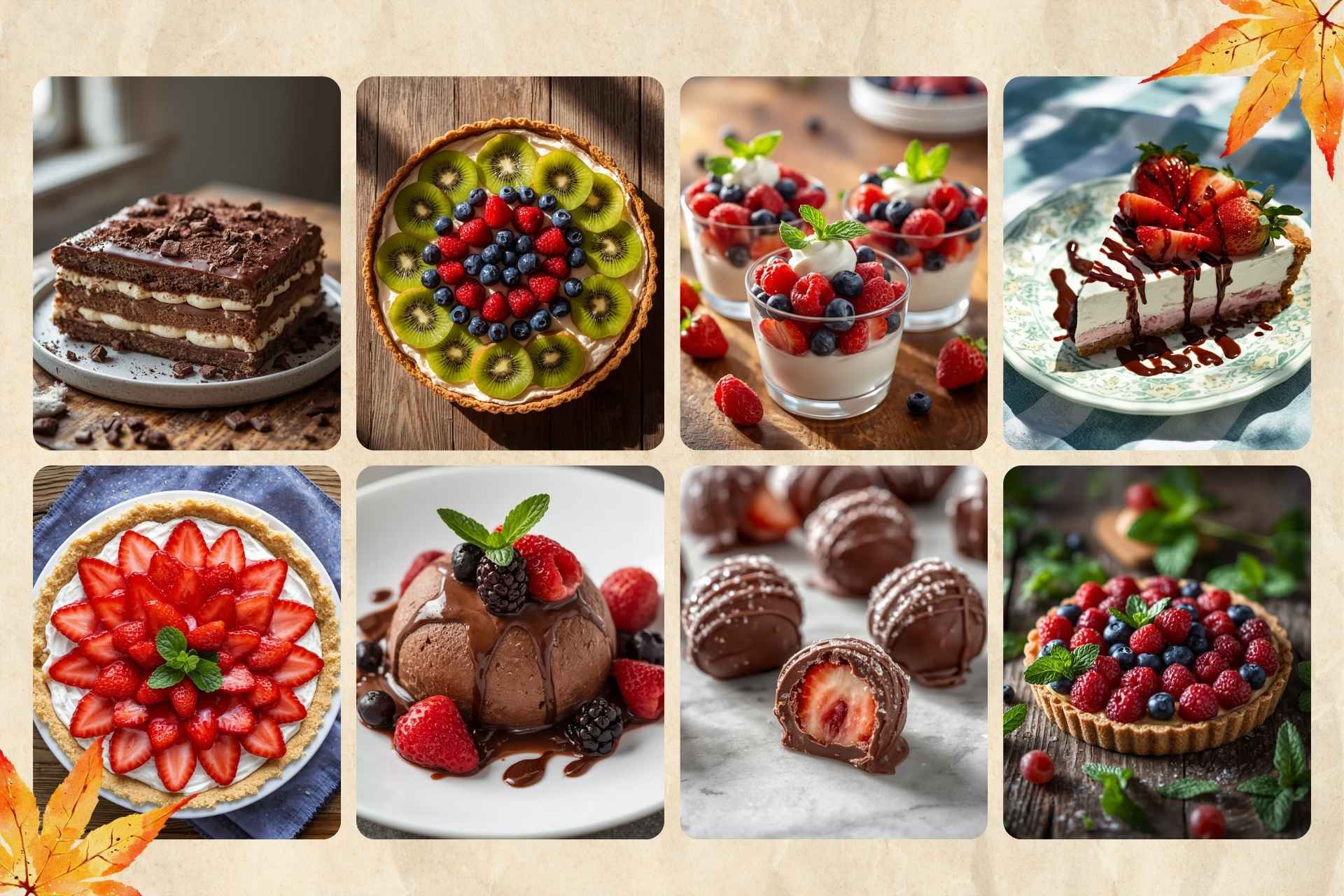
Icebox desserts are another strong fit for busy hosts because they are designed to sit in the fridge or freezer, which means the timeline works in your favor. King Arthur’s no-bake collection includes Chocolate Icebox Cake and other chilled desserts that rely on cooling rather than baking, and that makes them especially useful when oven space is limited, or your menu already has enough moving parts.
This is the kind of dessert strategy that keeps gluten-free dessert recipes practical: you make them in advance, let them settle, and serve them when the rest of the meal is ready.
Fruit-forward desserts are especially nice here because they bring freshness and color to the table. Sally’s No-Bake Greek Yogurt Fruit Tart uses a gluten-free crust and plenty of fresh fruit, which is a great reminder that no-bake desserts do not have to lean only on chocolate or cream. Fruit tarts, berry layers, and chilled fruit desserts can taste light and bright after a heavier meal, and they also photograph beautifully if you are serving guests or sharing the dessert online. That makes them a smart choice for gluten-free dessert recipes when you want the final result to feel lively instead of heavy. (35)
Freezer-friendly sweets are just as helpful because they give you breathing room. If a dessert can be frozen, chilled, or assembled ahead of time, it takes pressure off the day of the event and reduces the chance of last-minute mistakes.
King Arthur’s no-bake collection highlights recipes that work well in that make-ahead lane, including icebox cakes, fruit pies, and ice cream pies, all of which reinforce the same lesson: the freezer can be your best friend when you are building gluten-free dessert recipes for a crowd. That is especially true when you want a dessert that slices neatly and holds its shape on the plate.
You can also make freezer-friendly desserts feel more polished with simple finishing touches. A chilled tart can be topped with berries and mint, an icebox cake can be dusted with cocoa, and a semifreddo dessert can be served with a drizzle of sauce or a handful of chopped nuts. Recent recipe coverage keeps showing that no-bake desserts are not just a shortcut; they are a legitimate style of entertaining dessert. When done well, they look intentional, taste impressive, and fit neatly into the world of gluten-free dessert recipes without feeling like a backup plan. (36, 37)
Ingredient strategy — how gluten-free desserts stay tender, moist, and flavorful
The best gluten-free flours, starches, and blends for dessert baking
The biggest secret behind successful gluten-free dessert recipes is that the flour choice is really a texture choice. Almond flour, rice flour, oat flour, coconut flour, and all purpose gluten-free blends each bring something different to the bowl, and the best bakers learn how to match the flour to the dessert instead of trying to force one ingredient to do everything.
King Arthur’s gluten-free baking guides make this point clearly: some blends are built from refined starches like white rice flour, tapioca starch, and potato starch for a smoother, less gritty result, while other ingredients, such as almond flour and coconut flour, contribute richness, tenderness, or structure in very different ways. (38, 39, 40)
Almond flour is one of the most useful ingredients in gluten-free dessert recipes because it naturally supports moisture and tenderness. King Arthur notes that almond flour tends to make baked goods richer and more tender, and it suggests using it for non-yeast treats like cookies, scones, cake, biscuits, and muffins, where you can substitute it for part of the flour rather than trying to make it carry the entire recipe alone. That is why almond flour works so well in desserts that should feel soft and luxurious, such as cookies, tortes, snack cakes, and dense chocolate bakes. It brings a gentle nutty flavor and a plush crumb, which is exactly what many desserts need. (41, 42)
Rice flour plays a different role. It is not usually the star of a dessert on its own, but it shines inside a blend because it helps create structure without adding much flavor. King Arthur’s gluten-free flour guidance explains that blends made with refined starches like white rice flour, tapioca starch, and potato starch tend to avoid the grittiness or heaviness that can come from more rustic flours. That neutral profile is useful in gluten-free dessert recipes because it lets vanilla, chocolate, citrus, fruit, and spices stay front and center. In other words, rice flour is often the quiet teammate that helps the final dessert feel smooth rather than sandy. (43, 44)
Oat flour is another smart choice because it brings a soft texture and a gentle nutty flavor. King Arthur describes oat flour as naturally gluten-free and notes that it contributes to a soft, tender crumb in baked goods. That makes it a great fit for cookies, muffins, snack cakes, and other desserts where you want a little warmth and softness without a heavy flavor. The one catch is that oats need extra care in gluten-free baking, because oats should be labeled gluten-free to reduce cross-contact risk. That matters in dessert recipes because oat flour and rolled oats often appear in crusts, bars, and cookies, where ingredient safety is just as important as flavor. (45, 46)
Coconut flour is the opposite of subtle. It is very absorbent, so it behaves differently from most other flours and usually needs more eggs and moisture to hold a batter together. King Arthur’s coconut flour guidance explains that recipes using it rely on a lot of eggs and very little flour because the eggs provide moisture, binding, and structure.
That is why coconut flour can work beautifully in rich desserts like chocolate coconut cake or cupcakes, but only when the formula is designed for it. In gluten-free dessert recipes, coconut flour is a specialty ingredient, not a casual swap. Used well, it creates a tender, dense, flavorful crumb. Used carelessly, it can turn a dessert dry and crumbly fast. (47, 48, 49)
That is also why all purpose gluten-free blends are so popular. Many successful recipes rely on a tested blend rather than a single substitute flour, especially in cakes, brownies, cookies, and muffins. King Arthur’s Measure for Measure flour is designed as a simple 1:1 substitute in many non-yeasted recipes, and its gluten-free flour system is built around refined starches that create a smoother texture and a more neutral flavor profile. For home bakers, that convenience is huge. It means gluten-free dessert recipes can feel approachable instead of experimental, and it gives you a reliable starting point when you want traditional desserts to taste like themselves again. (50, 51)
Moisture, fat, eggs, and sweeteners: the texture-building toolkit
The other half of great gluten-free dessert recipes is moisture management. Gluten-free baking can go dry quickly because there is no wheat gluten to help trap water and create elasticity, so the recipe has to build tenderness in other ways. King Arthur’s baking guidance points out that higher-starch gluten-free flours help create a more moist and tender crumb, and Beyond Celiac recommends using ingredients like fruit puree, yogurt, sour cream, and other moisture-rich additions to improve softness. That is why gluten-free desserts often feel so successful when they include butter, oil, chocolate, fruit, or dairy in the formula. Those ingredients are not decoration; they are part of the texture strategy. (52, 53, 54)
Eggs do a lot of the heavy lifting in this world. King Arthur’s gluten-free baking advice specifically recommends using eggs and xanthan gum when adapting cakes, muffins, scones, and quick breads, because those ingredients help provide structure where wheat gluten would normally do the job. That is why so many gluten-free dessert recipes lean on eggs so heavily, especially in cakes, custards, mousse desserts, and coconut flour baking. Eggs help bind the batter, support rise, and keep the final crumb from collapsing into something fragile or chalky. When you see a gluten-free recipe with a surprisingly high egg count, that is usually not a mistake. It is the architecture. (55, 56)
Fat matters too, especially in desserts that should feel plush rather than dry. Almond flour naturally contributes fat and tenderness, and King Arthur repeatedly notes that almond flour helps make baked goods moist and tender. Butter, oil, nut butter, and chocolate all play a similar role by coating starches and softening the crumb.
That is one reason brownies, blondies, chocolate cakes, and nut cookies are such strong candidates for gluten-free dessert recipes: they already contain enough richness to keep the texture satisfying. If a dessert tastes good but feels a little flat, the missing piece is often fat or moisture, not sweetness. (57)
Sweeteners also shape the final texture more than people realize. Beyond Celiac notes that brown sugar, honey, and agave can help keep baked goods moister than plain white sugar. That can make a real difference in gluten-free dessert recipes, especially in cookies, snack cakes, and bars, where dryness is the enemy. The goal is not to make every dessert sticky or heavy. The goal is to create a bite that feels soft, rich, and balanced enough to hold its shape without tasting dusty or overbaked. That is the kind of texture people remember.
A final baker’s note: when a gluten-free cake looks pale or feels underdone in the center, the answer is not always “bake longer.” King Arthur’s guidance on cake baking says dark pans can bake hotter and recommends reducing oven temperature by 25°F and checking earlier to prevent overbrowning; that idea can be a useful general safeguard for delicate gluten-free cakes, too.
It is an inference, not a separate gluten-free rule, but it matches the bigger principle of this section: gentle heat, correct timing, and careful testing usually protect tenderness better than brute force does.
In gluten-free dessert recipes, overbaking is one of the fastest ways to lose moisture, so watching the clock closely is often as important as choosing the right flour. (58, 59, 60)
Flavor building and menu planning so the whole table gets excited
Seasonal flavors, pairings, and dessert table balance
The easiest way to make gluten-free dessert recipes feel exciting is to think like a host, not just a baker.
A good dessert table should have a range: something bright, something rich, something creamy, something crisp, and something that feels just a little celebratory. Current gluten-free recipe collections reflect that same idea, with spring and summer desserts leaning into berries, lemon, and fruit-forward bakes, while fall and winter menus naturally shift toward chocolate, pumpkin, warm spice, and deeper caramel notes. That seasonal rhythm keeps dessert from feeling repetitive and helps the whole spread feel like it belongs to the moment. (61, 62, 63, 64)
In warmer months, berry desserts are an easy win because they bring freshness and color without weighing the table down. Sally’s current gluten-free dessert collection highlights fruit-centered desserts like pavlova and cranberry frangipane tart, while other recent dessert roundups lean into blueberry, lemon blueberry, and mixed berry flavors as natural crowd-pleasers. That kind of flavor profile works especially well when the rest of the meal is already filling, because the dessert can finish the meal with a clean, bright note instead of one more heavy bite.
For gluten-free dessert recipes, that balance is gold: the dessert still feels indulgent, but it also feels refreshing. (65, 66)
A smart spring or summer spread might pair a berry pavlova or fruit tart with a creamy dessert like cheesecake jars or mousse cups. That gives the table contrast in both flavor and texture. One dessert brings tart fruit and crunch, while the other brings silkiness and richness, so guests can choose based on mood instead of settling for whatever is left. King Arthur’s no-bake dessert collection is full of examples that fit this kind of hosting strategy, including fruit pies, cheesecake desserts, and icebox cakes that can be made ahead and dressed up right before serving.
That flexibility makes gluten-free dessert recipes much easier to plan around when you are trying to keep the menu lively and balanced. (67)
When the weather cools down, the dessert table can lean into deeper flavors. Fall and winter are the seasons for chocolate, ginger, pumpkin, caramel, nuts, and baked fruit, and current gluten-free recipe collections mirror that pattern. King Arthur’s holiday gluten-free roundup specifically calls out rich chocolate cake and warmly spiced gingerbread cookies as seasonal examples, while BBC Good Food’s gluten-free cake and dessert collections include flourless chocolate cake, lemon drizzle, almond cake, and fruit bakes that fit comfortably into cooler-weather entertaining. That matters because guests often expect richer desserts in colder months, and gluten-free dessert recipes can absolutely deliver that cozy, celebratory feeling.
The best dessert table is not just a collection of sweets; it is a composition. A rich flourless chocolate cake can anchor the center of the table, while cookies or blondies fill the “grab and go” role, and a fruit dessert or chilled parfait keeps everything from feeling too heavy. If every dessert is creamy, the table can feel flat. If every dessert is crunchy, it can feel dry. If every dessert is chocolate, it can feel one-note. A better mix gives people options and makes your gluten-free dessert recipes feel intentional, not random. (68)
Toppings and garnishes are where you make each dessert feel customizable without adding much work. Fresh berries, citrus zest, whipped cream, shaved chocolate, toasted nuts, fruit compote, caramel sauce, and a dusting of powdered sugar can change the mood of the same base dessert almost instantly. A plain slice of almond cake can become a dinner party dessert with a berry sauce. A chocolate mousse cup can feel more elegant with whipped cream and cocoa. A cheesecake jar can go from casual to holiday-ready with a cookie crumb and a few pomegranate seeds. That kind of finish is one of the simplest ways to elevate gluten-free dessert recipes without making the recipe itself more complicated.
If you are planning the spread, think in pairs and contrast. Serve one fruity dessert next to one rich chocolate dessert. Put one creamy dessert beside one with crunch. Keep at least one dessert portable or pre-portioned, and let the most dramatic dessert act as the centerpiece. That approach makes the whole table feel more generous and helps guests relax because there is something for every mood.
In the end, that is what great gluten-free dessert recipes are really about: not just excluding gluten, but creating a table where everyone is excited to grab a plate.
Troubleshooting, storage, and serving tips that save the dessert
Fixing dryness, crumbling, graininess, sinking, and uneven baking
Even the best gluten-free dessert recipes can hit a rough patch if the texture balance is off. Dryness usually shows up when a recipe does not have enough moisture, fat, or sugar to support tenderness, while crumbling often happens when the structure is too fragile or the batter has been overmixed, overbaked, or weakened by too much flour replacement.
King Arthur’s baking testing shows that cutting sugar too aggressively can make cookies drier and more crumbly, and its sugar replacement experiments also found that brownies turned hard and dry while cakes became stiff and rubbery. That is a good reminder that in gluten-free baking, sweetness does more than make the dessert taste good; it helps the texture stay soft and cohesive, too. (69, 70)
When gluten-free dessert recipes turn out crumbly cookies, the first thing to check is the balance of fat, sugar, and flour. A cookie that spreads too little or falls apart too easily often needs more moisture support, not more flour. That is why almond flour, nut butter, or a tested gluten-free blend can work better than a dry single-flour swap in many cookie formulas. King Arthur’s cookie guidance also emphasizes that cookies should be stored airtight and allowed to cool fully so they hold their structure; that cooling time matters because many gluten-free cookies firm up as they rest.
If the cookie is already baked, the fix is usually gentle: serve it at room temperature, pair it with something creamy, or freeze future batches so the texture stays more dependable. (71, 72)
Dense brownies are not automatically a failure, because brownies are supposed to be rich and fudgy, but they cross the line when they become dry or rubbery. That usually happens when the batter lacks enough fat, the sugar has been cut too much, or the bake goes too far. King Arthur’s testing on sugar alternatives showed that brownies made with replacements could end up hard and dry, which is exactly the opposite of what most people want from a brownie.
The safest move is to protect the ingredients that create tenderness, then pull the pan from the oven when the center is still a little soft, rather than waiting for the entire pan to look fully set. In gluten-free dessert recipes, brownies usually forgive a slight underbake much better than an overbake.
Dry bars and blondies are often the result of the same problem: too little moisture or too much time in the oven. Because bars are baked in a shallow pan, they can go from perfectly chewy to disappointingly dry very quickly. That is why many successful gluten-free bar recipes lean on ingredients like butter, brown sugar, chocolate, nut butter, or fruit puree to help keep the crumb soft. If a recipe includes oats, remember that oat ingredients should be chosen carefully and labeled gluten-free, because oats can be a cross-contact risk. In other words, bars should be treated like a precision bake, even when they look casual and easy.
Sinking cakes are another common frustration, and they usually point to one of three things: too much leavening, too much moisture, or a structure that was not set before the cake was removed from the oven. Gluten-free cakes rely heavily on eggs and carefully chosen flour blends for structure, so they need a little more attention than a standard flour cake. King Arthur’s gluten-free baking advice consistently emphasizes using the right flour system and not treating every gluten-free flour like a simple 1:1 trade. If the cake collapses in the middle, the fix is often to bake a little longer, check the oven temperature, and avoid opening the door too early. (73)
Graininess is usually a flour issue, especially when the flour blend is too coarse or the recipe leans too hard on one ingredient. Refined blends built from white rice flour and starches tend to produce smoother results than rustic, heavy mixes, which is why many dependable gluten-free dessert recipes use a balanced blend rather than one flour doing all the work. King Arthur’s gluten-free guides stress that some flour choices are better suited to tender desserts because they create a smoother crumb and avoid a gritty mouthfeel. If a dessert feels sandy, the issue is often not the sweetness or the flavor; it is the flour blend itself. (74)
Storage is where a lot of gluten-free desserts either stay wonderful or lose their charm. Cookies should be kept in an airtight container at room temperature for a short time, then frozen if you need them to last longer.
King Arthur’s cookie recipes specifically recommend airtight storage and freezing for longer keeping, and its storage tips for cookies make one point very clear: loose containers dry cookies out faster. For gluten-free cakes, the same logic applies. Once the cake is fully cooled, wrap it airtight, and use freezing for longer storage so the crumb stays soft instead of stale. That matters because gluten-free dessert recipes often depend on moisture retention more than standard recipes do. (75, 76)
For serving, temperature is your secret weapon. Cookies usually taste best at room temperature, cakes should be completely cool before slicing, and meringue desserts stay crisp best when they are protected from moisture. King Arthur even notes that baked, cooled meringues can be stored in the freezer because the dry air helps them keep their crispness. That is a great example of how different dessert types need different handling, even inside the same gluten-free menu.
If you want your gluten-free dessert recipes to hold their texture at the table, match the serving style to the dessert: soft cakes should rest, crisp sweets should stay dry, and creamy desserts should stay chilled until the last minute. (77, 78)
A few final practical habits make the biggest difference of all. Prep pans well so cakes release cleanly, because even a nonstick pan is not always enough for a fragile gluten-free bake. Give cookies time to set before moving them, freeze extras in airtight containers, and keep ingredient labels close at hand so the dessert stays gluten-free from start to finish. The FDA’s gluten-free labeling standard gives you a trusted baseline for packaged products, but the kitchen still matters just as much because cross-contact can happen anywhere. When those details are handled carefully, gluten-free dessert recipes stop being unpredictable and start being the kind of desserts people ask for again. (79, 80)
The Bottom Line
The best gluten-free dessert recipes do not act like second choice desserts. They are rich, familiar, flexible, and easy to love, whether you are serving family, friends, or a holiday crowd.
Current recipe trends show that people keep returning to desserts that already feel like favorites: flourless chocolate cake, cookies, brownies, pavlova, fruit desserts, and no-bake layers. That is a strong clue for any home baker. If a dessert is simple to share and genuinely delicious, nobody cares whether it started with wheat flour or not. They just want another bite.
If you remember only one thing, make it this: the best gluten-free dessert recipes are built with flavor, moisture, and smart ingredient choices. Use safe labels, respect cross-contact, choose the right flour strategy for the texture you want, and do not be afraid to lean into desserts that were naturally gluten-free from the start. That is where the wins happen. Dessert should feel like the happy ending to the meal, not a compromise at the last minute.
FAQs
What are the easiest gluten-free dessert recipes for beginners?
The easiest options are usually no-bake desserts, flourless chocolate cake, fruit crisps, pudding cups, and simple cookies made with a reliable gluten-free flour blend. These recipes are forgiving because they do not rely on complex gluten structure, and many current gluten-free roundups highlight them for exactly that reason. If you are new to gluten-free baking, start with a dessert that already has a strong flavor and simple assembly.
What flour works best in gluten-free dessert recipes?
There is no single best flour for every dessert, but a good gluten-free 1:1 flour blend is often the easiest starting point for cakes, cookies, and bars. Almond flour is excellent for richness, rice flour gives a neutral base, oat flour adds softness, and starches help with lightness and structure. The strongest results usually come from recipes written for the exact flour style they use.
Are oats okay in gluten-free dessert recipes?
Yes, but only when they are specifically handled correctly. Celiac-focused organizations explain that oats can be safe when they are labeled gluten-free and protected from contamination during processing. Standard oats can be risky because of cross-contact with wheat, barley, and rye. In baking, that means the label matters just as much as the ingredient itself.
How do I keep gluten-free dessert recipes from turning dry?
Use moisture-rich ingredients like yogurt, sour cream, fruit purée, chocolate, and enough fat to support tenderness. Beyond Celiac specifically notes that recipes using pureed fruit, sour cream, or yogurt tend to produce moister results, and brown sugar can also help. Another big tip is not to overbake, because gluten-free desserts can go from perfect to dry very quickly.
Can gluten-free desserts taste as good as regular desserts?
Absolutely. The current popularity of flourless chocolate cake, pavlova, coconut macaroons, and no-bake desserts shows that gluten-free treats can be every bit as indulgent and crowd-pleasing as traditional ones. When the recipe is balanced well, most people will not be thinking about the missing flour at all. They will just be asking for the recipe.


This article was very useful for me. The explanations are simple and easy to understand. Thank you for sharing valuable health information that helps readers make smarter choices and improve their overall wellness.
Thank you for your wonderful feedback! We’re so glad to hear that you found the article useful and easy to understand. Our goal is to provide clear, practical health information that helps our readers make informed decisions and support their overall wellness. We truly appreciate you taking the time to share your thoughts, and we hope you’ll continue to visit for more helpful health tips and recipes!