
If you are looking for a reliable keto bread that actually tastes like real bread, this guide is for you.
The current keto bread landscape has clearly shifted toward a single goal: soft, sliceable, sandwich friendly loaves that do not taste like a sad substitute. Recent recipes from major low carb publishers keep circling the same ideas—simple ingredient lists, psyllium for structure, egg whites for lift, yeast for a more bread like flavor, and flour blends that deliver a lighter crumb rather than a heavy brick. You see that pattern in soft almond flour loaves, non-eggy yeast breads, and low carb breads built around psyllium husk or vital wheat gluten.
That is good news, because the best keto bread should not feel like a compromise. It should slice cleanly, toast well, hold sandwich fillings, and still feel tender enough to enjoy on its own. In other words, the goal is not just “low carb.” The goal is good bread with a low carb twist. And once you understand the ingredients and the science behind them, making a soft loaf becomes a lot less mysterious. FDA guidance also explains that dietary fiber is a form of carbohydrate that is not easily digested in the small intestine, which is why fiber-rich ingredients matter so much in keto bread math and texture alike.
Why keto bread deserves a different approach
Keto bread deserves its own baking strategy because it is trying to do a very tricky job. It has to deliver the comfort of classic bread without relying on wheat flour, which means the usual rules change fast. In regular baking, gluten builds stretch and strength almost automatically. In keto bread, that structure has to come from a different mix of ingredients, and that is exactly why the method matters just as much as the recipe itself.
A lot of people expect low carb bread to behave like standard sandwich bread on the first try, but that is usually where frustration starts. A good keto bread loaf needs the right balance of moisture, binding, lift, and cooling time. Too little structure, and the loaf falls apart. Too much drying, and it turns crumbly. Too much egg, and the flavor can feel heavy or overly “eggy.” The best low carb loaves are built with intention, not guesswork, so the final result feels soft, reliable, and easy to use in everyday meals.
That is why successful keto bread recipes often look a little different from traditional bread recipes. You will see ingredients like almond flour, psyllium husk, egg whites, butter, yeast, or even vital wheat gluten in some versions. Each ingredient has a job. Some help hold the loaf together. Some help it rise. Some improve the crumb. Some make the flavor more bread-like. When those pieces work together, the bread stops feeling like a substitute and starts feeling like something worth making again. (1, 2, 3, 4)
What “soft” means in low carb baking
In low carb baking, soft does not just mean fluffy. It means the bread feels pleasant to bite into, easy to slice, and sturdy enough to actually use. A soft keto bread loaf should not crumble into pieces the second a knife touches it. It should not feel dry and dusty in the mouth. It should not collapse under the weight of butter, peanut butter, avocado, or sandwich fillings.
Softness in this case is really about balance: tender on the inside, structured enough on the outside, and stable enough to hold up after cooling. (5)
That balance matters because keto bread has to replace several things at once. It needs to stand in for the texture of wheat bread, the convenience of store-bought sandwich bread, and the comfort factor people expect from homemade baking. When a loaf turns out well, it should feel sliceable without being rubbery, tender without being fragile, and moist without being gummy. That is a lot to ask from a loaf with very few carbs, which is why the right ingredients and method matter so much.
It also helps to set clear expectations before baking. Not every keto bread is trying to be the same thing. Some loaves are light and airy, almost cloud-like in texture. These can be lovely, but they are not always the best choice for a stacked sandwich or hearty toast.
Some loaves are more like classic sandwich bread: soft, neutral, and dependable. These are usually the most practical for daily use. Others are more rustic, with a denser crumb and a stronger flavor, which makes them great for toast, soups, or savory toppings. None of these styles is wrong. They simply serve different needs.
Think of it like choosing shoes. A cloud-like loaf is like a slipper: light, soft, and easy to enjoy, but not always built for heavy use.
A sandwich-style loaf is like a good pair of sneakers: versatile, reliable, and ready for almost anything.
A rustic loaf is more like a sturdy boot: flavorful, substantial, and great when you want something with presence. Once you know which result you want, it becomes much easier to choose the right keto bread recipe and avoid disappointment.
Rise is another part of the equation. In low carb baking, a tall loaf is nice, but a stable loaf is better. A keto bread recipe does not need to shoot up dramatically to be successful. It needs to rise enough to create a pleasing shape and a lighter crumb, then hold that structure once it cools. The crumb should look even and feel tender, not wet or dense in the center. Browning matters too, because a golden top signals that the loaf has developed flavor and baked through properly. A pale loaf can still taste fine, but a nicely browned crust gives keto bread that familiar bakery look and smell that makes it feel more satisfying.
Flavor is just as important as texture. A soft keto bread loaf should taste mild enough to work with both sweet and savory toppings. It should not overpower eggs, tuna salad, turkey, or butter. It should not have a strong aftertaste that distracts from the meal. That is why the best recipes keep the seasoning simple and let the texture do most of the talking. When the crumb is soft, the crust is golden, and the flavor is balanced, the loaf does exactly what people want from keto bread; it fits into real life.
If you are aiming for that kind of loaf, the goal is not just low carbs. The goal is a bread that feels dependable, sliceable, and genuinely good to eat. That is the standard that makes keto bread worth the effort. (6)
The core ingredients that make or break the loaf
The success of keto bread usually comes down to the ingredients you choose before the bowl ever gets mixed. Unlike traditional bread, where wheat flour does most of the heavy lifting, low carb baking needs a smarter combination of flours, binders, and moisture balancing ingredients. That is why one keto bread recipe can turn out tender and sliceable, while another ends up crumbly, dense, or strangely wet in the middle. The ingredient list is not just a formality here. It is the blueprint for texture, structure, and flavor.
When you understand what each ingredient is doing, baking becomes much easier. You stop following recipes blindly and start recognizing patterns. That matters because the best keto bread should feel soft enough for sandwiches, sturdy enough to slice, and neutral enough to work with both sweet and savory toppings. To get there, you need the right mix of flour, fiber, and binding agents. A good loaf is really a balancing act, and every ingredient has a job to do.
Almond flour, coconut flour, and binders
Among the most common ingredients in keto bread, almond flour is usually the first one people reach for. It is popular because it produces a soft, mild, and slightly rich crumb that feels more like everyday bread than many other low carb options. Almond flour also tends to be forgiving, which makes it ideal for beginner bakers who want a loaf that is easy to mix and less likely to dry out. If your goal is a tender sandwich-style loaf, almond flour is often the best place to start. (7, 8)
Coconut flour, on the other hand, behaves very differently. It absorbs a huge amount of moisture, which means a little goes a long way. In keto bread, that can be a good thing when you need help thickening the batter or reducing excess wetness. But if you use too much coconut flour, the loaf can quickly turn dry, crumbly, or overly dense. That is why coconut flour is usually best in small amounts or in recipes carefully designed around its absorbent nature. It is powerful, but it is not a one-to-one replacement for almond flour. (9)
The real magic often comes from the binders. These ingredients help keto bread hold together, improve sliceability, and create a more bread-like bite. Without them, low carb loaves can feel fragile or fall apart too easily. Each binder works a little differently, so knowing the difference can help you choose the right recipe for the texture you want.
- Psyllium husk adds structure, elasticity, and a more bread-like chew. It is one of the most effective ingredients for giving keto bread a sturdy but still soft crumb.
- Xanthan gum helps improve stability and binding in small amounts. It is especially useful when you want a smoother, more cohesive dough.
- Ground flax adds body, a slightly nutty flavor, and extra fiber. It can make keto bread feel heartier and a little more rustic.
- Vital wheat gluten creates the most traditional bread-like texture, but it is not suitable for gluten-free baking. When used, it can improve rise, chew, and sliceability dramatically.
Each of these ingredients changes the loaf differently. Psyllium often gives keto bread the best overall structure for a sandwich loaf. Xanthan gum helps hold moisture and prevent crumbling. Flax adds a denser, earthy character that works well in rustic loaves. Vital wheat gluten gives a more classic bread feel, especially if you want a taller, chewier loaf that behaves more like conventional bread. The key is not choosing the “best” one in every case. The key is choosing the one that fits your goal.
Texture changes fast depending on which ingredient leads the recipe. Almond flour tends to create a softer, more tender loaf. Coconut flour usually makes the crumb more absorbent and compact. Psyllium gives keto bread a stronger slice and better elasticity. Xanthan gum can smooth out the dough and keep it from breaking apart. Flax leans heartier. Vital wheat gluten makes the bread springier and more familiar to anyone used to traditional wheat loaves. That is why even small ingredient changes can produce a completely different result.
Net carbs matter too, which is one reason these ingredients are so important in keto bread. Almond flour is relatively low in carbs compared with wheat flour, while coconut flour is even more fiber-dense, though it must be used carefully because of its absorbency. Psyllium husk, flax, and xanthan gum are often used in low amounts and contribute structure without pushing carbs very high. Vital wheat gluten is lower in carbs than wheat flour, but because it contains gluten, it changes the dietary profile differently.
For many low carb bakers, the goal is not just reducing carbs. It is finding the best combination of ingredients that still gives the loaf a good bite, a clean slice, and a satisfying texture.
The best keto bread recipes do not rely on a single ingredient to do everything. They combine softening ingredients with structure builders, so the final loaf feels balanced. That is what separates a good loaf from one that only looks promising on paper. When almond flour, coconut flour, and binders work together properly, the result is a bread that feels much closer to something you would want to make again and again. (10)
The baking science behind a fluffy keto bread
If you want a fluffy keto bread, the real secret is not one magic ingredient. It is the way several ingredients work together in the oven. Eggs, fat, leavening, and heat all have specific jobs, and when those jobs line up, the loaf rises better, slices cleaner, and tastes much closer to the bread people actually want to eat. That is why some low carb loaves feel light and tender while others come out flat, dense, or oddly dry. The difference usually comes down to baking science, not luck.
A lot of beginners assume keto bread is just regular bread with fewer carbs, but the process is different enough that it deserves its own strategy. Traditional bread gets most of its lift from gluten and yeast working together over time. In low carb baking, you often need to create that structure with eggs, binders, fat, and careful heat control. Once you understand how these pieces interact, the whole process becomes much easier to manage. You stop chasing a perfect loaf and start building one with intention. (11, 12, 13)
Eggs, fat, steam, and rise
Eggs are one of the biggest reasons keto bread can hold together at all. They bring protein, moisture, and structure, which means they do more than just “bind” the batter. When eggs heat up in the oven, their proteins set and help the loaf firm up from the inside. That is especially important in low carb baking because there is no wheat gluten forming the same kind of elastic network. Eggs step in and help create the framework that keeps the bread from collapsing into a heavy block.
Egg whites are especially useful when you want a lighter keto bread. They add lift without contributing as much richness as whole eggs, which is one reason so many soft sandwich-style low carb loaves use a mix of whole eggs and extra whites. That combination can make the crumb feel airy instead of dense. Whole eggs still matter because they add flavor, color, and tenderness, but too many of them can make the bread taste egg-forward. The best recipes balance the two, so the loaf rises well without losing that bread-like flavor.
Fat is the other major player in a fluffy keto bread. Butter, ghee, coconut oil, olive oil, or another neutral fat can soften the crumb and keep the loaf from feeling dry. Fat coats some of the dry particles in the batter, which helps slow down moisture loss during baking. That is why a loaf with the right amount of fat feels tender rather than chalky. It also improves mouthfeel, which is a fancy way of saying the bread feels pleasant when you bite into it. Without enough fat, low carb bread can dry out quickly and feel more like a protein cake than real bread.
Steam matters more than most people realize. As the loaf heats up, moisture inside the batter turns to steam, and that steam helps push the bread upward before the structure fully sets. In other words, steam gives the loaf a little burst of expansion early in baking. That is part of why oven temperature and pan choice matter so much. If the outside of the loaf sets too quickly, the steam cannot do its job properly. If the temperature is too low, the loaf may not rise enough before it firms up. Getting that balance right is a huge part of making a better keto bread.
Baking powder also plays a major role in lift. It is a chemical leavening agent, which means it helps create bubbles that expand in the heat of the oven. Those bubbles are especially valuable in keto bread because the recipe often needs a little extra help creating a rise. Baking powder works quickly, so once the wet and dry ingredients are mixed, the batter should usually go into the pan and into the oven without too much delay. That keeps the leavening active and gives the loaf the best chance to rise properly.
Yeast works differently. Instead of creating an immediate reaction like baking powder, yeast brings slow fermentation, flavor, and a more traditional bread aroma. That is one reason yeast-based keto bread tastes closer to classic sandwich bread. The rise may not be dramatic, but the flavor payoff is often worth the wait. Yeast can help a loaf feel less like a workaround and more like the real thing. It gives the bread a bakery-style note that many low carb bakers miss most when they first cut out wheat.
Oven temperature is the final piece of the puzzle, and it is a big one. A properly heated oven helps keto bread expand at the start of baking, then set into shape before it collapses. If the temperature is too hot, the outside can brown too fast while the inside stays underdone. If it is too cool, the loaf may dry out before it gets enough lift. That is why preheating matters so much. A stable oven gives the batter the best chance to rise, set, and brown evenly. In low carb baking, a few degrees can change the final texture more than people expect.
The best thing about understanding these basics is that it makes troubleshooting much easier. If your keto bread is too dense, the issue may be weak leavening or not enough steam. If it is too dry, the fat level may be too low, or the oven may be running hot. If it tastes too eggy, the recipe may need more seasoning, more structure from binders, or a better balance of whites and whole eggs. Once you start reading the loaf this way, the oven stops feeling mysterious. You begin to see the bread as a system, and that makes better results much more repeatable.
A fluffy keto bread is really the result of teamwork. Eggs build structure, fat keeps the crumb soft, steam gives the loaf a burst of rise, baking powder adds lift, yeast adds flavor, and the oven turns everything into bread. When those parts are in sync, the loaf comes out tender, sliceable, and satisfying instead of flat and dry. That is the science behind the kind of keto bread people actually want to bake more than once.
The master soft keto bread recipe
A great keto bread recipe should feel simple enough for a weekday bake yet sturdy enough to make real sandwich slices. That is the sweet spot this loaf is aiming for. It is soft, mildly flavored, and built to hold together without turning gummy or crumbling the second you cut into it. The ingredient list is short on purpose because the goal here is not to overload the batter. The goal is to make a dependable keto bread loaf that bakes evenly, slices cleanly, and fits into everyday meals without fuss.
This version leans on almond flour for tenderness, psyllium husk for structure, eggs for lift, and fat for softness. Those are the same building blocks that show up again and again in successful low carb loaves because they solve the biggest problems in keto bread: dryness, fragility, and a dense crumb. Once you understand how each part works, the recipe becomes much easier to trust. And that trust matters, because the best low carb bread is the one you will actually make more than once.
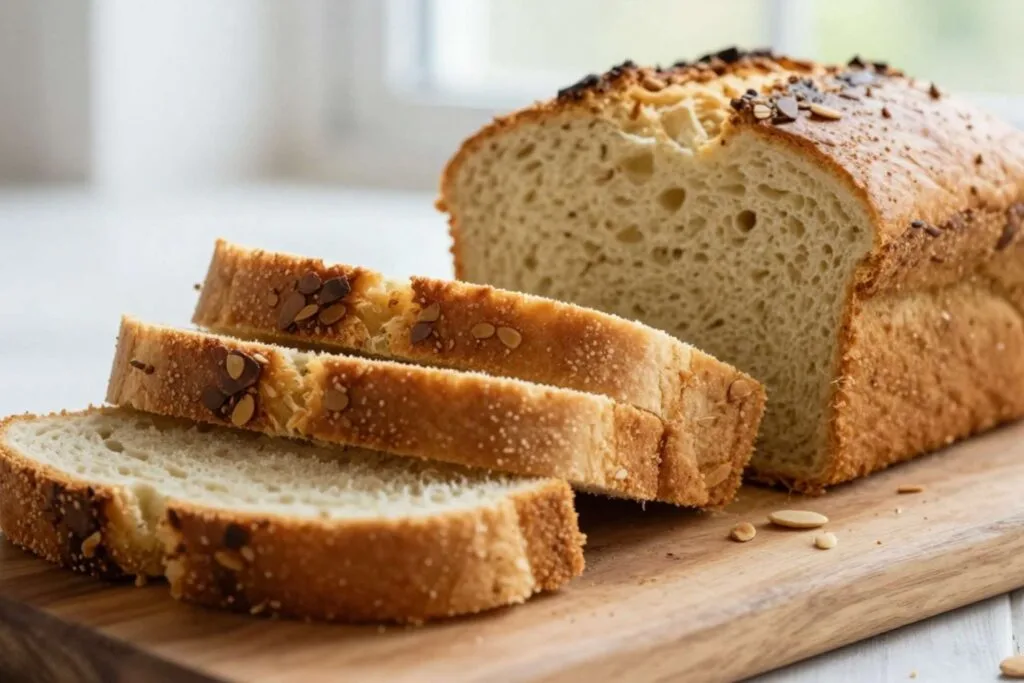
Ingredients, substitutions, and method
- Yield: 1 loaf, about 10 to 12 slices
- Prep time: 15 minutes
- Bake time: 45 to 55 minutes
- Cooling time: at least 1 hour
- Total time: about 2 hours
Ingredients
- 2 cups superfine almond flour
- 1/3 cup ground psyllium husk powder
- 2 teaspoons baking powder
- 1 teaspoon fine salt
- 4 large egg whites
- 2 large whole eggs
- 1/4 cup melted butter or oil
- 1 tablespoon apple cider vinegar
- 3/4 cup warm water
- Optional: 1 tablespoon sesame seeds for the top
Ingredient notes
Almond flour is the base of this keto bread because it gives the loaf a soft crumb and a mild flavor. It also helps the bread stay tender instead of dry or overly chewy. Use superfine almond flour if possible, because it creates a smoother texture and a better slice. Almond meal will still work in a pinch, but the loaf may turn out a little more rustic and less delicate.
Coconut flour is not part of the base formula here, and that is intentional. It absorbs moisture very aggressively, which can make keto bread too dry if the ratio is not carefully adjusted. If you want to use coconut flour, keep it as a small substitute rather than a full swap. A little can help with structure, but too much can make the loaf heavy and crumbly. For this recipe, almond flour helps maintain a more dependable texture.
Eggs are doing two jobs in this keto bread: they add structure and help the loaf rise. The egg whites lighten the crumb, while the whole eggs add richness and flavor. That combination helps keep the bread from tasting too eggy while still giving it enough lift. If you want a more neutral loaf, extra egg whites are usually a better choice than adding more whole eggs.
Butter gives the loaf a soft, rich texture. If you prefer a dairy-free version, a neutral oil works well too. The fat helps the crumb stay tender and keeps the bread from becoming dry after baking. A small amount of vinegar also helps brighten the texture and supports a lighter result.
Baking powder is the main leavening agent here. It helps the keto bread rise without relying on wheat gluten. Salt sharpens the flavor and keeps the loaf from tasting flat. Psyllium husk is the real structure builder, helping the bread hold together and slice well once it cools. If you skip it, the loaf will usually lose that sandwich-like texture.
Substitution guidance
For a dairy-free version, replace the butter with avocado oil, olive oil, or melted coconut oil. Neutral oil usually gives the mildest flavor, while olive oil adds a little more character. The texture should still stay soft if the rest of the recipe remains the same.
For a nut-free version, almond flour is the hardest ingredient to replace because it contributes both tenderness and body. A nut-free keto bread usually needs a different formula entirely, often built around seed flour, sunflower seed flour, or a psyllium-heavy blend. If you want to stay close to this recipe, you will need to test carefully because the texture will change a lot.
For an egg-light version, you can reduce the whole eggs slightly and add more whites instead. That keeps the loaf lighter and less rich. A fully egg-free keto bread is possible in some recipes, but it usually requires another binder or a different bread style altogether. Eggs are a major part of the structure here, so removing them completely will change the result significantly.
Method
- Preheat the oven to 350°F and line a standard 9×5-inch loaf pan with parchment paper.
- In a large mixing bowl, whisk together the almond flour, psyllium husk, baking powder, and salt.
- In a second bowl, whisk the egg whites, whole eggs, melted butter or oil, vinegar, and warm water until smooth.
- Pour the wet ingredients into the dry ingredients and stir until a thick dough forms.
- Let the batter rest for 2 to 3 minutes so the psyllium can absorb the liquid and thicken the mixture.
- Spoon the dough into the prepared loaf pan and smooth the top with a spatula or damp hands.
- Sprinkle sesame seeds on top if you want a little extra crunch and a bakery-style finish.
- Bake for 45 to 55 minutes, or until the loaf is deeply golden and fully set in the center.
- Remove the loaf from the oven and let it cool in the pan for about 10 minutes.
- Lift it out carefully and transfer it to a wire rack.
- Cool completely before slicing, because warm keto bread can seem soft or gummy if cut too early.
Success notes
Use a 9×5-inch loaf pan for the best balance of height and structure. A smaller pan can make the loaf too tall and underbaked in the middle, while a larger pan can spread the batter too thin. The right pan size helps the keto bread bake evenly and gives you slices that feel more like real sandwich bread.
Parchment paper makes removal much easier. Low carb loaves are often more delicate while warm, so the parchment acts like a sling and helps prevent breakage. It also keeps the loaf from sticking, which is especially helpful when the bread is still setting after baking. If you have ever tried to pry a soft keto bread loaf out of a pan too early, you already know why this matters.
For doneness, look for a loaf that is golden brown on top, firm to the touch, and no longer jiggly in the middle. You can also insert a toothpick into the center; it should come out mostly clean, with no wet batter attached. If the top browns too quickly, tent it loosely with foil during the last part of baking. And once it is done, let it cool all the way down. That final cooling step is where the crumb finishes setting, and the loaf becomes truly sliceable.
The biggest mistake people make with keto bread is rushing the process. They want to slice it while it is still warm, or they assume a pale loaf is underbaked, or they swap ingredients too casually without adjusting the moisture. The truth is that low carb baking requires patience. When you follow the method closely, the loaf becomes soft, balanced, and much more satisfying than the kind of bread that only looks good in photos.
Flavor variations and mix-ins
One of the best things about keto bread is how easily it can be customized without losing its soft, low carb base. A good loaf is not locked into one personality. It can be plain and versatile for sandwiches, seeded and rustic for toast, or savory and herb forward for soups, eggs, and quick lunches. That flexibility is a big part of what makes keto bread so useful in real life. Once you have a reliable base recipe, small changes can create a completely different eating experience without forcing you to start over from scratch. (14, 15)
The key is to make changes that improve the loaf instead of weighing it down. In low carb baking, mix-ins should support the structure, not sabotage it. That means using ingredients that add flavor, texture, or richness without making the bread too dense or too wet. A little sesame seed goes a long way. A sprinkle of herbs can make the loaf smell amazing while it bakes. A touch of shredded cheese can add savoriness, but too much can affect the crumb.
The goal is still the same: a soft, sliceable keto bread that feels dependable, only with a little more character.
Seeded, dairy-free, and sandwich versions
If you want a loaf that feels a little more rustic, a seeded keto bread version is a great place to start. Seeds add crunch, flavor, and a more bakery-style look without changing the loaf too much. Sesame seeds are especially useful because they toast beautifully and give the crust a nutty finish. Chia seeds can also work well, especially if you want a loaf with a slightly more textured bite. Flaxseeds are another smart option because they bring fiber and a deeper, earthier flavor. The best part is that these additions make the bread feel more interesting while still keeping it practical for everyday use. (16, 17)
A plain sandwich-style keto bread is the most versatile version of all. This is the loaf you want when you are making grilled cheese, turkey sandwiches, egg toast, or peanut butter toast. It should taste neutral enough to work with sweet or savory toppings, which means this version usually keeps the mix-ins minimal. A simple loaf with almond flour, psyllium husk, eggs, fat, and a little salt gives you the cleanest flavor and the most flexible result. If you want something that feels close to classic sandwich bread, this is the version to make first.
For a herb or savory keto bread, think of the loaf as a blank canvas with built-in personality. Garlic powder, onion powder, dried rosemary, thyme, Italian seasoning, or chopped parsley can all change the flavor in a really satisfying way. These ingredients pair especially well with eggs, cheese, soups, and roasted vegetables. You can also add a little shredded cheese if you want the loaf to feel richer and more indulgent. Just keep the amount moderate so the bread still slices cleanly. Too much cheese can make the crumb heavy, and that is the last thing you want in a soft keto bread recipe.
A dairy-free keto bread version is also easy to create if you swap the butter for a neutral oil like avocado oil, olive oil, or melted coconut oil. That change keeps the loaf soft while removing the dairy component. The flavor will shift slightly depending on the oil you choose, but the structure should stay dependable if the rest of the recipe remains balanced. This is a great option for anyone who wants a softer loaf without using butter, especially if they plan to toast it or pair it with savory toppings.
A lower-egg keto bread version can work too, but it needs a little care because eggs are such an important part of the structure. The easiest way to reduce the egg flavor is often to replace some whole eggs with extra egg whites. That keeps the loaf lighter and less rich while still helping it rise. This approach is especially helpful if you want a more neutral sandwich loaf. The result may be a little less custardy and a little more airy, which many people actually prefer in keto bread.
Here are a few easy mix-ins and add-ins that work well in the right version:
- Sesame seeds for a toasty crust and subtle crunch
- Chia seeds for texture and extra fiber
- Dried herbs like rosemary, thyme, or Italian seasoning
- Garlic powder for a savory, breadstick-like flavor
- Onion powder for deeper flavor
- Shredded cheese for a richer, more indulgent loaf
- Flaxseeds for earthiness and added structure
The most important thing to remember is that keto bread tastes best when the mix-ins support the loaf instead of overpowering it. A seed-topped sandwich bread feels familiar and useful. A herb loaf feels cozy and savory. A dairy-free loaf gives you a flexible everyday option. A lower-egg version can make the bread feel lighter and more neutral. Once you start treating the base recipe like a template, you can turn one dependable keto bread recipe into several useful variations that fit different meals and preferences.
Troubleshooting common keto bread problems
Even a solid keto bread recipe can go sideways if one small thing is off. Low carb baking is a little less forgiving than regular bread because there is no wheat gluten to quietly smooth out mistakes. That means texture problems show up fast. The good news is that most keto bread issues are easy to diagnose once you know what to look for. Dense loaf? Gummy center? Eggy flavor? Crumbly edges? Those are usually fixable the next time around, and sometimes they can even be rescued in the current batch.
The trick is to look at keto bread the way a baker does: not as a mystery, but as a set of clues. Heavy bread usually points to structure or leavening problems. A loaf that falls in the center often needs more time in the oven or a better pan size. Gummy bread is usually underbaked or sliced too soon. Dry bread often means too much absorbent flour or not enough fat. Once you start matching the symptoms to the cause, troubleshooting gets a lot less frustrating.
Dense, gummy, eggy, or dry loaves
A dense keto bread loaf usually means the batter was too heavy, the leavening was weak, or the structure ingredients were not balanced well enough. If you used too much almond flour or too little psyllium, the loaf may not have had enough lift or support. Overmixing can also make things worse by knocking out air before the bread has a chance to rise. Another common cause is old baking powder, which loses strength over time and can leave your loaf flat instead of fluffy. (18)
A gummy keto bread loaf usually means the bread needed more baking time or more cooling time. This is one of the most common issues in low carb baking because the outside can look done before the center is fully set. If you slice it too early, the crumb may seem sticky, wet, or underbaked, even if the loaf eventually firms up.
The fix is simple but important: bake until the center is fully set, then let the loaf cool completely before cutting into it. Cooling is not optional in keto bread. It is part of the baking process.
An eggy keto bread loaf usually happens when the recipe uses too many whole eggs without enough balancing ingredients. Eggs are important for structure, but too many can leave a strong flavor that tastes more like breakfast casserole than sandwich bread. If this happens often, try replacing some whole eggs with extra egg whites. You can also add more seasoning, a little vinegar, or yeast to soften the flavor. Savory mix-ins like herbs, garlic powder, or cheese can help, too, especially if you are making a loaf meant for lunch or dinner.
A dry keto bread loaf usually means the recipe absorbed too much moisture or baked too long. Coconut flour is a common reason because it is extremely absorbent, even in small amounts. Too much psyllium can also make the crumb feel dry or tight if the liquid ratio is not high enough. Another possible cause is not enough fat, since butter or oil helps keep the loaf tender. If your bread keeps turning out dry, reduce the absorbent ingredients slightly and make sure the loaf does not overbake.
A loaf that falls in the center usually needs more time to set. This can happen when the oven temperature is too high, which causes the outside to brown before the inside finishes baking. It can also happen when the loaf is too wet or the pan is too small. If the center sinks, the bread may have risen too quickly and then collapsed as it cooled. For better results, use the right loaf pan, bake until fully set, and resist the urge to remove it too early.
A loaf with crumbly edges usually needs more moisture or better binding. This can happen if the batter is too dry, if there is too little fat, or if the loaf cools too quickly before the structure fully settles. Psyllium husk, eggs, and fat all help hold keto bread together, so if one of those is off balance, the edges may break apart more easily. Slicing with a serrated knife and waiting until the bread is fully cool can also make a big difference.
Here is a fast troubleshooting checklist for quick rescue:
- Dense loaf: check baking powder freshness, avoid overmixing, and confirm ingredient ratios.
- Gummy center: bake longer and cool completely before slicing.
- Eggy flavor: use more egg whites, add herbs or seasoning, or try a yeast-based version.
- Dry crumb: Reduce coconut flour, add a little more fat, or shorten bake time slightly.
- Collapsed middle: Use the correct pan size and make sure the loaf is fully baked through.
- Crumbly edges: add more moisture, more binder, or slice only after full cooling.
The biggest takeaway is that keto bread usually fails for understandable reasons. It is rarely random. Once you know how the ingredients behave, you can make small corrections that lead to a much better loaf. That makes troubleshooting less like a guessing game and more like learning a recipe that finally starts making sense.
The Bottom Line
The best keto bread is the one that actually fits your life. It should be soft enough to enjoy, sturdy enough to slice, and flexible enough to serve as toast, sandwich bread, or a side for dinner.
That is why the most successful low carb loaves today keep coming back to a few dependable ideas: almond flour for tenderness, psyllium for structure, egg whites for lift, and careful baking for a better crumb. When those pieces work together, keto bread stops feeling like a workaround and starts feeling like a real staple.
If you are new to low carb baking, start with one simple loaf and make it a few times before adding variations. That is the easiest way to learn how your oven behaves, how the dough should feel, and how long your loaf really needs to cool. Once you have that down, keto bread becomes one of those recipes you can make almost from memory. And that is when it gets fun, because the bread is no longer the problem—it is the canvas.
FAQs
What makes keto bread different from regular bread?
Keto bread typically replaces wheat flour with low carb ingredients like almond flour, psyllium husk, flax, or seed-based blends. It also tends to depend on eggs, egg whites, cheese, or yeast for structure instead of the gluten network found in traditional bread. This alters the texture, flavor, and baking behavior, which is why low-carb loaves require their own techniques rather than just a direct wheat-bread substitution.
Why does keto bread sometimes taste eggy?
That usually happens when a recipe leans too hard on whole eggs without enough balancing ingredients. Using more egg whites, adding yeast, and choosing stronger seasoning can help reduce that flavor. Many modern low-carb loaves are intentionally designed to be less eggy, which is one reason yeast-based versions have become so popular.
Can I make keto bread without almond flour?
Yes. Some recipes use coconut flour, flaxseed meal, oat fiber, vital wheat gluten, or seed-based mixes instead. The trade-off is that each flour behaves differently, so the ratios and moisture levels need to change, too. That is why a recipe built for almond flour should not be swapped one-for-one with coconut flour or oat fiber.
Why is my keto bread dense or gummy?
Dense or gummy keto bread usually means the loaf needed better structure, more bake time, or a longer cooling period. Psyllium-based loaves need time to absorb moisture, and low-carb breads often firm up after they come out of the oven. If you slice too early, the crumb can look underbaked even when the loaf is almost there.
How should I store homemade keto bread?
Let it cool completely first, then store it wrapped in the fridge for short-term use or freeze slices for longer storage. Toasting from frozen works well because it restores the texture and makes the loaf feel fresh again. For the best result, slice only what you need and keep the rest protected from air so it does not dry out.



0 Comments