
The Best Keto Supplements — Science-Backed Guide to MCT, Electrolytes, Exogenous Ketones & More
Confused about which keto supplements actually help? Practical, evidence-based guide to the best keto supplements (MCT oil, electrolytes, magnesium, omega-3, vitamin D, exogenous ketones), how to use them safely, testing options (ketone strips vs blood meter), and stacks for women, athletes, and beginners. Sources: NIH, Mayo Clinic, Cleveland Clinic, peer-reviewed studies.
Quick summary — What matters most
- The most useful supplement categories on keto are electrolytes (sodium/potassium/magnesium), MCT oil, omega-3 (fish oil), vitamin D, a basic multivitamin, and targeted options like collagen, magnesium for cramps, or exogenous ketones for specific goals.
- Exogenous ketones reliably raise blood BHB, but clinical performance and weight-loss benefits are mixed; they’re not a magic bullet.
- For accurate monitoring, blood ketone meters remain the clinical gold standard versus urine strips; breath meters are improving but vary by device.
Why supplements on keto?
Switching to a ketogenic diet shifts your metabolism and electrolyte balance. That can cause short-term symptoms (“keto flu”), and long-term, certain micronutrients may be harder to get from food alone. Smart supplementation fills gaps, supports performance, and reduces side effects.
Best keto supplements by category (what to consider first)
1. Exogenous ketone supplements (best for beginners & cognitive support)
- What they do: raise blood beta-hydroxybutyrate (BHB) quickly and can modestly lower blood glucose and improve short-term cognitive performance in some studies. Use case: occasional cognitive boost, support for adaptation days, or therapeutic contexts under supervision. Evidence and safety notes: human trials show increased blood ketones and transient glycemic effects, but long-term benefits for weight loss remain limited.
- How to use: start with low doses to assess GI tolerance; not a replacement for dietary ketosis. Take before workouts or demanding focus tasks if tolerated.
2. MCT oil / MCT powder — best MCT oil for keto
- Why MCTs: medium-chain triglycerides (especially C8/caprylic acid) convert rapidly to ketones and can boost energy and mental clarity, studies and experts favor C8-rich formulas for the quickest ketone production.
- How to use: 1 tbsp (5–15 mL) with coffee or a shake; increase slowly to avoid digestive upset. C8-dominant oils/powders are preferred for fast ketone generation.
3. Electrolytes, magnesium, and cramps (fix keto flu)
- Why: low insulin reduces kidney sodium retention → faster electrolyte loss. Magnesium and balanced electrolyte supplements reduce cramps, headaches, and sleep trouble during adaptation. Clinical and nutrition guides recommend magnesium and electrolyte replacement to manage symptoms.
- Practical pick: sodium (salt), potassium (from food or carefully dosed supplements), and magnesium glycinate or citrate. Start with food + salt, then add a magnesium supplement if cramps persist.
4. Omega-3 (EPA/DHA)
Why: long-chain omega-3s support the heart, brain, and inflammation markers — useful on any diet and potentially complementary to keto’s metabolic effects. Taking fish oil will not kick you out of ketosis. Evidence indicates omega-3s can improve triglycerides and insulin markers when used alongside weight-loss diets.
5. Vitamin D and basic multivitamins
Why: Vitamin D and some minerals can be insufficient on restricted diets; clinical reviews recommend monitoring and supplementing vitamin D (especially if levels are low). For therapeutic ketogenic use (e.g., epilepsy), vitamin D replacement is standard.
6. Meal replacement shakes & protein options
Why: Keto meal replacement shakes designed for low carbs and higher fats/protein can help with weight loss adherence when whole meals aren’t possible. Look for low-sugar, high-MCT/protein options and check macros.
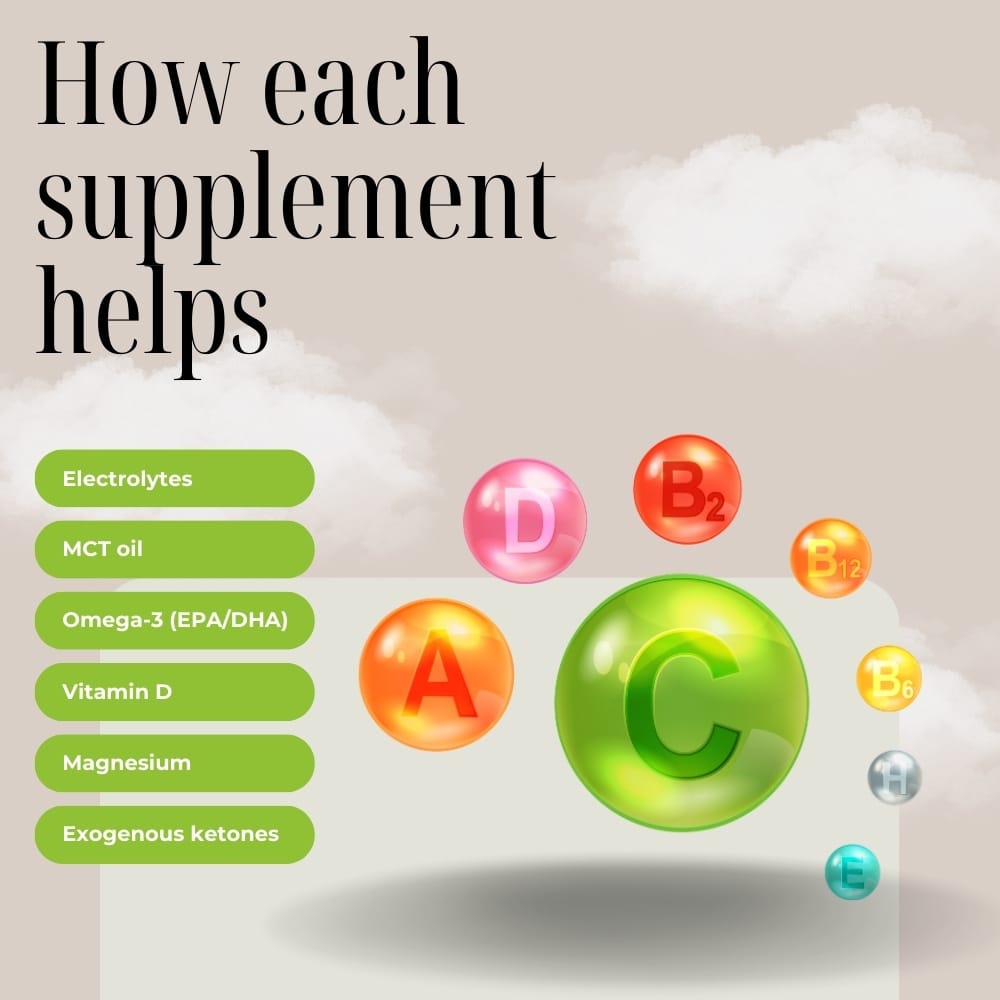
How each supplement helps — practical notes & evidence
Electrolytes: stop keto flu and cramps
When carbs drop, your kidneys excrete more sodium and water — that can cause headaches, fatigue, cramps, and constipation. Replacing sodium, potassium, and magnesium is the fastest fix. Use electrolyte powders, tablets, or mineral-rich foods; avoid mega-doses and check meds (ACE inhibitors, diuretics).
Tip: Aim for a zero-sugar electrolyte formula and split doses across the day to reduce GI upset.
MCT oil: fast ketones and appetite control
Medium-chain triglycerides (especially C8 caprylic acid) are rapidly converted to ketones in the liver. Studies and clinician resources show MCT can support ketone production and increase satiety, which helps adherence to keto. Start with 1 tsp and work up to 1–2 tbsp to avoid GI upset.
Omega-3 (EPA/DHA): heart & brain support on keto
A keto diet can be higher in saturated fat depending on choices; adding omega-3s from fish oil or algae reduces triglycerides and supports heart health and cognition. If you don’t eat fatty fish twice weekly, consider a supplement with combined EPA+DHA.
Vitamin D: test first, supplement if low
Vitamin D status affects bone, muscle, and immune function. Many adults are insufficient; supplementing (D3) when levels are low is standard practice. Get a 25-OH vitamin D blood test and follow guidance from the Office of Dietary Supplements or your clinician.
Magnesium: ease cramps and improve sleep
Magnesium glycinate or citrate is often recommended for “keto flu” symptoms and nighttime leg cramps. Dosages commonly used are 200–400 mg nightly, but individual needs vary. Watch for loose stools with higher doses.
Exogenous ketones: what they do — and don’t
Exogenous ketone salts or esters can raise blood β-hydroxybutyrate (BHB) quickly. They may reduce blood glucose acutely and sometimes blunt appetite, but large randomized trials have not shown consistent performance or long-term weight loss benefits. Consider them as a short-term tool (e.g., to ease transition days), not a replacement for dietary ketosis.
Recommended supplement stacks
A. Beginner adaptation stack (first 2–4 weeks)
- Electrolyte powder or tablets (sodium + potassium + magnesium) — take throughout the day.
- Magnesium (200–400 mg at night) if sleep/cramps occur.
- Single-ingredient MCT oil (small daily dose) for energy.
B. Performance/athlete stack
- C8-rich MCT before workouts.
- Electrolytes during longer sessions.
- Targeted pre-workout that is low-carb (check stimulant content).
C. Cognitive focus stack
- Low dose exogenous ketone (trial) when intense focus is required.
- Omega-3 daily, vitamin D if deficient.
Testing & tracking: ketone test strips vs blood meter vs breath
- Blood meters (finger-stick BHB) are the most accurate for clinical and precise tracking.
- Urine strips measure acetoacetate and are cheap but become less reliable as you adapt to keto (they read spilled ketones, not circulating BHB).
- Breath analyzers are improving and can be a convenient noninvasive option, but accuracy varies across devices and brands. Use blood meters if you need clinical accuracy.
Tailored mini-guides (quick wins)
For beginners — starter checklist
- Electrolytes (sodium + potassium + magnesium)
- MCT oil (small dose first)
- Basic multivitamin + vitamin D if low
- Low-sugar protein powder / meal replacement for convenience
For athletes / performance
Focus on tailored electrolyte replacement, targeted MCT pre-workout trials, and professional guidance before using exogenous ketones, which show mixed performance effects.
For women over 40
Prioritize vitamin D, omega-3, collagen, and bone-support nutrients; monitor hormones and energy, and adjust calories/macros to protect muscle mass.
For type 2 diabetes (safety)
Keto may improve glucose control for some, but supplements (especially exogenous ketones) can lower glucose and interact with meds. Always coordinate with your prescribing clinician; monitor glucose closely.
Safety, special populations & diabetes
- Type 2 diabetes: some exogenous ketone studies show glucose lowering, but supplements and diet both affect blood sugar — consult your clinician before use, especially if you take glucose-lowering meds. Supplements can interact with meds or worsen hypoglycemia risk if not managed.
- Women over 40: focus on vitamin D, omega-3, and bone-support nutrients; consider hormone/menopause status when choosing products.
Dosing & red flags
- Don’t megadose electrolytes or potassium without medical advice — excess electrolytes can be harmful.
- Check interactions if you’re on blood thinners or BP meds before starting fish oil or high-dose omega-3.
- Pregnant/breastfeeding people, those with kidney disease, or those with serious chronic conditions need clinician oversight before starting keto supplements.
Third-party testing and trustworthy brands
Always choose supplements that are third-party tested for purity and label accuracy (NSF, USP, Informed-Sport, or independent lab COAs). Look for manufacturers that publish Certificates of Analysis and avoid multi-ingredient “proprietary blends” when transparency is important.
Buying tips — free shipping & where to buy
- Compare official brand stores and major retailers for promotions and free shipping thresholds. Many brands offer free shipping on first orders or on orders above a set cart total.
- Prefer retailers that accept returns and post clear ingredient labels and COAs. Avoid marketplaces with poor seller reputations for high-risk categories.
All Keto Supplements Articles
Best Supplements to Support Your Keto Journey
Starting keto supplements the right way can make the whole low carb experience feel a lot smoother. When you cut carbs, your body shifts how it handles water, minerals, and energy, which is why many people notice headaches, fatigue, cramps, or constipation early on....

How to Choose a Multivitamin on Keto: Expert Guide & Checklist
The ketogenic diet is a very low carbohydrate, high-fat eating pattern designed to shift your body into nutritional ketosis — a state where fat and ketones become a primary fuel instead of glucose. People follow keto for weight loss, blood-sugar control, athletic...

Keto ACV Gummies — The Complete Guide: Ingredients, Science, Reviews & Buying Guide
If you’ve been scrolling health ads, you’ve probably seen glossy bottles promising “keto results” in gummy form — often with apple cider vinegar (ACV) and a pile of buzzwords: BHB, exogenous ketones, and appetite suppression. Sounds dreamy: candy that helps your diet....

The 6 Best Sweeteners on a Low Carb Keto Diet (Plus 6 to Avoid)
Sweeteners such as Stevia, sucralose, erythritol, xylitol, monk fruit, and yacon syrup are easy to incorporate into a low carb or ketogenic diet. On a low carb diet, you should limit your intake of additional sweeteners rich in carbohydrates or sugar. Following a...

Why Keto Salts Are the Most Reliable Keto Supplement
As the ketogenic and low-carb diets in general gain popularity, so does the need for keto supplements. Keto salts and other supplements can assist you in entering ketosis, a metabolic state in which you burn ketones for fuel rather than glucose. However, there are...

Smart Sweets Fruity Gummy Bears, Candy with Low Sugar
We heard conflicting reviews before testing the Smart Sweets Gummy Bears. They are a tasty, beloved brand for individuals who have dropped sugar in and out of the ketogenic community. They are gluten-free and contain only 3 grams of sugar per bag. On the other hand,...
Ketone Drinks: Types, Benefits, Risk & Safety, Drawbacks, and Should You Try Them?
Our bodies create ketones by restricting carbs, such as adopting a keto diet. We may also take a ketone drink (exogenous ketones) to help sustain nutritional ketosis and reap its advantages. Before deciding to supplement, it's a good idea to understand the different...

Multivitamins and Minerals on Keto: How to Avoid Deficiencies, And What Supplements Should I Take
The low-carb ketogenic diet, when done correctly, can enhance several areas of your health. Unfortunately, some first-time keto dieters neglect essential micronutrients, resulting in unwanted side effects such as muscle cramps, headaches, and low energy levels. This...

What are Exogenous Ketones Supplements: Are They Safe? and When to Use Them
Can vitamins help you go into ketosis? Without adhering to a ketogenic diet? We don't believe so, although there may be times when exogenous ketones can help you live a ketogenic lifestyle. When the body is in a state of ketosis, it uses fat as an alternate fuel for...
Do I Need to Take Vitamins or Supplements on a Keto Diet?
We have excellent news if you're pondering whether you need to take supplements when beginning or maintaining a keto lifestyle. When done correctly, the ketogenic, low-carb diet is highly nutrient-dense. Almost all nutritional needs can be readily satisfied by what...
FAQs
When to take keto supplements — morning or night?
It depends: MCT oil is often taken in the morning (energy, appetite control); magnesium is commonly taken at night for sleep/cramps; electrolytes are split throughout the day. Follow product labels and personal tolerance.
Are keto gummies sugar-free and safe?
Sugar-free gummies can be convenient; watch for sugar alcohols that may cause GI upset in larger amounts and check carb counts for your target macros.
Will exogenous ketones make me lose weight faster?
Not reliably. They raise BHB transiently, but long-term weight loss is driven by calorie balance and adherence to your plan.